How to get Canistel tree to produce
without dropping flowers and fruit
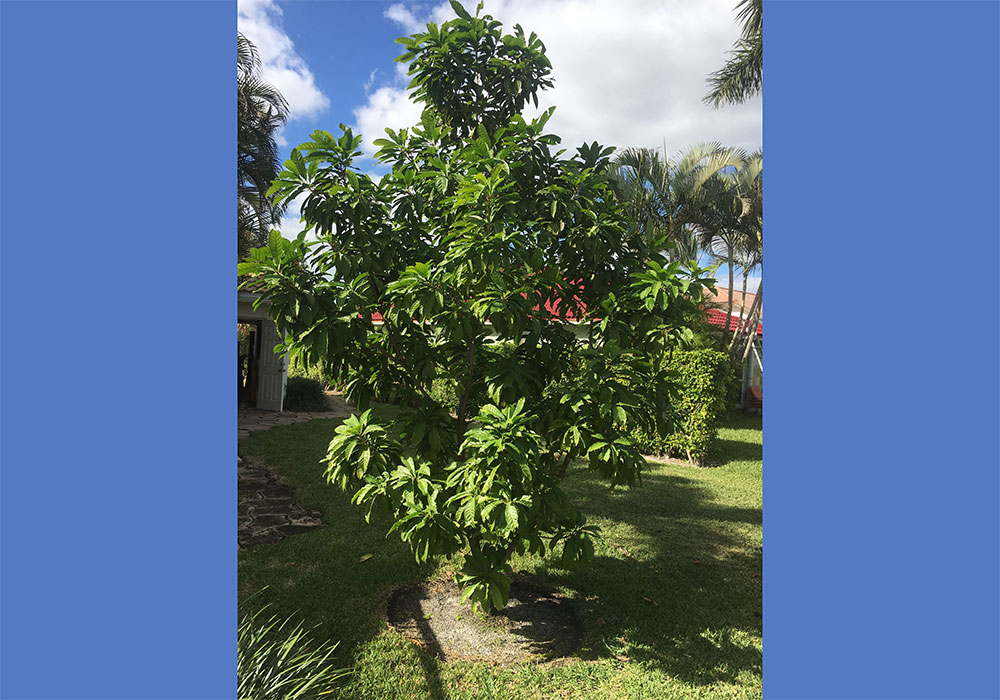
Q: My Canistel tree is 3 1/2 years old and is growing very well, see the
picture below. It gets hundreds of pea sized "berries" but then they fall off. No
canistel fruit. What's wrong?
A: You have such a nice looking tree, it is a shame you can't get
any fruit to ripen.
In our experience, Pouteria trees dropping fruit prematurely is a very common problem.
There may be one of the following reasons, or a combination of them:
- Cold winters may affect production, and while Canistel is generally
pretty hardy tropical plant that can easily withstand short periods of chill, the
fruit may never form properly if it had a cold winter.
- Lack of water. Canistel tree is pretty drought tolerant, but for the
proper production cycle it needs regular irrigation. Especially during hot
summer.
- The tree may be not strong enough; young trees drop fruit very often when
they don't have enough "fruiting energy" built up in their system.
Your tree looks well established and vigorous, however, flower/fruit drop
is often a sign of insufficient nutrients of particular kind, usually Boron
(B) and/or Molybdenum (Mo): either when a tree is too young and not strong
enough, or because of poor soils and lack of necessary elements.
Here is what can be done, considering you live in a warm, frost-free
climate.
1. Provide regular fertilizing program. We recommend liquid
fertilizers Sunshine Boosters that are safe to use with every watering and year
around. It is beneficial to switch plants from traditional "slow-release"
fertilizer to the liquid one because it makes a huge difference in plant growth
and flower/fruit quality and quantity. See also:
- Why liquid fertilizers are better than dry
- Article about benefits of liquid fertilizers.
2. Apply micro-element remedies that are very effective for
improving fruit production, especially when flower or fruit drop occurs:
SUNSHINE Honey - promotes more efficient blossoming and pollination, makes
flowers bigger and reduces bud drop. SUNSHINE SuperFood - improves plant vigor and quality and size of
flowers
These are all natural, eco-friendly supplements that work great for fruit
trees and other edibles.
Date: 2 Apr 2026
Stop Fixing Your Soil: 15 Bulletproof Fruit Trees for Tough Ground
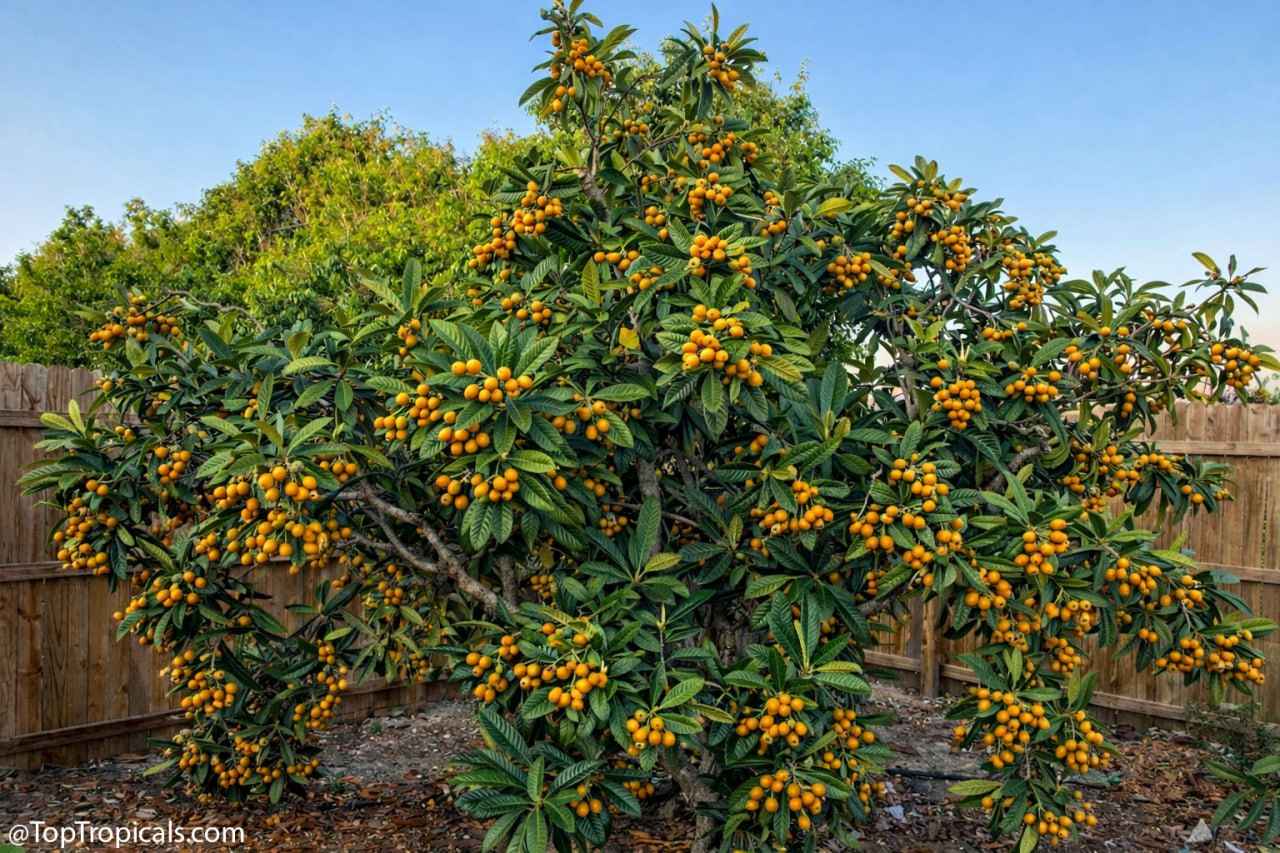
Loquat (Eriobotrya japonica) fruiting
Stop Fixing Your Soil: 15 "Bulletproof" Fruit Trees for Tough Ground 💩
Not everyone starts with a lush, loamy paradise. In many parts of Florida and the South, "soil" is just a polite word for sand, limestone rock, or depleted clay.
The biggest mistake new gardeners make? Spending hundreds of dollars on soil amendments before they ever put a tree in the ground.
The secret the pros know: You don't need to change your land to fit your plants; you need to choose plants that love your land. Some of the most delicious fruits actually thrive on neglect - and a few even produce better fruit when the soil is "poor."
🌳 The "Big 5" Toughest Fruit Trees
If your yard is a dry, sandy lot or a rocky outcrop, start with these. They are the ultimate "survivors."
Jujube, Chinese Date (Ziziphus jujuba): Arguably the toughest fruit tree on earth. It laughs at drought, poor soil, and neglect. The fruit is crisp like an apple when fresh and sweet like a date when dried.
Loquat (Eriobotrya japonica): A Southern staple. It’s evergreen, beautiful, and produces honey-sweet fruit in early spring when nothing else is ripe.
Mulberry (Morus alba): If you can’t grow a Mulberry, you might be gardening on the moon. It grows in sand, clay, or sidewalk cracks with equal enthusiasm.
Fig (Ficus carica): Figs actually prefer not to be pampered. In overly rich soil, they grow lots of leaves but little fruit. Give them well-drained, mediocre soil and they’ll thrive.
Pomegranate (Punica granatum): These trees are "stress-lovers." Rocky, alkaline soil is no problem, and a bit of soil stress often results in a higher sugar content in the fruit.
Pomegranate Plant Facts
Botanical name: Punica granatum Also known as: Pomegranate, Granada, Grenade, Pomegranate, Granada, Anar, Granaatappel, Pomo Granato, Romeira, Melo Grano
USDA Zone: 8 - 11
Highligths
🌳 Tropical Flavors That Don't Need "Perfect" Dirt
You don’t need a rainforest to grow tropical treats. These species are surprisingly resilient once they get their roots established.
🌟 The Sand-Lovers:
Mango (Mangifera indica): While young trees need a little babying, a mature Mango is incredibly drought-tolerant and handles Florida’s sandy "sugar sand" like a champ.
Mango Plant Facts
Botanical name: Mangifera indica Also known as: Mango
USDA Zone: 9 - 11
Highligths
Sapodilla (Manilkara sapota): A rugged, wind-resistant tree that produces fruit tasting like brown sugar and pear. It is a top-tier choice for coastal or sandy areas.
Tamarind (Tamarindus indica): It’s slow-growing but patient. Once it’s in, it’s there for a century, regardless of soil quality.
🌟 The Low-Maintenance Stars
Longan (Euphoria longana): If you’ve struggled with finicky Lychee trees, try Longan. It’s more cold-hardy and much less picky about its soil.
Citrus: While they need regular feeding (fertilizer), Citrus trees are naturally adapted to the sandy ridges of the South.
🌟 The "Quick-Win" Berry & Shrub Layer
If you want fruit this year, don’t wait for a tree to mature. Add these hardy producers to your edges. And here is why it works:
Dragon Fruit (Hylocereus undatus). It’s a cactus! It literally prefers poor, fast-draining soil over rich potting mixes.
Barbados Cherry (Malpighia glabra). A vitamin C powerhouse that handles low-nutrient soil with ease.
Grumichama (Eugenia brasiliensis). Slower grower, but steady and tolerant once established.
Surinam Cherry (Eugenia uniflora). Virtually indestructible. Often used as a hedge because it grows so vigorously in poor soil.
Pineapple Guava (Feijoa sellowiana). A beautiful silver-leafed shrub that is salt-tolerant and drought-resistant.
Pineapple Plant Facts
Botanical name: Ananas comosus Also known as: Pineapple, Pina
USDA Zone: 9 - 11
Highligths
🌳 The Strategy: "Plant First, Improve Later"
In the South, the "dig a $100 hole for a $10 tree" rule doesn't always apply. Trying to completely re-engineer your soil often leads to drainage issues (the "bathtub effect").
Try this instead:
1. Select a species naturally adapted to your pH and texture.
2. Plant it at the correct height (never too deep!).
3. Mulch heavily with wood chips. This improves the soil from the top down over time, mimicking a natural forest floor.
🌱 💪 Green Magic + SUNSHINE Boosters: A
Complete System for Strong Plant Growth
By Tatiana Anderson, Horticulture Expert at Top
Tropicals with Smokey & Sunshine help
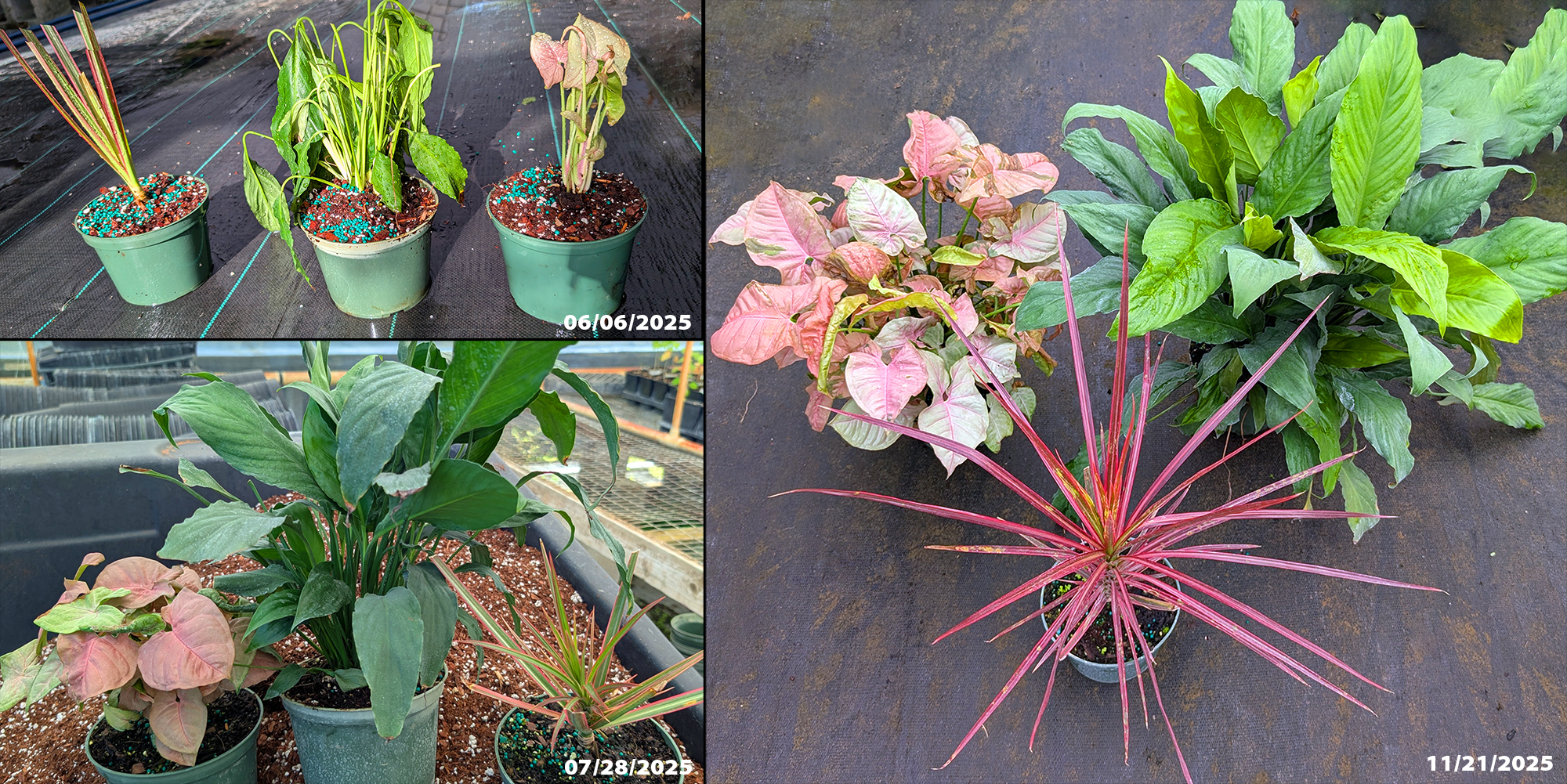
Green Magic recovery test with SUNSHINE Robusta support: Dracaena, Syngonium, and Spathiphyllum
revived from severe stress and growing vigorously.
☀️🌱 Sunshine Boosters: Complete Plant
Nutrition
Sunshine Boosters provide complete plant nutrition,
including Calcium and micronutrients that plants need for strong growth.
Because
nutrients are delivered in liquid form, plants can absorb them quickly and
respond almost immediately.
The Practical Problem
Liquid feeding works well, but it requires frequent application. In real
gardens, many growers simply do not have time to add liquid fertilizer with
every watering.
Green Magic: The Foundation
Green Magic solves this problem by providing steady
background nutrition through controlled-release fertilizer. It feeds plants
gradually, so they continue receiving nutrients even between liquid
feedings.
Why This Combination Works
Together, this system provides both complete nutrition and
steady feeding. Sunshine Boosters supply fast nutrients and
Calcium, while Green Magic maintains a stable nutrient supply between
feedings.
✍️ How to Feed Your Plants
📅 Step 1 – Start of the Growing Season
Apply Green Magic around the root zone every 6 months.
In ground:
Small Shrubs (1–3 feet): Use approximately 1/4
to 1/2 cup per plant
Established Trees: Use 1/2 lb to 1 lb of product per 1
inch of trunk diameter.
Small In-Ground Ornamentals: A common "spoon" rate is
roughly 1 teaspoon per gallon of estimated root volume (or per sq. ft. of
surface area).
Spread evenly around the dripline. Avoid piling the granules against
the base or trunk of the plant. For best results, lightly rake the granules
into the top 1–2 inches of soil.
Container plants:
Apply 1 tea spoon per 1 gal of soil (mix in with soil)
every 6 months during active growth period, or with every re-potting.
Water normally after application.
Adjustment for Temperature. Because Green Magic is
temperature-controlled, adjust your rate if your local climate is extreme:
Cooler Climates (<60°F average): Increase
the rate by 20% to ensure enough nutrients are released.
Hot Climates (> 80°F average): Decrease the rate
by 20% to prevent over-releasing as the heat speeds up the process.
☀️🌿 Step 2 – Active Growing Season
Apply Sunshine Boosters during the growing season.
Regular feeding (maintenance): Mix with tap water according to
the ratio on the label. For SUNSHINE Robusta use 25 ml (5 tsp)per
gallon
of water and spray leaves every 5-7
days during active growth.
Correction feeding ("medicine" dose): if plants show visible
nutrient deficiencies, combine SUNSHINE Robusta with SUNSHINE Superfood
and
spray every 5–7 days until new growth appears healthy. All SUNSHINE
Boosters
products are compatible and can be mixed with water in the same sprayer.
Best time to spray: early morning or evening when temperatures
are cooler and leaves can absorb nutrients efficiently.
Important: spray both the top and underside of leaves for
maximum absorption.
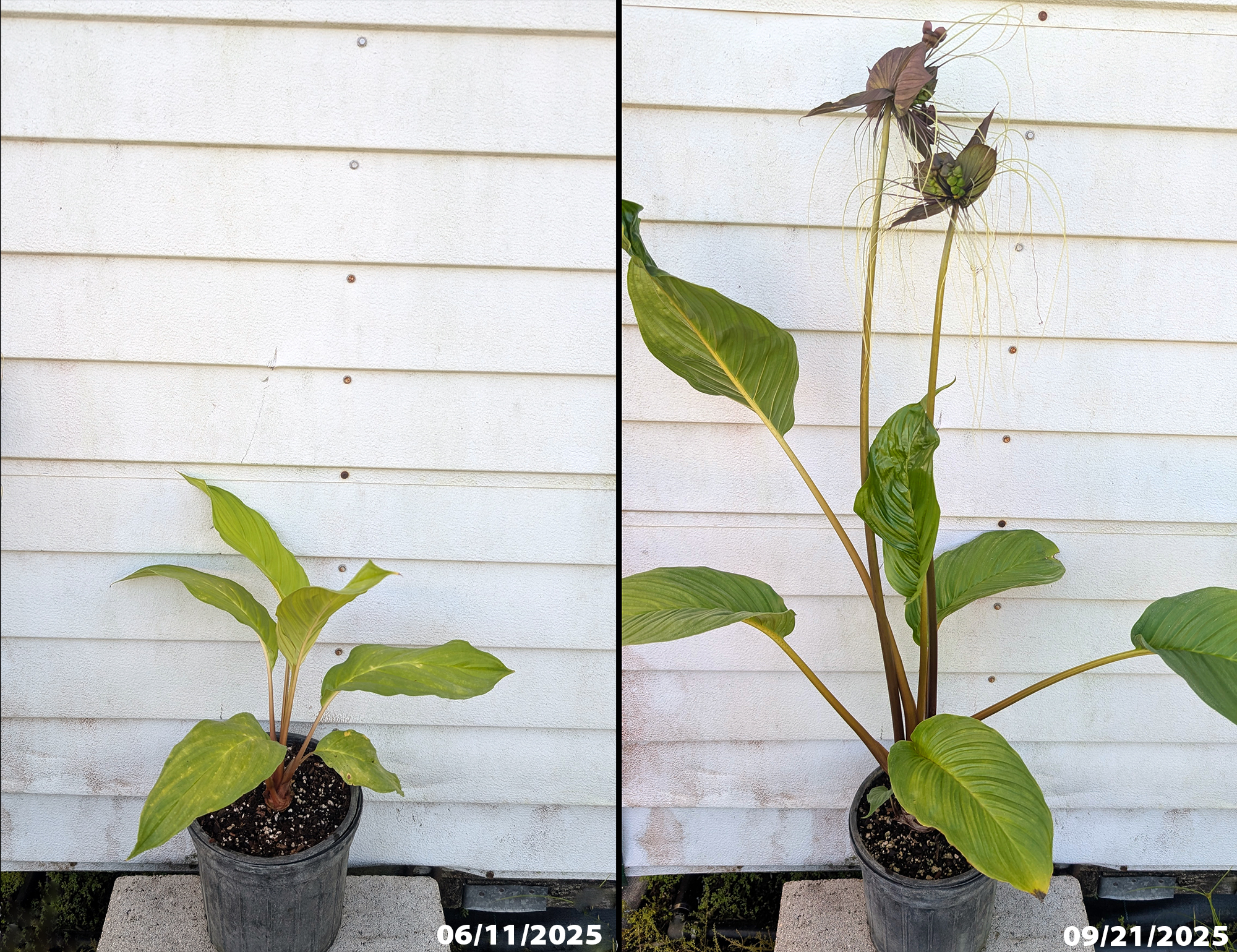
Tacca (bat flower) showing vigorous growth and producing flower buds in
the
same season after feeding with Green Magic.
Swipe left/right to see all data
↔️
📊 Seasonal feeding schedule with Green Magic and Sunshine Boosters.
Season
Product
Method
Goal
Spring (March)
Green Magic
Soil Surface
6-month steady nutrient base.
Growing Season
Sunshine Boosters
Foliar (Every 5-7 days)
Calcium & Bio-available growth power.
Late Summer
Green Magic
Soil Surface
Replenish foundation for Fall.
Winter
Sunshine Epi
Foliar/Drench
Cold tolerance and shipping recovery.
Quick Dose Reference
Green Magic: 1 teaspoon per 1 gallon of soil
volume.
Sunshine Boosters: 25 ml (5 tsp) per 1 gallon of
water.
Pro Tip: Always spray in the early morning or late
evening to prevent leaf scorch and ensure maximum absorption through the
stomata.
Why is the "Spring Fertilizer Rush" a problem?
Most gardeners apply a large amount of traditional fertilizer once in
March. This creates a "roller coaster" effect where plants get a sudden
spike of
nutrients followed by weeks of starvation. This leads to inconsistent growth
and potential "fertilizer burn."
What is "fertilizer burn"?
Traditional fertilizers are made of soluble salts. When too many salts
accumulate around the roots, they actually pull water out of the plant
tissues
(osmosis), dehydrating the plant and damaging sensitive root tips and leaf
edges.
Is there a difference between "Slow-Release" and
"Controlled-Release"?
Yes.
Slow-Release: Relies on natural factors like moisture
and soil microbes to break down. It is often unpredictable.
Controlled-Release: Uses engineered polymer membranes
(like Polyon) to release nutrients at a specific, predictable rate based
primarily on temperature.
Green Magic & Temperature
How does temperature affect my fertilizer?
Most fertilizers are lab-tested at 75°F. In hot climates
(90°F+), the nutrients release much faster. A "6-month" fertilizer
might only last 3
months in the summer heat.
How should I adjust Green Magic for my local weather?
Cooler Climates (<60°F): Increase the
application rate by 20%.
Hot Climates (> 80°F): Decrease the application
rate by 20% to prevent over-releasing.
The Calcium Gap
Why doesn't Green Magic contain Calcium?
Calcium salts are highly soluble and can destabilize the polymer coating
used in controlled-release granules. Therefore, most high-quality granules
leave Calcium out. You can provide Calcium by using SUNSHINE Boosters
Why is Calcium so important for new growth?
Calcium is the "bone" of the plant, building strong cell walls. Unlike
other nutrients, it is immobile—the plant cannot move it from old
leaves
to new ones. If you don't provide a constant supply, new leaves and fruit
will
emerge distorted or weak.
Advanced Science & Troubleshooting
What makes Sunshine Boosters "Bioavailable"?
Unlike most liquid fertilizers that use EDTA chelators, Sunshine Boosters
are amino-acid based. They use organic acids and glycine to escort minerals
into the plant, allowing it to incorporate nutrients into its proteins
almost
immediately.
Will these fertilizers affect the taste of my fruit?
No. Sunshine Boosters are made from pharmaceutical-grade components and
contain no urea or harmful salts, ensuring your harvest (like Mangoes or
Avocados) has a pure, natural flavor without a chemical aftertaste.
Avocado Plant Facts
Botanical name: Persea americana, Persea gratissima Also known as: Avocado, Alligator Pear, Aguacate, Abacate
USDA Zone: 9 - 11
Highligths
✨ Green Magic
- 15% Off This Week
Give Your Plants a Strong Start This Spring
Green Magic - 15% OFF.
Build the foundation for the entire growing season with a steady,
long-lasting nutrient base.
No coupon needed. The discount is automatically applied at
checkout.
Offer valid through 03/21/2026. Discount applies to Green
Magic products only. Not valid on previous purchases and cannot be combined
with other promotions or discounts. Offer subject to change without notice.
Sunshine: So Green Magic feeds the plant for months. Does
that mean I can forget about Sunshine Boosters?
Smokey: Not quite. Green Magic is the steady base diet.
Sunshine Boosters are the weekly power drink during active growth.
Sunshine: Ah. Like my regular meals and donuts on top.
Smokey: Exactly. Plants eat slowly from Green Magic, and
once a week they get a fresh boost.
Sunshine: Sprinkle once, then boosters every week. The
plant grows, I drink coffee, and nobody forgets anything important.
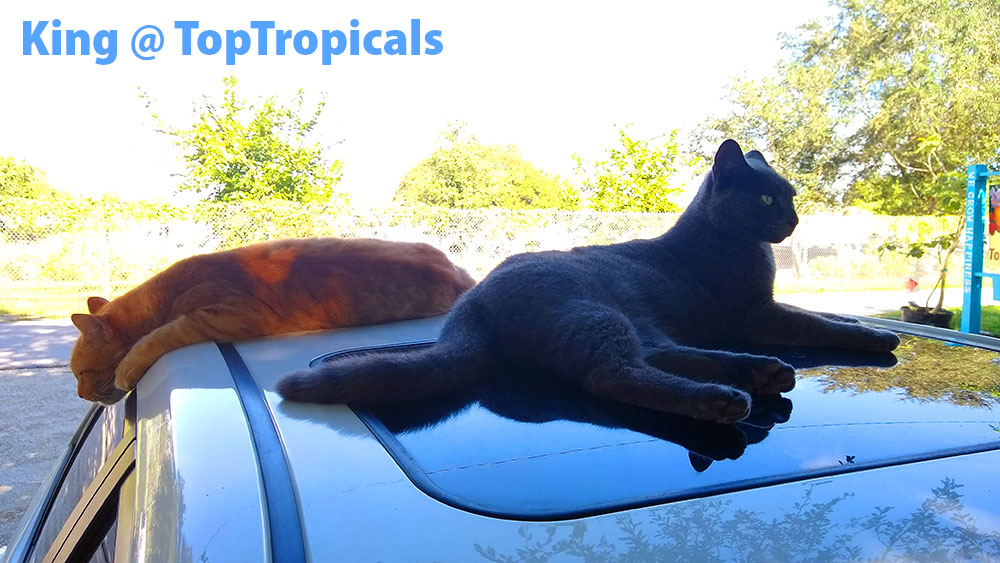
PeopleCats of TopTropicals. Cat of The Month: Greenhouse King
King continues being on top of the poll... thanks to his adventurous
nature. This Purrrson just loves to travel! He likes driving and biking. How many times we pulled him out of customer's car or delivery truck!
Sure thing, he just did it again, joining contractor's team. Luckily he was noticed hiding in the back of the truck before the driver hit the highway!
ATTENTION VISITORS!
We are reminding you, please check your vehicles for cats before you
leave!
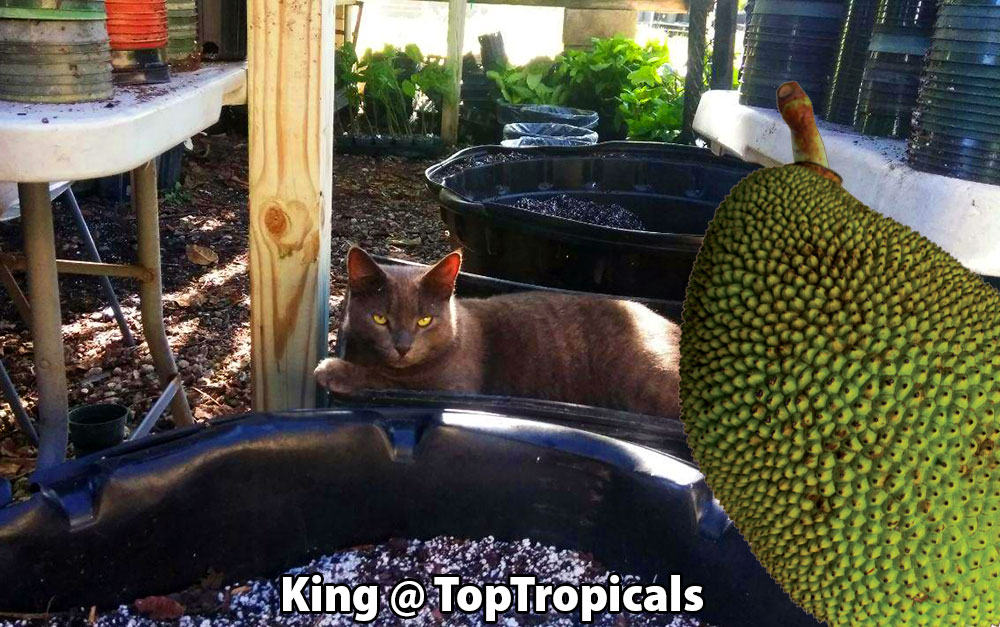
On a bright side, King has been very helpful, helping to plant newly
arrived plant shipment from Thailand.
For those of you who has been waiting for rare plants, after a long delay
due to airlines lockdown, we finally got lots of rare stuff and it will be
ready for shipping soon.
Please make sure to add to your wish-list these coming-soon rare plants, this is the only
way we can ensure you will get notified when they are available for sale, on
first come first serve basis. These are limited quantities, high demand plants!
Don't miss your dream plant! Just click on "Notify me when available" and add your email to waiting list.
Limited quantities - will be ready soon
(planted with King's help)
Thank you for supporting us in helping PeopleCat Community! Make
your kind donation today and receive a surprise gift from us! Every little
bit helps. Thank you and God bless you and your pets!
Date: 8 Apr 2020
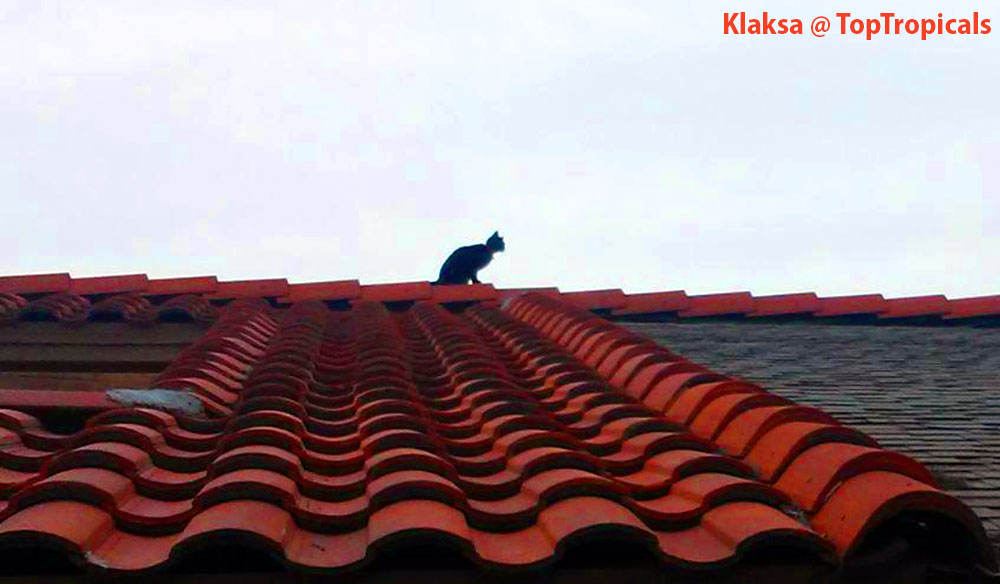
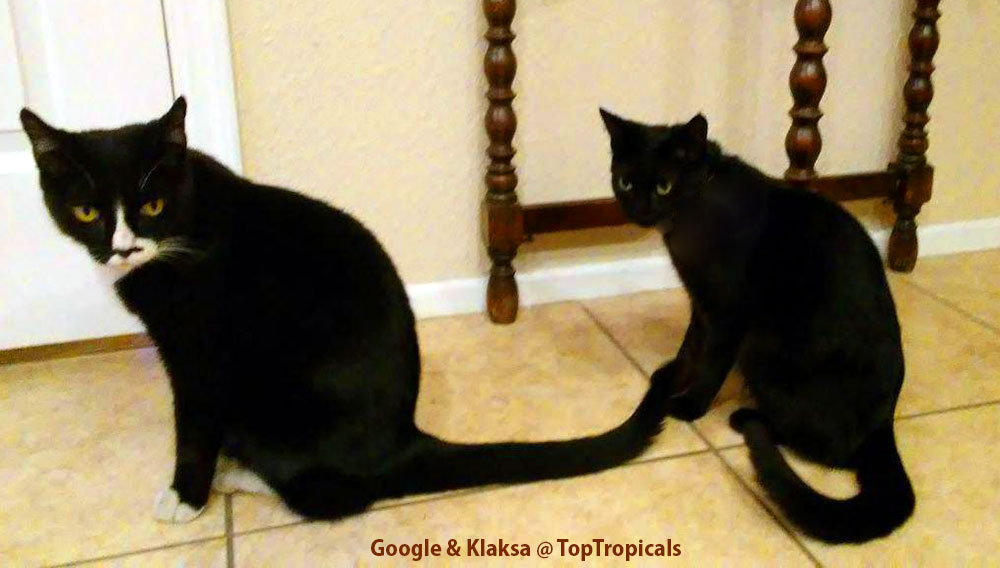
PeopleCats of TopTropicals. Cat of the Day: Klaksa, the Bird Purrrson
Klaksa is a tiny cat. She is almost 4 years old but she weighs only 6
pounds!
Klaksa considers herself a serious hunter. She spends her days chasing
birds on neighbors' roofs. With very little success though. However she never
gives up her dream to catch a Bird of Paradise.
In the meantime, she has been only catching the Birds of Paradise from our garden. No birds were hurt in the process so
far!
Can you find a cat in the picture?
In the photo: Mini-Klaksa with her full-size buddy
Google
TopTropicals PeopleCat Club
Thank you everybody for supporting us in helping PeopleCat Community! Donations accepted from our website. Thank you and God bless you and your pets!