Secrets of Real Mango
Flavor

A colorful mix of mango varieties - different shapes,
colors, and flavors all in one harvest.
Mangifera indica
Mango
USDA Zone: 9 - 11
 Mango Practical Growing Tips (Keep It
Simple)
Mango Practical Growing Tips (Keep It
Simple)
- Sun: Full sun is key. 6–8+ hours daily for best
growth and fruiting.
- Soil: Excellent drainage is critical. In pots, use
well-draining mix with added perlite or sand. Mango does not like wet
roots.
- Watering: Water deeply, then let soil dry slightly
before watering again. Avoid constantly wet soil.
- Containers: Excellent for pots. Condo mango varieties
stay compact and are easy to manage on patios.
- Feeding: Light but consistent feeding during active
growth makes a big difference. Use controlled-release Green
Magic for steady nutrition, and supplement
with liquid Sunshine
Boosters Mango Tango during warm months to push growth and
fruiting.
- USDA Zones: Best suited for Zones 9b–11. In Zone
9b, choose a warm, protected microclimate (south-facing wall, patio, or near
structures) and be prepared to protect during cold snaps. In Zones
10–11, mango grows reliably in-ground. If you live in colder zones,
grow in a pot so you can
move the tree indoors or protect it during cold weather.
- Cold Protection: Protect young trees during cold
nights. Use cover or place near a wall or warm microclimate. Mature trees
are more tolerant.
- Airflow: Good airflow helps prevent disease and keeps
growth clean.
- Spacing: Give the tree room for light and airflow. Even
compact trees benefit from space.
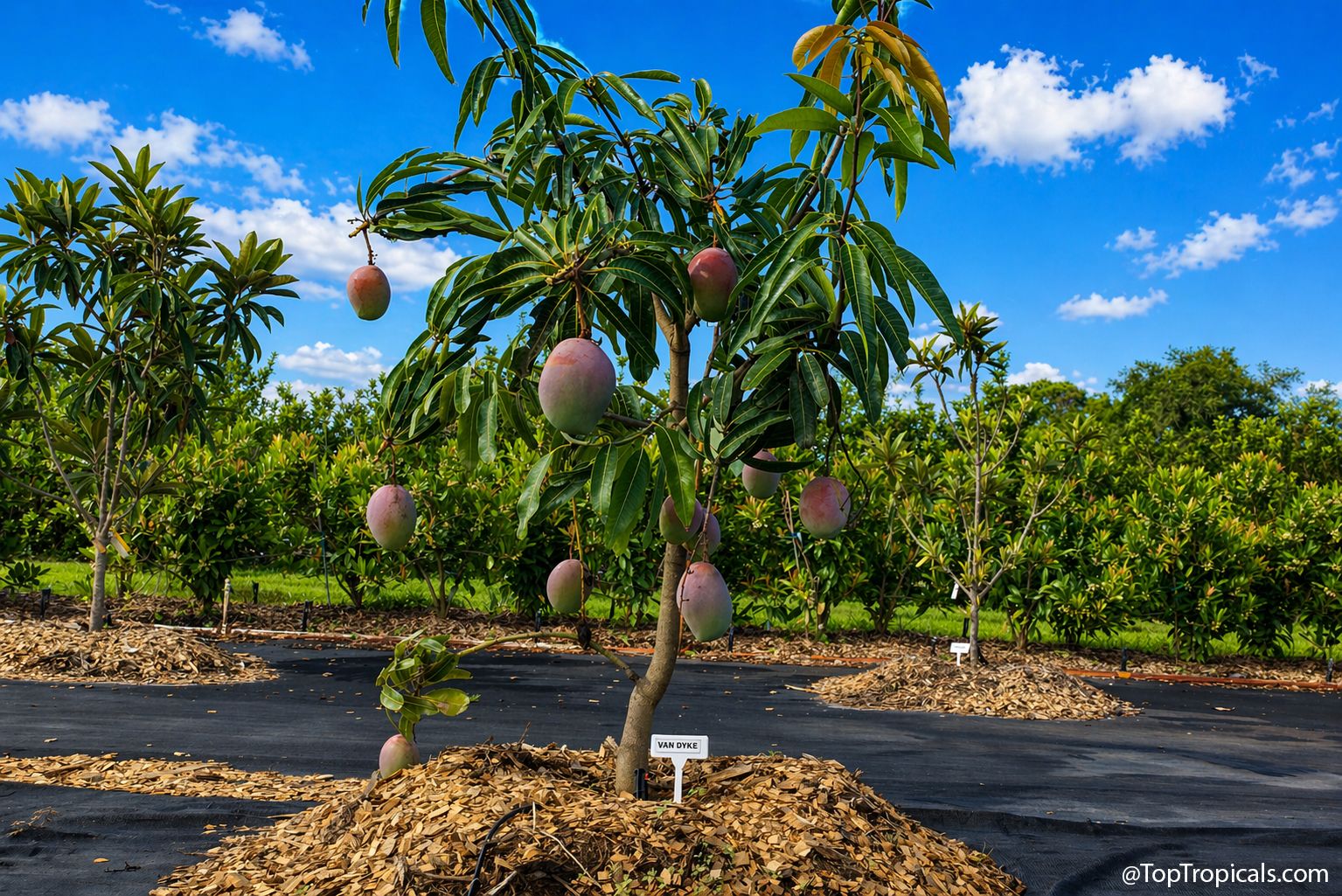
A fruiting mango tree Van Dyke in the grove, heavy
with developing mangoes and enjoying full sun.
 Mango Winter Care (Very Important)
Mango is not a truly cold-hardy plant. It performs best in USDA Zone 9b
and warmer, where freezes are rare and short. In borderline areas, winter
protection becomes part of the routine. Mango trees should be covered during
cold nights, and planting near a south-facing wall helps protect from cold
winds. That small microclimate can make a real difference. If your winters
are less predictable, growing mango in a container becomes the simplest
solution. It gives you full control — you can move the tree to a
protected space when temperatures drop, and bring it back into the sun when
conditions improve.
That is where condo mango varieties make the most sense. They are
naturally compact, easier to manage in pots, and still produce full-size,
high-quality fruit. You get all the benefits of a mango tree
without needing a large yard or perfect climate — just sun, a
container, and a bit of seasonal movement when needed.
📚 Mango tips from our Blog
Growing Mango in a Pot (Condo Mango Made Easy)
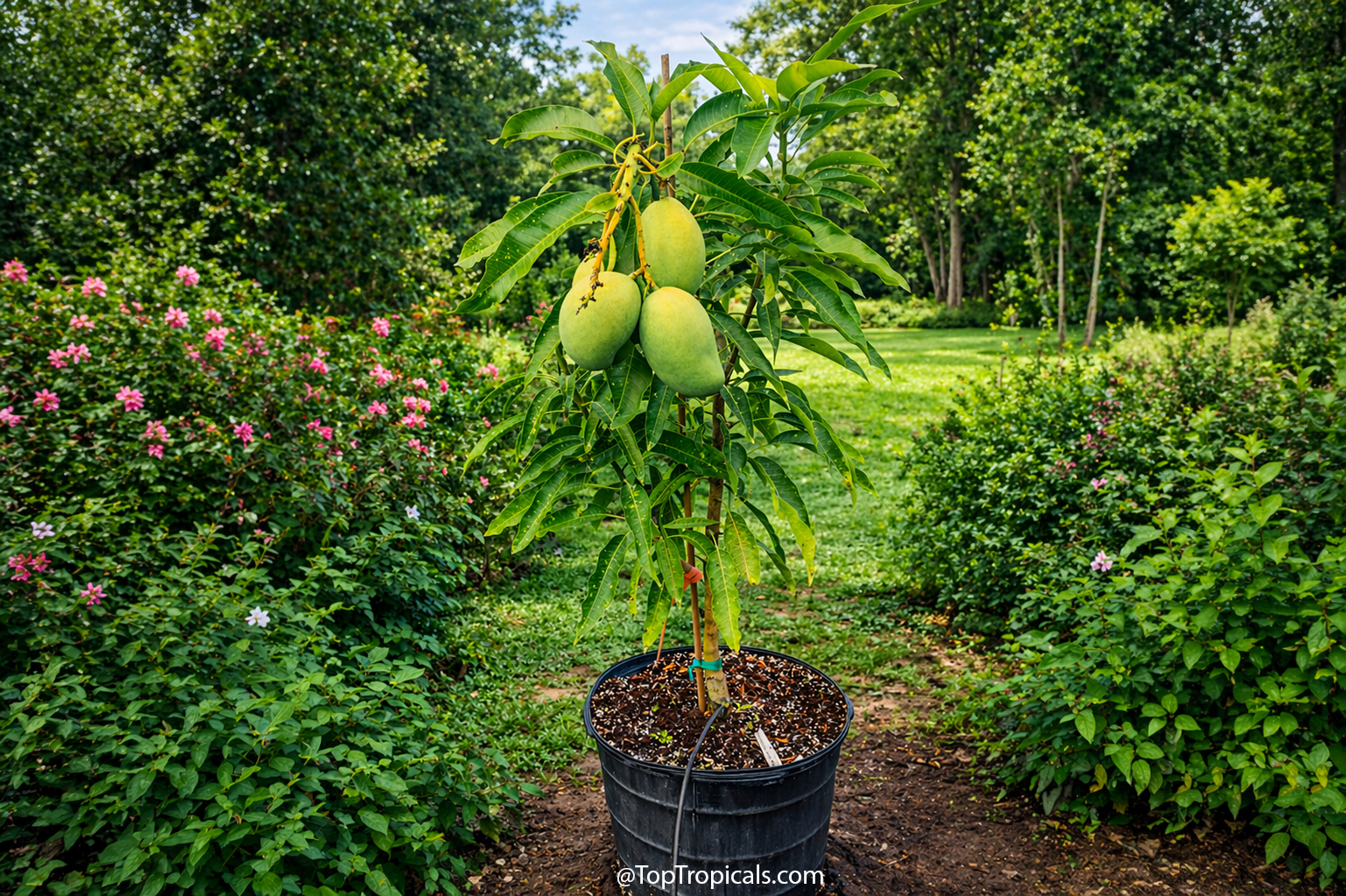
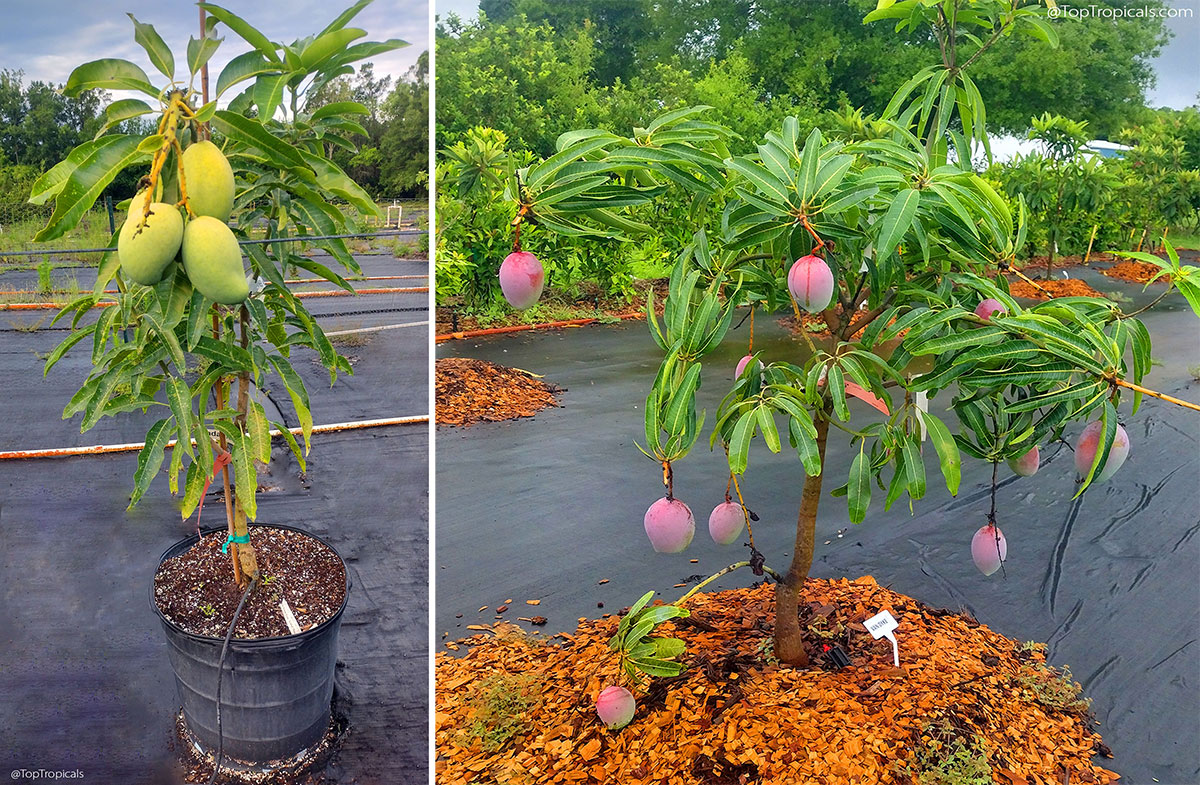
Young mango tree in a container, already holding fruit
and thriving in a sunny garden setting.
Growing mango in a container is one of the easiest ways to control size,
soil, and winter protection. Condo mango varieties stay naturally compact
and adapt well to pots, making them ideal for patios, small spaces, or
colder climates. You get full flexibility — move the tree when needed,
manage its growth, and still enjoy real tree-ripened fruit.
- Pot size: Start with 3–7 gallon, move up to
15–25 gallon as the tree grows.
- Soil: Use fast-draining mix such as Abundance soilles mix.
- Sun: Place in full sun. More light = better growth and
fruiting.
- Watering: Water deeply, then let soil dry slightly
before next watering.
- Feeding: Use controlled-release Green
Magic for steady nutrition, plus liquid Sunshine
Boosters Mango Tango during active growth.
- Climate Flexibility: Can be grown in any USDA zone when
kept in a container. Simply move indoors or to a protected area during cold
weather to keep the tree safe.
- Pruning: Light pruning keeps the tree compact and
productive.
Once you taste a real mango from your own tree, everything changes. It is
no longer something you buy — it is something you grow, wait for, and
look
forward to every season. What felt like hype suddenly makes sense. The
passion people have for mango is not exaggerated — it just comes from
a completely different experience.
And for people who have never tasted a fresh, juicy mango warmed by the sun,
that moment comes as a surprise — the first time they realize what
mango is actually supposed to taste like.
As Smokey quietly puts it: Now you know.
📚 More about Condo
Mango
🛒 Shop Condo Mango
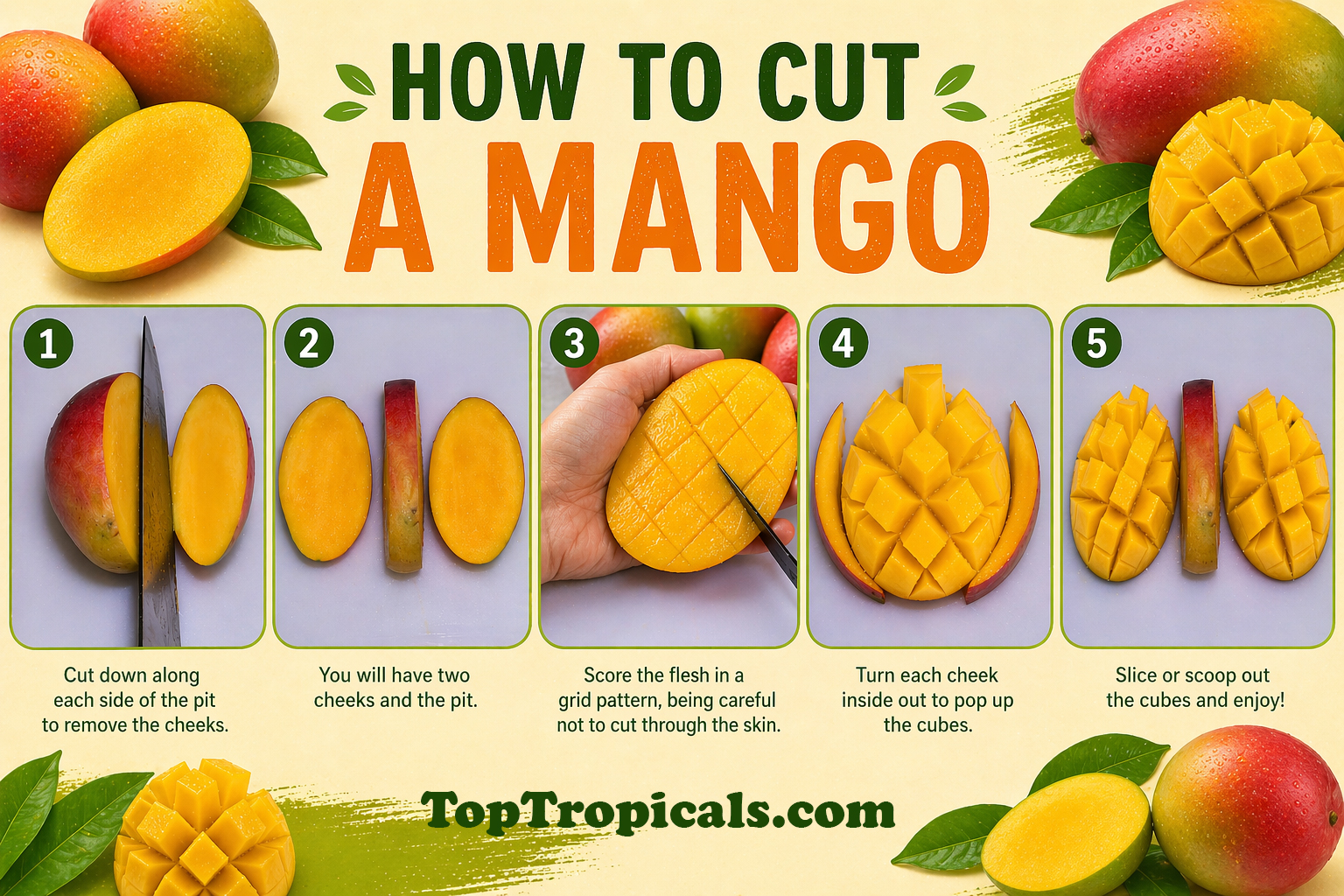
Simple step-by-step guide to cutting a
mango into clean, easy cubes - from slicing off the cheeks to popping and
scooping the fruit.
🎥 Watch Mango
videos
🛒 Shop Mango
Trees
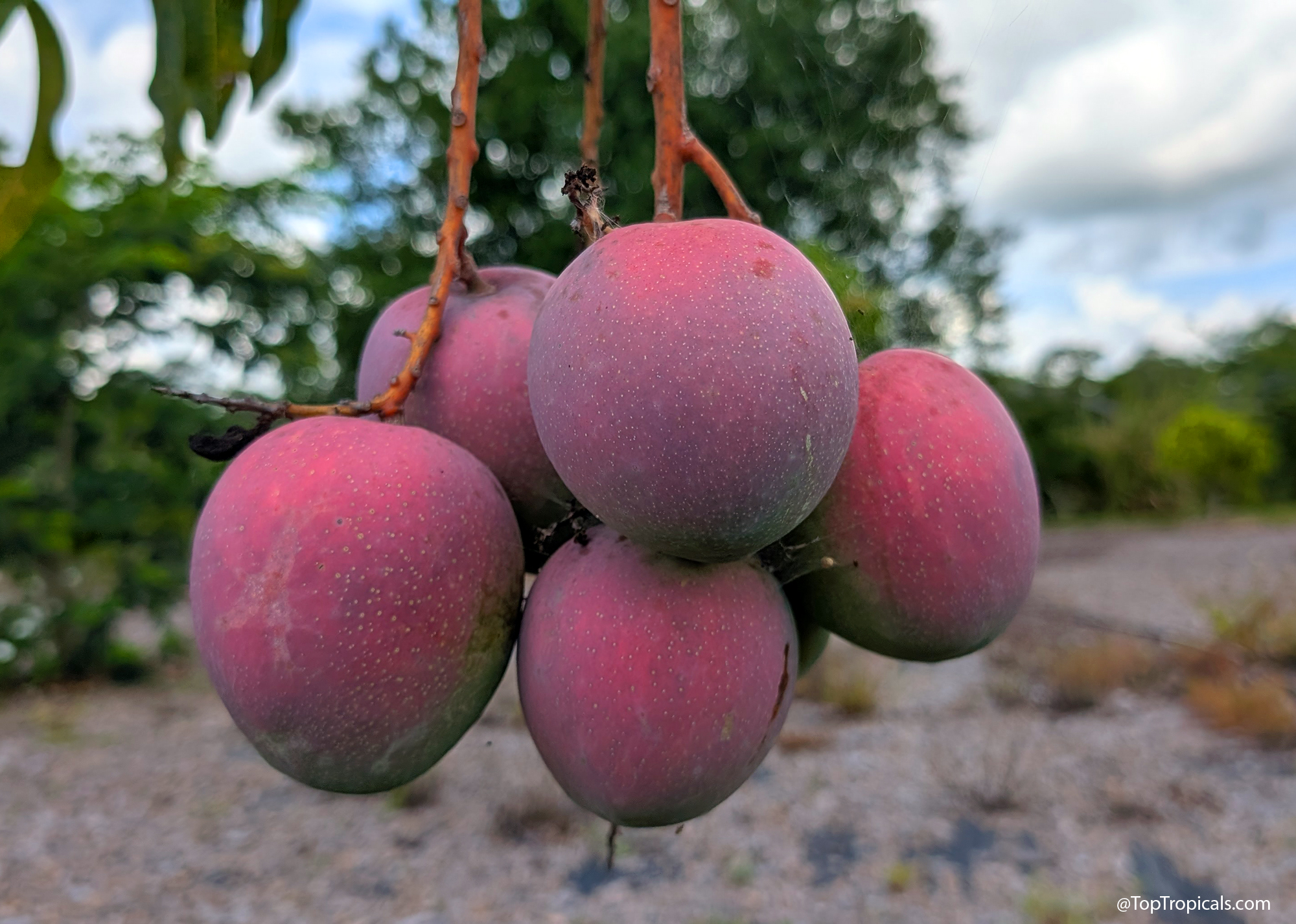
Cluster of ripening mangoes developing rich color on
the tree just before harvest.
 Taste the Mango Difference - Save 10%
Once you taste a real mango from your own tree, everything changes. Now you
know. Get 10% off with coupon code
MANGO2026 on 3 gal mango trees.
Offer valid through 04/28/2026.
Discount applies to 3 gal plants only. Not valid on previous purchases and
cannot be combined with other promotions or discounts. Offer subject to
change without notice.