Garden Blog - Top Tropicals

Date: 26 Dec 2025

Blackberry warm smash: quick-n-fun exotic recipes

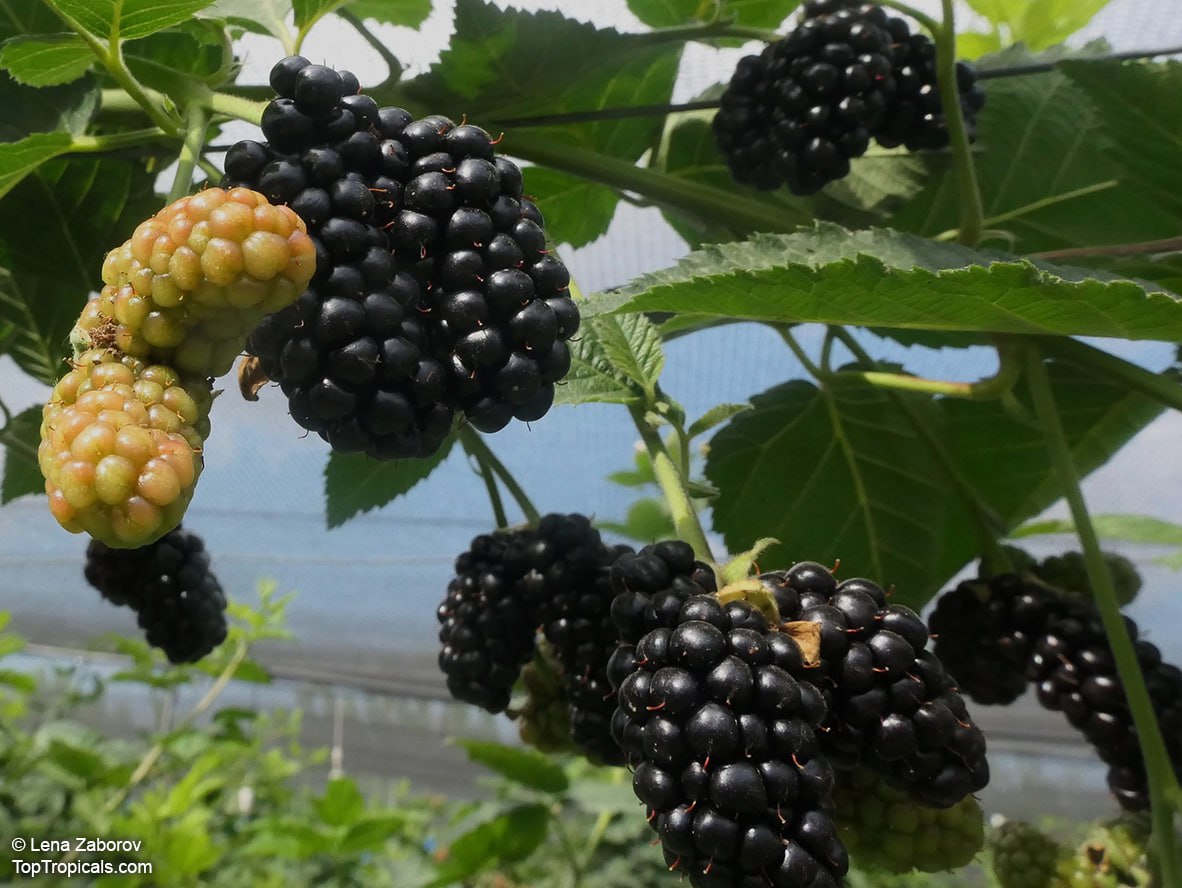
Blackberry warm smash

Blackberry warm smash

Blackberry fruit - Rubus hybrid

Blackberry fruit - Rubus hybrid

🍴 Blackberry Warm Smash Recipe

Ingredients

  • 1 cup fresh or frozen blackberries (Rubus sp.)
  • Optional: 1 tsp honey or sugar
  • Thick yogurt or toasted bread, for serving

Instructions

  1. Add blackberries to a small pan and warm over medium heat.
  2. Cook until berries soften and burst, about 3 to 5 minutes.
  3. Lightly mash with a spoon. Sweeten if desired.
  4. Spoon warm blackberry smash over yogurt or toast and serve immediately.

🛒 Grow your own Blackberries - hardy and productive plants

📚 Learn more:

Brazos Blackberry Plant Facts

Botanical name: Rubus sp.
Also known as: Brazos Blackberry, Black Raspberry
USDA Zone: 5 - 9
Highligths Large shrub 5-10 ft tallVine or creeper plantFull sunWatering: Moderate. Water when top soil feels dryThorny or spinyEdible plantDeciduous plantSubtropical plant. Mature plant cold hardy at least to 30s F for a short time
Get personalized tips for your region

Blackberry (Rubus sp.) in Plant Encyclopedia
Fruits with the most vitamin E, according to dietitians

#Food_Forest #Recipes

🟢 Join 👉 TopTropicals

Date: 9 Jan 2026

Moringa leaves made simple - daily benefits and 6 easy recipes

Moringa oleifera leaves and flowers
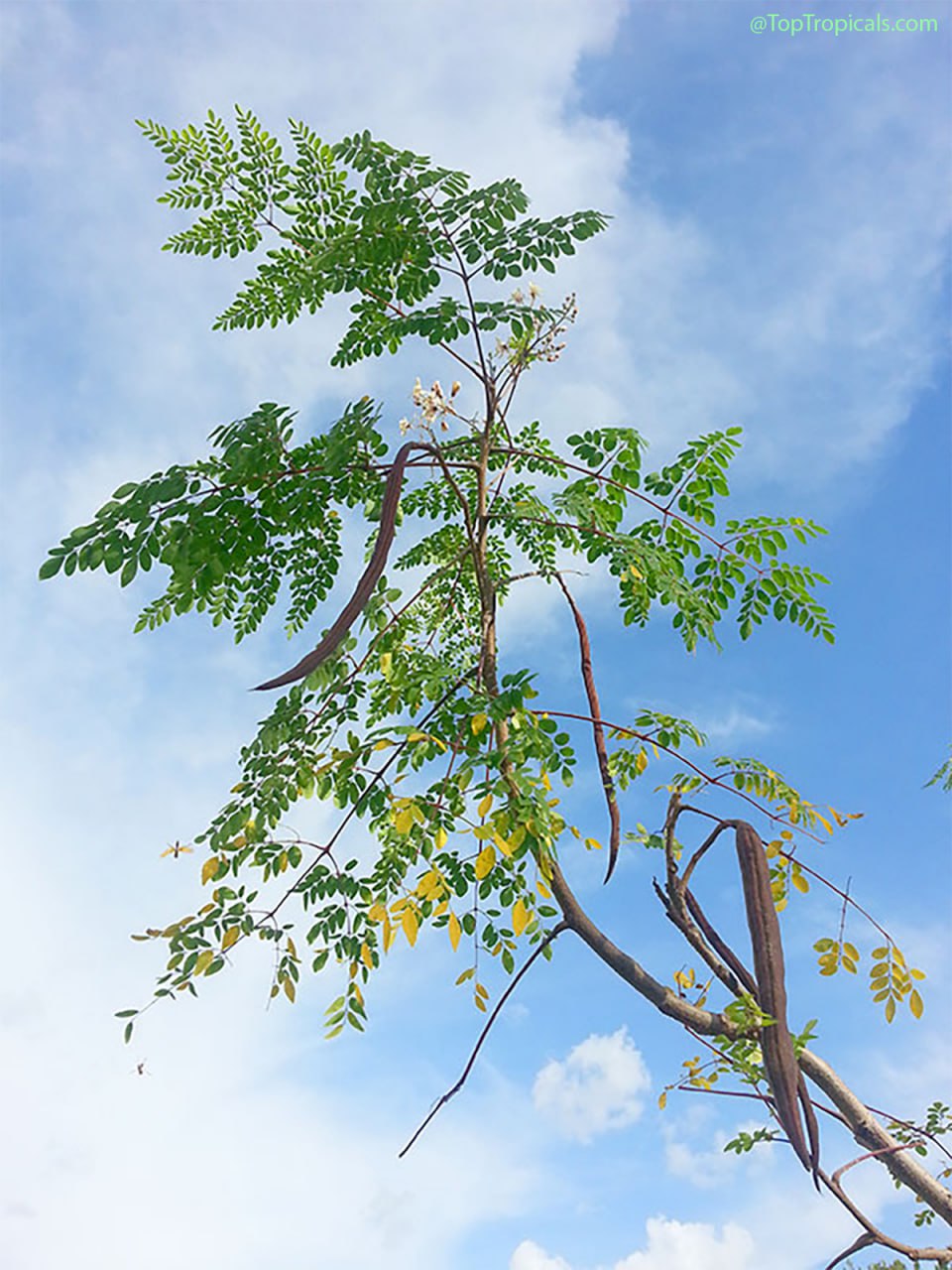
Moringa oleifera leaves and flowers

Moringa oleifera leaves on a branch

Moringa oleifera leaves on a branch

🌳 Moringa leaves made simple - daily benefits and 6 easy recipes


Moringa tree is called the Tree of Life for a reason. Moringa leaves, often called miracle greens, are packed with vitamins A, C, and E, calcium, iron, potassium, and plant protein. Regular use supports immunity, digestion, skin health, energy levels, and overall vitality. Traditionally, moringa has also been used to support blood sugar balance, heart health, and inflammation control thanks to its rich supply of antioxidants and bioactive compounds like flavonoids and polyphenols.

❤️ Key benefits of eating moringa leaves daily:


🌿 Supports blood sugar balance


Moringa may improve insulin sensitivity and help stabilize blood sugar, reducing sudden energy crashes. Regular intake has been linked to better glycemic control and reduced inflammation.

🌿 Improves digestion


High fiber supports gut health, while natural detoxifying compounds help liver function. Moringa may also promote healthy gut bacteria and improve digestion regularity.

🌿 Fights inflammation


Moringa leaves contain compounds that help reduce inflammatory markers in the body, supporting joint, heart, and overall cellular health.

6 easy moringa recipes to try


🌿 Moringa laddoo


Roast whole wheat flour in ghee, add fresh moringa leaves, jaggery, nuts, sesame seeds, and cardamom. Shape into laddoos and store airtight.

🌿 Moringa smoothie


Blend fresh moringa leaves, banana, curd, honey, and water. Top with soaked chia seeds and drink fresh.

🌿 Moringa dal


Cook toor dal with turmeric. Saute moringa leaves, onion, tomato, garlic, and chilies in ghee, mix into dal, and finish with cumin and asafoetida tempering.

🌿 Moringa paratha


Knead wheat flour with moringa leaves, onion, spices, and salt. Roll and cook on a hot tawa with oil or ghee.

🌿 Moringa chutney


Grind moringa leaves with coconut, green chilies, ginger, lemon juice, and salt. Serve fresh.

🌿 Moringa tea


Simmer fresh or dried moringa leaves in water for a few minutes, strain, and enjoy warm with honey or lemon if desired.

🛒 Grow your own Tree of Life - Moringa

📚 Learn more:

Horseradish tree Plant Facts

Botanical name: Moringa oleifera, Moringa pterygosperma
Also known as: Horseradish tree, Ben Oil Tree, Coatli, Drumstick tree, Bridal veil, Miracle Tree
USDA Zone: 9 - 11
Highligths Plant used for bonsaiLarge tree taller than 20 ftSmall tree 10-20 ftFull sunWatering: Moderate. Water when top soil feels dryWhite, off-white flowersEdible plantPlant attracts butterflies, hummingbirdsDeciduous plantEthnomedical plant.
Plants marked as ethnomedical and/or described as medicinal, are not offered as medicine but rather as ornamentals or plant collectibles.
Ethnomedical statements / products have not been evaluated by the FDA and are not intended to diagnose, treat, cure, or prevent any disease. We urge all customers to consult a physician before using any supplements, herbals or medicines advertised here or elsewhere.Fragrant plantSubtropical plant. Mature plant cold hardy at least to 30s F for a short time
Get personalized tips for your region

· Moringa oleifera in Plant Encyclopedia
· Moringa omelet recipe
· Moringa vs spinach: which one wins for nutrition?
· What edible plants and herbs can reduce your blood pressure
· Top 12 Eye-Supporting Fruit and Plants for Vitamin A - Retinol
· Memory & Cognitive Support (Brain Boosters) Edible Plants and Herbs
· How to grow drumsticks on a tree
· What is the most useful tree in the world?
· How to grow a happy Moringa Tree

#Food_Forest #Remedies #Discover #Trees #Recipes

🟢 Join 👉 TopTropicals

Date: 19 Jul 2025

☀️ When tropical plant takes a Summer break

Tropical  landscape

Why your plants might stop growing in mid-Summer
and what to do about it

Q: Why some tropical plants stop growing when it gets too hot? Aren't they supposed to like the heat? Should I use more fertilizer during hot Summer?

You've been watching your tropical tree thrive all spring. New leaves, steady growth, maybe even a flower or two. Then July hits, and… nothing. The heat cranks up, and your once-busy plant just sits there. No new shoots, no blooms, not even a twitch. If it feels like your plant ghosted you - but don't worry! It's not dying. It's just hot!

Q: What happens to tropical plants when it gets extremely hot?

When the heat hits, plants hit pause. In the peak of summer, especially with temperatures above 90F, many tropical and subtropical plants go into heat survival mode. Growth above ground may slow down or stop entirely. It's not because you forgot to water or skipped a fertilizer dose - it's just too hot. The plant's energy shifts underground, where roots may still be growing. Think of it like a tropical version of a siesta - less margarita, more mulch. This stage might last a few weeks or longer, depending on how intense the heat gets. But the important thing is: it's normal.

Q: What NOT to do?

  • Don't drown it in extra water. That leads to root rot.
  • Don't dump dry fertilizer on it. That can burn the roots or just get flushed away. Use controlled release or liquid fertilizer dozed proportionaly to the plant's water usage.
  • Don't prune aggressively, hoping to jolt it awake.

None of that helps - in fact, it can make things worse.

Q: What you CAN do?

  • Water deeply in the early morning, and let the soil dry a bit between waterings.
  • Add mulch to help keep the root zone cool and reduce evaporation.
  • Provide temporary shade for potted plants or young trees.
  • Hold off on pruning or heavy feeding until you see new growth.

Just like you wouldn't run a marathon in a heatwave, your plant needs a break too.

Q: Why you shouldn't fertilize stressed plants with dry fertilizer?

Fertilizing seems like the obvious solution when a plant stalls, but in the heat of summer, it can backfire. When temperatures soar, roots slow down, and absorption becomes inefficient. You might pour in nutrients, but your plant can't use them - and what's worse, any tender new growth that does emerge can get scorched or sunburned before it has a chance to harden.

Feeding a plant with strong fertilizers during a heatwave is like telling someone to sprint in a sauna. It's not just unhelpful - it's risky. That's why you need a fertilizer that’s engineered for hot weather - not just any slow-release formula.

Liquid Sunshine Boosters mild formulas are safe to use year around. Controlled release fertilizer like Green Magic are safe as well, just make sure to follow directions and dosage.


Q: Why Green Magic fertilizer works in heat better that Osmocote?

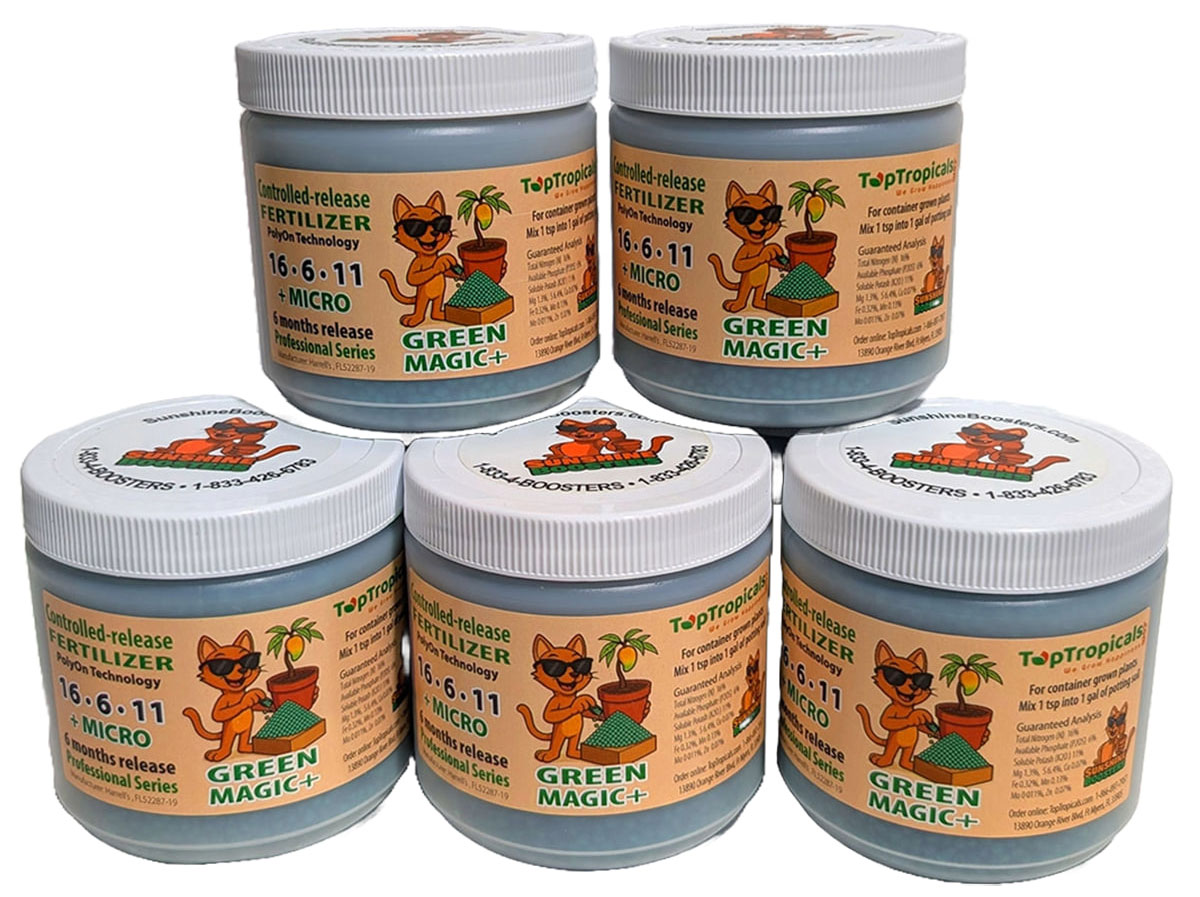
Green  Magic  controlled  release  fertilizer

Not all slow-release fertilizers are built for hot summer. Some popular brands might seem like a good choice - but they’re optimized for soil temperatures around 70-75F. That's a mild Spring day in the South, but in real-world Florida or Arizona heat? Not even close.

Here's the problem: Osmocote releases nutrients based on moisture, not temperature. When it's hot and humid - or worse, when you water heavily - it can dump too many nutrients at once. That nutrient surge can:

  • Burn your plant's roots
  • Force tender new growth that gets fried in the heat
  • Leach straight out of the pot, wasting both fertilizer and money

It's unpredictable, especially in containers that heat up faster than ground soil. What you think is "slow-release" can behave more like a fertilizer bomb.

Green-Magic, by contrast, uses a temperature-sensitive polyurethane coating that responds gradually and consistently as the soil warms. That means:

  • No sudden nutrient spikes
  • No wasted runoff
  • And no risk of heat-triggered burn

It's designed to feed steadily and predictably - even when temps hit 90F and stay there. For potted tropical plants, that kind of control is the difference between stressed and thriving.

Q: How does Sunshine Boosters help with daily plant recovery in summer?

Once your plant begins to show signs of life again - maybe a new bud, or evening perkiness - it's safe to resume feeding. But skip the salts, and reach for something gentler: Sunshine Boosters.

These amino-acid based liquid fertilizers are designed for daily use, even in containers during the hottest days. They enhance nutrient uptake, even when roots are stressed or sluggish. Unlike synthetic chelators like EDTA, Sunshine Boosters won't bind nutrients or burn root system. They stay gentle, available, and effective. Learn more from this short video.

Use SUNSHINE Robusta for foliage support, or Ca-Support PRO for strong structure and recovery. It's like hydration and nutrition in one - perfect for tropical plants fighting through summer heat.

Q: How can I help my plants during extreme heat?

Don't fight the heat - work with it. If your tree looks stalled this summer, don't panic. It's following a rhythm older than all of us. Support it with smart watering, the right fertilizer combo, and a little patience. Before long, you'll see buds again - and know your plant made it through the heat.


Shop fertilizers and garden supplies


Read more plant care tips in Garden Blog

Date: 20 Oct 2023

How to help a weak tree to recover and thrive?

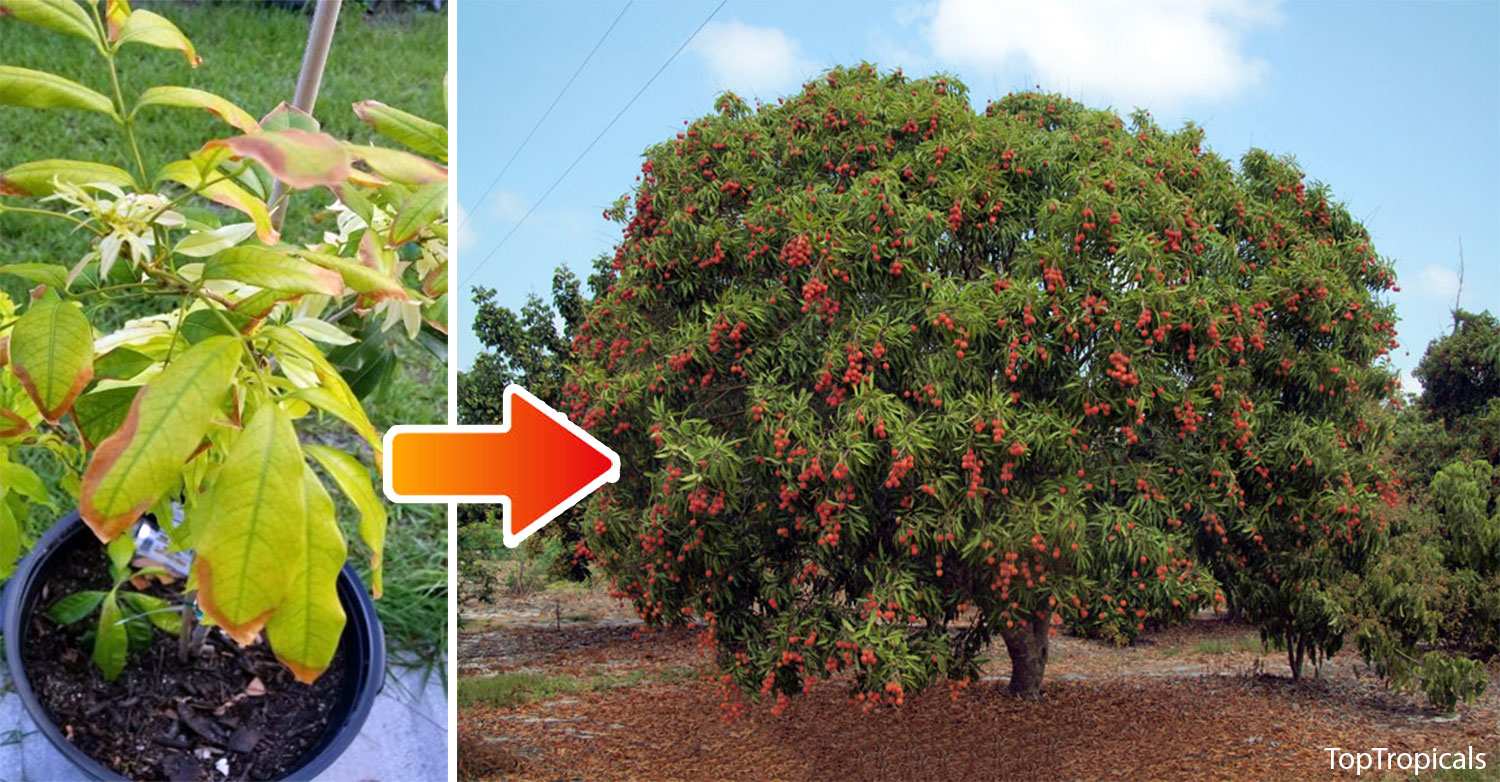
small  and  large  lychee  tree

Q: Look at my sad looking Lychee tree. Can you share with me any ideas about this tree condition?

A: From the photo (left), we see a few potential issues. The problem might be due to a combination of factors such as a heavy potting mix with poor drainage, over-watering, an underdeveloped root system sensitive to these conditions, leaf burn, and a lack of nutrients.

Suggestions for fixing the problem

1. Soil mix. First, assess the quality of the soil. If the plant has been in the same pot for a while, the soil at the bottom may have become compacted, leading to poor drainage. If this is the case, carefully remove the root system from the existing soil (by removing excess soil around the roots without disturbing the roots themselves). Repot the tree into fresh, well-draining potting mix with good drainage characteristics, which typically contains materials like bark and perlite. Ensure that the new pot is exactly the size of the root ball; using a significantly larger pot can lead to soggy conditions that harm the roots.

2. Light. Place the potted tree in an area with filtered light, avoiding direct sunlight throughout the day.

3. Water. Control the watering. During this recovery period, your plant will need very limited water until it shows signs of improvement and new growth. After repotting, water it thoroughly just once, and avoid watering again until the top layer of soil becomes dry. Then, water as needed. Avoid keeping the soil consistently wet, especially during rainy periods. Protect the plant from excessive rain.

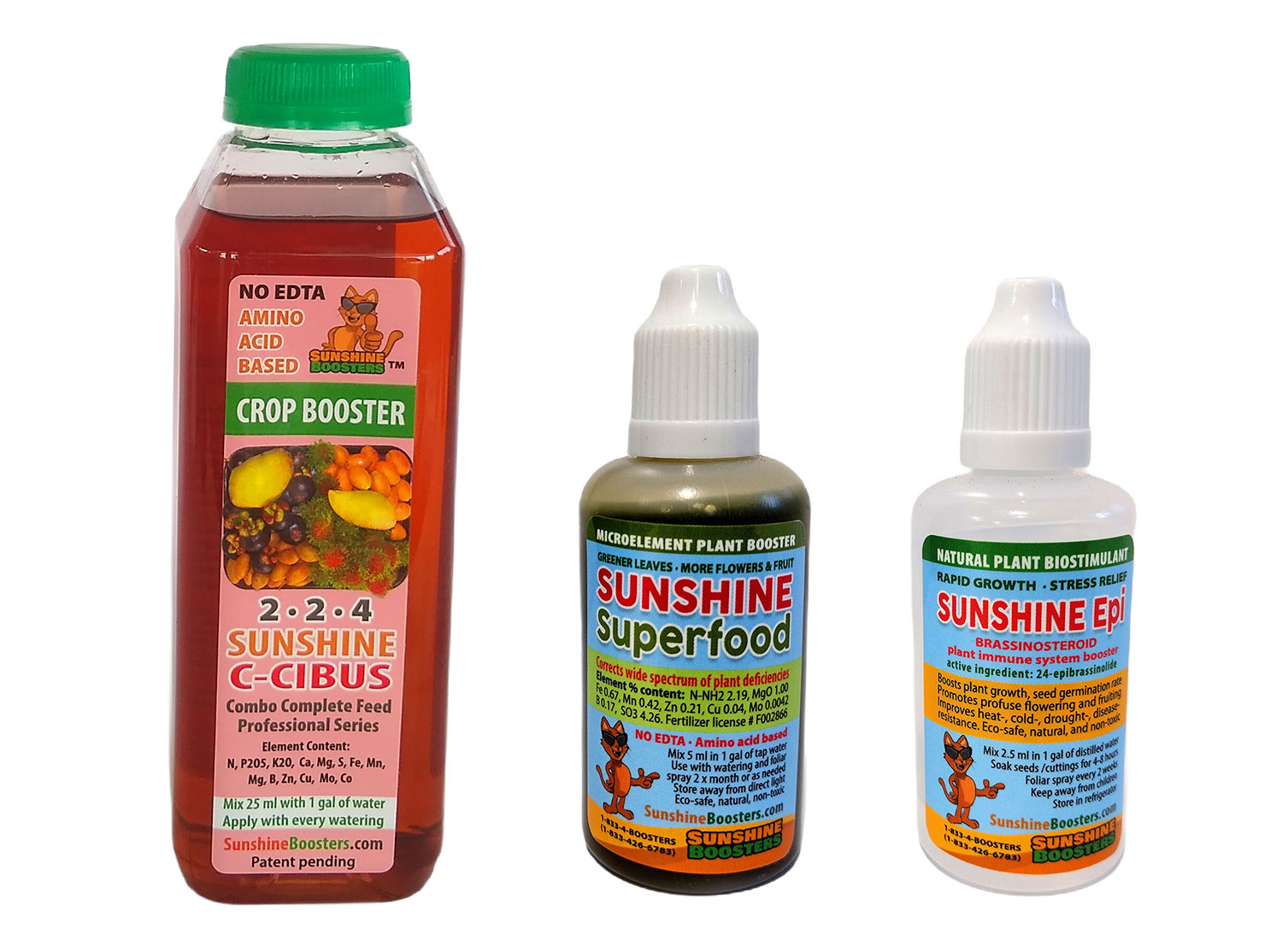
4. Supplements. Consider applying Sunshine Superfood micro-elements following the label instructions, once a month. Additionally, using Sunshine Epi bio-stimulant, sprayed every other week, can help the plant recover from stress and encourage growth. You can also use Sunshine C-Cibus at half the recommended concentration with each watering. Hold off on any other fertilizers until the plant has sufficiently recovered and begins to show signs of new growth.

5. Transplanting. If you plan to transplant the tree into the ground, it's advisable to wait until spring when nighttime temperatures consistently stay above 65F for at least two weeks.

6. Temperature. Keep the tree in a warm environment. When temperatures drop below 50F, bring it indoors.

These steps should help the tree recover, grow healthy leaves, and establish a better root system, preparing it for successful transplantation into the ground or a larger container, ensuring a happy and productive life ahead.

Sunshine  Boosters:  C-Cibus,  Superfood,  Epi

Date: 31 Oct 2025

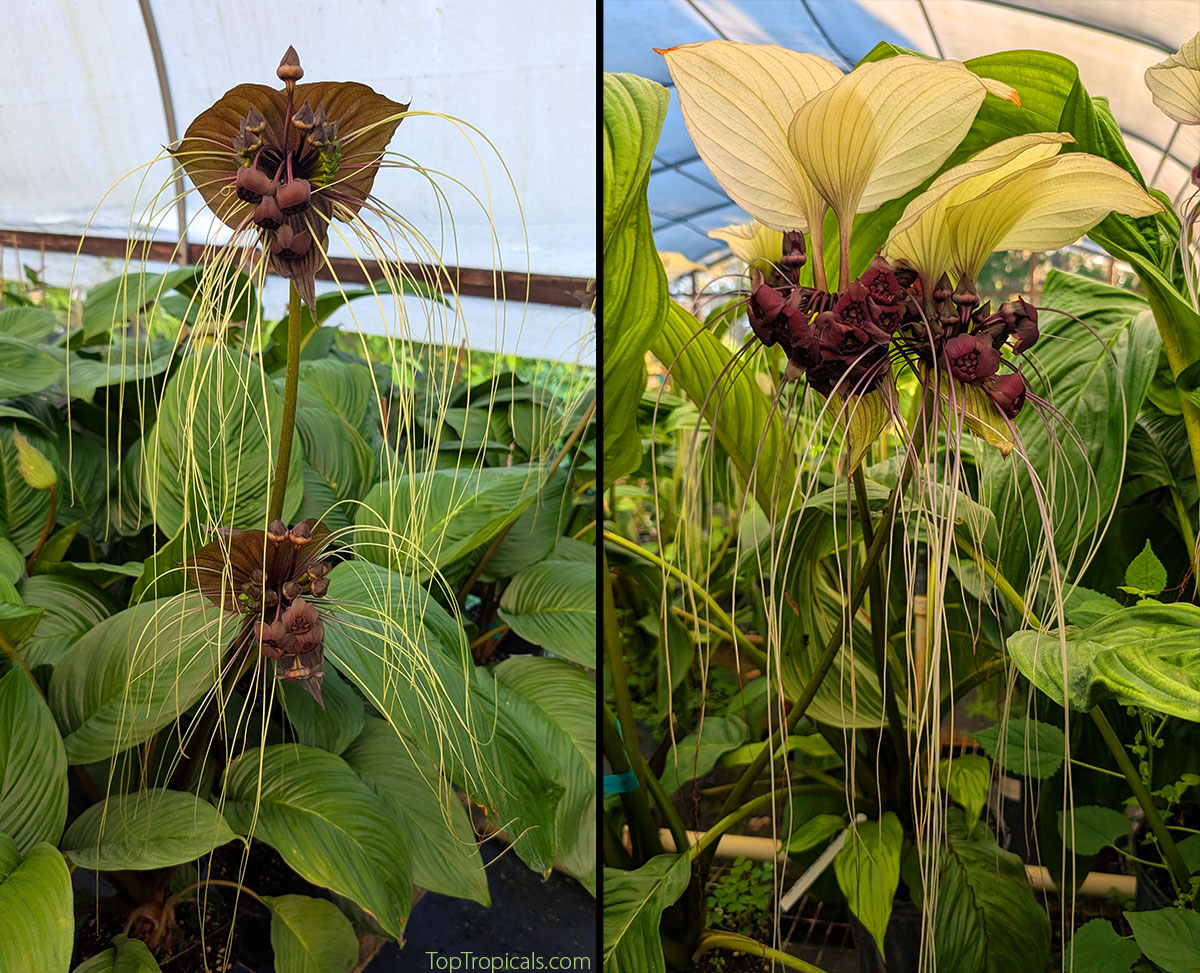
Black  Bat  Lily  and  White  Bat  Lily  plants  blooming  together  in  the  Top 
 Tropicals  greenhouse,  showing  contrast  between  dark  maroon  and  ivory  bracts 
 with  long  trailing 
 whiskers.

Black and White Bat Lilies (Tacca chantrieri and Tacca nivea) side by side in bloom

How to Care for Bat Lilies

by Top Tropicals Plant Expert Tatiana Anderson

🌞 Light

  • Bright, filtered light. Morning sun or dappled shade is perfect.
  • Avoid direct midday sun outdoors — it can scorch the leaves.
  • Indoors, place near a bright window with sheer curtains or use a grow light.

🌡️ Temperature

  • Warm and stable, ideally 70-85 F during the day.
  • Protect from cold drafts or sudden chills.
  • Ideally, do not let temperature drop below 45 F, although Taccas can tolerate short period of upper 30's.

💧 Watering

  • Keep soil evenly moist but not soggy.
  • Water when the top inch feels barely dry.
  • Use lukewarm water.
  • Avoid letting the pot sit in water.

💨 Humidity

  • High humidity (60-80%) is key.
  • Mist leaves often, use a humidity tray, or keep near a humidifier.
  • In greenhouses or bathrooms with a skylight, it thrives naturally.

🌱 Soil

  • Use rich, loose, well-draining mix
  • Combine bark, peat, and perlite for ideal airflow around the roots.
  • Best mix for growing tropical Tacca in pots - soilless potting mix Abundance . It provides perfect drainage and has a texture similar to a jungle rainforest media.

🍽️ Feeding

  • During growth season (Spring through Fall), feed with Green Magic controlled release fertilizer every 6 months. For even better results, you may apply liquid fertilizer Sunshine Boosters Rubusta.
  • Stop feeding dry fertilizer in cooler months when growth slows. Liquid Sunshine Boosters are safe to use with every watering, year around.

🏡 Indoor Growing

  • Great for bright bathrooms, sunrooms, or any warm, humid corner.
  • Rotate pot occasionally for even growth.
  • Keep away from heating vents and AC drafts.

🌴 Outdoor Growing (in warm climates)

  • Partial shade or filtered light under trees.
  • Excellent in large containers that can be brought inside for winter.
  • Shelter from heavy rain and wind.

Sunshine: "So… it’s a diva?"
Smokey: "Exactly. But take care of it - and it rewards you with wings!"
Smokey and Sunshine: "Happy Halloween!"

🎥 Watch Short Videos:

🛒 Grow your own gothic masterpiece:
Shop Bat Head Lily Tacca