Garden Blog - Top Tropicals

Date: 8 Jul 2025

How to grow Dragon Fruit from a cutting - Quick Guide

Dragon fruit, Pitaya - Hylocereus sp.

🌵 How to grow Dragon Fruit from a cutting - Quick Guide

  • 🐉 Get a healthy cutting


    Use a 6-10 inch long stem cutting from a mature dragon fruit plant. Let the cut end dry in the shade for 2-5 days so it forms a callus. This also helps prevent rot and fungus.
  • 🐉 Prepare the soil


    Use well-draining soil - well drained potting mix, Adenium mix, or cactus mix is ideal. Dragon fruit hates wet feet!
  • 🐉 Plant the cutting


    Stick the callused end about 2-3 inches deep into the soil. Make sure it's planted upright (the way it grew on the parent plant).
  • 🐉 Support it


    Add a trellis or post. Dragon fruit is a climbing cactus and needs something to grow on.
  • 🐉 Water lightly


    Water once after planting, then wait until the soil dries before watering again. Overwatering can rot the cutting.
  • 🐉 Give it sun and warmth


    Place in bright, indirect sunlight while it roots. Once established, it can handle full sun.
  • 🐉 Watch it grow!


    Roots usually form in 2-4 weeks. New growth means it's taking off! This is the time to Ferilize it!


🛒Shop Dragon Fruit plants and cuttings

📚 Learn more:


#Food_Forest #How_to #Dragon_Fruit

🟢 Join 👉 TopTropicals

Date: 10 Jul 2025

🐉 New video:
Quick Guide - How to grow Dragon Fruit from a cutting

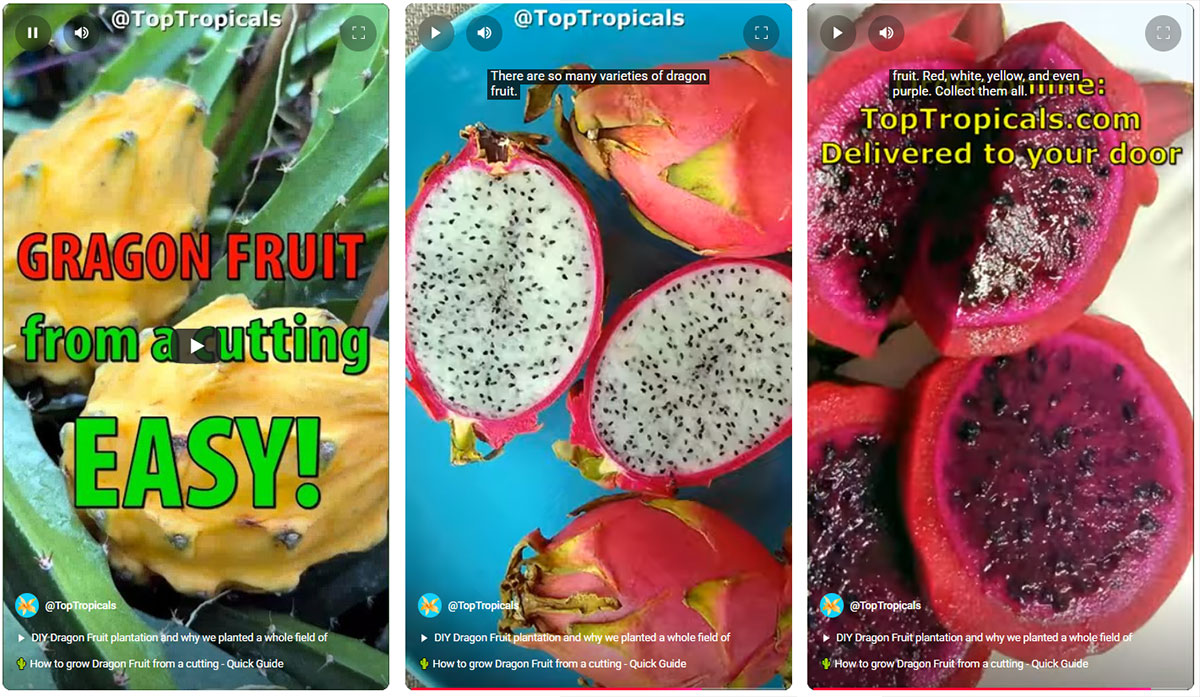
Dragon  fruit  from  cutting  video  guide

Step by step guide:

1. Use a 6-10 inch long stem cutting from a mature dragon fruit plant. Let the cut end dry in the shade for 2-5 days so it forms a callus. This also helps prevent rot and fungus.

2. Use well-draining soil - well drained potting mix, Adenium mix, or cactus mix. Dragon fruit hates wet feet!

3. Plant the cutting. Stick the callused end about 2-3 inches deep into the soil. Make sure it's planted upright (the way it grew on the parent plant).

4. Support it. Add a trellis or post. Dragon fruit is a climbing cactus and needs something to grow on.

5. Water lightly. Water once after planting, then wait until the soil dries before watering again. Overwatering can rot the cutting.

6. Give it light and warmth. Place in bright, indirect sunlight while it roots. Once established, it can handle full sun. Watch it grow! Roots usually form in 2-4 weeks. New growth means it's taking off! This is the time to Ferilize it!

Watch the 30-sec video
Dragon  fruit  collage Shop Dragon Fruits

Date: 8 Feb 2023

Gift Plants

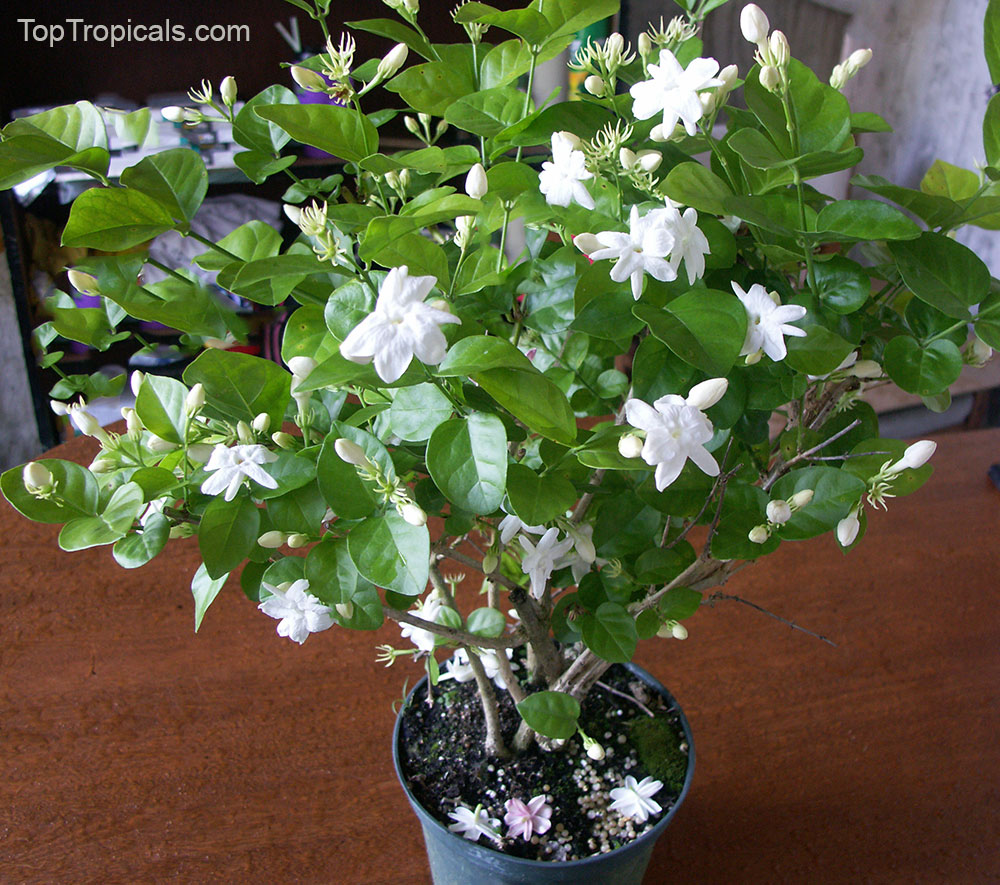
Jasmine  Sambac  Maid  of  Orleans

In the photo: fragrant Jasmine Sambac Maid of Orleans

How to make the best gift plant?

1. Consider her/his interests and environment: Think about the recipient's favorite colors, preferred growing conditions (e.g. sunlight, temperature), and any specific plants they already have and like.

2. Choose an easy plant, especially when giving it to inexperienced gardener. Desert roses, Plumerias, Indoor plants are great for both beginners and experts.

3. Something to enjoy right away: Select an established plant with developed roots and foliage. Grafted fruit trees will produce soon, and aroma of a spice tree can be appreciated without waiting for it to grow bigger. House plants such as Philodendrons with ornamental foliage will brighten the room.

4. Presentation matters: Wrap the plant in decorative paper or a gift bag, and consider adding a bow or tag for a personal touch.

5. Add a personal touch: Consider pairing the plant with a personalized message or a small item such as a watering can, plant food, or a pretty planter. Your thoughtfulness will make the gift even more special.

Some gift plant ideas: Jasmines - Desert Roses - Gingers - Mango - Avocado - Spice plants - Indoor plants - easy maintenance plants - Plants of Love: Aphrodisiacs.

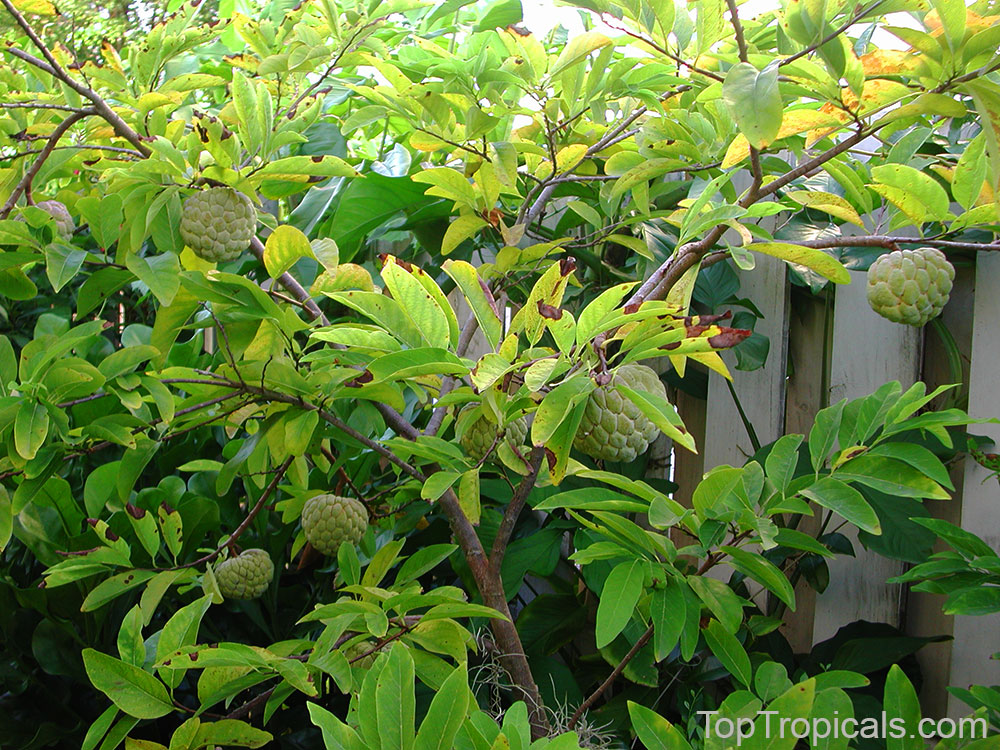
Annona  Tree  Sugar  Apple  with  fruit  on  it

In the photo: Annonas are one of the most popular tropical fruit trees, fast fruiting, suitable for small gardens and container culture

Date: 15 Jan 2021

Healthy Plants: Q&A from Mr Booster

New Boosters for the New Year!
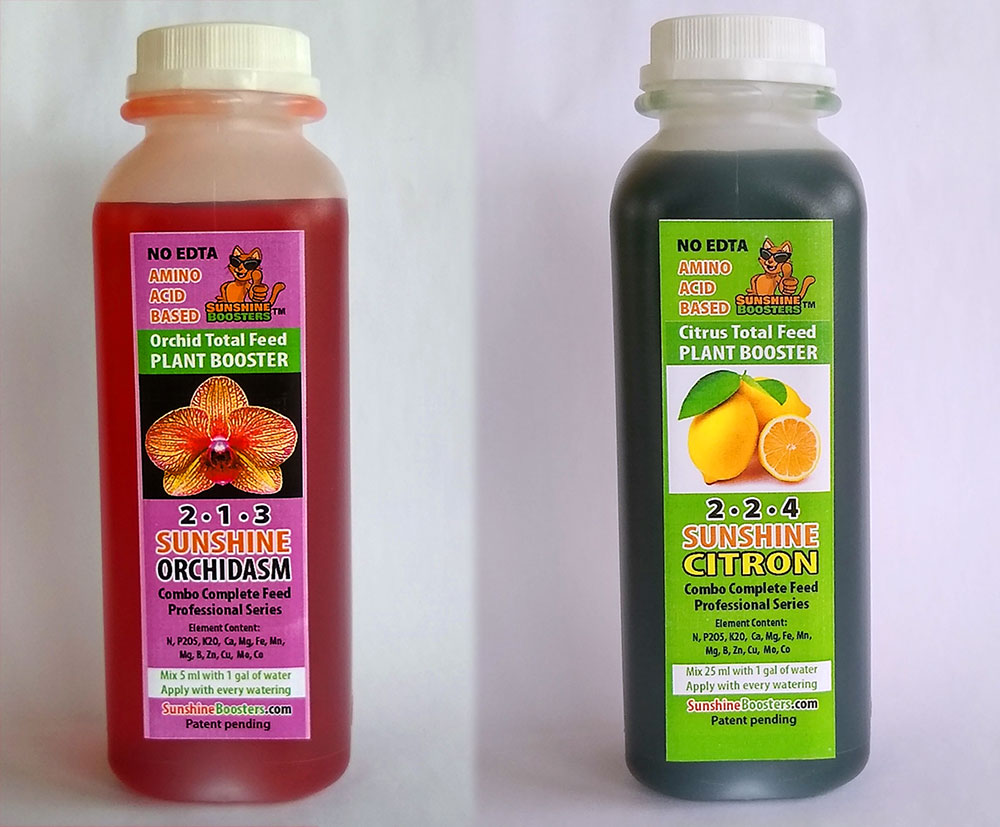
Sunshine Total Feed: Orchidasm and Citron
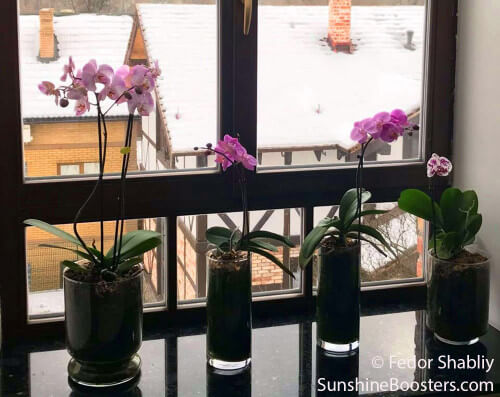
How to grow everblooming orchids?

Q: I ended up with a large collection of orchids that I was given as presents... They grow well but unfortunately after the showy blooms were gone, I don't see any more flowers, just green leaves. What do I need to do to make them bloom again? Should I fertilize them with Azalea bloom booster?

A: Orchids culture is different from garden ornamental plants. First big difference, they are epiphytes, growing in a loose bark medium rather than soil, and benefit from daily mist. Second difference is a type of fertilizer. You can not use a regular garden fertilizer on orchids, because they are very sensitive to salts. Orchids need special, acidic type of fertilizer, very mild in action.
Luckily, Sunshine Boosters formulas are exactly what orchids need! They are amino-acid based, have very mild formulas, and do not create nutrient lock up (building up salts is one of the biggest enemies of tender orchids).
A new Sunshine Boosters Orchidasm TotalFeed is scientifically balanced orchid food that contains all necessary nutrients, including micro-elements, for healthy, happy, vigorous orchids. It can be used as often as daily with every foliage spray. From our testing experience, after using Orchidasm Booster, orchids not only got happy and thriving - they also bloom more often - up to several times a year, shooting new flower spikes one after another! (while normal blooming cycle for most orchids is once a year). It gets even better - the flower display lasts twice longer!
To enjoy these beautiful flowers year around - treat them with Love, give them some Orchidasm!

See more information with pictures in Sunshine Boosters Orchid Blog

Secrets of a healthy Citrus tree

Q: We planted several citrus trees in our yard - Meyer Lemon, Grapefruit and Blood Orange. The trees came from the store full of flowers and even had a few fruit, but a year after planting - no more flowers! The old leaves are green, but new growth doesn't look healthy, leaves are yellowish and have spots, maybe eaten by bugs (?), and how do we get them to fruit?

A: Citrus plants are not the easiest trees to grow; they are susceptible to various diseases, pests, and deficiencies, especially in areas with high humidity/rainfall like Florida. Fungi, viruses, leaf minors, chlorosis - this is not a complete list of citrus common problems. In commercial groves, these conditions are kept under control by using harsh chemicals on solid schedule.
For home gardeners, growing citrus trees may become a challenge. Many people don't want to use harsh chemicals on their edibles; and those who do, may not always have time to apply treatments on a professional schedule. So as much as we all love a fresh juicy orange, growing your own may become quite a pain!
Sunshine Citron TotalFeed is your simple, eco-safe solution to a healthy looking, productive citrus tree with organic fruit! Amino-acid based formula provides all necessary elements to strengthen the tree and make it resistant to possible problems.
Did you know that treatment of leaf chlorosis (yellow leaves with dark green veins), commonly treated with iron supplements, in fact requires a complex combination of nutrients - both balanced NPK and micro-elements?
Use Sunshine Citron in combination with Sunshine GreenLeaf and Sunshine SuperFood and never see yellow chlorotic leaves again!
Apply Sunshine Epi on regular basis (every 2 weeks) and help your tree boost its immune system and stay virus-free.
Add Sunshine Honey, and you will have large, juicy fruit that are much sweeter and more flavorful than those from the store! All these boosters are compatible with each other, and perfectly natural. Eat your fruit safely and enjoy...

Read more about treating citrus tree defficiencies in Sunshine Boosters Citrus Blog.
Date: 20 Feb 2017

Flowering plant for a front yard

Q: I need your expertise. I had a plant in the front of my house that when I moved in (two years ago) wasn't doing well. It was infested with grasshoppers and snails. I treated it with a pesticide and fertilizer and it flourished. Had beautiful flowerings and was almost the size of the mulch area. Then the property management company hired some terrible grass cutters that I believed destroyed it. I would come home and find the red mulch and leaves from the plant all over the front lawn. And since then it has gone down hill. I am attaching a picture. As of now the larger of the remaining two trunks (out of six that were there) is falling over and it doesn't seem to be doing well. So I was wondering if you can recommend a nice plant that I can replace this one with. Nothing extravagant but nice enough to fill in that area. Also since I only lease here don't want to get to pricey either. Thanks for any advice and plants you have.

A: The plant you have is called Spider Lily. It is one of the easiest landscape plants that doesn't require much care and is great for low maintenance yards. In your case, besides possible damage from the grass cutter, looks like the plant is very old judging by the thick woody stem. It is not a bad idea to replace it with something more pretty rather than trying to baby it. Other suggestions for this location would be something easy and low maintenance, especially if you don't have reliable sprinkler system in that area of your yard and don't want to spend time hand-watering with a house:
Sweet mimosa - grows into very large bush, Pony tail, Dwarf poinciana, Powderpuff, Clusia, Devils backbone (smaller bush 3 ft tall), Cordyline, Ti leaf - these are very colorful.
There are more low maintenance plants you can chose from.
And always remember that traditional "landscapers" that only mow grass, may not be experts on plants. You may always call TopTropicals Garden Doctor and get professional help with keeping your plants healthy. We are always here to help your garden!