Garden Blog - Top Tropicals

Date: 29 Nov 2023

What plants are good to order in Winter?

Christmas  dog  and  night  moon  with  snow

Photo above: Christmas time in Ukraine (left) and Florida (right)

Q: Are there any tropical plants that will do well if I order them in Winter? We just bought a house in New Jersey with a large sunroom, and I can't wait to fill it with tropical beauties! Should I wait until Spring, or do you have something for a Winter start?

A: This is indeed a very good question, as many tropical plant collectors grow their treasures outside the tropics. The short answer is - yes! You can start filling your tropical sunroom any time of the year, but some plants are easier to deal with in Winter than others. Below are some guidelines.
Winter  bloomers:  Jatropha,  Champaka,  Brunfelsia,  Calliandra,  Leonotis

Winter bloomers today, left to right: Jatropha, Champaka, Brunfelsia, Calliandra, Leonotis.

1. Plants that prefer Winter shipping to avoid overheating stress:
- All plants with lush foliage such as Philodendrons, Medinilla
- Trees with fine feathery leaves such as Moringa, Jacaranda, Poinciana
- Some fruit trees sensitive to overheating during shipping: Papaya, Stawberry Tree, Starfruit (Carambola), Bilimbi.

2. Subtropical plants that are relatively cold hardy
- Fruit trees: Loquats, Olives, Avocados, Tropical Cherries: Eugenia, Malpighia, Noni (more cold hardy than you may think), Canistel.
- Flowering trees: Champaka, Tabebuia.
- All Bananas
- see all relatively cold hardy plants

3. Winter-dormant and/or deciduous plants: Adeniums, Plumerias, Gingers, Sugar Apple , Peaches and Plums, June Plum and Hog Plum.
See all deciduous/winter dormant plants.

4. Orchids, including Ground Orchids.

5. Winter flowers. Keep in mind that many tropical plants are winter bloomers, and their flowering is most profuse in Winter months, so you can enjoy the blooms right away:
Dombeya, Thunbergia, Gloxinia, Brunfelsia, Calliandra, Tibouchina, Barleria, Leonotis, Clerodendrums, Chinese Hat (Holmskioldia).
See all Winter bloomers.
Winter  bloomers:  Clerodendrum  minahasse,  Malvaviscus  Summer  Snow,  Kopsia 
 fruticosa

Winter bloomers today, left to right: Clerodendrum minahasse, Variegated Malvaviscus Summer Snow, Kopsia fruticosa

6. Winter plant care. During Winter the daylight is shorter and temperatures are cooler.
- Reduce watering
- Use only liquid amino-acid based fertilizer Sunshine Boosters (safe to use year around)
- Monitor insects.

7. Shipping in Winter. We ship year around. However, if it gets below freezing in your area, you may use FedEx Hold location, they are temperature controlled so you don't have to worry about a box being dropped off at your cold porch outside.

8. A note for mild climate residents. Most tropical plants can be planted in the ground year around. Some ultra-tropical tender species such Chocolate tree, Ylang Ylang, or small size Mango trees can be grown in pots until Spring and planted out once chances of cold spell are gone. Until then, they can be moved indoors for cold nights.

Think outside the box and bring tropical paradise indoors during the time when we need warmth the most! Tropical plants will brighten your short winter days and help you to have truly HAPPY HOLIDAYS!
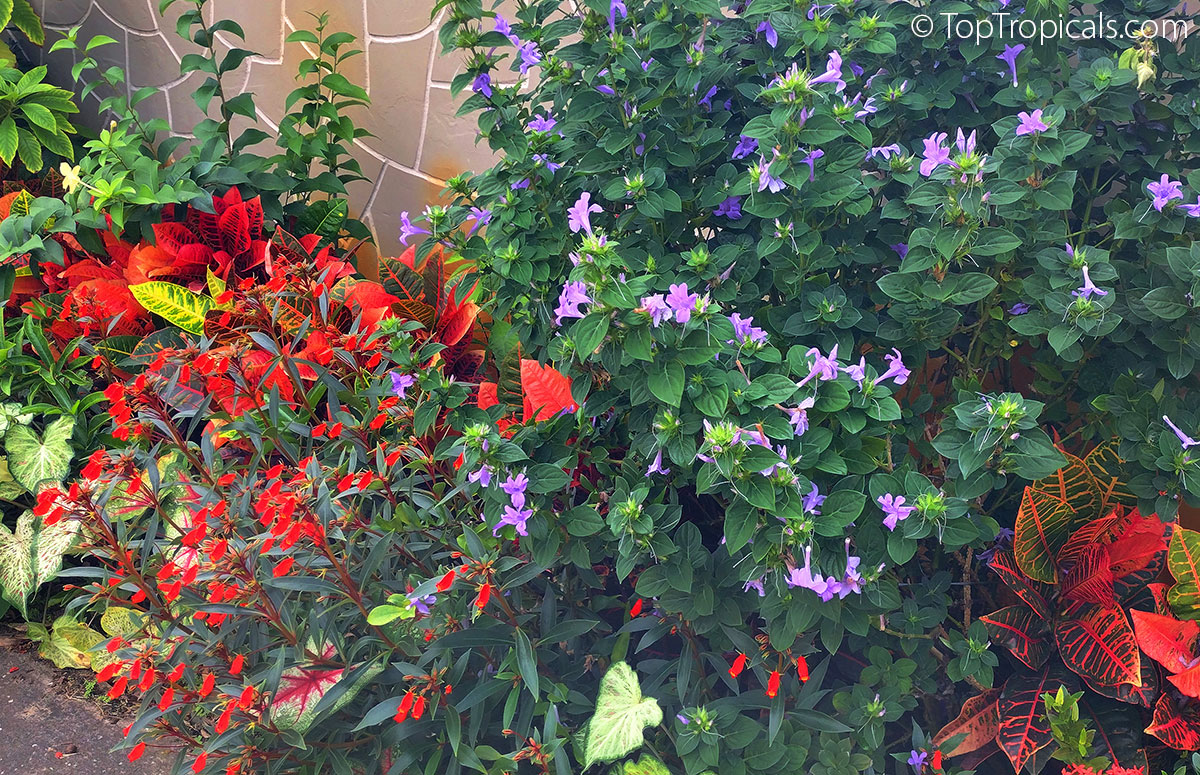
Winter  bloomers:  Gloxinia,  Barleria,  and  ever-bright  Crotons

Winter bloomers today, left to right: Gloxinia, Barleria, and ever-bright Crotons...
Date: 13 Dec 2022

Eight best fruit trees that produce right away

Grow Your Own Food

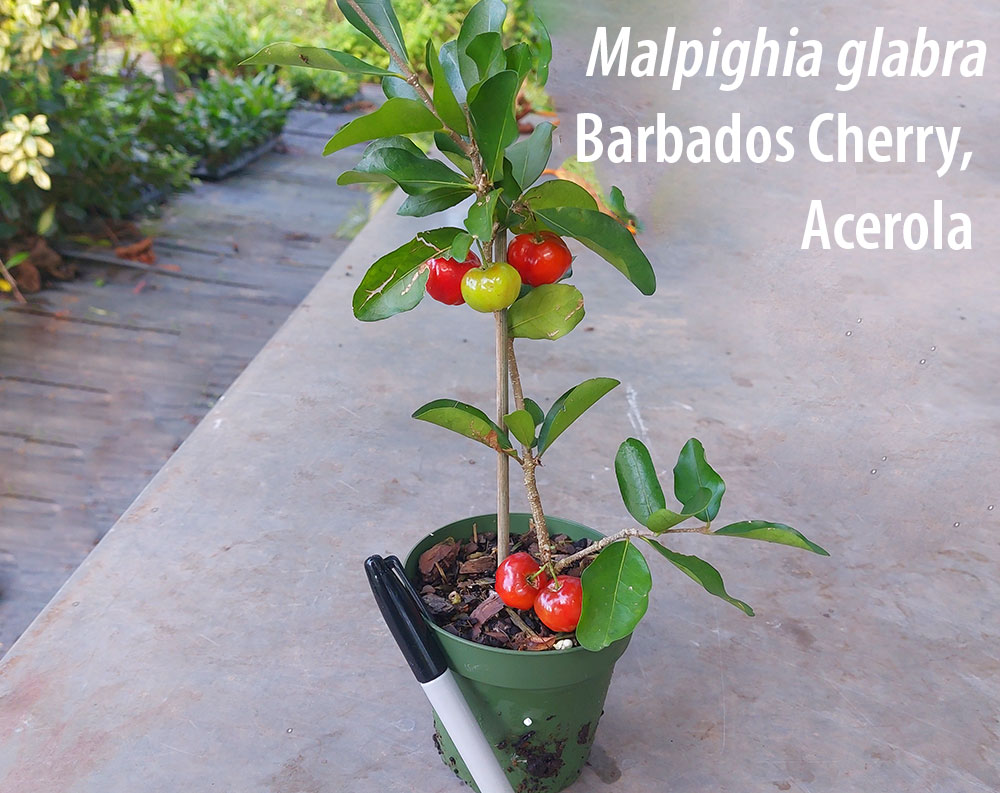
Malpighia  glabra  -  Barbados  Cherry,  Acerola

In the photo: Malpighia glabra - Barbados Cherry, Acerola

What fruit trees start fruiting right away?

Q: What fruit trees do you recommend that will start fruiting right away? I am 84 and I would really love to see the fruit sooner than later!

A: Most of grafted fruit trees will start producing the same year - such as Mango, Avocado, Peaches and other grafted trees. Besides, these are several garden favorites that start fruiting right in 1-3 gal container.

1. Eriobotrya japonica - Loquat
2. Spondias cytherea - June Plum
3. Psidium guajava - Tropical Guava
4. Musa sp. - Banana
5. Annona squamosa - Sugar Apple
6. Morus sp. - Mulberry tree
7. Eugenia uniflora - Surinam Cherry
8. Malpighia glabra - Barbados Cherry, Acerola

June  Plum  -Ambarella,  Spondias  cytherea

Date: 16 Dec 2019

Meet PeopleCats of TopTropicals. Cat of the Day: Jim the Founder

Jim is the oldest cat of Top Tropicals. In fact, he is one of the Founders. In 2004 a tiny kitten showed up at first TopTropicals Nursery - a small quarter acre in Ft Lauderdale... Jim looked very important and confident and told us that he wants to stay with us because he sees a great future for TopTropicals... and he was right. Since then, Jim traveled with us through all nursery locations we ever had!

Jim used to lay on top of a warm monitor and help with our first website designs... if you look at his favorite monitor in the picture, you now can imagine how old this cat is!
In spite of his age, Jim is very active and likes to eat a lot. He believes that a good meal is key to a healthy living, and prefers variety. He eats everything: meat, fish, soup, pasta, pizza, veggies, cucumbers, salad... eats well and stays healthy!
Jim happily participates in all costume parties. Yes, it is him in a Santa costume greeting you at the top of this newsletter!

Don't miss out: Loquat Big Jim - we only have 4 plants, they all named after Jim!

Check out and more Cat of the Day stories.

Date: 10 Nov 2025

❄️ How to Prepare Your Tropical Garden for Winter

Two  cats  in  a  tropical  garden  at  sunset.  Smokey,  a  black-and-white 
 tuxedo  cat  wearing  a  wool  cap,  holds  a  thermometer  while  Sunshine,  a  fluffy 
 orange  tabby,  sits  beside  mulch  and  folded  frost  cloths  surrounded  by  banana
    and  hibiscus  plants.

Smokey and Sunshine Wrap Up the Garden with Frost Cloth Before the Chill.

Smokey: "Thermometer says 45. Time to wrap the bananas!"
Sunshine: "You wrap the bananas. I’ll guard the mulch… from this sunny spot."
Smokey: "Teamwork, Sunshine. Teamwork."

🌡️ Cold nights are coming - but your tropicals do not need to shiver!

Even in sunny Florida and other warm zones, one cold snap can undo months of growth. Preparation is everything. Tropical plants can handle a lot, but they dislike surprises. Let’s make sure your garden stays safe, strong, and happy all winter long.

Tips from Tatiana Anderson, Top Tropicals Plant Expert

👉 Group and Check Your Plants

You already know which plants are in pots and which are in the ground. What matters now is prioritizing by cold sensitivity. Identify the tender tropicals – papaya, banana, plumeria, adenium, heliconia – and decide which ones get covered first when temperatures drop. Keep frost cloths or old sheets near those areas, ready to grab fast. If your garden is large, label protection zones or mark plants that always need extra care. The goal is to have a plan, not a panic, when the cold alert hits.

Once you know your priorities, you can plan the rest of your protection strategy.

👉 Feed and Mulch

Stop using high-nitrogen fertilizers by late fall. They push soft new growth that freezes easily. Add compost around the base of your plants and top with 3 to 4 inches of mulch. Mulch acts like a blanket: it keeps warmth in, protects the roots, and keeps soil moisture steady. Just make sure the soil drains well; cold and soggy soil leads to root rot. In raised beds, check that water flows away easily.

After you feed and mulch, it is time to look at how your local zone changes the game.

👉 Zone-by-Zone Tips

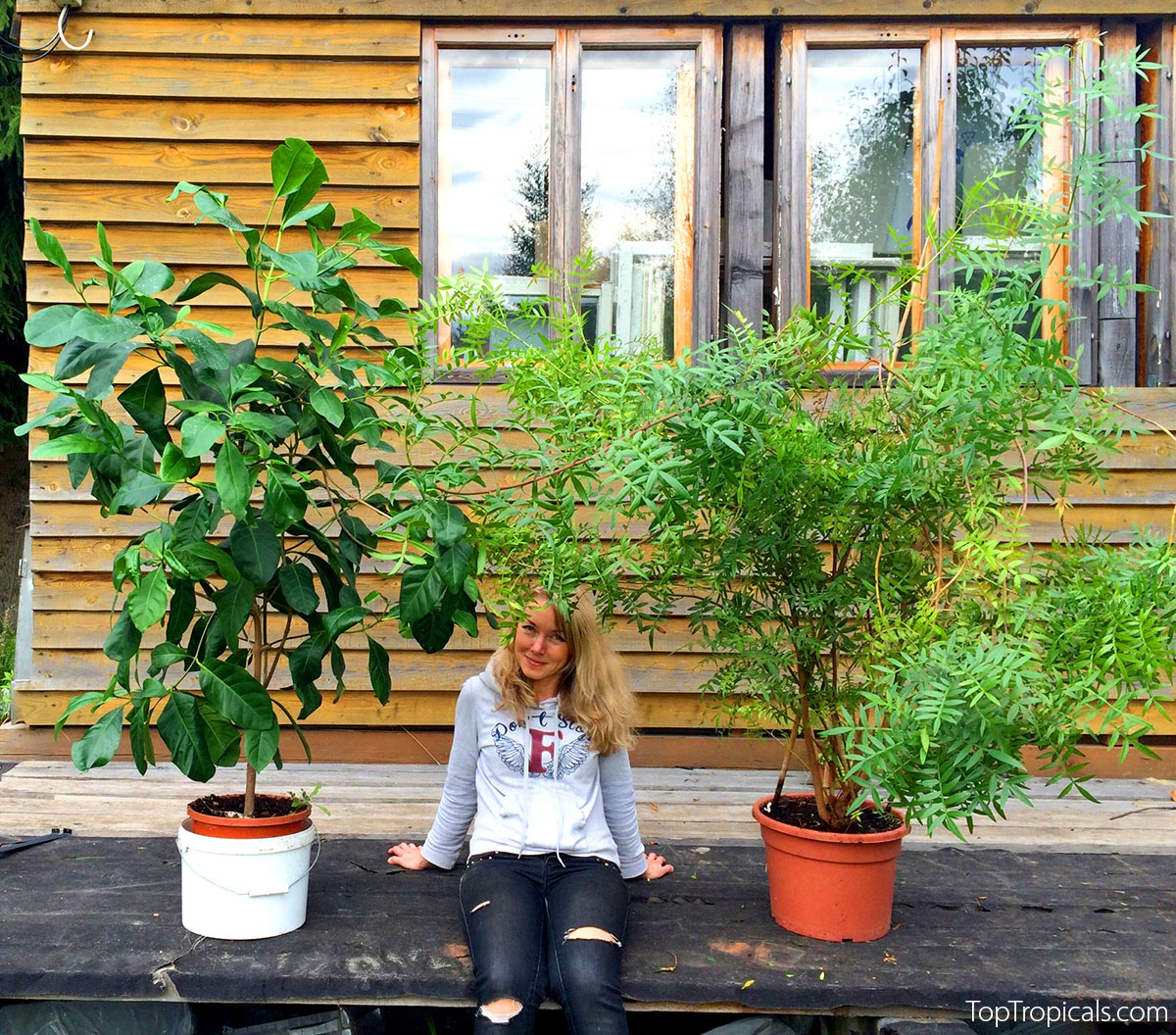
Woman  sitting  between  two  large  potted  tropical  plants  on  a  wooden  deck
    in  front  of  a  house,  preparing  to  move  them  indoors  for  the  winter.

Moving Tropical Plants Indoors for Winter Protection

  • Zone 10: You are lucky! This is mostly a maintenance season. Watch for root rot after heavy rain, trim lightly if needed, and protect tender young trees during surprise chills. Keep some frost cloth ready just in case.
  • Zone 9: This is the main action zone. Nights can dip into the 30s. Deep-water your trees once before cold nights to insulate the roots. Apply heavy mulch, and have frost protection ready to go. If you grow tropical fruit like mango or guava, consider wrapping young trunks in burlap or foam pipe insulation.
  • Zone 8: This is where tropical gardening becomes creative. Stick to cold-hardy tropicals such as loquat, guava, or cold-hardy avocado varieties. Use portable greenhouses, wrap trunks, and move smaller plants indoors or to a heated porch when frost threatens.

Now that the garden beds are set, let’s look at your pots and containers – your most mobile plants.

👉 Container and Patio Plants

Potted plants are the easiest to protect but also the quickest to freeze. Start reducing watering now so roots do not stay too wet in cooler weather. Before moving them, check for insects hiding under leaves or in the soil. Group your pots close to a wall for reflected heat and wind protection. If you plan to bring them indoors, do it gradually. Move them closer to the house for a few days before bringing them all the way inside to help them adjust to lower light and humidity.

When the chill starts, many gardeners rush to move everything inside at once – but a smooth transition works much better.

👉 Indoor Plants

When bringing plants inside, give them a good rinse to remove dust and bugs, and flush the soil to wash out salts from summer fertilizing. Keep them separate from your houseplants for a week to make sure no pests come along. Expect some leaf drop – it is normal as they adjust to lower light. Give them bright light near a window, and cut watering by about half until spring. Avoid misting too much; good airflow matters more than humidity during winter.

Many tropicals, like hibiscus, brugmansia, and crotons, may look tired for a while, but they will bounce back quickly once days get longer.

👉 Timing Is Everything

The key is to prepare before the first cold warning. Check your weather app regularly once nights start dropping into the 50s. Keep covers, mulch, and supplies ready so you are not running outside at midnight with a flashlight and a frozen hose. Have your frost cloths labeled by plant group and stored in an easy spot. A little organization now saves a lot of stress later.

Many tropicals, like hibiscus, brugmansia, and crotons, may look tired for a while, but they will bounce back quickly once days get longer.

Remember: the goal is to help your plants rest safely. Many gardeners prune or fertilize too late in the season – we will talk about why that can be risky next week."— says Tatiana Anderson, Top Tropicals Plant Expert

Coming next mail-list: The best gadgets for cold protection (lights, heaters, frost covers) and what NOT to do in winter.

📚 Learn more from Top Tropicals Blog:

Cold protection - winter action for your plant collection

What plants are good to order in Winter?

How to take care of house plants in Winter

How to protect tropical plants in Winter

How to take care of a mango tree in winter

How to protect Avocado from cold

Overwintering Adeniums outside of tropics

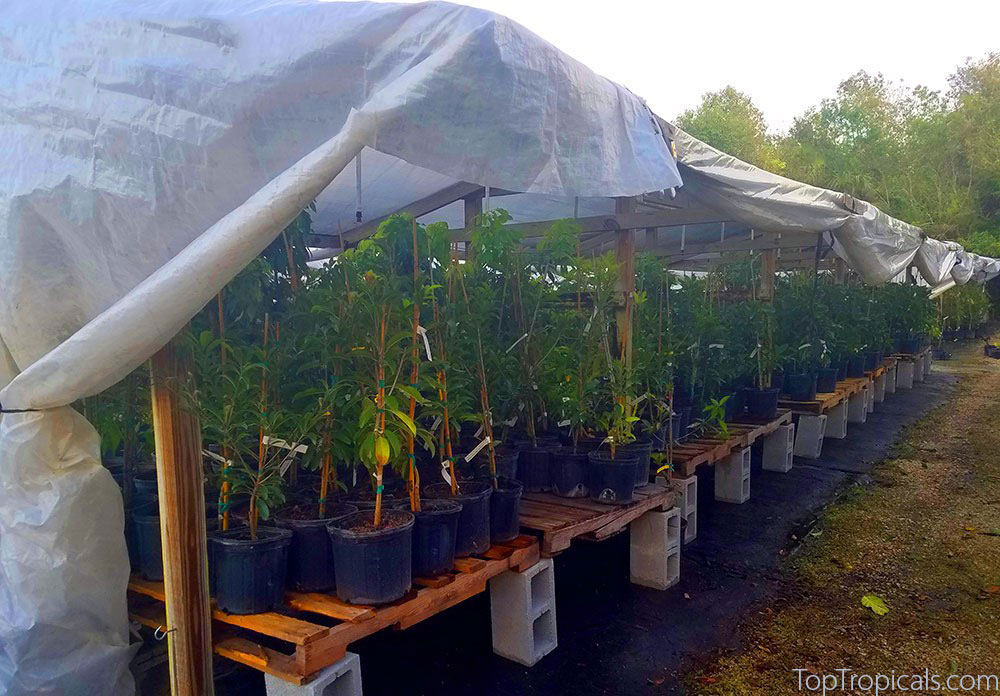
Rows  of  tropical  plants  in  black  pots  covered  with  frost  cloth  and 
 plastic  sheeting  for  winter  protection  at  Top  Tropicals  nursery.

Protecting Tropical Plants with Frost Covers at Top Tropicals Nursery

Date: 28 Dec 2020

Healthy Plants: Q&A from Mr Booster

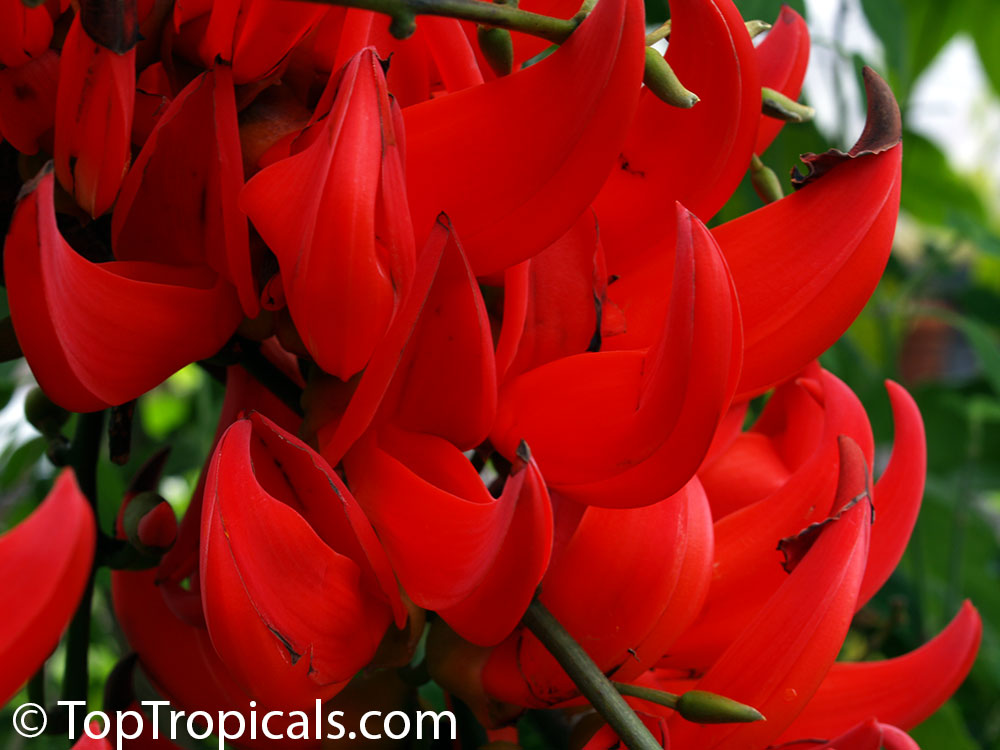
How to grow a happy Red Jade Vine?

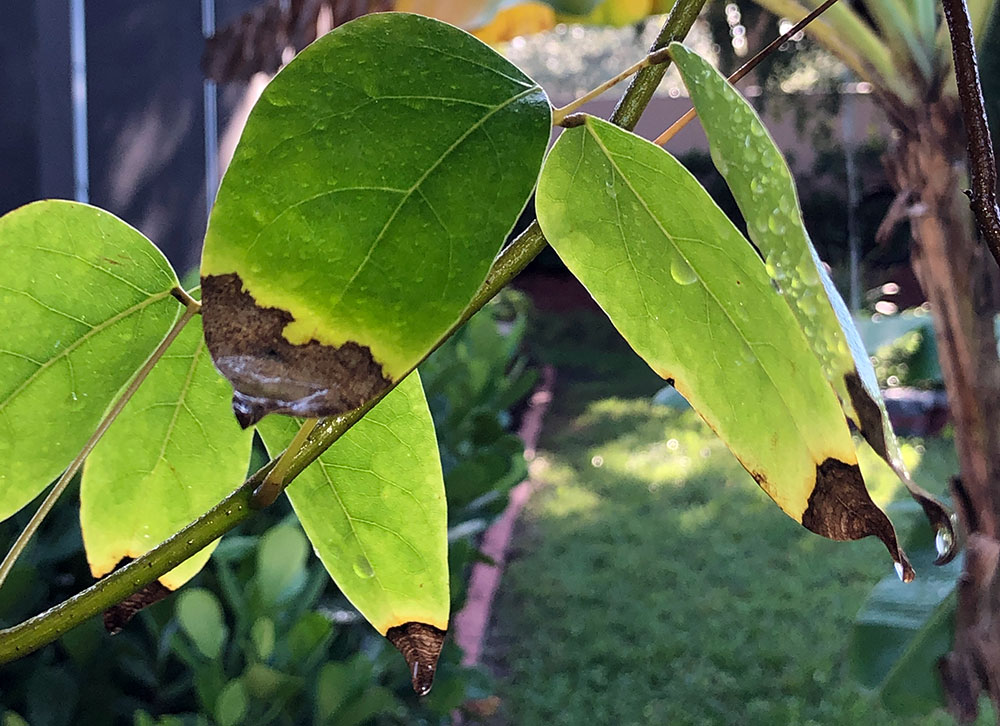
Q: My Red Jade Vine has the leaf tips turning brown. I water this plant four times a week and I am using a half a teaspoon of miracle grow bloom booster 15-30-15 per 2 gallons, every two weeks. In the beginning I had to water this plant off city water in South Fort Myers. Over the last two months I picked up a dechlorinator buggy plus threw that on my hose and I've been watering it with that but it didn't seem to make a difference. I put this plant in the ground last September. It has three shoots that run into the top of the tree, so it is growing but leaves seem to drop off down low at the base of the vine and the brown tipping running into the top of the plant. But not the newest shoot its leaves are solid green all the way at the top. Thanks for any advice.

A: Mucuna benettii - Red Jade vine - is not the easiest plant to grow, and we are glad your vine is growing well. For those who love this plant but not ready to face all challenges, we recommend its cousin - Camptosema grandiflora - Dwarf Red Jade Vine, which is much hardier and easier plant.
We looked at the photos and these are our thoughts.

1) The top of the plant with green fresh leaves definitely indicates that the plant is generally healthy and vigorous.
2) Dry tips of the old leaves may indicate excess salts in soil, in combination with the summer heat that it went through. Based on your feeding program description, that fertilizer may create a problem. Water soluble traditional fertilizers are EDTA-chelated which often causes nutrients lock up in soil and leaf drop. Try to stay away from that fertilizer for a month and let the rains and/or irrigation water flush the soil for a couple of weeks.
3) Red Jade vine is a very sensitive species. Normally, during hot season it is safe to use traditional fertilizers, especially slow-release granulated. However, with this plant we recommend you to switch to more delicate formula and use only liquid fertilizer.
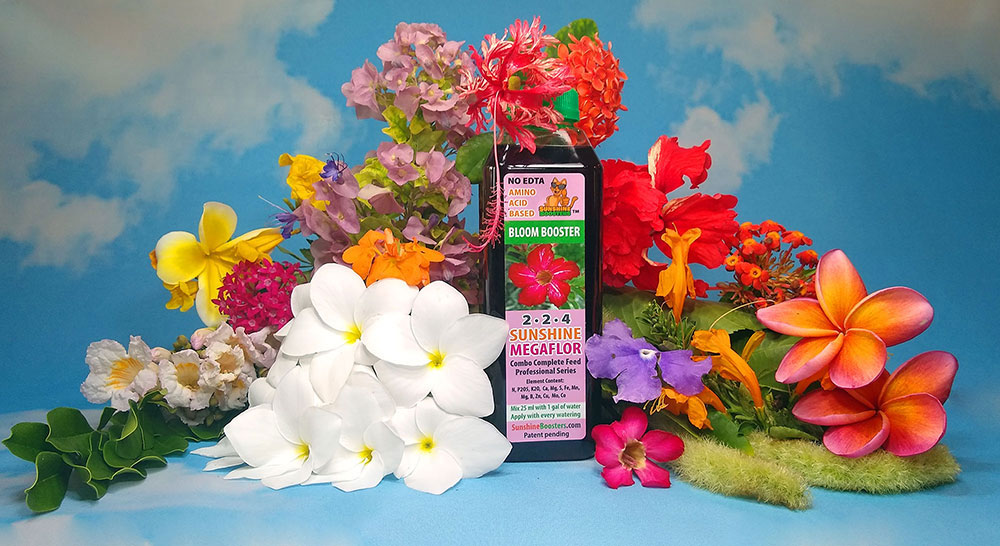
SUNSHINE Megaflor - Bloom Nutrition Booster will be the best. It is safe to use it as frequent as with every watering! It is amino-acid based, and will be totally consumed by the plant without nutrient lockup.
4) Another cause of dry leaf tips may be micro-element deficiency.
Megaflor booster already has all necessary micro-nutrients in it, plus you may apply some extra: SUNSHINE Superfood.
5) You may continue using regular water for watering (including city water) as long as you use amino-acid based plant food and supplements: they improve soil acidity (what tropical plants like is acidic soil, and Florida soils are alkaline). Additionally, to improve soil acidity which can be critical for this Mucuna species, you may add 1"layer of pure peat moss on top of the soil around the plant. Please keep us in loop how the plant is doing. It is pretty rare species in cultivation and we will be happy to help you to keep it thriving.