Garden Blog - Top Tropicals

Date: 10 Feb 2026

These Avocados survived 3 nights of 25F hard freeze, Florida Record Freeze

Cold hardy avocados

⛄️ These Avocados survived 3 nights of 25F hard freeze, Florida Record Freeze

  • ⛄️ Recent winter freezes have once again raised the same urgent question among avocado growers - which varieties actually survive cold weather, and what does survival really look like afterward?
  • ⛄️ After widespread freeze events, trees across many regions showed very different outcomes, from minor leaf burn to complete canopy loss.
  • ⛄️ This video taken on February 4, 2026 at Top Tropicals BFarm in Sebring, FL, reflects what we observed in real conditions after 3 nights of hard freeze.
  • ⛄️ The trees in the video had no protection.


❄️Weather data

Feb 1-6, 2026, Coldest in Recorded History (132 years of observations)
Top Tropicals Farm and Nursery at Sebring FL

🌡 Min temps: 25F, wind chill 14F
⏳ Duration of cold: 3 nights of 8-10 hour hard freeze, along with 7 days of cool daytime temps around 50F
🌀 Wind: 20 mph, with 40-50 mph gusts.

🛒 Explore cold hardy Avocado varieties

📖 Our Book: Avocado Variety Guide, Snack or Guacamole?

📚 Learn more:


#Food_Forest #Avocado #Discover #How_to

🟢 Join 👉 TopTropicals
Date: 4 Mar 2026

The Magic Number 65: when tropicals finally wake and the 7-Day Rule you should know

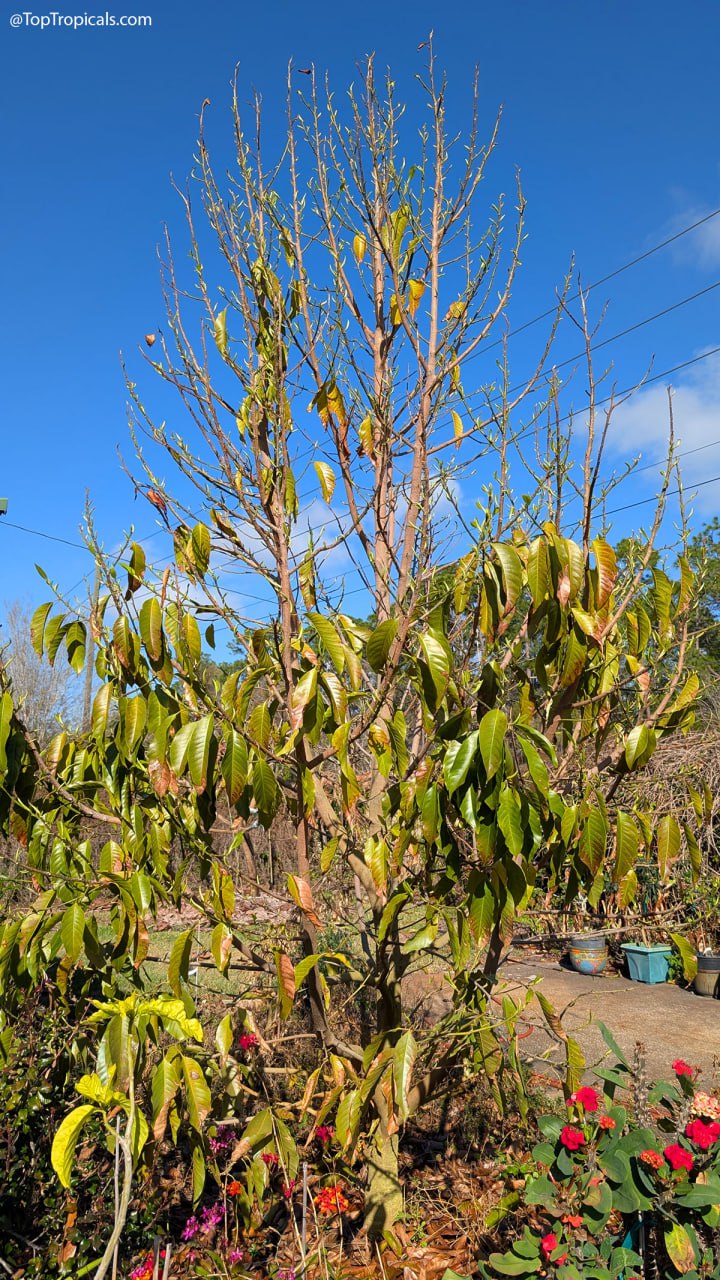
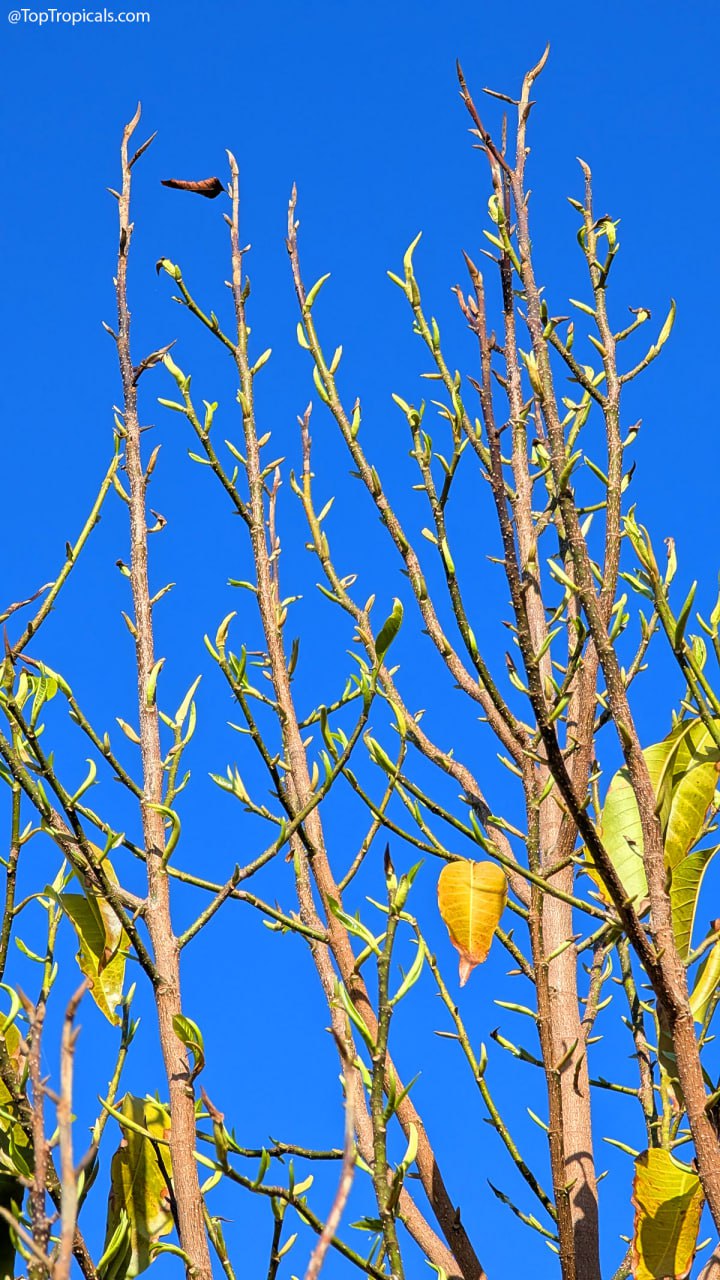
Champaka tree new growth sprouts

Champaka tree new growth sprouts

A Champaka tree (Joy Perfume Tree) first fresh sprouts

A Champaka tree (Joy Perfume Tree) first fresh sprouts

The Magic Number 65: when tropicals finally wake and the 7-Day Rule you should know 🌱

Discover the "Magic 65" rule for waking up your garden and the exact time to start fertilizing for maximum growth. Learn the specific temperature threshold that signals your tropicals to wake up and how to handle spring cold snaps.
  • 🌿 If you’ve been staring at your dormant trees and shrubs wondering if they survived the winter, you aren't alone. The most frequent question every spring is: "When will my tropical plants start sprouting?"
  • 🌿 While the calendar might say spring, tropical plants don’t use a watch - they use a thermometer. If you want to see green shoots and active growth, there is one "Magic Number" you need to watch: 65F 🌡
  • 🌿 The 7-Day Rule for Tropical Growth


    The gold standard for the tropical world is simple: plants generally wake up when minimum nighttime temperatures remain at or above 65F for at least one full week.
  • 🌿 Why 65°F?


    Tropical species are biologically programmed to stay dormant to protect their cell structure from cold damage. A single warm day won't fool them, but seven consecutive nights of 65F+ signals that the "growing season" has officially arrived. Once you hit that 7-day mark, you’ll see buds pushing and fresh leaves finally sprouting.
  • 🌿 Can You Force Them to Wake Up Faster?


    Patience is a virtue, but if you’re looking to "push" your plants, focus on two things:

🌞 Sun Exposure: Ensure they are in the brightest spot possible to warm the soil.
♨️ Heat Retention: Use dark mulch or move potted plants onto concrete surfaces that retain daytime heat.
  • 🌿 When to Start Fertilizing


Don’t reach for the fertilizer until you see that active growth. Feeding a dormant plant can lead to root rot or wasted nutrients.
  • 👉 The Signal: After that first week of 65F nights.

The Action: Once you see green tips, start your fertilization routine. This is when the plant actually has the metabolic "engine" running to use those nutrients.
  • 🌿 Watch Out for the "False Spring"


    Before you go all-in, ensure the risk of a hard freeze has passed. A minor cold snap - a few nights in the 50s - won't kill your progress, but it will act as a "pause" button. If cool weather persists, tropicals may "lock up" and return to dormancy. If that happens, simply reset your clock and wait for the next stretch of 65F nights.
  • 🌿 Ready for the Wake-Up Call? Fuel Your Tropical Growth!

Don’t get caught empty-handed when that 7th day of 65F hits. Stock up now so you can feed them the moment they wake up. Using the right nutrients during the active growth phase is key to lush blooms. Check out our curated selection of professional-grade fertilizers:

🛒 Get my growth boosters for every tropical type

📷 Recovery in Action: The Joy Perfume Tree - Champaka showing off its first fresh sprouts in March after a chilly Florida winter. This is exactly what happens once you hit that 7-day streak of 65F nights!

📚
Learn more:
Why is my Champaka Tree dropping leaves?

#How_to #Discover

🟢 Join 👉 TopTropicals
Date: 27 Feb 2026

Grilled star fruit slices: quick-n-fun exotic recipes

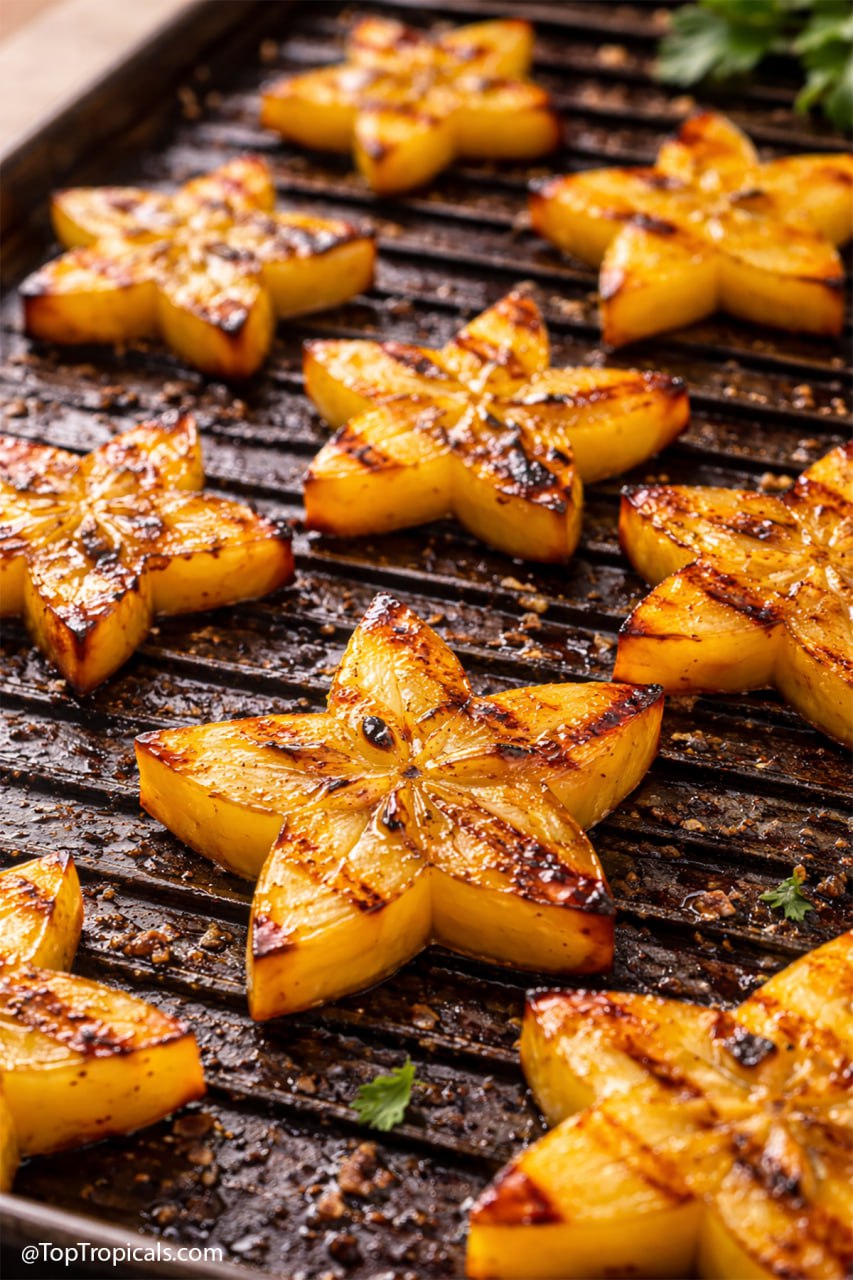
Grilled star fruit slices on grill pan

Grilled star fruit slices on grill pan

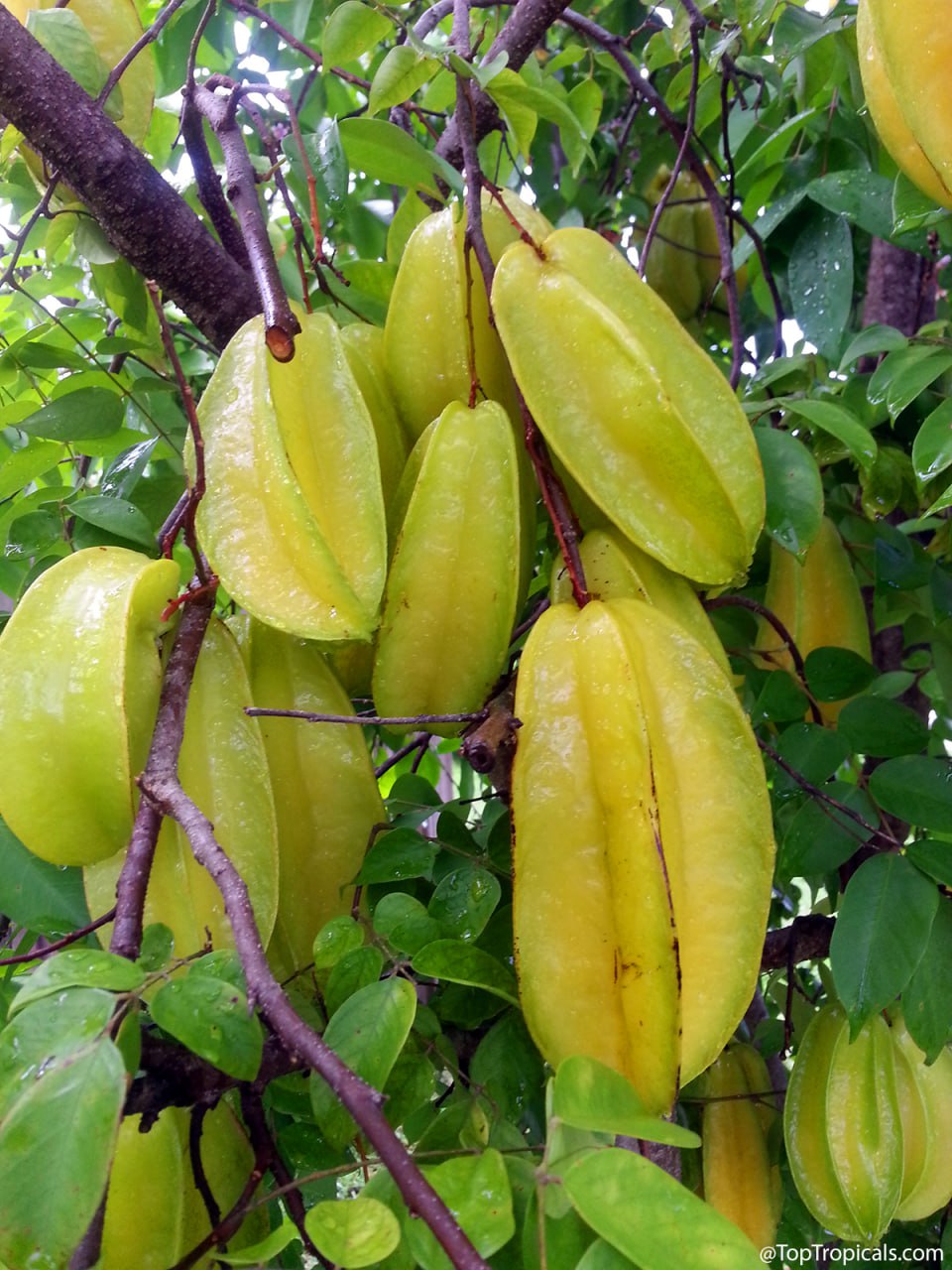
Averrhoa carambola - Star Fruit Carambola Tree

Averrhoa carambola - Star Fruit Carambola Tree

🍴 Grilled star fruit slices: quick-n-fun exotic recipes


Grilled Star Fruit Slices

Ingredients

  • 1 ripe star fruit (carambola)
  • 1 teaspoon honey
  • 1 teaspoon butter or coconut oil

Instructions

  1. Slice the star fruit crosswise into star-shaped pieces.
  2. Heat a grill pan or skillet and lightly grease with butter or coconut oil.
  3. Place the slices on the hot surface and grill briefly on each side.
  4. Drizzle lightly with honey as the edges begin to caramelize.
  5. Serve warm as a tropical side dish or dessert topping.


🌿 About the plant:


Carambola, or Star Fruit, is a small tropical tree with glossy leaves and crisp, juicy fruit that slices into perfect stars.

🏡 In the garden:


Thrives in zones 9-11. Likes sun, regular water, and protection from strong winds. Dwarf varieties do well in large containers.

🛒 Plant Star Fruit Carambola Tree

📚 Learn more:

Carambola Plant Facts

Averrhoa carambola
Carambola, Starfruit, Five-finger, Balimbing
USDA Zone: 9-11
Small tree 10-20 ftSemi-shadeFull sunRegular waterEdible plantSubtropical plant. Mature plant cold hardy at least to 30s F for a short time

#Food_Forest #Recipes

🟢 Join 👉 TopTropicals
Date: 24 Jun 2018

Fabulous Frangipani - Plumeria

New article! By Jane Jordan, a horticulturist who studied and worked at the RHS botanical gardens in Cannington, England. She now lives in Sarasota, Florida. Alongside her passion for horticulture, she is also a novelist.
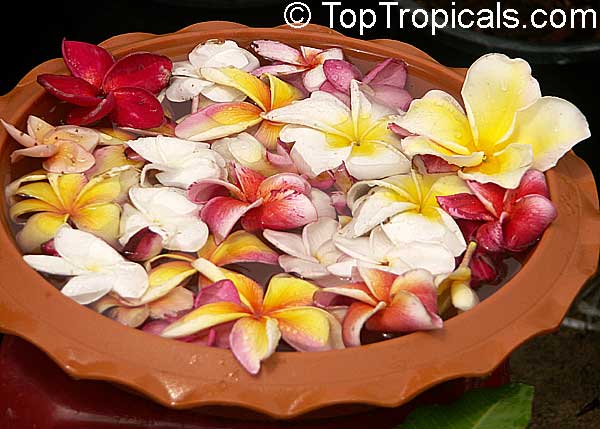
"...The name Frangipani is derived from a 16th century Italian Marquess, who invented a plumeria scented perfume. While in Hawaii they are known as Lei trees. Lei means garland or wreath, and Lei flower garlands are famously given as a symbol of affection. Hawaii has become synonymous with this beautiful flower, although Frangipani, is native to warm tropical areas of the Mexico, Central America, India and the Caribbean, accordingly, this plant is well suited to the Floridian climate and hardy to USDA planting zones 9-11..."
Read

Date: 15 May 2024

What does a dragon taste like? Does Dragon Fruit come from a monster cactus? Learn why you need to grow your own

Hylocereus and Selenicereus Dragon Fruit or Pitaya

Hylocereus and Selenicereus Dragon Fruit or Pitaya

Hylocereus and Selenicereus Dragon Fruit or Pitaya trees on trellis

Hylocereus and Selenicereus Dragon Fruit or Pitaya trees on trellis

Hylocereus and Selenicereus Dragon Fruit or Pitaya on trellis

Hylocereus and Selenicereus Dragon Fruit or Pitaya on trellis

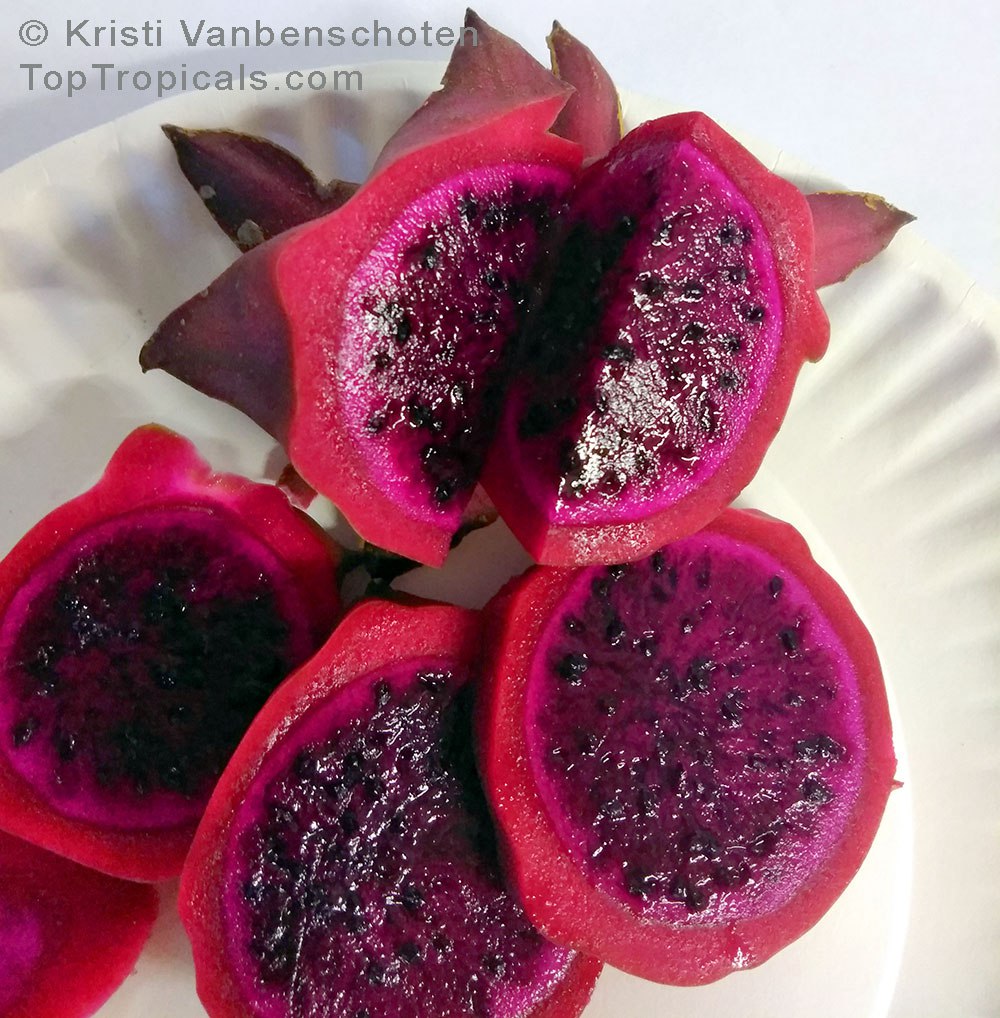
Hylocereus and Selenicereus Dragon Fruit or Pitaya red fruit

Hylocereus and Selenicereus Dragon Fruit or Pitaya red fruit

Hylocereus and Selenicereus Dragon Fruit or Pitaya purple fruit

Hylocereus and Selenicereus Dragon Fruit or Pitaya purple fruit

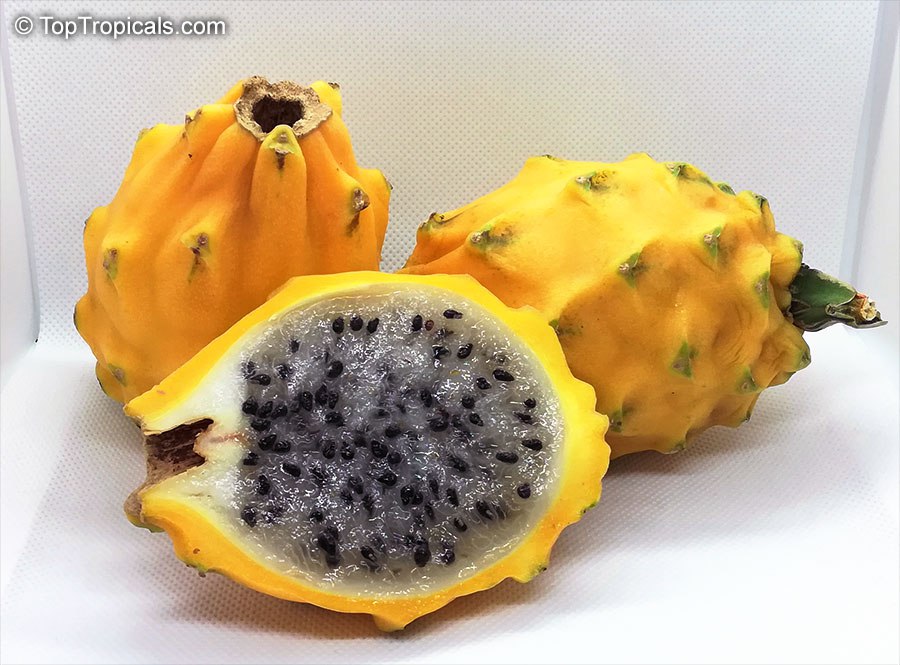
Hylocereus and Selenicereus Dragon Fruit or Pitaya Yellow Parlora

Hylocereus and Selenicereus Dragon Fruit or Pitaya Yellow Parlora

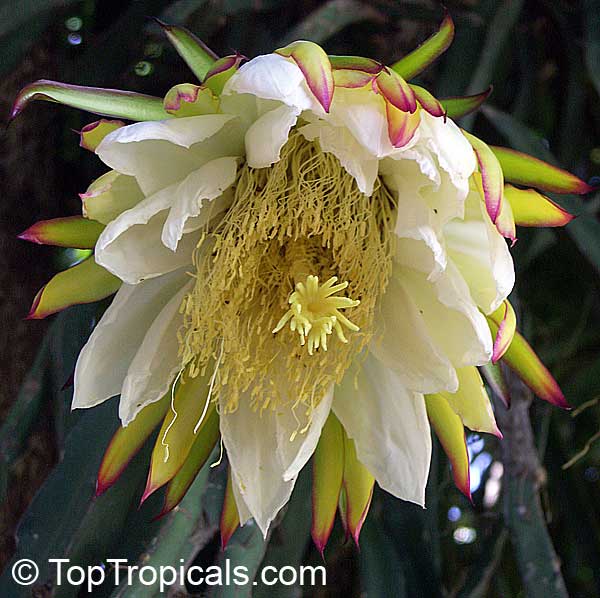
Hylocereus and Selenicereus Dragon Fruit or Pitaya flower

Hylocereus and Selenicereus Dragon Fruit or Pitaya flower

🐲 What does a dragon taste like? Does Dragon Fruit come from a monster cactus? Learn why you need to grow your own. 🌵
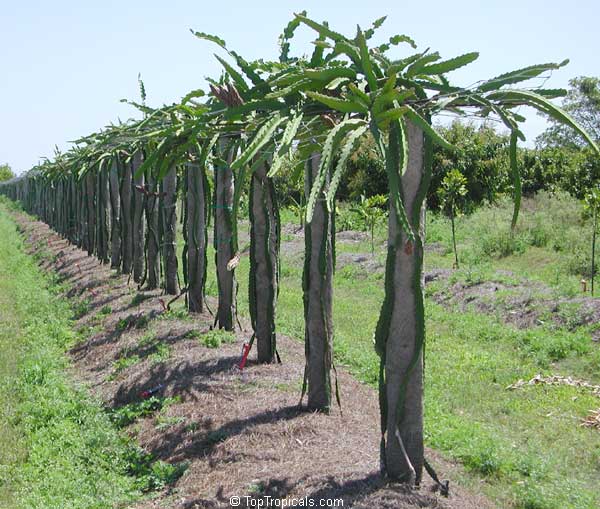
  • 🔴 You may have tried a Dragon fruit from the store l, but do you know how it grows? On a cactus tree!
  • 🔴 Names: varieties of Hylocereus and Selenicereus - these fruit bearing cactus plants are also called Dragon Fruit or Pitaya.
  • 🔴 Commercially grown fruit sold in a grocery store may be tasteless. You need to grow your own good variety to have tasty, sweet, flavorful fruit!
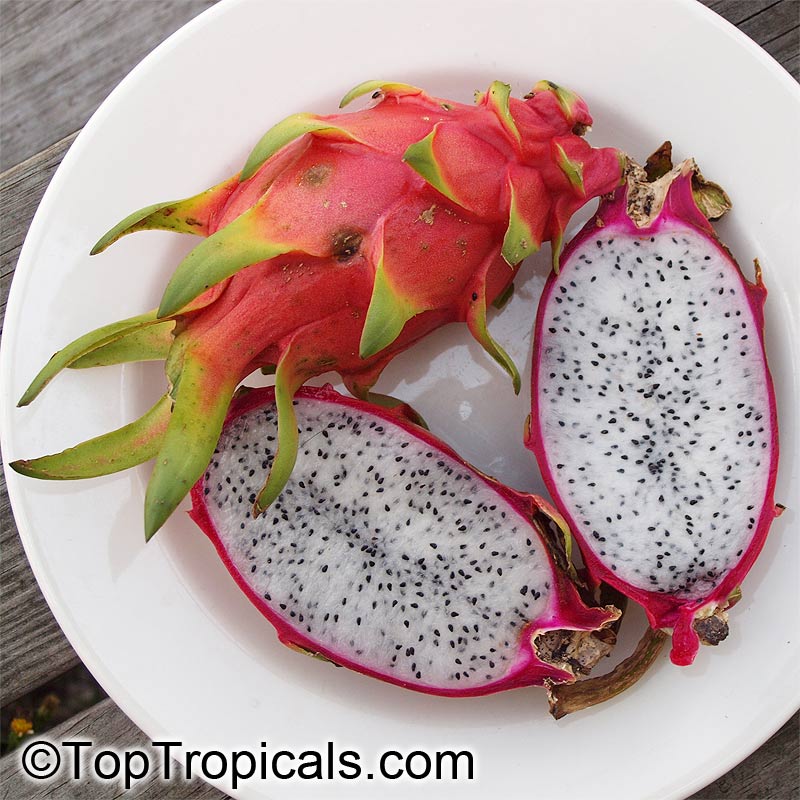
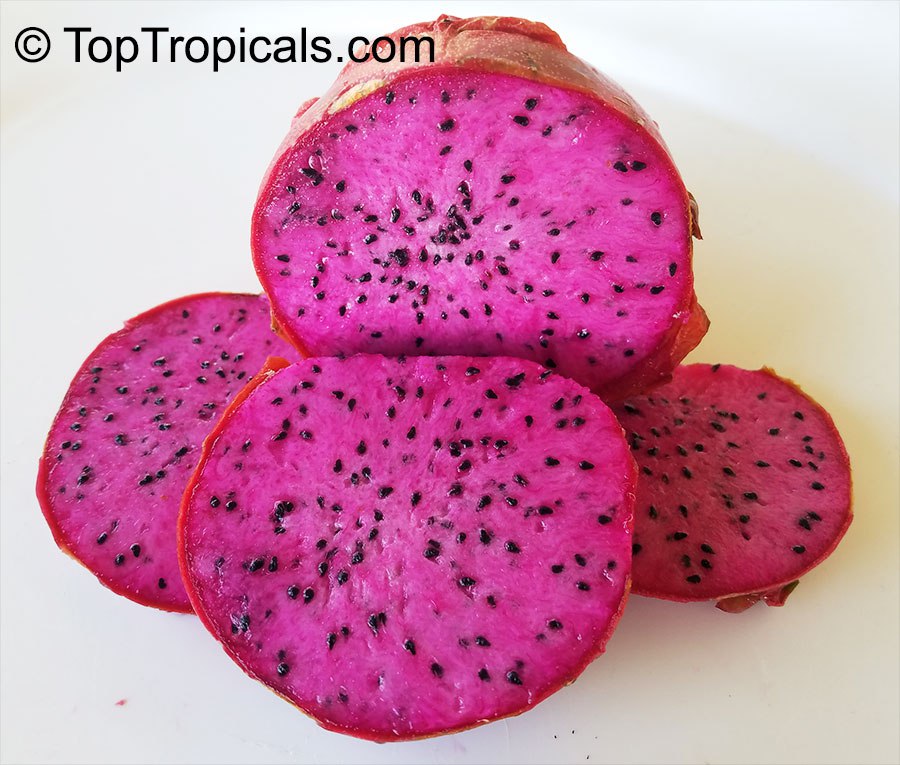
  • 🔴 Dragon fruit comes in many varieties. Colors of flesh differ: white, pink, dark red and even purple. The outside of the fruit can be red/pink or yellow.
  • 🔴 In commercial groves, Pitayas grow like cactus trees, over a strong support - big "umbrella frames" ☂️
  • 🔴 It is an easy plant, with low water needs, takes both sun and semi-shade.
  • 🔴 Our favorite variety is Yellow Dragon Fruit Palora, (Selenicereus megalanthus). It is the sweetest and has the most flavor of all. We shared some recipes earlier.
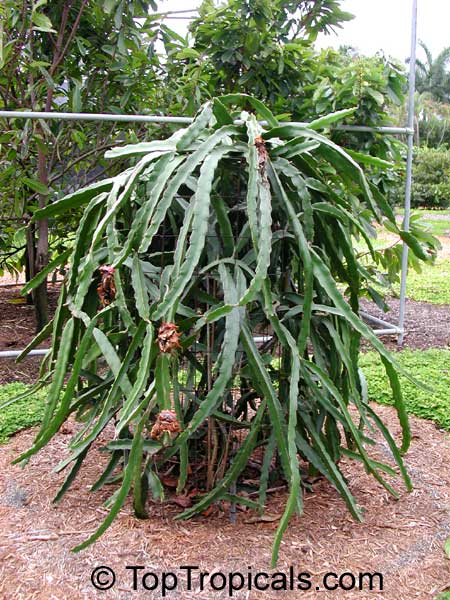
  • 🔴 Can be grown in container with a wooden trellis. And the flower is beautiful, too!


📚 Learn more about Dragon Fruit
🍹 Recipe: What to do with a Dragon fruit?

🛒Grow your own Tasty Dragon Fruits

#Food_Forest #Recipes #Nature_Wonders

🏵 TopTropicals