New
article! By Jane Jordan, a horticulturist who
studied and worked at the RHS botanical gardens in
Cannington, England. She now lives in Sarasota, Florida.
Alongside her passion for horticulture, she is also a
novelist.
"...The name Frangipani is derived from a 16th century
Italian Marquess, who invented a plumeria scented perfume.
While in Hawaii they are known as Lei trees. Lei means
garland or wreath, and Lei flower garlands are famously
given as a symbol of affection. Hawaii has become
synonymous with this beautiful flower, although
Frangipani, is native to warm tropical areas of the
Mexico, Central America, India and the Caribbean,
accordingly, this plant is well suited to the Floridian
climate and hardy to USDA planting zones 9-11..."
Date: 15 May 2024
What does a dragon taste like? Does Dragon Fruit come from a monster cactus? Learn why you need to grow your own
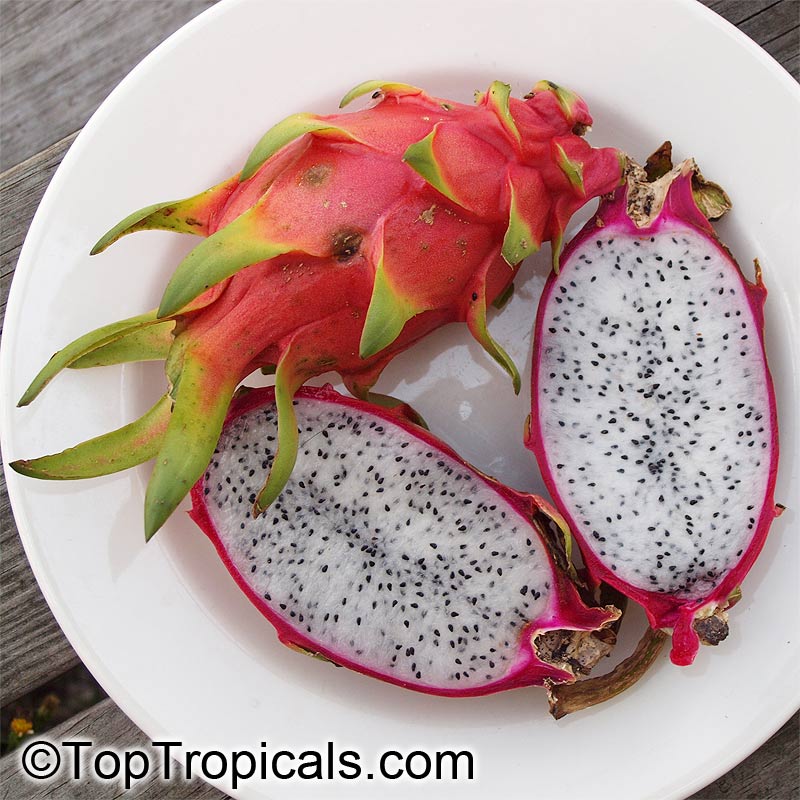
Hylocereus and Selenicereus Dragon Fruit or Pitaya
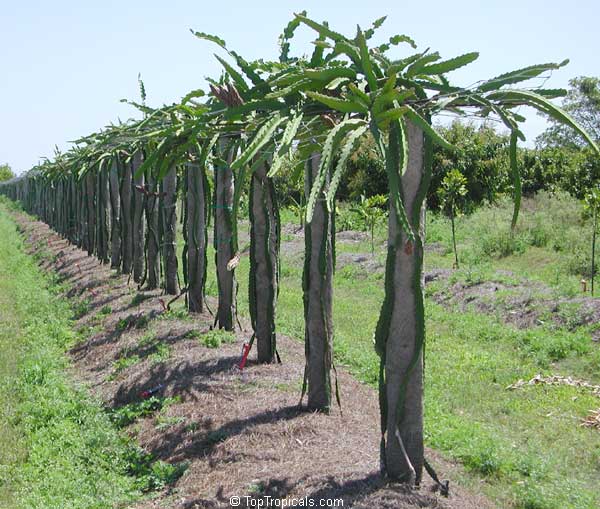
Hylocereus and Selenicereus Dragon Fruit or Pitaya trees on trellis
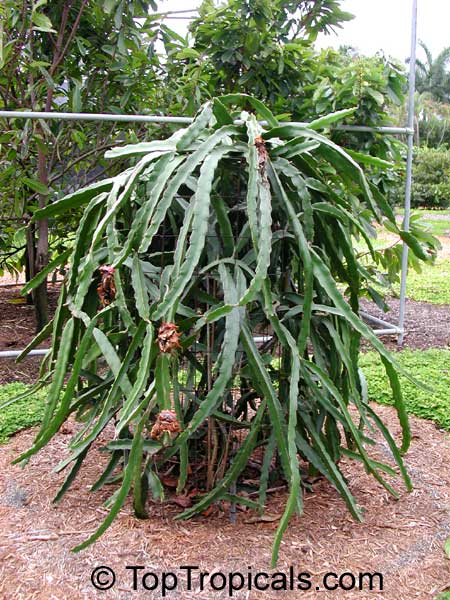
Hylocereus and Selenicereus Dragon Fruit or Pitaya on trellis
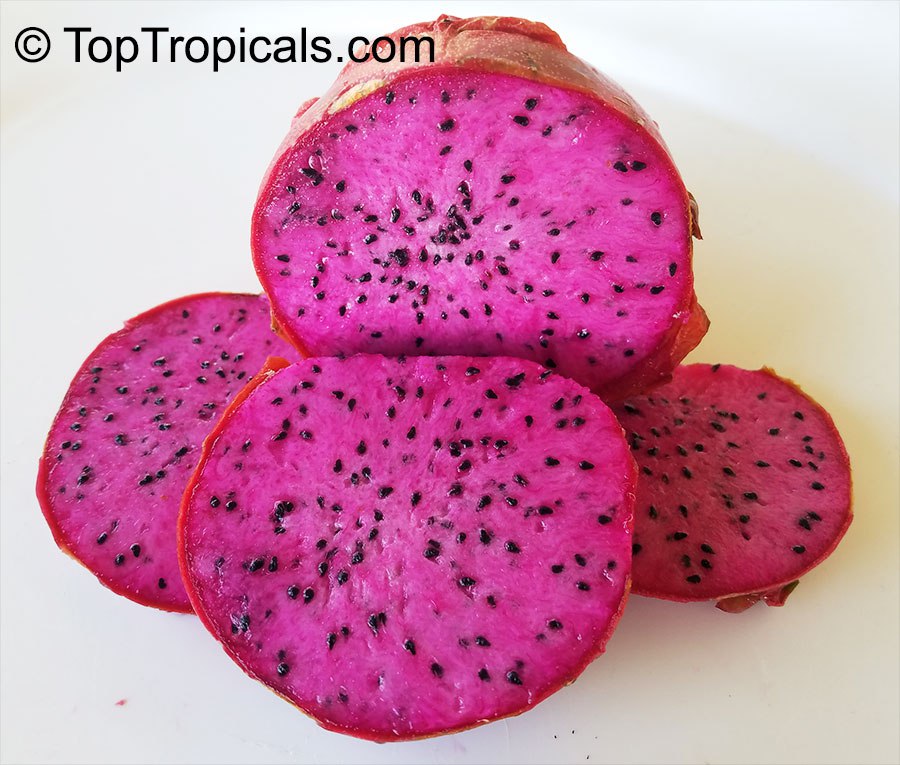
Hylocereus and Selenicereus Dragon Fruit or Pitaya red fruit
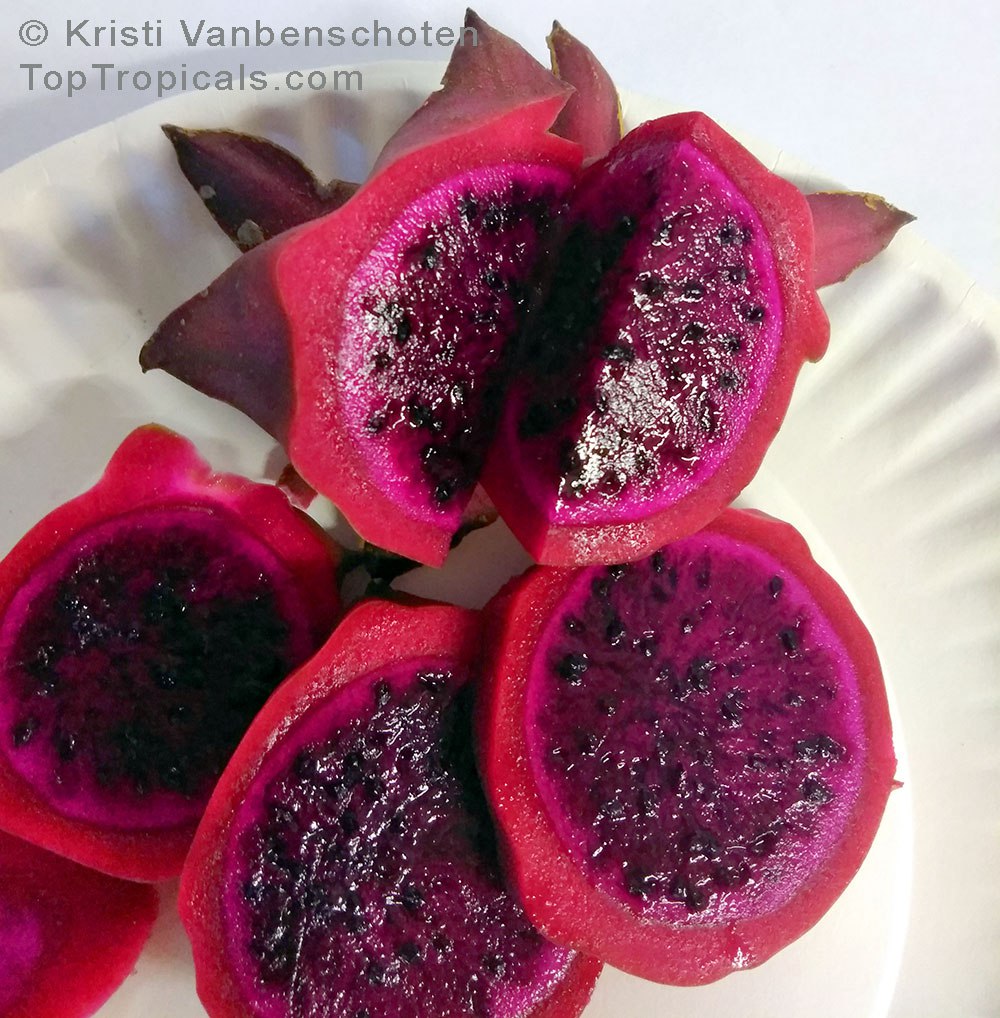
Hylocereus and Selenicereus Dragon Fruit or Pitaya purple fruit
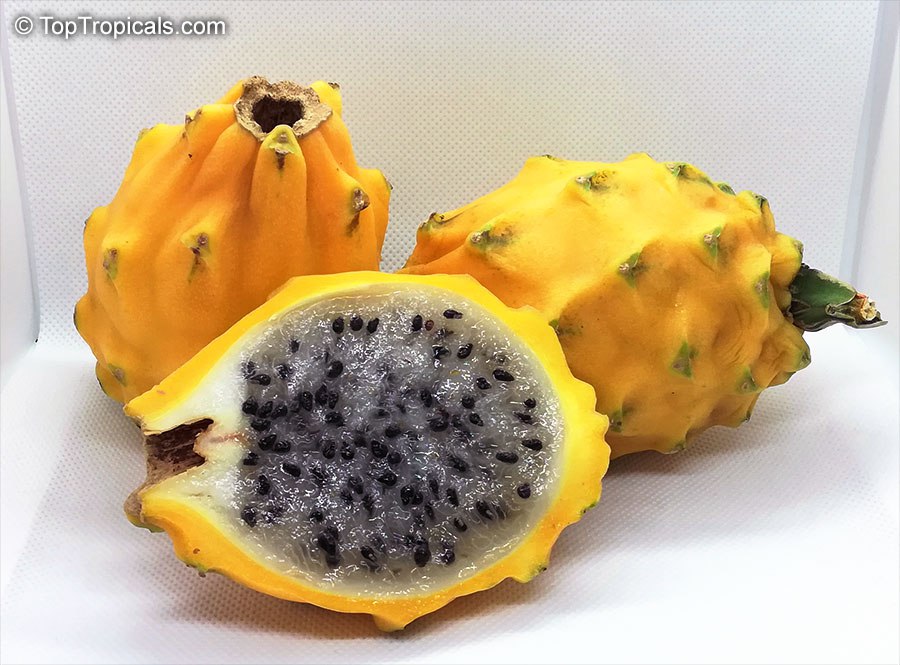
Hylocereus and Selenicereus Dragon Fruit or Pitaya Yellow Parlora
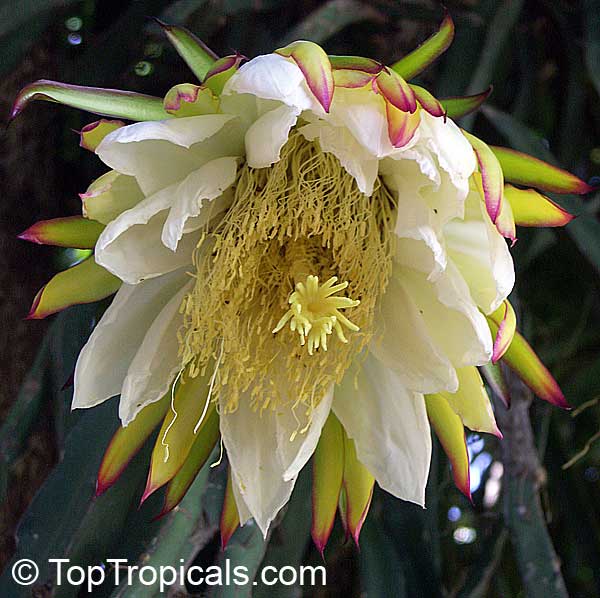
Hylocereus and Selenicereus Dragon Fruit or Pitaya flower
🐲 What does a dragon taste like? Does Dragon Fruit come from a monster cactus? Learn why you need to grow your own. 🌵
🔴 You may have tried a Dragon fruit from the store l, but do you know how it grows? On a cactus tree!
🔴 Names: varieties of Hylocereus and Selenicereus - these fruit bearing cactus plants are also called Dragon Fruit or Pitaya.
🔴 Commercially grown fruit sold in a grocery store may be tasteless. You need to grow your own good variety to have tasty, sweet, flavorful fruit!
🔴 Dragon fruit comes in many varieties. Colors of flesh differ: white, pink, dark red and even purple. The outside of the fruit can be red/pink or yellow.
🔴 In commercial groves, Pitayas grow like cactus trees, over a strong support - big "umbrella frames" ☂️
🔴 It is an easy plant, with low water needs, takes both sun and semi-shade.
🔴 Our favorite variety is Yellow Dragon Fruit Palora, (Selenicereus megalanthus). It is the sweetest and has the most flavor of all. We shared some recipes earlier.
🔴 Can be grown in container with a wooden trellis. And the flower is beautiful, too!
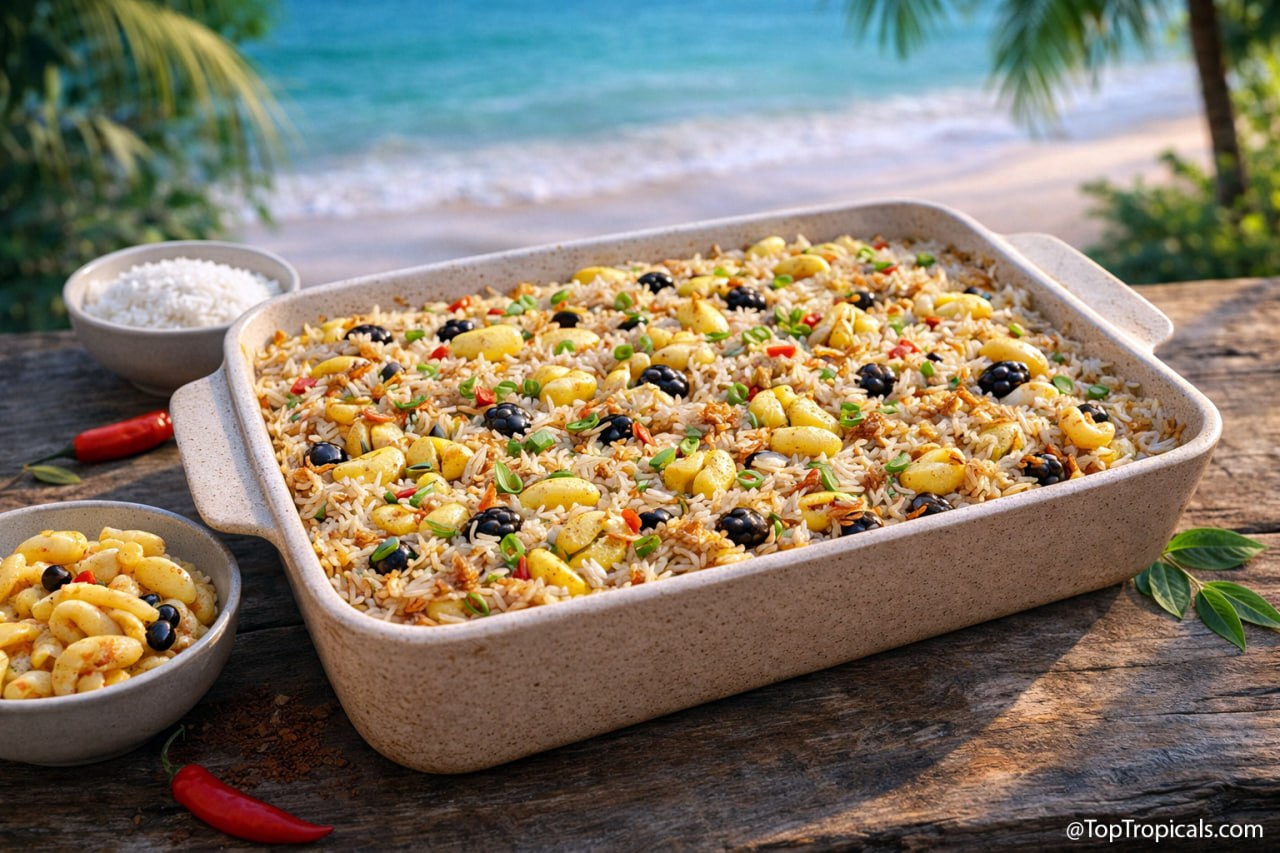
🔴Fold cooked ackee gently into warm, seasoned rice with a pinch of salt and a little oil or butter.
🔴Spread into a baking dish and bake until the top turns lightly crisp and golden.
🔴Scoop while warm - soft inside, slightly crisp on top, simple and satisfying.
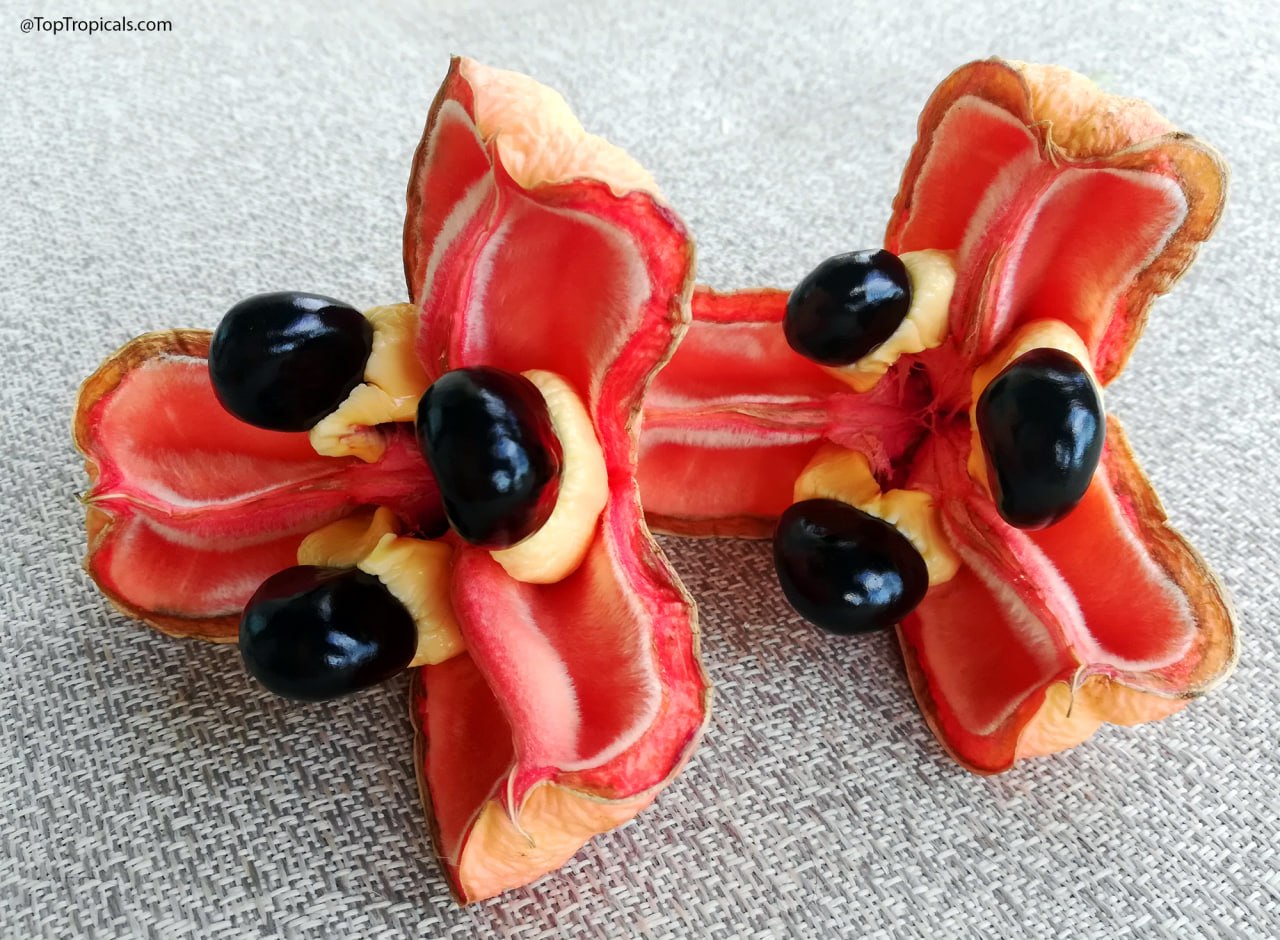
🌿 About the plant:
When properly harvested and prepared, ackee has a mild, buttery texture often compared to scrambled eggs. It contains healthy fats and is a staple ingredient in Caribbean cooking.
🏡 In the garden:
Trees require consistent warmth and do not tolerate frost. Mature trees can produce generously in suitable climates with minimal intervention.
Ordering plants in winter is often easier than people expect - and for
many plants, it is actually better. Lush foliage plants like philodendrons
and medinilla,
fine-leaved trees such as moringa, jacaranda,
and poinciana,
and even sensitive fruit trees like papaya, jackfruit
or starfruit
ship more safely in cool weather without
overheating stress.
Winter is also ideal for subtropical and cold-tolerant plants, dormant or
deciduous plants like plumeria and adenium, orchids - including ground
orchids and vanilla
orchids, and winter bloomers that flower their best right now. Winter
care is simple: water less, use gentle liquid amino-acid fertilizers like Sunshine
Boosters, and monitor insects.
In mild climates, many tropicals can be planted anytime, while
extra-tender plants can stay potted until spring. Winter is a
perfect time to bring tropical warmth indoors and enjoy greenery when you
need it most.
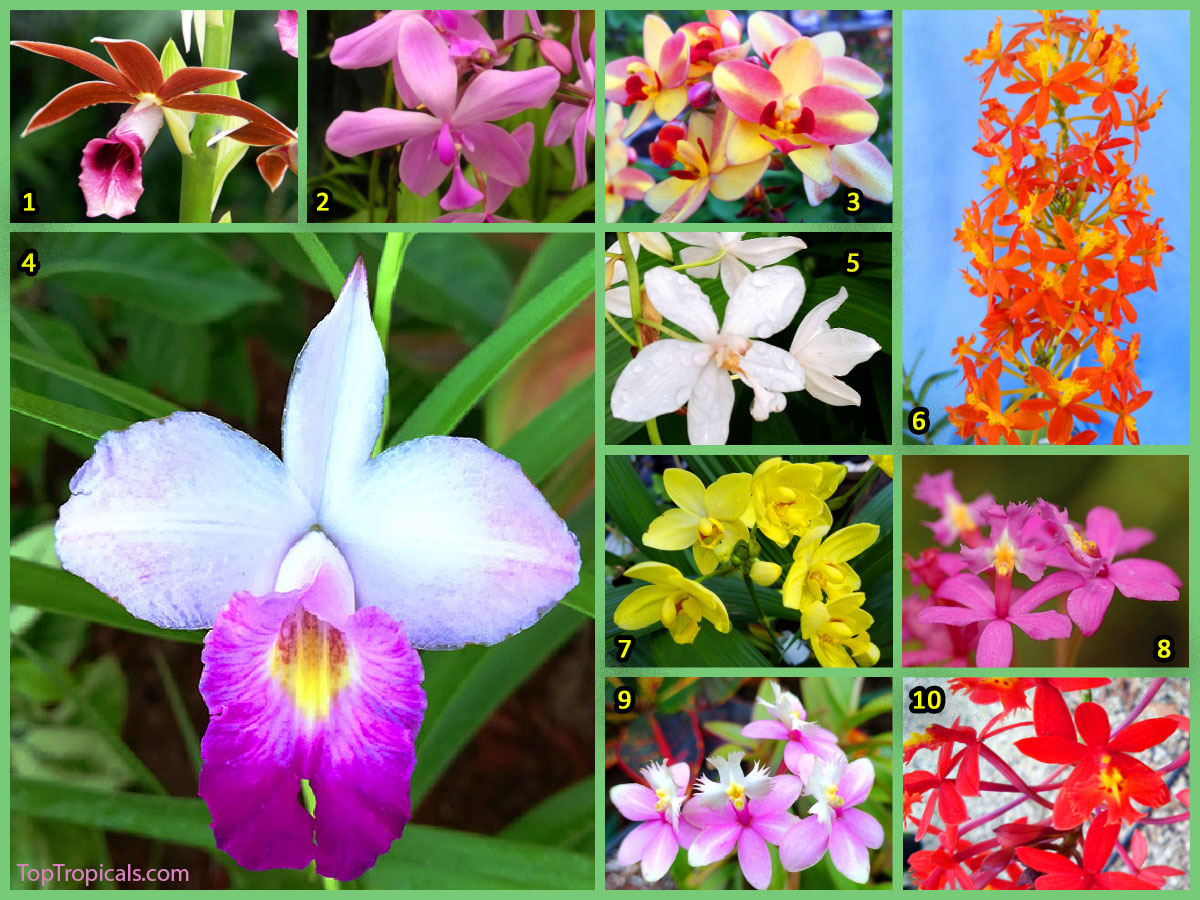
Orchids have a mystique that sets them apart — elegant, exotic,
almost unreal in their perfection. But let’s be honest, not everyone
has
luck with the fancy ones that cling to trees or need greenhouse tricks.
Ground orchids are different. They grow in regular garden soil, bloom in
sun or shade, and come in all sorts of shapes and colors. They’re the
orchids you don’t have to fuss over.
Nun Orchid
(Phaius tankervilleae) – Ever wonder why it’s called the
Nun
Orchid? The flowers really do look like the white veil and brown habit nuns
used to wear. The plants send up spikes 3–4 ft tall with 10–20
fragrant blooms that open one after another for weeks. I like them best
tucked
under trees where they just keep spreading year after year.
Spathoglottis – The nonstop bloomer – If you want flowers
that
just don’t quit, this one’s it. Spathoglottis clumps up and
throws
spikes of purple, pink, or yellow that last for weeks, then keep coming back
through the summer. In warm spots they’ll bloom almost year-round.
Honestly, it’s one of the easiest orchids you’ll ever grow.
💲
Special Offer – 20% off Ground Orchids!
Get 20% OFF ground orchids with code
ORCHID2025
Min order $100. Excluding S/H, valid online only,
cannot be combined with other offers.