Garden Blog - Top Tropicals

Date: 26 Apr 2023

The Benefits of Companion Planting
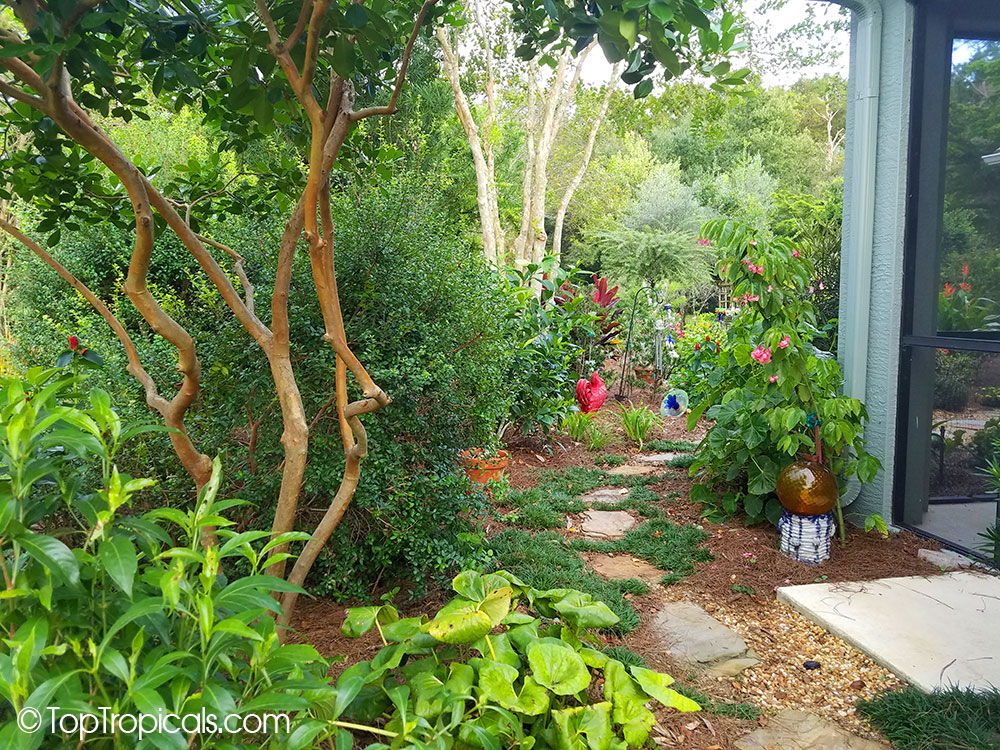
Landscaped  garden  with  companion  planting

Q: What is companion planting?

A: Companion planting is a gardening technique that involves planting different crops or types of plants together in a way that benefits all plants. This practice has been used for centuries, and it can be especially useful in tropical gardens where there is a diversity of plant life: trees, shrubs, vines and climbers, ground covers, fruit and edibles, and different flowering ornamentals. It is a great way to improve the health and yield of fruit tree crops while reducing the need for fertilizers and pesticides. By choosing the right companion plants and planning your garden layout carefully, you can create a vibrant and diverse ecosystem that will benefit both your plants and the environment.

Companion planting involves:

Planting different crops together to repel insects: adding such plants as Lemon grass, Patchouli leaf, or Moujean Tea near your vegetables can deter aphids and other pests.

Attracting pollinators - Butterfly plants. Many tropical crops, such as passion fruit, papaya, mango, and avocado, rely on pollinators to produce fruit. Companion planting can help to attract pollinators such as bees, butterflies, and hummingbirds to your garden.

Providing nutrients to the soil, adding mulch and low growing plants (ground covers) to preserve moisture.

Planting a variety of different types of plants together in order to create a more resilient ecosystem that is less susceptible to pests and diseases.

To get started, plan your garden layout and choose companion plants with similar water and light requirements.
For example, plant in the same group lush foliage plants, gingers, and flowering brunfelsias in shady areas; plant jasmines and gardenias in full sun and very well-drained spots.
Rotate annual crops regularly and experiment with combinations to find what works best. By doing this, you can create a thriving ecosystem that benefits both your plants and the environment, reducing the need for harmful chemicals.
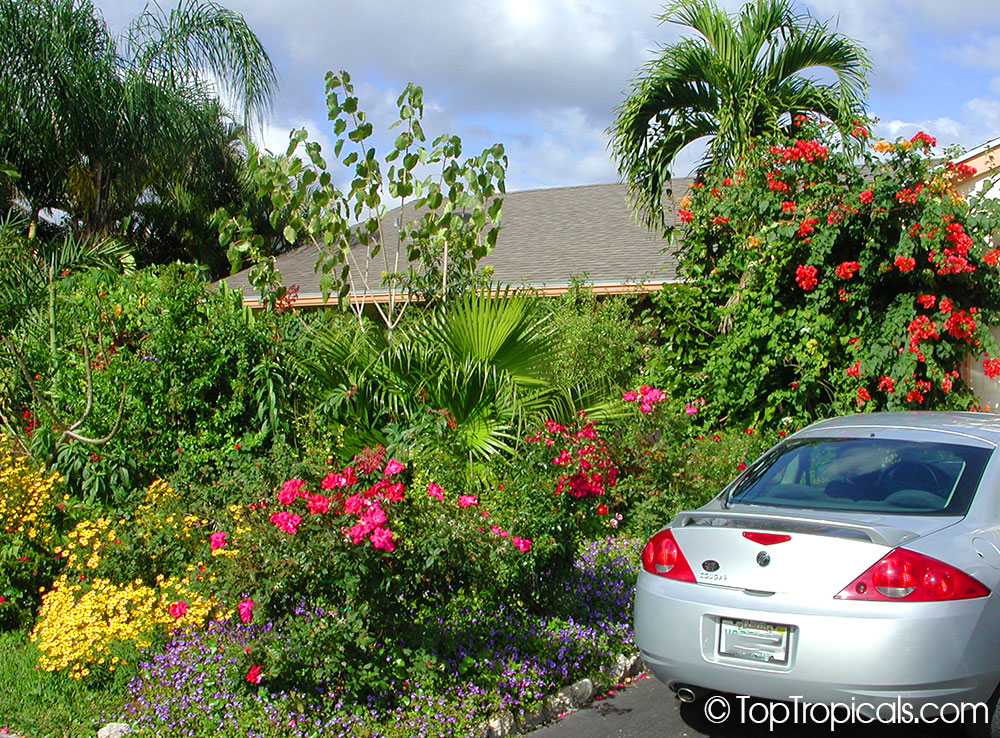
Landscaped  front  yard  with  companion  planting

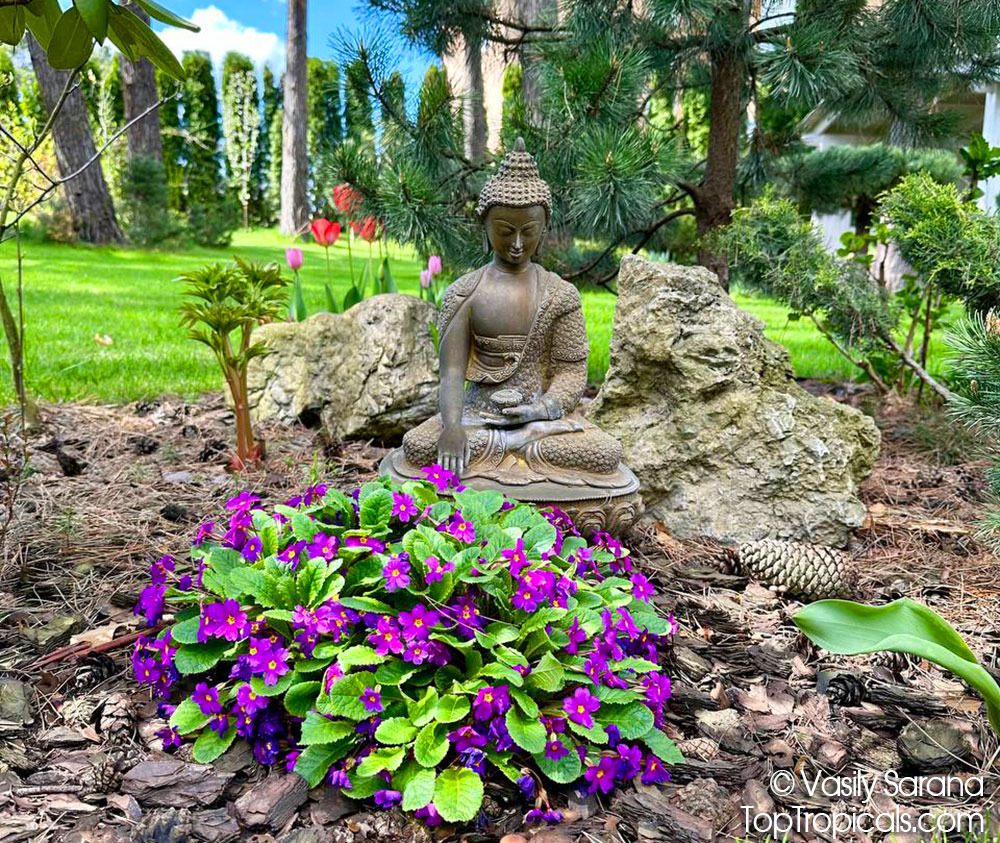
Buddah  and  flowers

Date: 27 Feb 2022

New Exotic Adeniums

Saving on your favorite plants is Easy.
Easy like Sunday Morning...


It's time for our favorite day and another Easy stroll through Top Tropicals Garden with savings of

up to 50% and MORE!

The Flower of Prosperity and Good Fortune...

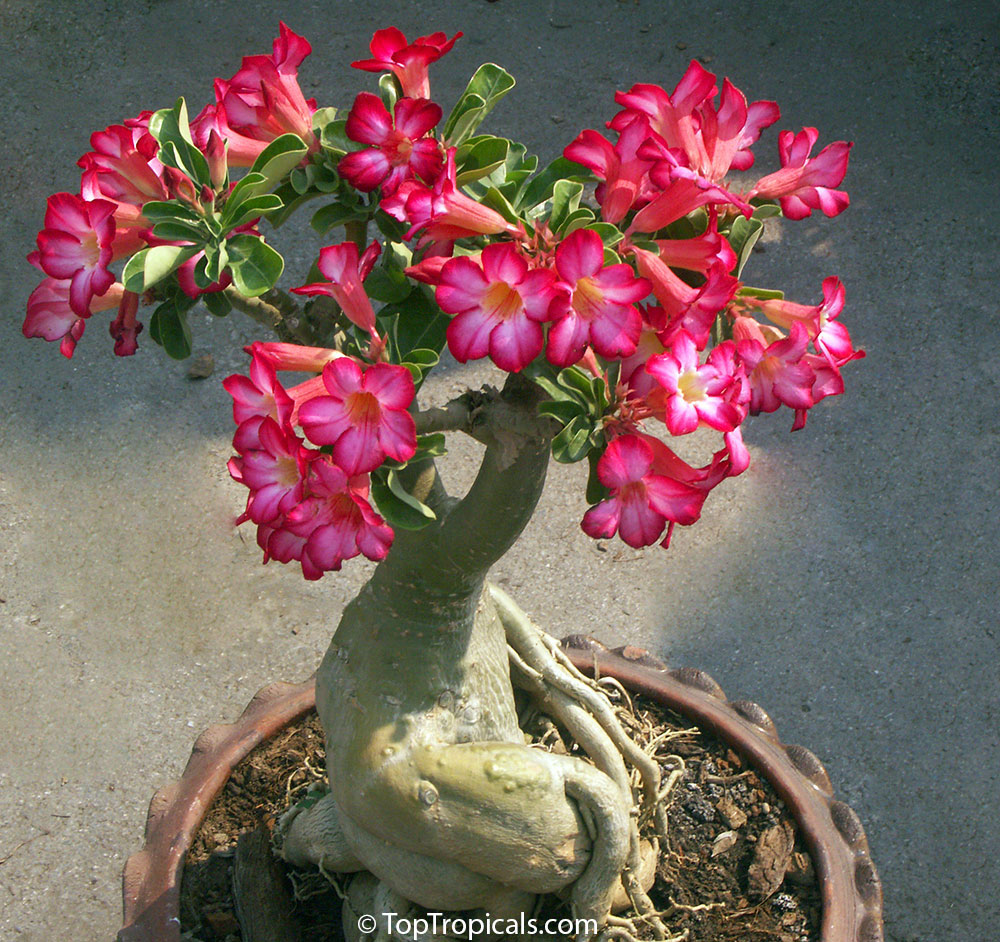
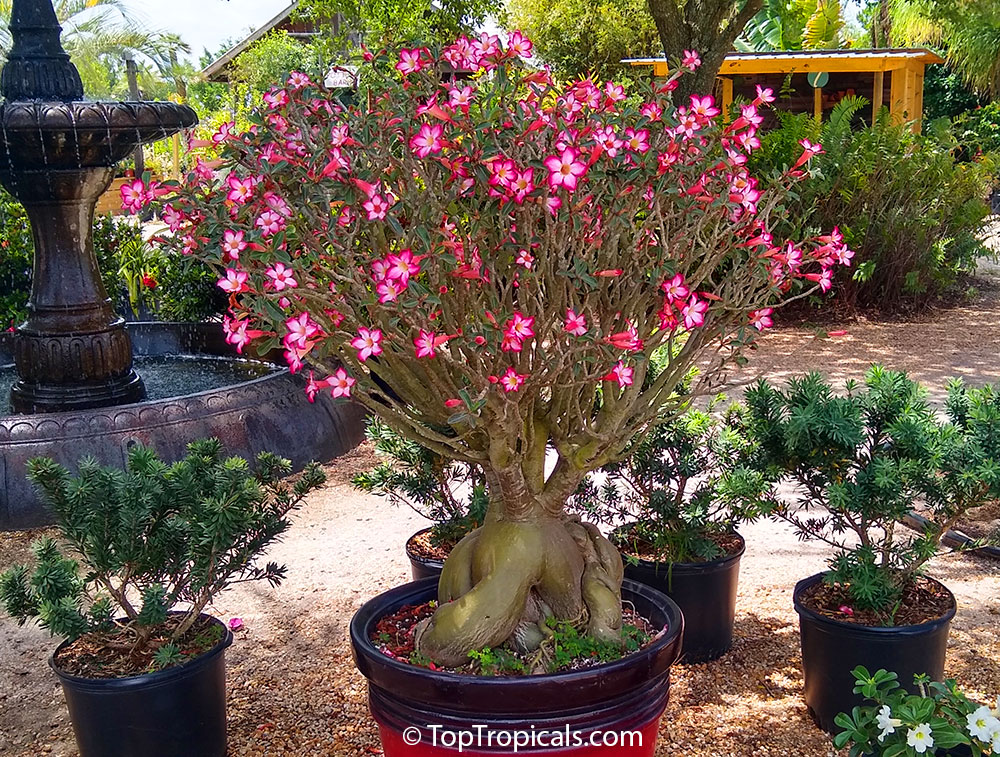
The Adenium obesum, Desert Rose, is a highly prized ornamental plant, perceived in some cultures as a sacred symbol of prosperity, abundance and good fortune. Since the Desert Rose is strong and adaptable to climatic conditions, it represents strength, persistence and resilience. We could all use a little more of these qualities in our lives...

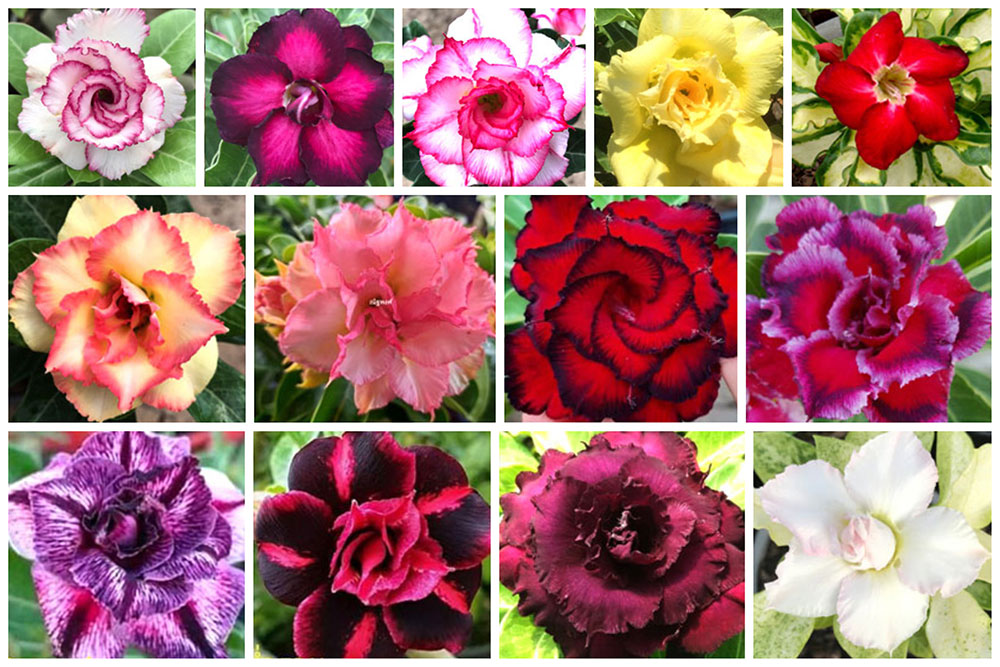
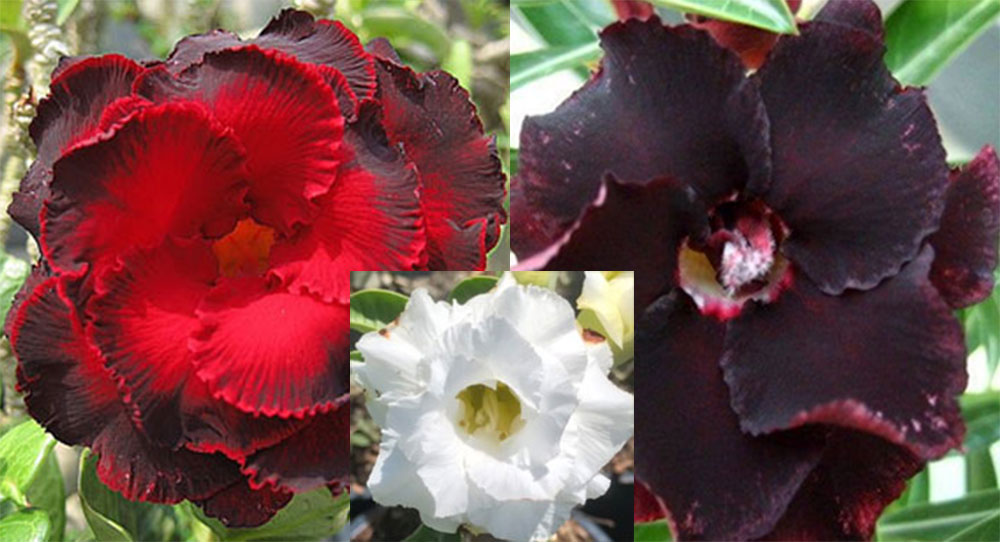
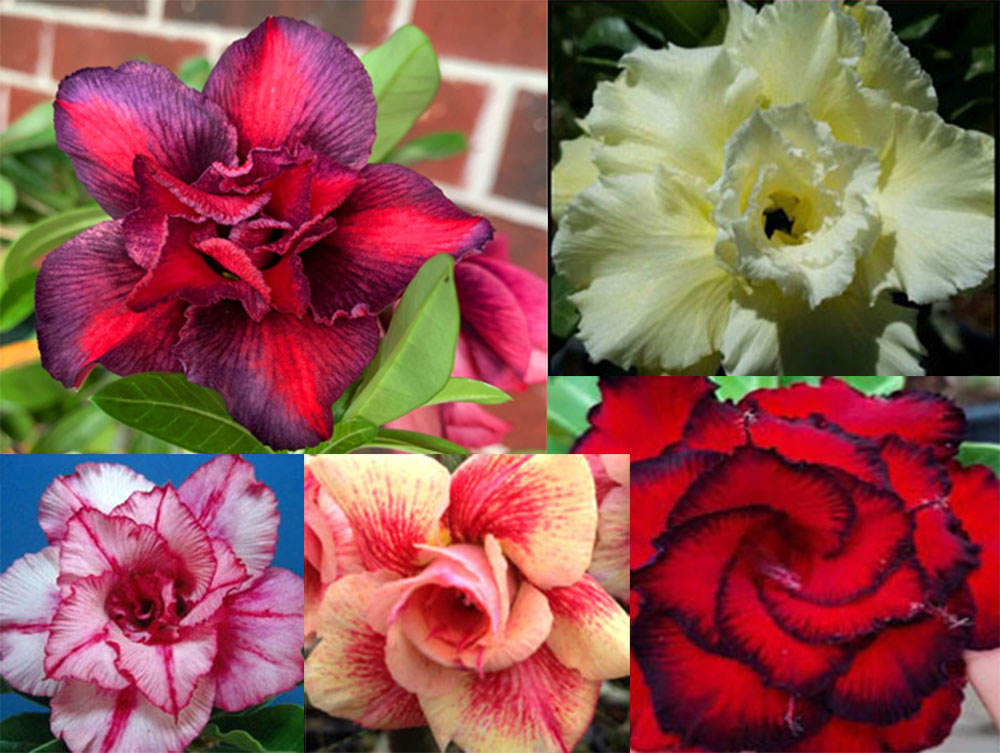
Adeniums (Desert Roses) are the easiest plants in cultivation yet they bring you so much joy with their colorful flowers and showy caudex. There are hundreds, if not thousands of amazing colors and new hybrids are created every year. Many gardeners want to collect them all! And we can help you to grow your collection. We have many new varieties in stock and are offering two special Collection Deals!

Special Deals for Desert Rose Collectors

The plants are well developed, with large caudex, grown in 1 gal pots, normally $42.95 each,
with Collection savings of $30 and $65!

3 Adeniums Collection

Regularly $128.95,
Collection price $98.95 - savings of $30 per set!

Varieties included in this collection:
RED Adenium Red Wine
WHITE Adenium Jasmine
BLACK Adenium Black Widow

5 Adeniums Collection

Regularly $214.95,
Collection price $149.95 - savings of $65 per set!

Varieties included in this collection:
PURPLE Adenium Mee Stang
LIGHT YELLOW Adenium Yellow Gold (Vanilla Gold)
STRIPED PINK Adenium Bua Champoo
ORANGE Adenium Yellow Gift (Sai Thong)
RED-BLACK Adenium Red Dragon

Now wait... Save even more with Easy Sunday:

Combine both collections and save ANOTHER $15! Use this limited time offer coupon:

ADENIUM15

Remember, this Easy Sunday Deal expires on Tuesday 3-1-22!

Date: 2 May 2019

How to propagate plants from cuttings. Top (Tropicals) secrets.

TopTropicals.com

Q: After pruning my jasmine, I have so many branches and I don't have a heart to through them away, can I use them to make more plants? Please tell me what size cuttings and do I need to remove leaves? Should I just stick them in the ground? Will they root? I don't know if you will be willing to share your secrets?

A: We are always happy to know that you grow more plants, and make our World better! These are some useful tips for the propagation of tropical plants using cuttings:

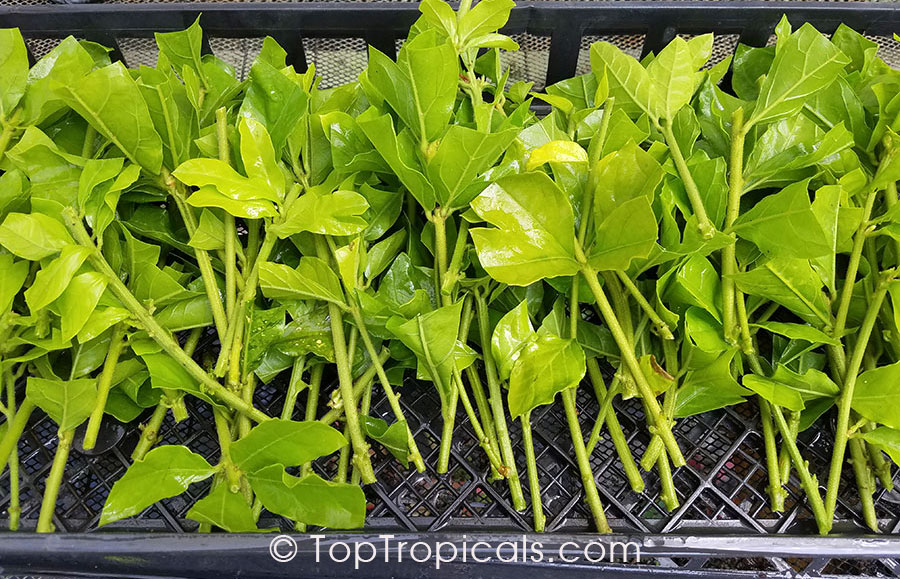
- Cuttings and leaves. Use cuttings 2-5"long. Strip leaves from the bottom. Cut larger leaves in half to reduce evaporation.
- Soak cuttings for 15-30 min in SUNSHINE solution.
- Mix. Use special well-drained mix with lots of soil conditioner: we have a special professional propagation mix for cuttings.
- Mist. Put community pots or trays with cuttings in mist, or if you don't have mist - cover the pot with a clear plastic bag to create a mini-greenhouse.
- Shade. Keep propagation pots in bright shade and never allow direct sun rays.
- Rooting hormone: yes, use it if you have it. Not only it promotes root formation but also prevents from fungus so the cuttings won't rot. We use Dip-N-Grow.
- Rooting and food. Check in 2-3 weeks for roots. Once you see the little roots, begin fertilizing with a special Baby-Plant Food and make sure never exceed recommended doze otherwise you may kill the cuttings.
- Establishing. Once roots start growing, plant in 4" pots in a well-drained potting mix and watch the beauty grow! Gradually move to the full sun only when little plants establish and start new growth.

If you are lucky to make more rare plants than you can use, contact us, we will buy them from you or trade for your dream plants! In fact, one of our customers from many years ago started selling us baby plants that he propagated from our plants, and now has a successful business (Karma Nursery); we buy a lot of plants from him every month!

For more ideas on tropical plant propagation, see also:
- Secrets of turtle tank propagation
- 5 secrets of propagation

Date: 27 Jun 2024

Celebrate America with
Independence Week Sale!

Independence  Week  Sale  Cat

Celebrate the birthday of our great Country with Top Tropicals Independence Week Sale! Finally get all the plants you ever wanted for your garden - at amazing prices! Choose from over 100 varieties of rare tropical plants specially priced for this week:

BLUE TAG SALE $9.95 >> SHOP

RED TAG SALE $14.95 >> SHOP

Feel FREE to shop away! Take advantage of this unique opportunity to enhance your garden with tropical beauty. But remember, this sale lasts only ONE WEEK, so hurry to get your plants and plant them during the best time of the year - hot summer! This is the ideal time to establish your plants quickly and ensure they become strong before winter arrives.

Check out our BOGO DEALS and Shipping discounts and make it a steal!

While supply lasts
Deals expire July 4, 2024
No minimum order
Max order: 2 plants per variety per order (for shipped orders)
Local pick up - no limit!

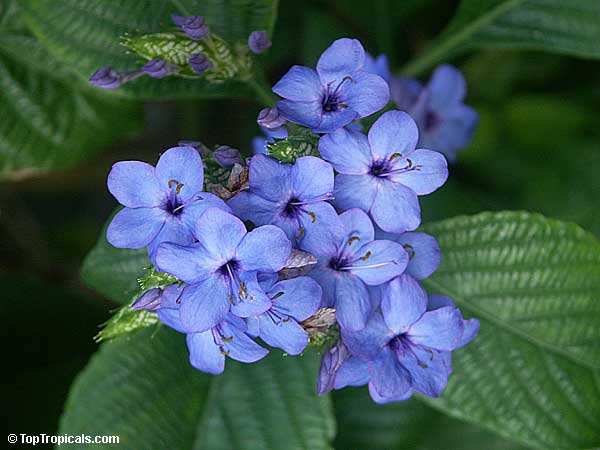
Eranthemum  pulchellum  -  Blue  Sage,  Lead  Flower

Eranthemum pulchellum - Blue Sage, Lead Flower
See more $9.95 deals

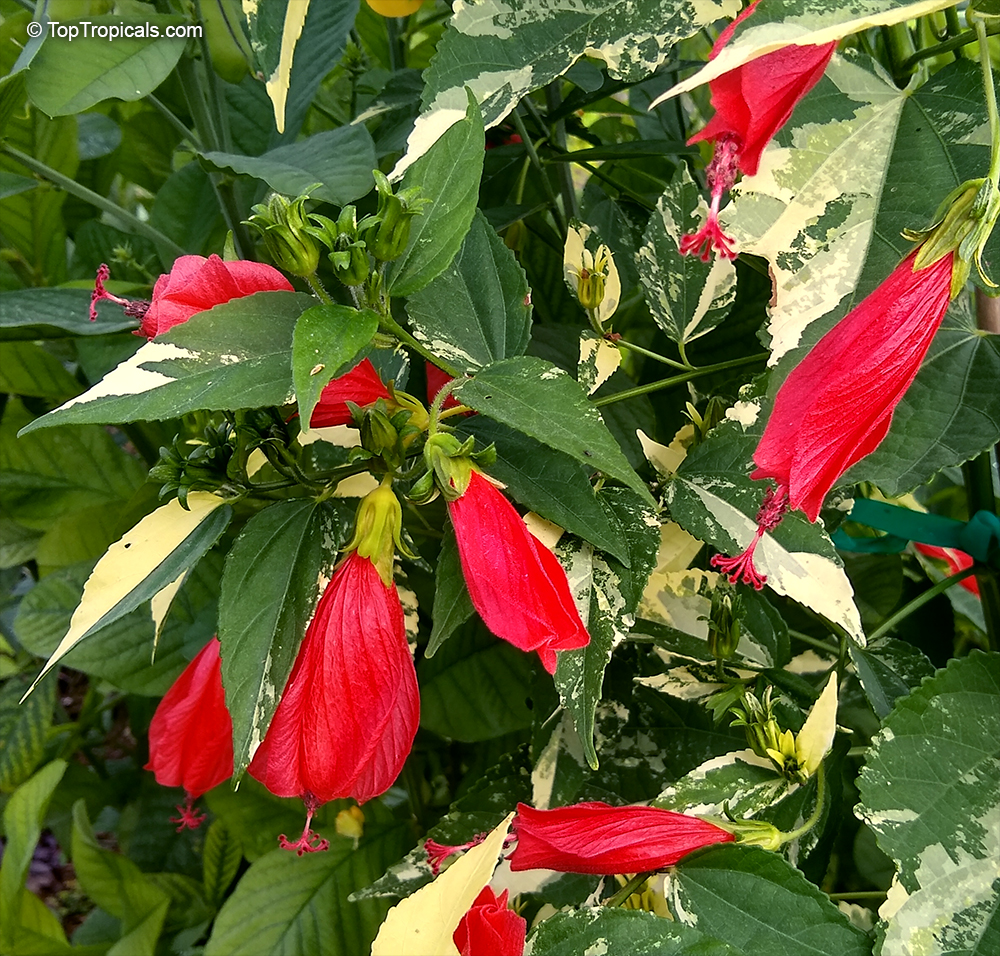
Malvaviscus  x  penduliflorus  Variegata  -  Summer  Snow

Malvaviscus x penduliflorus Variegata - Summer Snow
See more $14.95 deals

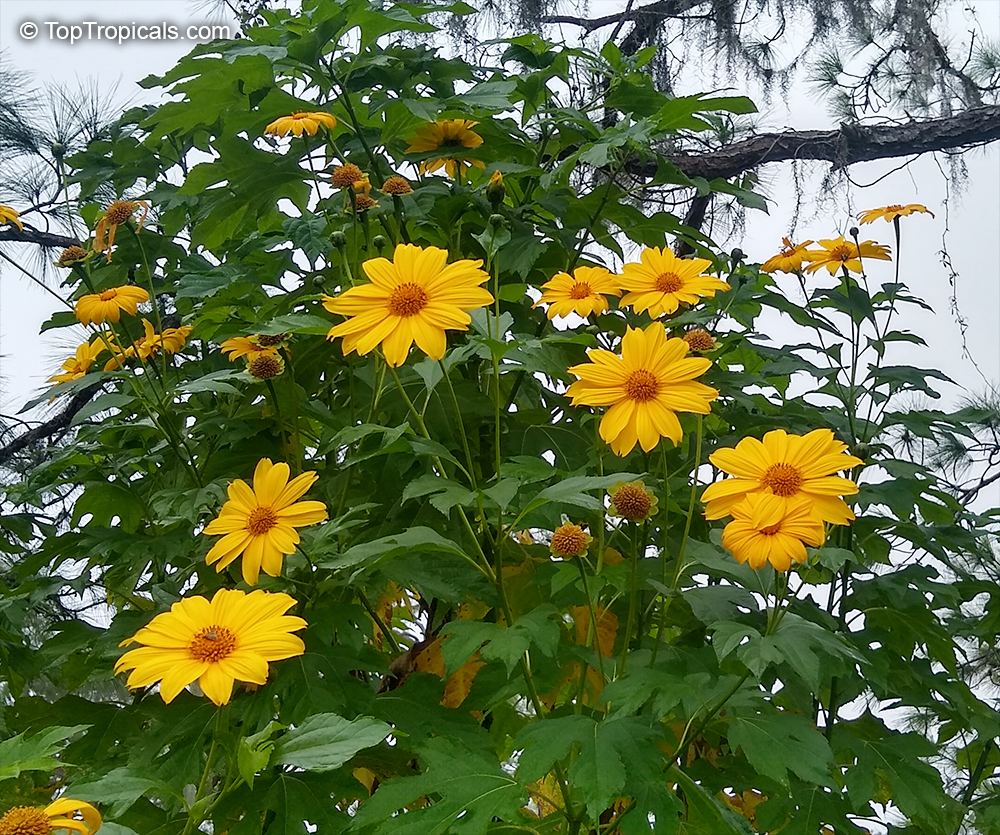
Tithonia  diversifolia  -  Sunflower  tree

Tithonia diversifolia - Sunflower tree - only $9.95!
See more $9.95 deals

Independence  Week  Sale  Cat

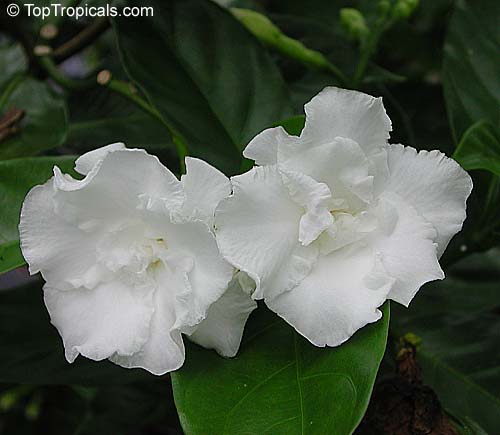
Tabernaemontana Flore Pleno, Crape Jasmine - only $14.95!
See more $14.95 deals

Date: 6 Oct 2024

Eight most spectacular gingers

White  ginger  flower

Photo above: Costus arabicus - Spiral Ginger

Q: I grow ginger for cooking, but I know that some varieties have showy flowers. What gingers can you recommend as ornamentals?

A: Ginger is famous for its culinary and medicinal uses, and many species are also strikingly beautiful, making them perfect centerpieces for tropical gardens or potted plant collections, especially in shaded spots. Here are a few of our favorite cultivars.

1. Yellow Butterfly Ginger

Hedychium  flavum  x  coronarium  -  Yellow  Butterfly  Ginger,  Nardo  Ginger 
 Lily

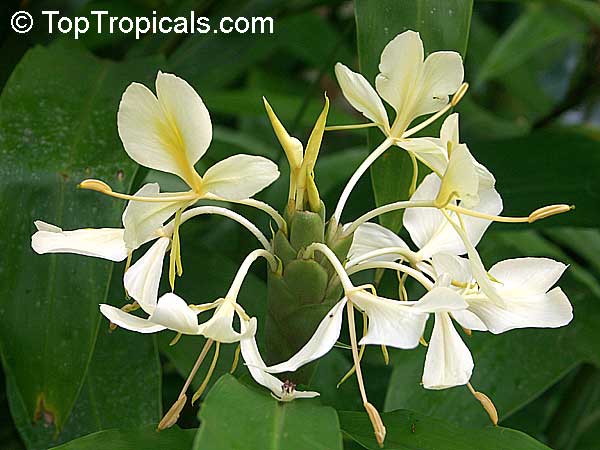
Hedychium flavum x coronarium - Yellow Butterfly Ginger, Nardo Ginger Lily - rare hybrid of White Butterfly ginger we mentioned earlier (https://t.me/TopTropicals/710), it is more vigorous and tall than its parent. With attractive long green leaves with a slight fuzziness, this ginger has open long spikes of pastel yellow flowers with a beautiful heady aroma. Exquisitely fragrant!

2. Variegated Spiral Ginger

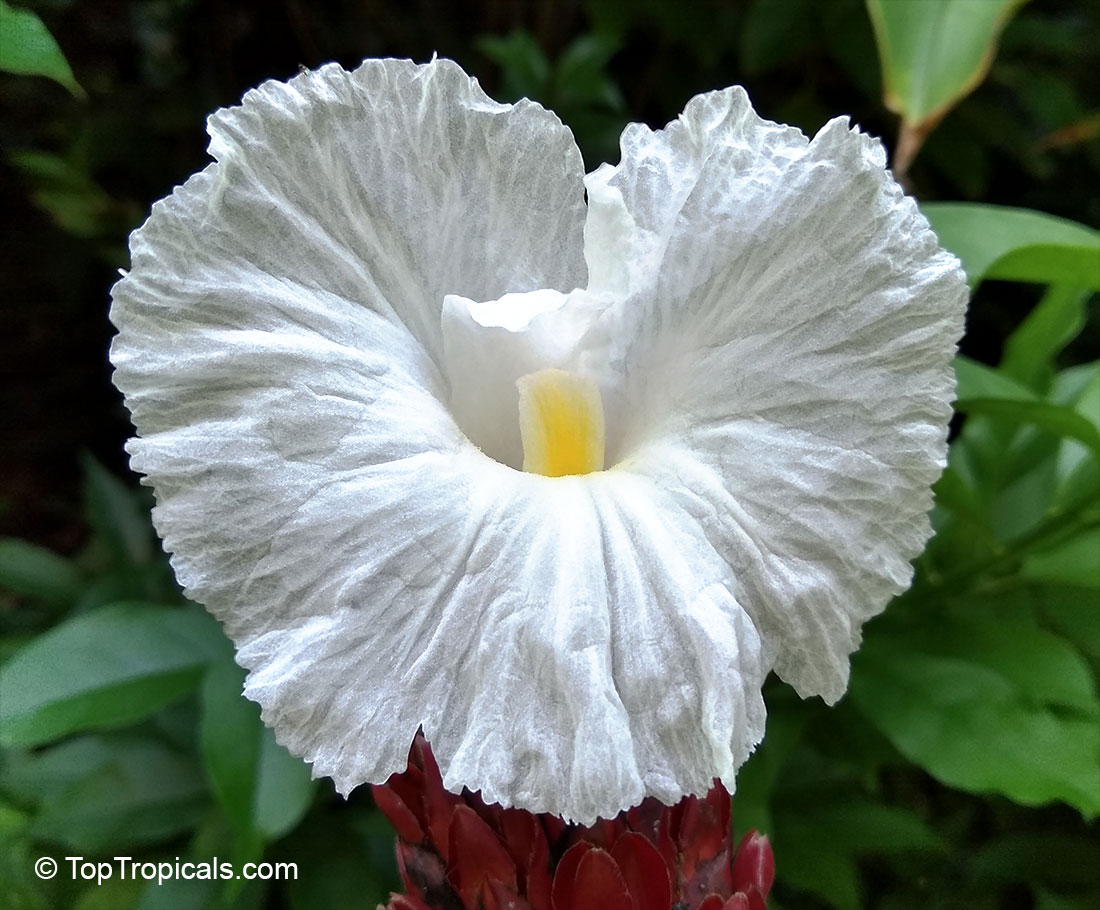
Costus  arabicus  (amazonicus)  variegata  -  Variegated  Spiral  Ginger

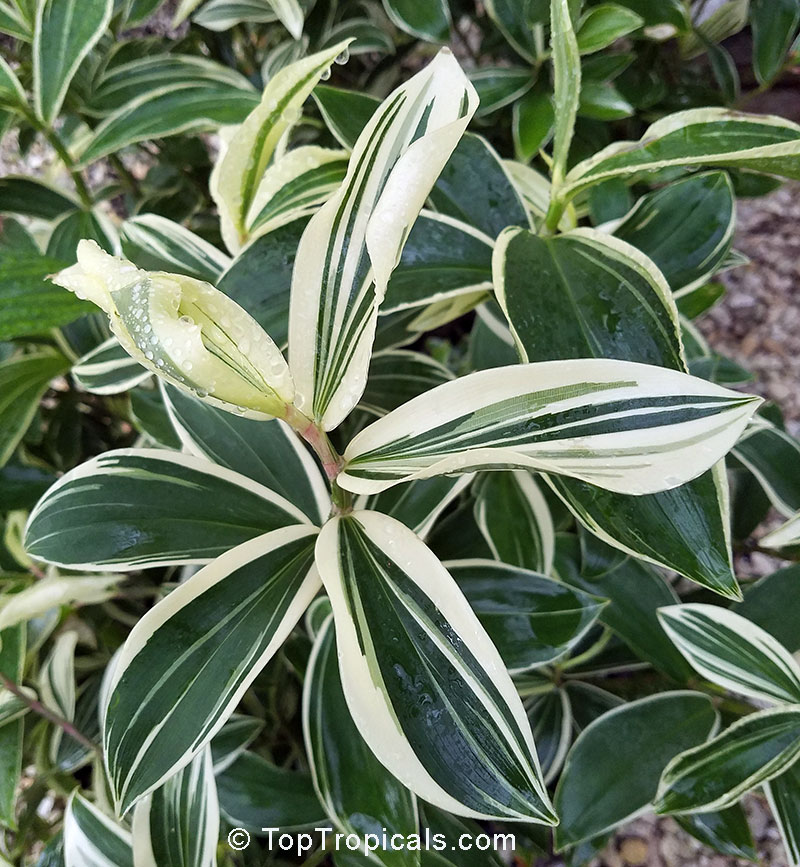
Costus arabicus (amazonicus) variegata - Variegated Spiral Ginger - is a tropical stunner originally from South America but adored in Hawaii and Florida. This ginger's eye-catching, spiraling stems are streaked with striking white variegation, topped with elegant pure white flowers with yellow centers. The pure white blooms are truly a piece of art! Perfect for shade gardens, this plant thrives in moist soil and loves plenty of water. If you're looking to add a bit of drama and elegance to your garden, this beauty is a must-have!

3. Pine Cone (Shampoo) Ginger

Zingiber  Zerumbet  -  Pine  Cone  Ginger,  Shampoo  Ginger

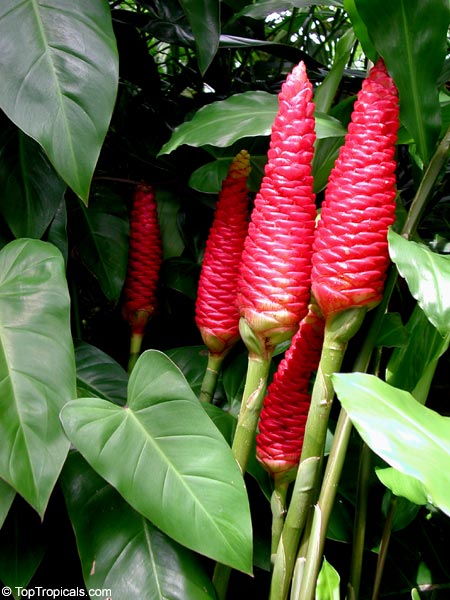
Zingiber Zerumbet - Pine Cone Ginger, Shampoo Ginger - is probably the most popular one. All parts of this ginger are spicy fragrant. The cone shaped flowers are long lasting and useful for cut flower arrangements. It is in fact used as a shampoo in Asia and Hawaii, and as an ingredient in several commercial shampoos! Pinecone ginger is considered a "canoe plant", that is, a plant introduced throughout the Pacific by the ancient Polynesian settlers.

4. Spiral Raspberry Ginger

Costus  vargasii  -  Spiral  Ginger  Raspberry  Yogurt

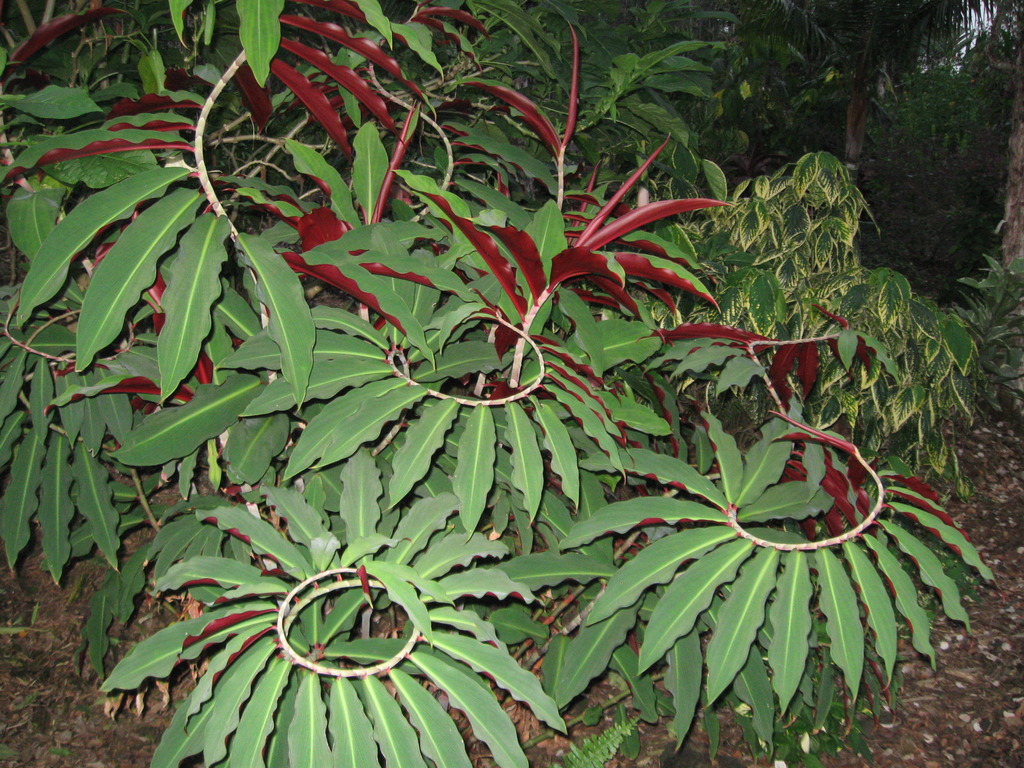
Costus vargasii - Spiral Ginger Raspberry Yogurt - The name refers to the colorful raspberry colored stem, but that's not the only colorful thing about it: the leaves are dark green, long and glossy with velvety deep purple undersides. The inflorescence is a vivid red with tight bracts and bold yellow flowers. The butterflies love to drink the nectar from the flowers. Large vigorous ginger, growing up to 5-6 ft tall.

5. Cameroon Costus African Princess

Costus  fissiligulatus  -  African  Princess,  Cameroon  Costus

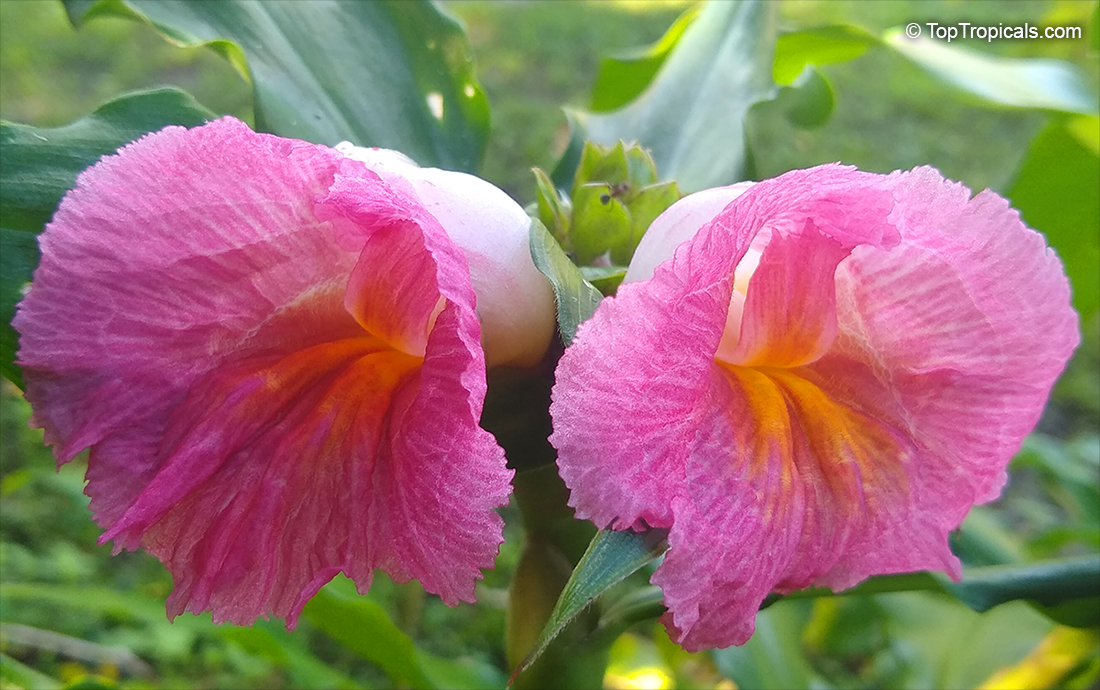
Costus fissiligulatus - African Princess, Cameroon Costus - from Gabon in West Africa. It has a dazzling pink trumpet flower with a yellow throat. It is very floriferous with an inflorescence of numerous flower buds on a shortish plant of 3-4 ft that stands very erect. It is an easy grower.

6. Red Button Ginger (French Kiss)

Costus  spicatus  x  woodsonii  -  Red  Button  Ginger,  French  Kiss

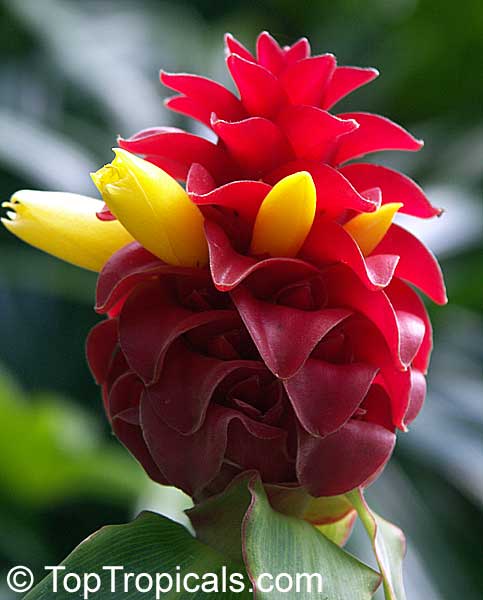
Costus spicatus x woodsonii - Red Button Ginger, French Kiss: this ginger's inflorescence resembles a cluster of bright red buttons, making it a standout in tropical gardens.

7. White Butterfly Ginger

Hedychium  coronarium  -  White  Butterfly  Ginger

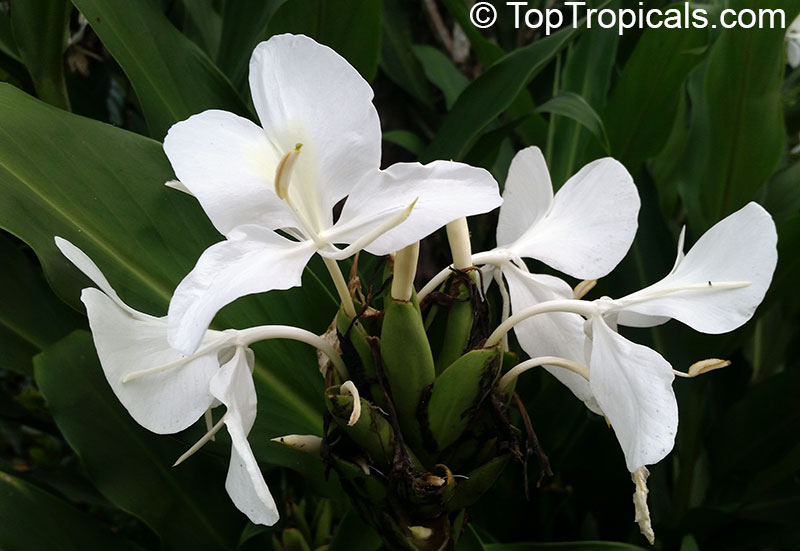
Hedychium coronarium - White Butterfly Ginger is a must for every Southern garden. It is famous for its intense, sweet scent. Symbol of Hawaiian Paradise along with Plumeria and Jasmine. It is popular in Hawaii and the Pacific Islands for leis and hair adornments and bears fragrant, butterfly-resembling flowers in summer. It has long lasting cut flowers, ideal for scenting the home. Can survive light freezes, with tops regrowing in the spring. Takes sun or shade.

8. Laos Silver Stripe Peacock Ginger

Kaempferia  angustifolia  -  Laos  Silver  Stripe

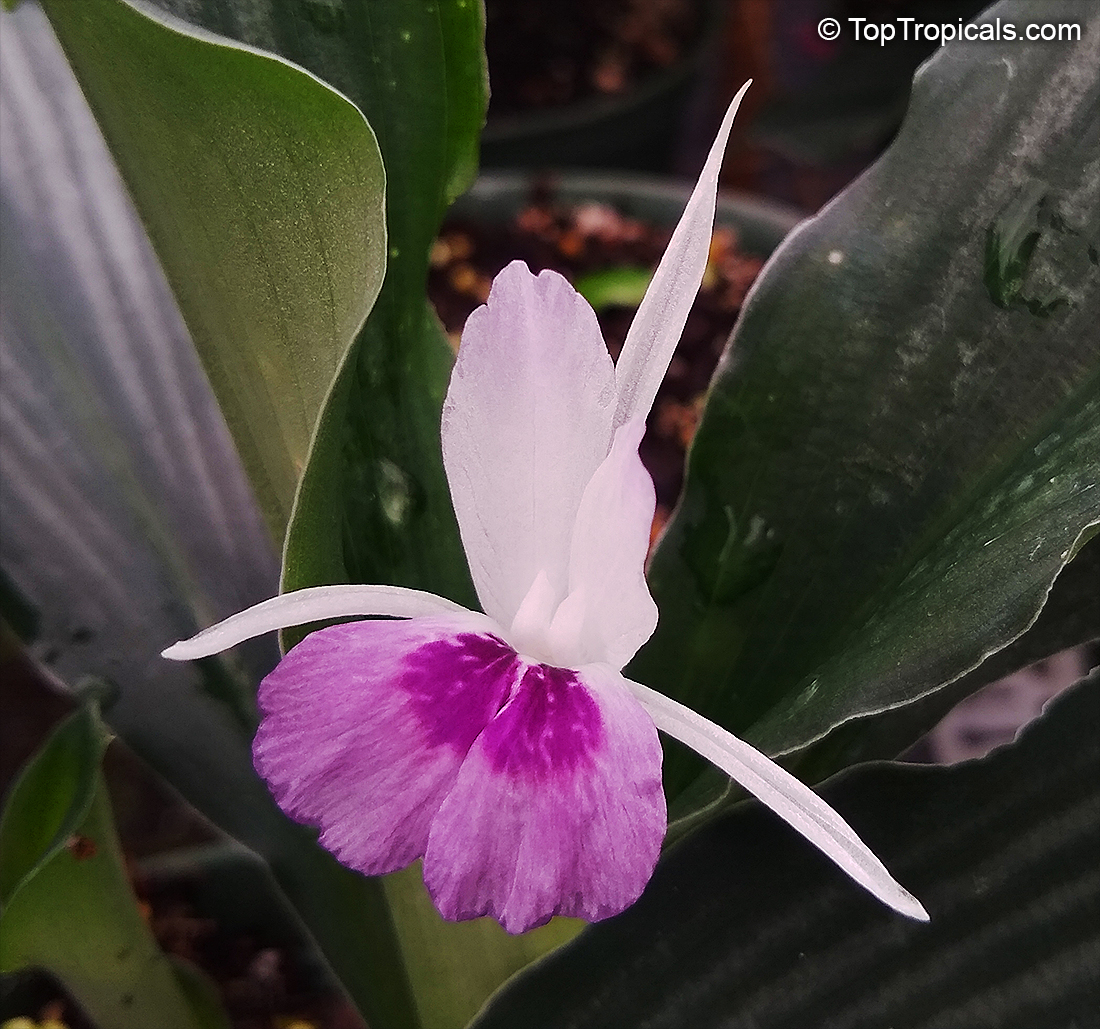
Kaempferia angustifolia - Laos Silver Stripe is one of the most beautiful of all the Kaempferia Peacock Ginger cultivars. It is one of the large types. The plant has boldly striped leaves of green and silver. The flowers are orchid shaped white and purple. Small, compact perennial, great for container culture. This hard to find variety is a must for every Ginger collector.