By Tatiana Anderson, Horticulture Expert at Top
Tropicals with Smokey & Sunshine help
Eugenia brasiliensis - Grumichama fruit on the branch
Growing Eugenia Cherries (Cherry of the Rio Grande & Grumichama)

Cherry of the Rio Grande and Grumichama are compact, adaptable tropical
fruit trees well suited to Southern landscapes. While forgiving, they
perform
best when planted correctly from the beginning.
Site and Planting
Drainage is essential. Avoid low areas where water collects. Plant on
a slight mound if soil is heavy or clay-like.
Choose full sun for best flowering and fruit production. Partial shade
is tolerated.
A south or southeast exposure near a wall improves cold resilience and
reduces wind stress.
Dig a hole twice as wide as the container, but no deeper than the root
ball.
Set the tree level with surrounding soil. Do not bury the trunk.
Water and Feeding
Water regularly during the first few months while roots establish.
Once established, trees tolerate short dry periods but fruit best with
moderate, consistent moisture.
Established Cherry of the Rio Grande can tolerate brief drops into the
low 20s.
Established Grumichama tolerates temperatures into the upper 20s.
Harvest and Production
Cherry of the Rio Grande fruits from late spring into summer. Pick
when fully dark and slightly soft.
Grumichama ripens quickly, often within four weeks after flowering.
Pick when glossy and deep purple-black.
Both trees often begin fruiting within 2–3 years and increase
production steadily with maturity.
Growing in Containers
Use at least a 10–20 gallon pot for long-term growth.
Ensure multiple drainage holes.
Use a high-quality, well-draining container mix. Avoid heavy garden
soil. Top Tropicals Abundance soil-less mix is specially formulated for pot
growing
Place in full sun for best fruiting.
Water deeply, then allow the top layer to dry slightly before watering
again.
Move containers to a protected area during hard freezes.
Prune lightly to maintain shape and airflow.
Common Mistakes
Planting in poorly drained soil.
Overwatering and keeping soil constantly saturated.
Over-fertilizing with excessive nitrogen.
Planting too deep and burying the trunk.
Expecting heavy crops immediately instead of allowing time for
maturity.
Which one tastes better – Cherry of the Rio Grande or
Grumichama?
Cherry of the Rio Grande has a deeper, classic “sweet cherry”
flavor with slight richness. Grumichama is softer, juicier, and often
described as cherry with hints of grape and plum. Both are excellent fresh;
Grumichama is especially popular for jam.
Which tree produces more fruit?
Grumichama typically produces heavier crops once mature and can carry
hundreds of fruits in a season. Cherry of the Rio Grande produces
consistently but
in slightly smaller volumes.
Do birds take all the fruit?
Birds are attracted to both trees, especially Grumichama. Netting during
peak ripening or harvesting promptly usually solves the issue.
Are these true "tropical" trees or subtropical?
They are best described as subtropical tropicals. Unlike ultra-tender
tropical fruits, Eugenia cherries tolerate occasional frost once
established,
making them more reliable in Southern landscapes.
Do they drop fruit messily?
Fruit will fall if overripe, but the trees are compact and manageable.
Regular harvesting prevents ground drop and keeps the area clean.
Can they be used for hedging or screening?
Yes. Their dense evergreen foliage and upright growth make them suitable
for edible hedges or privacy screens while still producing fruit.
Choosing between them is not about survival — both have proven
resilient. It is about flavor preference, crop volume, and how you want to
use
the fruit in your kitchen and landscape.
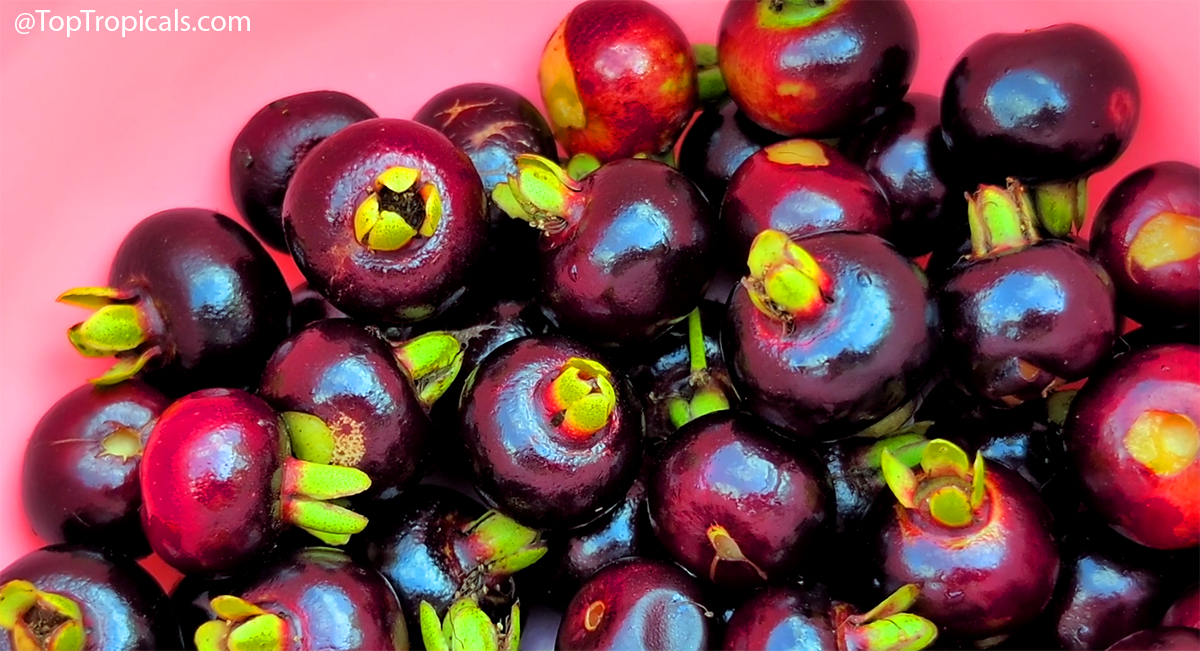
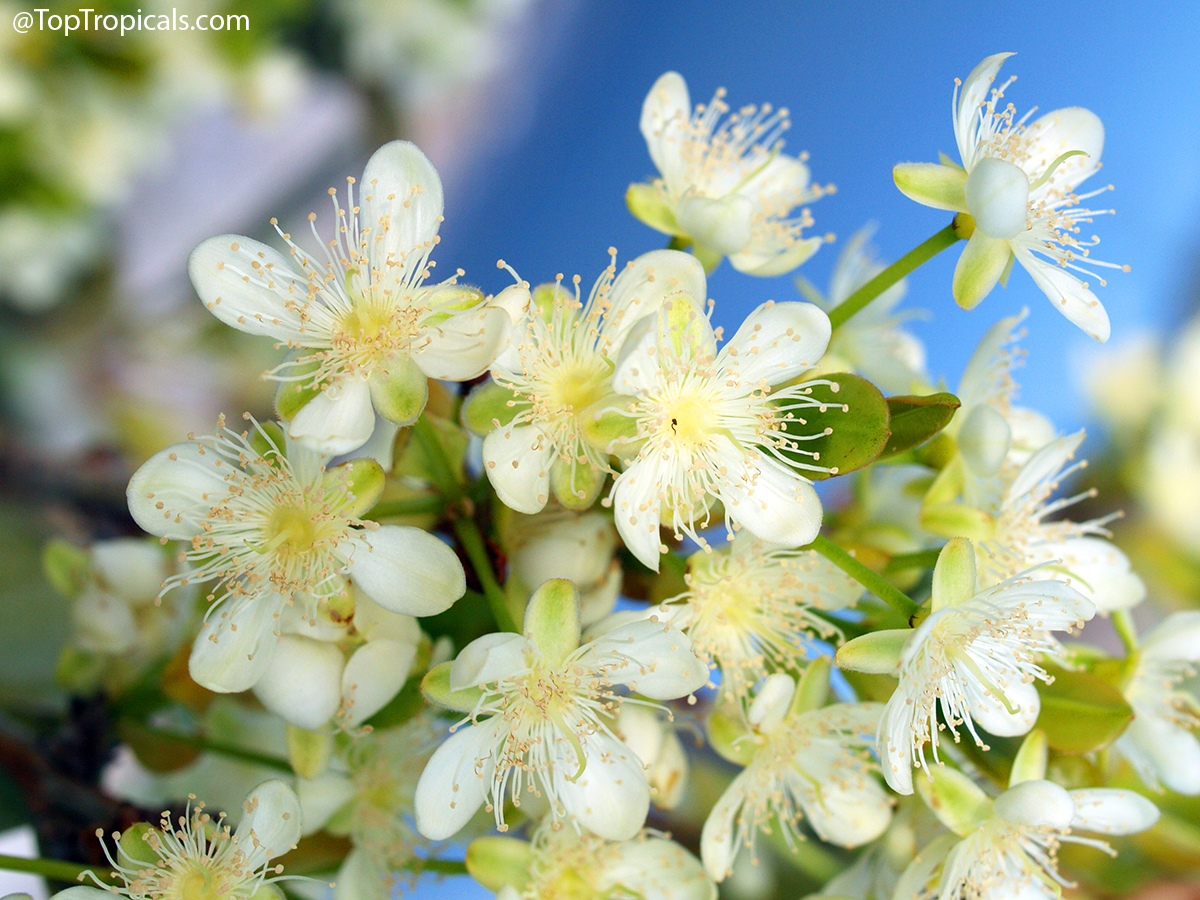
Eugenia brasiliensis - Grumichama fruit close up
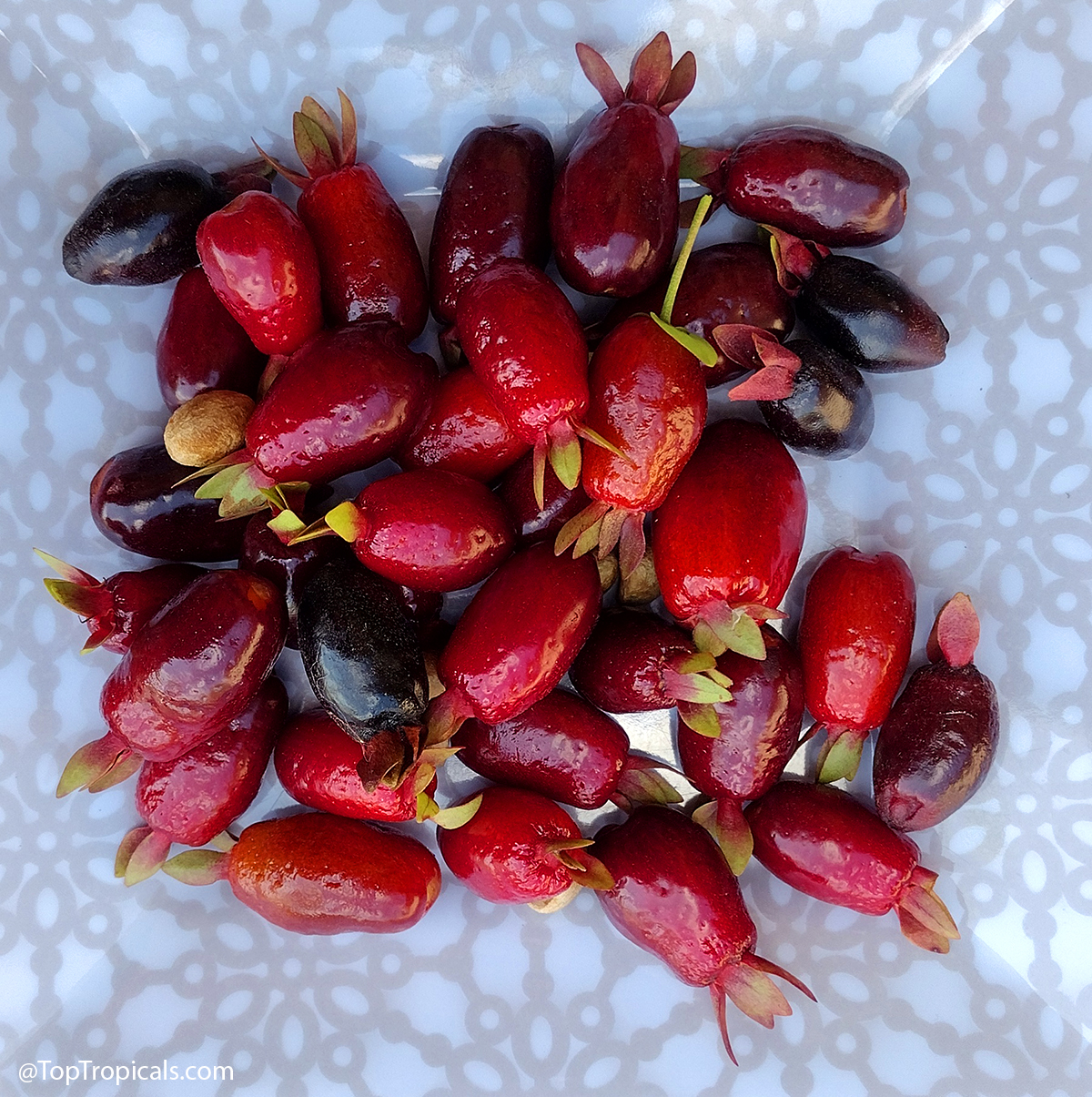
Eugenia aggregata (cv. Calycina), Cherry of the Rio Grande
When northern gardens fade into gray, our tropicals wake up. Winter is
color season here - and even if you live up north, you can still enjoy these
same flowering trees indoors or on a sunny patio.
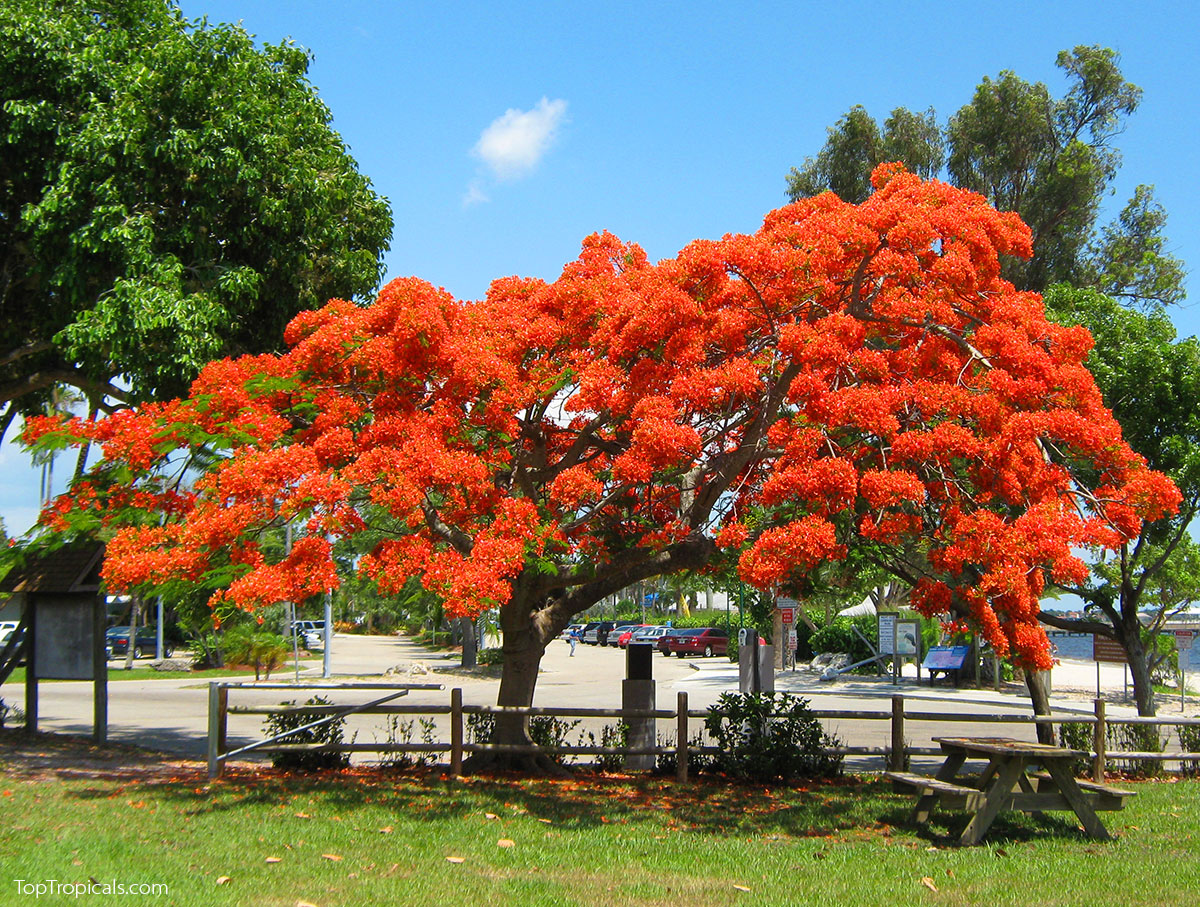
From the fiery Royal
Poinciana to the golden Tabebuia and
violet Jacaranda,
these eight trees prove that winter can bloom anywhere
How to Care for Winter-Flowering Trees
We're often asked, at Top Tropicals, “Can I really grow tropical
trees in winter?”
Yes — with the right light and care, you can.
Here’s what works best both outdoors and indoors, according to our
expert, Tatiana Anderson.
🌡️ Fall Planting Guide
Let’s talk about timing, because that’s the part most people
get nervous about.
Everyone asks: “Isn’t it too cool to plant now?” —
and the answer is no!
Fall and early winter are actually the best months for tropicals in Zones 9
to 11.
Here’s why: the air has cooled off, but the soil is still warm.
Roots love that combination. They quietly spread underground while the rest
of
the plant takes a break.
By spring, those roots are ready to feed a burst of new growth — and
that’s when you’ll see the first big flush of flowers.
Pick a sunny spot that gets plenty of light — six to eight hours
if you can.
Loosen the soil and mix in compost or pine bark so it drains well.
Dig a hole about twice as wide as the pot and just as deep.
Set the plant level with the ground, backfill, and water it deeply to
settle everything in.
Then add mulch — two or three inches is plenty — but keep it
away from the trunk so it can breathe.
Tatiana’s tip: “Fall planting builds roots while everyone
else is resting. By spring, your tree wakes up ready to grow.”
🌳 Outdoor Care (Warm Climates Zones 9–11)
Now, let’s talk about what happens after planting — because
real gardening starts once the plant is yours. Tropical trees thrive on
routine: steady sunlight, deep watering, and just a bit of attention.
Water them about once a week when the weather is mild, more often if
it’s dry or windy.
Always check the soil first — if it feels dry two inches down, go
ahead and water.
Mulch helps more than most people realize — it keeps roots cool in
summer and warm in winter, and it saves you from watering as often.
Now, for those of you in Zone 9, here’s the truth: your trees can
take a chill, but they don’t love surprises.
A quick night in the upper 20s F won’t hurt mature plants, but young
ones appreciate a little help — a frost cloth or being planted at the
south side.
And don’t underestimate the wind. Cold, dry gusts can burn leaves
faster than frost.
Use fences, hedges, or taller shrubs as windbreaks, and take advantage of
microclimates — those warm pockets next to the house, brick patios, or
corners that get extra afternoon sun.
Tatiana’s tip: “A tropical garden in Zone 9 isn’t
about fighting nature — it’s about cooperating with it. Find the
warm corners, protect from the cold wind, and your trees will thank you with
flowers all winter.”
🏚️ Indoor & Patio Care (Cooler Climates)
For our northern friends — yes, you can grow tropicals indoors!
You just need good light, warm air, and a little attention.
Pick a large pot, with drainage holes and a light tropical soil mix.
Place it in a bright window — south or southwest if you can —
or under grow lights for about 12–14 hours a day.
Keep temperatures between 65 and 85 F, and water when the top inch of soil
dries out.
Misting helps keep leaves clean and adds humidity.
Rotate the pot every couple of weeks so all sides get sun. In summer, move
your plant outdoors gradually so it can enjoy real sunlight — then
bring it back in before nights drop below 40 F.
Tatiana’s tip: “Don’t be afraid of growing trees in
pots. They adapt beautifully — just select the right trees and pay
attention to their needs.”
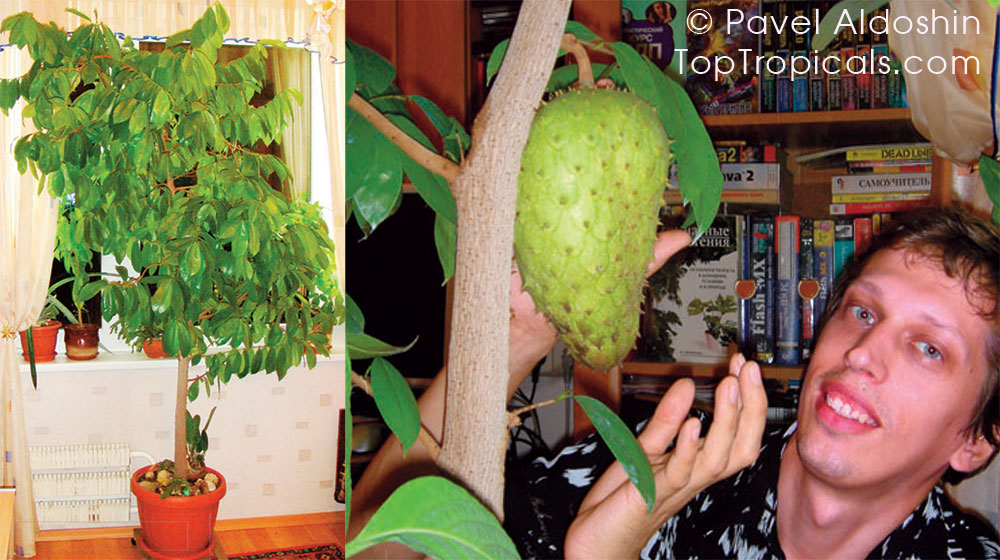
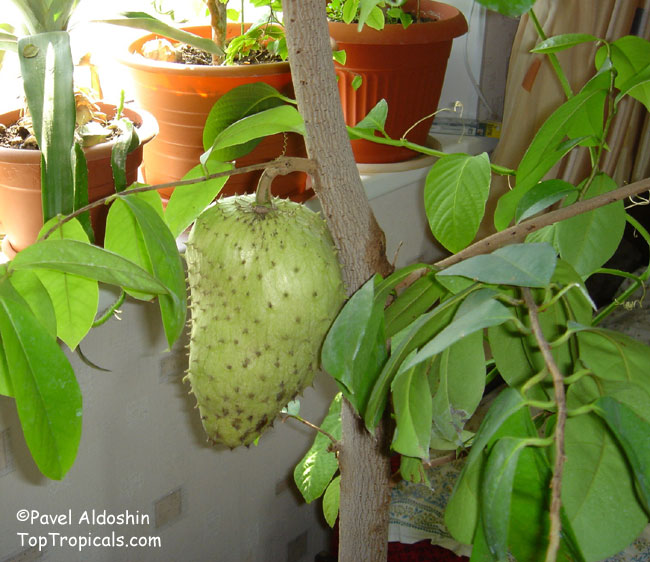
Q: Is it possible to grow soursop in a large pot for life?
A: Soursop, or Guanabana - Annona muricata - is actually one of those tropicals fruit trees that
can be easily cultivated in a container. Most plants of genus Annona have compact nature, and these fruit trees usually start
production at a young age, as early as 3 years from seed. Annona muricata
seedlings take a little longer to fruit, this is why we offer grafted trees, which can start producing right away.
We have a very interesting article about growing Soursop in an
apartment. The article was written by an indoor gardener who lives in a very small
apartment in Moscow, Russia. He grew this tree from seed and after years of
cultivation fun, he finally got several large delicious fruit! It is an amazing
story. We have it published in our Tropical Treasures magazine, download the whole issue #7, get a hard copy, or you may download PDF file of the single article.
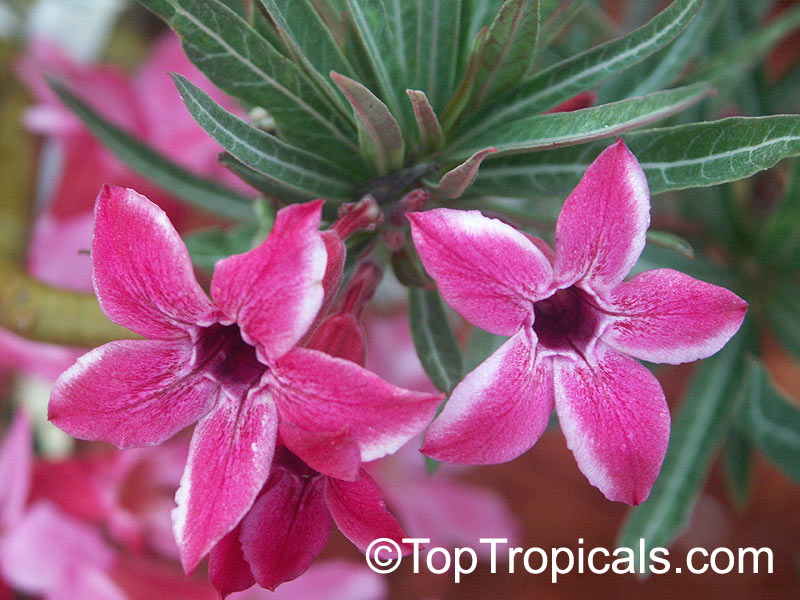
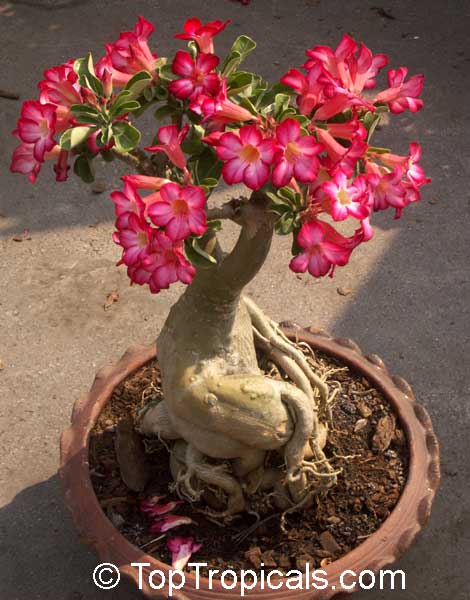
Q: I am looking forward to my three desert roses I just ordered from you and I am wondering how to take
care of them, especially during winter time. Should I put the pots in full sun
or shade? What kind of soil do they like? How often should I water them? When
it gets cooler, should I bring them inside? We do have occasional frost here
during winter.
A: Here are a few tips for your desert roses:
1. When received Adenium from mail-order, unpack carefully; branches are
fragile. Plant in well-drained potting mix. Cactus mix will do, but we
recommend special Adenium mix. If using regular acidic peat-based potting mix, you may
add sea-shells on top of soil to neutralize acidity: adeniums prefer alkaline
soils. Using clay pots is beneficial. Water once and do not water again until
soil gets dry. Place in bright shade until new leaves sprout, then the plant
can be moved to full sun.
2. Adenium is a succulent, but not a cactus. It needs watering, however
let soil dry before waterings. Reduce watering during cool season and
discontinue when plant gets dormant (drops all leaves in winter).
3. Bright light is the best for profuse flowering. However, adeniums
look much healthier in slightly filtered light rather than in all-day full
sun.
4. Fertilize and spray leaves with liquid fertilizer SUNSHINE Megaflor - Nutrition Bloom Booster. Phosphorous is responsible
both for flowering and caudex development. Avoid caudex, spray over foliage
only. Dry fertilizer can be used only during hot months.
5. Watch for spider mites during hot and dry season.
6. Give plants a break during winter dormant season. Keep in bright
shade and reduce watering to 1-2 per month or stop watering if temperature is
below 65F.
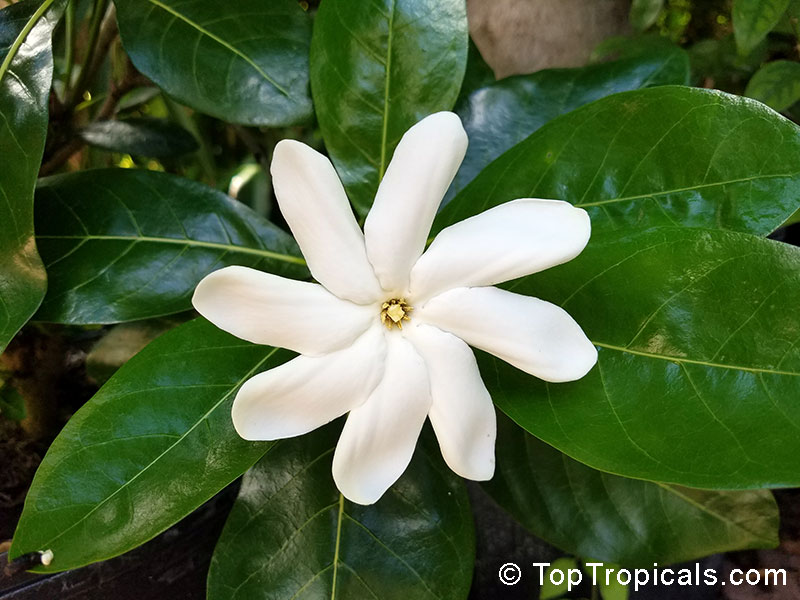
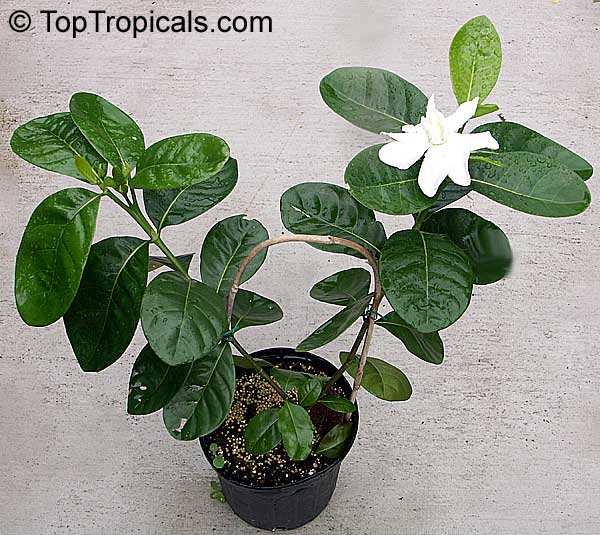
Q: I am interested in your Tahitian Gardenia and I would love to try and grow this plant in a
large container/fabric pot. The soil here where I live is terrible as it's hard rock, clay, and sand! So I'm not sure if amending the soil would help to plant in the ground? Can you tell me if this will do okay in a container or best in ground? I live here in Las Vegas, NV (zone 9a). Any information would be great to help me make a this decision, I love the selection of cool tropical plants you offer! Also my daughter does Tahitian/Polynesian dance and this would be a cool "topping on the cake" if she could have a live Tiare flower in her performances.
A:Tahitian Gardenia will be doing best if grown in container in your
area. In its natural habitat, it grows full sun but also it enjoys mild weather
conditions and high air humidity. All gardenias prefer acidic soils. In your
area, if planted in the ground, it may be exposed to some harsh conditions:
too high temperatures, too hot sun, dry air, and as you mentioned - heavy clay
and sandy soil. You can enjoy this plant grown in container, which can be
moved as needed away from too much sun during summer months. Use well-drained potting mix. Use plastic pot, do not use fabric or clay
pots - soil will dry out too quickly.
Also remember to fertilize this plant on regular basis with a liquid
fertilizer SUNSHINE Pikake - Fragrant Flower Booster.
Grow gardenia in full sun or semi-shade during the hottest months. You may
spray it with pure water if the air too dry and hot. Enjoy your Tropical
Beauty and good luck!