Garden Blog - Top Tropicals

Date: 27 Jun 2026

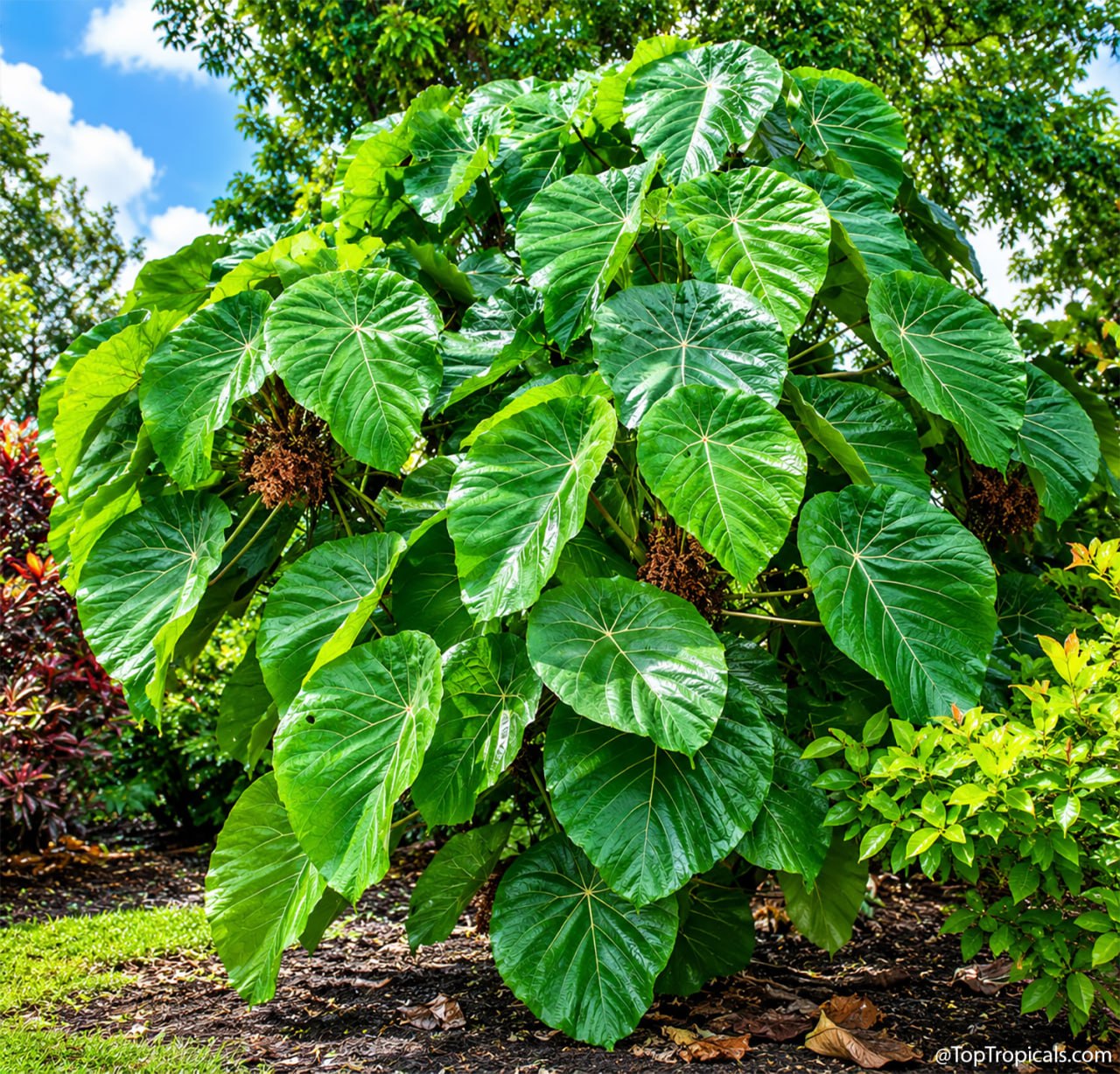
This Tropical Tree Has Leaves Bigger Than Your Head
This Tropical Tree Has Leaves Bigger Than Your Head

This Tropical Tree Has Leaves Bigger Than Your Head


One look at Macaranga grandifolia and most gardeners have the same reaction: "What is THAT?"
Nicknamed the Elephant Ear Tree, this rare tropical beauty produces enormous, glossy leaves that can easily grow larger than a person's head. The effect is dramatic, bold, and impossible to ignore.


☂️ A Living Jungle Umbrella


Native to tropical regions of Southeast Asia and grown widely in Hawaii, Macaranga forms a small upright tree with huge rounded leaves stacked along its stems like giant green shields.

Unlike many tropical plants that rely on colorful flowers, Macaranga's foliage is the entire show. The leathery leaves create an unmistakable rainforest look that instantly transforms a garden into something exotic.

☂️ Why Gardeners Fall in Love With It


· Massive elephant-ear-shaped leaves
· Fast enough to make an impact quickly
· Rare and hard to find
· Surprisingly easy to grow
· Few serious pest or disease problems
· Excellent for creating a lush tropical effect

Even a young plant becomes a conversation piece.

☂️ Bigger Than Most Elephant Ears


Despite its nickname, the leaves often resemble real elephant ears more than many of the plants commonly sold as "elephant ears."

The tree grows upright and relatively narrow, making it useful where space is limited but a bold tropical statement is desired. Mature specimens create a striking column of giant foliage that looks almost prehistoric.

☂️ Easy Tropical Luxury


Macaranga thrives in warm, frost-free climates and appreciates rich, moist soil. It can grow in nearly full sun with adequate water, but the largest and most attractive leaves usually develop with some protection from intense afternoon sun.

It also performs well in large containers, making it an excellent choice for patios and tropical plant collectors.

☂️ The Plant Nobody Knows About


Perhaps the biggest mystery about Macaranga is why it isn't grown more often. It combines spectacular foliage, easy care, and a truly unique appearance, yet remains surprisingly uncommon in Florida gardens and nurseries.

If your goal is to create instant tropical drama, few plants deliver more impact than the Elephant Ear Tree. One glance at those gigantic leaves and you'll understand why collectors become obsessed with it.

🛒 Grow Your Own Elephant Ear Tree with Giant Leaves

📚 Learn more:
· Macaranga grandifolia in Plant Encyclopedia
· One look and you're hooked: Macaranga!
🎥 Shocking ears of Macaranga

#Nature_Wonders #Trees #Discover

Macaranga Plant Facts

Botanical name: Macaranga grandifolia, Macaranga longifolia, Macaranga mappa
Also known as: Macaranga, Nasturtium Tree, Parasol Leaf Tree, Bingabing, Sun Parasol Shrub, Elephant Ear Tree
USDA Zone: 9 - 11
Highligths Large shrub 5-10 ft tallSmall tree 10-20 ftSemi-shadeFull sunWatering: Regular. Let topsoil dry slightlyRed, crimson, vinous flowersOrnamental foliagePlant attracts butterflies, hummingbirdsEthnomedical plant.
Plants marked as ethnomedical and/or described as medicinal, are not offered as medicine but rather as ornamentals or plant collectibles.
Ethnomedical statements / products have not been evaluated by the FDA and are not intended to diagnose, treat, cure, or prevent any disease. We urge all customers to consult a physician before using any supplements, herbals or medicines advertised here or elsewhere.Subtropical plant. Mature plant cold hardy at least to 30s F for a short timeSeaside, salt tolerant plant
Get personalized tips for your region
🟢 Join 👉 TopTropicals

Date: 27 Jun 2026

Canistel coconut fritters: quick-n-fun exotic recipes

Canistel coconut fritters: quick-n-fun exotic recipes

🍴 Canistel coconut fritters: quick-n-fun exotic recipes


🟡Mash ripe canistel until smooth and stir in flour and a splash of coconut milk to form a thick batter.
🟡Add a drizzle of honey or a spoonful of sugar if you like a sweeter fritter.
🟡Drop spoonfuls of the mixture into a lightly oiled skillet and flatten slightly.
🟡Pan-fry until golden brown and crisp on both sides, with a soft, creamy center.
🟡Serve warm with a drizzle of honey, maple syrup, or a sprinkle of powdered sugar for a tropical breakfast or dessert.

🌿 About the plant:


Canistel, Pouteria campechiana, is a member of the sapote family. The fruit develops a smooth yellow to orange skin and firm flesh that becomes soft and custard-like when fully ripe.

🏡 In the garden:


Trees prefer full sun and well-drained soil. They handle heat well and are moderately drought tolerant once established. Light pruning helps maintain a manageable shape.

🛒 Plant Canistel Egg Fruit tree - grows well in container too

📚 Learn more:

Canistel Plant Facts

Botanical name: Pouteria campechiana
Also known as: Canistel, Eggfruit, Chesa
USDA Zone: 9 - 11
Highligths Large tree taller than 20 ftSmall tree 10-20 ftFull sunWatering: Regular. Let topsoil dry slightlyEdible plant
Get personalized tips for your region

Pouteria campechiana - Canistel, Eggfruit - in Plant Encyclopedia
Golden canistel cream: quick-n-fun exotic recipes
This old-school tropical fruit is making a quiet comeback: Eggfruit - Canistel
Canistel breakfast mash: quick-n-fun exotic recipes
Health Benefits of Canistel Fruit
Pouteria campechiana - Canistel, the curious heart-shaped Egg Super-Fruit

#Food_Forest #Recipes

🟢 Join 👉 TopTropicals