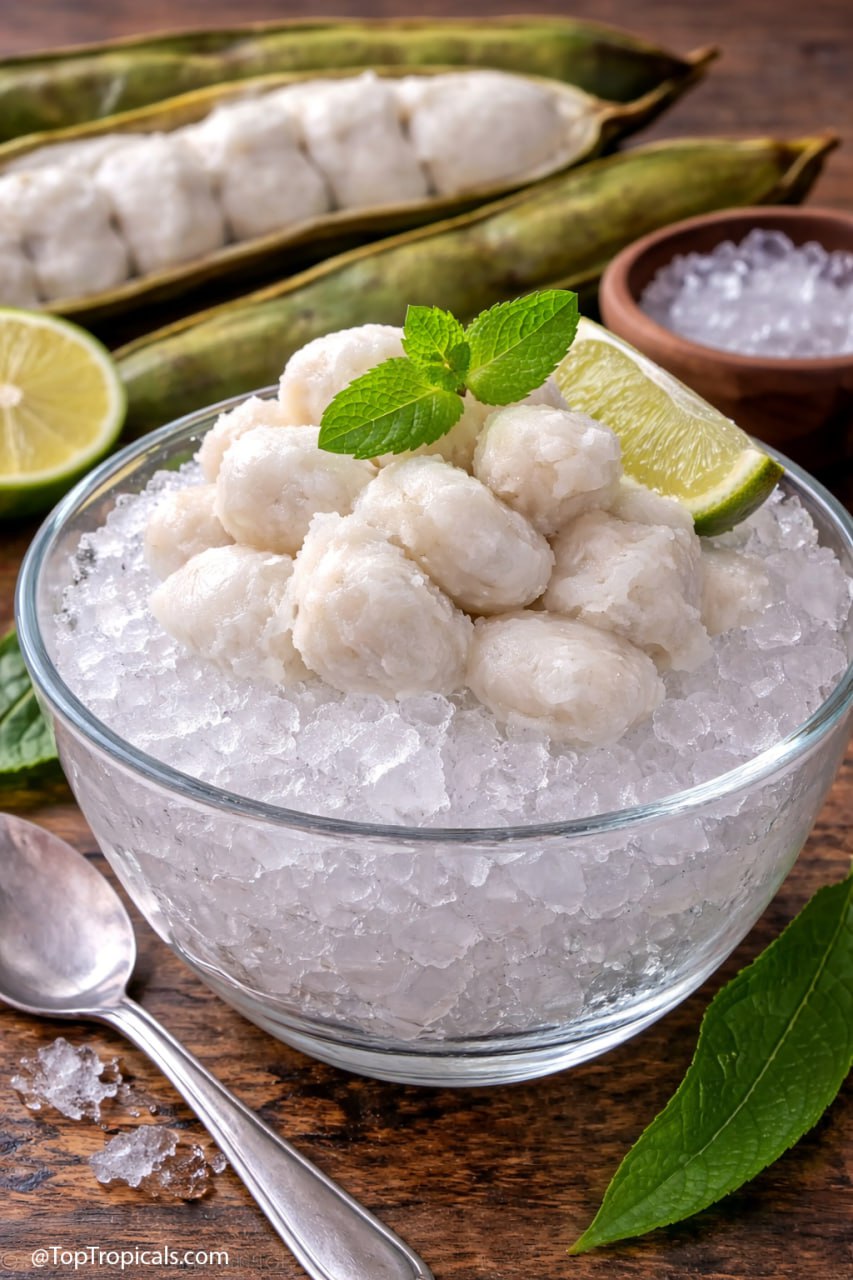
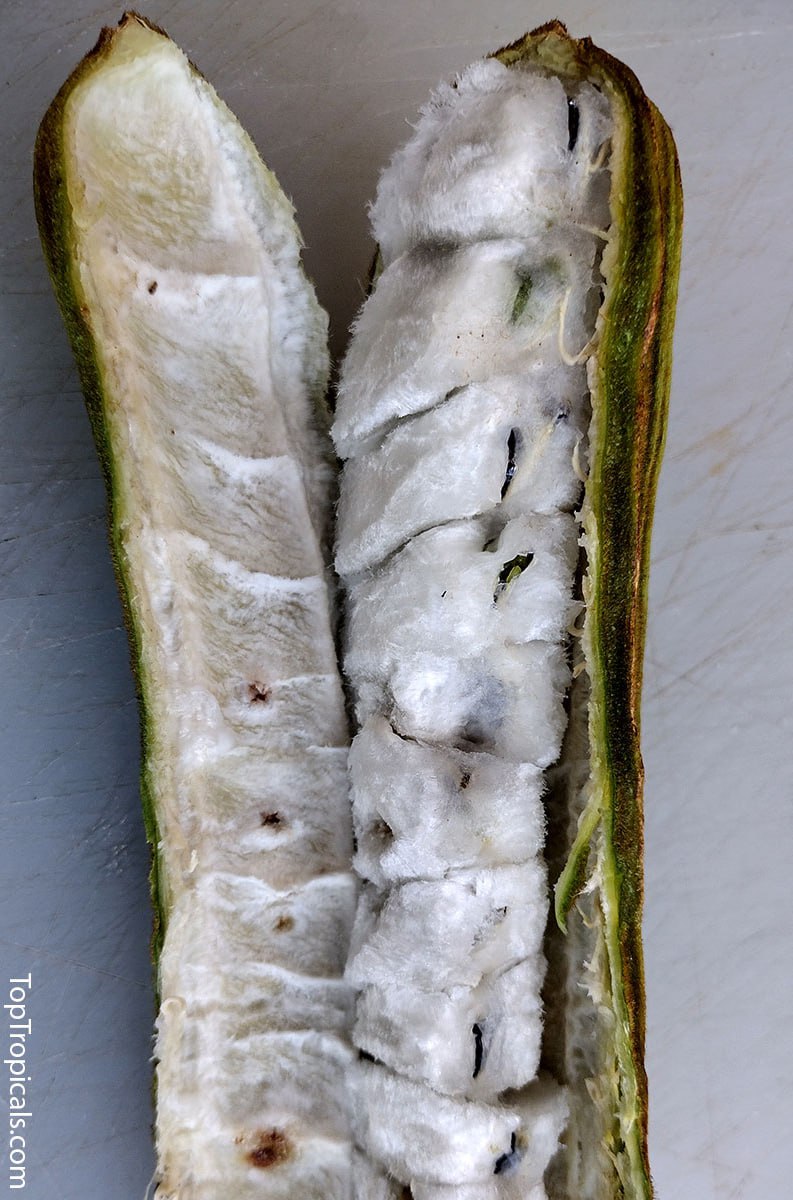
Open ripe Ice Cream Bean pods and scoop out the sweet white pulp.
Remove and save the seeds if you want to plant more Ice Cream Bean trees.
Chill the pulp for 20 to 30 minutes.
Serve the chilled pulp over crushed ice as a natural shaved-ice dessert.
🌿 About the plant:
Ice cream bean (Inga edulis) produces long pods filled with sweet, cottony white pulp surrounding dark seeds. The flavor is mild, vanilla-like, and naturally creamy. The pulp is eaten fresh and used as a natural dessert across South and Central America.
🌱 In the garden:
Inga edulis is a fast-growing tropical tree with lush foliage and nitrogen-fixing roots that improve soil health. It is a perfect tree for a quick shade solution in just one season. While large in the ground, it can be managed with pruning in home orchards.
Mango Tree for Zone 5: top 15 Condo Mango for growing in cold areas
Mango Tree for Zone 5
🥭 Mango Tree for Zone 5: top 15 Condo Mango for growing in cold areas
🥭 Can you grow a mango tree in Zone 5? Short answer - yes! The trick is - containers!
Mango trees are tropical plants but they do great in pots when you choose the right varieties.
🥭 Compact types stay short, respond well to pruning, and produce in containers.
You can grow them on a patio, balcony, even move them indoors in your condo for winter. That is why they are called condo mangoes!
During warm months, they live outside.
When cold weather hits, they come inside.
🥭 With good light, proper watering, fertilizing, and some patience, these trees can reward you with real mangoes. Not a farm harvest, but enough to enjoy and share.
These Avocados survived 3 nights of 25F hard freeze, Florida Record Freeze
Cold hardy avocados
⛄️ These Avocados survived 3 nights of 25F hard freeze, Florida Record Freeze
⛄️ Recent winter freezes have once again raised the same urgent question among avocado growers - which varieties actually survive cold weather, and what does survival really look like afterward?
⛄️ After widespread freeze events, trees across many regions showed very different outcomes, from minor leaf burn to complete canopy loss.
⛄️ This video taken on February 4, 2026 at Top Tropicals BFarm in Sebring, FL, reflects what we observed in real conditions after 3 nights of hard freeze.
⛄️ The trees in the video had no protection.
❄️Weather data
Feb 1-6, 2026, Coldest in Recorded History (132 years of observations) Top Tropicals Farm and Nursery at Sebring FL
🌡 Min temps: 25F, wind chill 14F ⏳ Duration of cold: 3 nights of 8-10 hour hard freeze, along with 7 days of cool daytime temps around 50F 🌀 Wind: 20 mph, with 40-50 mph gusts.
🐾 Smokey & Sunshine’s real-world survival data from our
Sebring, Florida Research Gardens.
Smokey analyzed the data. Sunshine just stayed happy. Here is what they
found.
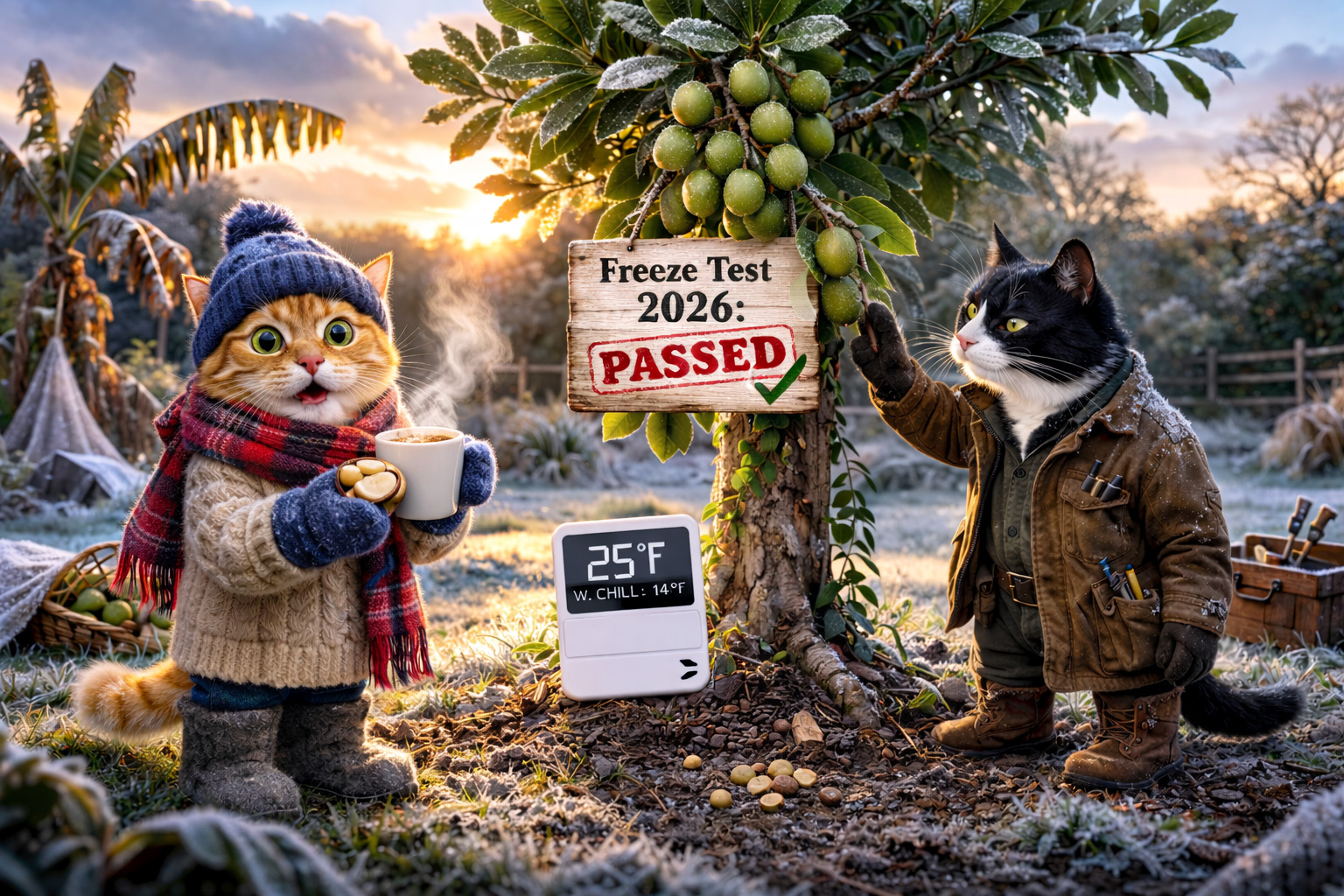
Sunshine: Twenty five degrees. Wind chill fourteen. And it is still
standing... like nothing happened? Smokey: This is macadamia strength. Sunshine: I should put a macadamia nut in my coffee and borrow some
of that strength. Smokey: Do not get too nutty yet. It still needs curing and
cracking.
📊 Weather Data – February 1–6,
2026
Sebring, Florida – 132 years of recorded observations
This was not a light frost. It was a prolonged, windy, penetrating hard
freeze.
🌡 Minimum temperature: 25F
❄️ Wind chill: 14F
⏳ Duration: 3 nights of 8–10 hour hard
freeze
☀️ Daytime temperatures: around 50F for 7 days
🌀 Wind: sustained 20 mph, gusts 40–50 mph
While all our plants in pots were protected in greenhouses, our in-ground
plantings faced the freeze outdoors. We covered what we could. Even so, some
plants were damaged, some died, and some surprised us by surviving.
In the next few newsletters, we will share the real survivors - the plants
that proved themselves in the ground, under real conditions. Smokey and
Sunshine have been out in the fields assessing the damage from the February
1–6 freeze. While many plants struggled, the Macadamia proved to
be a true standout. This is how we grow them to handle the tough years.
Why does this matter? Because we have gotten used to warm winters, and this
freeze was a rude awakening. Not everyone lives in Miami. If you garden in
places where a real cold event can happen, you have to be prepared - and you
have to plant what can take it.
🌰 Macadamia: Freeze
Tested and Standing
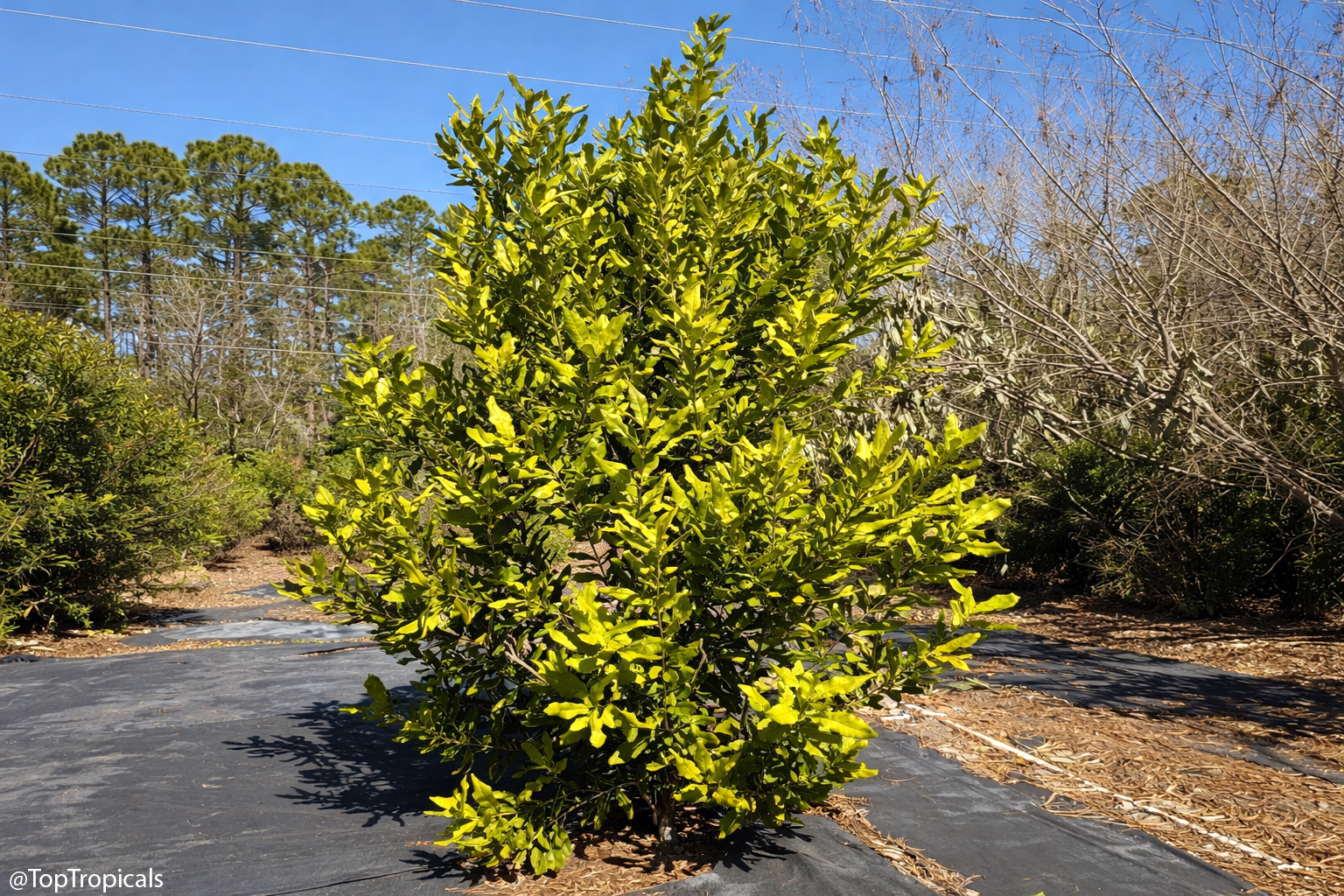
3 year old macadamia tree after 3 nights of hard
freeze in February 2026 - standing strong.
When temperatures dropped to 25F with wind chill near 14F, our established
macadamia trees remained upright, green, and structurally intact. Leaves
held. Branches stayed firm. No collapse, no panic.
That is not luck. That is macadamia hardiness.
Often considered a "tropical luxury nut," macadamia proved it can handle
more than many gardeners expect. In USDA Zones 9b-11, with proper drainage
and site selection, it is not just ornamental - it is a long-term food tree
with real resilience.
In a winter that reminded us not to take warmth for granted, macadamia
earned its place on the survivor list.
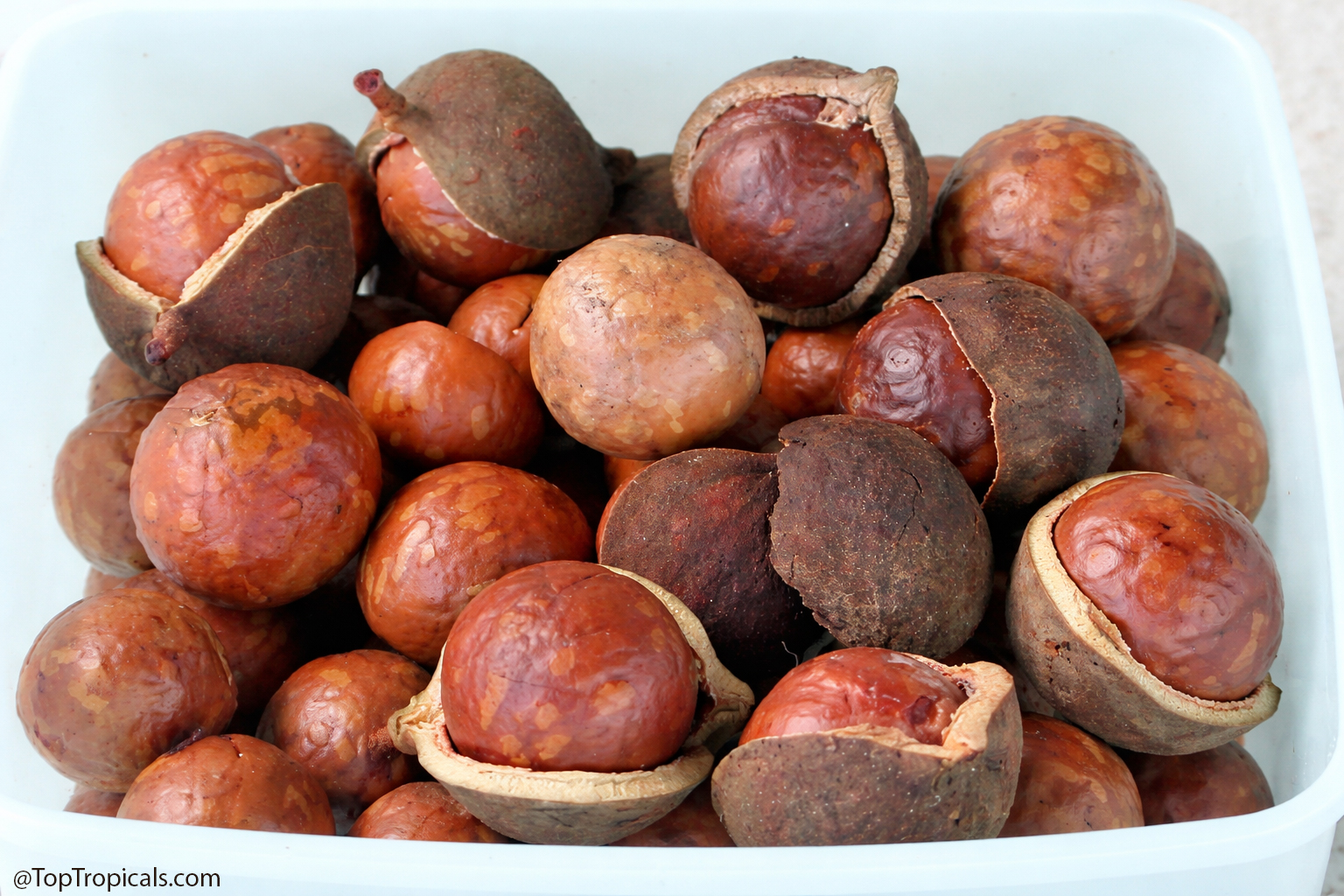
The nut itself is famous for its strength. The shell is among the hardest
in the nut world, requiring serious pressure to crack. Inside, the kernel
is creamy, buttery, rich, and deeply satisfying. High in monounsaturated
fats and naturally low in sugar, macadamias have long been valued both for
flavor and for nutrition.
The tree is equally impressive. An evergreen with tough leaves and elegant
spring flowers, it matures into a productive, manageable canopy. Nuts
develop slowly over six to seven months. Production begins in a few years
and increases steadily as the tree matures. Plant it once, and it can reward
you for decades.
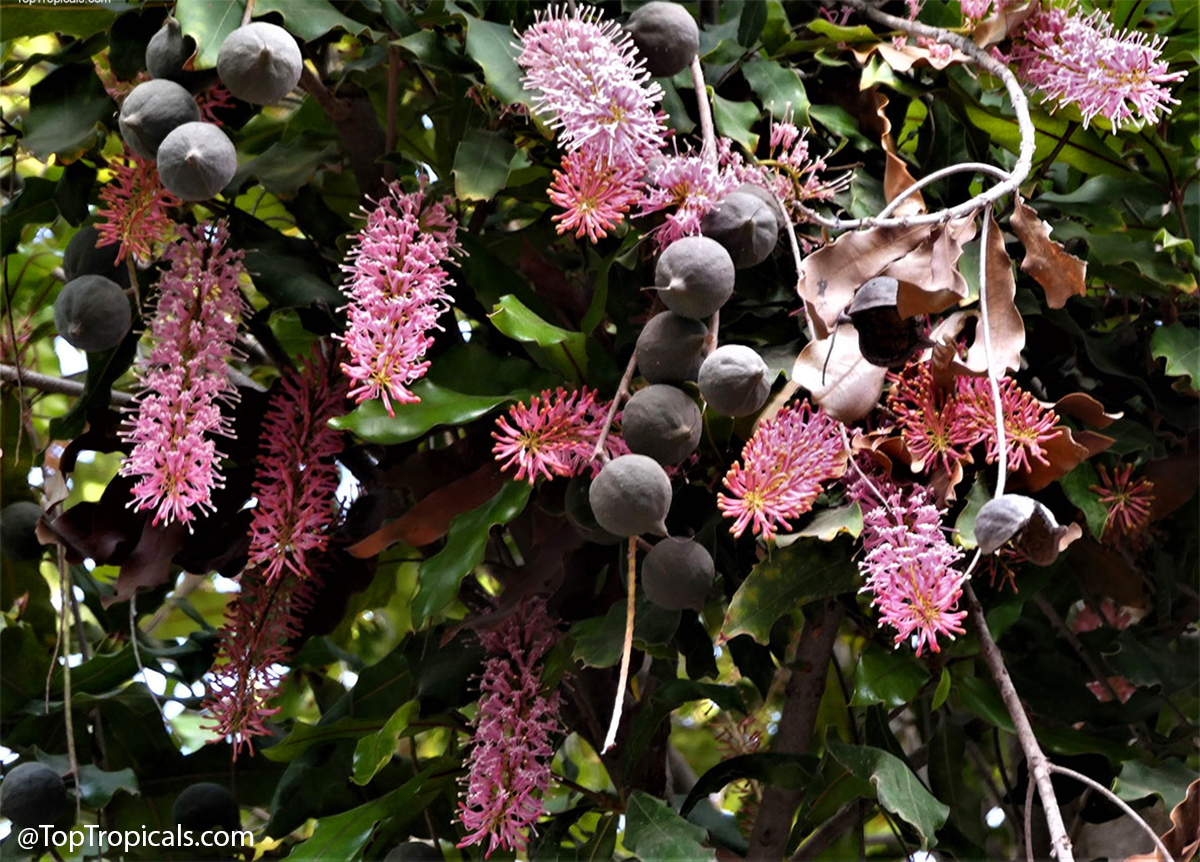
Macadamia flowers and developing nuts on the
tree.
Cold will come again. It always does.
The question is not whether winter will test your garden. The question is
whether your trees are ready.
Macadamia proved it is.
If you are building a garden that feeds you for decades, this is a tree
worth planting.
The Magic Number 65: when tropicals finally wake and the 7-Day Rule you should know
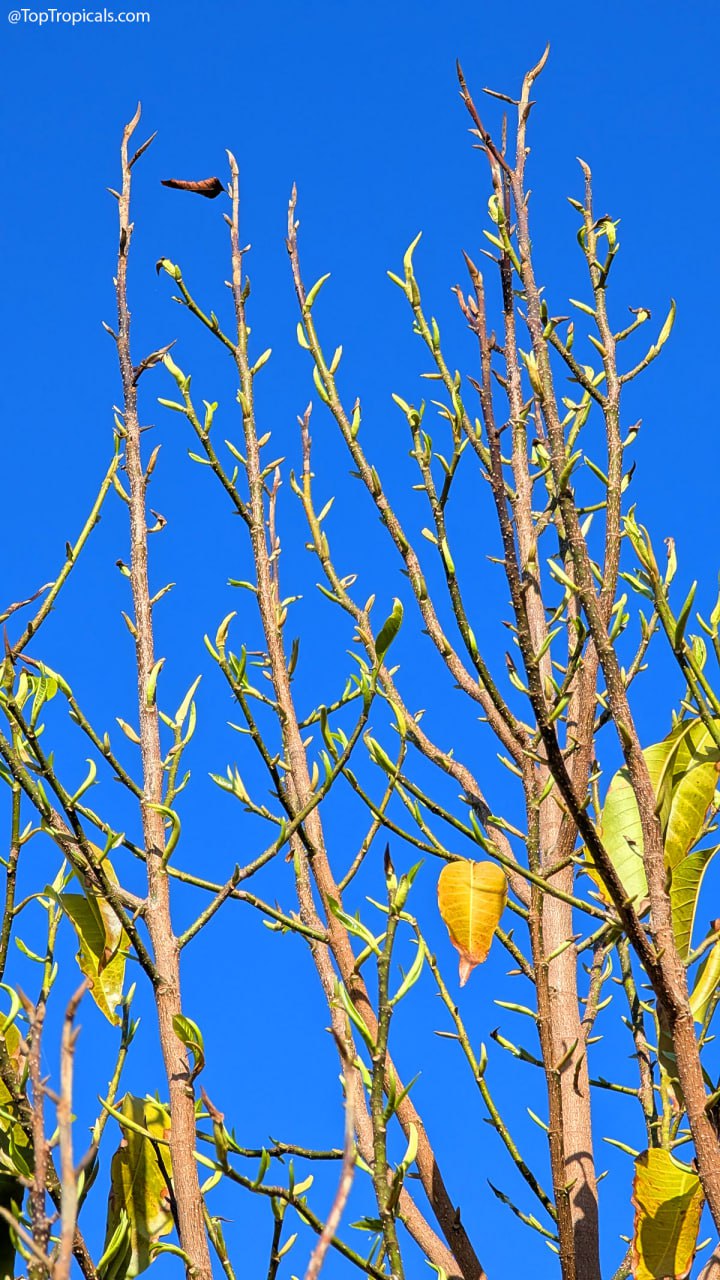
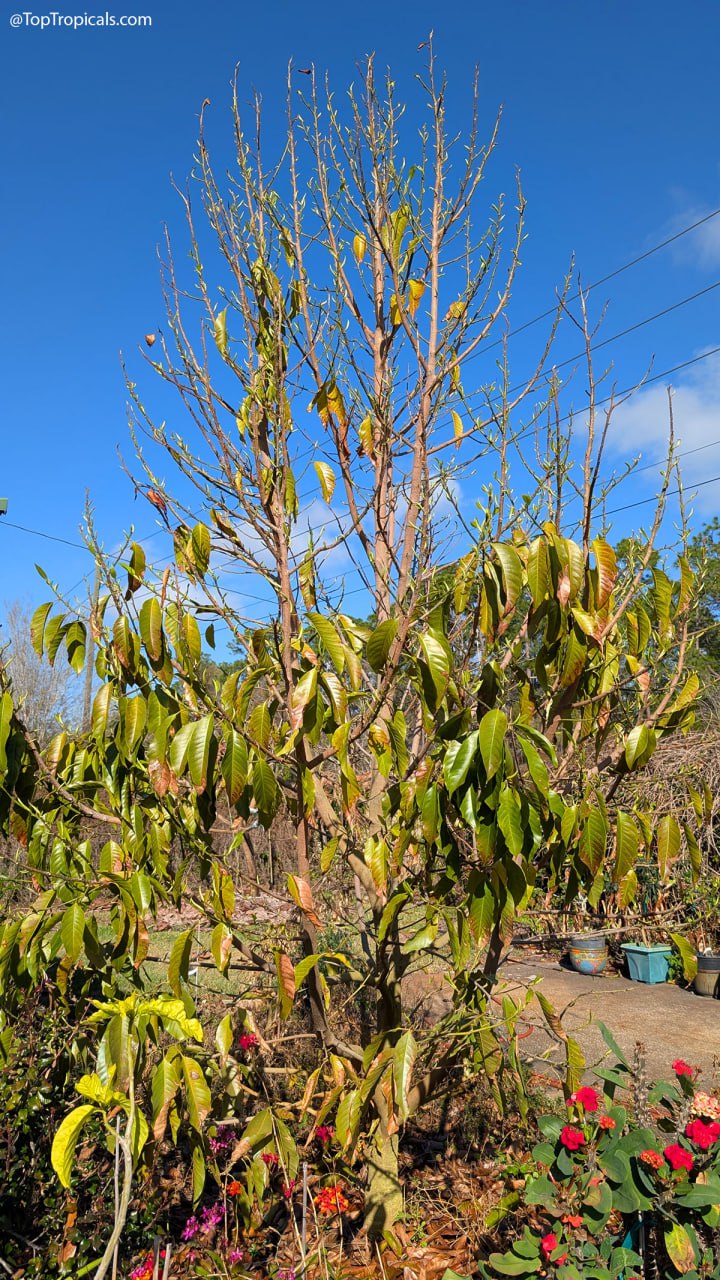
Champaka tree new growth sprouts
A Champaka tree (Joy Perfume Tree) first fresh sprouts
The Magic Number 65: when tropicals finally wake and the 7-Day Rule you should know 🌱
Discover the "Magic 65" rule for waking up your garden and the exact time to start fertilizing for maximum growth. Learn the specific temperature threshold that signals your tropicals to wake up and how to handle spring cold snaps.
🌿 If you’ve been staring at your dormant trees and shrubs wondering if they survived the winter, you aren't alone. The most frequent question every spring is: "When will my tropical plants start sprouting?"
🌿 While the calendar might say spring, tropical plants don’t use a watch - they use a thermometer. If you want to see green shoots and active growth, there is one "Magic Number" you need to watch: 65F 🌡
🌿 The 7-Day Rule for Tropical Growth
The gold standard for the tropical world is simple: plants generally wake up when minimum nighttime temperatures remain at or above 65F for at least one full week.
🌿 Why 65°F?
Tropical species are biologically programmed to stay dormant to protect their cell structure from cold damage. A single warm day won't fool them, but seven consecutive nights of 65F+ signals that the "growing season" has officially arrived. Once you hit that 7-day mark, you’ll see buds pushing and fresh leaves finally sprouting.
🌿 Can You Force Them to Wake Up Faster?
Patience is a virtue, but if you’re looking to "push" your plants, focus on two things:
🌞 Sun Exposure: Ensure they are in the brightest spot possible to warm the soil. ♨️ Heat Retention: Use dark mulch or move potted plants onto concrete surfaces that retain daytime heat.
🌿 When to Start Fertilizing
❌ Don’t reach for the fertilizer until you see that active growth. Feeding a dormant plant can lead to root rot or wasted nutrients.
👉 The Signal: After that first week of 65F nights.
✅ The Action: Once you see green tips, start your fertilization routine. This is when the plant actually has the metabolic "engine" running to use those nutrients.
🌿 Watch Out for the "False Spring"
Before you go all-in, ensure the risk of a hard freeze has passed. A minor cold snap - a few nights in the 50s - won't kill your progress, but it will act as a "pause" button. If cool weather persists, tropicals may "lock up" and return to dormancy. If that happens, simply reset your clock and wait for the next stretch of 65F nights.
🌿 Ready for the Wake-Up Call? Fuel Your Tropical Growth!
Don’t get caught empty-handed when that 7th day of 65F hits. Stock up now so you can feed them the moment they wake up. Using the right nutrients during the active growth phase is key to lush blooms. Check out our curated selection of professional-grade fertilizers:
📷 Recovery in Action: The Joy Perfume Tree - Champaka showing off its first fresh sprouts in March after a chilly Florida winter. This is exactly what happens once you hit that 7-day streak of 65F nights! 📚 Learn more: ✦ Why is my Champaka Tree dropping leaves?