Garden Blog - Top Tropicals

Date: 23 Apr 2024

Did you know that ice cream actually grows on a tree?

Ice Cream Bean Tree (Inga edulis)

Ice Cream Bean Tree (Inga edulis)

Ice Cream Bean Tree (Inga edulis)

Ice Cream Bean Tree (Inga edulis)

Ice Cream Bean Tree (Inga edulis)

Ice Cream Bean Tree (Inga edulis)

Ice Cream Bean Tree (Inga edulis)

Ice Cream Bean Tree (Inga edulis)

🍦 Did you know that ice cream actually grows on a tree?

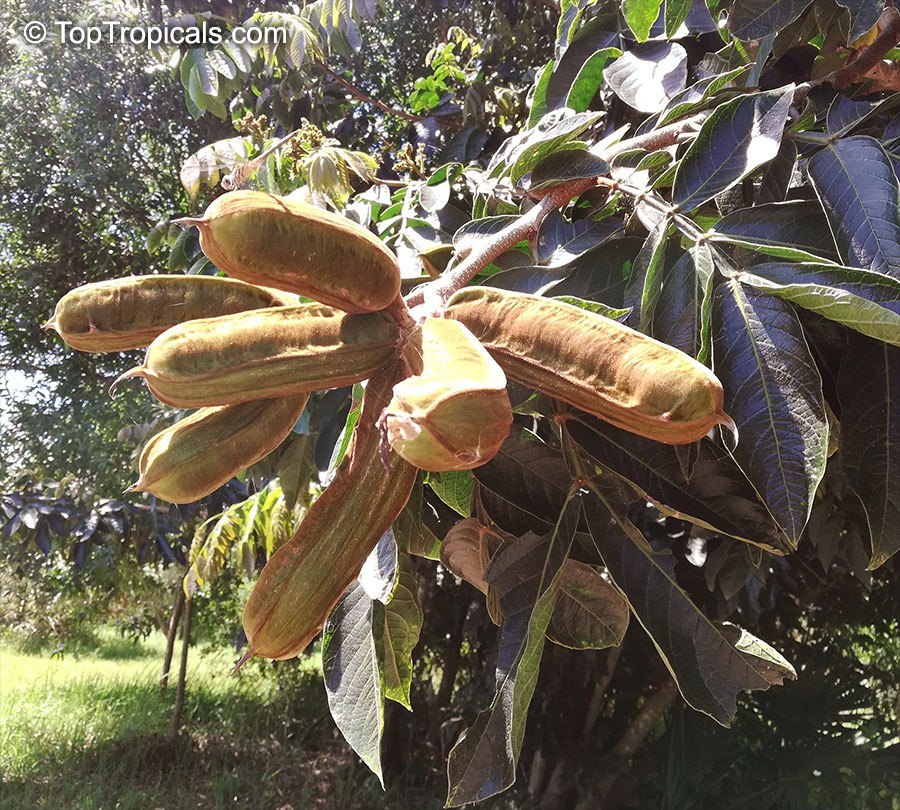
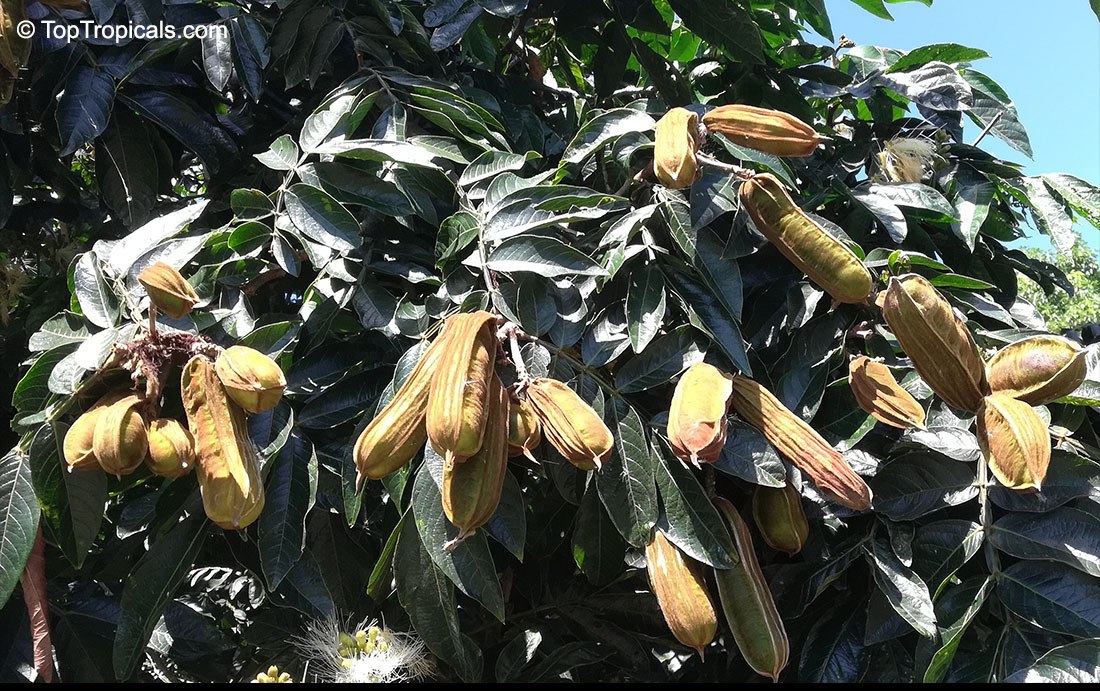
Ice Cream Bean Tree (Inga edulis) - fast growing shade tree with wonderful fruit that kids love! 👯‍♀️
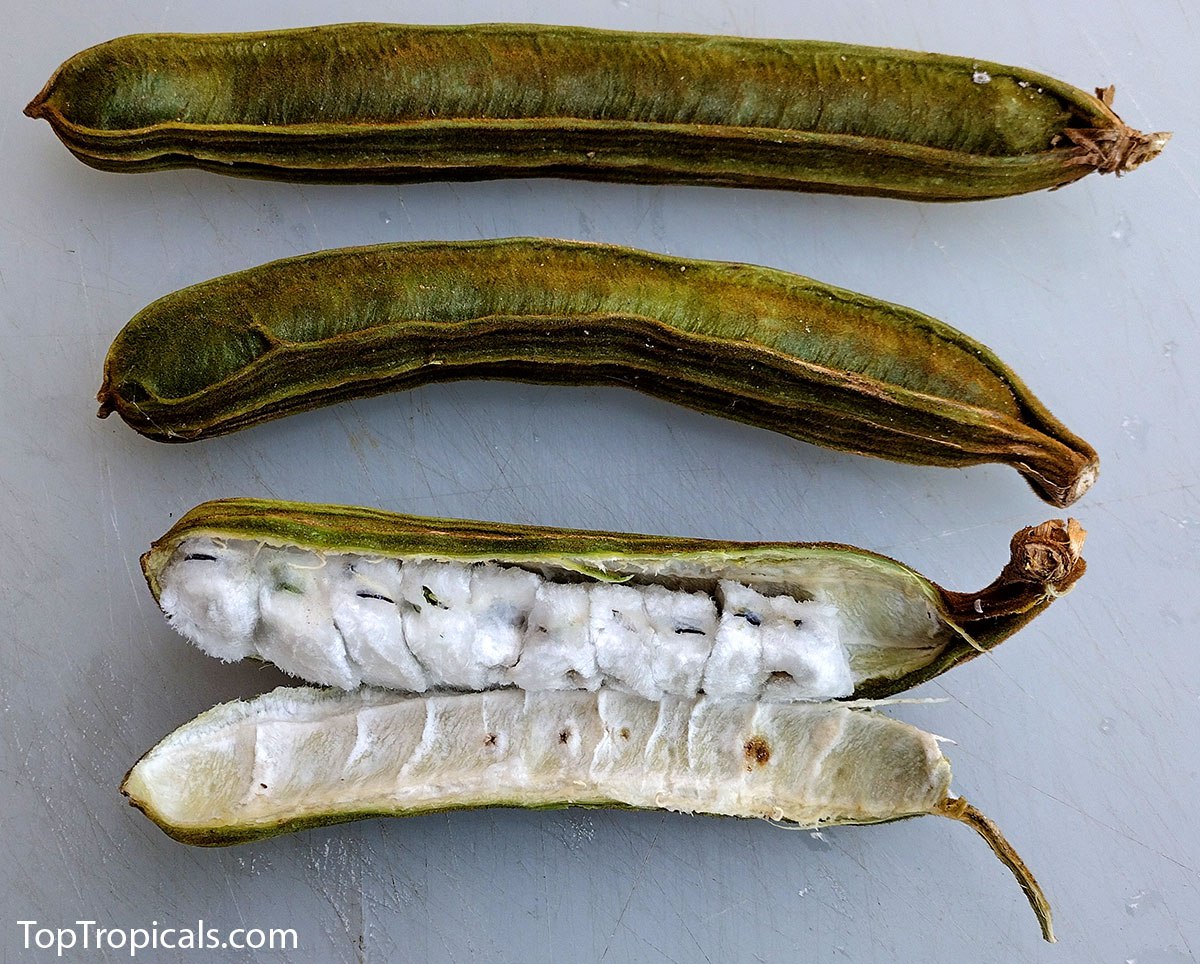
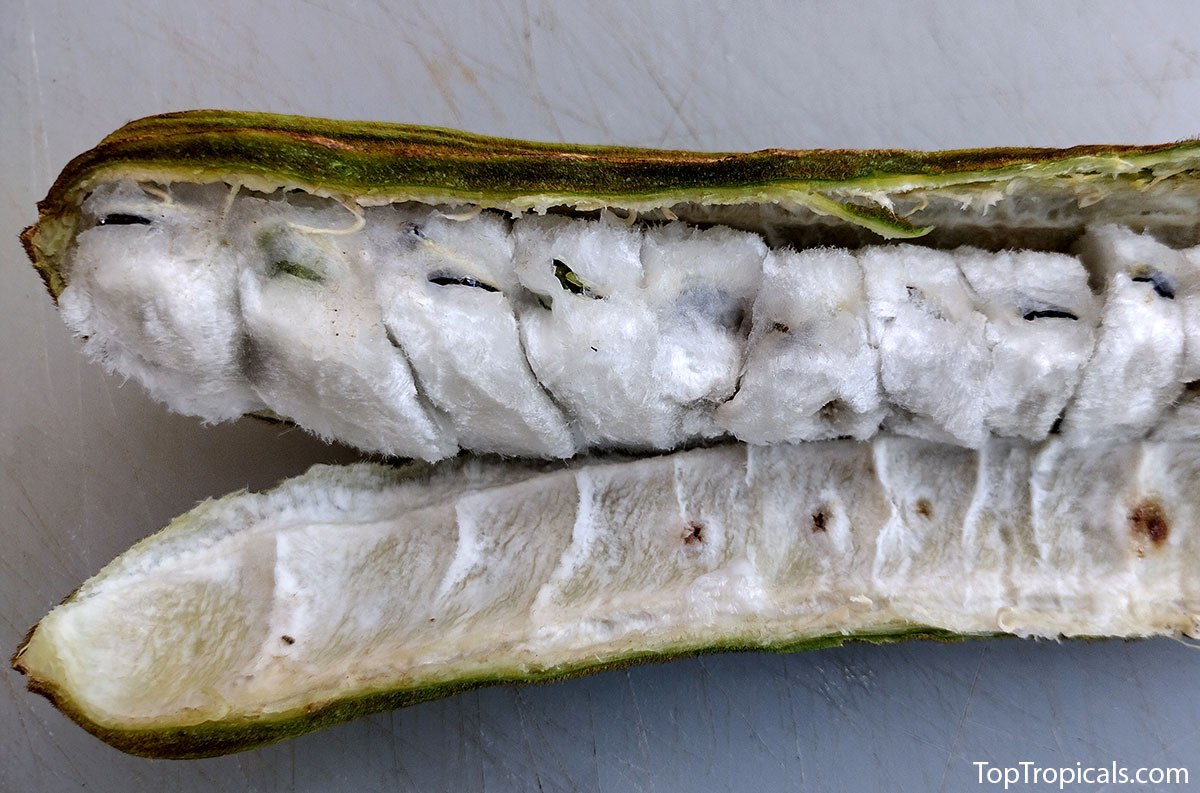
  • ✳️ Bean pods up to 3 ft long contain sweet, juicy, white pulp that has a soft cotton wool texture and tastes of vanilla ice-cream.
  • ✳️ The fruit has fantastic health benefits. It contains up to 25% sugar, 10% protein, 5% fiber, vitamins C, A and E, and minerals such as phosphorus, calcium, magnesium and zinc. The protein content is two times higher than that of a banana!
  • ✳️ A mature tree will produce around 100 fruits in a season. Seedlings start fruiting within 3-4 years.
  • ✳️ Fast growing, umbrella-shaped tree, 20 ft tall and almost as wide, provides plenty of shade. This is our favorite tree when we need to create shade quickly.


🛒 Shop Icecream Bean Tree

#Food_Forest #Nature_Wonders

TopTropicals.com
We Grow Happiness

Date: 19 May 2025

What fruit can reduce your blood pressure. Tropical fruit and plants that help keep blood pressure in balance

Tropical fruit that can reduce your blood pressure

Tropical fruit that can reduce your blood pressure

❤️ Tropical fruit and plants that help keep blood pressure in balance.
Part 1: What fruit can reduce your blood pressure?


💲 You don’t need to spend $$$ on doctors and medications to stay healthy and young. By eating right and adding a few powerful plants and fruits to your diet, you can naturally keep your blood pressure in check. Plant them today and harvest your own medicine tomorrow! And don’t forget - gardening itself is therapeutic! It keeps you active, reduces stress, and helps your whole body stay in balance.

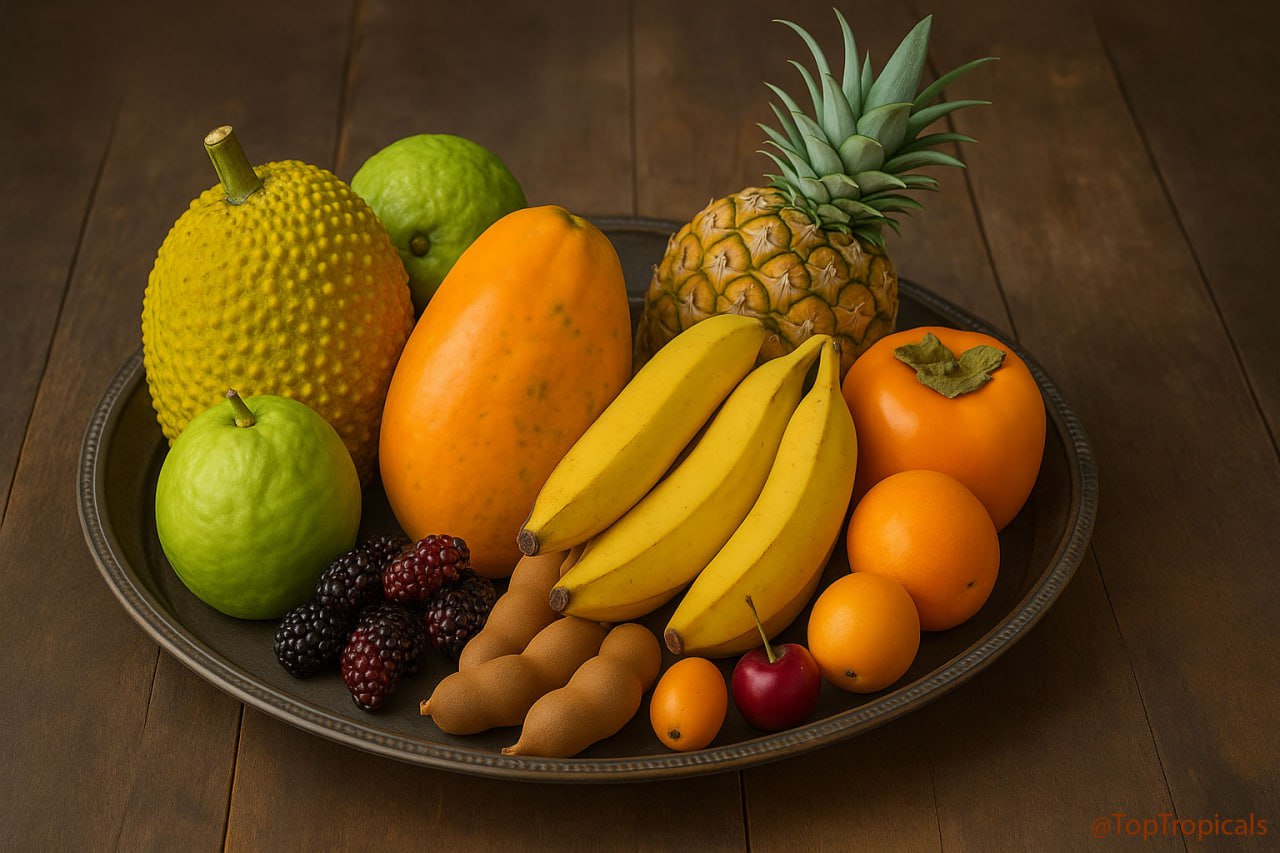
💚 Tropical fruit that help reduce blood pressure:

  • Jackfruit (Artabotrys hexapetallus) - Contains potassium and magnesium, which help relax blood vessels and regulate blood pressure.
  • Guava (Psidium sp.) - Rich in potassium and fiber, supports vascular health and may help lower blood pressure.
  • Papaya (Carica papaya) - High in potassium and antioxidants, promoting healthy blood pressure.
  • Banana (Musa sp.) - Well-known for its high potassium content, which helps counteract sodium and lower blood pressure.
  • Pineapple (Ananas comosus) - Contains potassium and bromelain, which may support circulation and reduce inflammation.
  • Persimmon - High in fiber and antioxidants, which can contribute to better heart and vascular function.
  • Mulberry (Morus sp.) - Contains resveratrol and other antioxidants linked to heart health and blood pressure support.
  • Tamarind (Tamarindus indica) - Rich in potassium and fiber, may help regulate blood pressure and support arterial health.
  • Loquat (Eriobotrya japonica) - Contains potassium, aiding in fluid balance and blood pressure control.
  • ✅🍒 Tropical Cherry (Eugenia) - Contains antioxidants and supports healthy circulation.

Part 2: Edible plants reducing blood pressure - see next post⤵️

🛒 Shop tropical fruit trees that boost your health

📚 Learn more:


Tropical fruit health benefits guide
#Disover more #Remedies and #Fruit_Forest

🔴 Join 👉 TopTropicals

Date: 13 Sep 2025

Watch this before cooking with black pepper!

Black pepper (Piper nigrum)

🍃 Watch this before cooking with black pepper!


Black pepper
(Piper nigrum) is famous for its berries, but the leaves are edible too, and in some regions they’re used just like betel leaves or bay leaves. Here are a few ways you can use them:
  • Cooking wrap: Fresh leaves can be used to wrap fish, meat, or rice before steaming or grilling, similar to banana or betel leaves. They add a mild peppery aroma.
  • Flavoring curries and soups: Whole leaves can be simmered in curries, broths, or stews to infuse a gentle peppery note, then removed before serving (like bay leaves).
  • Herbal teas: Fresh or dried leaves can be steeped with ginger, turmeric, or lemongrass to make a warming tea traditionally used for digestion and colds.
  • Chutneys and pastes: In South India, young pepper leaves are ground with coconut, tamarind, and chilies to make a tangy chutney.
  • Medicinal uses: Folk remedies use the leaves for coughs, sore throats, and as a poultice for muscle aches.


🍛 Black pepper leaf chutney

  • ♨️Lightly saute 6-8 pepper leaves in a little oil.
  • ♨️Blend with 1/2 cup grated coconut, 2 green chilies, tamarind, salt, and cumin.
  • ♨️Optional: top with a quick tempering of mustard seeds and curry leaves.
  • ♨️Serve with rice or dosa.


☕️ Pepper leaf tea - when you feel under the weather

  • Boil 2-3 leaves with a cup of water.
  • Add a slice of ginger and a pinch of turmeric (optional).
  • Simmer 5 minutes, strain, and sweeten with honey.

Both recipes give a warm, peppery aroma without being too spicy. Pepper leaves are milder than the berries, so you’ll get aroma more than heat.

🛒 Grow your own Black Pepper plant - spice and vegetable!

📚 Learn more:


#Food_Forest #Recipes

🟢 Join 👉 TopTropicals

Date: 16 Sep 2025

You wont believe what this cat is eating for lunch!

Cat Niki

🍌 You won’t believe what this cat is eating for lunch!


"When life gives you lemons, throw them back and ask for a banana!"


🐈📸 Cat Niki is eating dry bananas at TopTropicals PeopleCats.Garden 

#PeopleCats #Quotes

🟢 Join 👉 TopTropicals

Date: 21 May 2019

Colors of Cannas

TopTropicals.com

By Onika Amell, tropical flower specialist

Q: I'm a beginner gardener and looking for something easy to grow that will add a lot of color to my garden fast.

A: Try growing Canna lilies. They are a favorite of many gardeners as they are so easy to grow and always provide a reliable, beautiful show of flowers. In fact, Cannas are one of those plants that are spectacular even if they never bloomed. The leaves are tropical-looking, banana-like and huge! They range in a wide variety of shades and colors, always accentuating the large showy flowers on top.
One of our favorite cannas right now is Canna Cleopatra - very striking and most unique. Large yellow flowers speckled with red spots, or red flowers and even flowers with a little bit of both. Foliage is exotic and very beautiful, often dark green, dark chocolate or a combination of both. This is a canna that will definitely illuminate your garden!

Caring for Cannas

Cannas like a lot of water, full sun and high heat. They are also heavy feeders and prefer soils that are well drained, organically rich and moist. The leaves will quickly tell you when the plant is hungry. Feed your cannas weekly with a water-soluble 20-20-20 fertilizer Broad Leaf Plus, and they will quickly respond with beautiful, lush growth. Deadhead often to encourage continued flowering. Cannas are winter hardy in US hardiness zones 7 and warmer. If you live in colder areas, the rhizomes need to be lifted in the fall, and stored indoors in a dark, warm spot until spring arrives. Be sure to divide clumps every three or four years. Give them lots of room as they grow into large plants, forming spreading colonies up to 7 feet high and 4 feet wide. Show them off in mass plantings, in large containers or in mixed flower borders. Lure in hummingbirds with these beauties!

TopTropicals.com