Garden Blog - Top Tropicals

Date: 18 Jun 2026

Dating tips

Dating tips from Smokey and Sunshine

Dating tips from Smokey and Sunshine

🌹 Dating tips


Sunshine: Smokey, I have a date in one hour.
Smokey: Congratulations. Try not to order donuts.
Sunshine: I will try really hard. She is very smart. I need to sound intelligent.
Smokey: Then don't open your mouth. Your IQ will appear much higher.
Sunshine: You were on Jeopardy. Give me some random facts to impress her with my knowledge.
Smokey: I lost in the first round.
Sunshine: You still know more than me.
Smokey: Everyone knows more than you, Sunshine. How random?
Sunshine: Smart random. Not weird random.
Smokey: Those are the same category, Sunshine.
Sunshine: Just give me the facts.
Smokey: Avocados don't ripen on the tree. They mature there, then ripen after picking.
Sunshine: That sounds like personal growth.
Smokey: Plants warn each other about insects using chemical signals.
Sunshine: Romantic. Mysterious. Slightly terrifying.
Smokey: Bananas are technically berries.
Sunshine: Perfect. I'll say that and then stare thoughtfully at my coffee.
Smokey: Don't say everything you know in the first five minutes.
Sunshine: What if she asks about dessert?
Smokey: Then you'll be fine.
Sunshine: What if she doesn't?
Smokey: Lead with the banana thing. And please — not your ridiculous pants.
Sunshine: They are a statement.
Smokey: Yes. The statement is do not approach me


🛒 Explore plants and their facts

📚 Learn more:


·  About Smokey & Sunshine
·  Smokey & Sunshine interview

#PeopleCats

🟢 Join 👉 TopTropicals

Date: 21 Jun 2026

How to Grow Massive, Exotic Lobster Claw Blooms Anywhere (Even in Pots!)

How to Grow Massive, Exotic Lobster Claw Blooms Anywhere (Even in Pots!)

How to Grow Massive, Exotic "Lobster Claw" Blooms Anywhere (Even in Pots!)


If you’ve ever dreamed of transforming your patio or backyard into a lush, dramatic tropical getaway, there is one iconic plant that needs to be on your radar: Heliconia rostrata - famously known as the Lobster Claw or Parrot’s Beak.
With its massive, neon-bright, dangling inflorescences, it looks like something straight out of a high-end botanical resort. But here is the best-kept secret in tropical gardening: you don’t need to live in the deep jungle to grow them. Whether you have a sprawling tropical landscape or a simple sunny patio in a colder climate, this showstopper is ready to perform.


🔻 Why Heliconia Rostrata Rules the Tropics


There’s a reason the Lobster Claw is one of the most recognized and celebrated exotic plants in the world. It delivers maximum visual drama with surprisingly little fuss.

Jaw-Dropping Blooms: The vibrant, cascading flower bracts feature intense shades of red, yellow, and green, looking exactly like bright lobster claws or parrot feathers.
Unbeatable Vase Life: These flowers don’t just look spectacular on the plant; they last for weeks in water, making them the ultimate centerpiece for tropical floral arrangements.
Instant Scale: Growing up to 7 feet tall, a healthy cluster of Heliconia creates a dense, gorgeous tropical screen in no time.

🔻 The Container Secret: Growing in Pots


Think your winter weather is too harsh for jungle exotics? The Lobster Claw is surprisingly resilient. While it loves tropical heat, it can actually withstand brief temperature drops down into the high 20s F.
More importantly for northern gardeners, it adapts beautifully to container life.

By planting your Heliconia in a large, sturdy pot, you unlock the ability to grow them anywhere. When summer hits, your patio becomes a tropical oasis. When winter sets in and sustained freezing weather arrives, you simply roll the container into a greenhouse, garage, or bright indoor room until spring.

🔻 Pro-Tips for Maximum Blooms


To get those massive, vibrant stalks to stretch to their full potential, just follow these three golden rules:

1. Give the Underground Room
Heliconias grow from thick underground structures called rhizomes. To get a 7-foot canopy, use a large, deep pot with excellent drainage. Give those stalks room to multiply and spread!

2. Keep the Fuel Coming

These are fast-growing plants that require plenty of energy to produce those heavy, cascading flowers. Keep the soil consistently moist (never soggy) and feed them regularly with a high-quality tropical fertilizer to maximize bloom production. We put a scoop of Green Magic controlled release fertilizer every 6 months and Sunshine Booster Megaflor that is safe to apply with every watering, year around.

3. Sun and Shelter
Position your plant where it can soak up plenty of bright, filtered sunlight or partial afternoon sun. Try to protect it from harsh, whipping winds so those beautiful, banana-like leaves stay pristine and tear-free.

🛒 Claim Your Lobster Claw

📚 Learn more:

Lobster Claw Plant Facts

Botanical name: Heliconia rostrata, Bihai rostrata
Also known as: Lobster Claw, Parrot's beak
USDA Zone: 9 - 11
Highligths Small plant 2-5 ftSemi-shadeShadeFull sunWatering: Regular. Let topsoil dry slightlyYellow, orange flowersRed, crimson, vinous flowersSubtropical plant. Mature plant cold hardy at least to 30s F for a short timeFlood tolerant plantSeaside, salt tolerant plant
Get personalized tips for your region

Heliconia rostrata in Plant Encyclopedia
Blooming Lobster Claw Show at TopTropicals
Lobster Claw - Simply Spectacular
How to grow Lobster Claw
🎥 Lobster Claw Show at TopTropicals

#Hedges_with_benefits #Shade_Garden #Nature_Wonders #Discover

🟢 Join 👉 TopTropicals

Date: 28 Jun 2026

Which Pomegranate Is Right for You - Top 5 Amazing Varieties

Which Pomegranate Is Right for You - Top 5 Amazing Varieties Which Pomegranate Is Right for You - Top 5 Amazing Varieties

🍎 Which Pomegranate Is Right for You - Top 5 Amazing Varieties


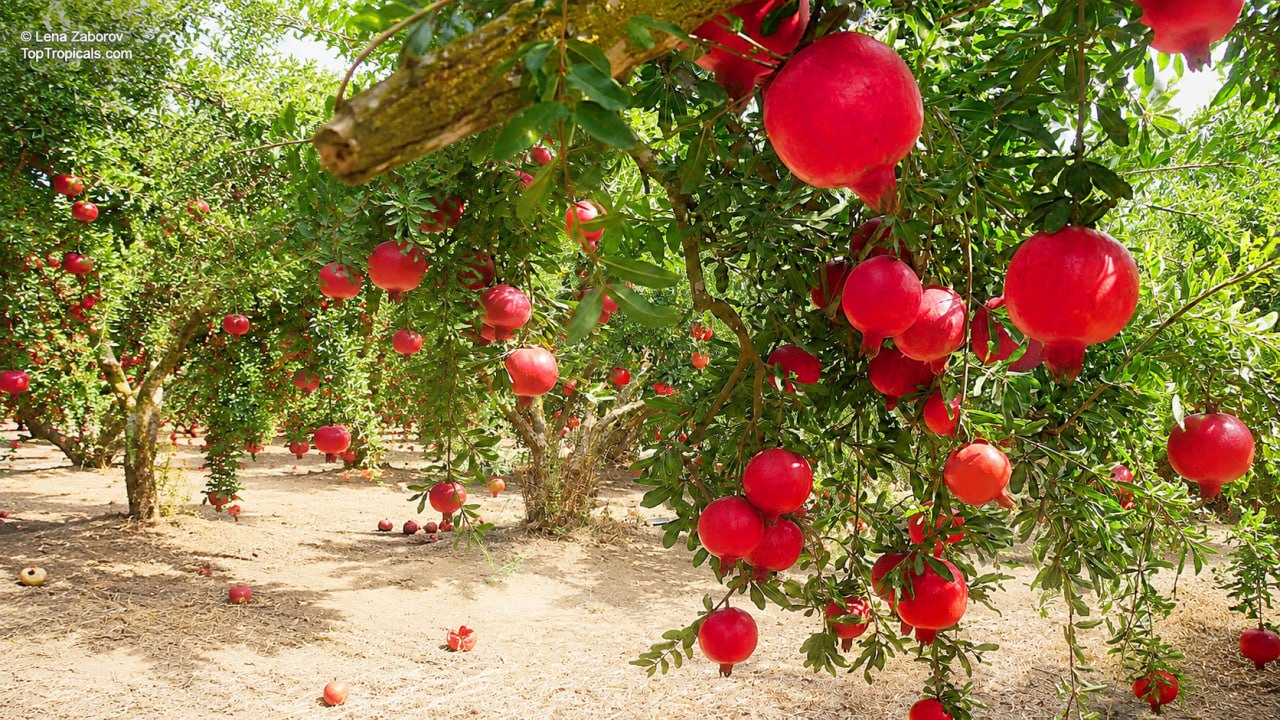
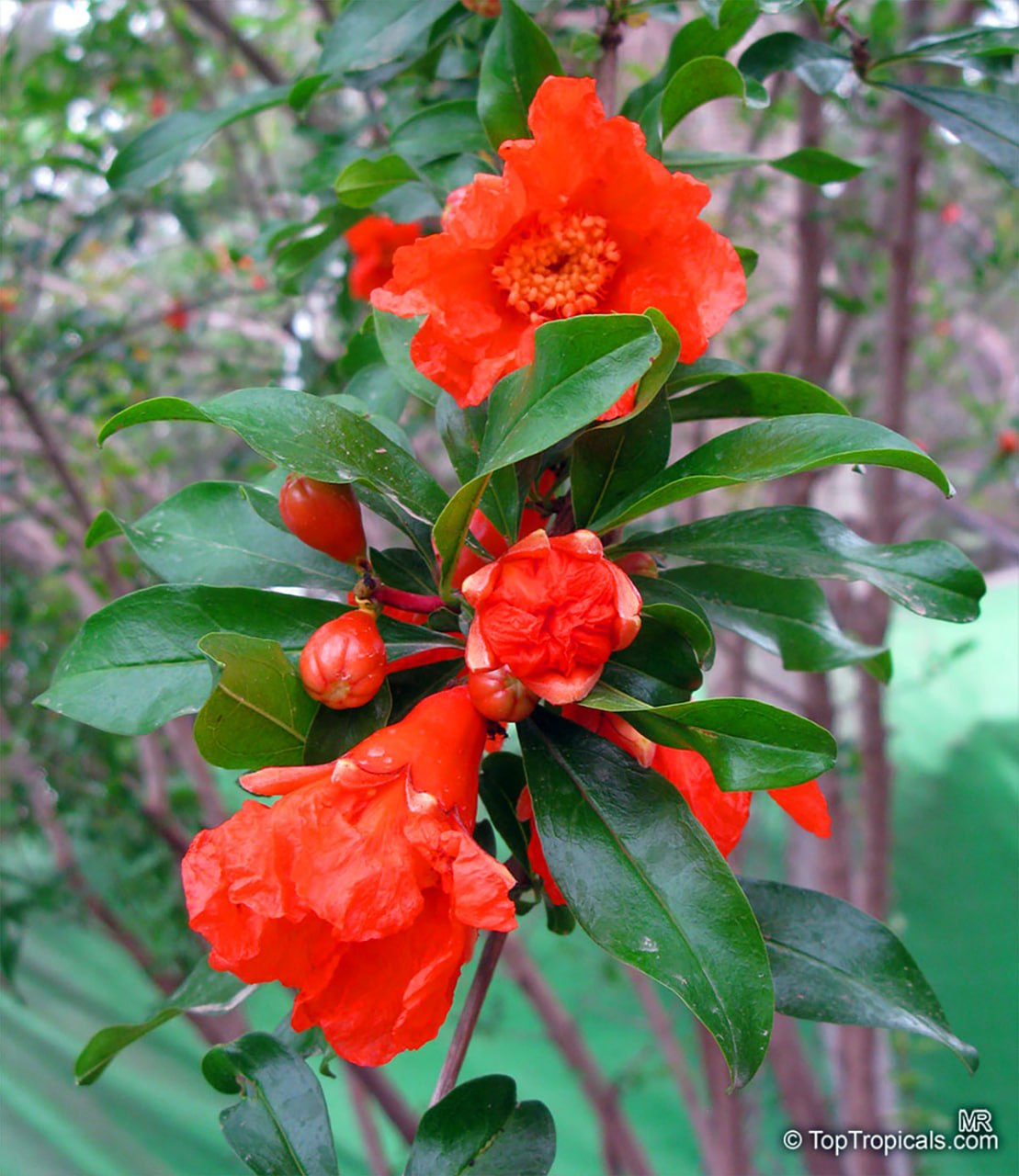
Pomegranate trees (Punica granatum) deserve a place in almost every garden. They are among the easiest fruit trees to grow, rewarding you with months of brilliant orange-red flowers followed by jewel-like fruit packed with sweet, refreshing arils. Beautiful enough to use as an ornamental and productive enough to fill your kitchen with fresh fruit, they have been cultivated for thousands of years and are still one of the healthiest fruits you can grow.
Which variety should you choose? They all produce delicious fruit, but each has its own personality.

  • ❣️ Angel Red: the biggest fruit and the juicing champion
    Large fruit with tender, edible seeds and exceptionally juicy ruby-red arils. Ripens earlier than Wonderful and is one of the best varieties for fresh juice.
  • ❣️ Eversweet: sweet before it's even ripe
    A unique variety with clear, non-staining juice and very soft seeds. Even slightly immature fruit is sweet, making it an excellent choice for cooler climates.


❣️ Eves: did Eve eat an apple, or was it a pomegranate? Rich flavor for fresh eating
Very large fruit with deep red arils and an outstanding sweet, cherry-like flavor. A favorite for eating fresh right off the tree.

❣️ Vietnam: evergreen and everbearing tropical producer


An evergreen, everbearing variety that flowers and fruits repeatedly in warm climates. Produces very large fruit with soft seeds and long harvest seasons.

❣️ Wonderful: the world's most famous classic favorite
The world's best-known pomegranate and the leading commercial variety. Famous for its rich, sweet-tart, wine-like flavor and outstanding juice quality.

🏡 Easy to grow, hard to beat


No matter which variety you choose, pomegranates are remarkably easy to grow.
· They are self-fertile, highly productive, drought tolerant once established, and thrive in full sun.
· They tolerate poor soils, salt, and heat, are cold hardy to about 15F, and grow beautifully as shrubs, small trees, or large container plants.
· Their long blooming season attracts pollinators, while the colorful fruit adds beauty to the landscape for months.

✨ A fruit treasured for thousands of years


According to Asian legend, the pomegranate was the "Tree of Life" in the Garden of Eden. Some historians even believe the famous forbidden fruit may have been a pomegranate rather than an apple.

The ruby-red arils have been treasured since ancient times, and an old Hindi saying reminds us: "One pomegranate can serve one hundred sick people." Rich in antioxidants, vitamins, and beneficial plant compounds, pomegranates remain one of the healthiest and most rewarding fruits you can grow in your own backyard.

🛒 Ready to grow One... or five?

📚 Learn more:

Pomegranate Plant Facts

Botanical name: Punica granatum
Also known as: Pomegranate, Granada, Grenade, Pomegranate, Granada, Anar, Granaatappel, Pomo Granato, Romeira, Melo Grano
USDA Zone: 8 - 11
Highligths Large shrub 5-10 ft tallSmall tree 10-20 ftFull sunWatering: Moderate. Water when top soil feels dryRed, crimson, vinous flowersThorny or spinyEdible plantDeciduous plantEthnomedical plant.
Plants marked as ethnomedical and/or described as medicinal, are not offered as medicine but rather as ornamentals or plant collectibles.
Ethnomedical statements / products have not been evaluated by the FDA and are not intended to diagnose, treat, cure, or prevent any disease. We urge all customers to consult a physician before using any supplements, herbals or medicines advertised here or elsewhere.Subtropical plant. Mature plant cold hardy at least to 30s F for a short timeSeaside, salt tolerant plant
Get personalized tips for your region

Punica granatum in Plant Encyclopedia
Healing drops of blood: why Pomegranate is a superfood
15 "Bulletproof" Fruit Trees for Tough Ground
Skip the lemon - 5 better fruits for a cough
Top Ten Fruit Tree Winners of Florida 2026 Record Freeze
Top nine plants of love, desire, and the senses: aphrodisiacs and sensory connections
Why you should grow your own Pomegranate Tree

#Food_Forest #Discover

🟢 Join 👉 TopTropicals

Date: 1 Jul 2026

Why is this banana called DOUBLE?

The remarkable Double Mahoi banana naturally produces two fruiting stalks from a single flower stem, creating an impressive display and the potential for a much larger harvest without taking up extra garden space.

The remarkable Double Mahoi banana naturally produces two fruiting stalks from a single flower stem, creating an impressive display and the potential for a much larger harvest without taking up extra garden space.

🍌 Why is this banana called DOUBLE?


Most banana plants produce one flower stalk and one bunch of fruit before that stem is finished.
Double Mahoi Banana changes the rules. It's the Banana that grows two bunches instead of one!
This unusual Cavendish banana is famous for often producing two flower stalks from a single fruiting stem after its first crop, giving gardeners the chance to harvest significantly more bananas without planting another tree. It's one of those rare plants people discover once - and immediately want in their collection.


🟡 What makes Double Mahoi so special?


🔸
Two bunches instead of one
The feature that made Double Mahoi famous is its ability to frequently produce a second flower stalk after the first harvest. While not every stem does it every time, this remarkable trait can nearly double the fruit produced from a single plant - something very few bananas can do.

🔸 Big harvests from a compact plant


Don't let its size fool you.
Double Mahoi grows only about 6-8 feet tall, making it easy to fit into smaller gardens, patios, or large containers. Yet a healthy plant can produce large, heavy bunches totaling up to 100 sweet bananas during a fruiting cycle.
That's an impressive harvest from such a manageable plant.

🟡 Classic banana flavor everyone loves


Double Mahoi belongs to the Cavendish group, so the fruit has the familiar sweet, creamy flavor people already know and enjoy.
Fresh-picked bananas often develop a richer aroma and better texture than store-bought fruit, making homegrown harvests especially rewarding.

🟡 Perfect for small gardens and containers


Not everyone has room for a giant banana grove.
Because Double Mahoi stays relatively compact, it's one of the easiest fruiting bananas for:
· Small backyards
· Patio containers
· Courtyards
· Poolside tropical gardens
· Greenhouses and bright sunrooms in cooler climates
With enough warmth, sunlight, water, and fertilizer, it rewards growers surprisingly quickly.

🟡 Fast, productive, and beginner-friendly


Double Mahoi is popular with both experienced collectors and first-time banana growers because it checks nearly every box:
· Fast fruiting, often in 12-18 months
· Self-pollinating
· Heavy producer
· Compact growth
· Easy to maintain
· Excellent container performance
It's one of the most productive dwarf bananas available for home gardens.

🟡 Why gardeners keep choosing Double Mahoi


If your goal is to harvest the most bananas from the least amount of space, Double Mahoi is hard to beat.
Its compact size, dependable production, delicious Cavendish-style fruit, and unique ability to often produce two flower stalks make it one of the smartest banana varieties you can grow.
Whether planted in the ground or a large container, it's the kind of banana that quickly becomes the centerpiece of a tropical garden.

Ready to grow twice the bananas from one amazing plant?
Get Double Mahoi and bring home one of the most productive dwarf bananas available 👉 Grow More in Less Space

🛒 Explore Banana Varieties

📚 Learn more:

Chinese Yellow Banana Plant Facts

Botanical name: Ensete lasiocarpum, Musella lasiocarpa, Musa lasiocarpa
Also known as: Chinese Yellow Banana, Golden Lotus Banana
USDA Zone: 7 - 10
Highligths Large shrub 5-10 ft tallSmall plant 2-5 ftSemi-shadeFull sunWatering: Regular. Let topsoil dry slightlyYellow, orange flowersSubtropical plant. Mature plant cold hardy at least to 30s F for a short time
Get personalized tips for your region

Bananas (Musa) in plant encyclopedia
How to double your banana crop without extra space
Why every garden needs a banana tree (or three!)
The best varieties of edible Bananas

#Food_Forest #Bananas #Discover

🟢 Join 👉 TopTropicals

Date: 29 Jun 2026

Which Passion Fruit Vine should you grow - 3 top varieties

Passiflora edulis - Passion fruit varieties

Passiflora edulis - Passion fruit varieties

Passiflora edulis - Passion fruit

🍊 Which Passion Fruit Vine should you grow - 3 top varieties


There are few plants that reward gardeners as quickly as a Passion Fruit Vine (Passiflora edulis). In just a season or two, a single vine can transform a fence, arbor, or trellis into a lush green wall covered with spectacular flowers, followed by dozens of delicious tropical fruits.
Passion fruit combines beauty and productivity like few other plants. The flowers look almost too exotic to be real, attracting butterflies and pollinators, while the aromatic fruit is perfect for fresh eating, smoothies, desserts, juices, and jams.

3 top varieties of Passion Fruit

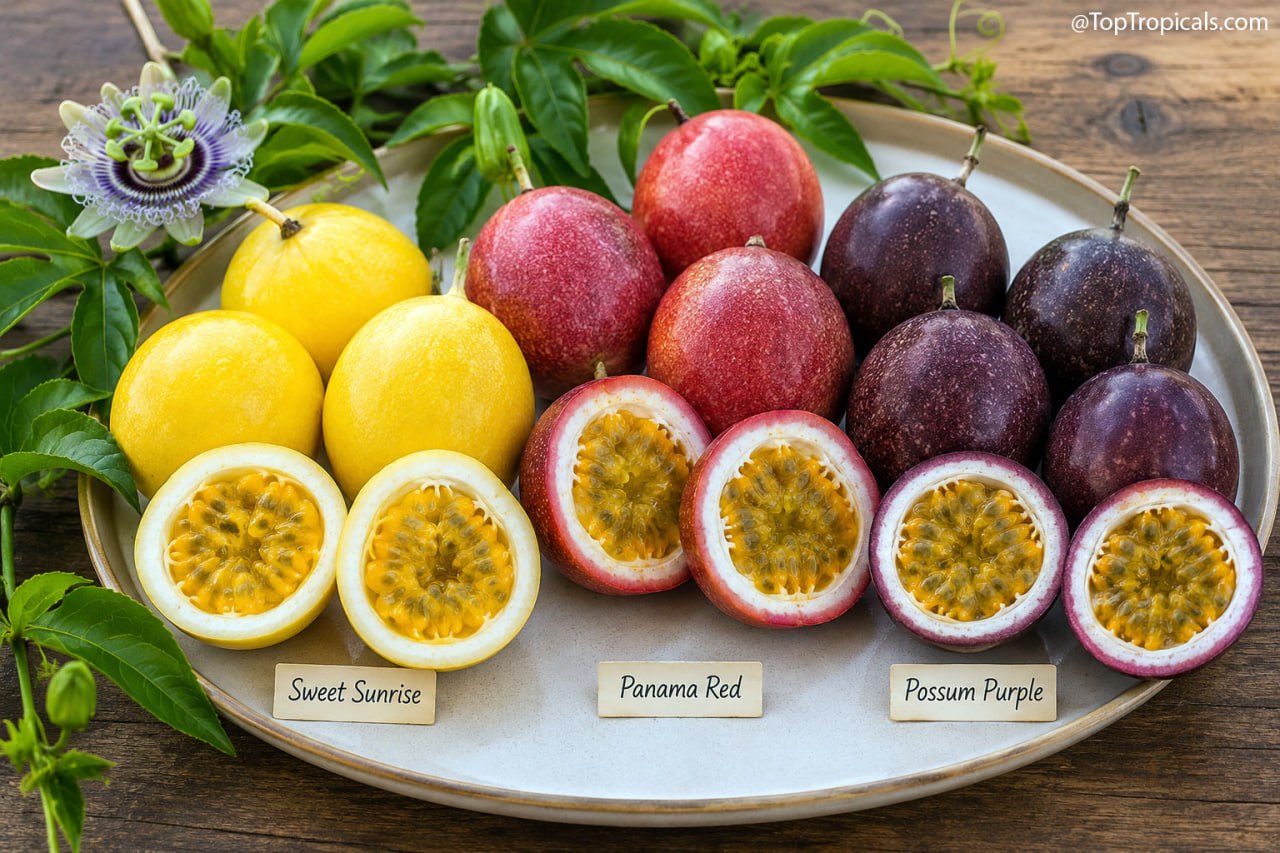
🟡 Sweet Sunrise: the sweetest choice


Large golden-yellow fruit with bright orange pulp and a smooth, sweet tropical flavor. Lower acidity makes it especially enjoyable fresh, right out of the shell.
Perfect for: Fresh eating, smoothies, desserts, and juice.

🟣 Possum Purple: the classic purple passion fruit


Medium-sized deep purple fruit with the traditional sweet-tart flavor and intense tropical aroma that passion fruit lovers expect. The most cold hardy variety.
Perfect for: Fresh eating, juices, desserts, jams, and all-around garden performance.

🔴 Panama Red: go big with giant fruit


Produces impressive burgundy-red fruits that are much larger than standard passion fruits. A vigorous vine known for heavy crops and bold tropical flavor.
Perfect for: Gardeners who want oversized fruit and abundant harvests.

🏡 Why gardeners love passion fruit


📌 No matter which variety you choose, all three are vigorous tropical vines that quickly cover fences, pergolas, arches, and trellises with attractive glossy foliage and some of the most unusual flowers in the plant world.
📌 Once established, passion fruit vines can produce generous harvests over a long season. The fragrant orange pulp is packed with sweet-tart tropical flavor and can be eaten fresh, scooped into yogurt, blended into drinks, or used in countless desserts and preserves.
📌 They thrive in full sun with fertile, well-drained soil and regular watering during active growth. In frost-free climates they can fruit for many years, while gardeners in cooler regions often enjoy growing them in large containers that can be protected during winter.

✅ Which one is right for you?


Choose Sweet Sunrise if you love sweeter, less acidic fruit.
Choose Possum Purple if you want the classic passion fruit experience with outstanding balance of sweetness and tang.
Choose Panama Red if your goal is giant, show-stopping fruit and heavy harvests.

Whichever you plant, you'll enjoy one of the fastest-growing and most rewarding edible vines you can add to your garden.

🛒 Plant Passionfruit - fast growing and rewarding

📚 Learn more:

Passion Fruit Plant Facts

Botanical name: Passiflora edulis
Also known as: Passion Fruit, Parcha, Maracuya, Granadilla
USDA Zone: 8 - 11
Highligths Vine or creeper plantFull sunWatering: Moderate. Water when top soil feels dryBlue, lavender, purple flowersWhite, off-white flowersEdible plantSubtropical plant. Mature plant cold hardy at least to 30s F for a short time
Get personalized tips for your region

Passiflora edulis in Plant Encyclopedia
Passion fruit butter glaze: quick-n-fun exotic recipes
The truth about Passion flower and Passion fruit.

#Food_Forest #Recipes

🟢 Join 👉 TopTropicals