Garden Blog - Top Tropicals

Date: 6 Jun 2026

The easy orchid that blooms like a tropical sunrise: Epidendrum

Orange Reed Ground Orchid or Sunrise Orchid - Epidendrum

🌅 The easy orchid that blooms like a tropical sunrise: Epidendrum


Most people think orchids are fussy plants that belong in greenhouses or on windowsills. Epidendrum radicans - also known as Orange Reed Ground Orchid or Sunrise Orchid - proves otherwise. This colorful orchid grows in the ground, tolerates heat and humidity, multiplies easily, and can bloom for months with very little care.

🔥 Not your typical orchid


Unlike many orchids that grow on trees, Epidendrum radicans is a terrestrial orchid native to Mexico, Central America, and northern South America. It naturally grows on the ground and even among rocks.

Its upright reed-like stems are topped by clusters of brilliant orange flowers with golden-yellow highlights. A single mature stem can carry dozens of blooms, and large plantings resemble patches of miniature tropical sunrises.

🔥 Easy to grow, easy to share


Epidendrum thrives in Florida's heat and humidity and performs best in bright light and well-drained soil. In warm climates it often blooms throughout the year.

One reason gardeners love it is its ability to spread. The stems naturally produce roots along their length, making division and propagation remarkably easy. A single plant can eventually develop into a large, colorful colony.

🔥 A pollinator favorite


The vivid orange flowers attract butterflies and hummingbirds and stand out brightly against green foliage. This makes Epidendrum a valuable addition to pollinator gardens and tropical landscapes.

🔥 Better than a flowering annual


Unlike annual flowers that must be replaced each season, Epidendrum returns year after year and gradually expands into larger clumps. It works well along walkways, patios, entryways, borders, and mixed tropical beds where its upright growth adds height and color.

🔥 The orchid that deserves more attention


Some plants become famous because they are difficult or rare. Epidendrum radicans deserves attention for the opposite reason.
It is colorful, dependable, beginner-friendly, and generous with flowers. Give it sunshine, good drainage, and a place to grow, and it will reward you with months of vibrant blooms that bring the warmth and energy of a tropical sunrise into your garden. 👉 More...

💡 #Fun_facts:

📌 The common name "Crucifix Orchid" comes from the tiny cross-shaped structure in the center of each flower.
📌 Unlike many orchids, it naturally produces roots along its stems, which is one reason it spreads and propagates so easily.
📌 In Florida, it's often used as a landscape orchid rather than a houseplant.

📚 Learn more:

Bamboo Orchid Plant Facts

Botanical name: Arundina graminifolia, Arundina affinis, Bletia graminifolia
Also known as: Bamboo Orchid, Bird Orchid
USDA Zone: 9 - 10
Highligths Small plant 2-5 ftSemi-shadeShadeFull sunWatering: Regular. Let topsoil dry slightlyEpiphyte plantWhite, off-white flowersPink flowers
Get personalized tips for your region

· Epidendrum in Plant Encyclopedia
· Orange Reed Ground Orchid, Sunrise
· The "Fake" Bamboo That Blooms Like a Rare Orchid Year-Round
· The prettiest flower for shade
· Ground orchids: all-summer colors
· Why do we love Ground Orchids
· Terrestrial orchids
· What orchids can be grown in the ground
🎥 Ground orchids: all-summer colors for shady gardens

🛒 Shop Ground Orchids

#Container_Garden #Shade_Garden #Discover

🟢 Join 👉 TopTropicals

Date: 4 Jun 2026

The Beginner-Friendly Houseplant With Blooms Large Enough to Be a Centerpiece

Amaryllis Minerva

💄 The Beginner-Friendly Houseplant With Blooms Large Enough to Be a Centerpiece


While most houseplants are prized for their green foliage, Amaryllis Minerva steals the show with its enormous blooms. If you are looking for a houseplant that delivers real color, this one is hard to beat. Its flowers combine bright scarlet-red petals with a crisp white star and a striking lime-green throat. The blooms can reach an incredible 6 to 8 inches across, making them some of the largest flowers you can commonly grow indoors.

🌷 A splash of color when you need it most


Amaryllis is especially valued for blooming during the dull, cooler months when many other plants are resting.
A single bulb can produce multiple sturdy flower stalks, each carrying several impressive blooms.
Named after Minerva, the Roman goddess of wisdom and the arts, its symmetrical red-and-white flowers look almost hand-painted.

🌷Amaryllis Minerva fast facts:

· Bloom Size: 6 to 8 inches across
· Colors: Scarlet-red, crisp white star, lime-green throat
· Difficulty: Easy (Great for beginners)
· Lifespan: Perennial (Blooms year after year)

🌷 Surprisingly easy to grow


Despite its dramatic appearance, Amaryllis Minerva is one of the easiest flowering houseplants for beginners. The bulb stores a remarkable amount of energy, which is why it can produce such impressive flowers with minimal effort from the gardener.

To get started, simply:

· Place it in a spot with bright, indirect light.
· Water when the soil begins to dry out.
· Watch it grow - the bulb does most of the work.

Unlike many flowering houseplants, it does not require constant humidity, misting, or complicated care routines.

🌷 More than a one-time holiday plant


Many people treat amaryllis as a seasonal decoration, but these bulbs can live and bloom for years.

Once the flowers fade, the remaining green leaves continue gathering energy from the sun. With a little post-bloom care, the bulb matures and often produces even larger displays in future seasons.

With giant flowers, vivid contrast, and simple care, Amaryllis Minerva remains one of the most rewarding flowering plants you can grow indoors. 👉 More...

🛒 Order Amaryllis Minerva

📚 Learn more:

Belladonna Lily Plant Facts

Botanical name: Amaryllis belladonna, Callicore rosea
Also known as: Belladonna Lily, March Lily, Naked Lady
USDA Zone: 9 - 10
Highligths Small plant 2-5 ftSemi-shadeFull sunWatering: Moderate. Water when top soil feels dryWatering: Regular. Let topsoil dry slightlyWhite, off-white flowersPink flowersPlant attracts butterflies, hummingbirdsDeciduous plant
Get personalized tips for your region

· Hippeastrum (Amaryllis) in Plant Encyclopedia
· What is the brightest indoor flower
· The Alien Lily: why this rare Peruvian bulb is taking over garden feeds

#Container_garden #Shade_garden #Discover

🟢 Join 👉 TopTropicals

Date: 18 Jun 2026

Dating tips

Dating tips from Smokey and Sunshine

Dating tips from Smokey and Sunshine

🌹 Dating tips


Sunshine: Smokey, I have a date in one hour.
Smokey: Congratulations. Try not to order donuts.
Sunshine: I will try really hard. She is very smart. I need to sound intelligent.
Smokey: Then don't open your mouth. Your IQ will appear much higher.
Sunshine: You were on Jeopardy. Give me some random facts to impress her with my knowledge.
Smokey: I lost in the first round.
Sunshine: You still know more than me.
Smokey: Everyone knows more than you, Sunshine. How random?
Sunshine: Smart random. Not weird random.
Smokey: Those are the same category, Sunshine.
Sunshine: Just give me the facts.
Smokey: Avocados don't ripen on the tree. They mature there, then ripen after picking.
Sunshine: That sounds like personal growth.
Smokey: Plants warn each other about insects using chemical signals.
Sunshine: Romantic. Mysterious. Slightly terrifying.
Smokey: Bananas are technically berries.
Sunshine: Perfect. I'll say that and then stare thoughtfully at my coffee.
Smokey: Don't say everything you know in the first five minutes.
Sunshine: What if she asks about dessert?
Smokey: Then you'll be fine.
Sunshine: What if she doesn't?
Smokey: Lead with the banana thing. And please — not your ridiculous pants.
Sunshine: They are a statement.
Smokey: Yes. The statement is do not approach me


🛒 Explore plants and their facts

📚 Learn more:


·  About Smokey & Sunshine
·  Smokey & Sunshine interview

#PeopleCats

🟢 Join 👉 TopTropicals

Date: 21 Jun 2026

How to Grow Massive, Exotic Lobster Claw Blooms Anywhere (Even in Pots!)

How to Grow Massive, Exotic Lobster Claw Blooms Anywhere (Even in Pots!)

How to Grow Massive, Exotic "Lobster Claw" Blooms Anywhere (Even in Pots!)


If you’ve ever dreamed of transforming your patio or backyard into a lush, dramatic tropical getaway, there is one iconic plant that needs to be on your radar: Heliconia rostrata - famously known as the Lobster Claw or Parrot’s Beak.
With its massive, neon-bright, dangling inflorescences, it looks like something straight out of a high-end botanical resort. But here is the best-kept secret in tropical gardening: you don’t need to live in the deep jungle to grow them. Whether you have a sprawling tropical landscape or a simple sunny patio in a colder climate, this showstopper is ready to perform.


🔻 Why Heliconia Rostrata Rules the Tropics


There’s a reason the Lobster Claw is one of the most recognized and celebrated exotic plants in the world. It delivers maximum visual drama with surprisingly little fuss.

Jaw-Dropping Blooms: The vibrant, cascading flower bracts feature intense shades of red, yellow, and green, looking exactly like bright lobster claws or parrot feathers.
Unbeatable Vase Life: These flowers don’t just look spectacular on the plant; they last for weeks in water, making them the ultimate centerpiece for tropical floral arrangements.
Instant Scale: Growing up to 7 feet tall, a healthy cluster of Heliconia creates a dense, gorgeous tropical screen in no time.

🔻 The Container Secret: Growing in Pots


Think your winter weather is too harsh for jungle exotics? The Lobster Claw is surprisingly resilient. While it loves tropical heat, it can actually withstand brief temperature drops down into the high 20s F.
More importantly for northern gardeners, it adapts beautifully to container life.

By planting your Heliconia in a large, sturdy pot, you unlock the ability to grow them anywhere. When summer hits, your patio becomes a tropical oasis. When winter sets in and sustained freezing weather arrives, you simply roll the container into a greenhouse, garage, or bright indoor room until spring.

🔻 Pro-Tips for Maximum Blooms


To get those massive, vibrant stalks to stretch to their full potential, just follow these three golden rules:

1. Give the Underground Room
Heliconias grow from thick underground structures called rhizomes. To get a 7-foot canopy, use a large, deep pot with excellent drainage. Give those stalks room to multiply and spread!

2. Keep the Fuel Coming

These are fast-growing plants that require plenty of energy to produce those heavy, cascading flowers. Keep the soil consistently moist (never soggy) and feed them regularly with a high-quality tropical fertilizer to maximize bloom production. We put a scoop of Green Magic controlled release fertilizer every 6 months and Sunshine Booster Megaflor that is safe to apply with every watering, year around.

3. Sun and Shelter
Position your plant where it can soak up plenty of bright, filtered sunlight or partial afternoon sun. Try to protect it from harsh, whipping winds so those beautiful, banana-like leaves stay pristine and tear-free.

🛒 Claim Your Lobster Claw

📚 Learn more:

Lobster Claw Plant Facts

Botanical name: Heliconia rostrata, Bihai rostrata
Also known as: Lobster Claw, Parrot's beak
USDA Zone: 9 - 11
Highligths Small plant 2-5 ftSemi-shadeShadeFull sunWatering: Regular. Let topsoil dry slightlyYellow, orange flowersRed, crimson, vinous flowersSubtropical plant. Mature plant cold hardy at least to 30s F for a short timeFlood tolerant plantSeaside, salt tolerant plant
Get personalized tips for your region

Heliconia rostrata in Plant Encyclopedia
Blooming Lobster Claw Show at TopTropicals
Lobster Claw - Simply Spectacular
How to grow Lobster Claw
🎥 Lobster Claw Show at TopTropicals

#Hedges_with_benefits #Shade_Garden #Nature_Wonders #Discover

🟢 Join 👉 TopTropicals

Date: 23 Sep 2025

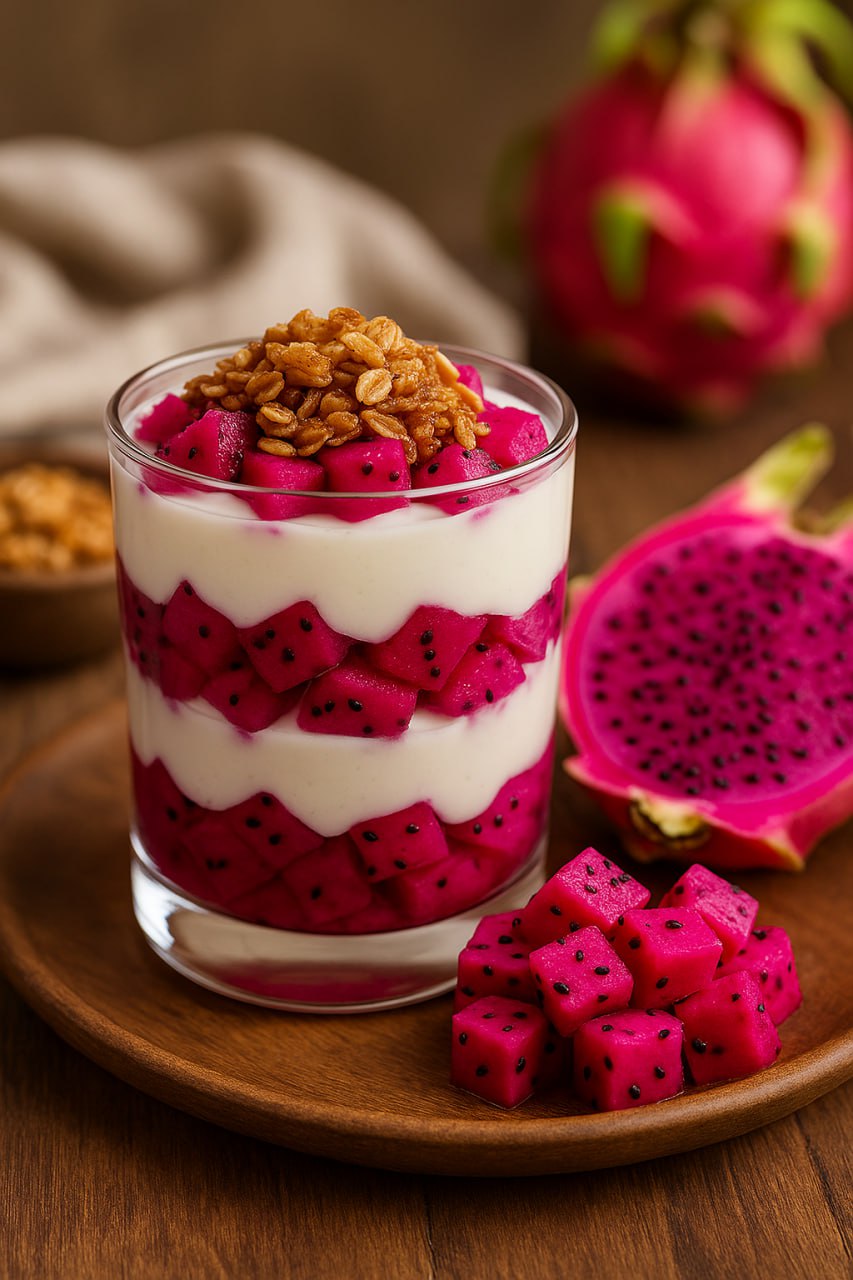
Dragon fruit coconut parfait: quick-n-fun exotic recipes

Dragon fruit coconut parfait

Dragon fruit coconut parfait

🍴 Dragon fruit coconut parfait: quick-n-fun exotic recipes


🔵Layer Dragon Fruit cubes with coconut cream and toasted granola.
🔵A tropical breakfast that looks neon and tastes fresh!

Dragon fruit coconut parfait recipe

Ingredients

  • 1 fresh Dragon Fruit, diced into cubes
  • 1 cup coconut cream
  • 1/2 cup toasted granola
  • Optional: honey or maple syrup for drizzle

Instructions

  1. Layer Dragon Fruit cubes in a glass or bowl.
  2. Add a layer of coconut cream, then sprinkle toasted granola.
  3. Repeat layers until glass is full, finishing with granola on top.
  4. Serve immediately for a refreshing tropical breakfast or snack.

🛒 Explore Dragon Fruit varieties

#Food_Forest #Recipes

🟢 Join 👉 TopTropicals