6 easiest fruit trees and 5 spices to grow in containers indoors
Q: This is why I want to move so that I can grow absolutely anything I want from your catalogue. Prefered Puerto Rico. Right now I live in New York and there is absolutely nothing I can grow there.
A: Of course living in Puerto Rico brings more opportunities to grow tropical species. However, you can create your unique tropical paradise even living in New York. We have many customers from up North who successfully grow tropical species (and get them to flower and fruit) in greenhouses, and even indoors.
Here are a few suggestions of tropical fruit trees that adapt well for container/indoor culture - for both beginners and advanced gardeners.
Top 6 fruit trees great for indoors / container culture / beginners 1. Mango (Mangifera indica). Select from one of smaller mango varieties 2. Sugar Apple (Annona squamosa)
3. Guanabana, Soursop (Annona muricata)
4. Miracle Fruit (Synsepalum dulcificum)
5. June Plum (Spondias cytherea)
6. Guava (Psidium guajava)
Don't forget to get some SUNSHINE boosters for your plant collection - for both successful indoor culture and cold protection!
See also our magazine Tropical Treasures) - Pushing the Limits of Tropical Gardening, with list of issues.
Date: 2 Apr 2026
Stop Fixing Your Soil: 15 Bulletproof Fruit Trees for Tough Ground
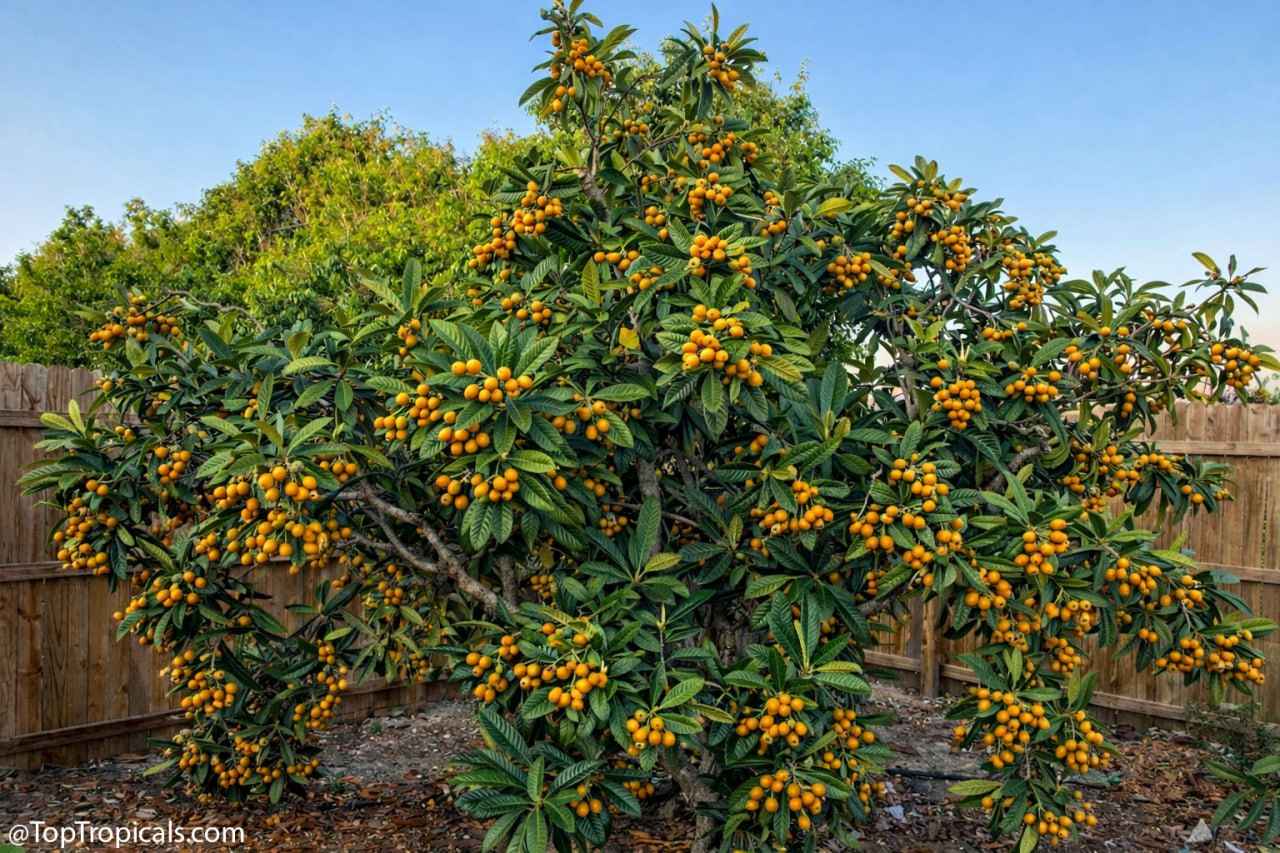
Loquat (Eriobotrya japonica) fruiting
Stop Fixing Your Soil: 15 "Bulletproof" Fruit Trees for Tough Ground 💩
Not everyone starts with a lush, loamy paradise. In many parts of Florida and the South, "soil" is just a polite word for sand, limestone rock, or depleted clay.
The biggest mistake new gardeners make? Spending hundreds of dollars on soil amendments before they ever put a tree in the ground.
The secret the pros know: You don't need to change your land to fit your plants; you need to choose plants that love your land. Some of the most delicious fruits actually thrive on neglect - and a few even produce better fruit when the soil is "poor."
🌳 The "Big 5" Toughest Fruit Trees
If your yard is a dry, sandy lot or a rocky outcrop, start with these. They are the ultimate "survivors."
Jujube, Chinese Date (Ziziphus jujuba): Arguably the toughest fruit tree on earth. It laughs at drought, poor soil, and neglect. The fruit is crisp like an apple when fresh and sweet like a date when dried.
Loquat (Eriobotrya japonica): A Southern staple. It’s evergreen, beautiful, and produces honey-sweet fruit in early spring when nothing else is ripe.
Mulberry (Morus alba): If you can’t grow a Mulberry, you might be gardening on the moon. It grows in sand, clay, or sidewalk cracks with equal enthusiasm.
Fig (Ficus carica): Figs actually prefer not to be pampered. In overly rich soil, they grow lots of leaves but little fruit. Give them well-drained, mediocre soil and they’ll thrive.
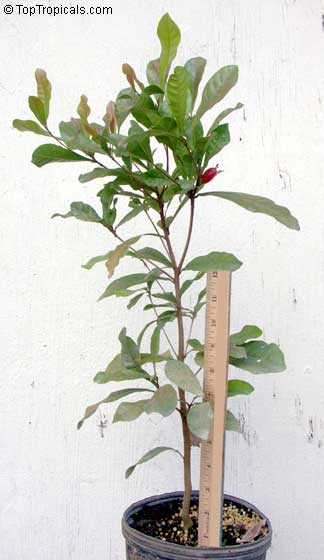
Pomegranate (Punica granatum): These trees are "stress-lovers." Rocky, alkaline soil is no problem, and a bit of soil stress often results in a higher sugar content in the fruit.
Pomegranate Plant Facts
Botanical name: Punica granatum Also known as: Pomegranate, Granada, Grenade, Pomegranate, Granada, Anar, Granaatappel, Pomo Granato, Romeira, Melo Grano
USDA Zone: 8 - 11
Highligths
🌳 Tropical Flavors That Don't Need "Perfect" Dirt
You don’t need a rainforest to grow tropical treats. These species are surprisingly resilient once they get their roots established.
🌟 The Sand-Lovers:
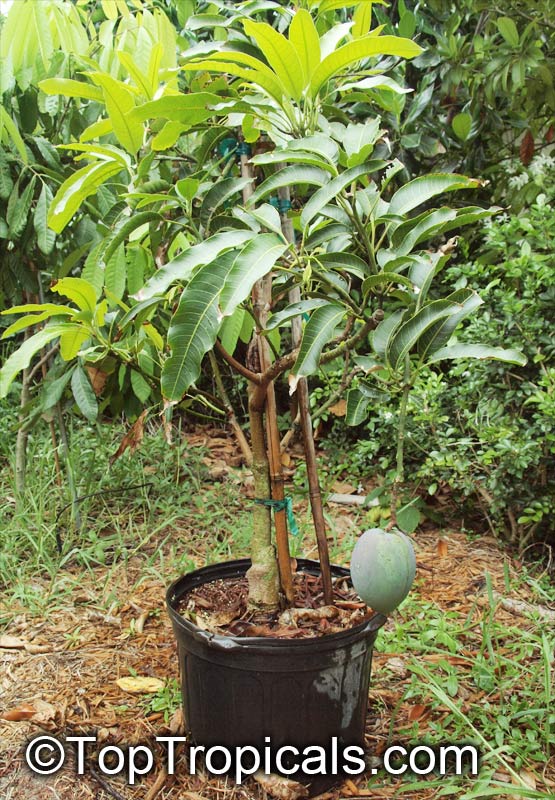
Mango (Mangifera indica): While young trees need a little babying, a mature Mango is incredibly drought-tolerant and handles Florida’s sandy "sugar sand" like a champ.
Mango Plant Facts
Botanical name: Mangifera indica Also known as: Mango
USDA Zone: 9 - 11
Highligths
Sapodilla (Manilkara sapota): A rugged, wind-resistant tree that produces fruit tasting like brown sugar and pear. It is a top-tier choice for coastal or sandy areas.
Tamarind (Tamarindus indica): It’s slow-growing but patient. Once it’s in, it’s there for a century, regardless of soil quality.
🌟 The Low-Maintenance Stars
Longan (Euphoria longana): If you’ve struggled with finicky Lychee trees, try Longan. It’s more cold-hardy and much less picky about its soil.
Citrus: While they need regular feeding (fertilizer), Citrus trees are naturally adapted to the sandy ridges of the South.
🌟 The "Quick-Win" Berry & Shrub Layer
If you want fruit this year, don’t wait for a tree to mature. Add these hardy producers to your edges. And here is why it works:
Dragon Fruit (Hylocereus undatus). It’s a cactus! It literally prefers poor, fast-draining soil over rich potting mixes.
Barbados Cherry (Malpighia glabra). A vitamin C powerhouse that handles low-nutrient soil with ease.
Grumichama (Eugenia brasiliensis). Slower grower, but steady and tolerant once established.
Surinam Cherry (Eugenia uniflora). Virtually indestructible. Often used as a hedge because it grows so vigorously in poor soil.
Pineapple Guava (Feijoa sellowiana). A beautiful silver-leafed shrub that is salt-tolerant and drought-resistant.
Pineapple Plant Facts
Botanical name: Ananas comosus Also known as: Pineapple, Pina
USDA Zone: 9 - 11
Highligths
🌳 The Strategy: "Plant First, Improve Later"
In the South, the "dig a $100 hole for a $10 tree" rule doesn't always apply. Trying to completely re-engineer your soil often leads to drainage issues (the "bathtub effect").
Try this instead:
1. Select a species naturally adapted to your pH and texture.
2. Plant it at the correct height (never too deep!).
3. Mulch heavily with wood chips. This improves the soil from the top down over time, mimicking a natural forest floor.
Q:
I was curious about indoor fruiting mango trees.
I live in upstate New York and was thinking about trying to grow an indoor
tree for fruit. I have a small heated greenhouse. Is there a variety that can
be grown from seed that would suit my purposes and if not what is the most
economical way I could obtain a cutting or small grafted plant? I keep my
greenhouse around 60F in the winter and have no supplemental lighting. Are there
any varieties that may work in a sunroom or other well lit indoor
location?
A:
There are many dwarf varieties of mango suitable for container culture. They
are called "condo mangoes".
The most popular condo varieties are: Carrie, Cogshall, Cushman, Fairchild,
Graham, Ice Cream, Julie
, Mallika, Nam Doc Mai,
Pickering. You may read more about them in our online
catalog. You may also look into variety
Lancetilla which is also a compact tree, and produces one of the biggest size
fruit, up to 5 pounds. If you want some rare variety that hardly anyone else has -
try Baptiste, an exotic Haitian dessert
mango.
Your greenhouse should work for the winter time. Mango trees can take
as low as mid 40s during winter and even lower as long as that cold is
occasional. If you keep the temperature around 60, this should work well for over
wintering. Just make sure to reduce watering to a minimum, because cool
temperatures, low light and wet soil - is a bad combination for tropical plants,
especially for mango trees which prefer to be kept on a dry side.
Many indoor gardeners have fruiting mango trees in their collection. However,
keep in mind that the most important requirement for a mango is full sun.
While you may over winter the plant for a few months in a low light conditions,
in order for it to flower and produce fruit it needs lots of light. If moving
the tree into full sun your yard during the summer is possible, this would
be the best solution.
We always recommend
SUNSHINE boosters for both over wintering tropical plants in colder
climates, and for indoor gardening. SUNSHINE applications will help your tree to
cope with cool temperatures and low light conditions. This will also
dramatically increase flowering and fruiting performance. Another important factor for
keeping your container plant healthy is quality of your potting soil. We
offer a special
professional mix that contains lots of good stuff: coconut fiber, peat moss, pine
bark, and perlite. Fertilizing potted plants
is also very important during the warm season, because this is the only way
for them to get nutrients (which in the ground can be reached by spreading
root system).
As far as seedlings vs. grafting - the only way to
have a nicely fruiting mango tree is to plant a grafted variety. Seedlings start
producing only after 8-15 years, and the quality of such fruit may be
questionable. Only grafted plants can guarantee the desired taste of a variety.
Besides, grafted mangoes start producing immediately - you may see fruit forming
on plants as small as 3 ft, in 3 gal containers. However, during the first
1-2 years you will need to remove extra fruit and leave only 1-2 fruit so the
plant doesn't get exhausted and has enough energy to establish strong root
system.
For fun stories about growing mango, check out our Radio
Show recording YO Tango Mango!
Date: 24 Jun 2018
Cold hardy tropical fruit trees for Luisiana
Q: I've
just moved to Louisiana and have been wondering whether it
would make sense to plant some tropical fruit trees in our
garden. Average lows in New Orleans are 41 deg F in
January and February, although we did hit 25 once with the
Arctic vortex. I'm interested in litchi, longan,
rambutans, and persimmons. Do you have varieties that can
tolerate Louisiana's temperature range? I'd love
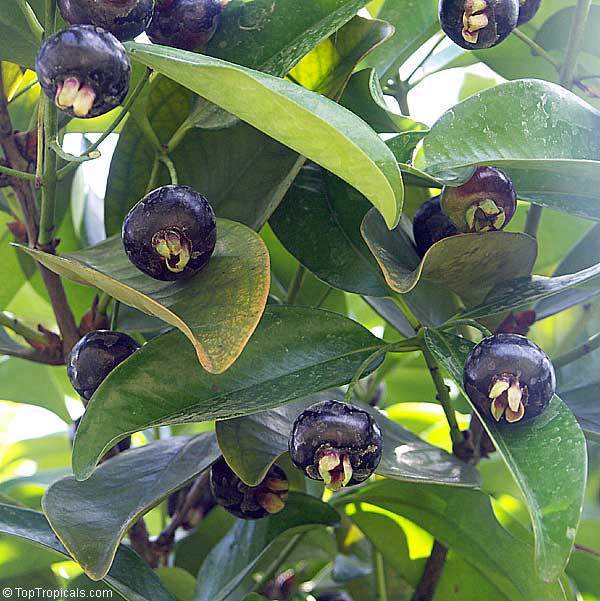
mangosteen but I don't suppose they will survive. Do you
have any suggestions on tropical fruit trees that I could
try?
A:
Average temperatures are for statistics only; it is actual
temperatures that may hurt your cold sensitive plant. This
is what you should keep in mind when starting your
tropical fruit collection:
1) Ultra-tropical plants like Rambutan can not survive
winters below 45-50F. However, they can be successfully
grown in containers in a greenhouse or moved indoors into
a sun room during cold periods.
2) Tropical plants like Litchi and Longan may take some light
frost once established. Still, for areas with freeze our
advice is - keep them in pots and move inside in case of
cold.
3) There is a number of subtropical fruit trees that are
hardy enough to take some freeze. Persimmon, Feijoa, Fig, Cattley Guava, Jujube, Kiwi, some Eugenias and others. Please
refer to our Tropical Fruit Sensitivity Chart.
4) Remember that plant's ability to survive winter depends
on several factors, not only temperature itself. Important
factors are: wind protection (chill wind kills rather than
low temperature itself), exposure, how close the tree is
planted to the house, plant maturity and its overall
strength and health. If a plant had received good
nutrients during summer, has well established root system,
planted in enclosed area protected from winds and has
plenty of bright sunlight - it has better chances to
survive than a weak plant in warmer conditions.
5) Use SUNSHINE plant boosters for
improving cold tolerance of your tropical plant. It only
takes a few drops, and only costs $5!
Date: 24 Jun 2018
URBAN TROPICAL GARDENING:
10 secrets of successful Container Mango growing on a
balcony.
Q:
I live in Miami in apartment on a second floor, and I have
a balcony with SE exposure. I wonder if I can grow a mango tree in a pot? Will it
fruit for me? I recently moved to South Florida and I
don't know much about tropical plants; but I tasted real
fiberless mangos from someone's garden - it was so
delicious and different from those in the grocery store. I
wonder if I can have a fruiting tree on my balcony? And if
yes, how do I plant and take care of it?
A:
Yes, you can! Here is what you need to do:
1) Temperature. You are lucky to live in Tropics,
keep it on a balcony year round.
2) Light. Position the pot in a spot with the most
sun exposure. Mango trees can take filtered light too, but
the less sun, the less fruit you will get.
3) Soil and Container. Use only
well drained potting mix. Step up the purchased
plant into next size container (3 gal into 7 gal, 7 gal
into 15 gal). When transplanting, make sure to keep growth
point (where roots meet the trunk) just at the top of the
soil. Covering base of the trunk with soil may kill the
plant.
4) Water. Water daily during hot season, but only
if top of soil gets dry. If it still moist, skip that day.
Mangoes (unlike
Avocados!) prefer to stay on a dry side.
5) Fertilizer. Use
balanced fertilizer once a month, 1 tsp per 1 gal of
soil. Do not fertilize during fruiting - this may cause
fruit cracks.
6) Microelements. Apply
SUNSHINE-Superfood once a month. This will help your
mango healthy, vigorous, and resistant to diseases. Use SUNSHINE-Honey to make your
fruit sweeter.
7) Insect control. Watch for scales and mealybugs,
clean with solution of soapy water + vegetable oil (may
need to repeat 2-3 times with 10 days interval), or with
systemic insecticide like imidacloprid only as needed (if
non-harsh treatment didn't help). Most Flea shampoo for
dogs contain that chemical, you may try that shampoo
solution.
8) Trimming. Once potted, do not remove leaves
that are discolored or have spots until new growth
appears. Dark dots on mango leaves, especially in humid
climate like Florida, may be signs of fungus. Treat with
fungicide according to label, and remove only badly
damaged leaves. Trim crown as needed after flowering and
fruiting (by Fall). Train into a small tree, and you may
remove some lower branches eventually.
9) Flower and fruit. Mangoes are winter bloomers
with bunches of tiny flowers coming in thousands. Many of
them set fruit (if pollinating insects present). Keep in
mind that young trees can only bare a few fruit. Normally
a tree will drop excessive fruit and keep only a few that
it can manage. To save the young tree some energy, remove
fruit if too many and leave only 2-3 for the first year.
It will pay you next year with more abundant crop.
10) Variety. Last but not least: Choose the right
variety for container culture! Pick from "condo" dwarf
varieties such as Icecream, Nam Doc Mai, Carrie, Cogshall, Julie, Fairchild, Pickering, Graham, Mallika, and a few others -
check out Mango Chart pdf
and full list of our Mango varieties.