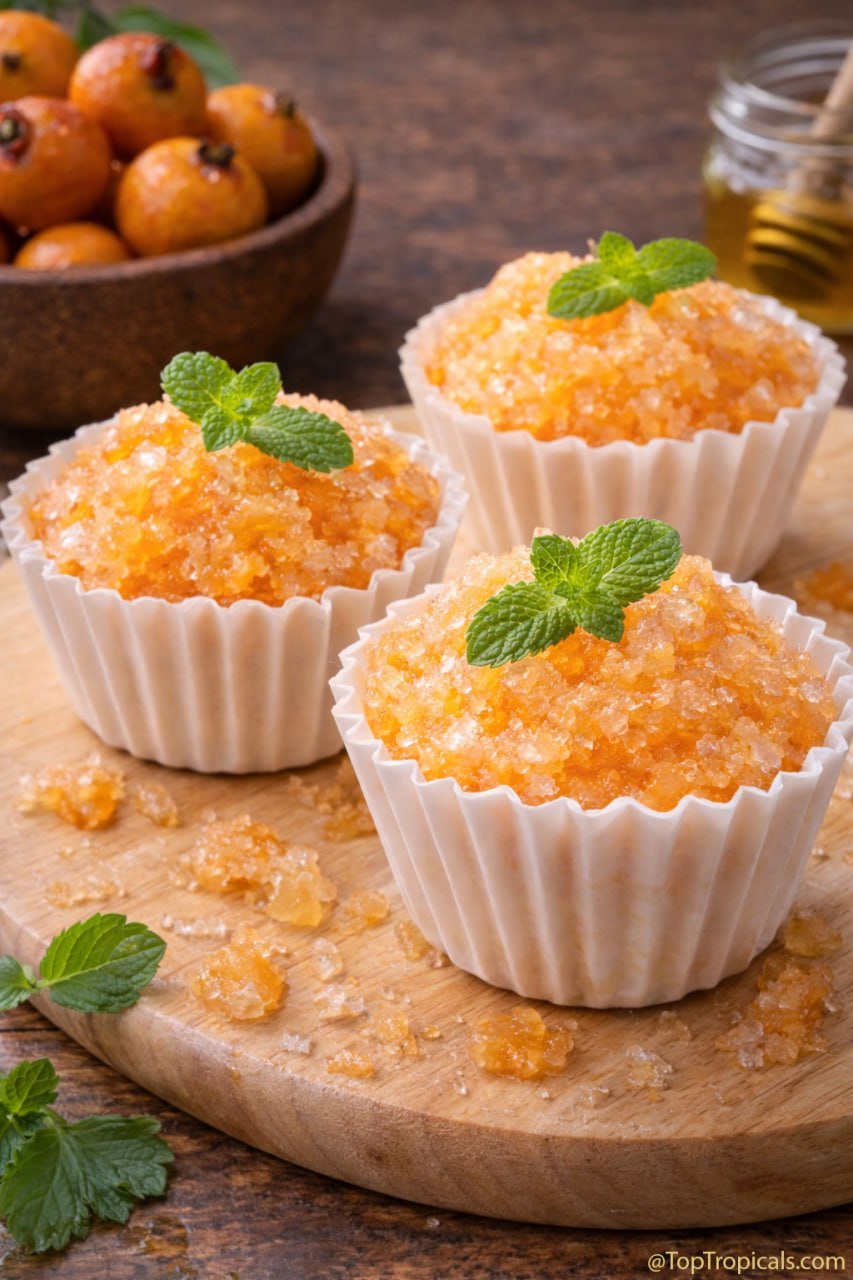
Mix with honey and a little water to soften the texture.
Spoon the mixture into small cups or molds.
Freeze until icy-soft.
Serve topped with fresh mint for a refreshing tropical snack.
🌿 About the plant:
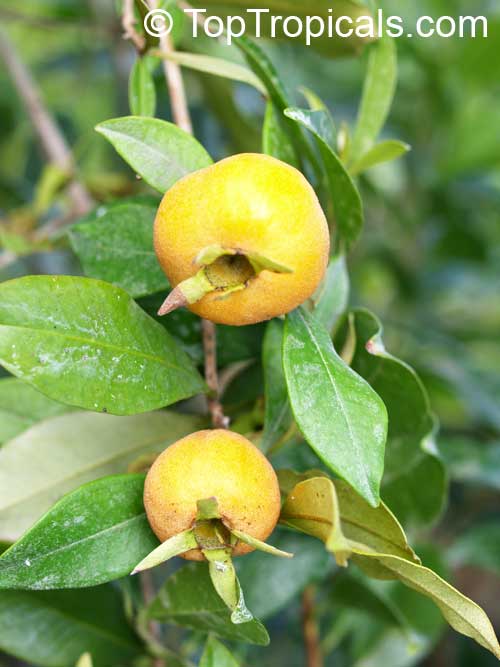
Pitomba (Eugenia luschnathiana) is a tropical fruit native to Brazil, prized for its bright, citrusy pulp with a sweet-sour kick. The flavor is often compared to a mix of apricot, citrus, and mild resin, making it refreshing and snack-worthy straight from the fruit.
Pitomba Plant Facts
Botanical name: Eugenia luschnathiana, Phyllocalyx luschnathianus Also known as: Pitomba
USDA Zone: 9 - 11
Highligths
🌱 In the garden:
Pitomba grows as a small to medium-sized slow growing tree with glossy evergreen leaves. It thrives in warm climates, prefers full sun to light shade, suitable for USDA zones 10-11, it can also be grown in large containers and responds well to pruning, making it manageable for home gardens.
🌸Dombeya seminole - Tropical Rose Hydrangea: everyone who sees this plant falls in love at first sight. Exceptional rose-pink flower clusters cover the shrub, and butterflies and bees go wild over it. While it is considered a winter bloomer, here at Top Tropicals garden we regularly see it flower multiple times a year, with peak bloom from November through January and surprise blooms the rest of the year.
Tropical Rose Hydrangea Plant Facts
Botanical name: Dombeya Seminole Also known as: Tropical Rose Hydrangea
USDA Zone: 9 - 11
Highligths
🌸 Here is how to keep your Dombeya seminole happy and blooming more:
💋 1. Full sun
The more sun it gets, the more flowers it produces. Sun equals bloom power.
💋 2. Adequate water
Dombeyas are heavy drinkers. Regular watering fuels fast growth and heavier flowering.
💋 3. Feed for flowers
Use Sunshine Megaflor bloom booster with regular watering, or apply Green Magic controlled-release fertilizer every 6 months.
💋 4. Trim after flowering
Prune once blooms fade. A bushier plant means more flowering points next season.
💋 5. Give it space
This is a round, airy shrub. Allow at least 6 x 6 ft for good air circulation and even light exposure.
🌸 Quick facts you will appreciate: 💋Often called Tropical Hydrangea because of its hydrangea-like flower clusters 💋Blooms fall through spring, often all winter 💋Reaches about 6-7 ft tall and wide, but can be kept smaller with pruning 💋Thrives in full sun to partial shade and tolerates poor soil 💋An excellent nectar source for butterflies
If you want a beautiful color that refuses to quit, this shrub earns its spotlight.
The Tropical Survivor: Why This Pink Plume Defied a 25F Freeze
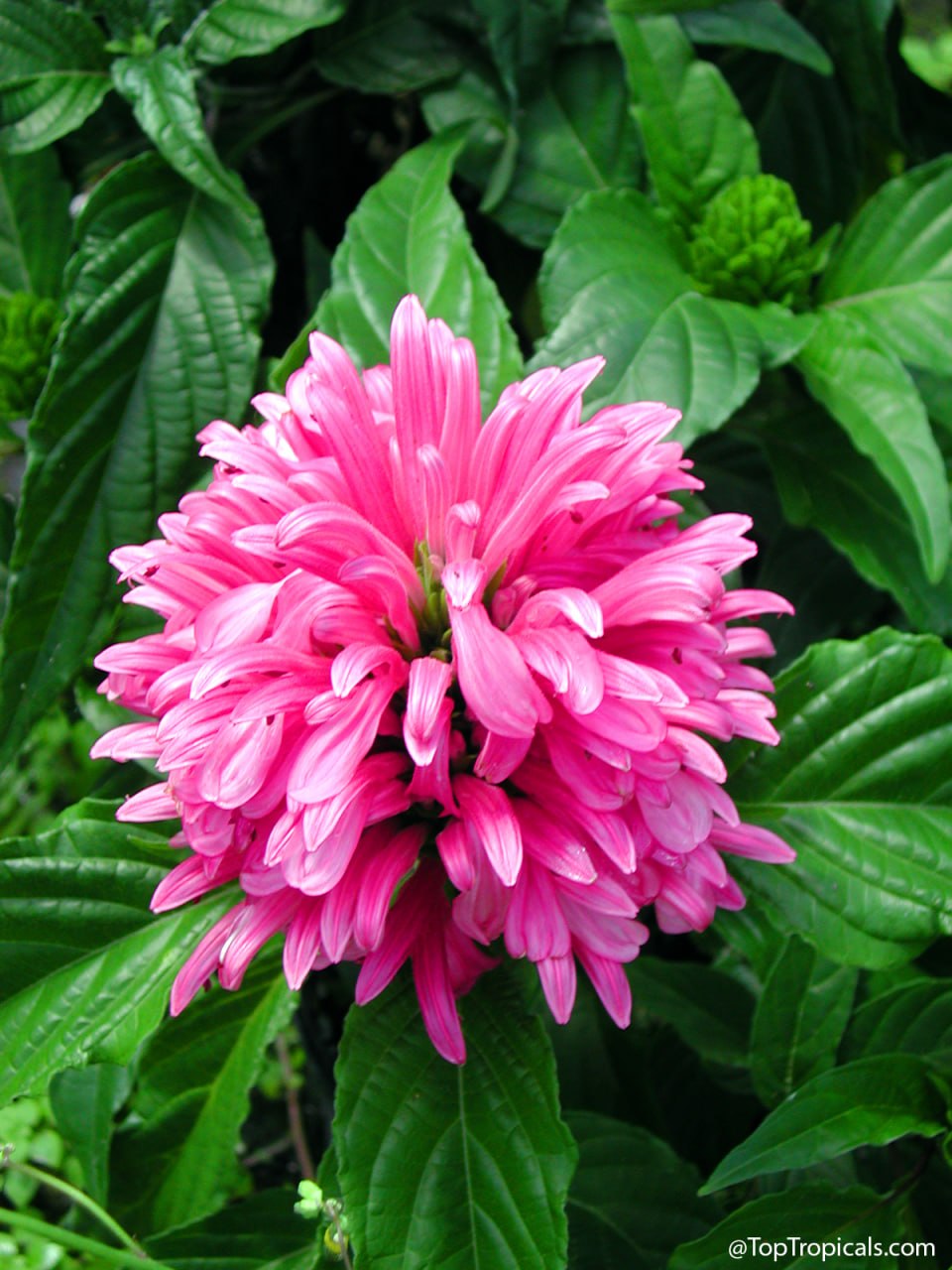
Justicia carnea - the Pink Brazilian Plume
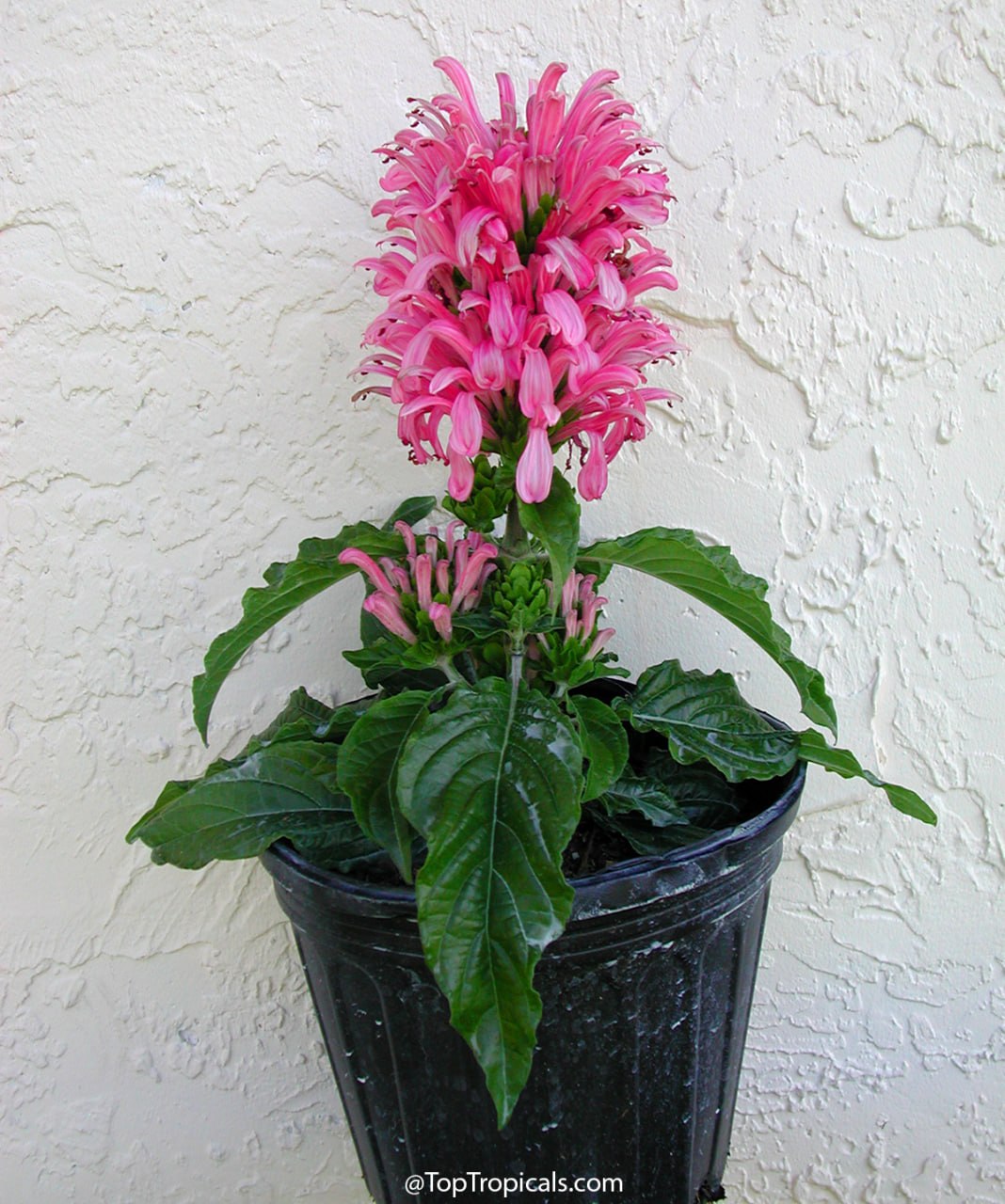
Justicia carnea - the Pink Brazilian Plume in a pot
The Tropical Survivor: Why This Pink Plume Defied a 25F Freeze
When Central Florida temperatures plummeted to 25F for two days, many gardeners braced for a total loss; and while most tropicals melted into black mush, Justicia carnea - the Pink Brazilian Plume or Jacobinia - proved that looks can be deceiving.
Brazilian Plume Plant Facts
Botanical name: Justicia carnea, Jacobinia carnea Also known as: Brazilian Plume, Flamingo Flower
USDA Zone: 9 - 11
Highligths
Tougher Than it Looks
As many other tropical plants from Acanthaceae family - Justicia plants are much hardier than they look.
At first glance, the Brazilian Plume looks like a greenhouse diva. It boasts huge, lush leaves and giant, cotton-candy pink flower clusters. However, it harbors a secret: it behaves more like a hardy perennial than a delicate shrub.
Even when a hard freeze burns the top growth to the ground, the root system remains remarkably resilient. Once the soil warms, fresh shoots often push through the dirt faster than expected.
A Hummingbird Magnet for the Shade
The real draw of Justicia carnea isn't just its survival skills - it’s the show-stopping blooms.
Large upright plumes can reach the size of a football. The tubular flowers are a primary target for hummingbirds and butterflies. Unlike most tropical bloomers, it thrives in filtered light and bright shade, making it perfect for understory planting.
👉 Gardener’s Tip:
Don't dig it up too soon! Freeze-damaged stems may look finished for weeks, but patience usually rewards you with new growth by late spring.
🌱 Quick Care Guide
Light: Bright shade or filtered sun Soil: Rich, well-draining Water: Regular moisture during heat Best For: Pool areas, woodland gardens, and pollinator beds
For gardeners wanting that high-impact tropical aesthetic without the heartbreak of constant replanting, this Jacobinia is the ultimate comeback kid.
🔮 When the World Around Becomes Too
Gray: Plant a Tree. Eat a Donut. Keep going.
Sunshine: Smokey, what do we do when the world around
becomes too gray? Smokey: Plant a tree. Sunshine: And if that does not help? Smokey: Plant another one. Sunshine: And eat a donut. Smokey: Not strictly necessary, but statistically
beneficial.
If you have been feeling a little worn down lately, you are not
alone.
You already know about the headlines. We do not need to list them. You
have probably seen them today before breakfast.
We are not here to pretend that is not happening. It is happening. And
it is a lot.
But here is the thing we keep coming back to, the thing that has been true
for as long as people have had hands and a patch of ground: when the world
feels out of control, you can still plant something.
Gardening is not an escape. It is an answer. When you put a tree in the
ground, you are making a quiet statement. You are saying that you expect
there to be a future. That you intend to be in it. That shade and fruit and
flowers still matter, and you are going to make sure they exist in your
corner of
the world.
That is not naive. That is courageous in the most ordinary and
underrated way.
One tree, planted this season, might give you fruit in a few years. It
might give butterflies somewhere to stop. It might give a bird a place to
nest. It will almost certainly give you something to look at on a hard day
that
reminds you the world still contains beauty, and that you put some of it
there.
And if one tree does not quite do it? Plant another one.
Dostoevsky said beauty will save the world. We think a mango fruiting in
your backyard counts. So does a Magnolia opening on a quiet morning.
Do not skip the donut.
A donut is a small, simple, completely unnecessary thing. That is
exactly the point. It is not productive. It does not solve anything. It is
just
good, and sometimes that is the whole reason. In a world that constantly
demands
you be useful and informed and concerned, eating a donut is a quiet act of
being human. You are allowed to enjoy a small thing on a hard day. You do
not
have to earn it.
Rest a little. Then go put something in the ground. Anything that will
grow and flower and remind you that beautiful things are still happening
whether the headlines mention them or not.
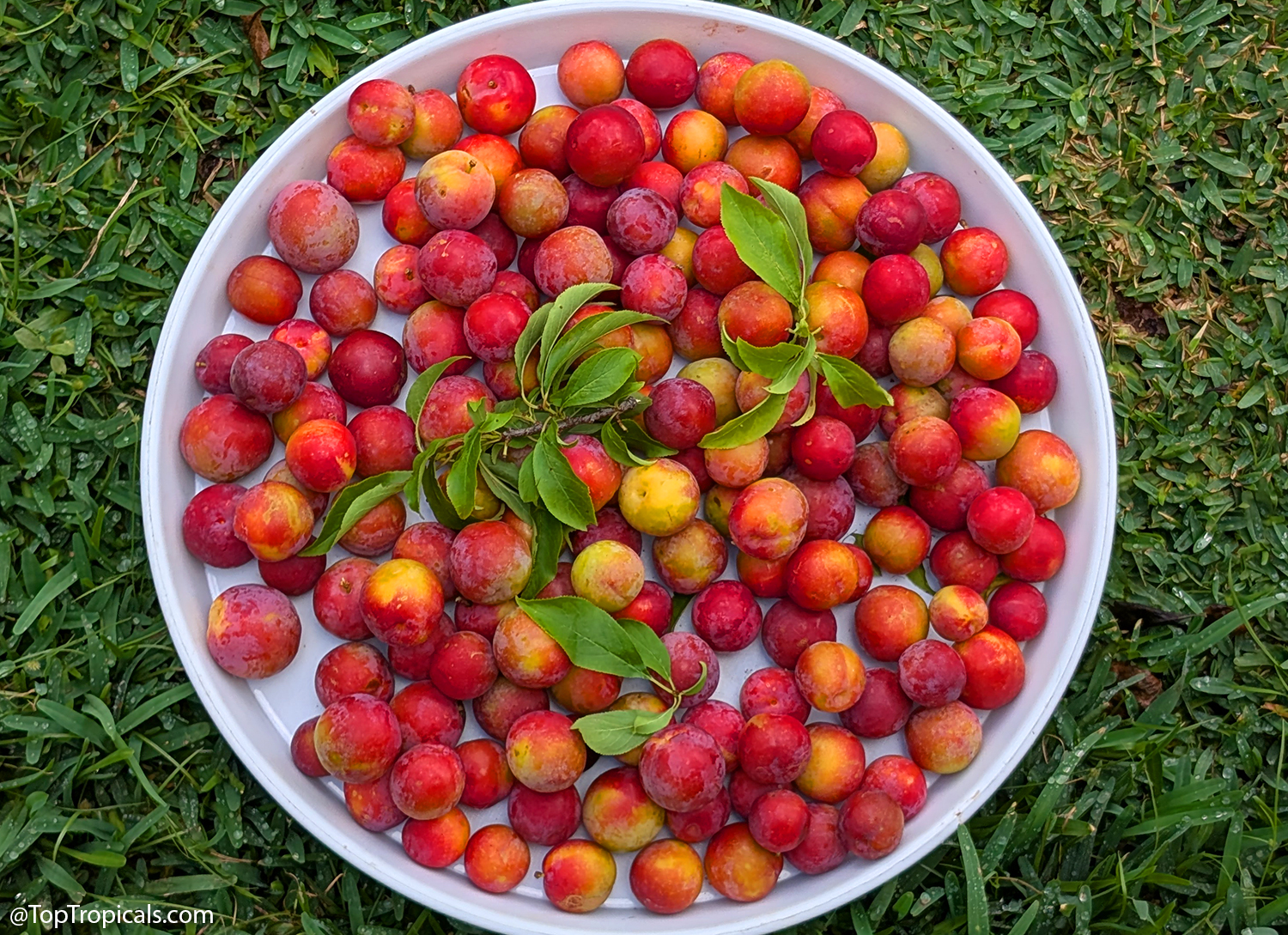
We just finished harvesting loquats
and mulberries,
and now another wave is coming in - low chill plums,
peaches, and nectarines fresh from the garden. This is one of
the most rewarding times of the year, when every season brings the fruit of
your labor and all that work finally turns into something sweet.
The easy orchid that blooms like a tropical sunrise: Epidendrum
Orange Reed Ground Orchid or Sunrise Orchid - Epidendrum
🌅 The easy orchid that blooms like a tropical sunrise: Epidendrum
Most people think orchids are fussy plants that belong in greenhouses or on windowsills. Epidendrum radicans - also known as Orange Reed Ground Orchid or Sunrise Orchid - proves otherwise. This colorful orchid grows in the ground, tolerates heat and humidity, multiplies easily, and can bloom for months with very little care.
🔥 Not your typical orchid
Unlike many orchids that grow on trees, Epidendrum radicans is a terrestrial orchid native to Mexico, Central America, and northern South America. It naturally grows on the ground and even among rocks.
Its upright reed-like stems are topped by clusters of brilliant orange flowers with golden-yellow highlights. A single mature stem can carry dozens of blooms, and large plantings resemble patches of miniature tropical sunrises.
🔥 Easy to grow, easy to share
Epidendrum thrives in Florida's heat and humidity and performs best in bright light and well-drained soil. In warm climates it often blooms throughout the year.
One reason gardeners love it is its ability to spread. The stems naturally produce roots along their length, making division and propagation remarkably easy. A single plant can eventually develop into a large, colorful colony.
🔥 A pollinator favorite
The vivid orange flowers attract butterflies and hummingbirds and stand out brightly against green foliage. This makes Epidendrum a valuable addition to pollinator gardens and tropical landscapes.
🔥 Better than a flowering annual
Unlike annual flowers that must be replaced each season, Epidendrum returns year after year and gradually expands into larger clumps. It works well along walkways, patios, entryways, borders, and mixed tropical beds where its upright growth adds height and color.
🔥 The orchid that deserves more attention
Some plants become famous because they are difficult or rare. Epidendrum radicans deserves attention for the opposite reason.
It is colorful, dependable, beginner-friendly, and generous with flowers. Give it sunshine, good drainage, and a place to grow, and it will reward you with months of vibrant blooms that bring the warmth and energy of a tropical sunrise into your garden. 👉 More...
📌 The common name "Crucifix Orchid" comes from the tiny cross-shaped structure in the center of each flower. 📌 Unlike many orchids, it naturally produces roots along its stems, which is one reason it spreads and propagates so easily. 📌 In Florida, it's often used as a landscape orchid rather than a houseplant.
📚 Learn more:
Bamboo Orchid Plant Facts
Botanical name: Arundina graminifolia, Arundina affinis, Bletia graminifolia Also known as: Bamboo Orchid, Bird Orchid