Eugenias have earned a spot in many Southern gardens because they’re
easy, dependable, and surprisingly versatile. These small trees and shrubs
grow well in the ground or in containers, and they don’t waste time
before setting fruit.
15% Off
Eugenias – Limited Time
Use code EUGENIA15 at checkout.
Excluding S/H. Offer expires 08/28/2025
👍 Popular
Choices:
What Makes Eugenia Cherries
Stand Out
Start producing fruit in just a couple of years
Compact size — easy to keep 6–12 ft tall, smaller in
pots
Low-care — tolerant of most soils and resistant to common
pests
Strong in hot weather, yet can handle a light frost down to the mid-20s
°F
Plenty of fruit for people and birds alike
Grumichama Tree in Bloom – Eugenia brasiliensis
Growing & Care
Outdoors
Best in USDA Zones 9–11
Sun or partial shade; more sun usually means sweeter fruit
Plant in well-drained soil; avoid heavy, wet spots
Withstands summer heat and humidity, and can take a light freeze
Container / Indoor
Do well in 5–10 gallon pots on patios or balconies
Need bright light indoors — a sunny window or grow lights
Can flower and fruit in containers if kept warm and well lit
In cooler zones, bring plants indoors for winter and back out in
spring
General Care
Water: Keep soil evenly moist; drought-tolerant once established but
best yields with regular watering
Soil: Use good potting mix - LINK TO SOIL
Fertilizer: Balanced slow-release LINKL TO FERTILIZER Sunshine
Boosters
Pruning: Light trimming keeps plants bushy and productive
Pollination: Self-fertile; one plant will fruit on its own
Which jaboticaba to grow: a quick guide to the most popular varieties
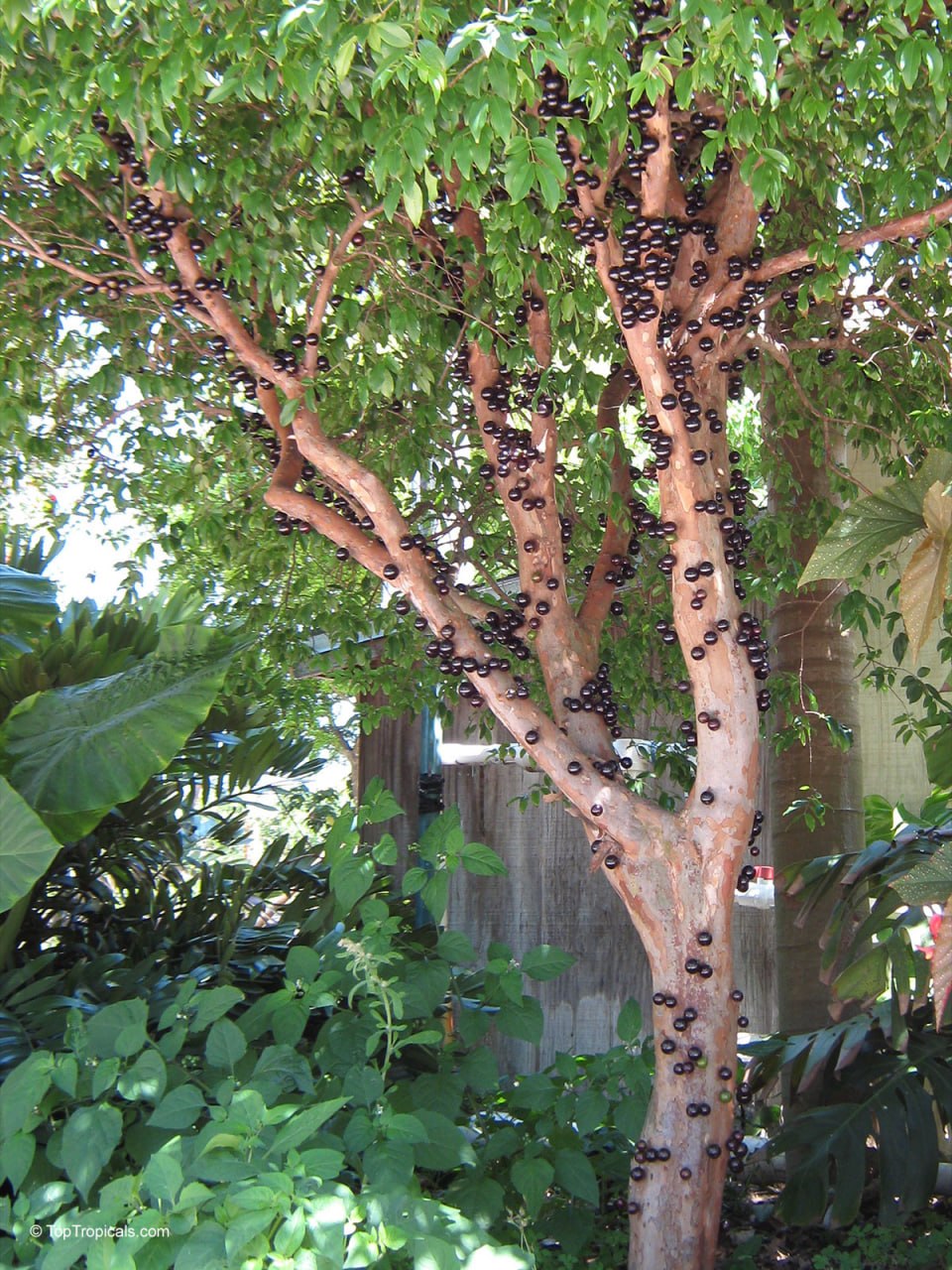
Myrciaria cauliflora Jaboticaba tree
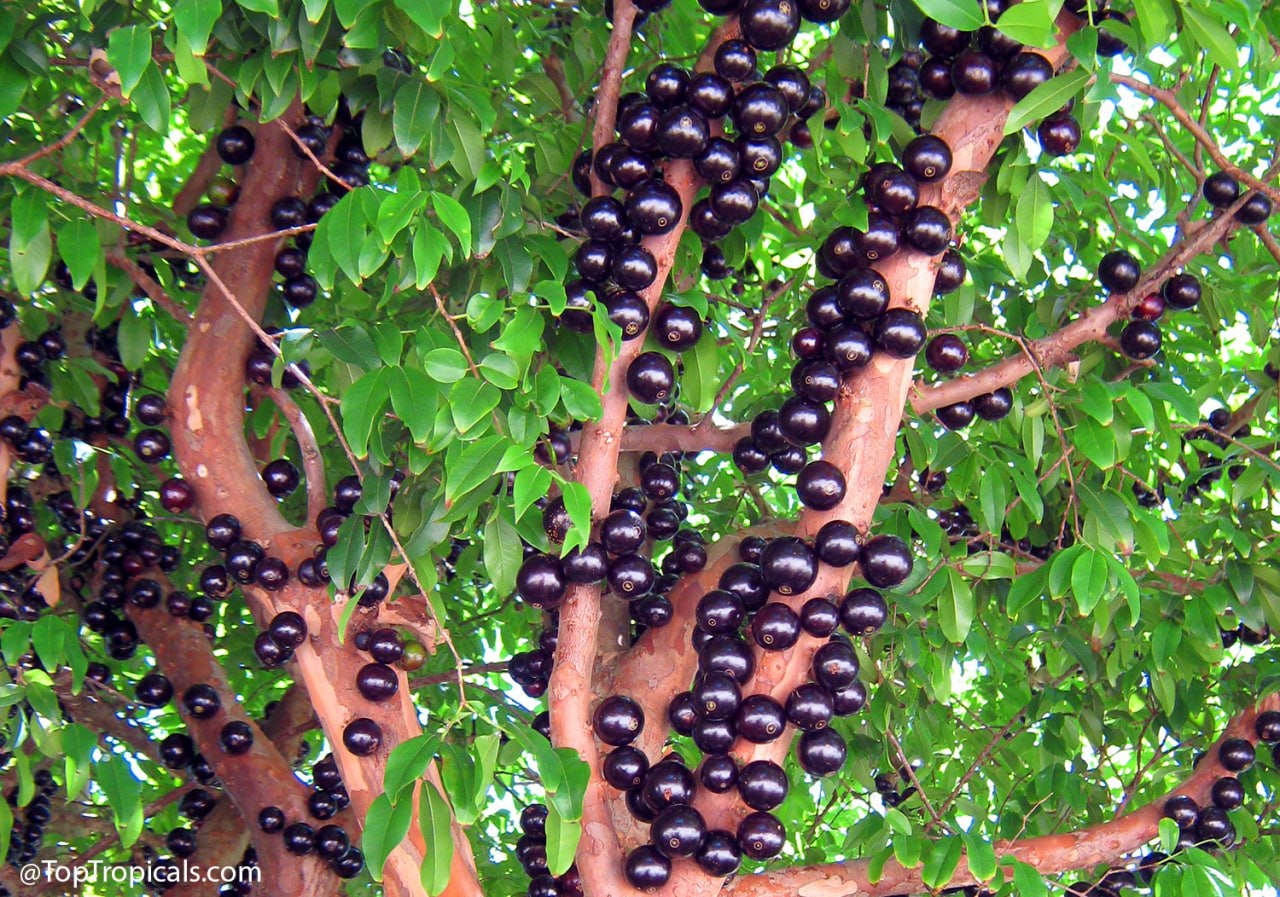
Myrciaria cauliflora Jaboticaba fruit
Myrciaria cauliflora Jaboticaba fruit
🍇Which jaboticaba to grow: a quick guide to the most popular varieties
Jaboticabas are among the most unusual fruit trees in the world. Native to Brazil, they produce grape-like fruit directly on the trunk and branches. Most varieties have sweet pulp, can fruit multiple times per year, and grow well in containers.
Despite their tropical appearance, jaboticabas are surprisingly cold hardy. During our historic Florida freeze, established trees handled 25F for two nights and nearly two weeks of unusual cold without protection. Many varieties can tolerate temperatures into the 20s, making them one of the more cold-hardy tropical fruit trees for Florida.
From fast-fruiting dwarfs to giant-fruited collectors' varieties, each jaboticaba offers something a little different. Here's a practical guide to some of the most popular selections.
For beginners: Precoce Dwarf (Red Scarlet)
One of the fastest-fruiting jaboticabas, often producing in 3-5 years. Compact, container-friendly, ideal for gardeners who want fruit sooner.
• Fruits young • Naturally compact • Excellent container plant • Good for cooler climates where winter protection is needed
The classic choice: Sabara
The classic Brazilian jaboticaba and still the most widely grown variety. Small, exceptionally sweet fruit with thin skin and juicy pulp. Can produce several crops per year.
• Traditional jaboticaba flavor • Thin-skinned fruit • Sweet and juicy • Excellent for bonsai and containers • One of Brazil's most popular wine varieties
For large fruit: Grimal
Often called Giant Jaboticaba, with much larger fruit than most varieties. Thick juicy pulp, small seeds, heavy production.
• Larger fruit • Thick pulp • Heavy producer • Excellent fresh eating quality
For exceptional flavor: ESALQ
Known for large, exceptionally sweet fruit and relatively early production.
• Outstanding sweetness • Large fruit • Fruits in about 4-5 years • Collector favorite
For beauty and productivity: Branca Vinho
One of the most ornamental jaboticabas, with attractive foliage, upright growth, and excellent white-fleshed fruit. Fruits young and often several times per year.
• Beautiful foliage and trunk • White-fleshed fruit • Excellent flavor • Multiple crops per year • Good cold tolerance
For collectors: Blue Jaboticaba
A close jaboticaba relative (Myrciaria vexator) producing blue-purple fruit with a sweet grape-like flavor. Often grown as much for its beauty as its fruit.
• Unique blue fruit • Sweet grape-like flavor • Ornamental tree • Rare and unusual
For faster growth: Volcano Red (La Vinotinto)
More vigorous and faster growing than traditional jaboticabas. Famous in Hawaii for Volcano Red wine.
• Faster growth • More vigorous tree • Good adaptability • Tolerates occasional waterlogging • Source of Hawaiian Volcano Red wine
👉 All jaboticabas share the same magical trait - flowers and fruit appearing directly on the trunk. The differences are in fruit size, growth rate, and how quickly you'll enjoy your first harvest. Jaboticabas are notoriously slow growing, and large fruiting-size trees can take many years to develop. Established specimens are hard to find and can save years of waiting. If you've been thinking about adding one to your garden, remember: the best time to plant a jaboticaba was years ago - the second-best time is today.
Q: What can you do with Dragon Fruit? I bought some from the grocery store, but they don't have much flavor.
A:Dragon fruit, or Pitaya, comes in many varieties that differ in flavor,
sweetness, and texture. In the store they usually carry simple varieties
that are easy to ship and store but have very little flavor. This is why we
prefer grow our own Dragon Fruit, same way like we grow many varieties of Mango - to enjoy their
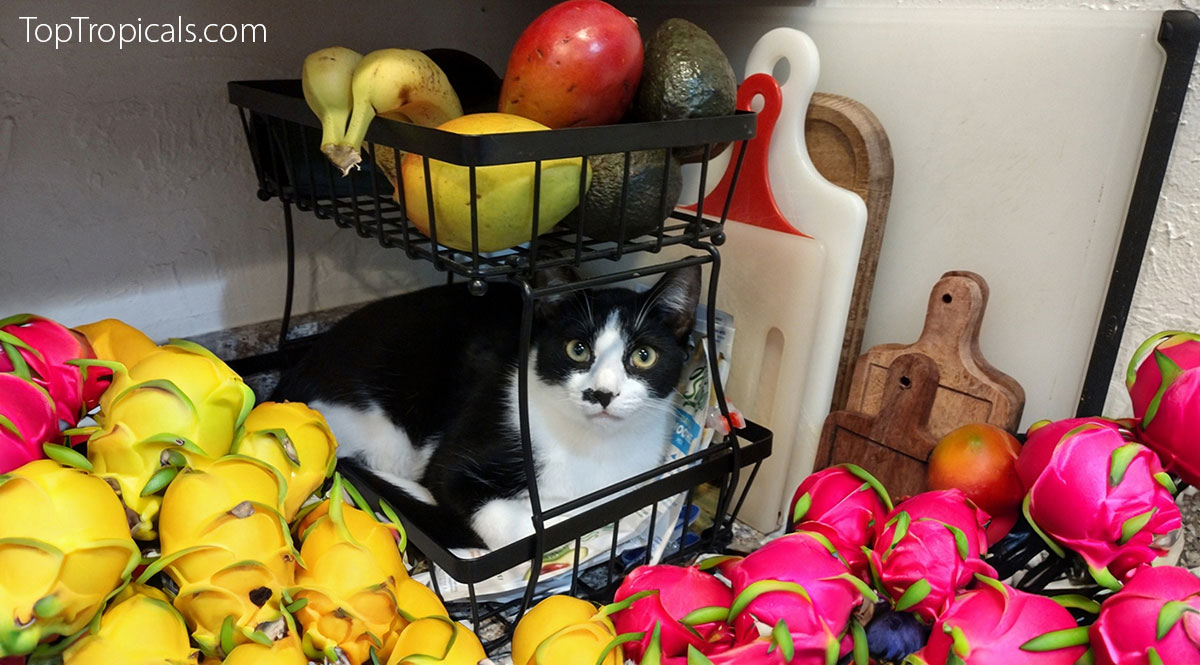
excellent flavors that you can't find in a store. Our favorite is the Yellow Dragon Fruit that
is not only the sweetest of all but also have the best flavor, with
pineapple-mango hint. It is best enjoyed fresh out of hand.
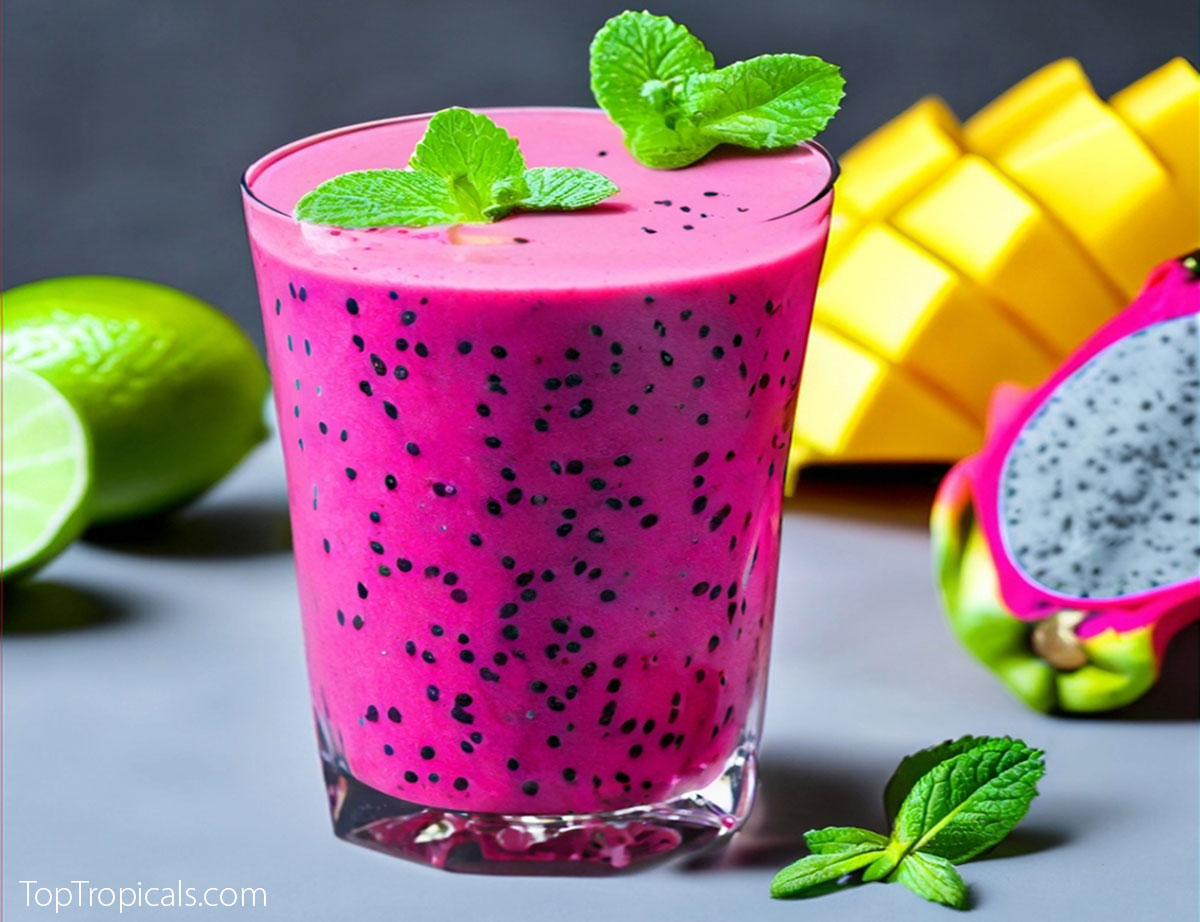
Dragon fruit, regardless of variety, makes excellent smoothies. A
perfect Dragon Fruit Smoothie can be made with a creamy blend of dragon fruit,
mango, and banana. The tropical flavor is played up with a squeeze of fresh
lime.
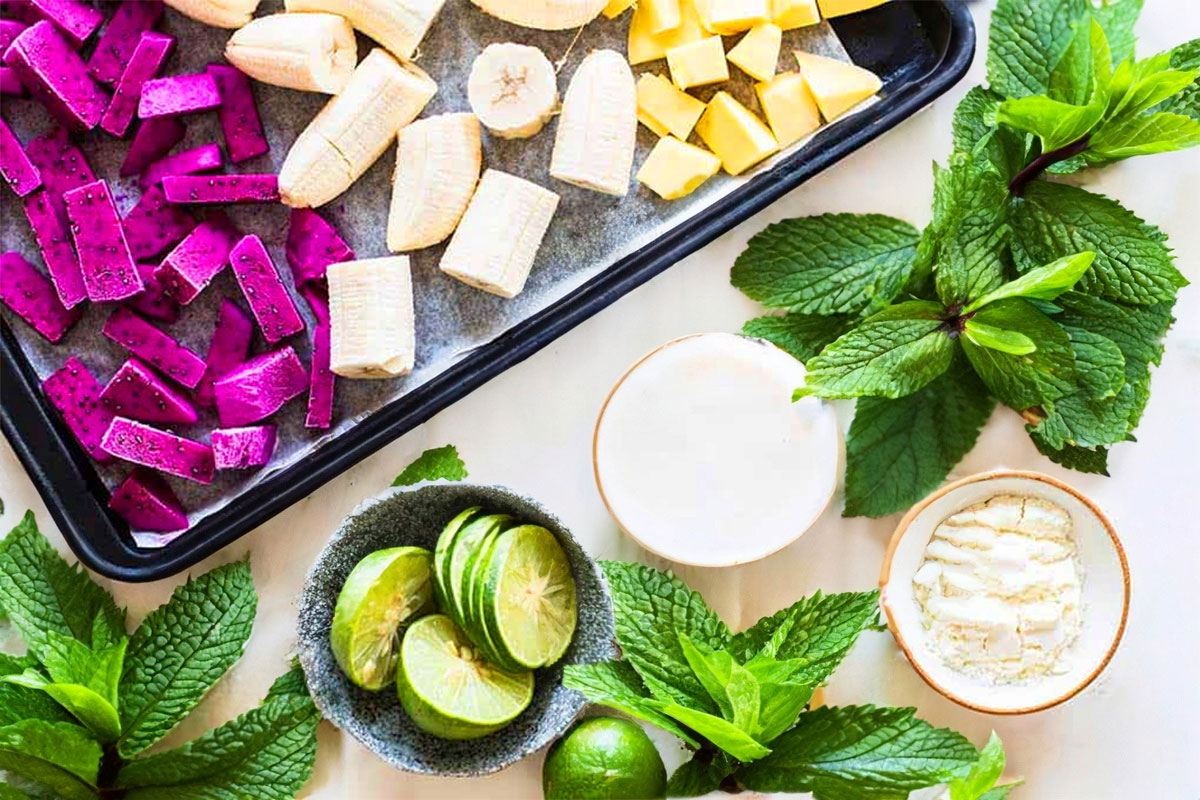
Ingredients
Mix in a blender:
2 dragon fruit, peeled
1/2 cup of mango pulp
1 banana
1 cup of milk of your preference
2 tbsp sugar
1/2 tsp Lime juce
Some Ice
-
Mint for decoration
Dragon fruit contains lots of of nutrients, most notably high vitamin C
and iron. Its low calorie content helps give it superfood status because of
high nutrient density. Try it today, even from the grocery store! Although these fruit can be quite costly.
So, plant your own Dragon Fruit variety collection and enjoy an endless
palette of deliciousness!
Pitaya vs Dragon fruit - what is the difference and how to grow it?
🌵 Pitaya vs Dragon fruit - what is the difference and how to grow it?
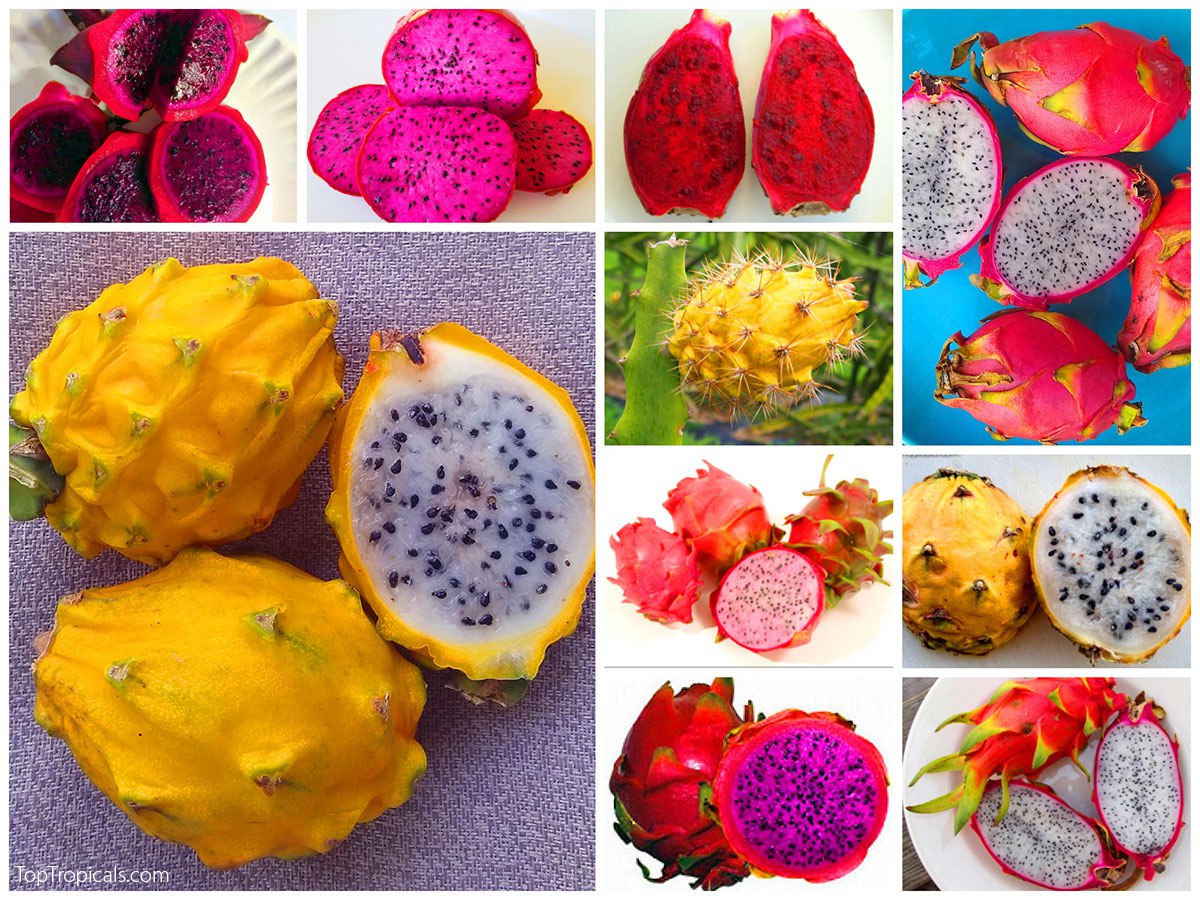
🍉 Pitaya and Dragon Fruit are the same plant! Both names refer to climbing cacti in the genus Hylocereus. The word pitaya is more common in Latin America, while dragon fruit is the name used in Asia and English-speaking countries. They come in different types: white-fleshed (Hylocereus undatus), red-fleshed (Hylocereus costaricensis), and yellow-skinned (Hylocereus, or Selenicereus megalanthus). All share the same growth habit and care needs. Pitaya or dragon fruit - whichever name you use, it's one of the easiest exotic fruits to grow at home.
🍉 How to grow Dragon Fruit
Get a desired variety or start from a cutting - let the cut end dry for a few days before planting to prevent rot. Plant in well-draining soil with lots of sun. Give it a strong support to climb on - it's a vining cactus. Water deeply but let the soil dry between waterings. Flowers open at night and need pollination - some types are self-fertile, others need cross-pollination. With care, you can enjoy fruit in 1-2 years. Remember to ferilize!
🍉 Dragon fruit varieties
🔴 ⚪️ Red skin, white flesh(Hylocereus undatus) - The most popular type, and the biggest fruit. Mildly sweet, refreshing, and often compared to a kiwi crossed with a pear. Varieties:David Bowie, Delight, Hana, Lake Atitlan, Seoul Kitchen, Vietnamese Jaina, Hana
🔴🔴 Red skin, red flesh(Hylocereus costaricensis) - Sweeter, juicier, and more intense in flavor. The deep red juice can stain, but it’s loaded with antioxidants. Varieties:American Beauty, Bloody Mary, Eureka Red, Costa Rican Sunset, Mac Edwin, Halleys Comet, Mac Edwin, Makisupa, Mega Red, Physical Graffiti, Sweet Red
🔴🟣 Red flesh, purple/magenta flesh(Hylocereus x costaricensis) - Hybrids, usually between red and white varieties. Varieties:Cosmic Charlie, Edgar's Baby, Halleys Comet, Natural Mystic, Physical Graffiti, Purple Haze, Tricia, Voodoo Child, Zamorano
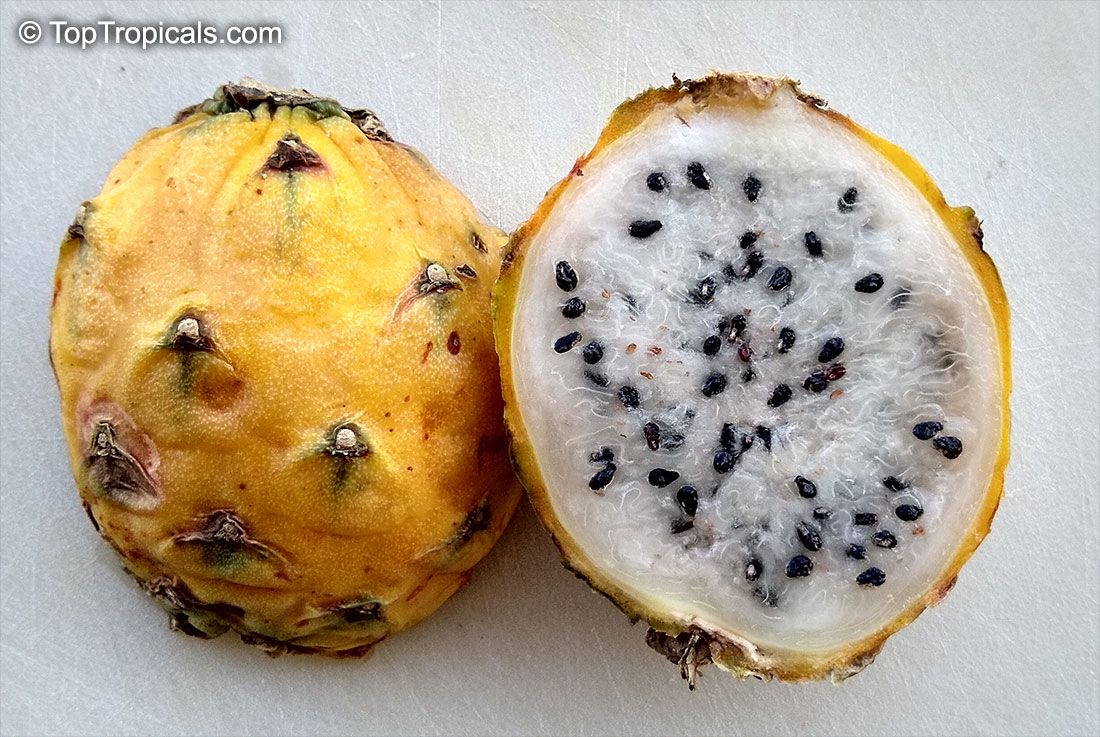
🟡⚪️ Yellow skin, white flesh (Hylocereus, or Selenicereus megalanthus) - Smaller fruit, but the sweetest of all. Crisp, juicy, and tropical with notes of pineapple or honey. Varieties:Amarilla (Kirin), Colimbiana, Godlen Dragon, Palora, Thai Gold (Hawaiian)
Each type looks stunning and tastes slightly different, but all are easy to grow once you give them sun, support, and patience.
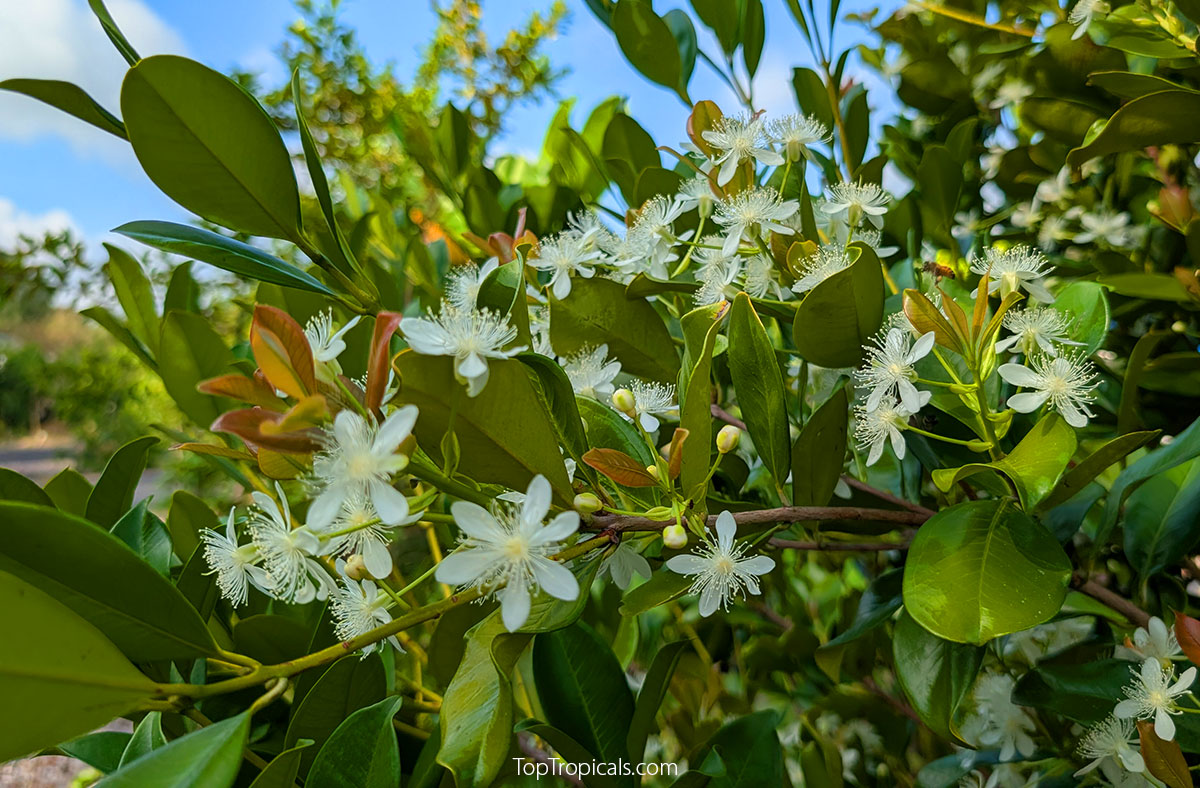 Grumichama Tree in Bloom – Eugenia brasiliensis
 Growing & Care