What tropical plants survived Floridas historic freeze without protection
Florida historic freeze
What tropical plants survived Florida's historic freeze without protection
In the first week of February 2026, arctic air pushed deep into Florida. For many areas, this was the coldest event in over a century.
We received one question over and over: How did your gardens do?
Top Tropicals Farm in Sebring, Florida is up and running - and this freeze became a real-world hardiness test for tropical and subtropical plants. Below is our initial field report after inspecting established plantings.
📊 Weather data - February 1-6, 2026
Sebring, Florida - 132 years of recorded observations
This was not a light frost. It was prolonged, windy, penetrating hard freeze.
🌡 Minimum temperature: 25F ❄️ Wind chill: 14F ⏳ Duration: 3 nights of 8-10 hour hard freeze ☀️ Daytime temperatures: around 50F for 7 days 🌀 Wind: sustained 20 mph, gusts 40-50 mph
Cold protection
In-ground trees: selected plants covered with frost cloth, especially
Mango Plant Facts
Botanical name: Mangifera indica Also known as: Mango
USDA Zone: 9 - 11
Highligths
mango and young
Avocado Plant Facts
Botanical name: Persea americana, Persea gratissima Also known as: Avocado, Alligator Pear, Aguacate, Abacate
USDA Zone: 9 - 11
Highligths
avocado trees. Tender container plants: moved into greenhouses with propane heat above 34F. Hardy container plants: frost cloth and wind protection only - no plastic Nutrition support: plants fertilized regularly during the growing season with Green Magic and Sunshine Boosters to maintain vigor and hardiness.
However, the plants listed below had no protection at all.
All were established trees 2-3 years in the ground.
The plants below had NO PROTECTION, established trees 2-3 years old
Botanical name: Psidium cattleyanum, Psidium littorale Also known as: Cattley Guava, Sand Plum, Strawberry Guava
USDA Zone: 9 - 11
Highligths
Eugenias (Grumichama, Rio Grande, Surinam and more)
Olive trees
Bay Leaf (Laurus nobilis)
Fig trees (Ficus carica)
Prunus sp - Peaches, Plums, Nectarines
Persimmons
Rubus (Blackberries) including Tropical Mysore Raspberry
Elderberry (Sambucus)
Yerba Mate - Ilex paraguariensis
Opuntia - Nopal Cactus, Prickly Pear
🌸 Flowering Trees and Shrubs:
Beaucarnea recurvata - Pony Tail
Ponytail Palm Plant Facts
Botanical name: Beaucarnea recurvata, Nolina recurvata Also known as: Ponytail Palm, Pony Tail, Bottle Palm, Nolina, Elephant-foot Tree
USDA Zone: 10 - 11
Highligths
Callistemon - Bottlebrush
Yucca
Tabebuias
Magnolia figo and Little Gem
Banana Magnolia Plant Facts
Botanical name: Magnolia figo, Michelia figo, Magnolia fuscata Also known as: Banana Magnolia, Banana Shrub, Port Wine Magnolia
USDA Zone: 7 - 10
Highligths
Calliandra tweedii - Red Powderpuff
Sophora tomentosa
Yellow Necklace Pod Plant Facts
Botanical name: Sophora tomentosa Also known as: Yellow Necklace Pod, Silverbush
USDA Zone: 8 - 11
Highligths
Galphimia gracillis - Thriallis
Thriallis Plant Facts
Botanical name: Galphimia gracillis, Galphimia gracilis, Galphimia glauca Also known as: Thriallis, Rain of Gold, Spray of Gold
USDA Zone: 9 - 11
Highligths
Acacia trees
Osmanthus fragrans
Tea Olive Plant Facts
Botanical name: Osmanthus fragrans, Olea fragrans, Olea ovalis, Osmanthus longibracteatus, Osmanthus macrocarpus Also known as: Tea Olive, Fragrant Olive, Sweet Olive, Kinmokusei in Japan
USDA Zone: 8 - 11
Highligths
Abutilon trees
Erythrina - several species
Monkey Ear tree - Enterolobium cyclocarpum
Bauhinia Orchid Trees - several species
Pseudobombax ellipticum - Shaving Brush Tree
Shaving Brush Tree Plant Facts
Botanical name: Pseudobombax ellipticum, Bombax ellipticum Also known as: Shaving Brush Tree
USDA Zone: 9 - 11
Highligths
Bulnesia arborea- Vera Wood
Vera Plant Facts
Botanical name: Bulnesia arborea Also known as: Vera, Verawood, Vera Wood, Maracaibo Lignum Vitae
USDA Zone: 10 - 12
Highligths
Caesalpinia mexicana, Mexican Bird of Paradise
Mexican Bird of Paradise Plant Facts
Botanical name: Caesalpinia mexicana Also known as: Mexican Bird of Paradise, Dwarf Poinciana
USDA Zone: 9 - 11
Highligths
Sansevieria - Snake Plant
Foxtail fern - Asparagus densiflorus
Lonicera - several varieties
Jacaranda tree
Eucalyptus
Plumbago Imperial Blue
Philodendron bipinnatum
Gardenias
Gingers (dormant rhizomes)
✳️ Minimal leaf damage only:
(These plants showed light cosmetic damage but no structural injury)
🍑 Tropical Fruit Trees and Edibles:
Glycosmis pentaphylla - Gin Berry
Ash sheora Plant Facts
Botanical name: Glycosmis pentaphylla, Limonia pentaphylla Also known as: Ash sheora, Orangeberry, Rum Berry, Gin Berry
USDA Zone: 9 - 10
Highligths
Black sapote tree
Tamarind tree
Syzygiums: Rose Apple and Java Plum
🌸 Flowering Trees and Shrubs:
Pandora vine
Jasminum - several species
Stenocarpus sinuatus - Firewheel Tree
Firewheel Tree Plant Facts
Botanical name: Stenocarpus sinuatus Also known as: Firewheel Tree
USDA Zone: 9 - 11
Highligths
Xanthostemon
Quisqualis indica
Rangoon Creeper Plant Facts
Botanical name: Combretum indicum, Quisqualis indica Also known as: Rangoon Creeper, Burma Creeper, Chinese Honeysuckle
USDA Zone: 10 - 11
Highligths
Schotia tree
Eranthemum pulchellum - Blue Sage
Blue sage Plant Facts
Botanical name: Eranthemum pulchellum, Eranthemum nervosum Also known as: Blue sage, Blue eranthemum, Lead Flower
USDA Zone: 9 - 11
Highligths
Hiptage benghalensis - Helicopter Flower
Hiptage Plant Facts
Botanical name: Hiptage benghalensis, Hyptage bengalensis Also known as: Hiptage, Helicopter Flower
USDA Zone: 9 - 10
Highligths
🏡 What this means for Florida gardeners
This freeze was a stress test few gardens are prepared for. Yet many species handled 25F, wind, and multi-night freeze conditions without protection.
Choosing proven survivors, planting in smart microclimates, and maintaining strong plant health during the growing season makes a measurable difference.
More updates will follow as full recovery continues - but these early results already help define a stronger plant palette for future winters.
Fruit Tree Hacks: 5 High-Yield Fruit Trees You Can Buy for Under $50
High-Yield Fruit Trees You Can Buy for Under $50
💲 Fruit Tree Hacks: 5 High-Yield Fruit Trees You Can Buy for Under $50
Starting a home orchard doesn’t have to cost a fortune. While high-end grafted Mangoes or Avocados can easily set you back $100 or more, there is a "secret category" of fruit plants that are affordable, fast-growing, and perfect for beginners. If you have a $40-50 budget and a small sunny spot, these five options provide the best "bang for your buck" in terms of growth speed and flavor.
1. Dragon Fruit: The Vertical Speedster
Dragon Fruit is the ultimate budget win. Because it grows from cuttings easily, nursery prices stay low. The Payoff: It grows incredibly fast. In a single season, a small pot can turn into a massive climbing cactus. Space Saver: It grows vertically on a post or trellis, making it perfect for side-yards or balconies. 👉 More...
2. Peanut Butter Fruit (Bunchosia)
This is the ultimate conversation starter for your garden. The Flavor: The fruit has a dense, sticky texture that tastes exactly like sweet peanut butter.
Why it’s a Bargain: It stays naturally compact (shrub-sized) and often begins fruiting in its second or third year - much faster than traditional fruit trees. 👉 More...
3. Blackberry Jam Fruit (Randia formosa)
If you love gardening in containers, this is your best friend. The Experience: You don't pick a bucket of these; you enjoy them as a garden snack. The pulp inside is black and gooey, tasting remarkably like high-quality preserves. The Price Point: Because it is technically a woody shrub, you can often find "ready-to-fruit" sizes for very reasonable prices compared to large-canopy trees. 👉 More...
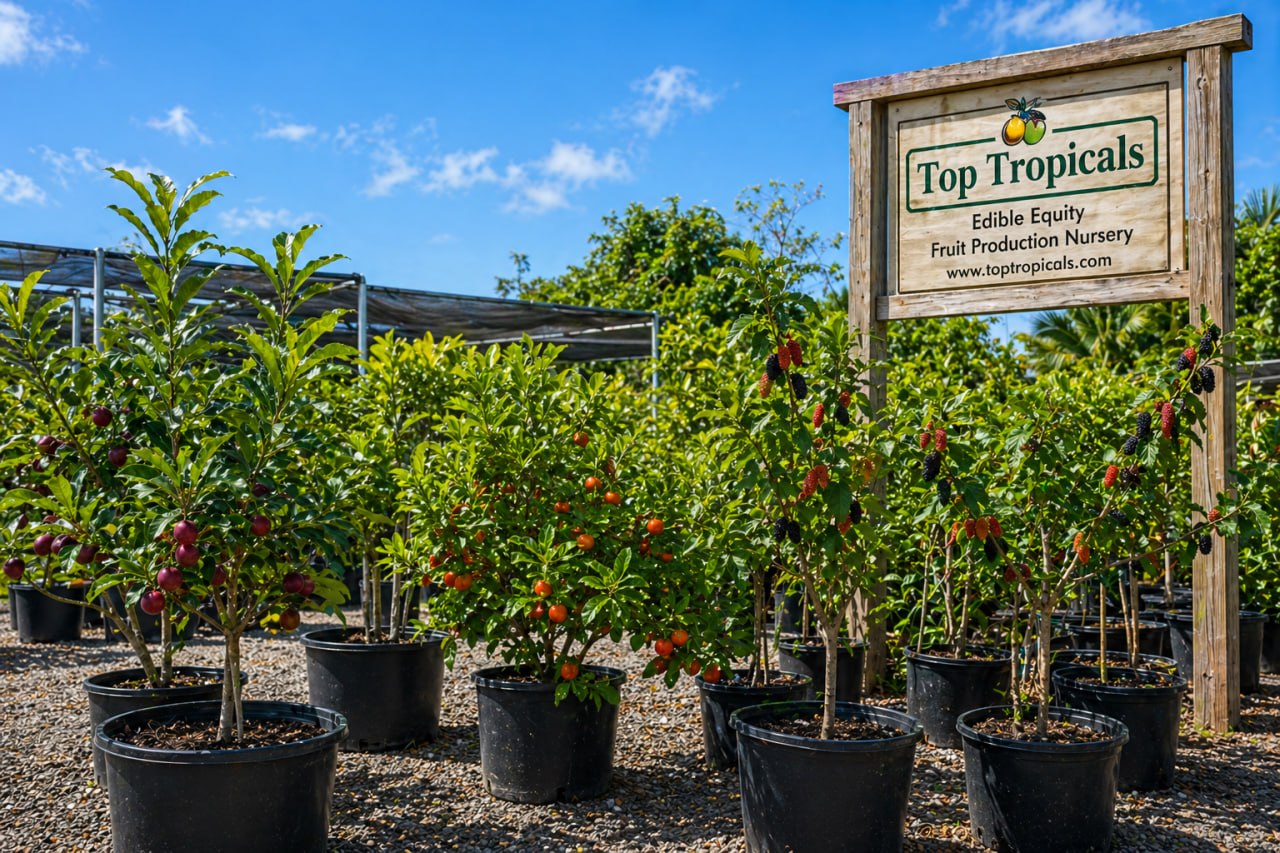
4. The "Eugenia" Group (Surinam, Grumichama, Rio Grande)
Professional landscapers love this family of plants because they double as "Edible Hedges." Surinam Cherry: Extremely tough. It handles poor soil and neglect while producing star-shaped, ribbed fruits. Grumichama: Often called the "Brazilian Cherry," it produces a fruit that looks and tastes strikingly like a true Bing cherry but grows in warm climates where cherries usually fail. Cherry of the Rio Grande: A beautiful, upright grower with attractive peeling bark. It produces dark purple, teardrop-shaped fruits that are among the best tasting of all the tropical cherries. The tree is the most cold hardy of all eugenias. 👉 More...
5. Mulberries
While not on every list, a Mulberry is a budget powerhouse. They are often sold in small 3-gallon pots for $30-40 and will literally start popping out berries the same week you plant them. 👉 More...
👉 Pro Tip: How to Save Even More
To keep your costs down, look for these plants in 3-gallon containers.
Why? 3-gallon plants are the "sweet spot" for value. They are large enough to be established and hardy, but they haven't reached the premium price point of 7 or 15-gallon "instant landscape" trees.
Pitaya David Bowie: Dragon Fruit Beyond Pink and White - A Collectors Guide
🍉 Pitaya David Bowie: Dragon Fruit Beyond Pink and White - A Collector's Guide
Most people know dragon fruit as a bright pink fruit with white flesh from the grocery store. But that's only the beginning. The world of dragon fruits is surprisingly diverse, with varieties ranging from white to deep purple, giant fruit to compact producers, and flavors that can remind you of kiwi, pear, melon, berries, or even lemonade. In this series, we'll explore some of the most interesting dragon fruit varieties, highlighting their appearance, flavor, growth habits, and what makes each one special.
🔸 At first glance
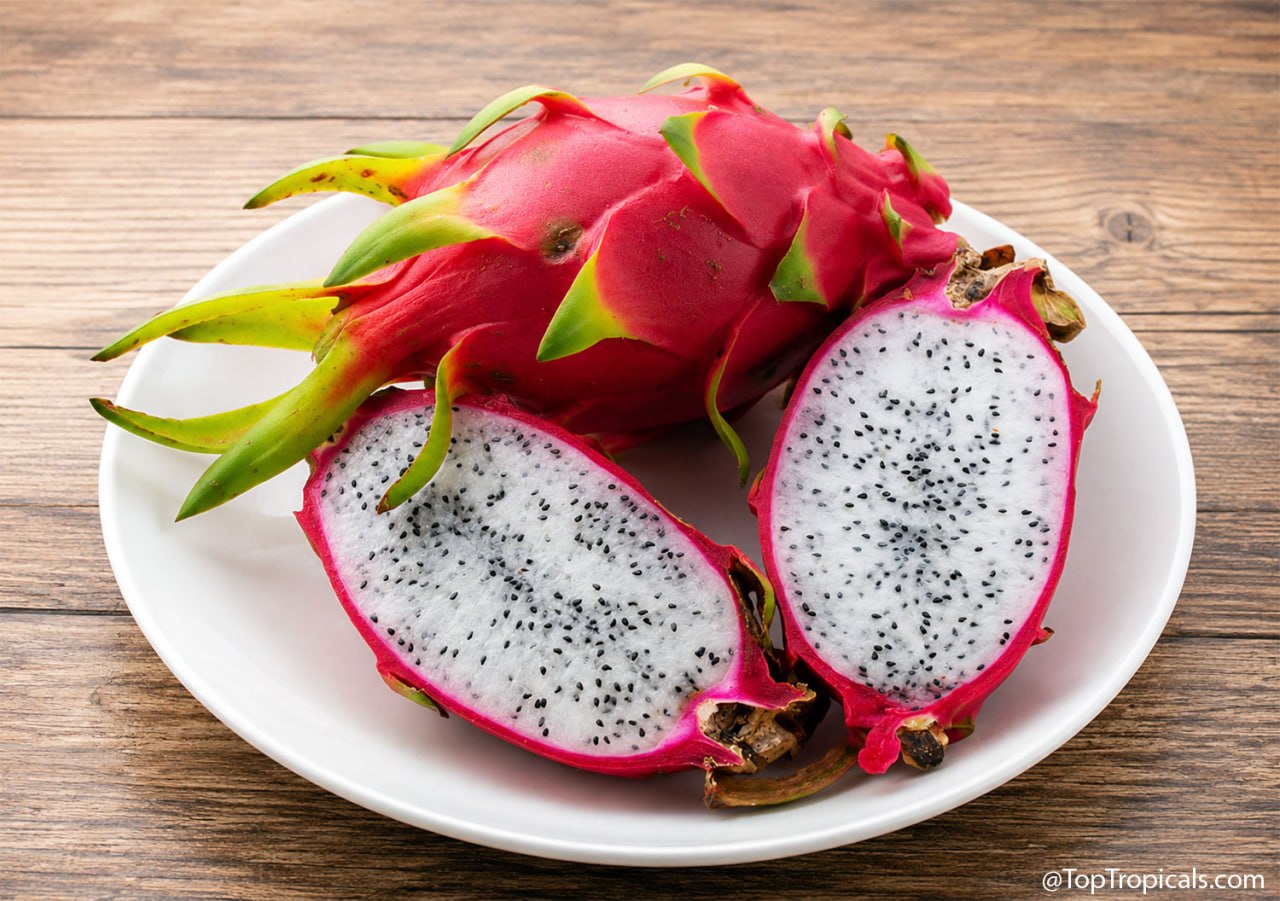
David Bowie (Hylocereus undatus x monacanthuis) looks like a classic dragon fruit - bright red skin, white flesh, and a familiar appearance. But spend a little time with this variety and you'll discover why collectors actively seek it out. David Bowie is one of the most popular white-fleshed dragon fruit varieties, prized for its large fruit, reliable production, and refreshing flavor.
🔸 A classic dragon fruit done right
This self-pollinating variety produces medium to large fruit, often approaching a pound in weight. The bright red skin is decorated with numerous green-tipped fins, giving the fruit an especially dramatic appearance.
Among white-fleshed dragon fruits, David Bowie is known for producing larger-than-average fruit while maintaining excellent eating quality.
🔸 Refreshing flavor with a citrus twist
Unlike some dragon fruits that are valued mainly for appearance, David Bowie delivers a flavor that keeps people coming back.
The flesh is mildly sweet and refreshing, often compared to a cross between kiwi and pear. What makes it memorable is a pleasant tangy character and subtle lemony finish that brightens the flavor and makes it especially enjoyable chilled.
The fruit is excellent eaten fresh and is also popular for smoothies, fruit salads, and garnishes.
🔸 Easy to grow and rewarding
David Bowie is self-pollinating, making it an excellent choice for home gardeners who want reliable fruit production from a single plant.
Like other dragon fruits, it is a vigorous climbing cactus that produces spectacular night-blooming white flowers before setting fruit. The blooms are large, fragrant, and beautiful enough to make the plant worth growing even before the harvest arrives.
🔸 Why collectors love it
Not every dragon fruit has to be purple, yellow, or unusually exotic to earn a place in a collection.
David Bowie remains popular because it combines everything growers want - attractive fruit, dependable production, large size, refreshing flavor, and self-pollinating flowers. Sometimes the classics become classics for a reason. 👉 More...
Pitaya Eureka Red: dragon fruit beyond pink and white - A Collectors Guide
🍉 Pitaya Eureka Red: dragon fruit beyond pink and white - A Collector's Guide
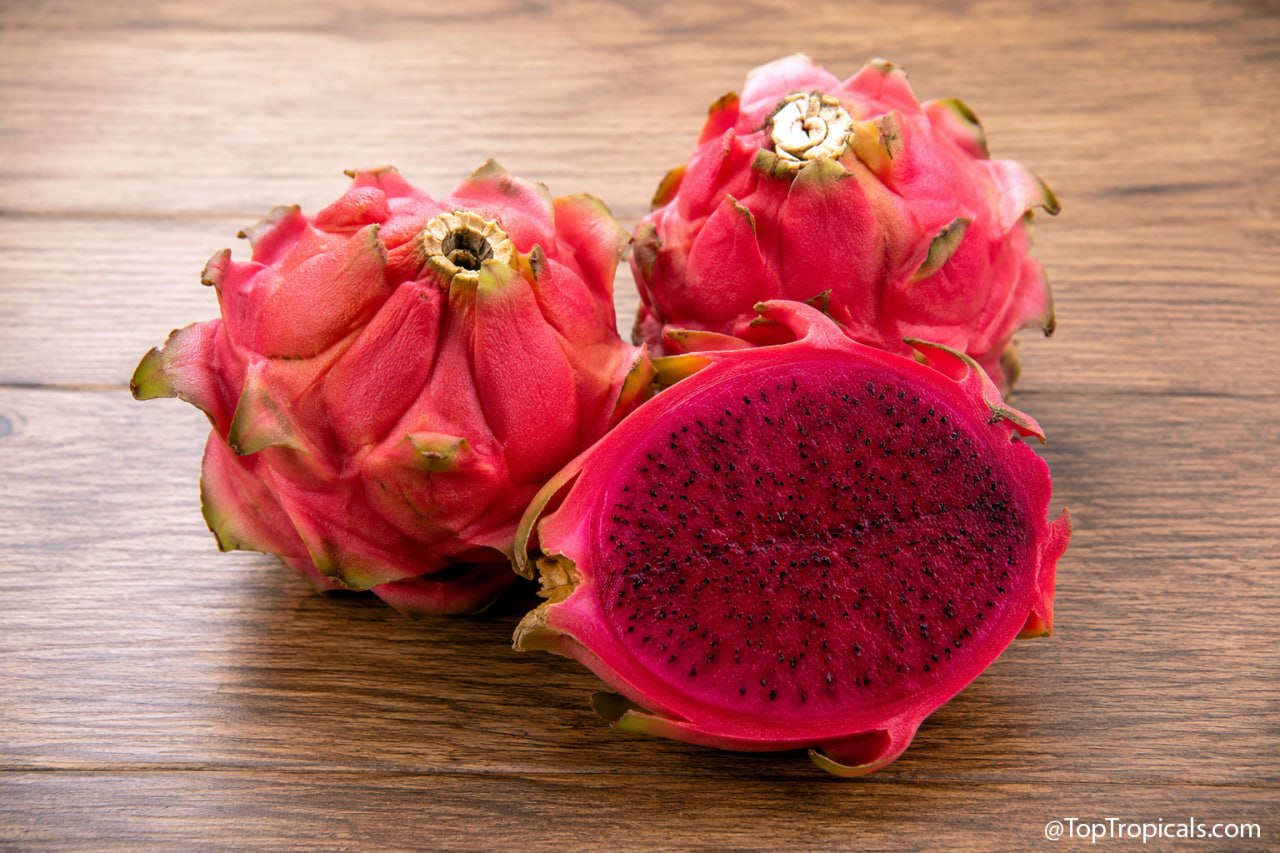
Most people think dragon fruit is a mild, white-fleshed fruit with bright pink skin; then they discover Eureka Red - the highly sought-after, red-fleshed dragon fruit variet, a hybrid of Hylocereus polyrhizus and Hylocereus costaricensis. It is prized for its bold tropical flavor, intense sweetness, and vibrant, antioxidant-rich dark red juice. Originally selected in Nicaragua, Eureka Red is a self-pollinating variety that produces large fruit with deep red flesh and a flavor that is noticeably richer than many common white-fleshed dragon fruits. It belongs to a group of dragon fruits prized not only for their beauty but also for their intense color and higher antioxidant content.
🔸 A fruit that stands out
The first thing you'll notice is the flesh. Slice open a ripe Eureka Red and you'll find a vivid ruby-red interior packed with tiny black seeds. The contrast between the bright pink skin and dark red flesh makes it one of the most striking dragon fruits you can grow.
The fruit are typically large, often larger than many standard white-fleshed varieties, making them especially rewarding for home gardeners. 🔸More flavor than you might expect
Many people describe white-fleshed dragon fruits as refreshing and mildly sweet. Eureka Red takes things a step further.
The flavor is richer and more complex, with berry-like notes and a deeper sweetness balanced by a pleasant tang. The texture remains smooth and juicy, making it excellent for eating fresh, blending into smoothies, or adding dramatic color to fruit salads and desserts.
🔸 Easy to grow and productive
One reason Eureka Red has become popular among collectors is that it is self-pollinating. A single plant can produce fruit without requiring a second variety for cross-pollination.
Like other dragon fruits, it is a climbing cactus that thrives in warm climates, appreciates good drainage, and rewards growers with enormous fragrant white flowers that open after sunset. Once established, the plants can be remarkably productive.
🔸 Why collectors love it
Dragon fruit enthusiasts are always searching for varieties that combine beauty, flavor, and reliability. Eureka Red checks all three boxes. Its large fruit, deep red flesh, self-pollinating nature, and excellent flavor have earned it a place among the most desirable dragon fruit varieties for home gardens.
If you've only tasted the typical supermarket dragon fruit, Eureka Red is a reminder that the world of dragon fruits is far more colorful - and flavorful - than most people realize. 👉 More...