Date: 19 May 2026
The Tree That Looks Photoshopped (But Isnt)
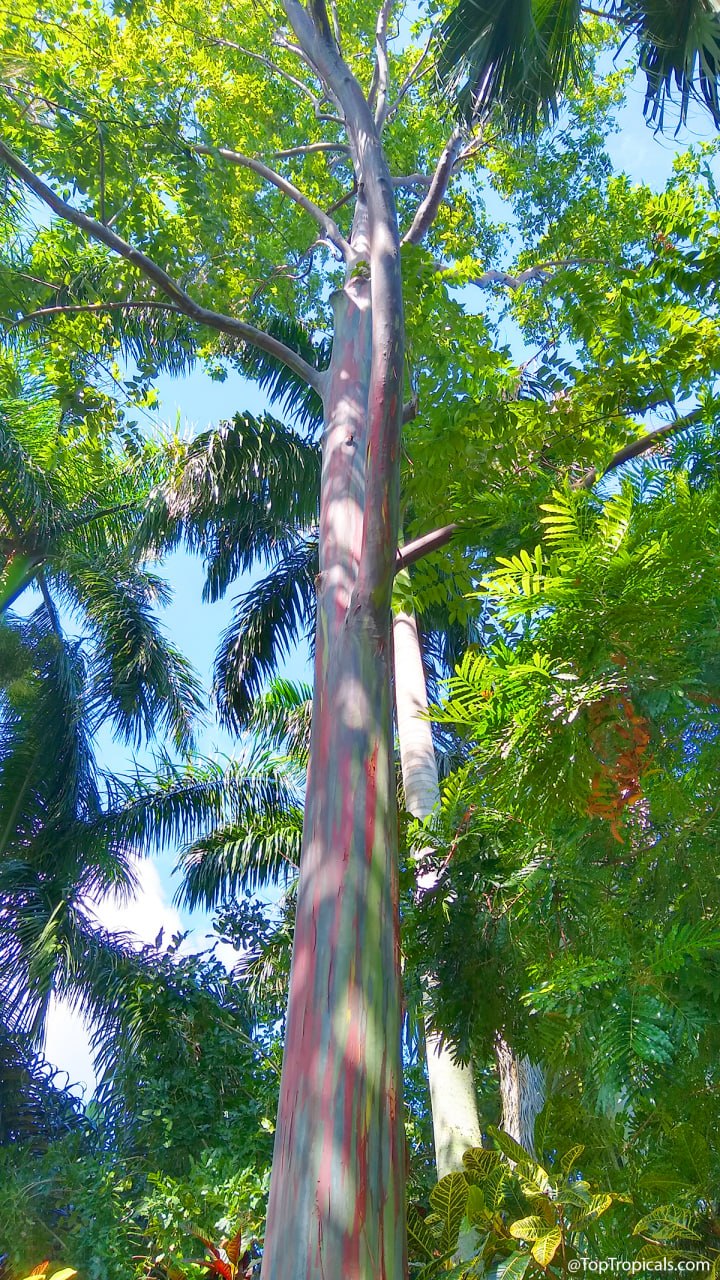
Rainbow Eucalyptus - Eucalyptus deglupta
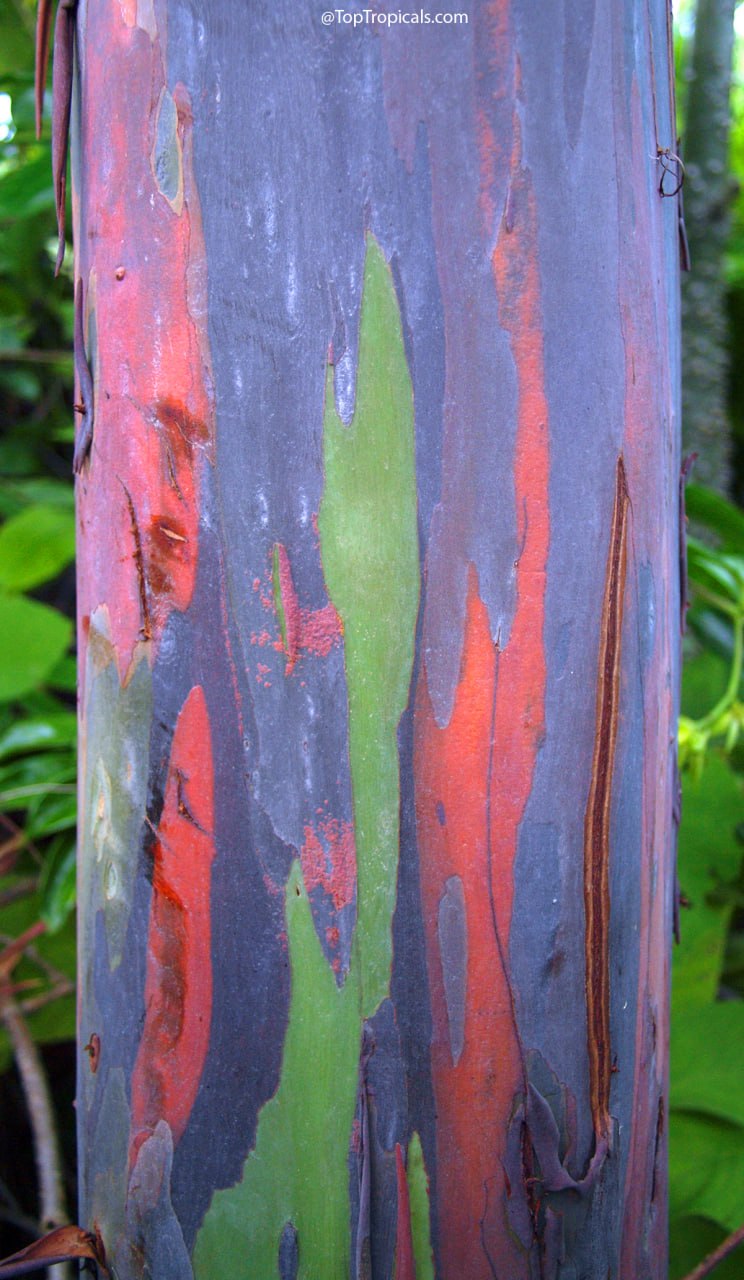
Rainbow Eucalyptus - Eucalyptus deglupta, close up bark
The Tree That Looks Photoshopped (But Isn't) 🌈
Most people see a photo of the Rainbow Eucalyptus and assume someone went heavy on the saturation filters. The trunk looks like an abstract artist got loose with neon greens, deep blues, purples, and burnt oranges - all on the same tree, all at once. It doesn't look real. But it is. And if you live in the right climate, you can actually grow one.
Eucalyptus deglupta does something no other tree quite pulls off at this scale: it sheds its bark in patches and strips throughout the year. While it seems entirely alien, this multi-colored, peeling bark is actually a family trait shared by many other members of the Myrtaceae (Myrtle) family - including common guava trees.


However, the Rainbow Eucalyptus takes this family tradition to an absolute extreme. This constant shedding reveals a living, shifting canvas underneath:
The Fresh Layer: New bark starts out a shocking, vivid green because of the chlorophyll sitting just beneath the surface.
The Shift: As the bark is exposed to air, it oxidizes. Time and oxygen push the colors through a spectrum of blues, purples, and eventually into warm oranges and deep, reddish-browns.
The Living Canvas: Because different sections of the trunk shed at different times, the tree is never just one color. It looks like a living watercolor painting that's still drying.
Native to the humid tropical rainforests of the Philippines, Indonesia, and Papua New Guinea, this isn't your average backyard sapling. In the wild, it can tower at nearly 200 feet tall.
While it stays a bit more manageable in residential landscapes, it remains fast-growing. If you give it full sun, rich soil, and plenty of humidity, a young tree can put on several feet of height per year.
Unlike its drought-tolerant Australian cousins, the Rainbow Eucalyptus loves water and can even handle occasional flooding. As a bonus, its leaves release a pleasant, spicy aroma when crushed, adding a sensory layer to its visual drama.
Before you run out to buy one, there is a major catch. While many eucalyptus species are surprisingly tough against the hard freeze, the Rainbow Eucalyptus is the tropical outlier of the family.
✅ The Safe Zones: It thrives best in USDA Zones 10-11 (like South Florida and Southern California), where winters stay mild.
❄️ The Cold Threat: Hard freezes, frost, and biting cold winds will badly damage or kill it.
Can you grow it in colder climates? Yes, but you'll need a big container and a tall space to move it in. Many gardeners outside the tropics grow them in large pots so they can drag them indoors or into a greenhouse for the winter. It limits their ultimate size, but it keeps the theatrical effect alive.
If you are lucky enough to live in a climate where it can thrive, the Rainbow Eucalyptus makes the ultimate landscape centerpiece. Because its canopy is tall and airy rather than dense, it won't completely black out the sun for the rest of your garden. Instead, it just stands there looking impossible.
Photos actually undersell it. Standing next to the trunk in person, you find yourself looking for the trick. But there isn't one - just nature showing off.
🛒 Plant the Impossible Rainbow Eucalyptus
Eucalyptus deglupta - Rainbow Eucalyptus in Plant Encyclopedia
#Trees #Discover #Nature_Wonders #Fun_Facts
🟢 Join 👉 TopTropicals
Most people see a photo of the Rainbow Eucalyptus and assume someone went heavy on the saturation filters. The trunk looks like an abstract artist got loose with neon greens, deep blues, purples, and burnt oranges - all on the same tree, all at once. It doesn't look real. But it is. And if you live in the right climate, you can actually grow one.
🎨 The Chemistry Behind the Watercolor Trunk
Eucalyptus deglupta does something no other tree quite pulls off at this scale: it sheds its bark in patches and strips throughout the year. While it seems entirely alien, this multi-colored, peeling bark is actually a family trait shared by many other members of the Myrtaceae (Myrtle) family - including common guava trees.
However, the Rainbow Eucalyptus takes this family tradition to an absolute extreme. This constant shedding reveals a living, shifting canvas underneath:
The Fresh Layer: New bark starts out a shocking, vivid green because of the chlorophyll sitting just beneath the surface.
The Shift: As the bark is exposed to air, it oxidizes. Time and oxygen push the colors through a spectrum of blues, purples, and eventually into warm oranges and deep, reddish-browns.
The Living Canvas: Because different sections of the trunk shed at different times, the tree is never just one color. It looks like a living watercolor painting that's still drying.
🎨 A Rainforest Giant That Grows at Breakneck Speed
Native to the humid tropical rainforests of the Philippines, Indonesia, and Papua New Guinea, this isn't your average backyard sapling. In the wild, it can tower at nearly 200 feet tall.
While it stays a bit more manageable in residential landscapes, it remains fast-growing. If you give it full sun, rich soil, and plenty of humidity, a young tree can put on several feet of height per year.
Unlike its drought-tolerant Australian cousins, the Rainbow Eucalyptus loves water and can even handle occasional flooding. As a bonus, its leaves release a pleasant, spicy aroma when crushed, adding a sensory layer to its visual drama.
🎨 The Catch: It Hates the Cold
Before you run out to buy one, there is a major catch. While many eucalyptus species are surprisingly tough against the hard freeze, the Rainbow Eucalyptus is the tropical outlier of the family.
✅ The Safe Zones: It thrives best in USDA Zones 10-11 (like South Florida and Southern California), where winters stay mild.
❄️ The Cold Threat: Hard freezes, frost, and biting cold winds will badly damage or kill it.
Can you grow it in colder climates? Yes, but you'll need a big container and a tall space to move it in. Many gardeners outside the tropics grow them in large pots so they can drag them indoors or into a greenhouse for the winter. It limits their ultimate size, but it keeps the theatrical effect alive.
🎨 Why It's Worth the Hype
If you are lucky enough to live in a climate where it can thrive, the Rainbow Eucalyptus makes the ultimate landscape centerpiece. Because its canopy is tall and airy rather than dense, it won't completely black out the sun for the rest of your garden. Instead, it just stands there looking impossible.
Photos actually undersell it. Standing next to the trunk in person, you find yourself looking for the trick. But there isn't one - just nature showing off.
🛒 Plant the Impossible Rainbow Eucalyptus
📚 Learn more:
Eucalyptus deglupta - Rainbow Eucalyptus in Plant Encyclopedia
#Trees #Discover #Nature_Wonders #Fun_Facts
🟢 Join 👉 TopTropicals