Date: 30 May 2020
How to prevent mango fruit drop
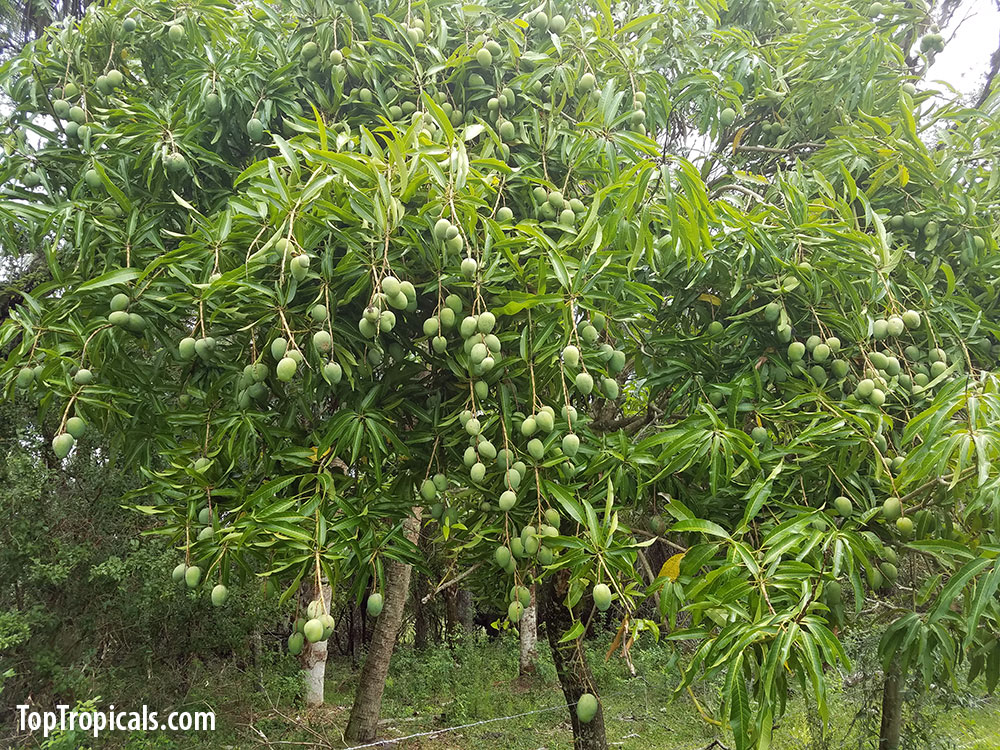
Q: My mature mango tree is fully grown 15 yrs old and each year it fully blooms, sometimes twice. Shortly thereafter, all the baby mangos and flowers fall off providing no mangos for the season. I have tried fertilizing, spraying the tree for fungus or other insects, to no avail. I give up, any suggestions?
A: Dropping fruit in pretty common issue with mango trees. There
may be several reasons, or a combination of reasons.
1. Fungal disease (anthracnose), and/or powdery mildew. To avoid
fungal disease problems, spray your tree when it just begins to form the flower
spikes. Treat foliage with Copper fungicide. There is also another
one, very effective for anthracnose: Thiophanate methyl.
2. Inadequate nutrition. Feed your tree with a combination of
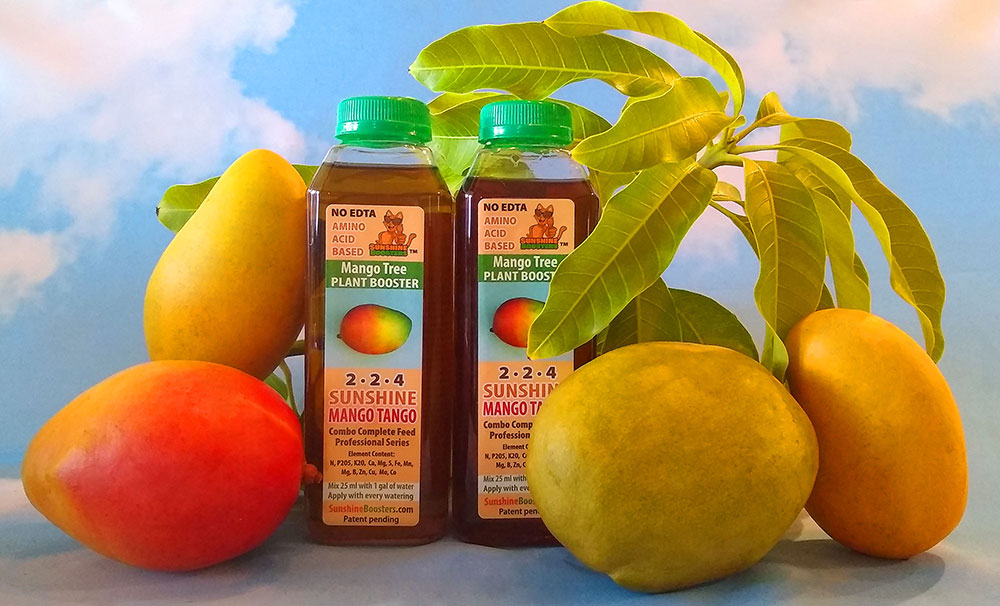
granulated fertilizer Mango-Food, liquid booster SUNSHINE Mango Tango and micro-elements Sunshine Honey and Sunshine Superfood
Check out pictures of our mango tree problems that were fixed within a month by
using Sunshine Boosters.
3. Too much rain or heavy dew during blooming and fruit set (see 1 -
use preventive treatment for fungus)
4. Cold. Sometimes the cause of premature fruit drop is from the
cold weather during bloom and fruit set. Usually the most affected varieties are
the early bloomers including Glenn, Haden. The cold damages the developing
embryo in the seed. The fruit starts to develop but because of ethylene gas
given off by the damaged embryo, the fruit is triggered to drop before
maturity. To see if cold temperature was the cause for your fruit dropping, cut open
the fallen fruit. Even if there is a small speck of brown in the seed,
that's enough damage to stop fruit development.
To learn more how to care for your mango, please read this publication.

Date: 9 Nov 2018
Taste of Mango
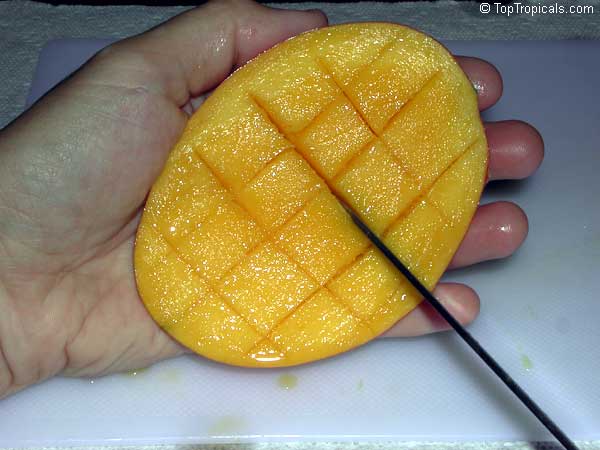
Mango harvest season is over, and now it's the time to plant young Mango trees for the next year season of flowering and fruiting. When choosing a mango tree, researching your location for proper growing conditions is relatively easy. But refining your decision-making process based on the taste of mango is both easy and fun (and filling)! However, since it is often difficult to find a convenient source for sampling a wide variety of mango fruits; we at Top Tropicals sat down and tasted a handful of varieties for you... Just another opinion on taste!
Pickering - Sweet, juicy, fiberless, with a hint of an apricot fragrance. (A universal favorite amongst the group.)
Nam Doc Mai - A slightly fibrous marmalade-like texture, with a sweet and floral flavor.
Cogshall - Very little fiber with a slightly tart and piney flavor.
Florigon - A mild, even flavor. Not too sweet, not too tart, and fiberless.
Mallika - A fiberless cantaloupe-like consistency. Slightly tart, with some semblance to non-acidic orange juice.
Valencia Pride - Slightly fibrous, with a tangy near citrus flavor.
Glenn - Very mild flavor, less sweet compared to other varieties, but very refreshing.
Read more about Mango varieties...

Date: 25 May 2025
How to make chocolate dumplings in mango sauce: exotic recipe
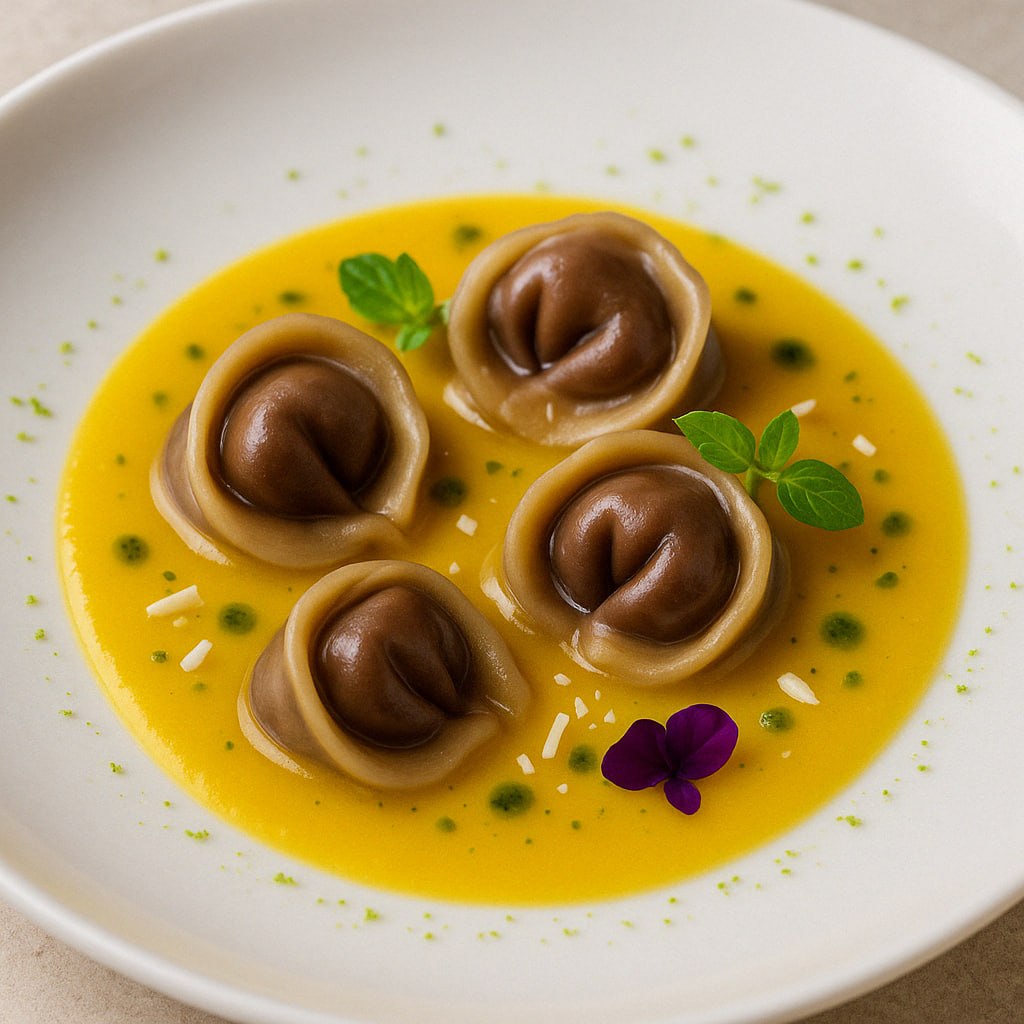
chocolate dumplings in mango sauce
How to make chocolate dumplings in mango sauce: exotic recipe
Ready to sneak this onto your dessert menu under a name like "Tropics Lost in Vienna"?
Ingredients
🔸 For the dough:
• 200 g (1 ½ cups) all-purpose flour
- • 1 egg
- • 3 tbsp water
- • Pinch of salt
🔸 For the filling:
- • 70 g (2.5 oz) dark chocolate
- • 3 tbsp heavy cream
- • 1 tsp cocoa powder (optional)
- • 1 tsp sugar (if chocolate is too bitter)
🔸 For the mango sauce:
- • 1 ripe mango (or 150 g mango puree)
- • 100 ml (just under ½ cup) heavy cream
- • 1-2 tsp honey
- • 1 tsp lime or lemon juice
- • Pinch of salt
🔪 Instructions
- ➡Make the dough: Mix flour, egg, water, and salt into a soft dough. Knead, wrap, and rest for 30 minutes.
- ➡Prepare the filling: Melt chocolate with cream over a water bath. Stir in sugar and cocoa if using. Let cool until thick.
- ➡Shape the dumplings: Roll out dough, cut into circles, fill with chocolate, and seal. Freeze for 10 minutes to firm up.
- ➡Cook: Boil in lightly salted water. Once they float, cook 2–3 minutes more. Lift out gently.
- ➡Make the mango sauce: Blend mango, then stir in cream, honey, citrus juice, and salt. Warm gently without boiling.
- ➡Serve: Arrange dumplings, spoon over sauce, and garnish with mint or lime zest if desired.
🛒 Plant your own Mango Tree and always have mango supply
#Food_Forest #Recipes #Mango
🔴 Join 👉 TopTropicals
Date: 17 Nov 2025
Pram Kai Mai: a sweeter twist on Nam Doc Mai with a story - Mango Rainbow
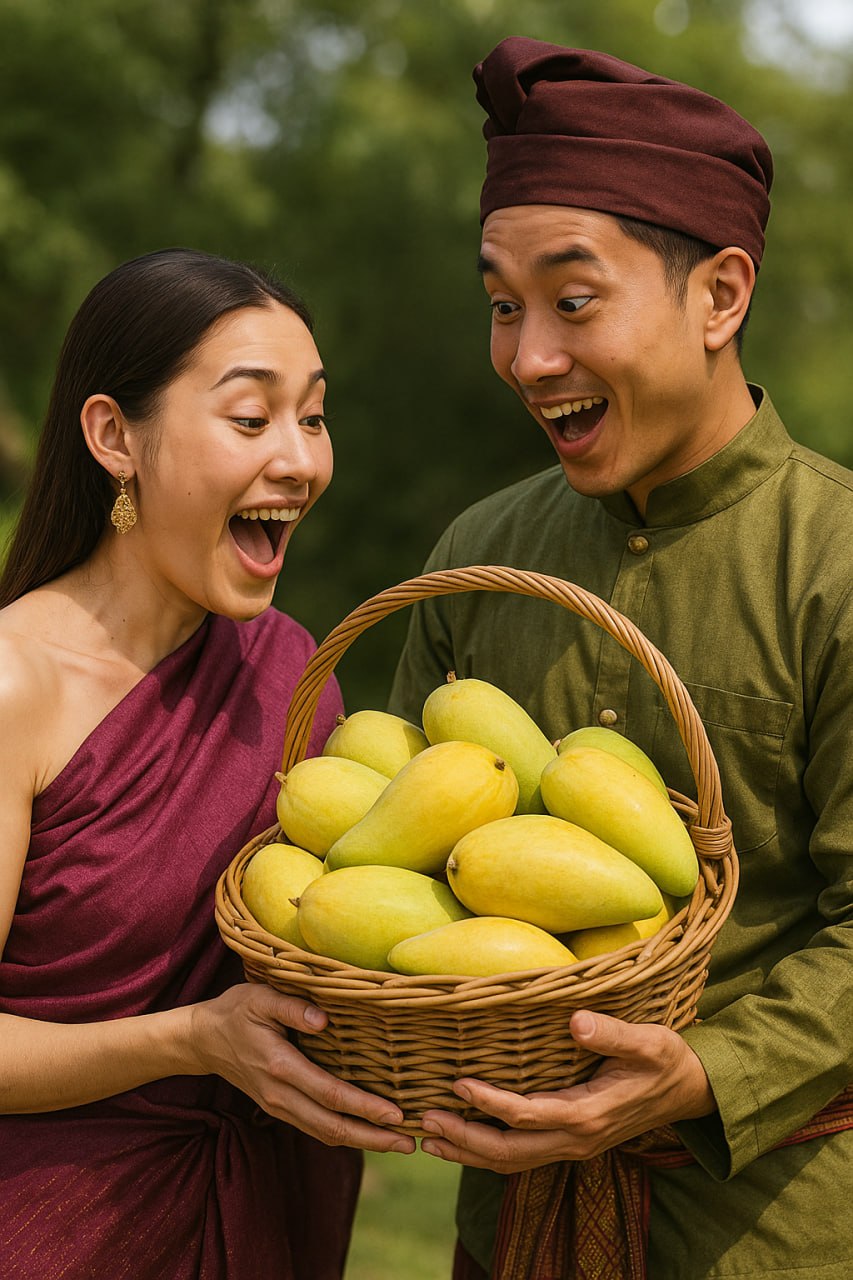
Pram Kai Mai Mango crop in a basket
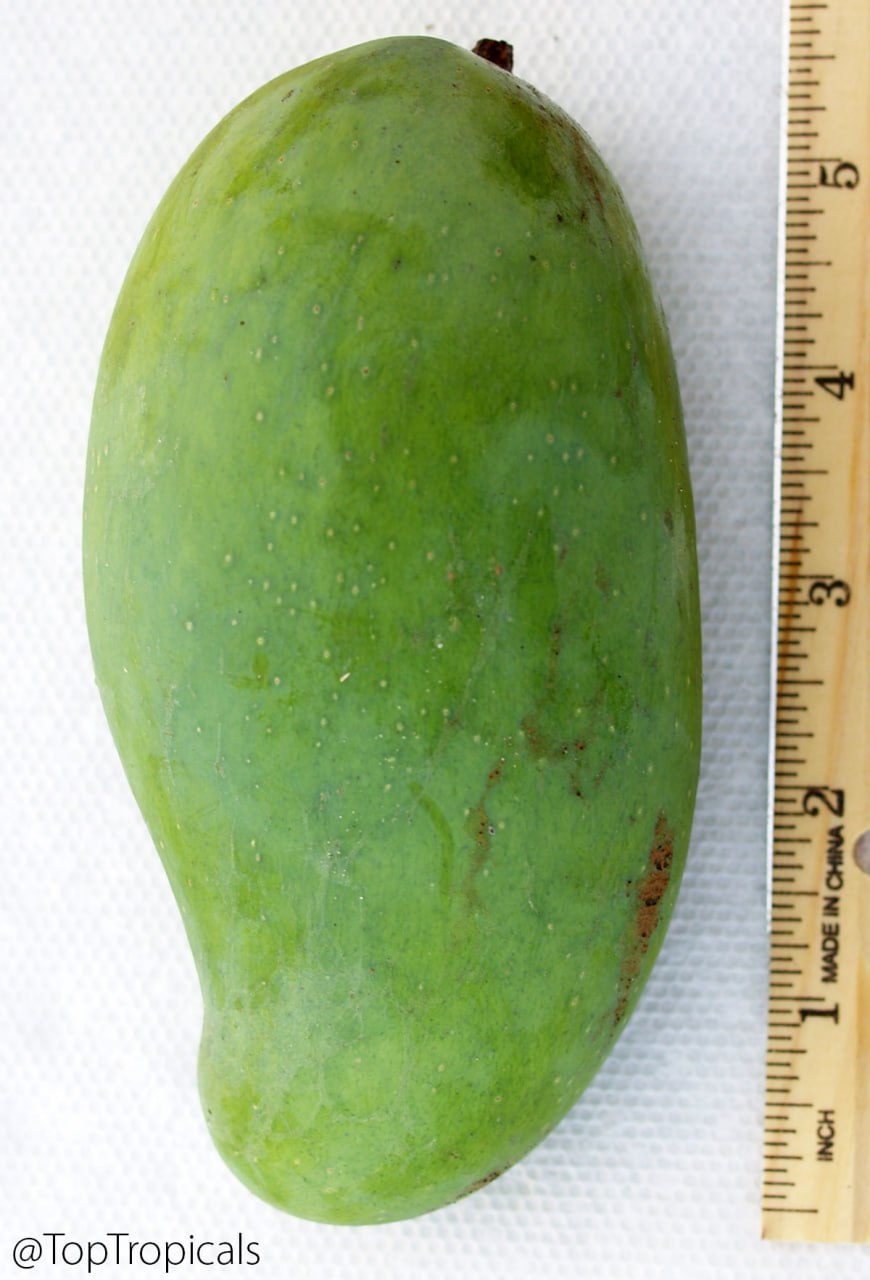
Pram Kai Mai Mango
- 🟡Why mango collectors chase after Pram Kai Mai? Pram Kai Mai is like Nam Doc Mai’s cooler cousin - with even better flavor. This Thai mango can be eaten green when it’s sweet and crispy, or fully ripe when it turns golden and silky. No fiber, just smooth, juicy flesh and a tropical aroma that hits you as soon as you slice it. It’s semi-dwarf, great for pots, and some trees even fruit more than once a year. Rare, compact, and loaded with flavor - this one’s a collector’s dream.
- 🟡Pram Kai Mai is a Thai dessert mango known for its gentle sweetness and smooth, almost fiberless flesh. The name appears in several spellings - Pram Kai Mai, Pram Kai Mea, Pram Kai Mia, Prom Ki Mia, and even Brahm Kai Meu - all referring to the same variety.
- 🟡If we break down the original Thai name พร้ามกายเมีย (Brahm/Pram/Prom Kai Mea/Mai/Mia) literally: Brahm / Pram / Prom relates to "noble, elevated, precious".
กาย - Kai means body
เมีย - Mia means wife
But no one in Thailand interprets this name word-for-word.
In mango names, this construction works as a cultural compliment, a gentle metaphor. The meaning is closer to:
"A mango so good you would save it for the one you love most."
or "A fruit worthy of a beloved wife".
Similar to how in other languages we may call something "royal", "special", or "meant for someone dear", this name is simply expressing admiration.
And the fruit truly matches that feeling. It is fragrant and sweet, with soft tender flesh. It can be enjoyed while still crisp and green, when its flavor is clean and refreshing, or fully ripe, when it becomes rich and smooth, almost melting on the tongue.
🛒 Shop Mango varieties
📚 Learn more: #Mango_Rainbow - varieties you should try
#Food_Forest #Mango #Mango_Rainbow
🟢 Join 👉 TopTropicals
Date: 15 Oct 2020
Healthy Plants. Q&A from Mr Booster: Fertilizing Mango trees in Winter
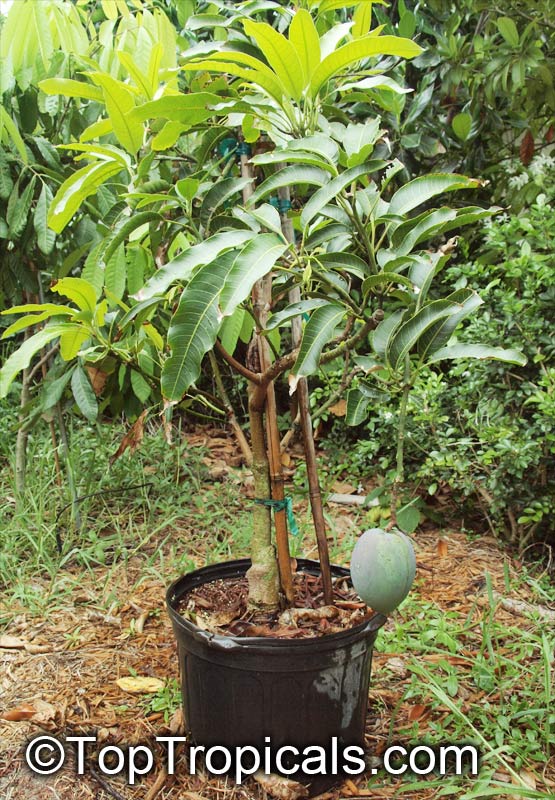
Q: I'm living in Maryland growing zone 7A and would like some info on when to fertilize my potted mango trees. I ordered your Sunshine Mango Tango 2-2-4. All your mango trees are in pots.
A: You can start using this fertilizer right away, any time of
the year, and every time you water your plants.
Sunshine Mango Tango, as well as other Sunshine boosters, is an amino-acid
based liquid fertilizer that is scientifically developed for daily plant
needs in all necessary nutrients. This means, you may use this fertilizer with
every watering, including winter period.
Traditional fertilizers (both granulated and soluble, EDTA-chelated) can
only be used during hot months while plants grow actively, and must be limited
or not used at all during cooler months, to avoid nutrient lock up in soil
(which basically means "building up unused elements"). With Liquid Sunshine Boosters, it is safe to add them every time you water
your tree.
During cooler weather and when plant metabolism slows down, a tree will
consume less water (as well as food), and you will automatically reduce
watering, to keep over-wintering plants on a dry side. This means, less fertilizer
too. This allows you to control elements intake naturally, like you control
water amount just as much as the plant needs.