Garden Blog - Top Tropicals

Date: 8 Sep 2025

Four best low-growing perennials that bloom all summer

Crossandra, Heliconia Lady Di, Plumbago, and Spathoglottis ground orchids.

🌷 Four best low-growing perennials that bloom all summer

  • 🌼 1. Crossandra


    Crossandra is one of those plants that never really takes a break. Its ruffled orange blooms pop almost nonstop in warm weather, making it a reliable color source for borders, pots, or even as a filler around taller shrubs. Unlike many flowering plants that fade in midsummer, Crossandra keeps going through heat and humidity, thriving where others give up. It's compact, easy to trim, and works beautifully in small gardens or patios.
  • 🌼 2. Heliconia psittacorum Lady Di


    Heliconia Lady Di adds a tropical accent with its upright, torch-like blooms in fiery orange and yellow. What makes this variety practical is its manageable size compared to giant heliconias - it fits well in small gardens and large pots. Its flowers last long, both on the plant and as cut flowers, making it popular for summer arrangements. Once established, it keeps sending up flower stalks all season, giving a steady display of color and drama.
  • 🌼 3. Plumbago


    Plumbago is a gardener's friend in hot climates because it covers a lot of ground and throws out flower clusters all summer (sky-blue, white or red). It's versatile - train it as a shrub, hedge, or let it spill over walls and trellises. The flowers attract butterflies, and the plant is low-maintenance, tolerating pruning, sandy soil, and neglect. If you need a reliable plant to soften fences or add a cool color contrast to reds and oranges in the garden, plumbago is a winner.
  • 🌼 4. Spathoglottis ground orchids


    Ground orchids like Spathoglottis are practical because they give you the exotic look of orchids without the fuss. These hardy, clumping perennials send up spikes of purple, pink, or yellow blooms that last for weeks, repeating through summer in warm climates. They’re perfect for edging walkways or filling beds where you want constant color with minimal care. Unlike potted orchids that bloom once and rest, Spathoglottis keeps producing flowers right in the ground, almost year-round in frost-free areas.


🛒 Discover more flowering perennials

#Hedges_with_benefits #Container_Garden #Discover

🟢 Join 👉 TopTropicals

Date: 9 Sep 2025

Night jasmine that disappears with sunrise: Parijat

Nyctanthes arbor-tristis - Parijat, Night Jasmine, Sad Tree, Tree of Sorrow

💔 Night jasmine that disappears with sunrise: Parijat

  • 💔 Nyctanthes arbor-tristis, Parijat, Night Jasmine, Sad Tree or Tree of Sorrow... What secret is hidden in this flower?
  • 💔 Parijat is a small tree or shrub from South Asia known for its intensely perfumed white flowers with bright orange centers that open at dusk and fall by dawn.
  • 💔 What is Parijat famous for?
  • Mostly for its scent and stories - but locals also use it in traditional remedies. The flowers are beloved in temple garlands and perfumery. Leaves, flowers, bark, and seeds are used in Ayurveda for treating fevers, sciatica, arthritis, and more. Extracts also show anti-inflammatory and liver-protective effects in modern studies.
  • 💔 Why do people plant Parijat?
  • It’s both fragrant and spiritual. Parijat is sacred in Hindu myth - some say Krishna brought it from heaven, others that it sprang from a grieving princess’s ashes. People plant it near temples or in small gardens not just for the scent, but for its cultural symbolism and graceful beauty.
  • 💔 Is Parijat easy to grow?
Yes - if your climate cooperates. Parijat grows up to 10 feet tall, handles full sun or light shade, and thrives in well-drained soil with regular, moderate watering. It blooms best with monthly fertilizer and tolerates light cold (into the 30s F). In cooler areas, grow it in a container. Regular pruning helps it stay compact and flower more.

🛒 Plant Parijat - the tree smell like heartbreak and heaven

📚 Learn more:


#Perfume_Plants #Trees #Discover

🟢 Join 👉 TopTropicals

Date: 18 Sep 2025

Passion fruit fizz: Quick-n-Fun exotic recipes

Passion fruit fizz: Quick-n-Fun exotic recipes

🍴 Passion fruit fizz: Quick-n-Fun exotic recipes 🍹


  • 🔴Scoop passion fruit pulp into sparkling water with a squeeze of orange juice.
  • 🔴A bubbly, tangy tropical soda!
  • 🔴You may add a plash of Rum (optional)


🛒

Passion fruit fizz recipes

Ingredients

  • 2 passion fruits (pulp scooped)
  • 1 cup sparkling water
  • 1 tbsp orange juice
  • (Optional) 1 shot rum

Instructions

  1. Scoop passion fruit pulp into a glass.
  2. Add sparkling water and orange juice, stir gently.
  3. Optionally add a splash of rum.
  4. Serve chilled with an orange slice garnish.
Shop Passion fruit plants

#Food_Forest #Recipes

🟢 Join 👉 TopTropicals

Date: 28 Sep 2025

10-minute recipe Bo La Lot with a leaf youve never cooked before!

Bo La Lot recipe with Vietnamese pepper Lalot (Piper sarmentosum)

🍴 10-minute recipe Bo La Lot with a leaf you’ve never cooked before!

  • 🌮 Forget boring tacos - this wrap will blow your mind! In Vietnam they call it Bo La Lot - beef wrapped in peppery Lalot leaves.
  • 🌮 It started as grape leaf wraps in the Middle East, but in tropical Asia grapes don’t grow, so people swapped to Lalot. Way more flavor than grape leaves!
  • 🌮 Grilled beef, garlic, onion, lemongrass - all can be tucked into these shiny green leaves. Smoky, juicy, and so good you’ll wonder why you didn't try it sooner! It's better than grape leaf wraps, because it has so much flavor!
  • 🌮 Most large leaf pepper plants will work for this recipe - Vietnamese pepper Lalot (Piper sarmentosum), Betel Leaf (Piper betle), or even large leaves of the traditional Black Pepper plant (Piper nigrum).


🌯 BO LA LOT RECIPE


✔️ Ingredients

  • · 1 pound ground beef or turkey
  • · 2 tablespoons chopped lemongrass (optional)
  • · 1 tbsp spice powder
  • · 1 tbsp curry powder
  • · 1 tbsp finely minced garlic
  • · 1 tbsp oyster sauce or fish sauce (optional)
  • · 1 tsp ground black pepper
  • · 1 tbsp finely minced shallots
  • · 1 tbsp soy sauce
  • · 2 tsp sugar or honey
  • · 1/2 tbsp olive oil
  • · 1/2 tbsp salt
  • · 10-15 fresh Lalot leaves


👉 Directions

  • · Preheat the grill.
  • · Combine all ingredients in a large mixing bowl and mix well.
  • · Wrap about 2 tablespoons of the mixture into each betel leaf.
  • · Spear 3 to 4 betel leaf wraps onto a skewer and grill until the meat is thoroughly cooked.
  • · Be sure to eat immediately.


🛒 Grow Leaf Pappers for tasty, peppery recipes

📚 Learn more:


📱

#Food_Forest #Recipes #Container_Garden #How_to

🟢 Join 👉 TopTropicals

Date: 21 May 2019

Colors of Cannas

TopTropicals.com

By Onika Amell, tropical flower specialist

Q: I'm a beginner gardener and looking for something easy to grow that will add a lot of color to my garden fast.

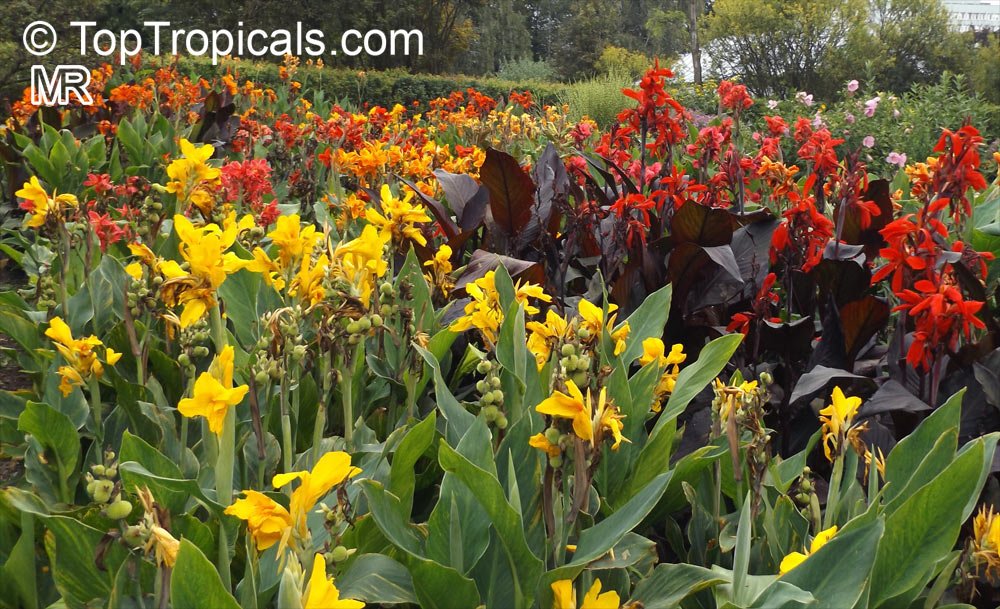
A: Try growing Canna lilies. They are a favorite of many gardeners as they are so easy to grow and always provide a reliable, beautiful show of flowers. In fact, Cannas are one of those plants that are spectacular even if they never bloomed. The leaves are tropical-looking, banana-like and huge! They range in a wide variety of shades and colors, always accentuating the large showy flowers on top.
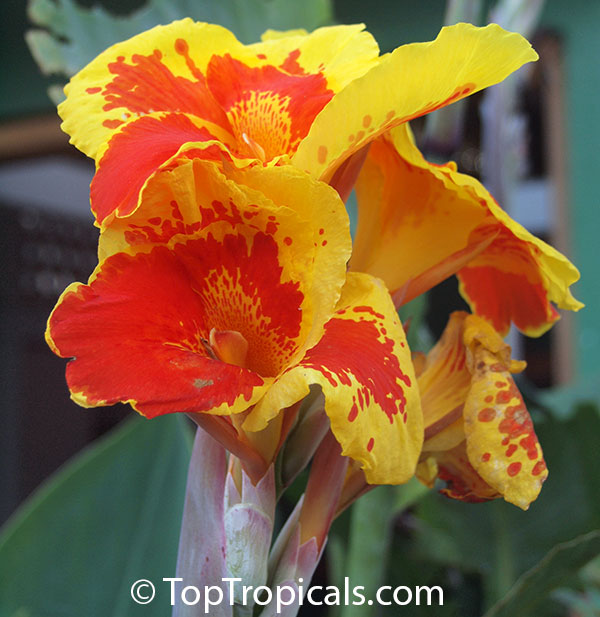
One of our favorite cannas right now is Canna Cleopatra - very striking and most unique. Large yellow flowers speckled with red spots, or red flowers and even flowers with a little bit of both. Foliage is exotic and very beautiful, often dark green, dark chocolate or a combination of both. This is a canna that will definitely illuminate your garden!

Caring for Cannas

Cannas like a lot of water, full sun and high heat. They are also heavy feeders and prefer soils that are well drained, organically rich and moist. The leaves will quickly tell you when the plant is hungry. Feed your cannas weekly with a water-soluble 20-20-20 fertilizer Broad Leaf Plus, and they will quickly respond with beautiful, lush growth. Deadhead often to encourage continued flowering. Cannas are winter hardy in US hardiness zones 7 and warmer. If you live in colder areas, the rhizomes need to be lifted in the fall, and stored indoors in a dark, warm spot until spring arrives. Be sure to divide clumps every three or four years. Give them lots of room as they grow into large plants, forming spreading colonies up to 7 feet high and 4 feet wide. Show them off in mass plantings, in large containers or in mixed flower borders. Lure in hummingbirds with these beauties!

TopTropicals.com