Garden Blog - Top Tropicals

Date: 6 Jun 2026

The easy orchid that blooms like a tropical sunrise: Epidendrum

🌅 The easy orchid that blooms like a tropical sunrise: Epidendrum


Most people think orchids are fussy plants that belong in greenhouses or on windowsills. Epidendrum radicans - also known as Orange Reed Ground Orchid or Sunrise Orchid - proves otherwise. This colorful orchid grows in the ground, tolerates heat and humidity, multiplies easily, and can bloom for months with very little care.

🔥 Not your typical orchid


Unlike many orchids that grow on trees, Epidendrum radicans is a terrestrial orchid native to Mexico, Central America, and northern South America. It naturally grows on the ground and even among rocks.

Its upright reed-like stems are topped by clusters of brilliant orange flowers with golden-yellow highlights. A single mature stem can carry dozens of blooms, and large plantings resemble patches of miniature tropical sunrises.

🔥 Easy to grow, easy to share


Epidendrum thrives in Florida's heat and humidity and performs best in bright light and well-drained soil. In warm climates it often blooms throughout the year.

One reason gardeners love it is its ability to spread. The stems naturally produce roots along their length, making division and propagation remarkably easy. A single plant can eventually develop into a large, colorful colony.

🔥 A pollinator favorite


The vivid orange flowers attract butterflies and hummingbirds and stand out brightly against green foliage. This makes Epidendrum a valuable addition to pollinator gardens and tropical landscapes.

🔥 Better than a flowering annual


Unlike annual flowers that must be replaced each season, Epidendrum returns year after year and gradually expands into larger clumps. It works well along walkways, patios, entryways, borders, and mixed tropical beds where its upright growth adds height and color.

🔥 The orchid that deserves more attention


Some plants become famous because they are difficult or rare. Epidendrum radicans deserves attention for the opposite reason.
It is colorful, dependable, beginner-friendly, and generous with flowers. Give it sunshine, good drainage, and a place to grow, and it will reward you with months of vibrant blooms that bring the warmth and energy of a tropical sunrise into your garden. 👉 More...

💡 #Fun_facts:

📌 The common name "Crucifix Orchid" comes from the tiny cross-shaped structure in the center of each flower.
📌 Unlike many orchids, it naturally produces roots along its stems, which is one reason it spreads and propagates so easily.
📌 In Florida, it's often used as a landscape orchid rather than a houseplant.

📚 Learn more:

Bamboo Orchid Plant Facts

Botanical name: Arundina graminifolia, Arundina affinis, Bletia graminifolia
Also known as: Bamboo Orchid, Bird Orchid
USDA Zone: 9 - 10
Highligths Small plant 2-5 ftSemi-shadeShadeFull sunWatering: Regular. Let topsoil dry slightlyEpiphyte plantWhite, off-white flowersPink flowers
Get personalized tips for your region

· Epidendrum in Plant Encyclopedia
· Orange Reed Ground Orchid, Sunrise
· The "Fake" Bamboo That Blooms Like a Rare Orchid Year-Round
· The prettiest flower for shade
· Ground orchids: all-summer colors
· Why do we love Ground Orchids
· Terrestrial orchids
· What orchids can be grown in the ground
🎥 Ground orchids: all-summer colors for shady gardens

🛒 Shop Ground Orchids

#Container_Garden #Shade_Garden #Discover

🟢 Join 👉 TopTropicals
Date: 8 Jun 2026

Pitaya Hana: dragon fruit beyond pink and white - A Collectors Guide

Pitaya Hana: dragon fruit beyond pink and white - A Collectors Guide

🍉 Pitaya Hana: dragon fruit beyond pink and white - A Collector's Guide


Most dragon fruit varieties are known for their colorful fruit. Hana stands out for something else - speed.
Originally discovered along Hawaii's famous Hana Highway on the island of Maui, Hana has earned a reputation as one of the fastest-growing dragon fruit varieties in cultivation. Under good conditions, the plant can grow more than six feet per year and may begin producing fruit in as little as 14 months from a cutting.


🔸 A dragon fruit with Hawaiian roots


Hana is a hybrid of Hylocereus undatus and Hylocereus monacanthus, combining vigorous growth with excellent fruit quality. The plant is easy to recognize by its relatively thin stems and unusually long thorns, giving it a different look from many modern dragon fruit varieties.

Like many Hawaiian treasures, Hana remains somewhat uncommon outside collector circles, making it a prized addition to a dragon fruit collection.

🔸 Fragrant flowers and dependable production


Hana is self-fertile, so a single plant can produce fruit without requiring another variety nearby. It is also known as an excellent pollen producer and is often used to help pollinate other dragon fruits.

Its large night-blooming flowers open after sunset, filling the air with a sweet fragrance. Unlike most dragon fruit flowers, Hana's blooms often show a delicate pink blush near the base of the petals, adding extra beauty to an already spectacular display.

🔸 Sweet flavor with a floral twist


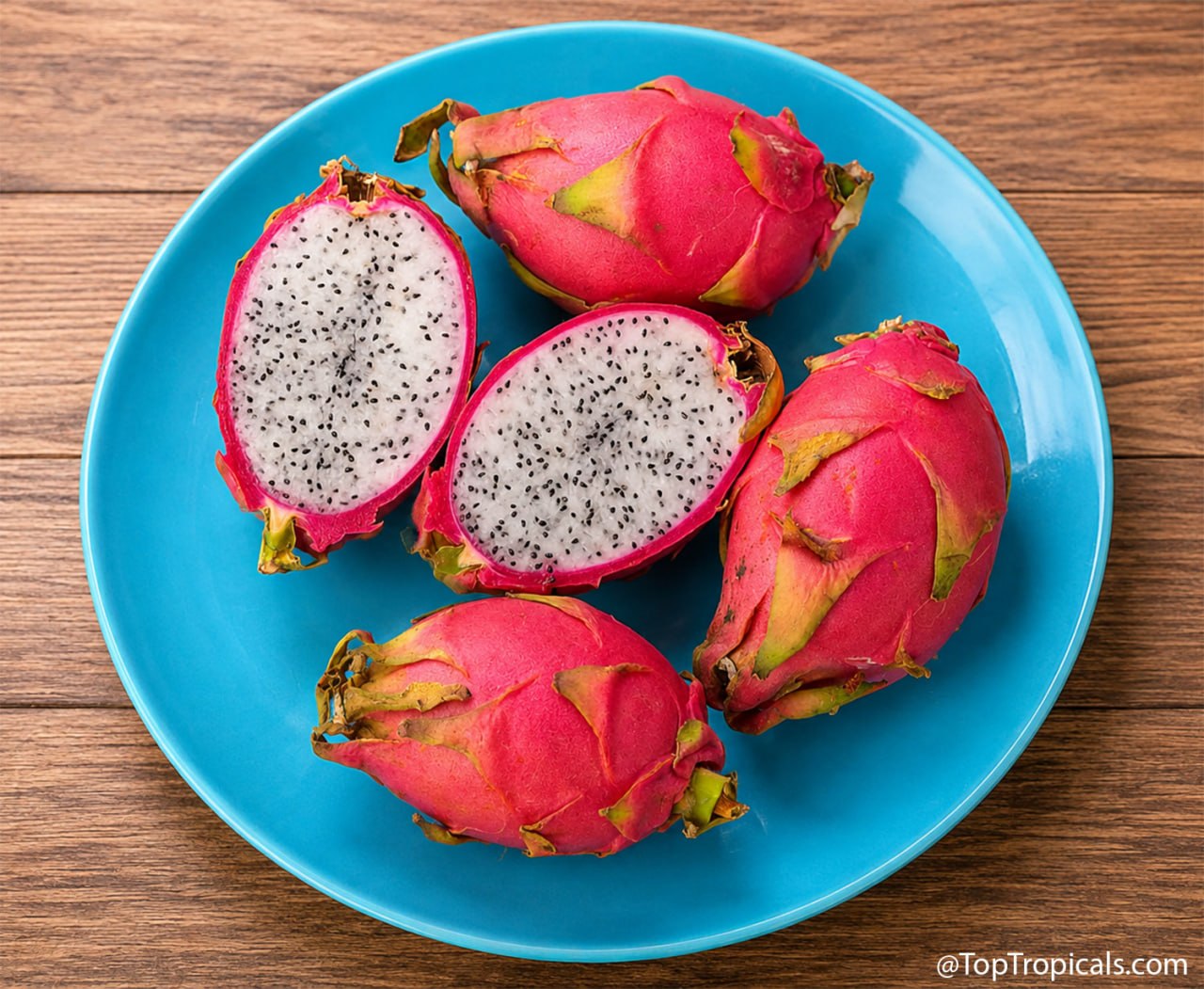
The fruit are typically small to medium-sized, though some can exceed a pound. The skin is bright pink with green-tipped scales, while the flesh is white and filled with tiny black seeds.

What makes Hana memorable is its flavor. Many growers describe it as sweet melon with subtle floral notes and a pleasant rosy aftertaste - a combination that sets it apart from ordinary white-fleshed dragon fruits.

🔸 Why collectors love it


Fast growth, early fruiting, fragrant flowers, self-fertility, and unique flavor make Hana one of the most interesting dragon fruit varieties available to home gardeners. It is proof that some of the most rewarding dragon fruits are not always the biggest or the most colorful - sometimes they are simply the ones that grow fast and taste unforgettable. 👉 More...

🛒 Explore and collect Dragon Fruit varieties

📚 Learn more:

Pitaya Plant Facts

Botanical name: Hylocereus sp.
Also known as: Pitaya, Pitahaya, Dragon Fruit, Strawberry Pear
USDA Zone: 9 - 11
Highligths Large shrub 5-10 ft tallVine or creeper plantSemi-shadeFull sunWatering: Moderate. Water when top soil feels dryWhite, off-white flowersThorny or spinyEdible plantSubtropical plant. Mature plant cold hardy at least to 30s F for a short timeSeaside, salt tolerant plant
Get personalized tips for your region

· Dragon fruit Hylocereus in Plant Encyclopedia
· Why white-flesh Dragon fruits deserve more attention
· Pitaya Eureka Red: dragon fruit beyond pink and white
· Pitaya David Bowie: Dragon Fruit Beyond Pink and White
· A Quick Guide to Dragon fruit varieties: Red, White, Yellow, Purple and more...
· What is the best Dragon fruit with red flesh?
· Planting your own Dragon Fruit plantation
· Do-It-Yourself Support Structure for Dragon Fruit
· Why you need to grow your own dragon fruit
· Do red, white and yellow Dragon fruit taste differently?

#Food_Forest #Dragon_Fruit #Discover

🟢 Join 👉 TopTropicals