Date: 19 Apr 2026
Complete Adenium Care Guide: 9 tips how to keep it simple and thriving
🌸 Complete Adenium Care Guide: 9 tips how to keep it simple and thriving
Adeniums don’t need intense care - just the right balance.
Most problems come from too much water, not enough light, or the wrong soil.
🌸 1. Soil is everything
Why it matters
Adeniums are succulents with thick roots and a caudex that stores water. They must never sit in wet, heavy soil.
Most problems come from soil that stays wet too long - leading to root rot, soft caudex, weak growth, and poor flowering.
Good soil builds strong roots, dries faster, supports a healthy caudex, and improves blooming.
Ideal soil formula
Use a very fast-draining, airy mix with perlite, bark, sand, coconut fiber. Avoid heavy peat-based mixes.
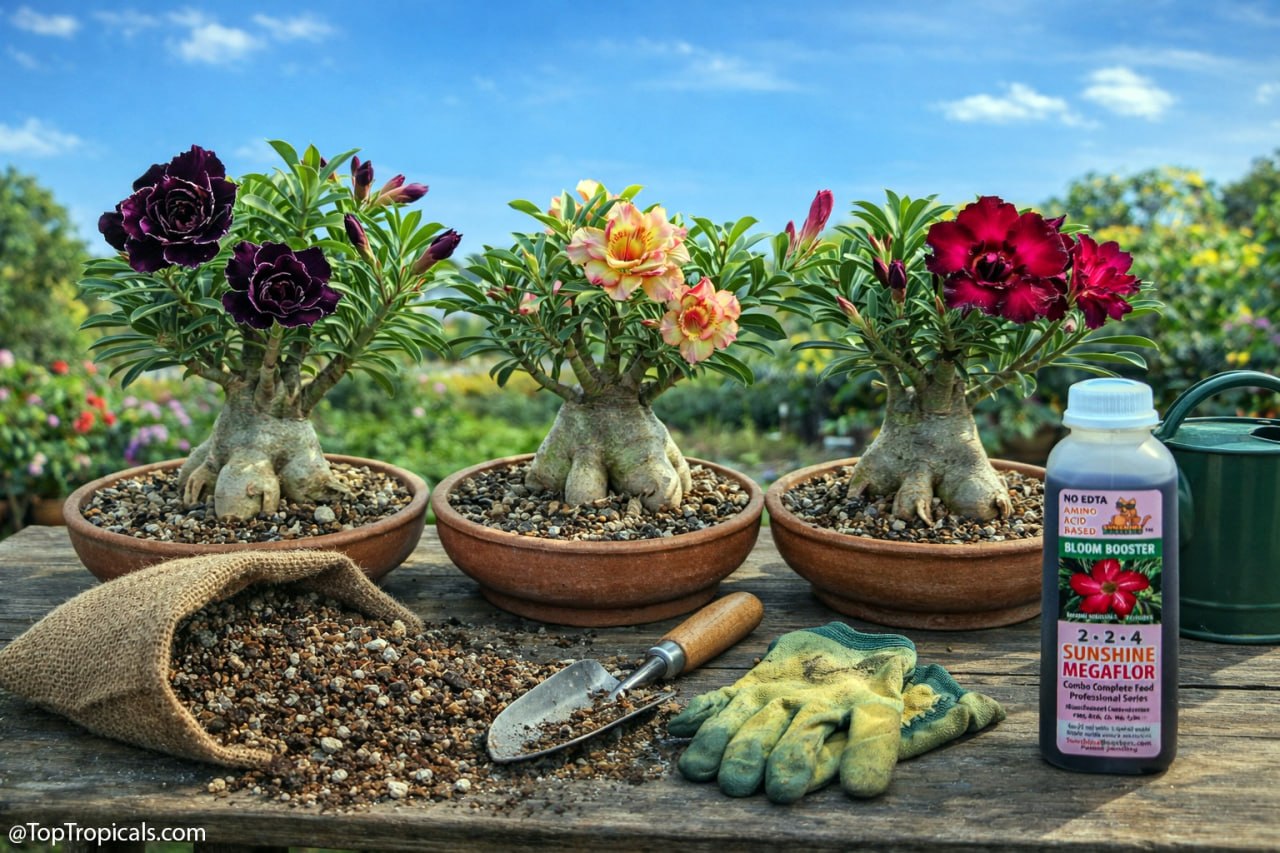
A simple formula: TopTropicals Abundance potting mix + coarse sand (50/50). Use coarse sand (for construction), not fine beach sand. Sand improves drainage, structure, and aeration.
You can also add lava rock and charcoal.
Soil pH
Adeniums prefer slightly alkaline soil. Too much peat (acidic) holds moisture and increases rot risk.
Tip: add a few sea shells on top - watering slowly raises pH.
Golden rule
Better too fast-draining than too heavy.
You can water more. You can’t fix rot.
🌸 2. Containers
Use shallow, unglazed clay pots. They dry faster, improve airflow, and stabilize the plant as the caudex gets heavy.
Do not oversize - keep close to root ball.
When repotting, raise the caudex slightly each time to develop that thick base.
🌸 3. Light
Give as much light as possible.
Full sun is best, but in very hot climates, bright filtered light prevents leaf burn and helps flowers last longer.
Too little light = weak growth and poor blooming.
🌸 4. Watering
Water deeply, then let soil dry out completely before watering again.
Do not keep soil constantly wet. Adeniums prefer the dry side and hate sitting in moisture.
In rainy climates, protect from excess water. Keep under cover - bright light, no constant soaking.
🌸 5. Fertilizer
Feed lightly and regularly during active growth.
Use liquid fertilizer Sunshine Megafloк Bloom Booster on soil and lightly on leaves - avoid the caudex.
Bloom boosters (high phosphorus) support flowers and caudex growth.
Add controlled-release fertilizer (Green Magic) twice a year - spring and late summer. Do not fertilize during winter dormancy.
Add microelements (iron, boron, molybdenum) - Sunshine Superfood supplement - for healthier leaves and longer blooms.
🌸 6. Trimming (pruning)
Trim after flowering, especially leggy branches.
Pruning encourages branching - more branches = more flowers.
Don’t be afraid to cut - it improves structure and blooming.
🌸 7. Caudex development (secret trick)
When repotting, raise the caudex slightly above soil level.
Combined with regular feeding (bloom booster), this helps develop a thicker, more pronounced base.
🌸 8. Seedlings vs grafted plants
Seed-grown plants form a natural caudex but take 2-3 years to bloom and do not come true to type (often simple pink).
Grafted plants combine a developed caudex with a known variety.
Best choice for predictable, high-quality blooms.
🌸 9. Troubleshooting
If something goes wrong, check these first:
· Too much water
- · Not enough light
- · Soil too heavy
🛒 Explore Exotic Thai Adeniums
📚 Learn more:


- · Adenium varieties in Plant Encyclopedia
- · About #Adenium Rainbow - fantastic varieties
- · Adenium rainbow - warm, bright, and full of energy
- · Adenium rainbow - pink in every shade
- · Dark tones that don’t look real. Secret of a Big Caudex.
- · Variegated and impossible to ignore adeniums that change your collection. Soil tips.
- · We picked 6 adeniums - you’ll probably want all 6. Soil and Watering tip.
- · A few adeniums you don’t want to miss. Trimming tip.
- · The adenium colors everyone is talking about right now. Light tips for hot climates.
- · Adenium rainbow: these 6 will pull you in. Fertilizing tips.
- · How to start your dream collection: before you start
- · How to grow a happy Adenium
#Container_Garden #Adeniums #How_to #Discover
🟢 Join 👉 TopTropicals