Date: 16 May 2026
🔮 When the World Around Becomes Too Gray: Plant a Tree. Eat a Donut. Keep going.

Smokey: Plant a tree.
Sunshine: And if that does not help?
Smokey: Plant another one.
Sunshine: And eat a donut.
Smokey: Not strictly necessary, but statistically beneficial.

If you have been feeling a little worn down lately, you are not alone.
You already know about the headlines. We do not need to list them. You have probably seen them today before breakfast.
We are not here to pretend that is not happening. It is happening. And it is a lot. But here is the thing we keep coming back to, the thing that has been true for as long as people have had hands and a patch of ground: when the world feels out of control, you can still plant something.
Gardening is not an escape. It is an answer. When you put a tree in the ground, you are making a quiet statement. You are saying that you expect there to be a future. That you intend to be in it. That shade and fruit and flowers still matter, and you are going to make sure they exist in your corner of the world.
That is not naive. That is courageous in the most ordinary and underrated way.
One tree, planted this season, might give you fruit in a few years. It might give butterflies somewhere to stop. It might give a bird a place to nest. It will almost certainly give you something to look at on a hard day that reminds you the world still contains beauty, and that you put some of it there. And if one tree does not quite do it? Plant another one.
Dostoevsky said beauty will save the world. We think a mango fruiting in your backyard counts. So does a Magnolia opening on a quiet morning.
Do not skip the donut.
A donut is a small, simple, completely unnecessary thing. That is exactly the point. It is not productive. It does not solve anything. It is just good, and sometimes that is the whole reason. In a world that constantly demands you be useful and informed and concerned, eating a donut is a quiet act of being human. You are allowed to enjoy a small thing on a hard day. You do not have to earn it.
Rest a little. Then go put something in the ground. Anything that will grow and flower and remind you that beautiful things are still happening whether the headlines mention them or not.
We have the plants. You bring the donuts.
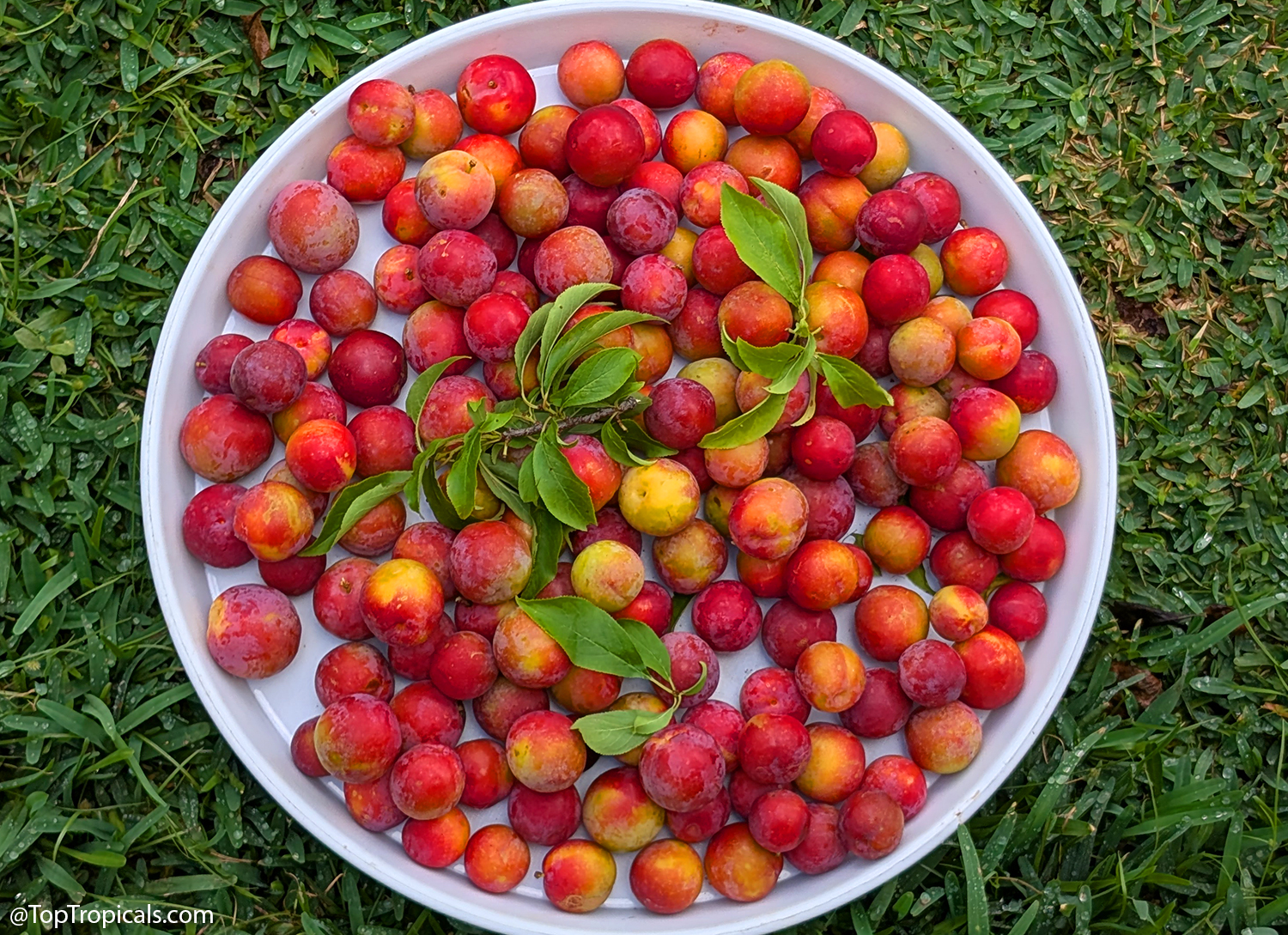
🛒 Plant a sweeter world: grow color and flavor
Date: 31 May 2026
📚 🍩 ❓❓❓ 😱 5000 plants. 60000 photos. 25 years of notes. Estimated pages: ??? OH NO.

After posting about our search for a mysterious fragrant Cerbera, this arrived in our inbox:
"Bless you all for finding this and sharing… Love those books your research cats are hunting through. Where do I get those, too?"
Smokey & Sunshine looked at each other. Then at the books. Then at the donuts.
Smokey: About the plants in the photo?
Sunshine: No. The books. People want to read them.
Smokey: Most of those books don't exist. We made them up for the photo.
Sunshine: "The Apocynaceae Family" sounded very convincing. Very distinguished. Like the Corleone family, but with more flowers and fewer offers you can't refuse.
Smokey: The Corleones were also toxic. So the comparison holds. Did you notice you spilled donut glaze on the cover and called it peer review.
Sunshine: That is simply how great botanical discoveries are made.
Smokey: That explains the investigation board. And the suspects list.
Sunshine: The point is — now people want to read the books. All of them.
Smokey: The books. Do. Not. Exist.
Sunshine: Exactly. Which is why we need to convince the Top Tropicals humans to write them. They have 5000 plants, 60000 photos, and 25 years of notes. The raw material is right there.
Smokey: That would be a very large book.
Sunshine: Excellent. We can call it The Encyclopedia of Plants That Smell Better Than Donuts.
Smokey: That narrows it down to exactly one chapter.
Sunshine: A very good chapter though. Jasmine alone would fill at least twenty pages.
Smokey: While we wait for the humans to write it, the actual Top Tropicals plant encyclopedia is at toptropicals.com. Over 5,000 plants. No donuts involved.
Sunshine: ...yet.
Date: 31 Aug 2025
 Happy Labor Day!
Labor Day cats Smokey & Sunshine enjoy BBQ in fruit
garden
Labor Day is a good reminder that gardening is work, but it is the kind of work that gives back. Digging, hauling, trimming, watering — it all counts as labor, and it all makes life better. Take a little time this weekend to enjoy what has already grown, even if the next project is waiting right around the corner.
Celebrate the holiday with blooms and savings — 15% off orders $100+ this Labor Day, excluding S&H. Expires Exp. 09-03-2025
LABORDAY25
Date: 11 Jun 2026
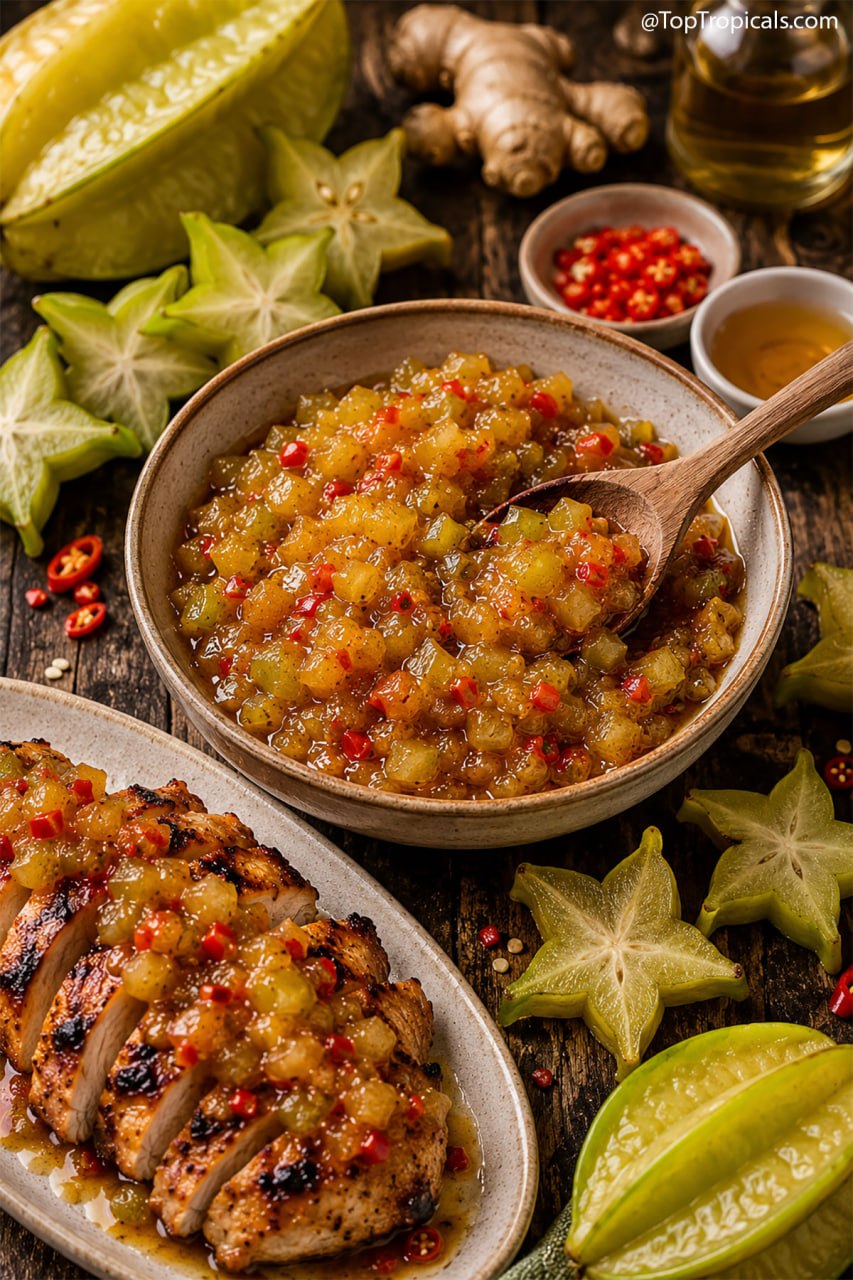
Star fruit chili relish: quick-n-fun exotic recipes
Star fruit chili relish
Carambola - Starfruit
🍴 Star fruit chili relish: quick-n-fun exotic recipes
🟡Dice ripe star fruit into small cubes and combine with finely chopped chili peppers, grated ginger, and a splash of vinegar in a saucepan.
🟡Simmer over medium heat, stirring occasionally, until the fruit softens and releases its juices.
🟡Continue cooking until the mixture thickens into a glossy sweet-and-spicy relish with tender fruit pieces throughout.
🟡Spoon generously over grilled chicken, pork, or fish for a bright tropical kick.
🌿 About the plant:
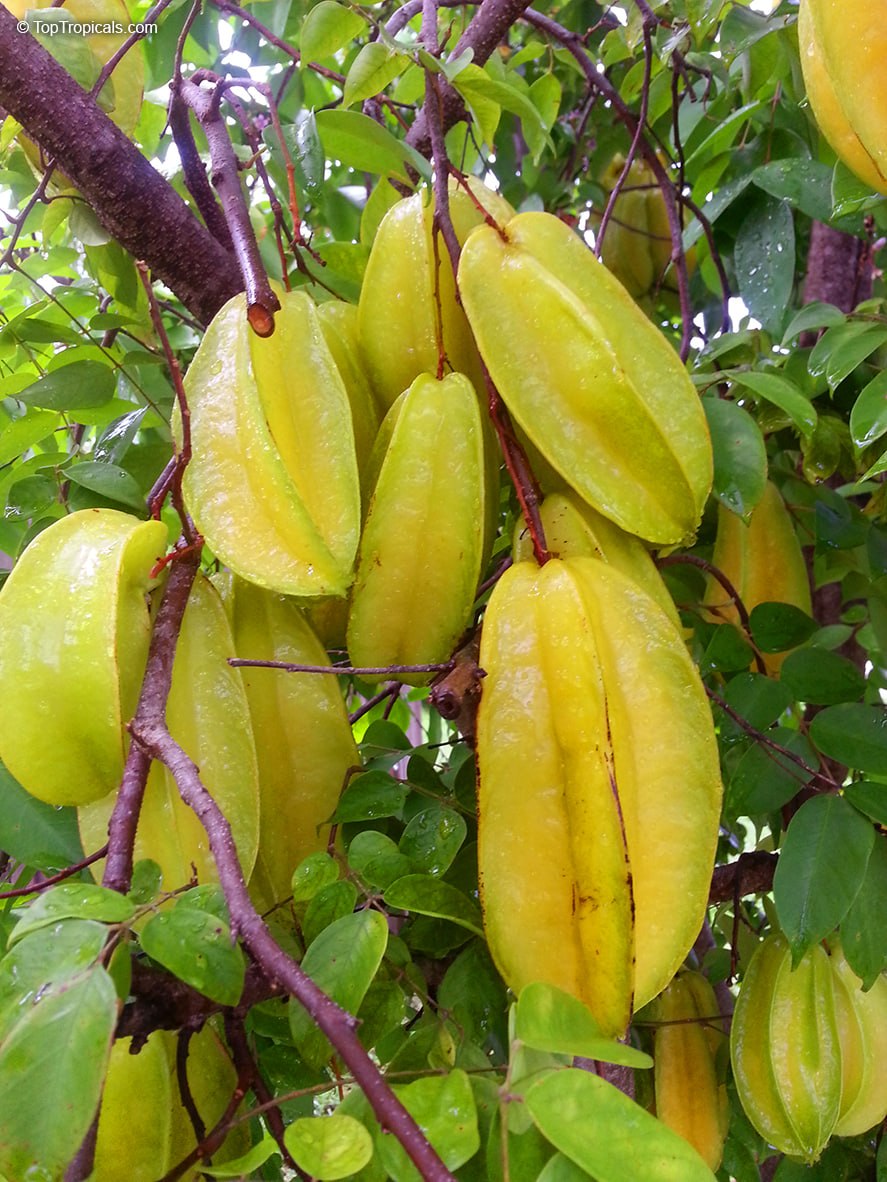
Carambola, Averrhoa carambola, produces delicate pink-lavender flowers that grow along the branches before forming ribbed fruit. The distinctive five ridges create those clean star shapes when sliced.
🏡 In the garden:
Trees stay relatively compact and respond well to light pruning. Flowering can occur several times a year in warm climates, leading to multiple harvests. Good drainage is essential - they dislike soggy roots.
🛒 Plant Star Fruit Carambola Tree
📚 Learn more:


✦ Averrhoa carambola in Plant Encyclopedia
✦ Grilled star fruit slices: quick-n-fun exotic recipes
✦ How to gets lots of Star Fruit Carambola
✦ Star Fruit from our garden
✦ Grow your own Carambola
✦ Top 10 fast-fruiting trees: #8. Carambola - Starfruit
✦ Carambola Banana Whip
✦ Carambola Jam recipe
✦ When young Carambola trees are covered with fruit
✦ Carambola tree is the Star of the orchard
#Food_Forest #Recipes
🟢 Join 👉 TopTropicals
Date: 8 Jun 2026
Pitaya Hana: dragon fruit beyond pink and white - A Collectors Guide
Pitaya Hana: white dragon fruit Hylocereus
🍉 Pitaya Hana: dragon fruit beyond pink and white - A Collector's Guide
Most dragon fruit varieties are known for their colorful fruit. Hana stands out for something else - speed.
Originally discovered along Hawaii's famous Hana Highway on the island of Maui, Hana has earned a reputation as one of the fastest-growing dragon fruit varieties in cultivation. Under good conditions, the plant can grow more than six feet per year and may begin producing fruit in as little as 14 months from a cutting.
🔸 A dragon fruit with Hawaiian roots
Hana is a hybrid of Hylocereus undatus and Hylocereus monacanthus, combining vigorous growth with excellent fruit quality. The plant is easy to recognize by its relatively thin stems and unusually long thorns, giving it a different look from many modern dragon fruit varieties.
Like many Hawaiian treasures, Hana remains somewhat uncommon outside collector circles, making it a prized addition to a dragon fruit collection.
🔸 Fragrant flowers and dependable production
Hana is self-fertile, so a single plant can produce fruit without requiring another variety nearby. It is also known as an excellent pollen producer and is often used to help pollinate other dragon fruits.
Its large night-blooming flowers open after sunset, filling the air with a sweet fragrance. Unlike most dragon fruit flowers, Hana's blooms often show a delicate pink blush near the base of the petals, adding extra beauty to an already spectacular display.
🔸 Sweet flavor with a floral twist
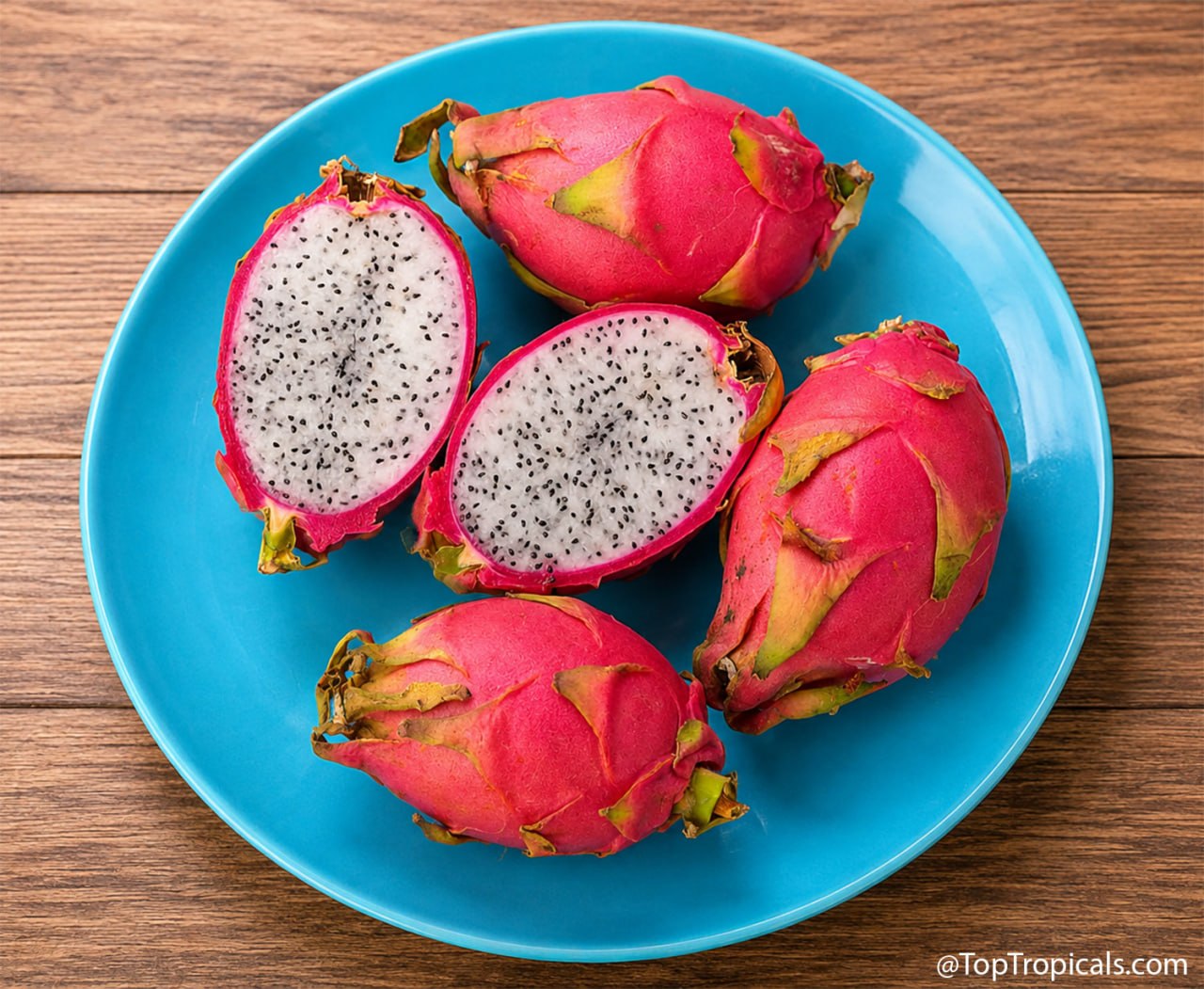
The fruit are typically small to medium-sized, though some can exceed a pound. The skin is bright pink with green-tipped scales, while the flesh is white and filled with tiny black seeds.
What makes Hana memorable is its flavor. Many growers describe it as sweet melon with subtle floral notes and a pleasant rosy aftertaste - a combination that sets it apart from ordinary white-fleshed dragon fruits.
🔸 Why collectors love it
Fast growth, early fruiting, fragrant flowers, self-fertility, and unique flavor make Hana one of the most interesting dragon fruit varieties available to home gardeners. It is proof that some of the most rewarding dragon fruits are not always the biggest or the most colorful - sometimes they are simply the ones that grow fast and taste unforgettable. 👉 More...
🛒 Explore and collect Dragon Fruit varieties
📚 Learn more:


· Dragon fruit Hylocereus in Plant Encyclopedia
· Why white-flesh Dragon fruits deserve more attention
· Pitaya Eureka Red: dragon fruit beyond pink and white
· Pitaya David Bowie: Dragon Fruit Beyond Pink and White
· A Quick Guide to Dragon fruit varieties: Red, White, Yellow, Purple and more...
· What is the best Dragon fruit with red flesh?
· Planting your own Dragon Fruit plantation
· Do-It-Yourself Support Structure for Dragon Fruit
· Why you need to grow your own dragon fruit
· Do red, white and yellow Dragon fruit taste differently?
#Food_Forest #Dragon_Fruit #Discover
🟢 Join 👉 TopTropicals