Garden Blog - Top Tropicals

Date: 21 Feb 2026

The best time to plant a fruit tree was 20 years ago - here is why you need to plant it now
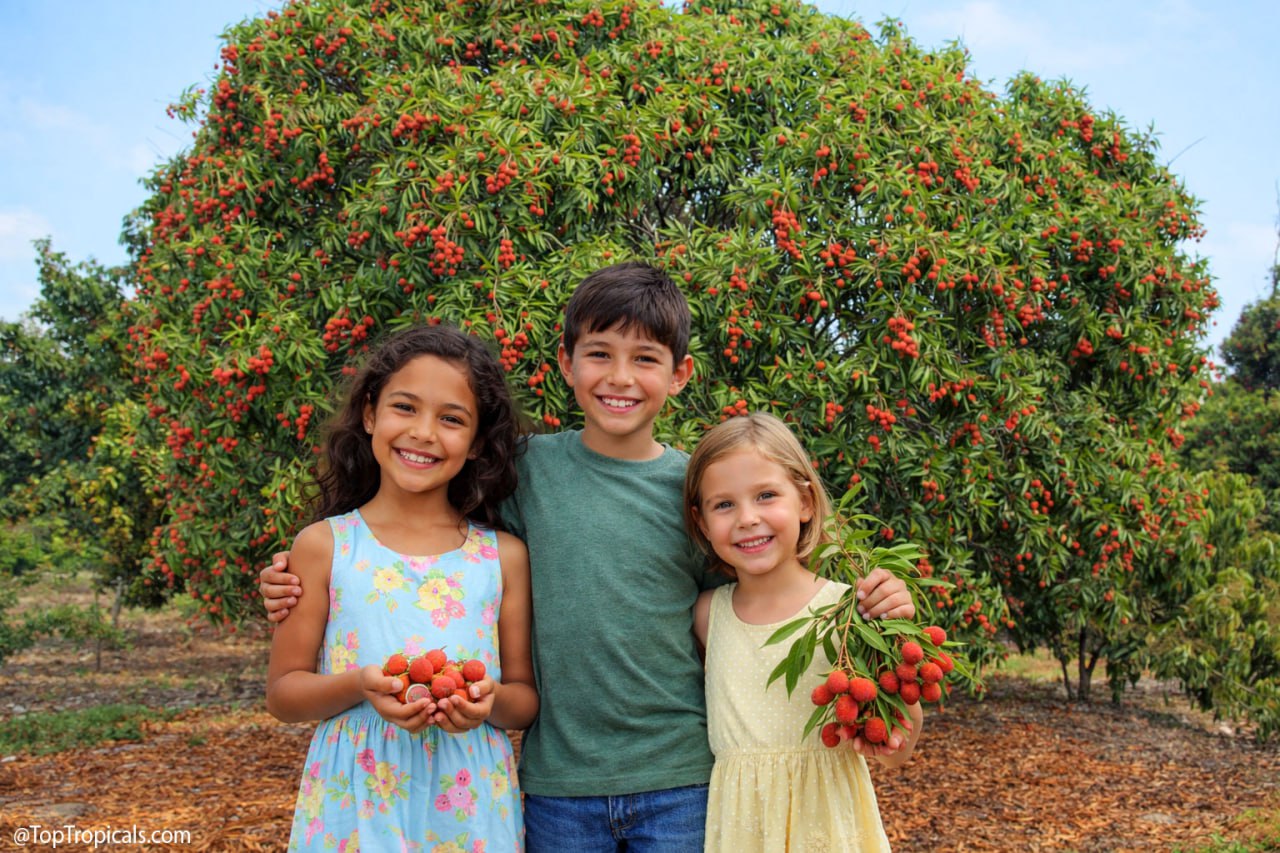
Litchi chinensis - Smiles under the Lychee tree

Litchi chinensis - Smiles under the Lychee tree

🍑 The best time to plant a fruit tree was 20 years ago - here is why you need to plant it now


They say the best time to plant a fruit tree was 20 years ago.
The second best time is today.

A fruit tree is not a seasonal purchase. It is not a decoration. It is a decision that stretches far beyond you.

When you plant a mango, an avocado, a loquat, a lychee tree - you are not just planting for this summer. You are planting for children who will climb that tree. For neighbors who will ask for a basket of fruit. For someone who may live in your house long after you are gone.

Fruit trees are quiet investments in the future.
Unlike annual crops that come and go, a tree deepens its roots every year. Many fruit trees - especially mangoes - can live for decades, even a century. They outlive trends, owners, renovations, even mortgages. They stand there, steady, producing.

Even if you sell the house, the tree remains.
The next family will walk into the yard and discover fruit hanging overhead. Imagine buying a home and realizing someone before you planted abundance!

That is a gift.

In many parts of the world, mango trees are called generational crops. One farmer plants them. His children harvest them. His grandchildren sell the fruit. A single decision continues to feed and support a family long after the planter is gone.
There is something deeply grounding about that.

We live in a fast world. Quick returns. Quick moves. Quick upgrades.
A fruit tree moves at a different pace. It asks for patience. It rewards consistency. It teaches you to think long term.

Planting a fruit tree says:
I believe in tomorrow.
I believe this land will matter.
I believe someone will stand here after me.

And even if you never taste the fullest harvest, someone will.
Passing fruit trees through generations is more than horticulture - it is legacy. It is continuity. It is resilience. It is saying that this space, this soil, this home will keep giving.

So plant it now.
Plant it for your children.
Plant it for the next homeowner.
Plant it for shade you may never sit under.
Plant it for fruit you may never pick.
Because one day, someone will walk into that yard, look up, and thank the person who thought ahead.
Let that person be you.

🛒 Explore fruit trees for your orchard
  • 👉 Tropical Fruit favorites:


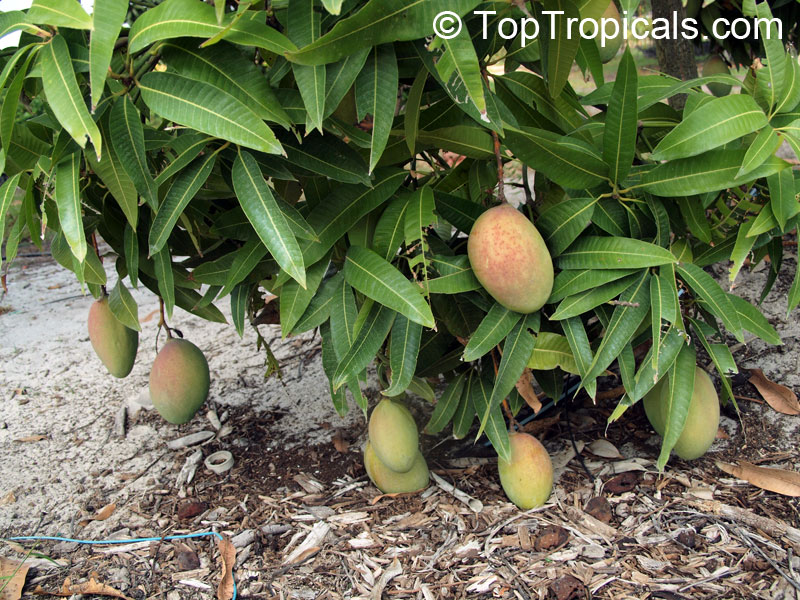
🥭 Mango
Avocado
🍒 Cherry
🍊 Loquat
🍈 Jackfruit
🍑 Peach tree
🍉 Guava
🍏 Sugar apple
🍇 Mulberry
🍐 Sapodilla

#Food_Forest #Discover

🟢 Join 👉 TopTropicals
Date: 3 Mar 2020

Tu BiShvat - New Year for Trees

By Alex Butova

Tu BiShvat is the Israeli Arbor Day, and it is often referred to by that name in international media. Ecological organizations have adopted the holiday to further environmental-awareness programs. The modern practices and interpretations of Tu BiShvat often revolve around the earth and environment. This holiday is a celebration of nature and appreciation for creating the natural world. In Israel, Tu BiShvat is celebrated as an agricultural holiday. The 15th of Tu BiShvat was celebrated this year on February 10, 2020. This day marked the beginning of a new year for trees. This day marks the season in which the earliest-blooming trees emerge from their winter sleep and begin a new fruit-bearing cycle. Often the date of Tu BiShvat is used for determining the age of fruit baring trees and therefore establishes their birth dates. Therefore, Tu BiShvat is the "birthday" of trees!

The traditions and customs of Tu BiShvat vary, however, the most common include planting trees and gathering with family and friends for a meal. It is celebrated by eating fruit, particularly the kinds that praise the bounty of the Holy Land: grapes, figs, pomegranates, almonds, dates, olives and others. It reminds people that "a man is a tree of the field", and reflects on the lessons we can derive from the botanical analogue.

Check out fruit trees and nuts:

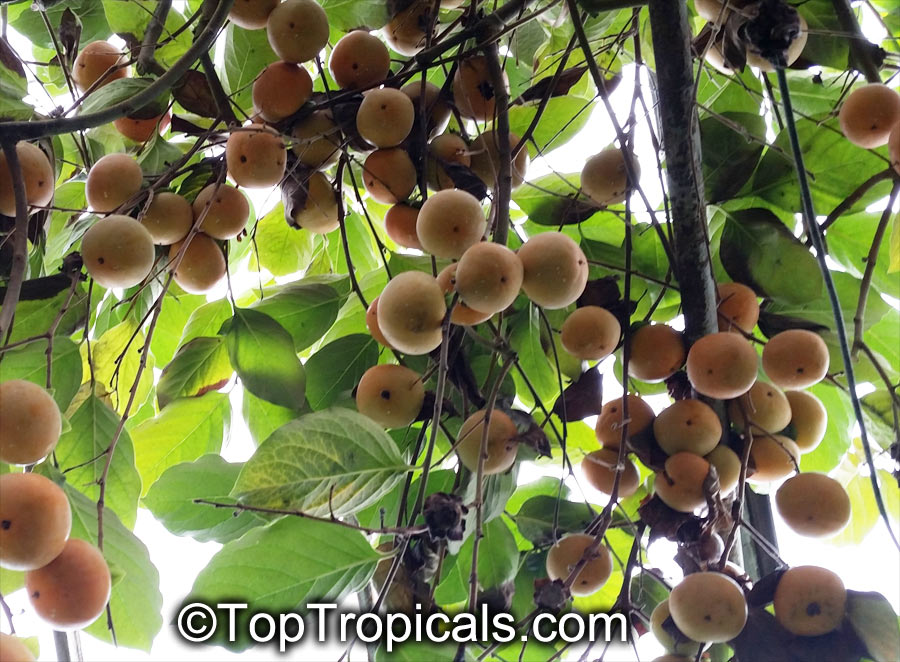
Persimmon tree

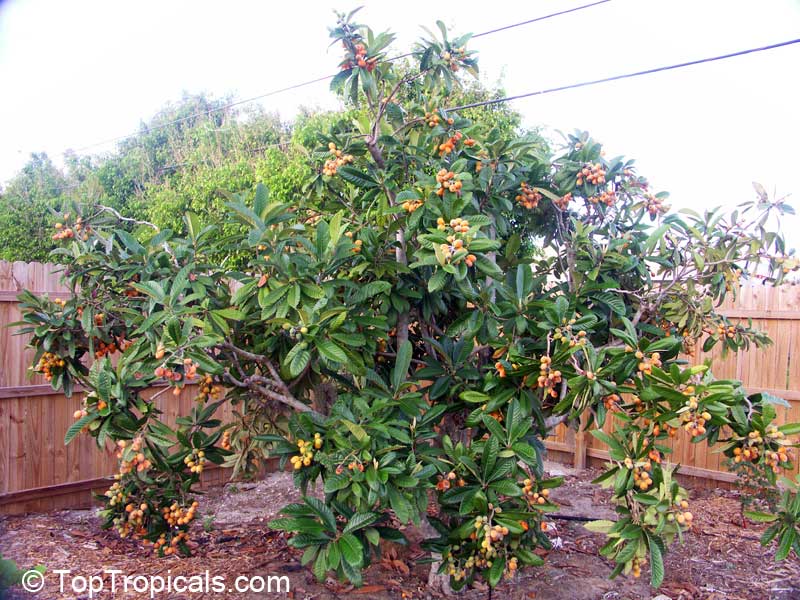
Loquat tree

Date: 11 Mar 2026

📅 Do Not Miss: March 21 - Spring Equinox Plant Market

🍩 Saturday, March 21, 2026: 9 am - 4 pm

Smokey  the  tuxedo  cat  in  work  clothes  studies  the  Spring  Equinox  Plant 
 Market  poster  at  the  Top  Tropicals  nursery  entrance  while  Sunshine  the 
 ginger  tabby  cat  rides  a  bicycle  balancing  coffee  and 
 donuts.
Sunshine: Smokey, look at me! See what I can do on my bike? I'm practicing to give people what they like: coffee and donuts.

Smokey: You'd be perfect for a Gulf beach cafe. But gardeners don't come here for donuts.

Sunshine: Really? Then why do they come?

Smokey: Some gardeners lost plants to the freeze. Others want trees that will handle winter better. Cold-hardy avocados. Macadamia. Grumichama. And some just come for fun - to see the PeopleCats.

Sunshine: And my charm... and my donuts will make it more fun.

Read more about Smokey & Sunshine

Ft Myers Garden Center: 13890 Orange River, Ft Myers, FL
Sebring B-Farm : 9100 McRoy Rd, Sebring, FL

More Spring Equinox Plant Market details

🌞 Welcome to our Spring Equinox Plant Market, proudly hosted by the PeopleCats of Top Tropicals.

This one feels different.

After Florida’s record freeze, many gardens are brown, trimmed back, or missing a few old friends. We felt it too. And now - we rebuild.

The equinox marks equal day and night. More light ahead. New growth beginning.

And the PeopleCats are ready🐾.

  • 🐱King is back on gate duty - inspecting every vehicle for proper plant-hauling capacity.
  • 😺Paisley is rearranging freeze survivors and new arrivals like a design consultant.
  • 😼Snitch is supervising recovery efforts from a comfortable chair.
  • 😸Persephone is checking under tables for "hidden spring energy."
  • 😻Sushi and Loki are preparing for guided garden tours - recovery edition.

This is not just a plant market. This is the spring reset.

👍 Why You Should Come

It is finally warm in Florida. After several nights of hard freeze, some plants survived - and some didn’t. This event is your chance to see real freeze champions in person.

If you lost plants, you are not alone. If you are ready to plant smarter, this is your moment.

Walk the gardens. See proven winter survivors. Discover cold-hardy fruit trees and resilient ornamentals. Get practical advice about replanting after freeze. This is rebuilding - Florida style.

♥️ What Makes This Event Special

We are featuring:

  • Verified freeze survivors
  • Cold-hardy fruit trees
  • Tough flowering trees and shrubs
  • Replacement plants for damaged landscapes
  • Smart layering ideas for frost-resilient gardens
  • You will see which species handled 25F with wind and multiple nights of freeze - with no protection.

Real-world test. Real results.

Cold hardy fruit favorites include:

🌸 Cold hardy subtropical flowering trees including:

And many other cold hardy plants

🎉Event Highlights

  • 30% OFF online prices
  • FREE plants with purchase
  • $5-10 specials
  • Exciting raffle prizes

🌳Don't just mow - grow!

Start your food forest, beat rising prices, and plant a future your family will thank you for.

🌿 Friendly Reminder
Just a quick reminder before we go: Sunshine Boosters are still shipping free. If you were thinking about stocking up for the season, now is a great time to do it while the offer is still active.

🛒 Feed your plants

Date: 14 Jul 2019

Dwarf and Condo mangoes - easy mangoes

Q: We leave in zone 6a, could you tell us what is the list of different types of mango plants that could be planted indoor and that they can bear fruits?

A:There is a large group of mangoes called "Condo Mango" - they literally can be grown in your apartment! Those are dwarf varieties that can remain compact in containers with minimal pruning and successfully bear fruit providing bright light and proper care, including plant food.

The best dwarf and semi-dwarf varieties are: Carrie, Cogshall, Cushman, Fairchild, Graham, Ice Cream, Julie, Mallika, Nam Doc Mai, Pickering, Irwin, Jahangir, Juliette, Lancetilla, Little Gem, Manilita, Sia Tong, Torbert, Pim Seng Mun, Super Julie.

They produce juicy, fiberless sweet fruit. Julie is also a very popular dwarf variety, however, it is very cold sensitive and not the easiest to grow. If you get a 3 gal size mango, step it up to 7 gal when the plant reaches 4 ft; you may use a bigger container as the root system grows, up to 15 gal or even 25 gal, space permitting. Trim the tree under 6-8 ft after production season is over (summer-fall).

See more information on growing condo mangoes

RECOMMENDED FERTILIZERS:

Mango-Food - Smart Release Fruit Tree Booster
Fruit Festival Plant Food - Super Crop Booster
For sweeter fruit, use SUNSHINE-Honey - sugar booster

Date: 28 Apr 2021

Cold hardy tropical fruit trees for Zone 9

Q: Can you suggest tropical fruit that can be grown (cold hardy) in Zone 9?

A: There are quite a few tropical/subtropical trees that will grow well in zone 9. Our favorites are: Figs - very cold hardy and drought tolerant.
Loquats - grafted trees that start fruiting right away, reliable producers.
Tropical Mulberry - very fast growing trees that can take freeze, heavy producers.
Macadamia - these trees are of a compact nature, very easy to grow and start producing nuts right away.
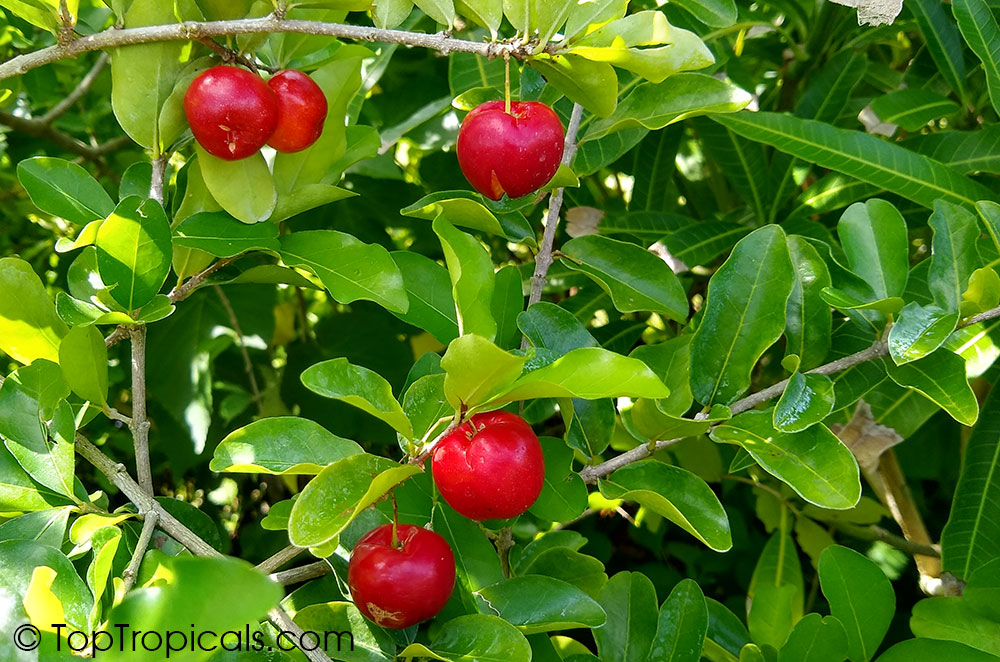
Many different varieties of Eugenias - tropical cherries - all-time favorites. Another tropical cherry - Malpighia, or Barbados cherry - starts fruiting in small size under one food tall! Great for containers.
Tropical (Low Chill) Peaches, Nectarines, and Plums. See full list of low-chill, relatively cold hardy fruit trees.
And of course - Bananas!

Don't forget to fertilize your fruit trees to improve their cold hardiness!