Everyone knows that Top Tropicals is good at unique, special novelties.
And it is not a secret that most plant people also are pet people - cat
people (with PeopleCats), dog people (with PeopleDogs) or at least fish people,
right?
Today we are excited to introduce our new revolutionary Fish Food developed
by our business partners at Floritin Aquarium Labs
Floritin stikiStikâ„¢ - Ultimate Aquarium fish food
StikiStik is a dry powder that you just mixed with water to create a
sticky paste. The paste can be attached to any surface inside your aquarium.
StikiStik is a patent pending fish food that does things which
conventional fish food does not. It introduces picky eaters to a more natural feeding
environment, does not pollute the fish tank, is easy to mix from its powder
format and provides gradual feeding. It is easy to apply to any surface in the
aquarium, such as interior glass wall, rocks or coral skeleton.
stikiStik advantages
- Easy to use. Just mix with a few drops of water and stik it in!
Self adhesive paste can be applied to any surface. Stays intact for hours in
aquarium. Does not pollute water - Scientifically designed and proven for all types of aquarium fish,
invertebrates, and corals - Optimal and balanced nutrition. Contains vitamins and amino
acids - Natural. No hormones, no artificial colors - Stimulates fish appetite and enhances fish color - Promotes natural feeding habits. Helps training hard to feed fish.
The perfect food to acclimate newly introduced fish, including Moorish Idol,
finicky butterfly fish, such as Copperband Butterfly, Pearscale
Butterfly, Mandarinfish, and many oithers - Easy to store. Can be used immediately or frozen for future use - Add any frozen fish food or medications to mix
"The stikiStik is the best Aquarium fish food ever - hands
down!"
- Mr Booster -
Date: 25 Feb 2026
A Miracle in the Garden: Watching a Tiger Swallowtail Rebuild Itself on a Magnolia Champaka - Joy Perfume Tree
Tiger Swallowtail Butterfly
A Miracle in the Garden: Watching a Tiger Swallowtail Rebuild Itself on a Magnolia Champaka - Joy Perfume Tree 🐯
Tiger Swallowtail Metamorphosis: From Cocoon to Joy
🏼 Nature’s most mind-blowing magic trick happened right here on a branch of our Magnolia champaka - the Joy Perfume Tree. Did you know that when a caterpillar enters its chrysalis (cocoon), it literally dissolves its body and rebuilds it from scratch?
🏼 This Tiger Swallowtail chose the legendary Joy Perfume Tree as its nursery. It’s a match made in heaven—the "flying tiger" of North America born on a tree famous for the world’s most expensive perfume scent. While most people know the Champaka for its intensely fragrant flowers, few realize that even the leaves release a soft, sweet aroma when brushed against.
🏼 In this video, you’ll see the rare moment of eclosion - where the butterfly emerges with soft, wrinkled wings and begins the slow process of pumping life into them before its first flight.
🏼 It is a real gem in your garden - not just for fragrance lovers, but for wildlife that clearly loves it too.
Watch this Tiger Swallowtail butterfly being born on a Champaka - Joy Perfume tree!
Smokey: Winter roots make spring easy. Keep that plant straight.
Sunshine: I am keeping it straight by not touching it at all.
Smokey: That is exactly what I was afraid of.
November is the month when the garden finally stops yelling at you.
The heat backs off, the bugs calm down, and the weeds take a breath.
This is when we get to take control again.
And as gardeners, we know the truth:
Either you use your garden, or your garden will use you in
spring.
Let me walk you through this, gardener to gardener.
"November is when the garden finally listens.
Give it a little direction now, shape it, guide it, and prepare it for
spring.
It will reward you all year." - Tatiana Anderson, Top Tropicals Plant
Expert
🌴
When The Garden Uses
You
We have all lived this scene:
March weeds appear, and two days later it looks like a jungle.
One missed watering turns into five wilted plants and a full week of
recovery.
A skipped feeding shows up as yellow leaves and panic searching
online.
Bugs return fast, and suddenly you are washing leaves every other
day.
Random plant purchases fill your yard with chaos and mismatched care
needs.
When the garden takes control, spring feels like hard work, not
joy.
Overgrown Tropical Garden Showing How a Garden Can Use You
📊
When You Use Your Garden
November flips the script.
Plants slow down. Soil stays warm.
This is the safest month to experiment, move plants, fix mistakes, and
redesign.
What you do now pays off huge in March.
You map out sun zones and shade zones.
You mulch now so weeds do not explode later.
You move plants to better positions without heat stress.
You remove the high-drama plants before they start another season of
complaints.
You pick what you want for next year instead of letting impulse buys
rule you.
Spring becomes smooth instead of overwhelming.
And honestly? It feels good to walk outside in March and see order instead
of chaos.
In the photo: Every garden starts in small steps. Biquinho Pepper
(front) in the garden.
What Benefit
Do You Get Personally?
Less watering.
Fewer bugs.
Bigger fruit.
Better flowering.
Less money wasted.
Less time fixing problems you could have prevented now.
This is why experienced tropical gardeners adore November.
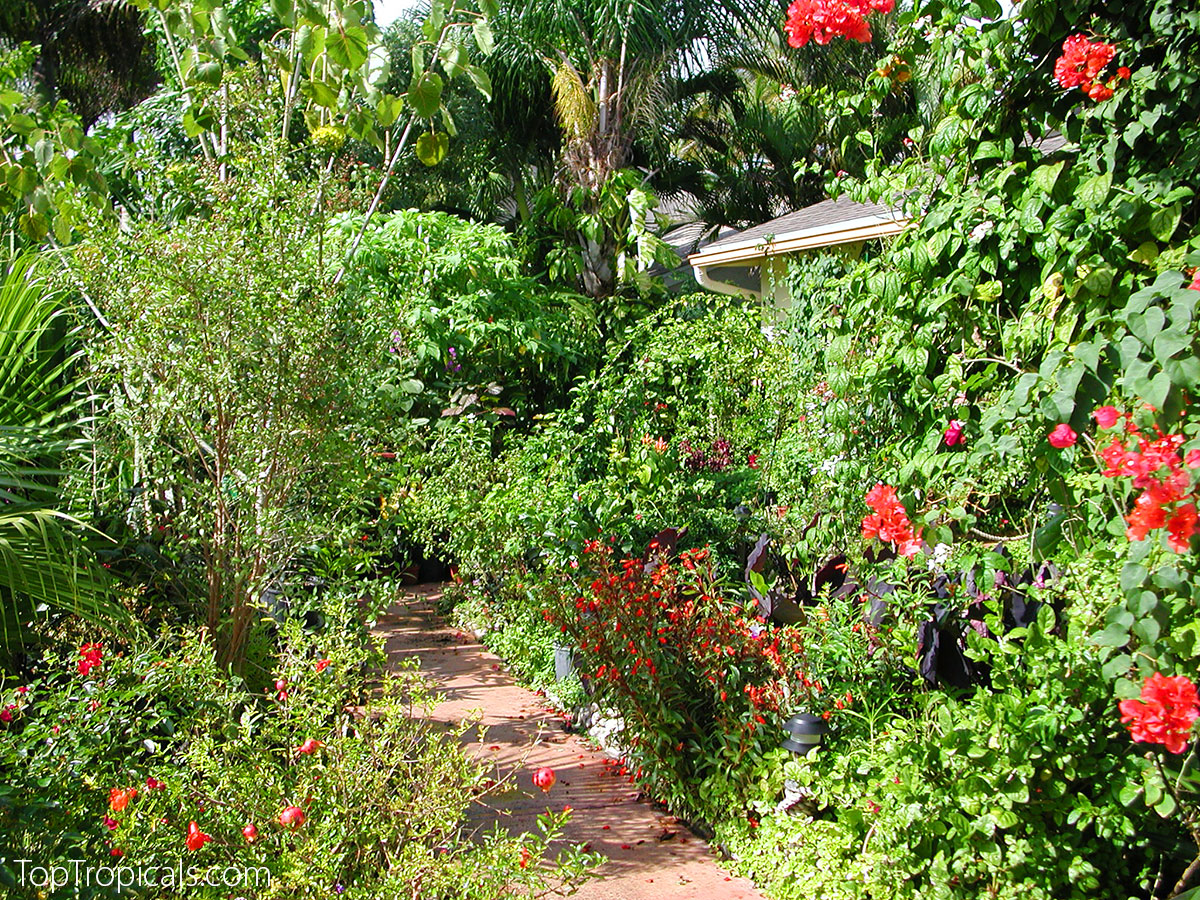
In the photo: Organized Tropical Garden. Firebush (lemon gold
variety) and Cordylines (Ti Leaf) make colorful spots in the garden.
🐭
Start With Something Small Today (5 Minutes)
Pick one:
Add mulch to the driest spot in your yard.
Cut one dead branch from any tree.
Move one pot to a better sun angle.
Pull three weeds from the worst area.
Water deeply once this week.
Small steps now save hours later.
⭐
One Short Story
Last year we planted a
Star Fruit in November.
By March, it was already covered in flowers, and have been harvesting fruit
non-stop since then!
That is what winter planning does: it gives plants a head start you can
actually see.
🐍
Plants That Will Use You If You Let Them
These are great plants, but only if you plan before planting them:
Papaya
- fits any yard, delicious fruit and natural digestive remedy
Pick even one of these and your garden starts giving back.
In the photo: Cattley Guava brings not only tasty fruit but also a
wonderful character with its amazing multi-color twisted trunk.
🌡️ November Advantage
You cannot ruin anything in November.
This is the safest, calmest month to shape your garden the way you want.
If you act now, spring becomes a victory lap.
If you wait, spring becomes a rescue mission.
In the photo: Adenium is a colorful accent in the
garden.
💐
Thanksgiving Tie-In
This is the season to reset, breathe, and be thankful for your outdoor
space.
A garden that works for you is one of the best gifts you can give yourself
going into the new year.
Start your November plan today.
Use your garden.
Do not let it use you.
In the photo: Megaskepasma, Iris, Colocasia, Crotons, Dracaena and Ti
Leaf bring instant tropical look to your garden.
🌿 Bring the Jungle Inside: Winter Survival
Guide Part 2.Temperature.
❄️
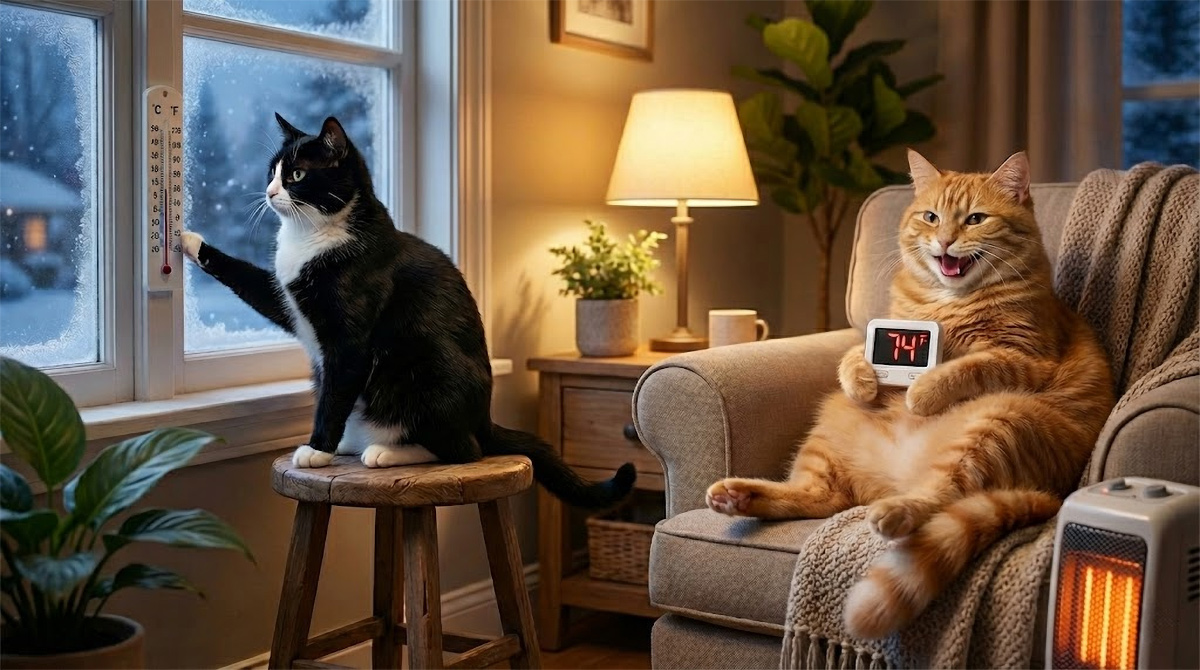
Smokey: Too cold. We need more heaters so the plants feel comfortable. Sunshine: I feel comfortable. Smokey: You are not part of my plant collection, but I am glad you are comfortable.
Most tropicals stop growing below 70 to 75 F. They stay green, but their engine shuts down.
Below 70F:
Water intake drops.
Roots slow down.
Fertilizing becomes risky.
Root root becomes easy.
If you WANT your plants to grow in winter, you must take care of everything:
Warmth, light, humidity, water. It all works together.
Aim for 75 F with bright light. Water lightly. No fertilizer.
Watch out for drafts. Cold windows. Door blasts. Garage entryways.
Even one gust can trigger leaf drop.
Vents are the opposite problem: hot, dry, dusty air. That gives you crispy edges and mites.
Root zone temperature matters just as much as room air.
Your thermostat may say 72 F, but your pot on a tile floor may be sitting at 55 F.
Fix this by elevating pots on boards or stands. Use Styrofoam.
Never keep pots directly on cold tile o windowsill
Extra winter heat: Space heaters are fine if used smartly. Do not blow hot air directly on plants.
Keep heaters away from cords, trays, and water. Oil filled radiators are the safest option for plant rooms.
Use a humidifier if you want growth or want to prevent spider mites.
But do not blow mist directly onto leaves.
Always place the unit lower than the plant canopy.
Grouping helps. Put tropical plants close together to share humidity.
Do not mix succulents with humidity lovers.
Cats and dogs love to knock over lights and stands. Secure your fixtures. Trust us.
Airflow: Light airflow is healthy. Direct fan blast is not. Still, dry corners invite mites.
A mild night drop is OK. A big one below 55 F will stop growth completely.
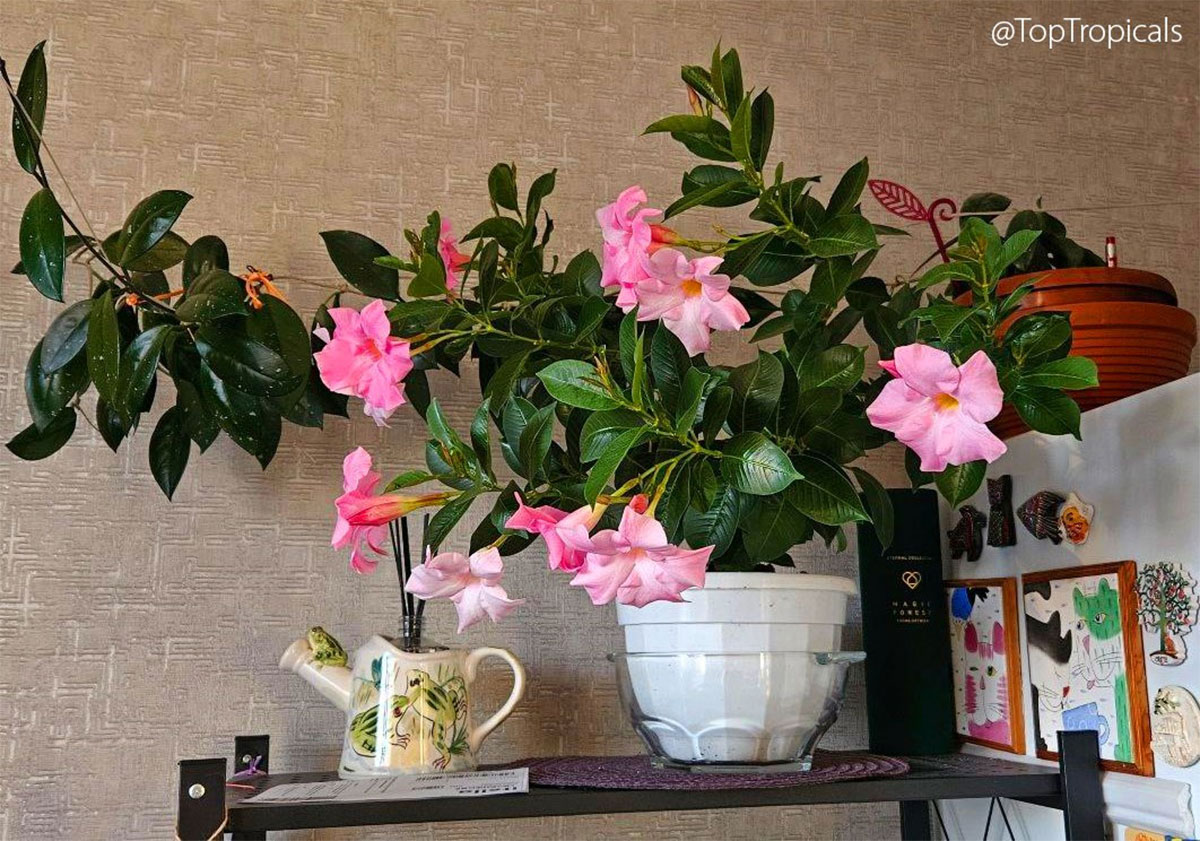
A mandevilla thriving indoors with bright pink blooms and glossy green leaves.
☂️ PLACEMENT: MICROCLIMATES RULE EVERYTHING
Indoors is one big tradeoff: light but cold near windows, warm but dim away from them.
The winning combo is a warm room with supplemental light.
Best zones to keep plants in winter:
South or east windows with additional light
Warm living spaces
Bright bathrooms for natural humidity
Worst zones to keep plants in winter:
Behind curtains
Directly on windowsills
Near heaters or vents
Against cold exterior walls
Dark corners without supplemental lighting
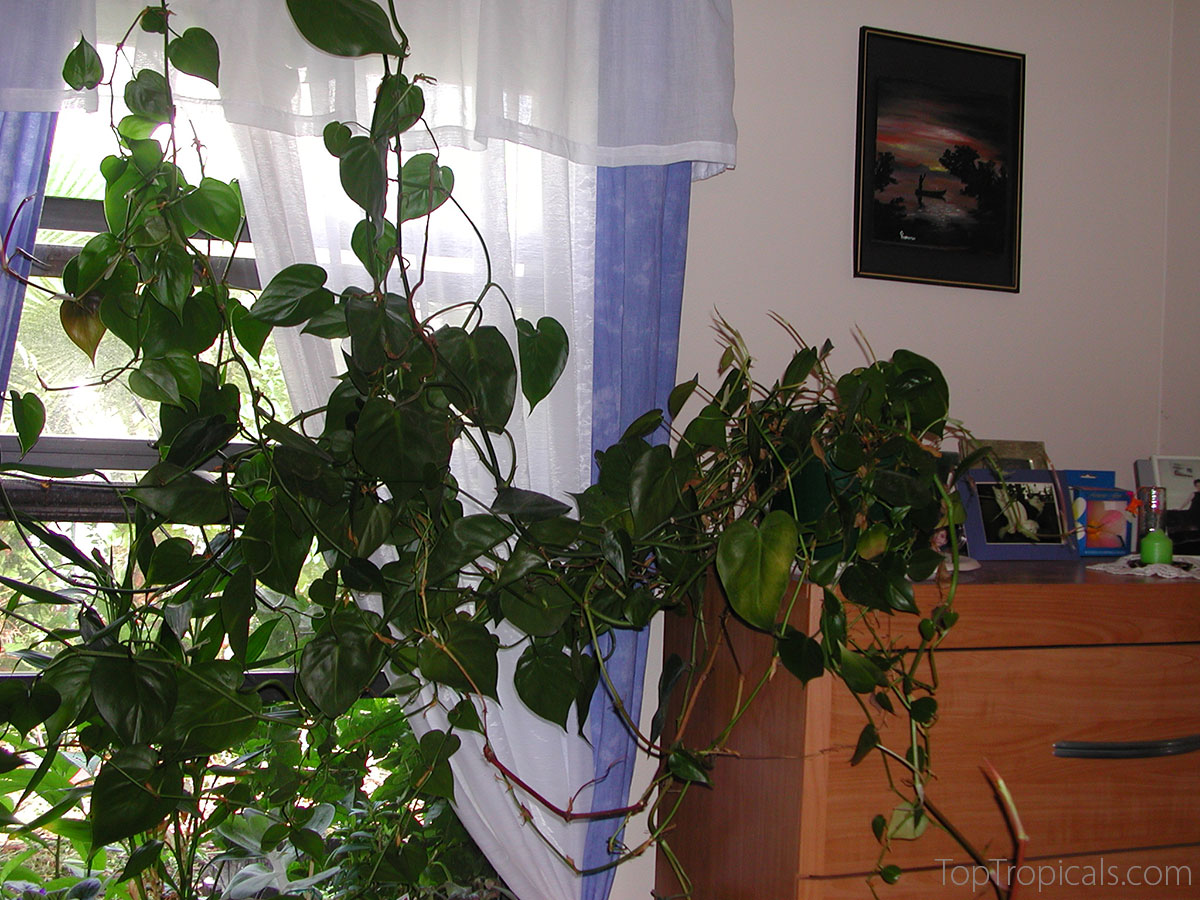
A vigorous indoor philodendron stretching across the window.
💨 ACCLIMATION
Moving a plant from outdoors to indoors is a shock. Light drops. Humidity drops. Airflow stops. Soil cools. Even healthy plants may drop some leaves for a few weeks. That is normal.
Before you bring them inside:
Rinse foliage to remove dust and pests. We recommend Sunshine NoBug - and organic, safe solution.
Check for ants.
Trim weak branches.
Treat soil if fungus gnats are present.
Try to bring plants inside before the first cold front, not after.
If you are reading this too late, do the prep now and expect a little leaf drop.
If you nail light and temperature, winter becomes simple. In the next mail-list we will cover watering, fertilizer timing, humidity, and other indoor tricks that keep tropicals happy till spring. Stay tuned.
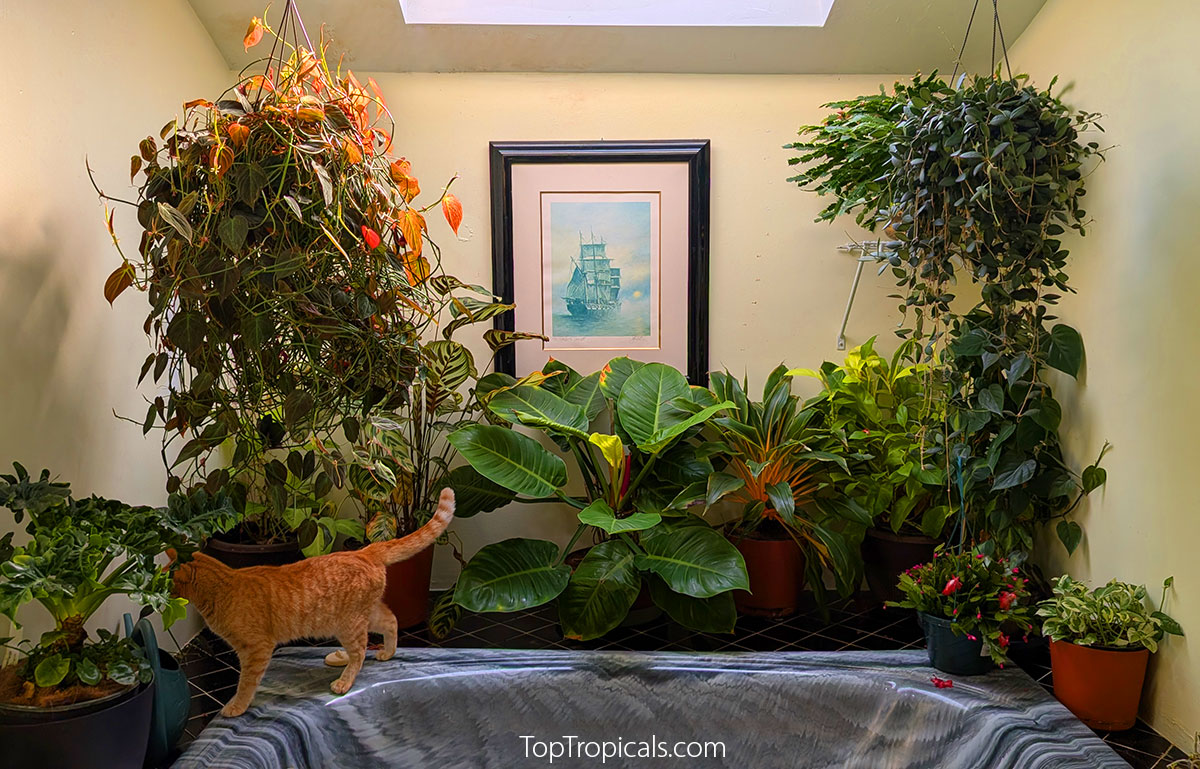
Cat Bob is inspecting his indoor garden around the tub
with a bright skylight
✔️ WINTER INDOOR FAQ: TEMPERATURE AND PLACEMENT
Q: Why are leaves dropping only on the window side?
A: Cold glass. The room may be warm, but the glass surface can be much colder.
Q: Is a cold room OK for tropicals?
A: They may survive, but they will not grow below about 65F to 75F. When nights stay below 65F for a week, many plants enter dormancy.
Q: My room feels warm. Why is my plant still not growing?
A: Check the soil temperature. Pots on cold tile can be 10 to 20F colder than the air.
Q: Can plants sit directly on the floor?
A: Not on cold tile. Always elevate them on boards, stands, or trays.
Q: Is it OK to keep plants near a heater or vent?
A: No. Vents and heaters blast hot, dry air and cause crispy leaves and mites.
Q: My plant is dropping leaves after coming indoors. Why?
A: Normal acclimation to reduced light and humidity right after the move.
Q: Can I keep plants in a bright bathroom?
A: Yes. Bathrooms can have good humidity. Just keep pots off cold tile.
Q: Do I need a humidifier?
A: Not for survival. Yes if you want better growth and fewer pests like spider mites.
Q: Do I need a grow tent?
A: No. A bright LED plus a warm room is enough for winter holding.
Q: Should I fertilize in winter?
A: Not now. Winter fertilizer rules will be covered in the next mail-list.
Q: Should I water the same as in summer?
A: No. Indoor plants need much less water in winter. Watering rules also coming soon.
🌿 Bring the Jungle Inside: Winter Survival
Guide Part 1: Lighting
❄️
Smokey: "Winter lighting must be precise. I need this light exactly at 14
inches."
Sunshine: "Sure. I am holding this… little number thing."
Smokey: "It reads humidity. Your main job is to look cute."
🌞
LIGHT, TEMPERATURE, PLACEMENT
Winter indoors is a different kind of battlefield.
Dark rooms. Dry air. Cold windows. Random drafts. Weak light. Sad plants.
We've been talking about keeping your tropicals alive outdoors previously.
But some of you have no choice this time of year. You have to bring the jungle inside.
If that is you, then this is your plant survival guide.
☀️ LIGHT: THE WINTER LIFELINE
Light advice here comes straight from our in-house expert, Michael Dubinovsky, a high-tech lighting engineer with over 30 years of hands-on experience. If he says brightness beats hours, trust him.
Here is the truth: Indoor light in winter is 10 to 50 times weaker than outdoors.
Short days. Low-angle sun. Windows filtering half the useful light. It all adds up.
Tropicals need 10 to 12 hours of real brightness. Winter sun cannot do that on its own. Not even in a big window. So we help them.
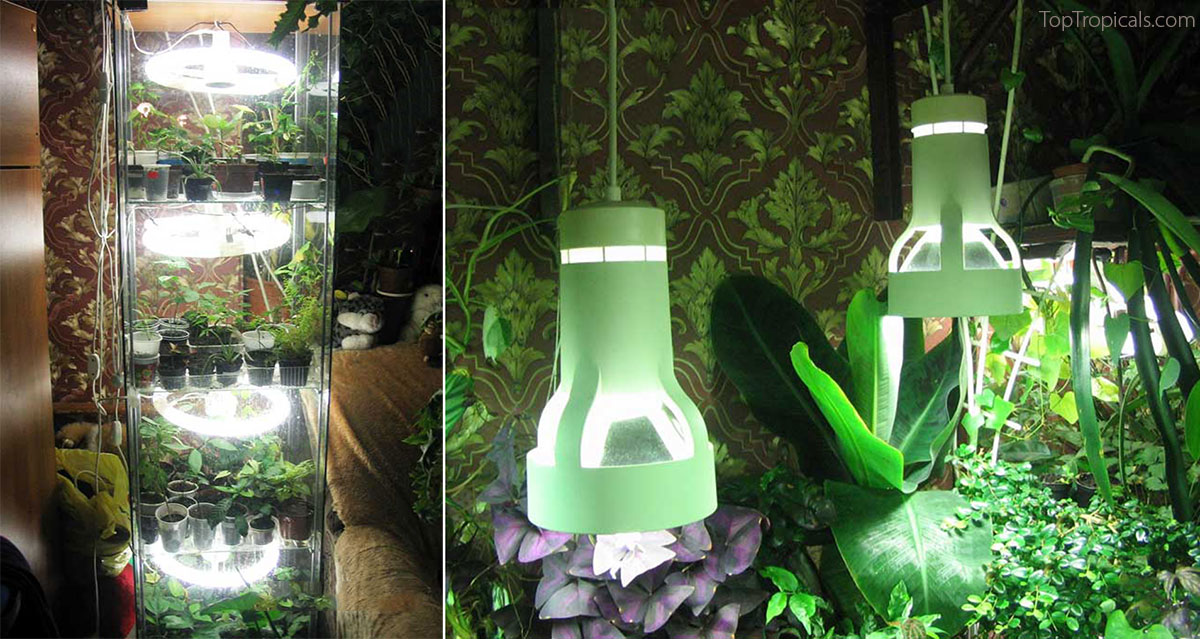
Use bright LED shop lights or utility lights. 5000K to 6500K CCT. High lumen output. Skip decorative bulbs. Skip purple grow fancy toy lights. If you want a single plant light, even a clamp lamp is fine if you screw in a bright daylight LED bulb.
Panels work best for plant clusters. Bars for shelves. Bulbs for single plants.
And grouping plants under one bright panel always beats spreading them out.
Distance matters: keep LEDs about 12 to 18 inches above the leaves.
Too close: leaf burn.
Too far: stretching, weak stems.
Leaves reaching up? Light is too high or too weak.
Leaves curling down? Light is too close.
If you want a reality check, download any smartphone lux meter app.
Most indoor corners are 50 to 200 lux without supplemental light.
Tropicals want much more
And a quick tip about windows: winter sun comes in sideways.
A spot that looks bright at noon can go dull by 2 PM. Don't count of window light
Bright light or long hours
People try to fix weak light by running it for 16 or 18 hours. That does not work.
Plants care more about light intensity.
A few hours of strong light beats all-day dim light.
If the light is weak, adding more hours will not change anything except your electric bill.
Simple rule: Short duration but bright is always better than long duration but weak. - by Michael, Top Tropicals lighting expert
No need for fancy horticultural panels
You do not need purple grow lights. You do not need special horticultural fixtures. You do not need expensive panels unless you want real winter growth.
For winter plant holding till spring, the inexpensive solution works great:
Bright LED daylight bulbs (5000K to 6500K) from hardware store
High lumen output
Inexpensive clamp lamps
Aim directly at the plant from 12 to 18 inches
This setup keeps tropicals happy until spring without buying anything fancy.
Save the money for soil, pots, or your next plant.
Indoor plant lighting safety note:
Use timers. Keep cords dry. Do not overload outlets.
Do not hang lights over humidifiers.
And do not put fixtures on piles of books to raise them. People do this.
✔️ WINTER INDOOR FAQ: TEMPERATURE AND PLACEMENT
Q: I am in Home Depot. Which light do I buy?
A: LED shop light, daylight color (5000K to 6500K), high lumens. Skip fancy plant bulbs.
Q: Can I use clamp lamps or floor lamps for plants?
A: Yes. Clamp lamps with a bright daylight LED bulb work great for winter holding.
Q: Do I need special horticultural grow lights?
A: No. A bright LED daylight bulb works fine for winter. Save the fancy lights for real growth projects.
Q: How far should the light be from the plant?
A: About 12 to 18 inches above the leaves. Too close burns. Too far stretches.
Q: Can I run weak lights for 18 hours to compensate?
A: No. Weak light plus long hours still equals a weak plant. Brightness matters more than hours.
Q: How do I know if a spot is bright enough?
A: Use a free phone lux app. Most indoor corners are much too dim for tropicals.
Q: I have a huge window. Why do I still need LEDs?
A: Indoor winter light is weak, short, and filtered by glass. Plants want intensity, not just a big window.
Q: My window faces north. Now what?
A: North windows are decorative only. Use supplemental lighting or move the plant.