Garden Blog - Top Tropicals

Date: 3 Mar 2026

Jaboticaba reduction sauce: quick-n-fun exotic recipes
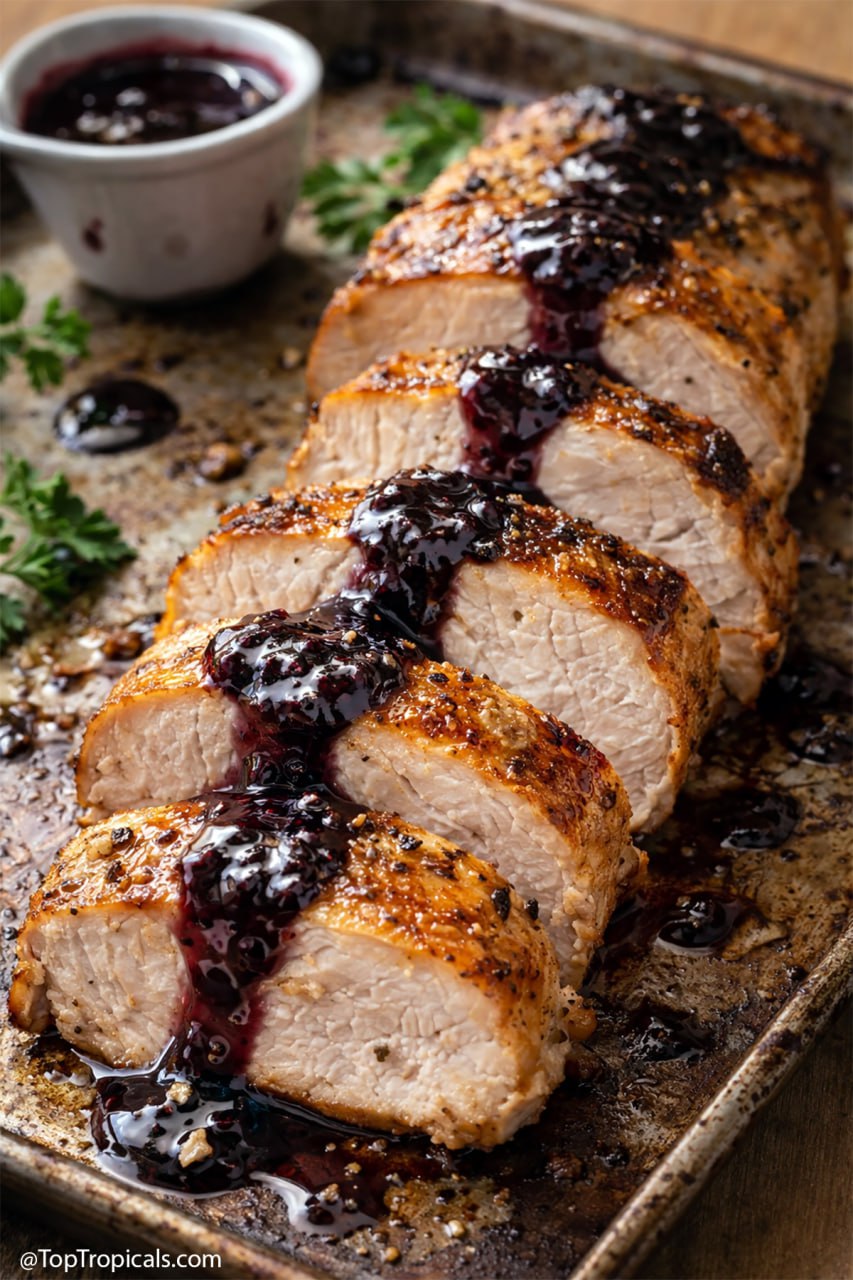
Jaboticaba reduction sauce
Jaboticaba reduction sauce

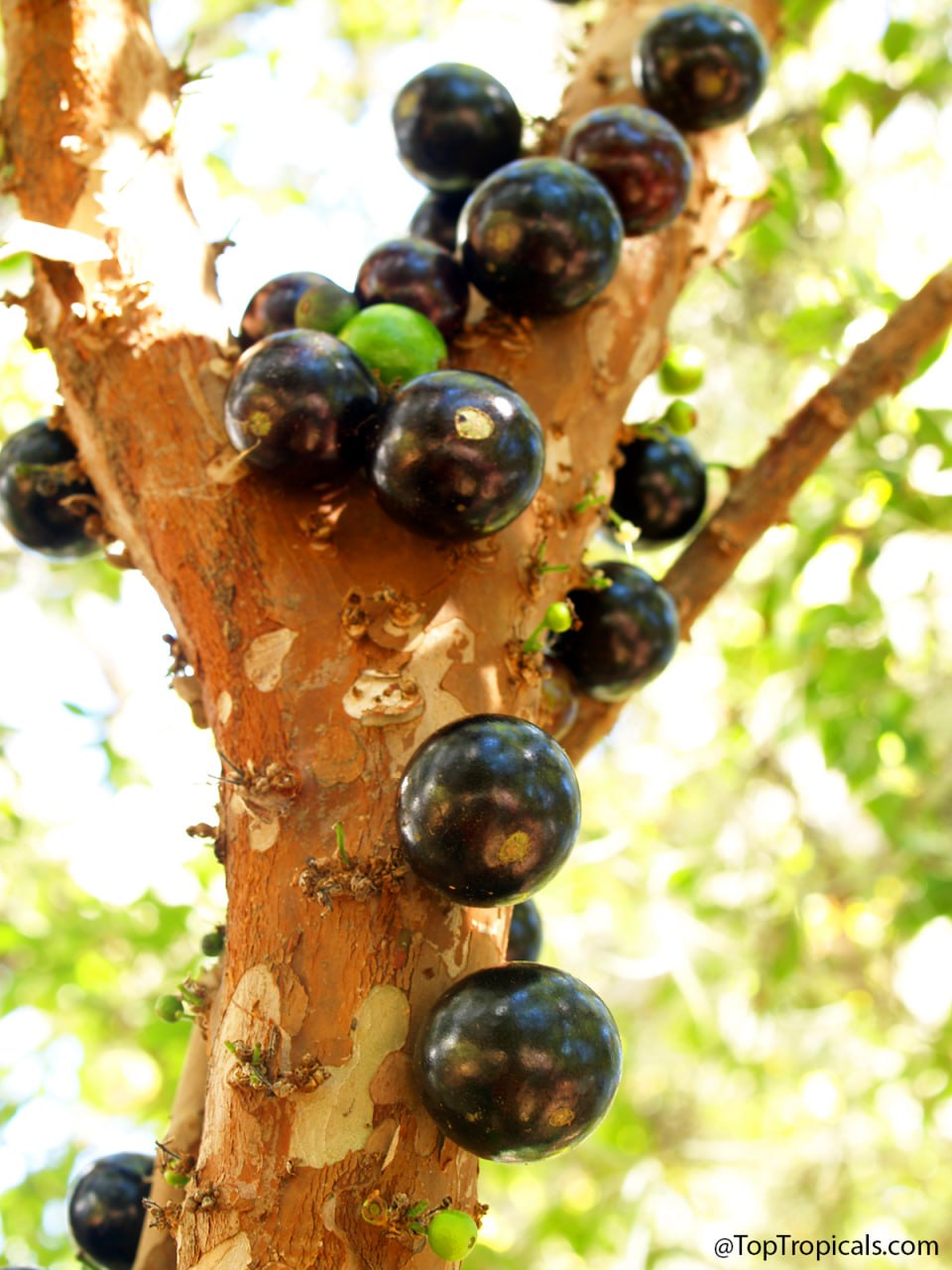
Myrciaria cauliflora - Jaboticaba fruit

Myrciaria cauliflora - Jaboticaba fruit

🍴 Jaboticaba reduction sauce: quick-n-fun exotic recipes

Jaboticaba Reduction Sauce

Ingredients

  • 1 cup ripe jaboticaba fruit
  • 1 tablespoon sugar
  • 1 tablespoon water

Instructions

  1. Crush the jaboticaba fruit in a small saucepan.
  2. Add sugar and a little water.
  3. Simmer gently until the mixture thickens and becomes glossy.
  4. Strain the sauce to remove skins.
  5. Drizzle over roasted pork, chicken, or grilled vegetables.


🌿 About the plant:


A Brazilian tree that fruits directly on the trunk. The grape-like fruit has a thick skin and juicy pulp inside.

🏡 In the garden:


Grows well in warm, humid climates. Slow growing but very ornamental. Can be grown in large pots when young.

🛒 Plant Jaboticaba tree now, don't wait - it's slow growing!

📚 Learn more:

Plant Facts

Myrciaria cauliflora, Plinia cauliflora, Eugenia cauliflora
Jaboticaba, Duhat
USDA Zone: 9-11
Plant used for bonsaiSmall tree 10-20 ftFull sunKeep soil moistEdible plantSubtropical plant. Mature plant cold hardy at least to 30s F for a short timeFlood tolerant plant


#Food_Forest #Recipes

🟢 Join 👉 TopTropicals
Date: 27 Feb 2026

Grilled star fruit slices: quick-n-fun exotic recipes

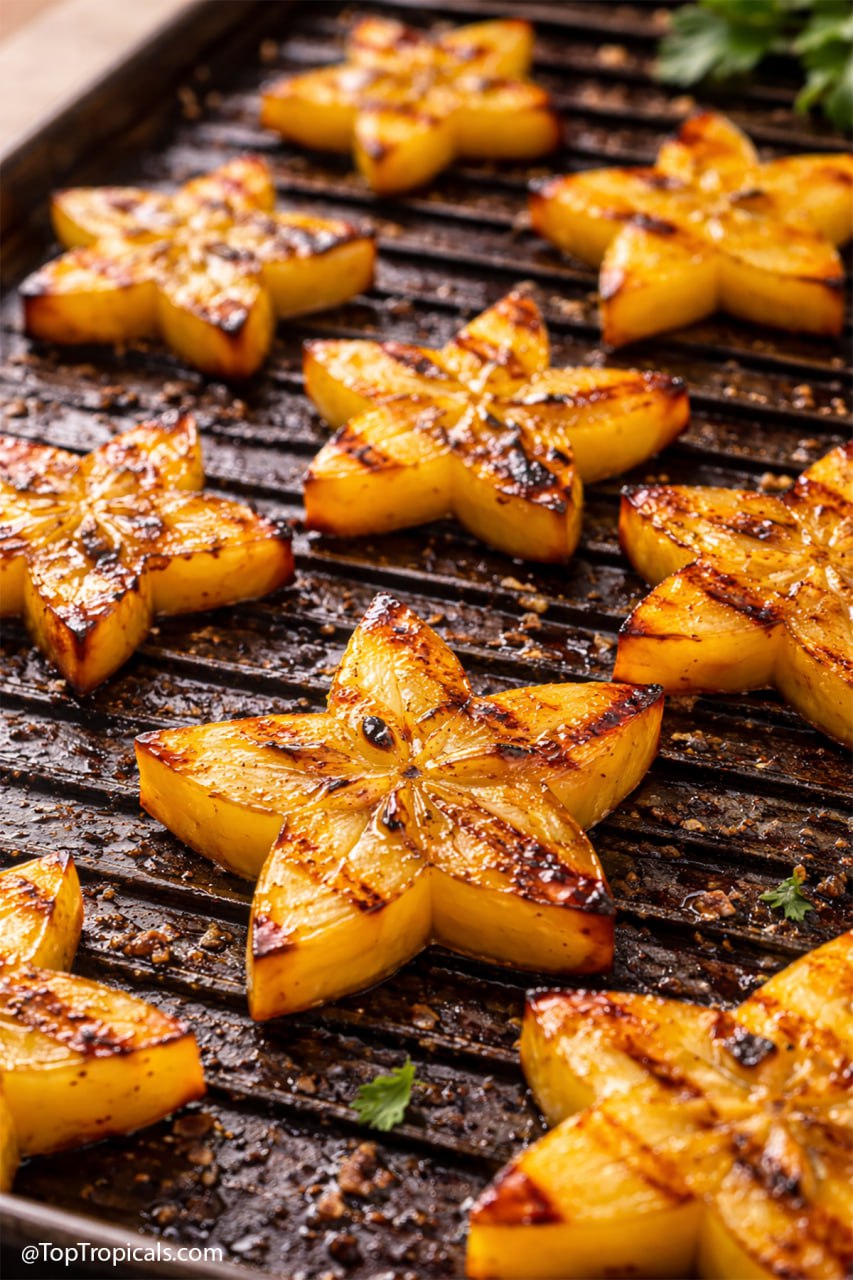
Grilled star fruit slices on grill pan

Grilled star fruit slices on grill pan

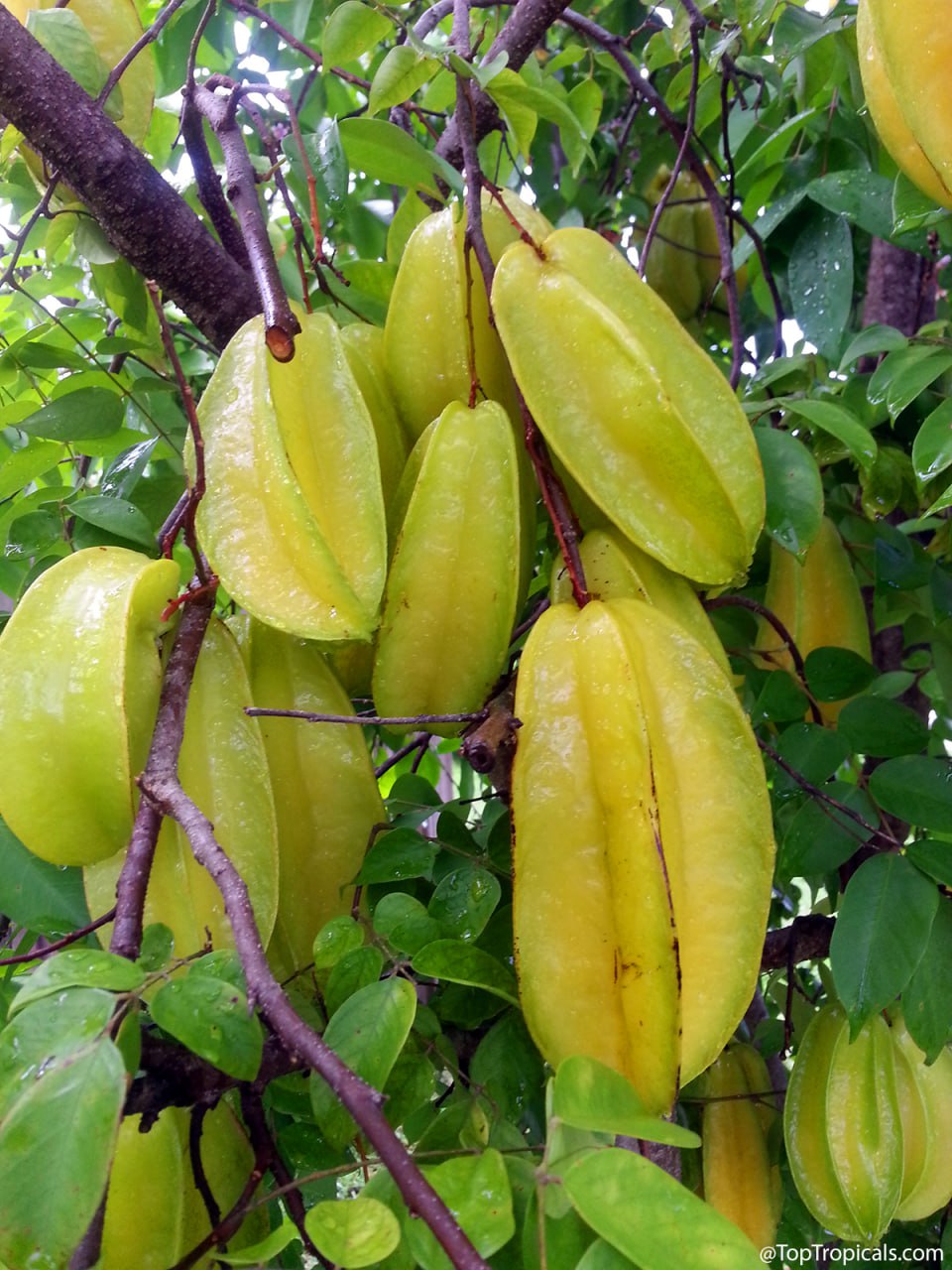
Averrhoa carambola - Star Fruit Carambola Tree

Averrhoa carambola - Star Fruit Carambola Tree

🍴 Grilled star fruit slices: quick-n-fun exotic recipes


Grilled Star Fruit Slices

Ingredients

  • 1 ripe star fruit (carambola)
  • 1 teaspoon honey
  • 1 teaspoon butter or coconut oil

Instructions

  1. Slice the star fruit crosswise into star-shaped pieces.
  2. Heat a grill pan or skillet and lightly grease with butter or coconut oil.
  3. Place the slices on the hot surface and grill briefly on each side.
  4. Drizzle lightly with honey as the edges begin to caramelize.
  5. Serve warm as a tropical side dish or dessert topping.


🌿 About the plant:


Carambola, or Star Fruit, is a small tropical tree with glossy leaves and crisp, juicy fruit that slices into perfect stars.

🏡 In the garden:


Thrives in zones 9-11. Likes sun, regular water, and protection from strong winds. Dwarf varieties do well in large containers.

🛒 Plant Star Fruit Carambola Tree

📚 Learn more:

Plant Facts

Averrhoa carambola
Carambola, Starfruit, Five-finger, Balimbing
USDA Zone: 9-11
Small tree 10-20 ftSemi-shadeFull sunRegular waterEdible plantSubtropical plant. Mature plant cold hardy at least to 30s F for a short time

#Food_Forest #Recipes

🟢 Join 👉 TopTropicals
Date: 23 Feb 2026

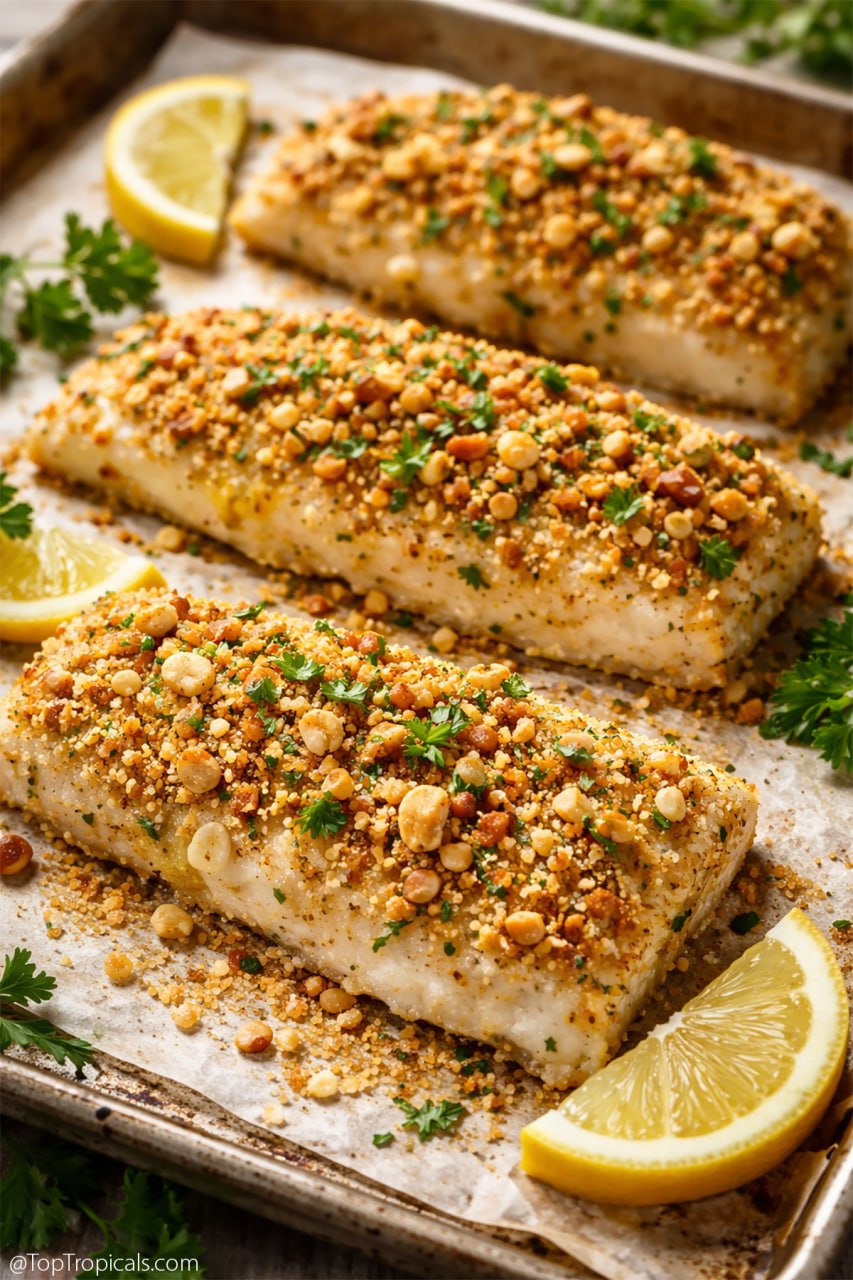
Macadamia nut oven crisp

Golden macadamia-crusted fish fillet

Golden macadamia-crusted fish fillet

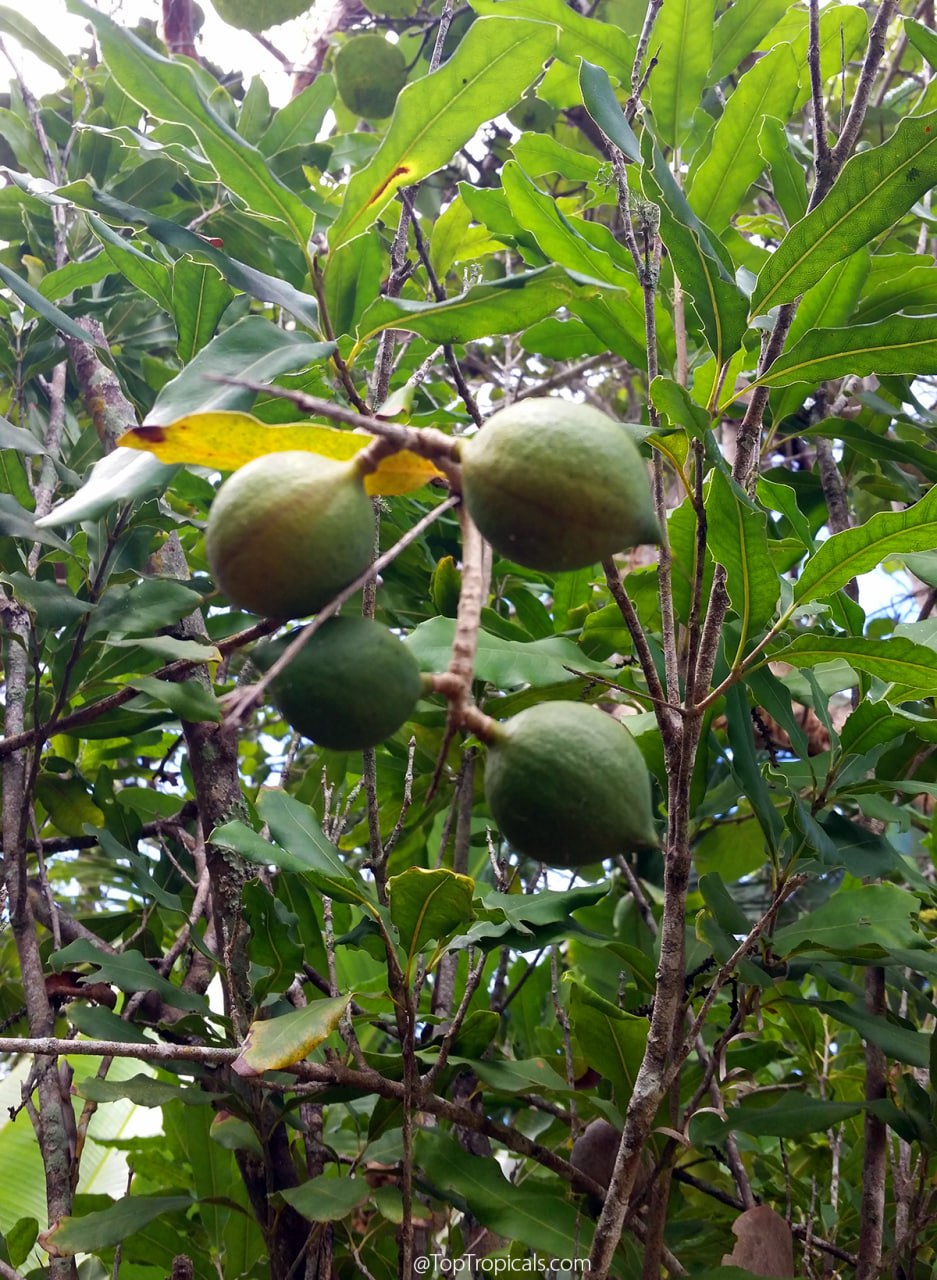
Macadamia integrifolia - Macadamia nuts and leaves on a tree

Macadamia integrifolia - Macadamia nuts and leaves on a tree

🍴 Macadamia nut oven crisp: quick-n-fun exotic recipes

Macadamia Nut Oven Crisp

Ingredients

  • 1 fish fillet (cod, tilapia, or snapper)
  • 1/3 cup crushed macadamia nuts
  • 1 teaspoon Dijon mustard
  • 1 teaspoon olive oil
  • Salt and pepper to taste

Instructions

  1. Preheat oven to 375°F.
  2. Spread a thin layer of mustard over the fish fillet.
  3. Press crushed macadamia nuts onto the top of the fillet.
  4. Drizzle lightly with olive oil.
  5. Bake until golden and crisp, about 12–15 minutes.


🌿About the plant:
Macadamia is an Australian rainforest tree that gives us one of the richest, creamiest nuts on earth. The shell is famously hard - you really earn that buttery crunch.

🏡 In the garden:


Best in warm climates, zones 9-11, cold hardy to light freeze. Needs full sun, good drainage, and patience - seedlings can take several years to start producing (grafted or air-layered trees start flowering right away). Once established, they are long-lived and productive.

🛒 Plant a hardy Macadamia tree to always have your nuts

📚 Learn more:

Plant Facts

Macadamia sp.
Macadamia nut
USDA Zone: 9-11
Large tree taller than 20 ftSmall tree 10-20 ftFull sunRegular waterYellow, orange flowersWhite, off-white flowersPink flowersEdible plantSubtropical plant. Mature plant cold hardy at least to 30s F for a short timeFlood tolerant plant

🎥 Growing Macadamia trees

#Food_Forest #Recipes

🟢 Join 👉 TopTropicals

Date: 19 Feb 2026

10 ways to enjoy Wild Medlar - Spanish Tamarind

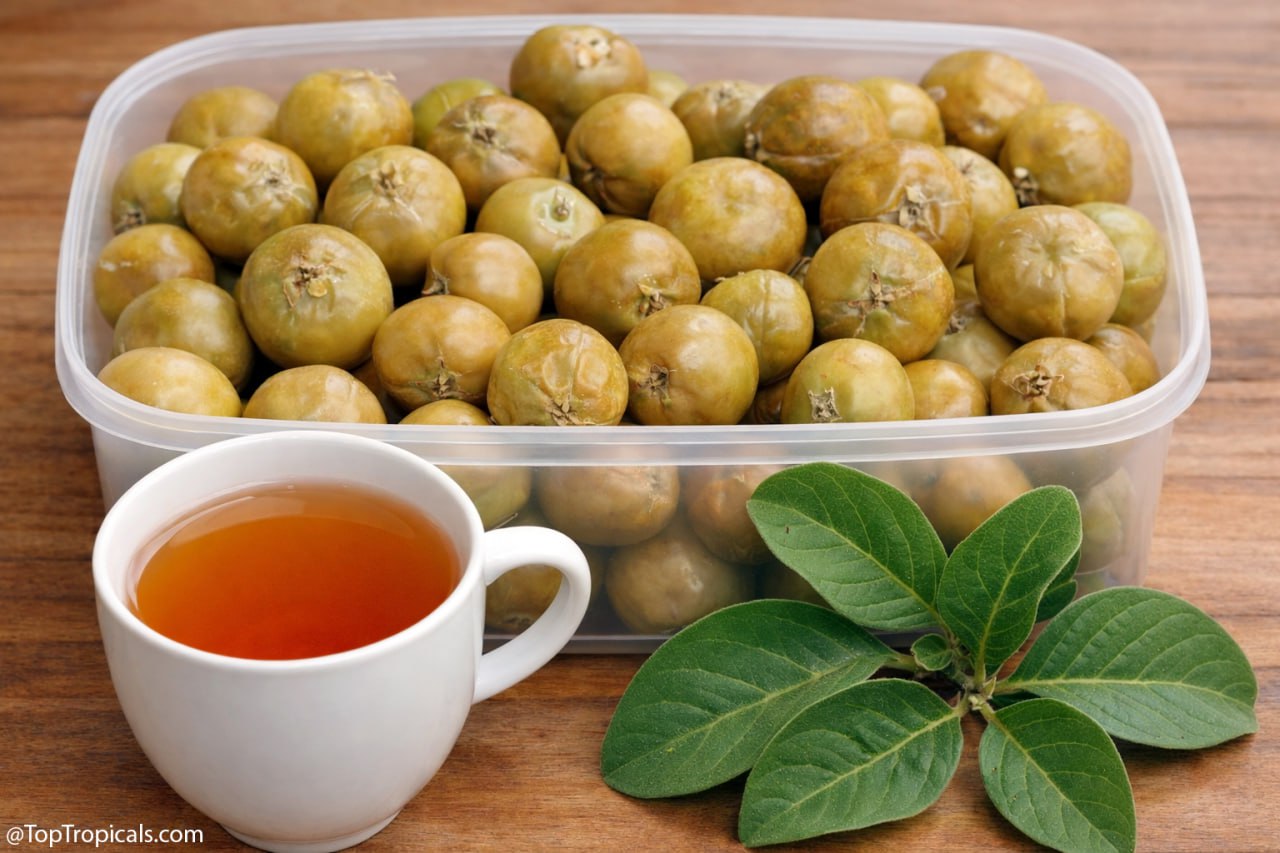
Vangueria infausta (Spanish Tamarind, Wild Medlar)

Vangueria infausta (Spanish Tamarind, Wild Medlar)

🍊 10 ways to enjoy Wild Medlar - Spanish Tamarind


Vangueria infausta (Spanish Tamarind, Wild Medlar) from Africa to your backyard: the fruit, the medicine, the tradition.

Spanish Tamarind may look like a small, unassuming fruit - but don’t let it fool you. In its native Africa, this tree is a food staple, a home remedy, and a cultural favorite, all wrapped into one. And now, it’s ready to bring that same magic into your garden and kitchen. People have used this fruit for generations - and how you can too.

🍊 1. Eat it fresh, off the tree


When ripe, the fruit turns golden brown and softens slightly. Its flavor is sweet-tart, almost like a tangy apple or tamarind with a hint of citrus. Just peel and eat!

🍬 2. Dry it for snacks


In many African regions, the fruit is sun-dried and enjoyed like natural fruit leather. It keeps well, travels well, and makes a great healthy snack.

🍵 3. Brew it into a fruit tea


Dried fruit can be steeped into a tart, refreshing tea that’s packed with vitamin C and antioxidants. Add honey or ginger for a soothing drink.

🍷 4. Ferment it into traditional beer or wine


In some local cultures, the fruit is fermented into a mild alcoholic drink, similar to fruit wine or beer. This is one of the tree’s oldest known traditional uses.

🍧 5. Make jams and preserves


Boil the pulp with sugar and lemon juice to make tangy medlar jam. Spread it on toast, stir into yogurt, or use it in baking.

6. Add to porridge or smoothies


Crushed or juiced medlar fruit is added to traditional maize porridge for a nutrient boost. You can do the same with oatmeal or smoothies.

7. Try traditional fruit pudding


A simple medlar mash with a little sweetener makes a rich, apple-like pudding with hints of spice. Great as a chilled dessert.

🌿 8. Use the leaves and bark medicinally


In folk medicine, leaves are brewed into a tea for treating fever, colds, and stomach aches. Bark is used for chest congestion and coughs. Roots are sometimes used for even stronger remedies like malaria treatment.

9. Clean your teeth the traditional way


Believe it or not, people use medlar leaves to clean their teeth! The leaves are antimicrobial and have a slight astringent taste that leaves your mouth feeling fresh.

🎨 10. Dye fabric naturally
Crush the bark or boil the leaves to create natural dyes in yellow, green, and even purple tones. This use is still practiced in rural areas of southern Africa.

✍️ Why this tree belongs in your life


Wild Medlar is more than just a fruit. It’s a versatile, resilient, and deeply cultural plant that connects generations. It’s food, it’s healing, it’s art—and now it can be part of your garden story.
Grow it for the fruit, the medicine, the tradition… or just for the joy of growing something wild and wonderful.

🛒 Plant Spanish Tamarind and enjoy exotic fruit benefits

📚 Learn more:

Plant Facts

Vangueria infausta
Wild Medlar, Spanish Tamarind
USDA Zone: 9-11
Small tree 10-20 ftFull sunModerate waterEdible plantDeciduous plantEthnomedical plant.
Plants marked as ethnomedical and/or described as medicinal, are not offered as medicine but rather as ornamentals or plant collectibles.
Ethnomedical statements / products have not been evaluated by the FDA and are not intended to diagnose, treat, cure, or prevent any disease. We urge all customers to consult a physician before using any supplements, herbals or medicines advertised here or elsewhere.Subtropical plant. Mature plant cold hardy at least to 30s F for a short time

#Food_Forest #Remedies #Recipes #Discover

🟢 Join 👉 TopTropicals

Date: 15 Feb 2026

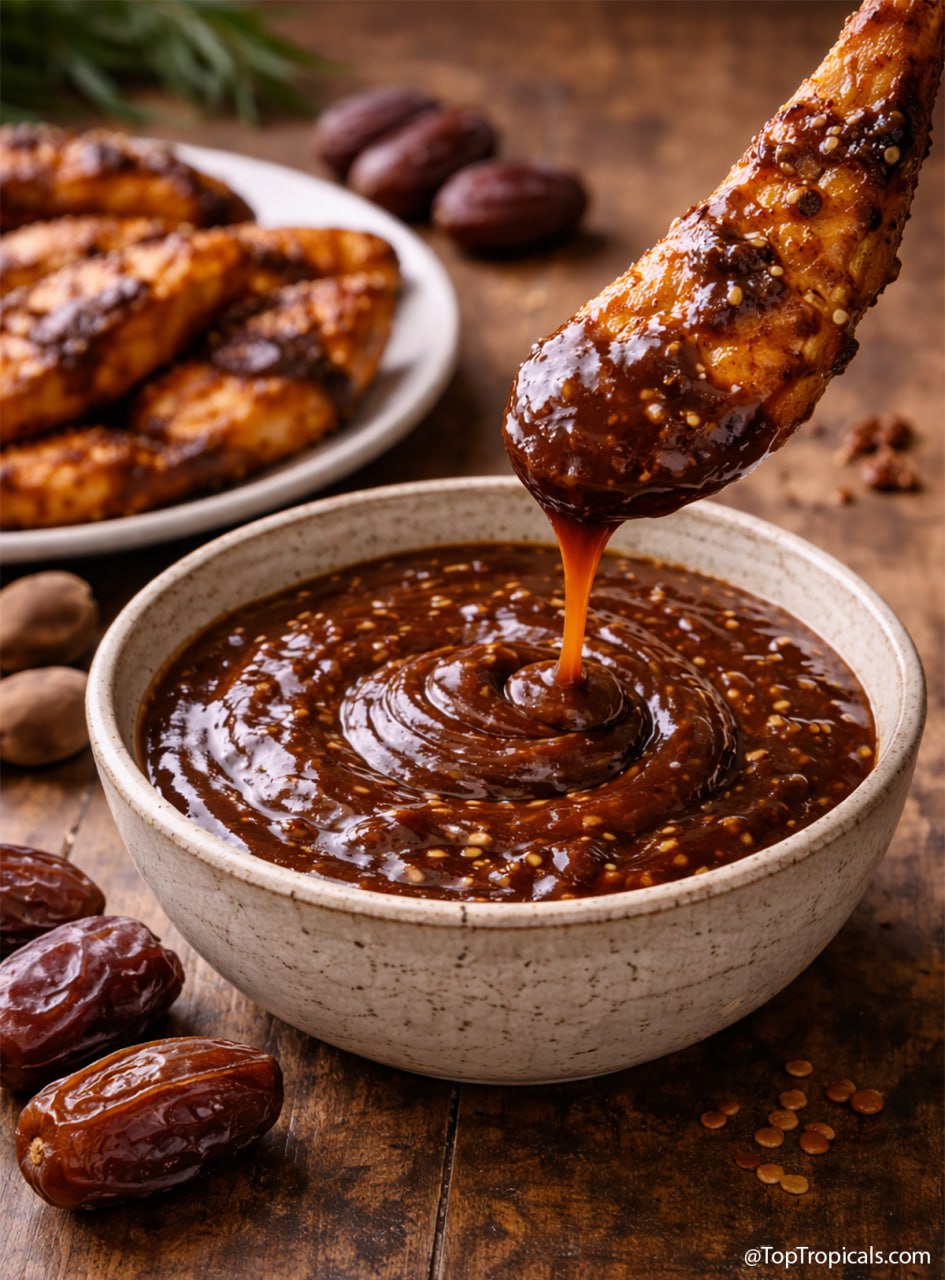
Tamarind date dipping sauce, quick-n-fun exotic recipes

Tamarind date dipping sauce

Tamarind date dipping sauce

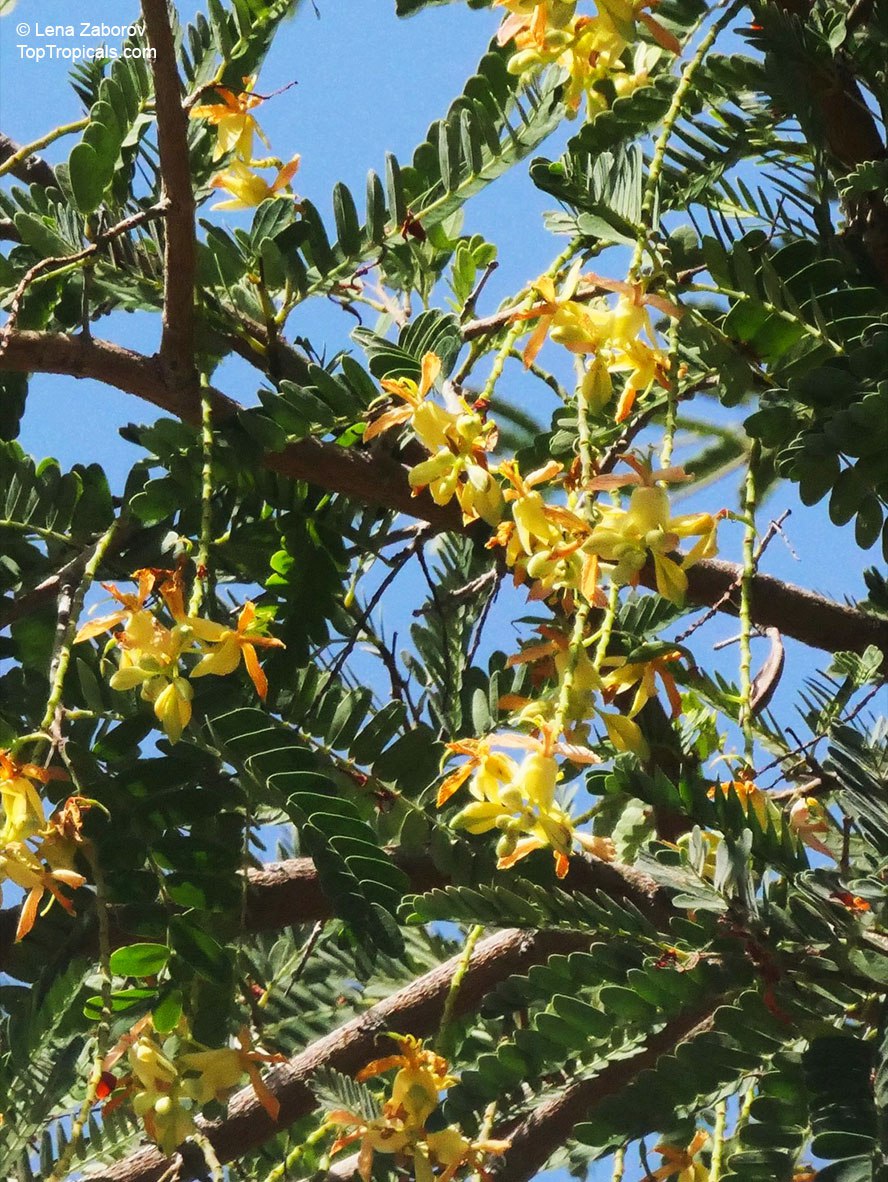
Tamarind - Tamarindus indica - flowers

Tamarind - Tamarindus indica - flowers

🍴 Tamarind date dipping sauce: quick-n-fun exotic recipes


Tamarind Date Dipping Sauce

Ingredients

  • 3 soft dates
  • 1 tablespoon tamarind pulp
  • 1 pinch salt
  • 2–3 tablespoons warm water

Instructions

  1. Soak the dates briefly in warm water if they are firm.
  2. Add the dates, tamarind pulp, and salt to a blender.
  3. Blend until smooth.
  4. Add warm water gradually until the sauce reaches dipping consistency.
  5. Serve with snacks, roasted vegetables, or grilled foods.


🌿 About the plant:


When combined with dates, tamarind transforms into a sweet-sour chutney common in Indian street food.

🏡 In the garden:


Tamarind (Tamarindus indica) flowering occurs in warm months with small yellowish blooms. Pollination leads to the familiar curved pods.

🛒 Add Tamarind tree to your garden

📚 Learn more:

Plant Facts

Tamarindus indica
Tamarind, Sampalok
USDA Zone: 9-11
Large tree taller than 20 ftFull sunModerate waterEdible plantSubtropical plant. Mature plant cold hardy at least to 30s F for a short timeFlood tolerant plantSeaside, salt tolerant plant

Tamarindus indica in Plant Encyclopedia

#Food_Forest #Recipes

🟢 Join 👉 TopTropicals