Garden Blog - Top Tropicals

Date: 22 Apr 2026

When Mango Ripens on the Tree, Everything Changes

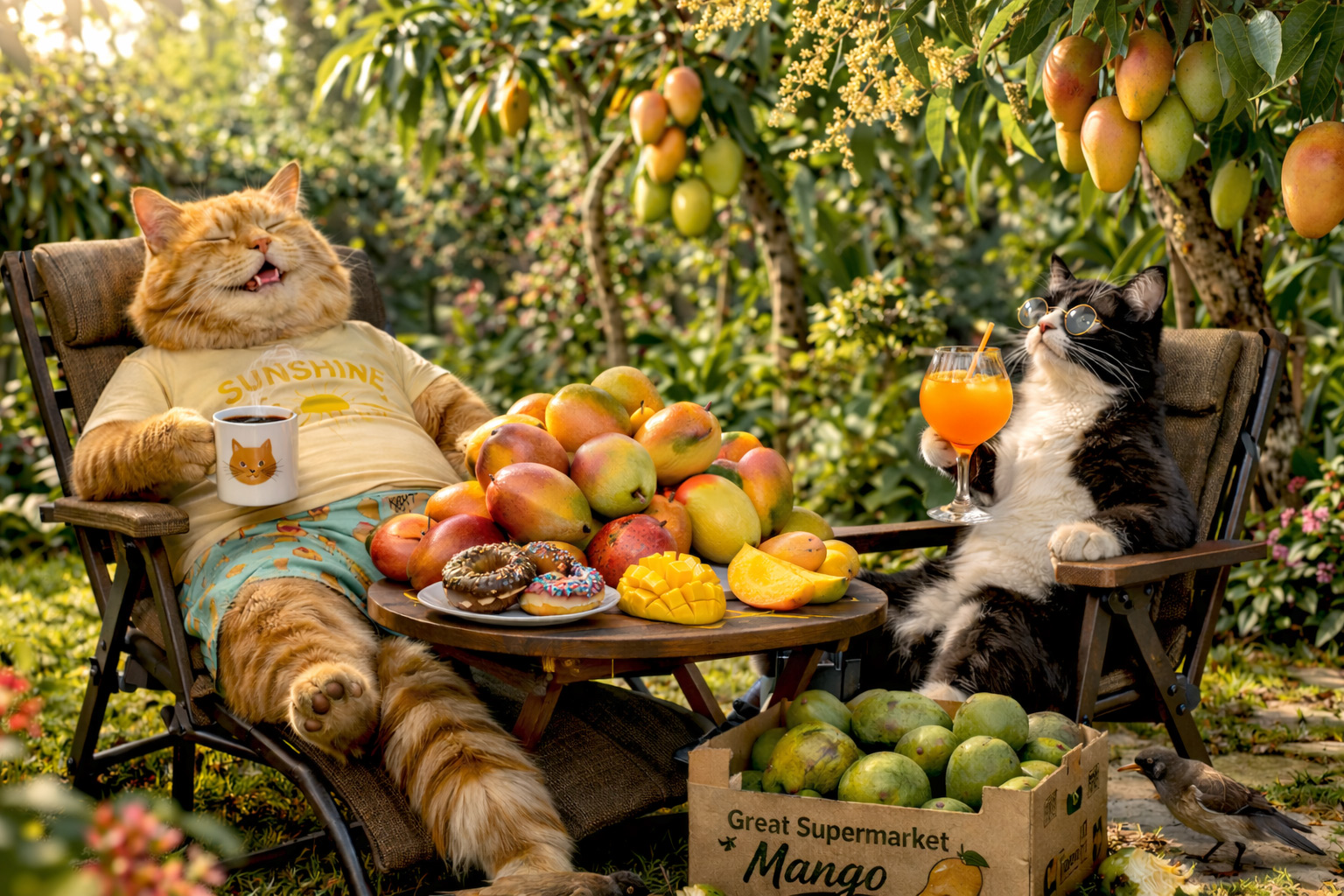
Smokey  and  Sunshine  enjoying  fresh  homegrown  mango  harvest  in  garden
Sunshine: Never understood the passion for Mango. I tried store Mangoes. I really tried. Just disappointment. So this is what real Mango is supposed to taste like?

Smokey: Now you know.

There is a moment when a Mango is perfectly ripe — soft to the touch, warm from the sun, fragrant before you even cut it open. The skin gives way, and suddenly there is color, juice, and a sweetness that feels almost unreal. Not sugary, but deep and layered, like something that took its time to become what it is. In that moment, it feels less like fruit and more like something truly given, exactly as it should be.

Mango Plant Facts

Botanical name: Mangifera indica
Also known as: Mango
USDA Zone: 9 - 11
Highligths Large tree taller than 20 ftSmall tree 10-20 ftFull sunWatering: Moderate. Water when top soil feels dryYellow, orange flowersPink flowersEdible plantSeaside, salt tolerant plant
Get personalized tips for your region

What you find in most supermarkets is something else entirely. Picked early so it can survive shipping, it never gets the chance to finish ripening process. It softens, it turns yellow, but the depth never comes. The flavor stays thin, and the texture often turns fibrous — strings in the flesh that get stuck in your teeth instead of melting away. That fiber is not an accident. It helps the fruit stay firm enough to handle transport without damage. It looks like a Mango, but it never becomes one.

The only way to close that gap is simple — let the fruit ripe where it belongs. On the tree. When you grow your own Mango, you control that moment. You pick it when it is actually ready, not when it has to survive a truck ride across the country. And that one difference is everything you taste.

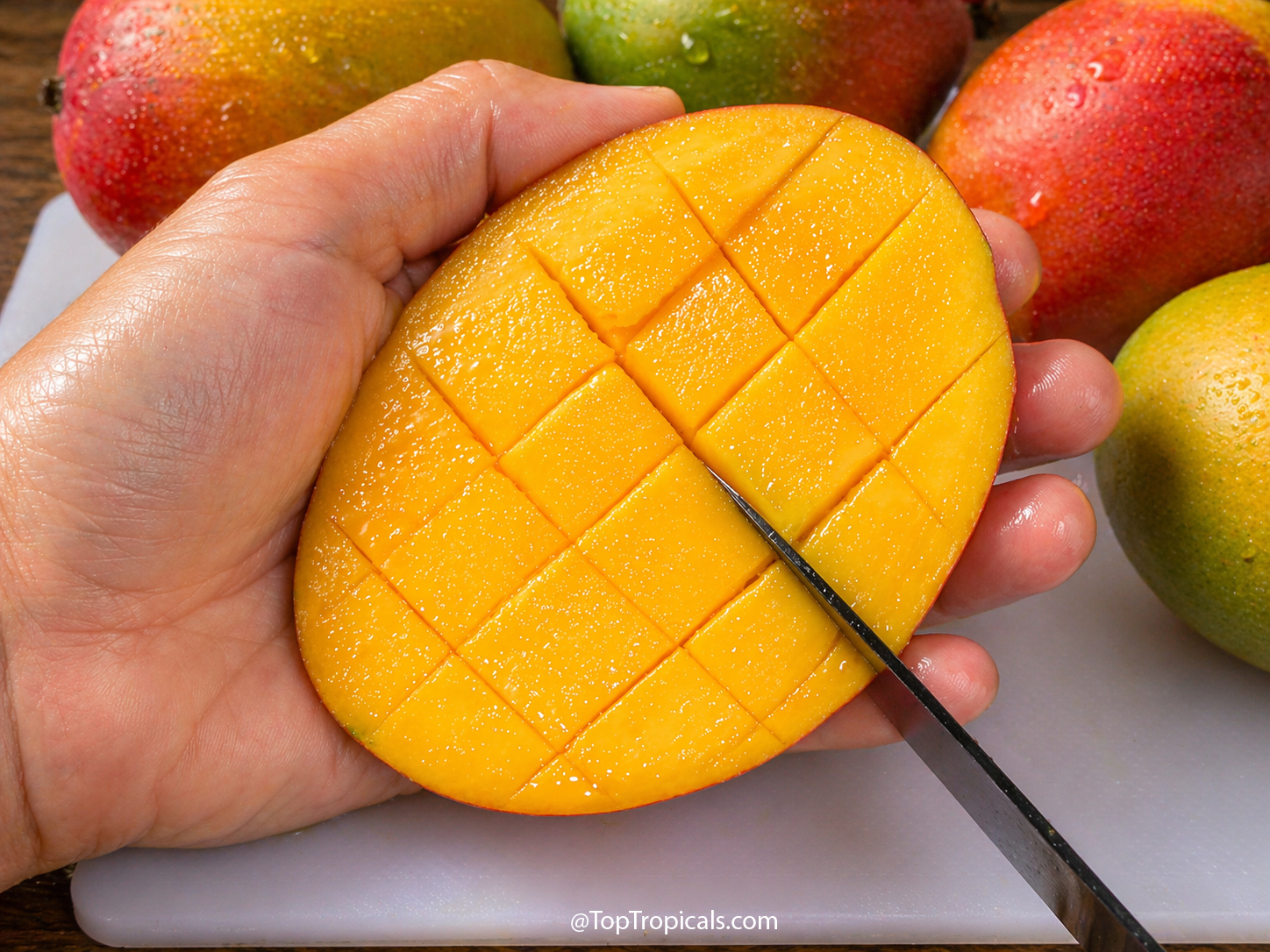
Close-up  of  a  hand  holding  a  mango  cheek  while  scoring  the  bright 
 orange  flesh  into  a  grid  pattern  with  a  knife,  with  whole  mangoes  in  the 
 background.

Scoring a Mango cheek into cubes - the easiest way to prepare clean, ready-to-eat pieces.

📚 Learn more about Mango varieties

🛒 Shop Mango Trees

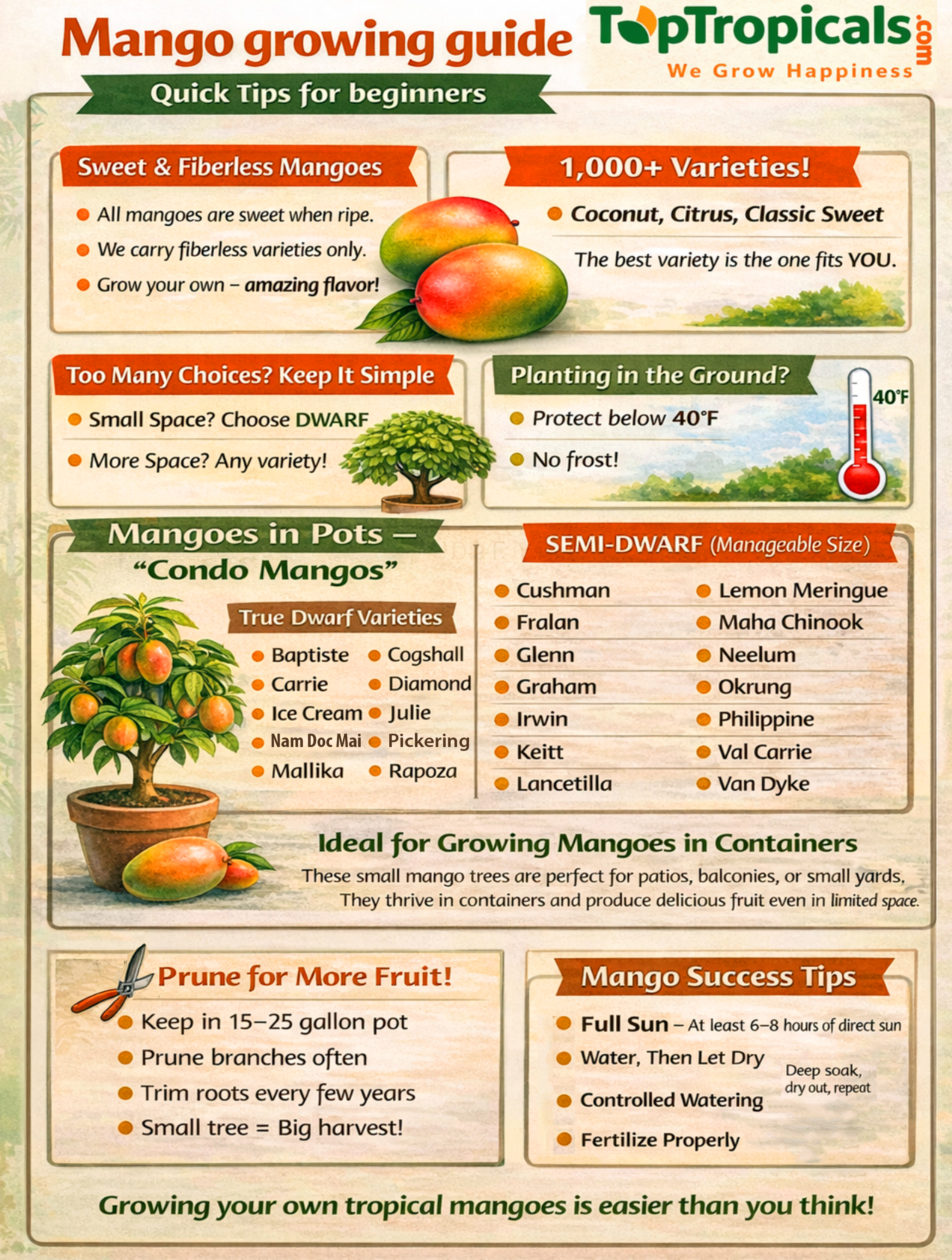
Educational  infographic  titled  mango  growing  guide  showing  beginner 
 tips  for  growing  mango  trees,  including  sweet  fiberless  varieties,  dwarf  and
   semi-dwarf  options  for  containers,  planting  tips,  pruning  advice,  watering,
   sunlight,  and  fertilizing  recommendations,  with  illustrated  mango  trees  and
   fruit.

Quick beginner guide to growing Mango trees - from choosing the right variety to pruning, watering, and container growing tips.

Date: 19 May 2026

The Tree That Looks Photoshopped (But Isnt)

The Tree That Looks Photoshopped (But Isnt) The Tree That Looks Photoshopped (But Isnt)
The Tree That Looks Photoshopped (But Isn't) 🌈

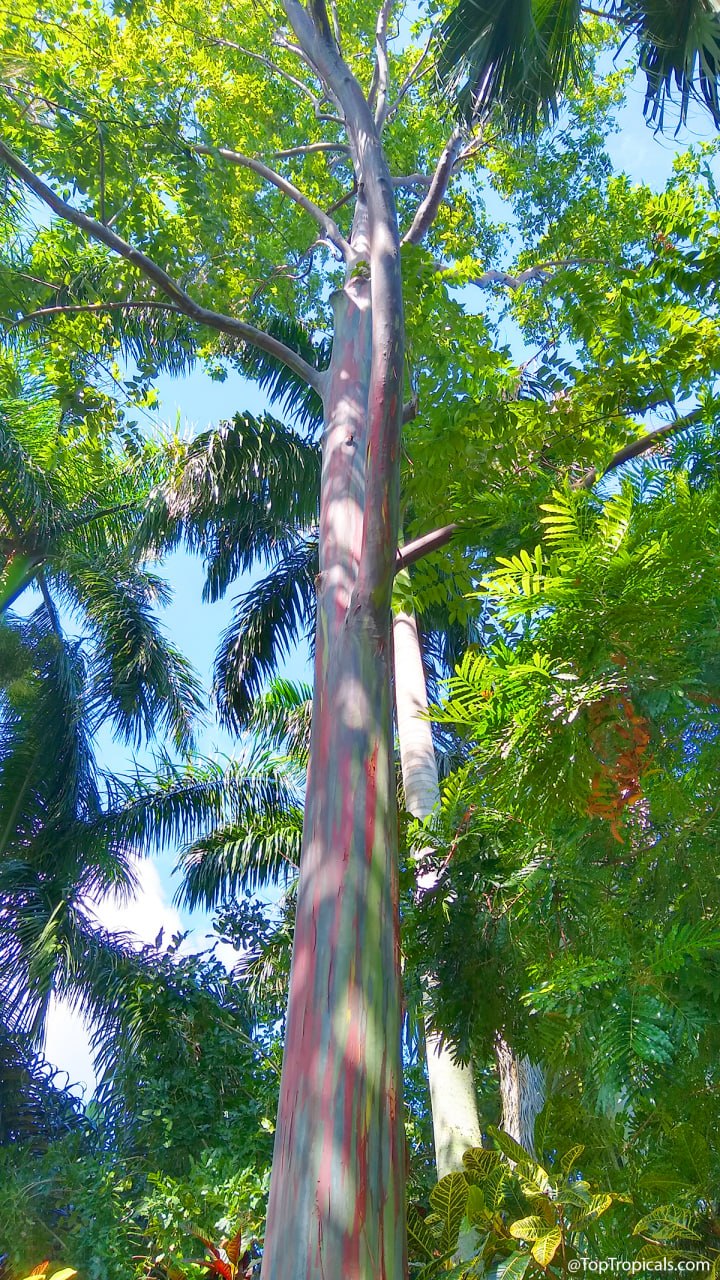
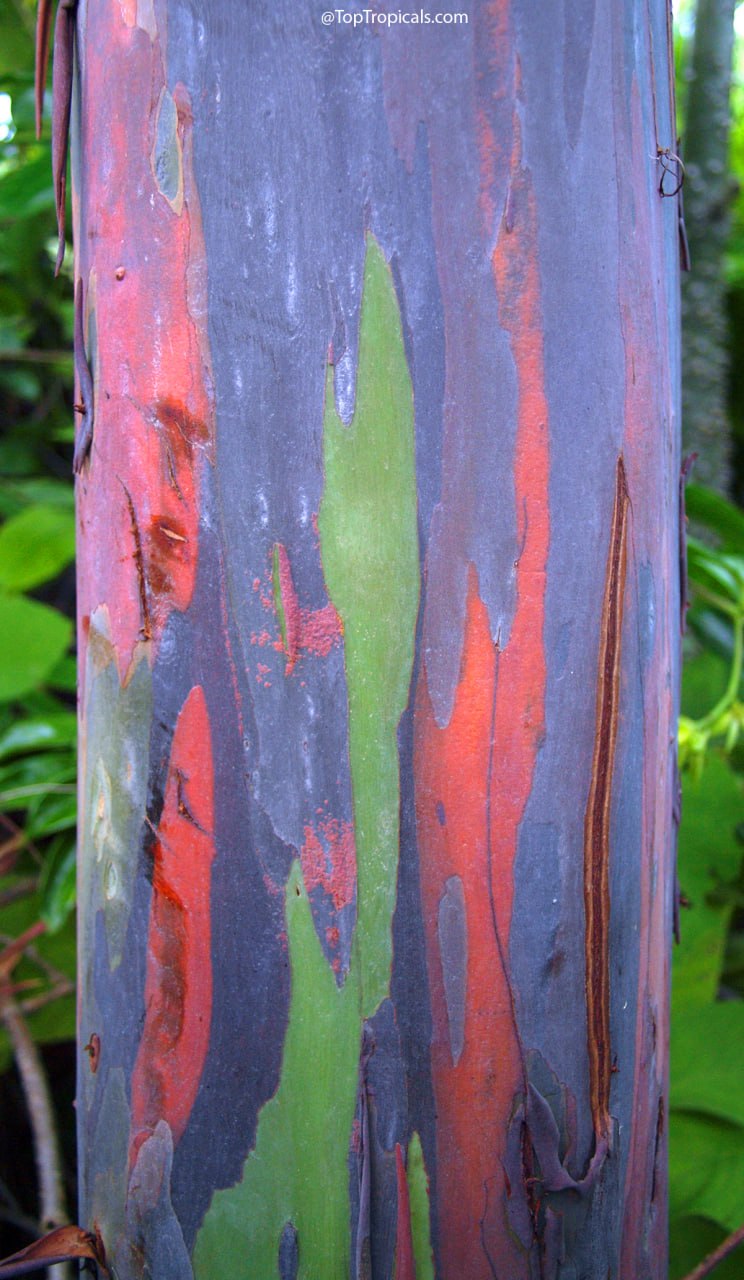
Most people see a photo of the Rainbow Eucalyptus and assume someone went heavy on the saturation filters. The trunk looks like an abstract artist got loose with neon greens, deep blues, purples, and burnt oranges - all on the same tree, all at once. It doesn't look real. But it is. And if you live in the right climate, you can actually grow one.

🎨 The Chemistry Behind the Watercolor Trunk


Eucalyptus deglupta does something no other tree quite pulls off at this scale: it sheds its bark in patches and strips throughout the year. While it seems entirely alien, this multi-colored, peeling bark is actually a family trait shared by many other members of the Myrtaceae (Myrtle) family - including common guava trees.

Rainbow Eucalyptus Plant Facts

Botanical name: Eucalyptus deglupta
Also known as: Rainbow Eucalyptus, Mindanao Gum, Rainbow Gum
USDA Zone: 10 - 11
Highligths Large tree taller than 20 ftFull sunWatering: Moderate. Water when top soil feels dryKeep soil moistRed, crimson, vinous flowersWhite, off-white flowersSpice or herb plantFlood tolerant plant
Get personalized tips for your region


However, the Rainbow Eucalyptus takes this family tradition to an absolute extreme. This constant shedding reveals a living, shifting canvas underneath:
The Fresh Layer: New bark starts out a shocking, vivid green because of the chlorophyll sitting just beneath the surface.
The Shift: As the bark is exposed to air, it oxidizes. Time and oxygen push the colors through a spectrum of blues, purples, and eventually into warm oranges and deep, reddish-browns.
The Living Canvas: Because different sections of the trunk shed at different times, the tree is never just one color. It looks like a living watercolor painting that's still drying.

🎨 A Rainforest Giant That Grows at Breakneck Speed


Native to the humid tropical rainforests of the Philippines, Indonesia, and Papua New Guinea, this isn't your average backyard sapling. In the wild, it can tower at nearly 200 feet tall.
While it stays a bit more manageable in residential landscapes, it remains fast-growing. If you give it full sun, rich soil, and plenty of humidity, a young tree can put on several feet of height per year.
Unlike its drought-tolerant Australian cousins, the Rainbow Eucalyptus loves water and can even handle occasional flooding. As a bonus, its leaves release a pleasant, spicy aroma when crushed, adding a sensory layer to its visual drama.

🎨 The Catch: It Hates the Cold


Before you run out to buy one, there is a major catch. While many eucalyptus species are surprisingly tough against the hard freeze, the Rainbow Eucalyptus is the tropical outlier of the family.

The Safe Zones: It thrives best in USDA Zones 10-11 (like South Florida and Southern California), where winters stay mild.
❄️ The Cold Threat: Hard freezes, frost, and biting cold winds will badly damage or kill it.

Can you grow it in colder climates? Yes, but you'll need a big container and a tall space to move it in. Many gardeners outside the tropics grow them in large pots so they can drag them indoors or into a greenhouse for the winter. It limits their ultimate size, but it keeps the theatrical effect alive.

🎨 Why It's Worth the Hype


If you are lucky enough to live in a climate where it can thrive, the Rainbow Eucalyptus makes the ultimate landscape centerpiece. Because its canopy is tall and airy rather than dense, it won't completely black out the sun for the rest of your garden. Instead, it just stands there looking impossible.

Photos actually undersell it. Standing next to the trunk in person, you find yourself looking for the trick. But there isn't one - just nature showing off.

🛒 Plant the Impossible Rainbow Eucalyptus

📚 Learn more: 


Eucalyptus deglupta - Rainbow Eucalyptus in Plant Encyclopedia

#Trees #Discover #Nature_Wonders #Fun_Facts

🟢 Join 👉 TopTropicals
Date: 3 May 2026

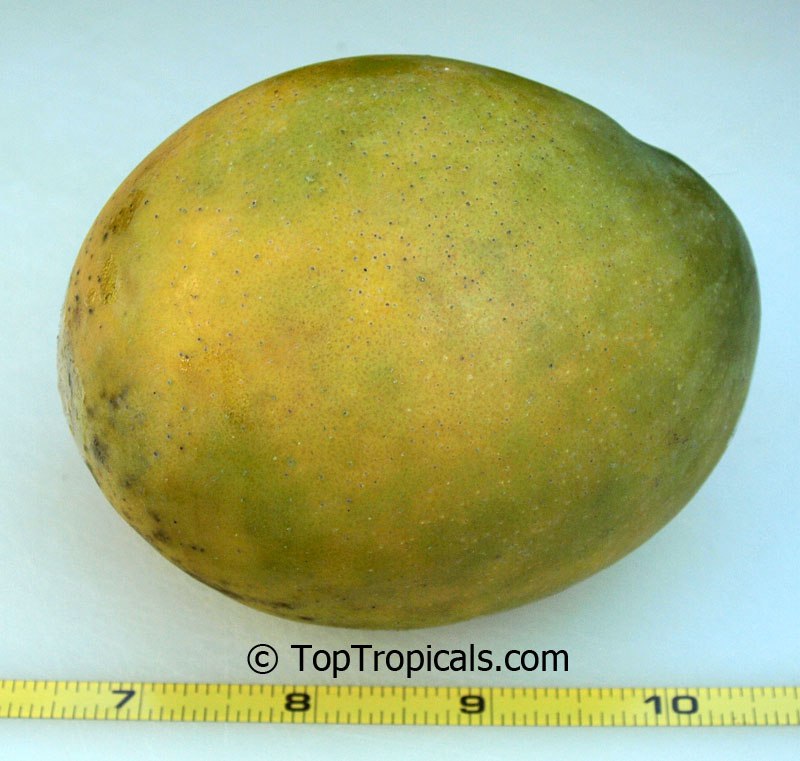
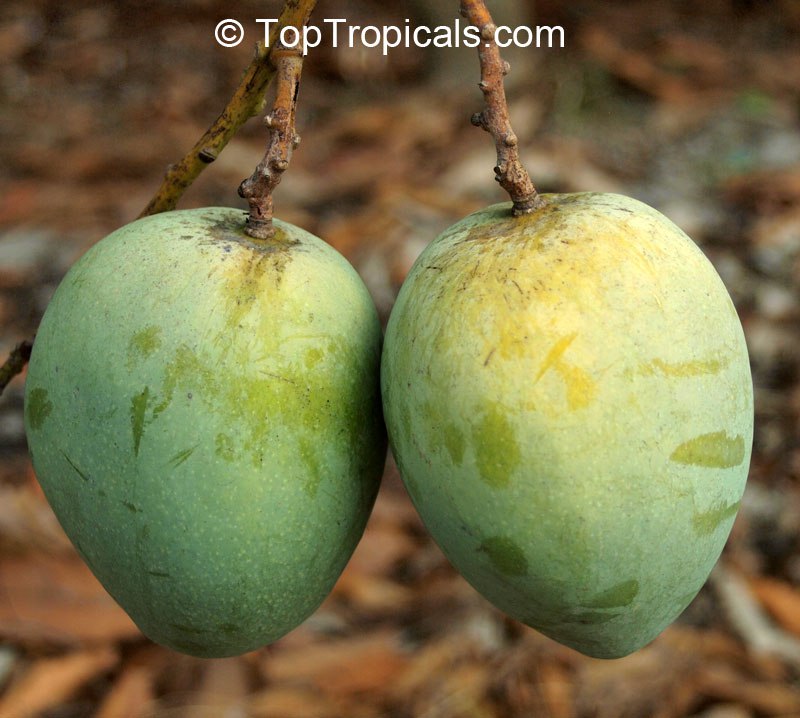
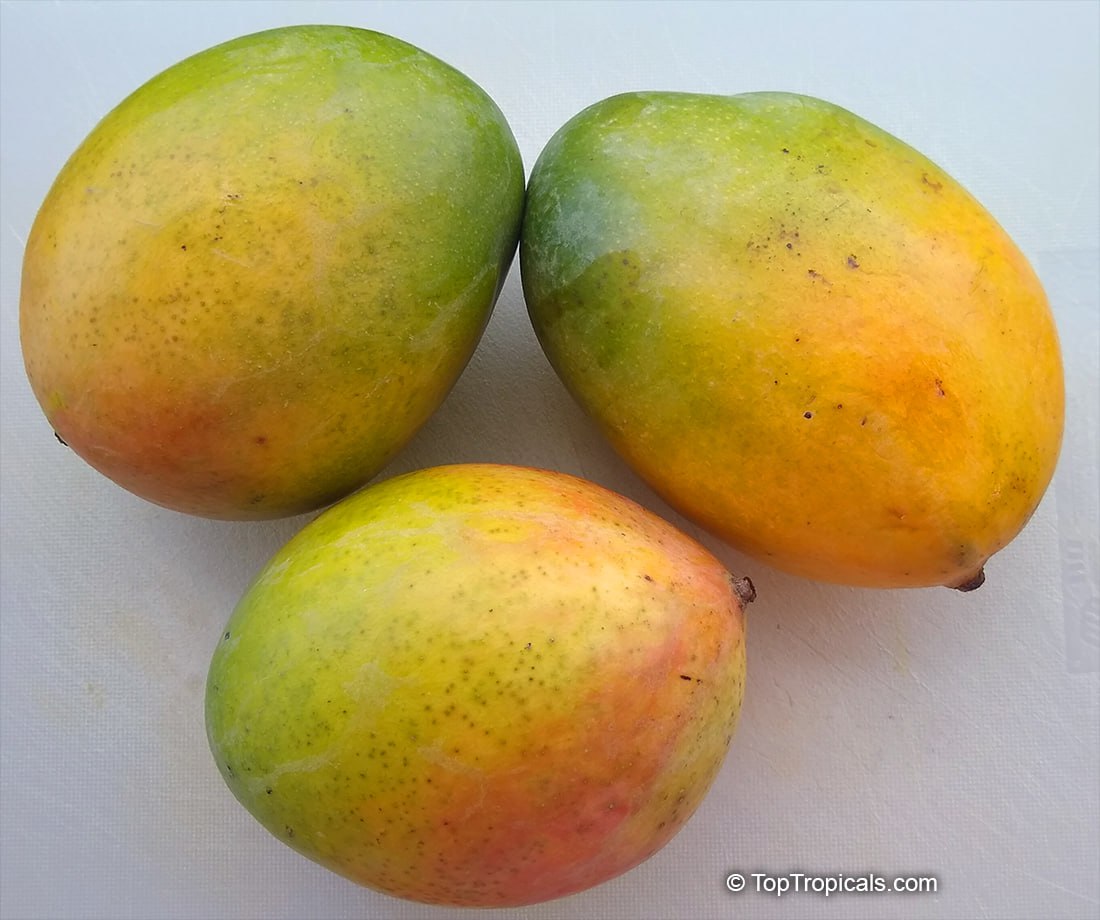
Mango Rainbow: a miniature Angie

Mango Rainbow: a miniature Angie
Mango Rainbow: a miniature Angie 🌈

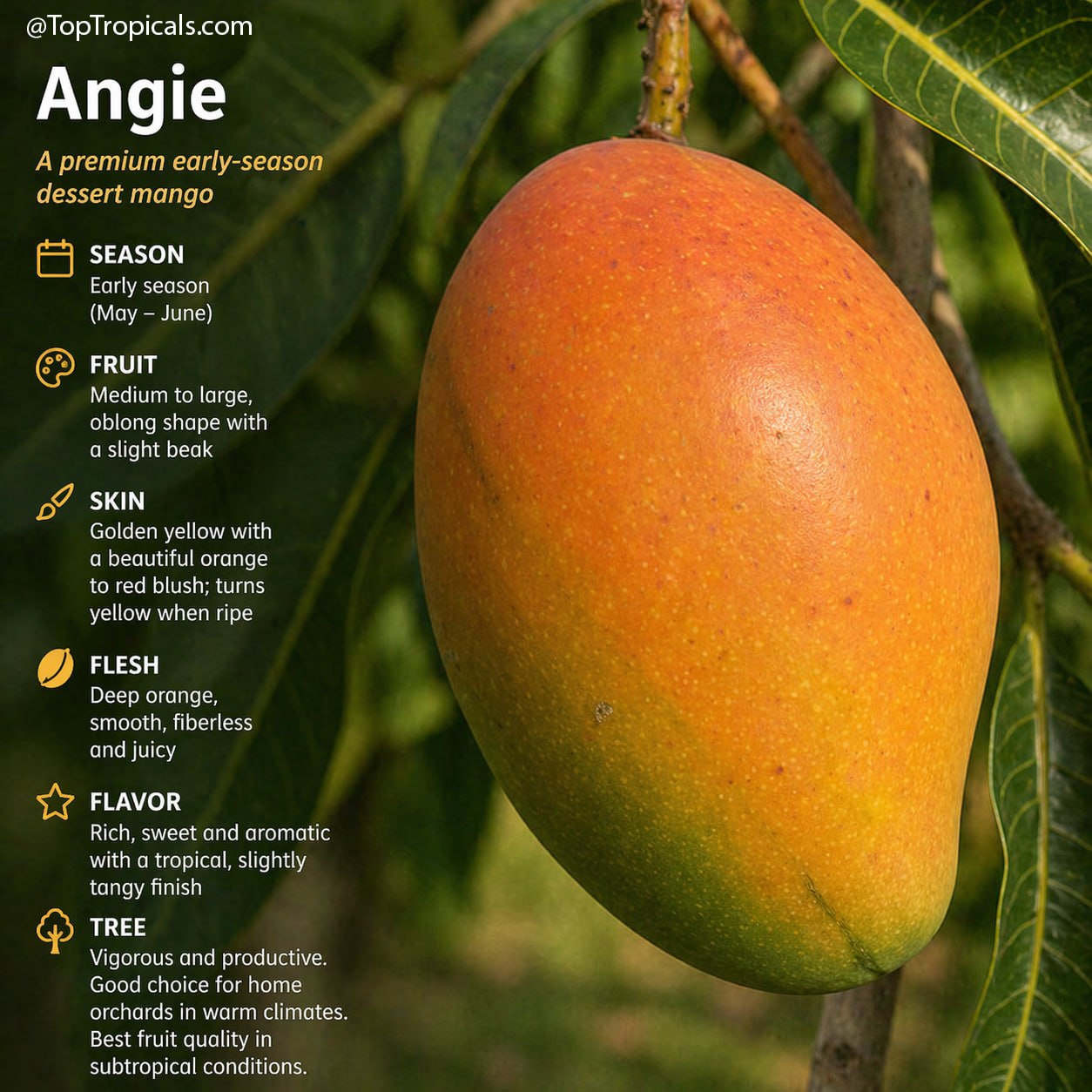
🥭 Angie mango is a South Florida selection named after Angie Whitman, wife of the legendary mango collector Bill Whitman and a trustee of Fairchild Tropical Botanic Garden.

Mango Plant Facts

Botanical name: Mangifera indica
Also known as: Mango
USDA Zone: 9 - 11
Highligths Large tree taller than 20 ftSmall tree 10-20 ftFull sunWatering: Moderate. Water when top soil feels dryYellow, orange flowersPink flowersEdible plantSeaside, salt tolerant plant
Get personalized tips for your region


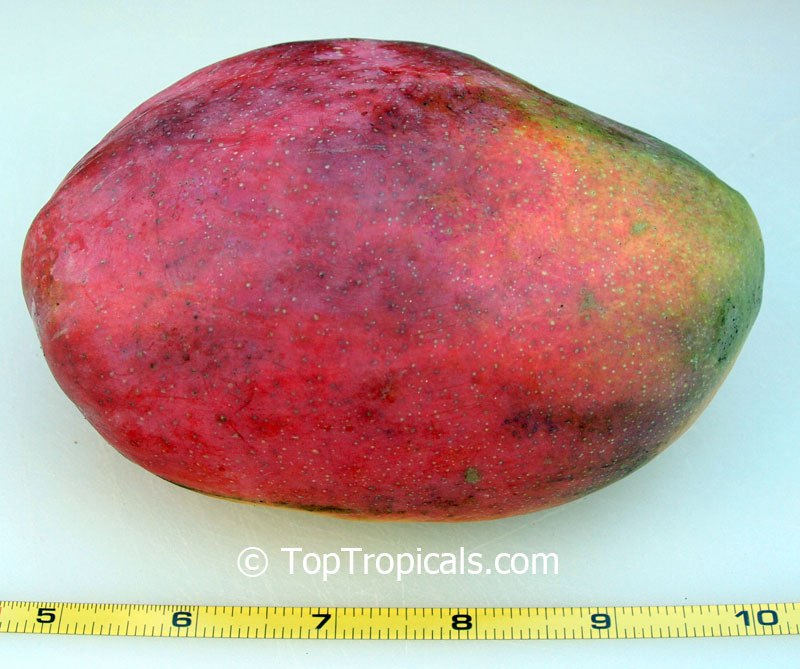
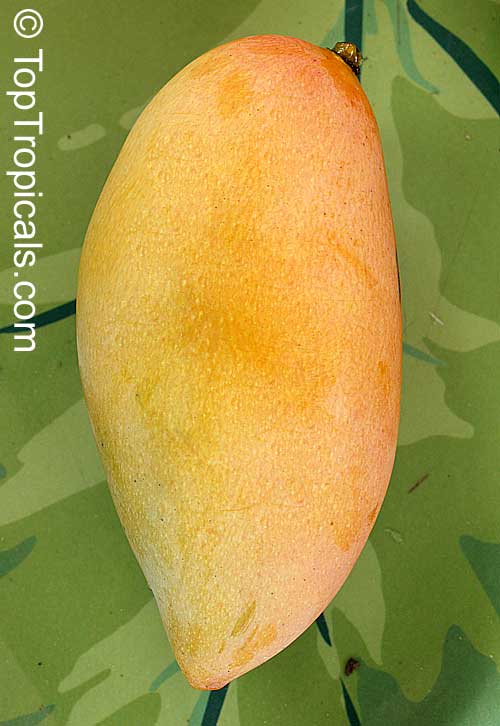
🥭 It is prized for its rich, complex flavor in the Alphonso class, with deep sweetness and layered apricot notes. The fruit is oblong, about 1 lb on average, with smooth yellow to orange skin and an Indian-orange blush on sun-exposed shoulders. The flesh is deep tangerine orange, fiberless, and intensely flavorful.

🥭 Trees are semi-dwarf, good as Condo Mango, highly manageable with pruning, and known for excellent disease resistance. Its early season is another major advantage in South Florida, often allowing fruit to mature before the heavy summer rains. More 👉

🛒 Shop Mango varieties

📚 Learn more:
Mango Tree - Mangifera indica - in Plant Encyclopedia
#Mango_Rainbow - varieties you should try
How big does the Condo Mango grow?
Forget the Tropics: These 5 "Condo Mango" Varieties Thrive in Your Living Room
Mango varieties and Condo Mango
Yes, you can grow a mango tree on your patio - here is how to do it right
Mango Tree for Zone 5: top 15 Condo Mango for growing in cold areas

#Food_Forest #Mango #Mango_Rainbow

🟢 Join 👉 TopTropicals

Date: 25 Mar 2026

Forget the Tropics: These 5 Condo Mango Varieties Thrive in Your Living Room

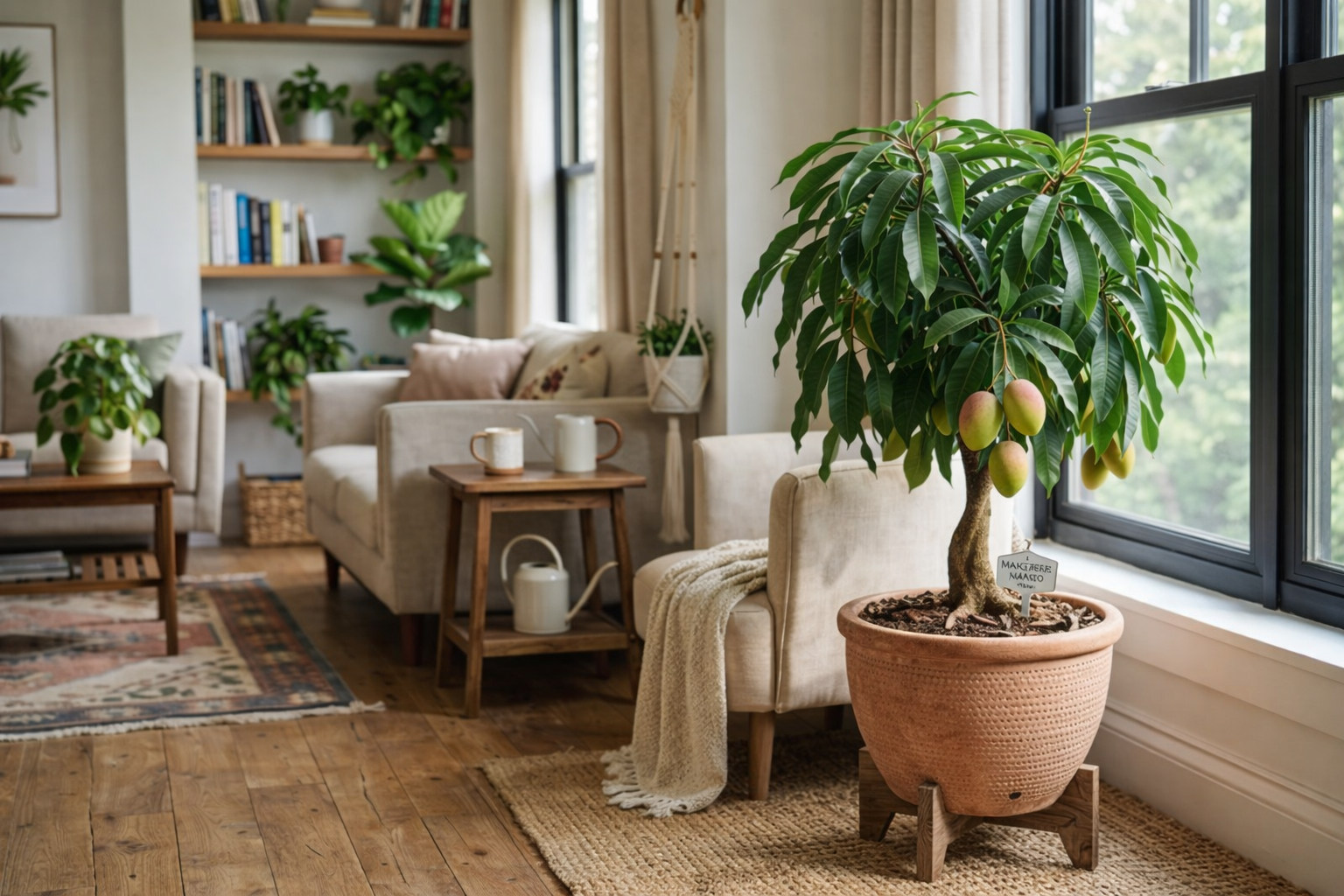
Mngo tree in a pot

Mngo tree in a pot

Forget the Tropics: These 5 "Condo Mango" Varieties Thrive in Your Living Room 🥭

A tropical orchard in your living room? It’s more possible than you think. While wild mango trees can tower at 60 feet, "condo mango" varieties allow you to harvest juicy, sun-ripened fruit right next to your sofa.

Mango Plant Facts

Botanical name: Mangifera indica
Also known as: Mango
USDA Zone: 9 - 11
Highligths Large tree taller than 20 ftSmall tree 10-20 ftFull sunWatering: Moderate. Water when top soil feels dryYellow, orange flowersPink flowersEdible plantSeaside, salt tolerant plant
Get personalized tips for your region

If you have a sunny window and a bit of patience, here is exactly how to grow a potted mango tree indoors.


🌳 Why "Condo Mangoes" are the Secret to Success


Most people fail because they plant a seed from a grocery store mango. Don't do that. Seeds take up to a decade to fruit and grow far too large.

Instead, look for grafted, dwarf varieties. These are bred to:
•  Stay compact (6–10 feet).
•  Fruit within 1–3 years.
•  Thrive in the limited root space of a container.

🌳 The 5 Best Mango Varieties for Indoor Pots


Choosing the right cultivar is 90% of the battle. These five are the gold standard for indoor growers:

•  Pickering: The #1 choice for pots; naturally tiny. Rich, fiberless, and coconut-heavy.
•  Cogshall: Slow-growing and easy to prune. Classic, ultra-sweet tropical taste.
•  Ice Cream: Extremely compact; thrives in small spaces. Creamy texture, like mango sorbet.
•  Carrie: High disease resistance; very productive. intense, spicy-sweet aroma.
•  Mallika: A semi-dwarf Indian favorite. Exceptional, honey-like sweetness.

👉 See full list of Condo Mango

🌳 4 Essentials for Indoor Mango Care


1. Light: The "Make or Break" Factor

Mangoes are sun-worshippers. They need at least 8 hours of direct light daily.

The Pro Move: Place your tree in a south-facing window. If you live in a cloudy climate, a high-quality LED grow light isn't optional - it’s a necessity to prevent leaf drop and encourage flowering.

2. Strategic Watering

Mango trees hate "wet feet." Use a fast-draining potting mix and a pot with large drainage holes.

The Rule: Let the top 2 inches of soil dry completely before watering deeply.

3. Temperature & Humidity


Keep your room between 65F and 90F. If you are comfortable, the tree is likely comfortable. Avoid placing it near drafty AC vents or heaters that sap humidity.

4. The "Bee" Factor (Pollination)

Indoors, you lack wind and insects. When your tree flowers, gently shake the branches or use a small paintbrush to move pollen between blooms to ensure fruit sets.

👉 Quick Tips for a Better Harvest


•  Pot Size: Start with a 15-inch wide container and "up-pot" every two years.
•  Pruning: Don't be afraid to snip! Pruning the tips encourages branching, and more branches mean more fruit.
•  Fertilizer: Use a balanced organic fertilizer with micronutrients (like magnesium and iron). We recommend Sunshine Mango Tango specifically formulated for mango trees, and a micro element supplement - Sunshine Superfood - these are safe to use with every watering.

🛒 Dicover Condo Mango

📚 Learn more:
Mango Tree - Mangifera indica - in Plant Encyclopedia
Mango varieties and Condo Mango
Yes, you can grow a mango tree on your patio - here is how to do it right
Mango Tree for Zone 5: top 15 Condo Mango for growing in cold areas
How long does it take for a mango tree to bear fruit?
What are the Condo Mangos - a practical guide
Top 10 Dwarf "Condo" Mango, great for container culture
Yes, you can grow an avocado tree on your patio - here is how to do it right

Avocado Plant Facts

Botanical name: Persea americana, Persea gratissima
Also known as: Avocado, Alligator Pear, Aguacate, Abacate
USDA Zone: 9 - 11
Highligths Large tree taller than 20 ftSmall tree 10-20 ftFull sunWatering: Regular. Let topsoil dry slightlyEdible plantSubtropical plant. Mature plant cold hardy at least to 30s F for a short time
Get personalized tips for your region

How to grow tropical fruit outside the Tropics
Yes, you can grow a tropical fruit tree in a pot!
Growing and fruiting Soursop in apartment

Soursop Plant Facts

Botanical name: Annona muricata
Also known as: Soursop, Guanabana, Graviola, Korosol, Corosol
USDA Zone: 10 - 11
Highligths Large tree taller than 20 ftSmall tree 10-20 ftFull sunWatering: Moderate. Water when top soil feels dryWatering: Regular. Let topsoil dry slightlyEdible plant
Get personalized tips for your region
(PDF download)

#Food_Forest #How_to #Discover #Mango

🟢 Join 👉 TopTropicals
Date: 5 Jun 2024

Top 10 Dwarf Condo Mango - great for container culture

Mango Cogshall

Mango Cogshall

Mango Ice Cream

Mango Ice Cream

Mango Julie

Mango Julie

Mango Okrung

Mango Okrung

Mango Pickering

Mango Pickering

Mango Nam Doc Mai

Mango Nam Doc Mai

Mango Mallika

Mango Mallika

Mango Carrie

Mango Carrie

Mango Diamond

Mango Diamond

Mango Keitt

Mango Keitt

🥭 Top 10 Dwarf "Condo" Mango - great for container culture.


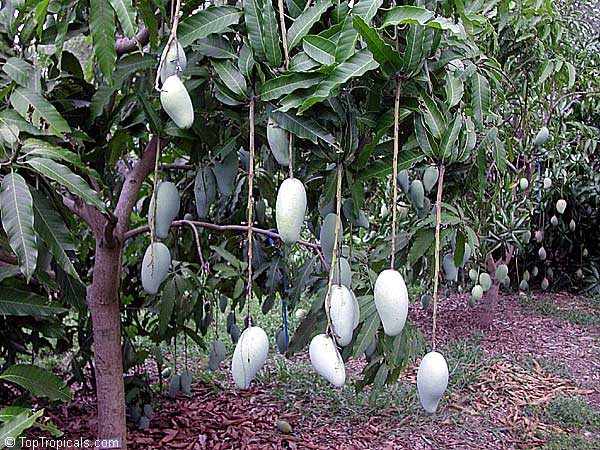
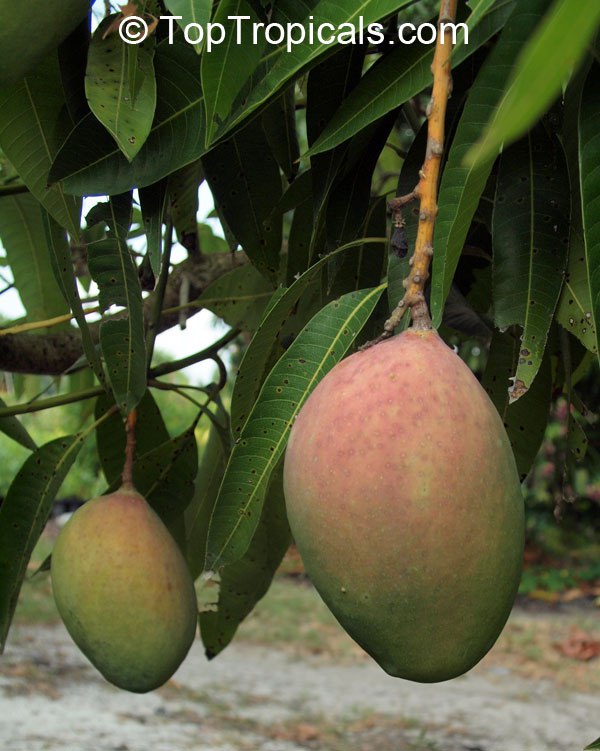
🟠 1. Cogshall - an ultra compact grower up to just eight feet tall, will still produce a good size crop. Very colorful and has a mild, sweet flavor. Fungus resistant.

🟠 2. Ice Cream - far and away the most popular of the "condo mangoes." Flavored like the name. Maintained at a height of just six feet (!) making it ideal for container growing.

🟠 3. Julie - the most popular variety in Jamaica and many other Caribbean islands because of its rich, sweet, coconut/pineapple-like flavor. Great for containers, but keep in mind it's very cold sensitive, don't plant it in the ground if you get freeze in winter.

🟠 4. Okrung - Thai compact cultivar, served in Thailand in combination with sticky rice. One of the most popular varieties in Thailand. The fruit is very sweet, with the highest sugar content.

🟠 5. Pickering - great for pot culture. It has a bushy, compact growth habit, maintained in a container at just six feet (!). The fruit has a firm flesh with a fantastic coconut/mango flavor.

🟠 6. Nam Doc Mai - The most popular variety for pot culture. Everyone loves it. Eaten green or ripe, a Thailand favorite.

🟠 7. Mallika - condo mango native to India. Among the best of the new generation of Indian dessert mangos. Intensely sweet, rich and highly aromatic flavor with hints of citrus and melon.

🟠 8. Carrie - the flavor is by far the most outstanding. It has absolutely no fiber and extremely rich in flavor, sweet, aromatic and a pure pleasure to eat. You will savor every mouthful! Its compact size makes it an excellent dooryard tree.

🟠 9. Diamond - It has a great taste very similar to Nam Doc Mai. Very compact, of a dwarf habit, great condo mango.

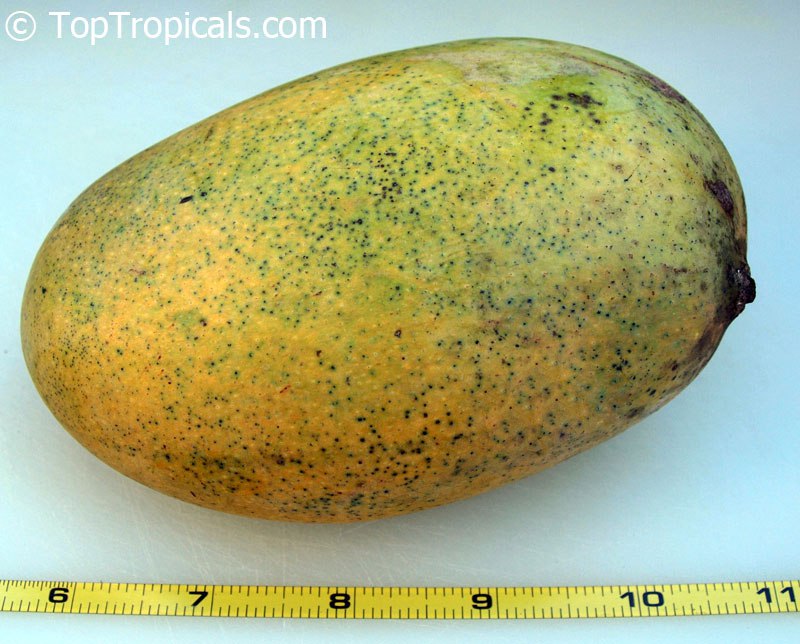
🟠 10. Keitt - the best all-around late mango. Very productive, good-flavored, and disease resistant. Has a very long and late season. The compact tree is semi dwarf that bears 4-5 pound goliath fruit!

📝 See also earlier post: 5 most Favorite Mango Varieties

🛒 Shop Mango Trees

#Food_Forest

🏵 TopTropicals