Garden Blog - Top Tropicals

Date: 15 Feb 2026

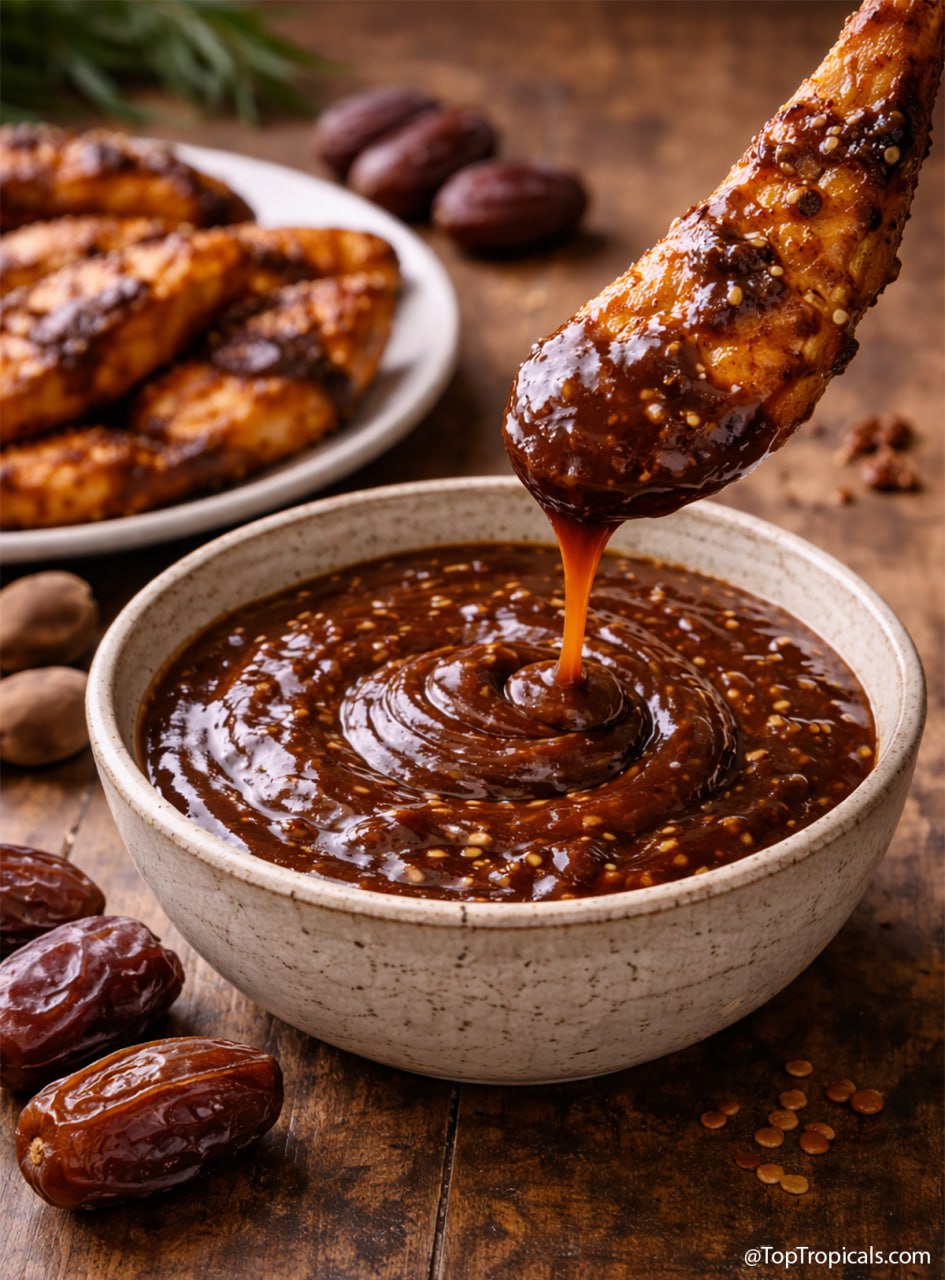
Tamarind date dipping sauce, quick-n-fun exotic recipes

Tamarind date dipping sauce

Tamarind date dipping sauce

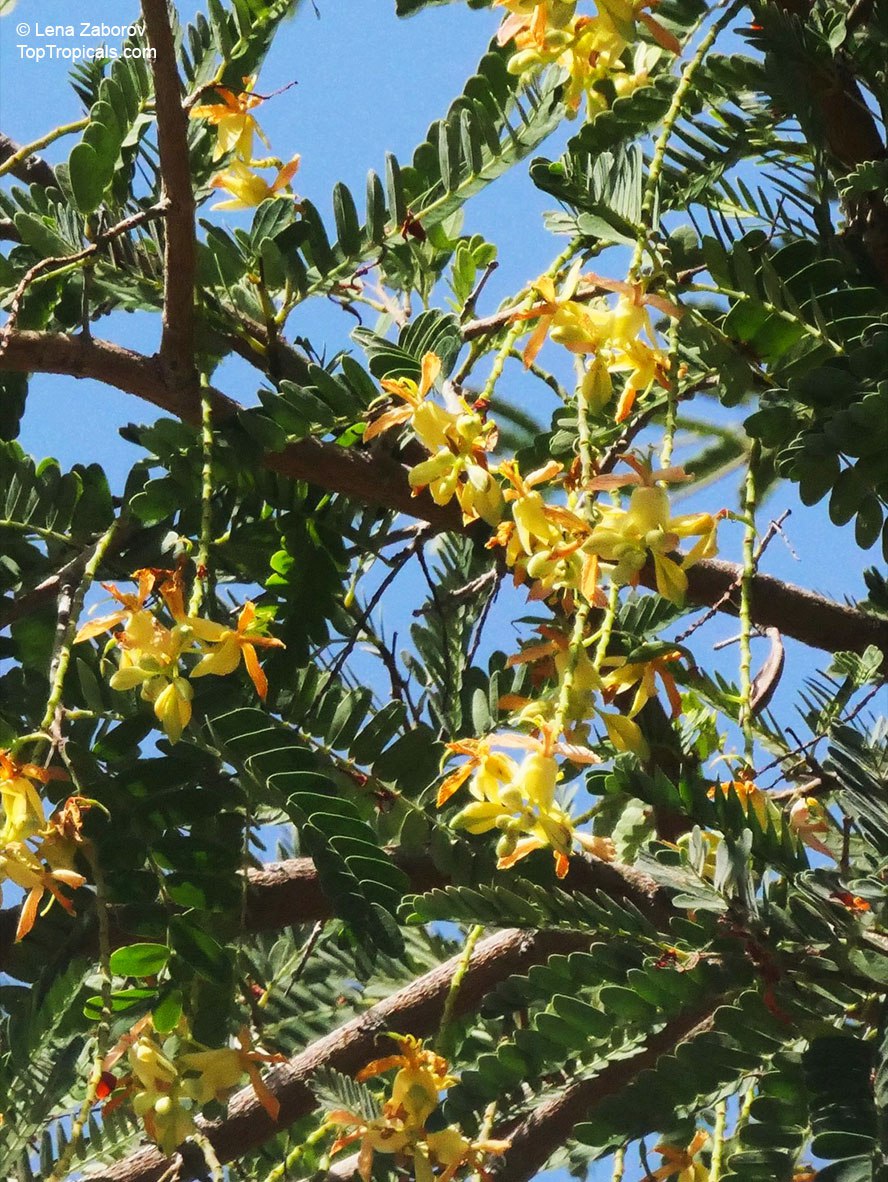
Tamarind - Tamarindus indica - flowers

Tamarind - Tamarindus indica - flowers

🍴 Tamarind date dipping sauce: quick-n-fun exotic recipes


Tamarind Date Dipping Sauce

Ingredients

  • 3 soft dates
  • 1 tablespoon tamarind pulp
  • 1 pinch salt
  • 2–3 tablespoons warm water

Instructions

  1. Soak the dates briefly in warm water if they are firm.
  2. Add the dates, tamarind pulp, and salt to a blender.
  3. Blend until smooth.
  4. Add warm water gradually until the sauce reaches dipping consistency.
  5. Serve with snacks, roasted vegetables, or grilled foods.


🌿 About the plant:


When combined with dates, tamarind transforms into a sweet-sour chutney common in Indian street food.

🏡 In the garden:


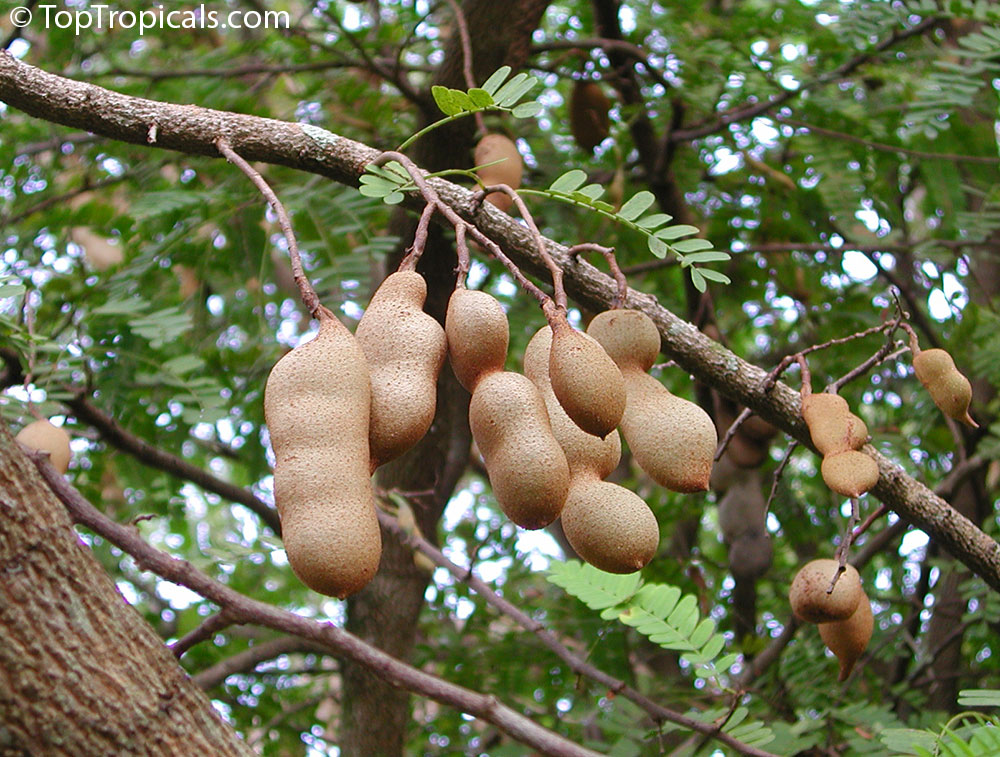
Tamarind (Tamarindus indica) flowering occurs in warm months with small yellowish blooms. Pollination leads to the familiar curved pods.

🛒 Add Tamarind tree to your garden

📚 Learn more:

Tamarind Plant Facts

Botanical name: Tamarindus indica
Also known as: Tamarind, Sampalok
USDA Zone: 9 - 11
Highligths Large tree taller than 20 ftFull sunWatering: Moderate. Water when top soil feels dryEdible plantSubtropical plant. Mature plant cold hardy at least to 30s F for a short timeFlood tolerant plantSeaside, salt tolerant plant
Get personalized tips for your region

Tamarindus indica in Plant Encyclopedia

#Food_Forest #Recipes

🟢 Join 👉 TopTropicals

Date: 13 Mar 2026

Tamarind shrimp stir-fry: quick-n-fun exotic recipes

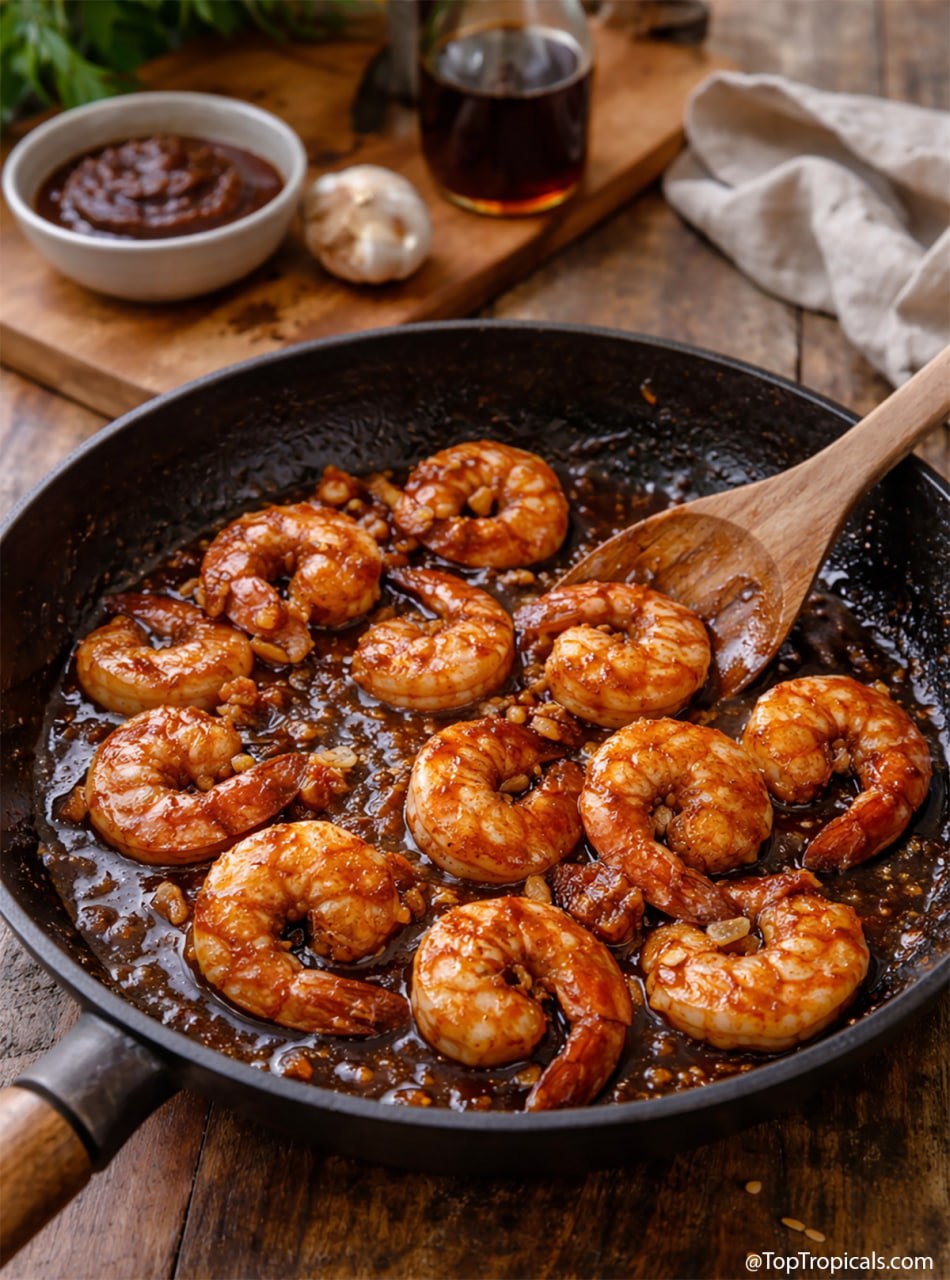
Tamarind shrimp stir-fry in skillet

Tamarind shrimp stir-fry in skillet

🍴 Tamarind shrimp stir-fry: quick-n-fun exotic recipes


Tamarind Shrimp Stir-Fry

Ingredients

  • 1 lb shrimp, peeled and deveined
  • 2 tbsp tamarind pulp
  • 2 cloves garlic, minced
  • 1 tbsp fish sauce
  • 1 tbsp brown sugar
  • 1 tbsp vegetable oil
  • 1 tbsp water (to loosen tamarind pulp if needed)
  • Optional: sliced green onions or chili flakes for garnish

Instructions

  1. In a small bowl mix tamarind pulp, garlic, fish sauce, brown sugar, and water until a smooth sauce forms.
  2. Heat oil in a very hot skillet or wok.
  3. Add shrimp and stir-fry for 3 to 4 minutes until they begin turning pink.
  4. Pour the tamarind sauce into the skillet and toss shrimp to coat evenly.
  5. Cook about 1 more minute until the sauce becomes glossy and slightly thick.
  6. Serve immediately. Garnish with green onions or chili flakes if desired.

🌿 About the plant:


The pulp of tamarind can be used fresh from the pod, pressed into blocks, or sold as concentrate. Its acidity works like citrus but with more complexity - slightly fruity, slightly caramel-like.

🏡 In the garden:


Tamarind trees - Tamarindus indica - are drought-tolerant once established and surprisingly hardy in brief cool snaps. They develop a beautiful spreading canopy and fine, fern-like leaves that close at night.

Tamarind Plant Facts

Botanical name: Tamarindus indica
Also known as: Tamarind, Sampalok
USDA Zone: 9 - 11
Highligths Large tree taller than 20 ftFull sunWatering: Moderate. Water when top soil feels dryEdible plantSubtropical plant. Mature plant cold hardy at least to 30s F for a short timeFlood tolerant plantSeaside, salt tolerant plant
Get personalized tips for your region


🛒 Plant a Tamarind tree

📚 Learn more:


Tamarindus indica in Plant Encyclopedia

#Food_Forest #Recipes

🟢 Join 👉 TopTropicals

Date: 11 May 2023

The Wonderful World of Tamarind:
from Planting to Plating

Tamarind  tree

Q: I use a lot of tamarind in my cooking. Can I grow my own Tamarind fruit? Can Tamarind tree grow in North Florida? Will Tamarind grow well outside or should I keep it in a pot?

A: Originating from tropical Africa, the Tamarind - Tamarindus indica - is a tropical tree that is highly appreciated for its ornamental beauty, delightful shade, and soft texture.

Tamarind is a highly valued culinary ingredient, with its tangy and sweet-sour flavor profile making it a popular addition to many dishes. It is frequently used in South Asian, Latin American, Caribbean, and African cuisines to add a touch of acidity and sweetness. Tamarind paste, made from the fruit's pulp, is a key ingredient in Worcestershire sauce, tamarind chutney, and many curry dishes. The seeds, when roasted and ground, can be used as a coffee substitute or as a thickening agent in sauces and stews....

Tamarind tree is prized for its versatile fruits and numerous health benefits. The tree can be grown outside in warm climates, as well as in pots and indoors... even as bonsai!
CONTINUE READING >>

Tamarind  fruit

Date: 2 Mar 2026

Beyond fruit: how this African tree supports wildlife and garden health

Vangueria infausta - Spanish Tamarind

Vangueria infausta - Spanish Tamarind

Beyond fruit: how this African tree supports wildlife and garden health: Wild Medlar in the ecological food forest 🍊

Vangueria infausta (Spanish Tamarind, Wild Medlar) might win your heart for its sweet-tart fruit and folk medicine magic - but did you know it’s also a quiet hero in the ecosystem? Whether you’re planting a full-blown food forest or just a mixed backyard garden, Vangueria infausta brings more than fruit to the table. It brings balance, beauty, and biodiversity.

Wild Medlar Plant Facts

Botanical name: Vangueria infausta
Also known as: Wild Medlar, Spanish Tamarind
USDA Zone: 9 - 11
Highligths Small tree 10-20 ftFull sunWatering: Moderate. Water when top soil feels dryEdible plantDeciduous plantEthnomedical plant.
Plants marked as ethnomedical and/or described as medicinal, are not offered as medicine but rather as ornamentals or plant collectibles.
Ethnomedical statements / products have not been evaluated by the FDA and are not intended to diagnose, treat, cure, or prevent any disease. We urge all customers to consult a physician before using any supplements, herbals or medicines advertised here or elsewhere.Subtropical plant. Mature plant cold hardy at least to 30s F for a short time
Get personalized tips for your region


🐝 Pollinator power


When in bloom, this tree produces nectar-rich flowers that attract bees, butterflies, and other pollinators. These beneficial insects don’t just help the Wild Medlar fruit - they boost productivity in your entire garden.
If you grow mangos, citrus, guava, or veggies nearby, Spanish Tamarind helps keep the pollinator traffic moving.

🐦 Bird magnet


Birds are big fans of this tree. They nest in its dense branching, snack on overripe fruit, and help spread seeds. In return, they’ll help keep down pests like caterpillars and beetles.
Even in a small garden, one Wild Medlar can be a micro-habitat for birds, insects, and other helpful wildlife.

🌱 Soil stabilizer


With its deep roots and drought-hardy nature, Wild Medlar helps hold soil in place, especially on slopes or rocky patches. It improves drainage and reduces erosion, which makes it a great addition to food forests in challenging spots.

🍂 Natural mulch & green cleanup


The tree drops a modest amount of leaf litter, which breaks down into soft, rich mulch. In a diverse planting, that means fewer weeds, better soil structure, and less watering needed.

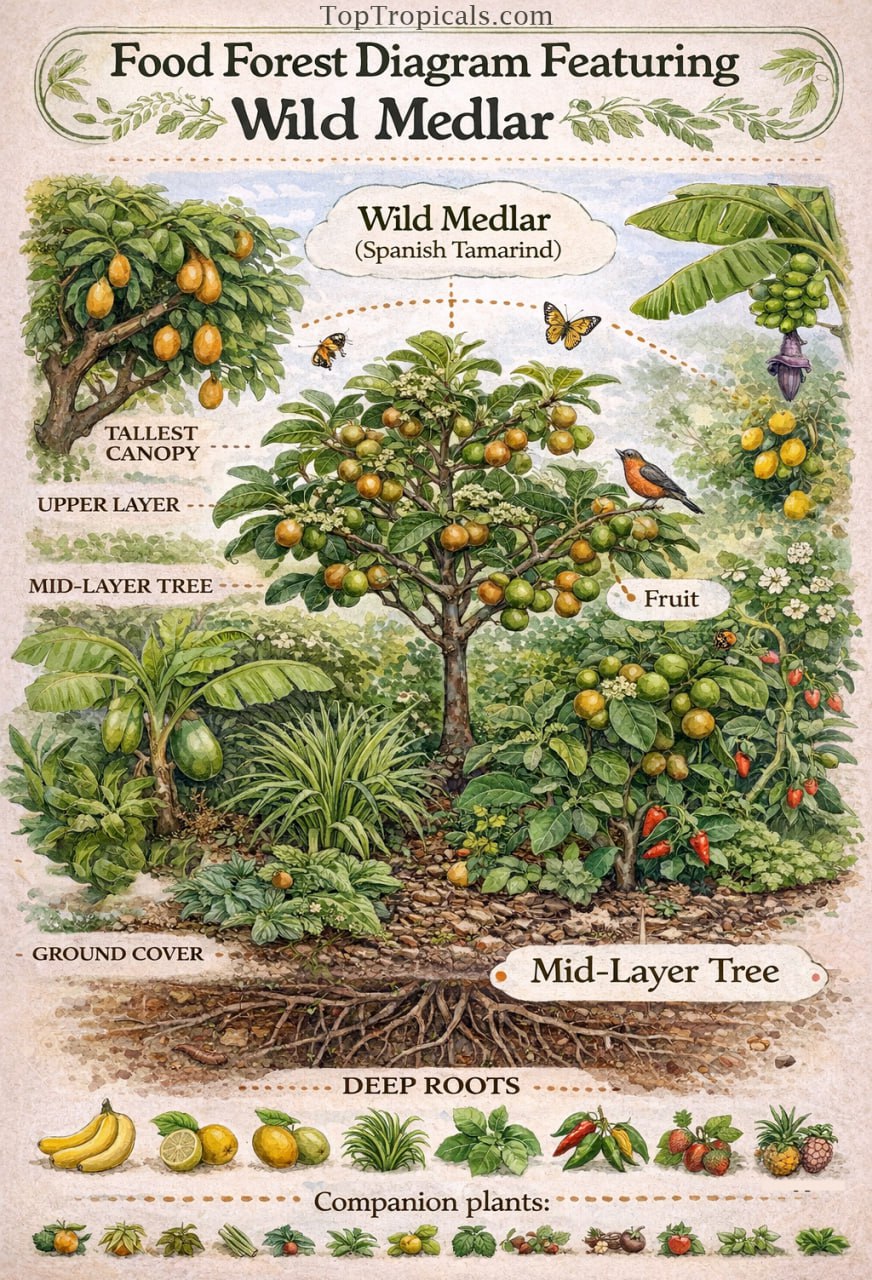
🌿 Companion planting & food forest stacking
· Works great as a mid-layer tree in multi-tiered systems
· Provides light shade for herbs or smaller fruiting plants
· Plays well with bananas, papaya, guava, lemongrass, and ground covers
In zones 9-11, it can live happily in a mixed border or permaculture guild. In colder zones, just keep it potted and move it around as needed - it still offers many of the same benefits.

🛡 Pest and disease resistant


One more bonus: Spanish Tamarind is incredibly low-maintenance. It resists most common pests and doesn’t suffer from fungal issues like many tropical fruit trees do. That means fewer chemicals and more harmony in your garden ecosystem.

✍️ Ready to plant something that gives back?


Think you need more than just another fruit tree? More life. More movement. More meaning in your garden?
Grow Wild Medlar for the fruit - but keep it for everything else it brings. The pollinators. The shade. The quiet medicine. The steady presence that makes your space feel alive.
If you’re building a food forest - or simply want a tree that earns its place every single season - this one doesn’t just sit there. It contributes.

🛒 Plant Spanish Tamarind in your Food Forest for a happy wildlife

📚 Learn more:


Vangueria infausta - Spanish Tamarind in Plant Encyclopedia
10 ways to enjoy Wild Medlar - Spanish Tamarind
7 steps for a care-free Spanish Tamarind - the easiest rare fruit to grow
The wild fruit with a secret: health benefits of rare Spanish Tamarind - the exotic fruit you've never heard of

#Food_Forest #Discover

🟢 Join 👉 TopTropicals
Date: 24 Apr 2025

Dont miss out: Rare Sweet Tamarind - Seeds Planted!

Vietnamese Pink Sweet Tamarind tree

Don't miss out: Rare Sweet Tamarind - Seeds Planted!


🌱 We just harvested fruit from our young Vietnamese Pink Sweet Tamarind tree that we planted less than a year ago (see earlier post), and seeds are already planted!

🌱 Expect young trees of this rare, sweet variety (item#3497) in a few months.

🌱 Want one? Add it to your Wish List now!
You'll get an instant email alert when it's back in stock, along with current inventory and number of requests.

🌱 First come, first served – don't miss your chance! More info on wishlist here.

📚 Learn more from previous posts:


How long does it take for Tamarind fruit to ripen?
Top 10 fruit you'll ever need for your health benefits: #7 Tamarind
Tamarind Chutney Recipe
How productive is Tamarind
Tamarind's pretty flowers

🛒Grow your own Tamarind Tree

#Food_Forest

🔴 Join 👉 TopTropicals