Garden Blog - Top Tropicals

Date: 31 Mar 2025

MANGO VARIETY CHEAT SHEET
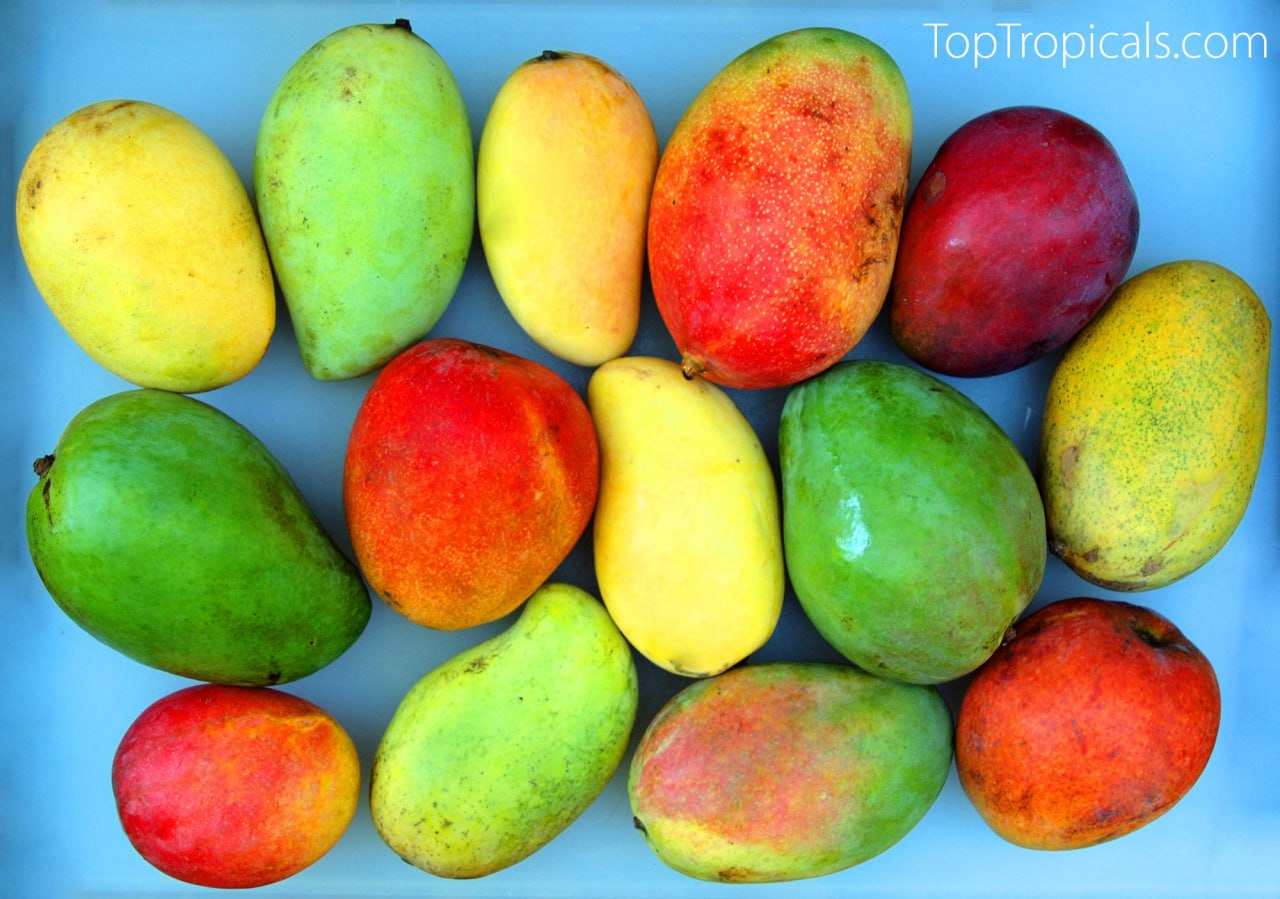
Mango fruit on a tray

Mango fruit on a tray

🥭 MANGO VARIETY CHEAT SHEET
How to pick the right mango tree for your yard, Quick Guide

  • 🟠 Condo Mango - for containers and small spaces


    1. Cogshall - Compact and colorful, with sweet flavor and fungus resistance.
    2. Ice Cream - Stays under six feet with rich, dessert-like flavor.
    3. Julie - Caribbean favorite with sweet tropical flavor, but very cold sensitive.
    4. Mallika - Indian condo mango with rich, sweet flavor and hints of citrus and melon.
    5. Carrie - Super sweet and fiberless, perfect for small yards.

📚 More: Top 10 Dwarf "Condo" Mango - great for container culture.
  • 🟠 Most popular varieties everyone wants


    1. Alphonso - Rich Indian mango with coconut-like flavor, highly prized.
    2. Maha Chinook - Rare, ultra-sweet Singapore mango, good for pots.
    3. Fralan - Hardy tree with sweet green fruit that cracks when peeled.
    4. Fruit Cocktail - Tastes like a blend of pineapple, citrus, and guava.
    5. Nam Doc Mai - Most beloved Asian mango, semi-dwarf and versatile.
  • 🟠 Most vigorous reliable producers


    1. Glenn - Easy to grow, consistently produces excellent fruit.
    2. Pim Seng Mun - Super productive and reliable.
    3. Sweet Tart - Intense flavor, new and exclusive variety.
    4. Fruit Punch - Tastes like a medley of tropical fruits.
    5. Orange Sherbet - Sweet citrus flavor on a moderately vigorous tree.


🛒 Select perfect Mango trees and enjoy your own treats

#Food_Forest #Mango #Discover

🔴 Join 👉 TopTropicals
Date: 6 Feb 2025

How to get mango trees to bloom and set fruit

Cat  with  mango  fruit

Q: Is there any way to make a mango tree set more fruit? My mango trees bloomed like crazy last year but most of the flowers dropped and I had only a few fruit. What do I need to do to get more fruit?

A: Mango trees flower from late Winter to Spring, with the peak blooming season varying based on variety. During this time, mango trees produce hundreds of small, fragrant flowers in large panicles. A healthy mango tree can produce anywhere from 500 to 2,000 flowers per panicle. However, only a small fraction of the flowers will be successfully pollinated and develop into fruit, depending on the tree's size and health.

To support healthy flowering and fruit set, mango trees need dry weather, as excessive moisture can inhibit pollination and fruit development. During flowering period, it's important not to overwater, as the tree is less active in water uptake.

Avoid dry fertilizers during flowering since the tree is focused on reproduction rather than vegetative growth. Continue applying Sunshine Boosters Mango Tango liquid fertilizer to support the tree's overall health and vigor which will encourage fruit quantity and quality. Sunshine Boosters deliver essential nutrients in optimum amounts, proportionally to water intake.

Ensuring a dry, sunny environment and mild fertilizer Mango Tango will help the tree set fruit successfully.

Mango  tree  flowering

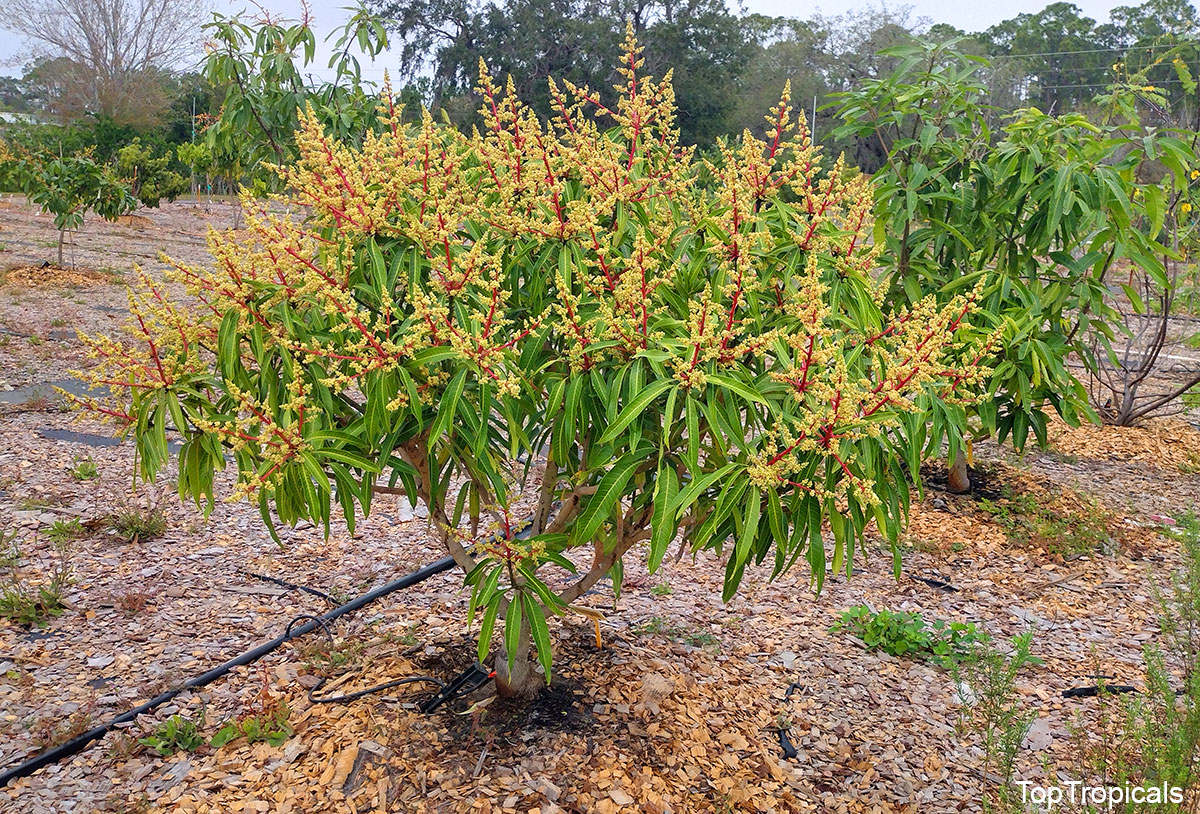
Photo above: Our Mango garden in Sebring, FL is in full bloom now! Early spring in Florida started in January 2025. Surprisingly, all our mango varieties decided to start blooming: - early, mid- and late- season cultivars. It's a stunning view! Check out a short Video.

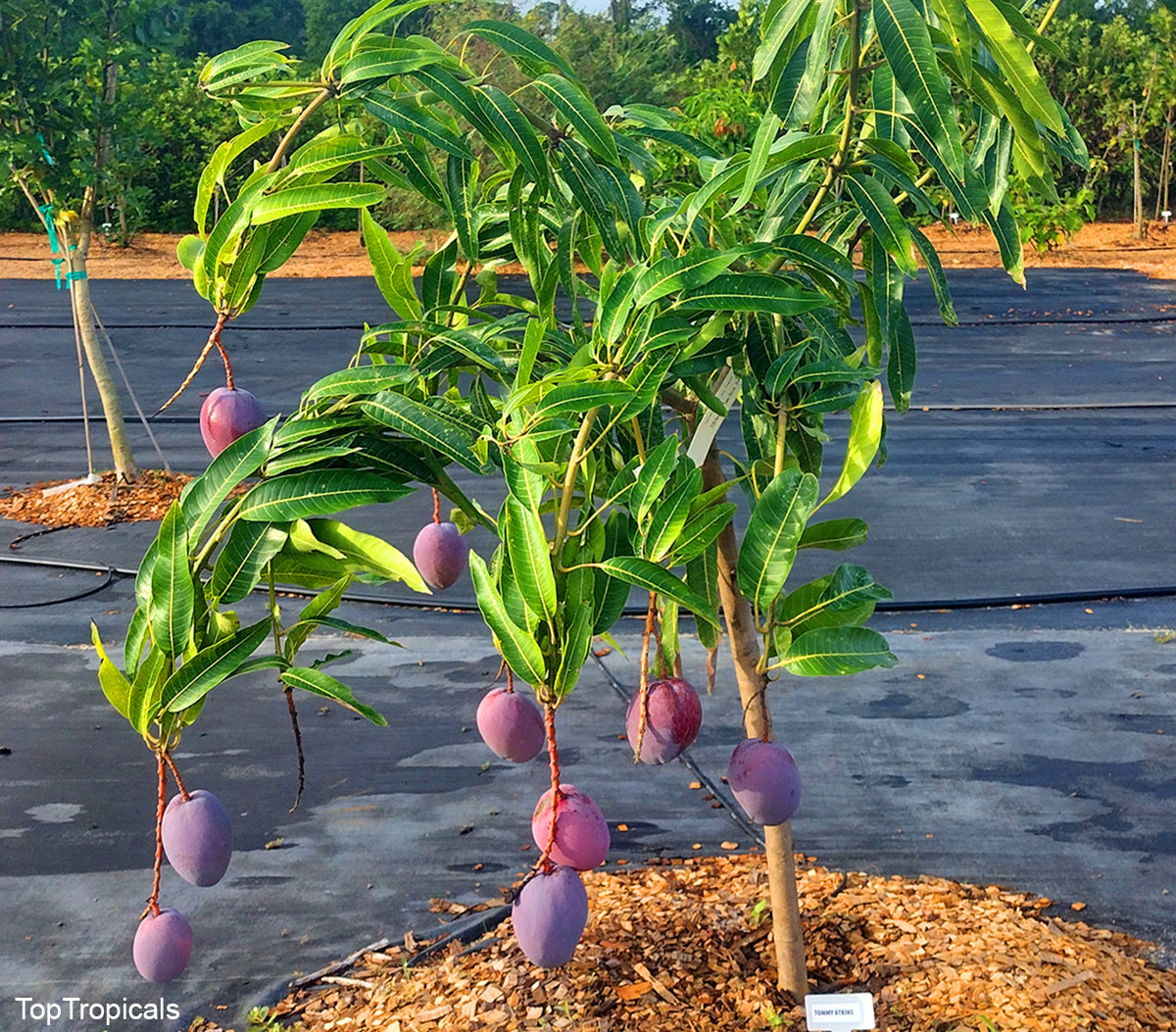
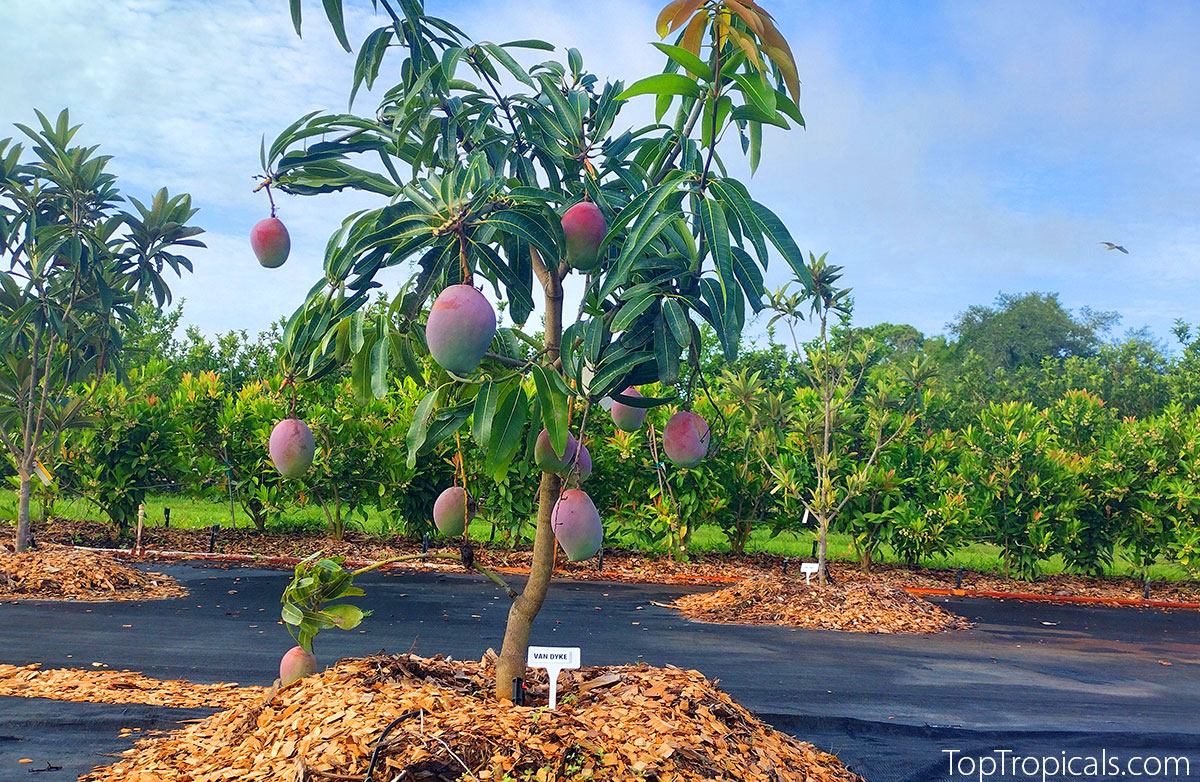
Photo below: 2024 fruiting trees. We use Sunshine Mango Tango year around.

Mango  tree  fruiting

Date: 22 Mar 2017

Condo Mango

Q: I was curious about indoor fruiting mango trees. I live in upstate New York and was thinking about trying to grow an indoor tree for fruit. I have a small heated greenhouse. Is there a variety that can be grown from seed that would suit my purposes and if not what is the most economical way I could obtain a cutting or small grafted plant? I keep my greenhouse around 60F in the winter and have no supplemental lighting. Are there any varieties that may work in a sunroom or other well lit indoor location?

A: There are many dwarf varieties of mango suitable for container culture. They are called "condo mangoes".
The most popular condo varieties are: Carrie, Cogshall, Cushman, Fairchild, Graham, Ice Cream, Julie , Mallika, Nam Doc Mai, Pickering. You may read more about them in our online catalog. You may also look into variety Lancetilla which is also a compact tree, and produces one of the biggest size fruit, up to 5 pounds. If you want some rare variety that hardly anyone else has - try Baptiste, an exotic Haitian dessert mango.

Your greenhouse should work for the winter time. Mango trees can take as low as mid 40s during winter and even lower as long as that cold is occasional. If you keep the temperature around 60, this should work well for over wintering. Just make sure to reduce watering to a minimum, because cool temperatures, low light and wet soil - is a bad combination for tropical plants, especially for mango trees which prefer to be kept on a dry side.

Many indoor gardeners have fruiting mango trees in their collection. However, keep in mind that the most important requirement for a mango is full sun. While you may over winter the plant for a few months in a low light conditions, in order for it to flower and produce fruit it needs lots of light. If moving the tree into full sun your yard during the summer is possible, this would be the best solution.

We always recommend SUNSHINE boosters for both over wintering tropical plants in colder climates, and for indoor gardening. SUNSHINE applications will help your tree to cope with cool temperatures and low light conditions. This will also dramatically increase flowering and fruiting performance. Another important factor for keeping your container plant healthy is quality of your potting soil. We offer a special professional mix that contains lots of good stuff: coconut fiber, peat moss, pine bark, and perlite. Fertilizing potted plants is also very important during the warm season, because this is the only way for them to get nutrients (which in the ground can be reached by spreading root system).

As far as seedlings vs. grafting - the only way to have a nicely fruiting mango tree is to plant a grafted variety. Seedlings start producing only after 8-15 years, and the quality of such fruit may be questionable. Only grafted plants can guarantee the desired taste of a variety. Besides, grafted mangoes start producing immediately - you may see fruit forming on plants as small as 3 ft, in 3 gal containers. However, during the first 1-2 years you will need to remove extra fruit and leave only 1-2 fruit so the plant doesn't get exhausted and has enough energy to establish strong root system.

For fun stories about growing mango, check out our Radio Show recording YO Tango Mango!

Date: 5 Jan 2025

Condo (Dwarf) Mango Practical Guide:
What varieties are good for container culture
or small yards

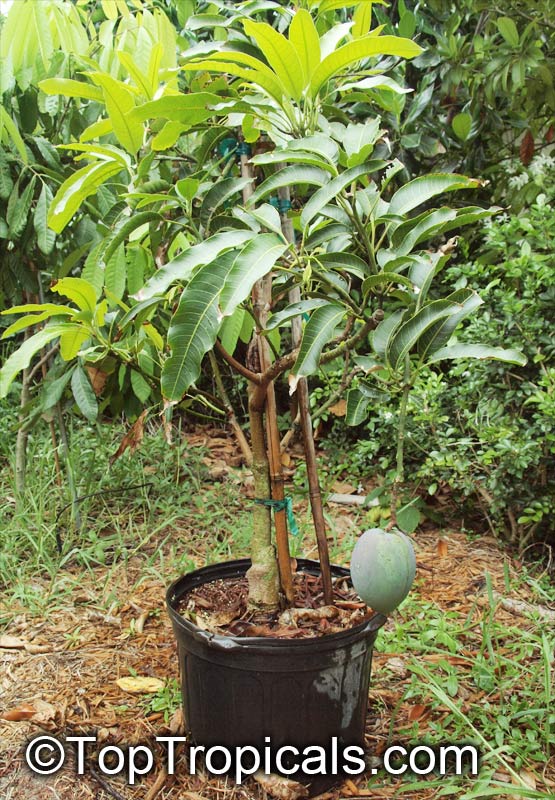
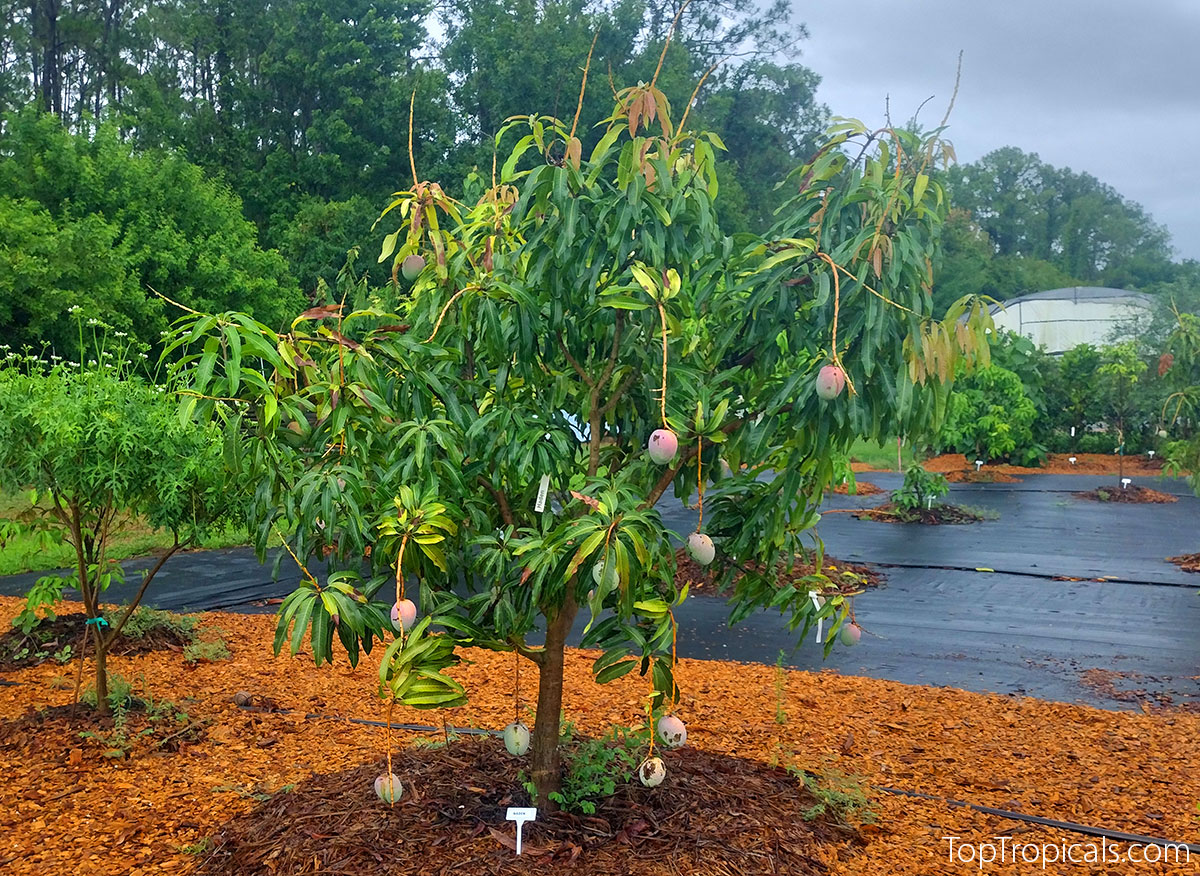
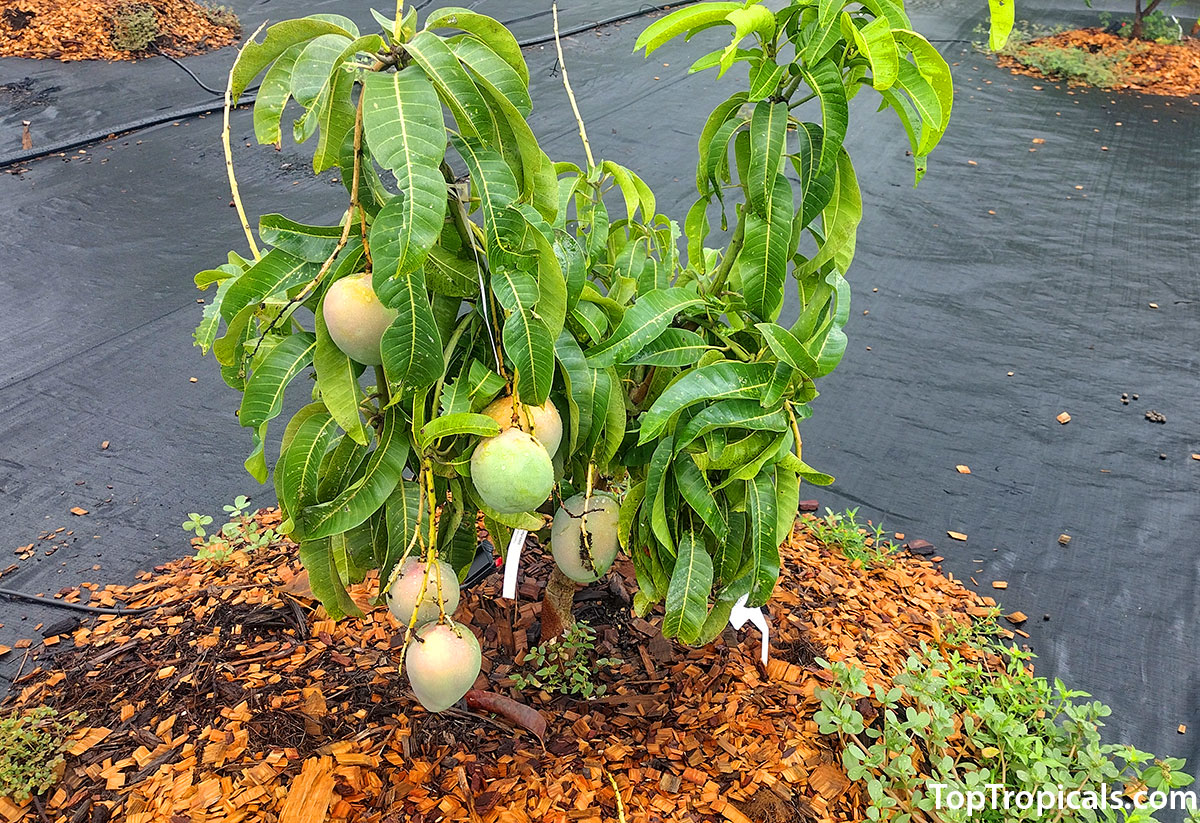
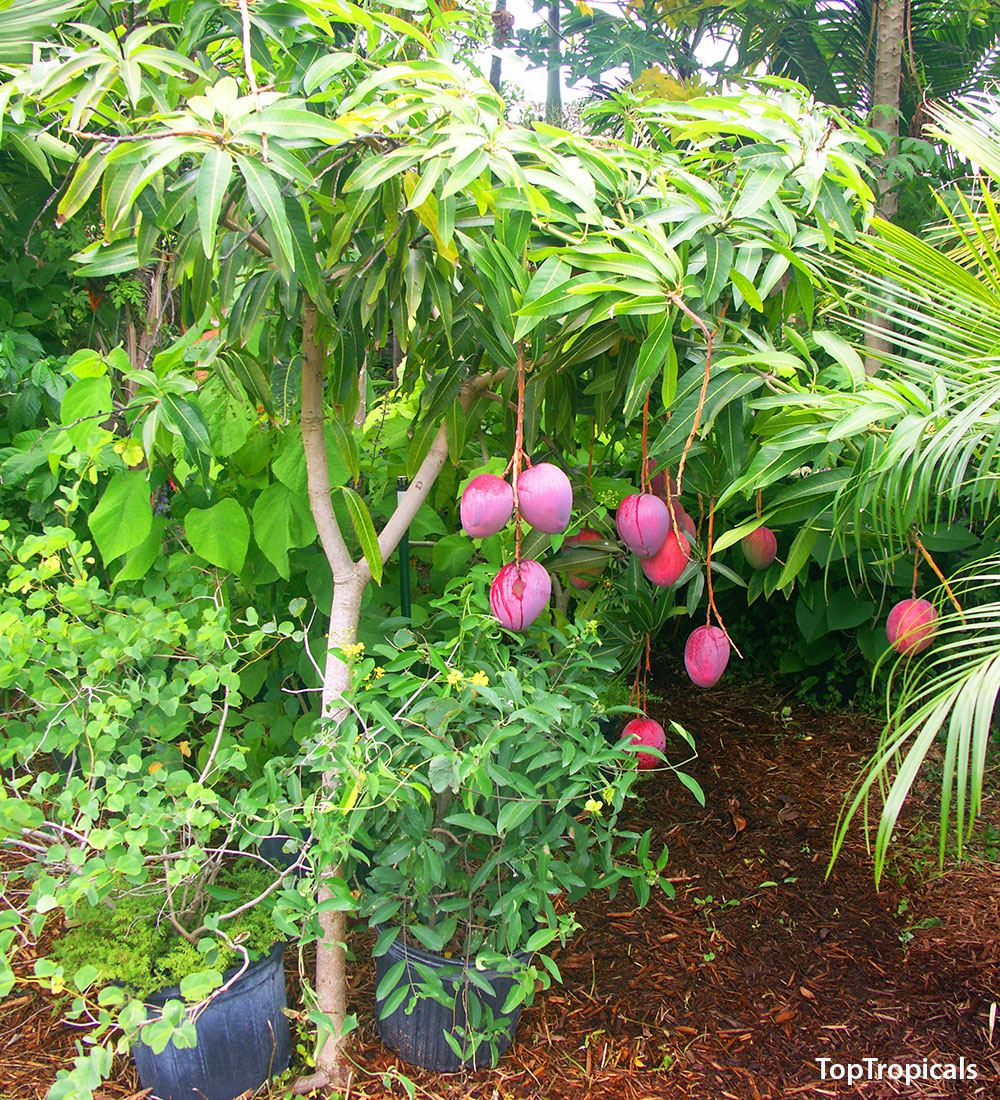
Condo  dwarf  mango  with  fruit

Q: "Our winters are too cold for a mango tree, but I'd like to grow one in a pot so I can bring it inside during cold nights. Which varieties do you recommend for container gardening? I've heard of Condo Mango - do you carry them?"

A: Yes, we always carry Condo Mango varieties: they are a fantastic choice for gardeners with limited space or in cooler climates. They grow well in containers and can be easily maintained through pruning. Whether you're growing them on a balcony, in a greenhouse, or in a backyard, Condo Mangos provide the perfect mix of beauty and practicality.

What Are Condo Mangos?

Condo Mangos, also known as dwarf mango trees, are perfect for small spaces. These trees can be grown in containers, making them ideal for balconies, greenhouses, or small suburban backyards. With proper care, they can be maintained at a manageable height of 6-10 feet through regular pruning. Some plant enthusiasts even manage growing Mango tree as an indoor plant!

The term Condo Mango

Condo Mango refers to mango varieties that thrive in containers and are small by nature, allowing them to be easily kept even smaller with selective pruning.

Size and Growth

Unlike traditional mango trees, Condo Mangos are compact. They naturally grow to around 6-10 feet, but with proper pruning, they can be kept small, making them an excellent choice for limited space.

Growing in Containers

- Condo Mango trees thrive in pots and containers.
- A 15-20 gallon pot is ideal to give the roots enough room to grow.
- Ensure your container has drainage holes to prevent root rot.

Planting Tips

- Plant Condo Mangos in full sun, where they'll get plenty of heat and light.
- Use well-draining soil for optimal growth.
- Fertilizer regularly with quality plant food. Out best choice is Sunshine Mango Tango for edibles. - Late Winter to early Spring is the best time to plant in containers, before the rainy season starts.
- Mangoes grow well in USDA zones 9-10, but if you live in cooler climates, you can grow them indoors or in a greenhouse, as long as you meet their heat and light needs.

Pruning and Maintenance

- Prune Condo Mango trees once a year to keep them at the desired height (6-10 feet), right after harvesting (late Summer to Fall)
- Trim the tips of the branches to maintain a compact shape and encourage healthy growth.
- Regular pruning will help keep the tree manageable and ensure better fruit production.

Learn more: Find out what are Top 10 Dwarf Condo Mango - great for container culture.

Condo  dwarf  mango  with  fruit

Condo  dwarf  mango  with  fruit

Date: 27 Apr 2020

How to feed a Mango tree...
and to grow a Dwarf Mango

How to fertilize a Mango tree

Q: My mango trees that I bought and planted last august now have fruit. I bought 2 types of fertilizer from you and never used it. Should I use your fertilizer now?

A: It is a perfect time now to fertilize your plants as they start active growth. For mango trees, we recommend liquid fertilizer Sunshine Booster - Mango Tango. It is formulated for Mango trees, especially for container grown. It improves quantity and quality of flowers and ability to set fruit, reduces bud-flower-fruit drop. Can be used as often as with every watering. For best results, use in combination with Sunshine Honey and Sunshine Superfood plant supplements. Its scientifically-balanced stable formula is organic Amino-acid based and has NO EDTA chelators to eliminate nutrients lockup; it does not affect crop taste.
Additionally, you may use slow-release granulated fertilizer Mango-Food once a month during hot season only. Dosage: 1 teaspoon per each gal of soil. Water-soluble fertilizers can be also used, however, those are usually EDTA-chelated which is not as efficient as Amono-acid based Sunshine Boosters and may create nutrients build up, especially if overdosed in containers.
For in-ground mango trees, you may use all the above, and slow-release granulated fertilizer can be applied in larger quantities: spread a handful around the drip line.

Remember that only liquid Sunshine Boosters can be applied year around. With other fertilizers, you need to be careful not to overdose, and apply only during hot weather (when night temperatures are steadily above 65F).

How to grow a Dwarf Mango tree

Q: I received the Ice cream mango tree in great condition (thank you for the ingenious packing job) on Wednesday and have planted it in a pot slightly bigger than the root ball. I plan to grow the tree on my front porch, so how big a container should I ultimately use when the tree outgrows this pot? How big a container does it need to fruit? I hope to keep it around 6-7 feet high, if possible. I live in Hawaii.

A: Ice Cream mango is a perfect variety for container culture, and it should be happy in Hawaii. You did everything right. Keep it in this small pot for now and wait until it starts vigorous growth in Summer. Once it starts growing (and you will notice roots growing too, sometimes they try to grow through the holes in the bottom of the pot), then it's time to step up into a bigger container (7-10 gal). Eventually you may use container size as large as 15 gal. Ice cream mango is slow growing and compact, and you will be able to maintain it under 7 ft with very minimal pruning if any.