Date: 5 May 2023
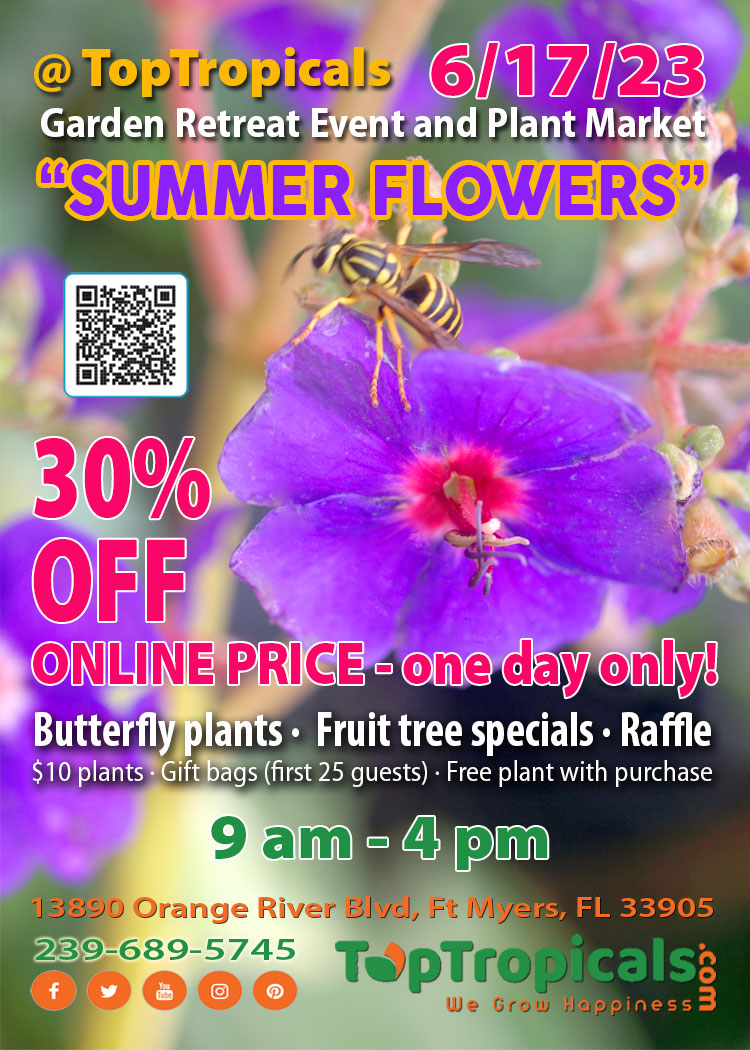
Mark your calendars: June 17
Summer Flowers Plant Market
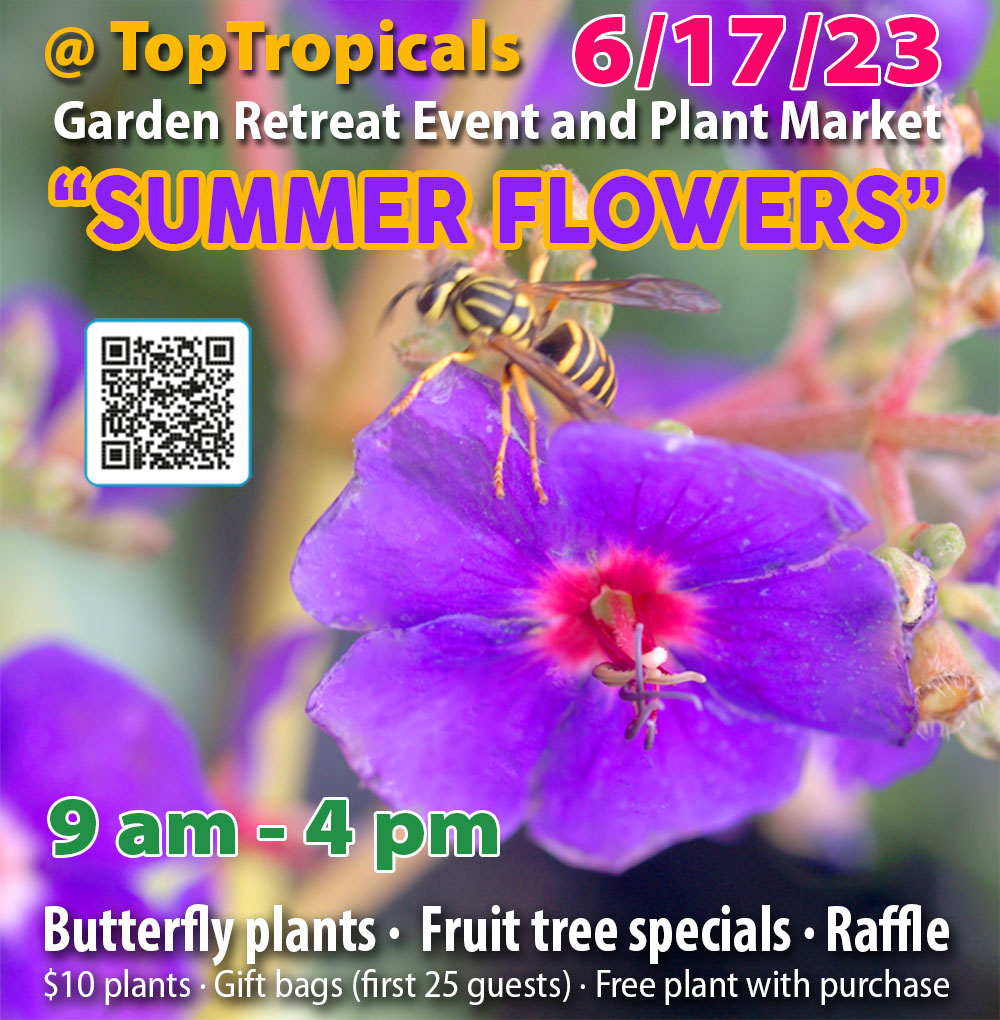
Saturday, June 17, 9 am - 4 pm
Join us for a celebration of Summer Garden Festival and Plant Market! Immerse yourself in a world of colorful blooms, fragrant scents, and nature's beauty. Don't miss out on the opportunity to stroll through our gardens and nursery. Bring your friends and family for a day of fun in the sun!
Event agenda:
9 am - 4 pm: Plant Market. 30% off online price, one day
only! Raffle.
Gift bags - for first 25 customers with $50 order
Secret Garden: Super savings area 50% off
Fruit tree specials
$10 plants and FREE plants with a purchase!
Event discounts valid at both locations:
Ft Myers Garden Center: 13890 Orange River, Ft Myers, FL
Sebring B-Farm: 9100 McRoy Rd, Sebring, FL
Date: 30 Apr 2023
B-Farm in Sebring
Now open 6 days a week!
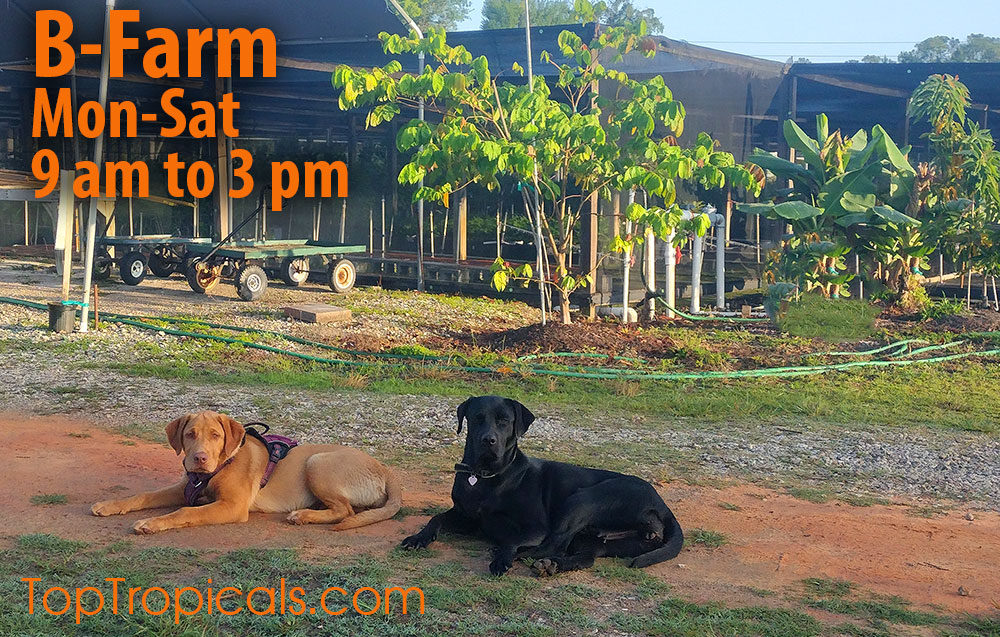
In the photo: Sunshine and Mango, our friendly Customer "Service Animals" will be happy to give you a tour of the farm, including Sunshine Boosters selection and Mango Collection!
Attention local shoppers! Note new business hours for our Sebring location:
Monday - Saturday
9 am - 3 pm
Large discounts for locals!
Come visit us in Sebring, the heart of Florida, easily accessible from any Florida destination. You won't want to miss out on our 10-acre tropical farm, boasting the largest selection of rare plants, flowering and fruiting trees, edibles, and perfume plants from around the world!
Take your time and browse through our extensive collection, and don't hesitate to ask our knowledgeable staff for advice or assistance. You'll love being able to handpick your own garden gems straight from the grower. Whether you're a seasoned gardener or just starting out, we have something for everyone. So come on down and see for yourself...
P.S. Our Garden Center in Ft Myers is open as usual, 7 days a week

Date: 30 Apr 2023
Attracting butterflies

Q: How to attract more butterflies to my garden?
A: Attracting butterflies to your garden can be a fun and rewarding experience. Here are some tips to help you create a butterfly-friendly environment.
1. Choose the right plants: Butterflies are attracted to nectar-producing flowers such as milkweeds, butterfly bushes. Plant lots of bright flowers, especially of yellow and pink colors like some cassias which seem to be the pleasant to butterfly's eye. Use a variety of flowers to attract different species of butterflies. This is a full list of butterfly-attracting plants.
2. Provide food for caterpillars: Butterflies lay their eggs on specific host plants that caterpillars will eat. For example, monarch butterflies lay their eggs on milkweed. Passion flower is also a great butterfly host, but be prepared to sacrifice some leaves!
3. Provide a water source: Butterflies need a source of water to drink from. A shallow dish or birdbath with rocks in it will provide a place for butterflies to rest and drink.
4. Avoid using pesticides: Pesticides can harm butterflies and other beneficial insects. Try using natural methods to control pests in your garden, such as companion planting and hand-picking.
5. Create a sunny spot: Butterflies love warm, sunny spots. Plant your butterfly garden in an area that receives at least six hours of direct sunlight each day.
6. Add a butterfly house: A butterfly house can provide shelter for butterflies during bad weather and at night.
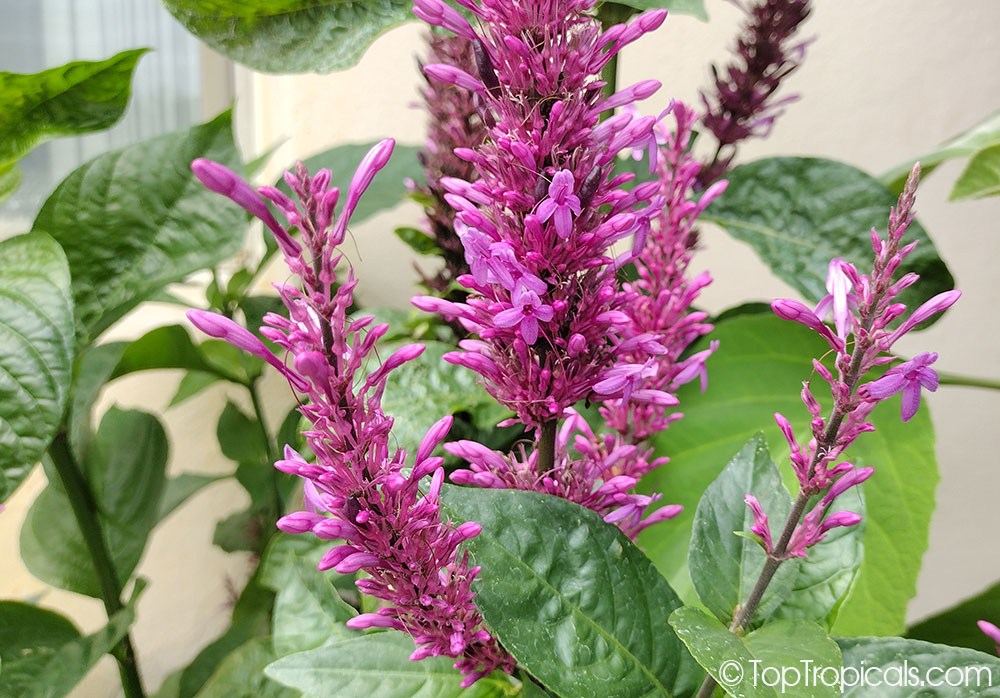
In the photo: Odontonema callistachyum - Lavender Butterfly Bush. Showy bright lavender flowers, butterfly attractor. Blooms in both sun or shade.
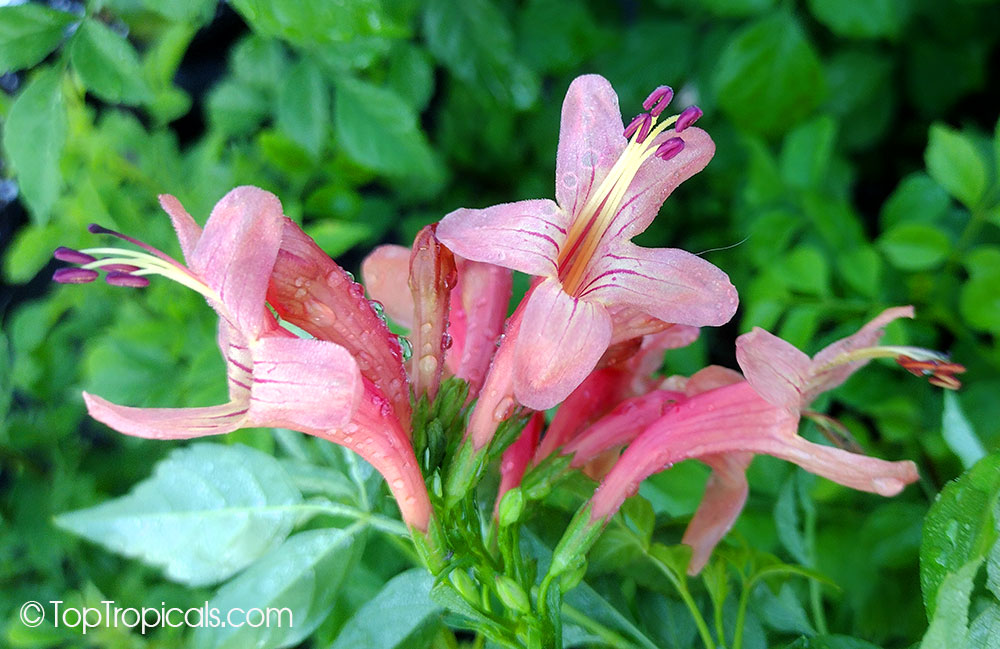
In the photo: Tecomaria capensis Apricot
Date: 26 Apr 2023
Cat Horoscope
By Alex Butova, the Witch of Herbs and Cats
Taurus Cats 4/21-5/20

The astrological sign of a cat can be determined by either their date of birth or adoption...More >>
...Taurus Cats are real sybarites! They are relaxed and seeming not to
be worried about anything. It is pragmatic, the Cat who comes down to earth.
They enjoy being petted, groomed, and they're not likely to pass up a meal.
They enjoy their food...
...One of the overriding characteristics of Taurus Cats is that they are
gourmands. They are greedy pussy cats who put on layers for winter… all year
around. They also have impeccable taste in food as they prefer human food to
cat food, likely because human food costs more...
...They may also enjoy dreaming in a garden, nestled in the shade of plants
with soft, broad leaves ...may listen the chirping birds with half-opened
eyes, observing them at the same time - just in case...
CONTINUE READING >>
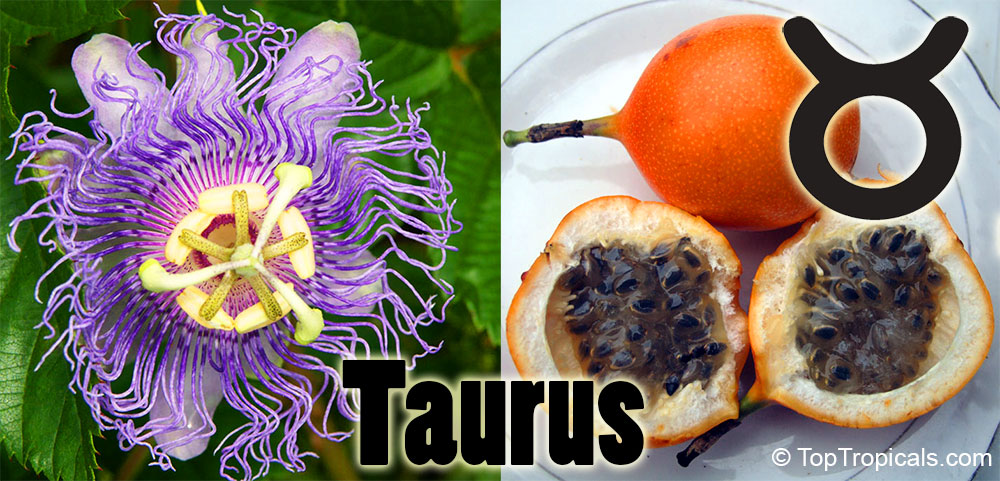
Taurus Plant Zodiac for humans
Date: 26 Apr 2023
The Benefits of Companion Planting
Q: What is companion planting?
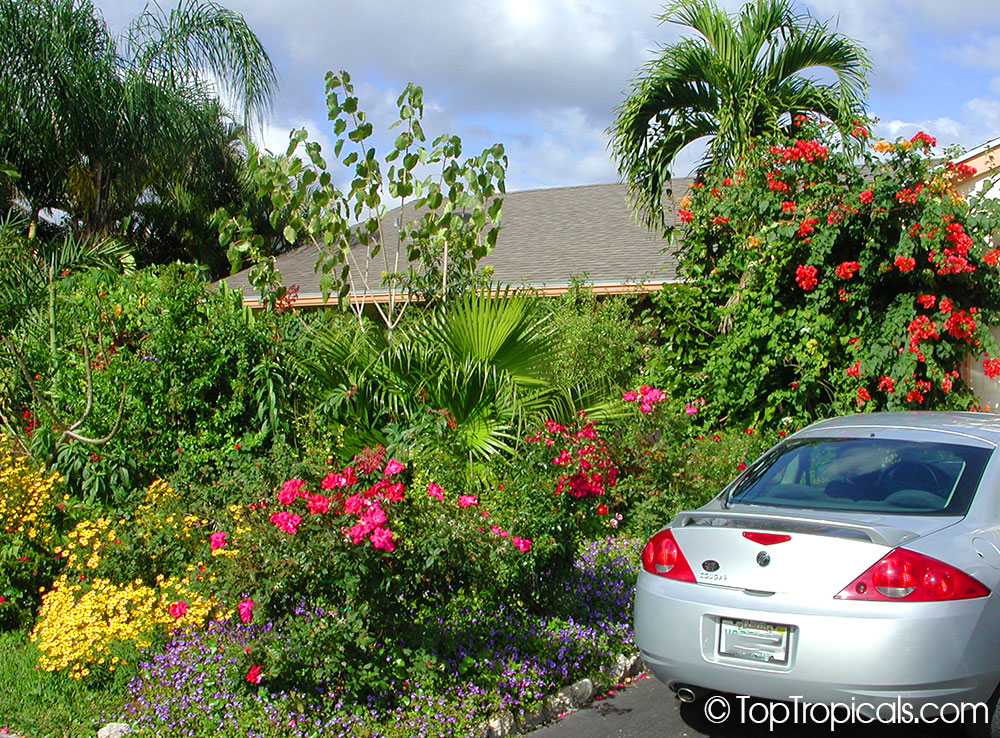
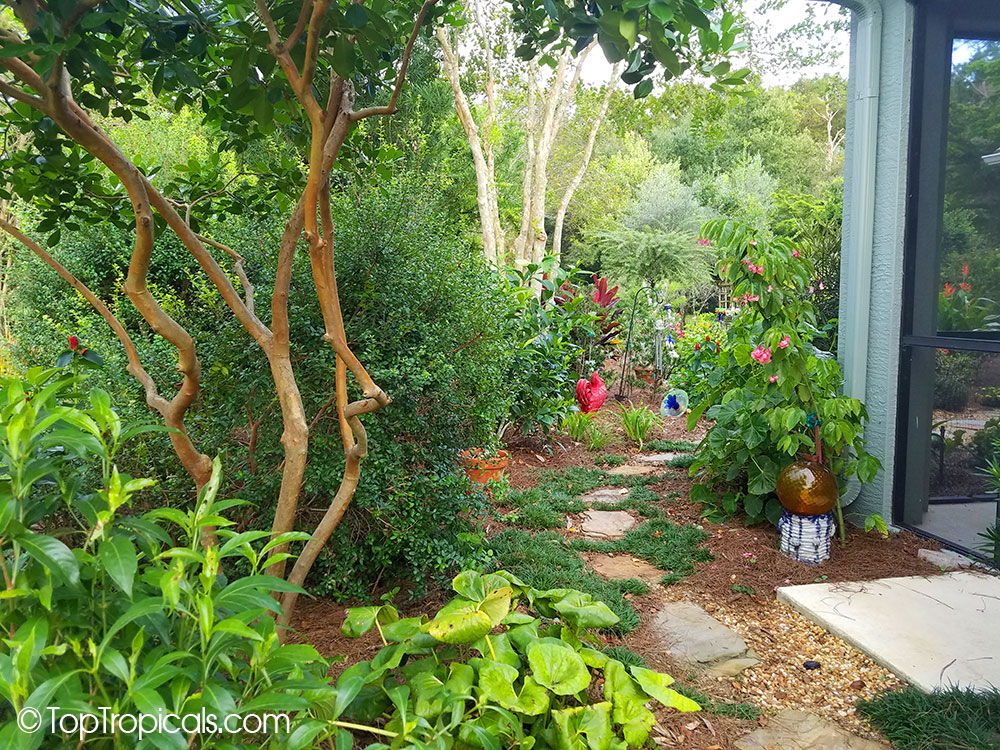
A: Companion planting is a gardening technique that involves planting different crops or types of plants together in a way that benefits all plants. This practice has been used for centuries, and it can be especially useful in tropical gardens where there is a diversity of plant life: trees, shrubs, vines and climbers, ground covers, fruit and edibles, and different flowering ornamentals. It is a great way to improve the health and yield of fruit tree crops while reducing the need for fertilizers and pesticides. By choosing the right companion plants and planning your garden layout carefully, you can create a vibrant and diverse ecosystem that will benefit both your plants and the environment.
Companion planting involves:
Planting different crops together to repel insects: adding such plants as Lemon grass, Patchouli leaf, or Moujean Tea near your vegetables can deter aphids and other pests.
Attracting pollinators - Butterfly plants. Many tropical crops, such as passion fruit, papaya, mango, and avocado, rely on pollinators to produce fruit. Companion planting can help to attract pollinators such as bees, butterflies, and hummingbirds to your garden.
Providing nutrients to the soil, adding mulch and low growing plants (ground covers) to preserve moisture.
Planting a variety of different types of plants together in order to create a more resilient ecosystem that is less susceptible to pests and diseases.
To get started, plan your garden layout and choose companion plants with
similar water and light requirements.
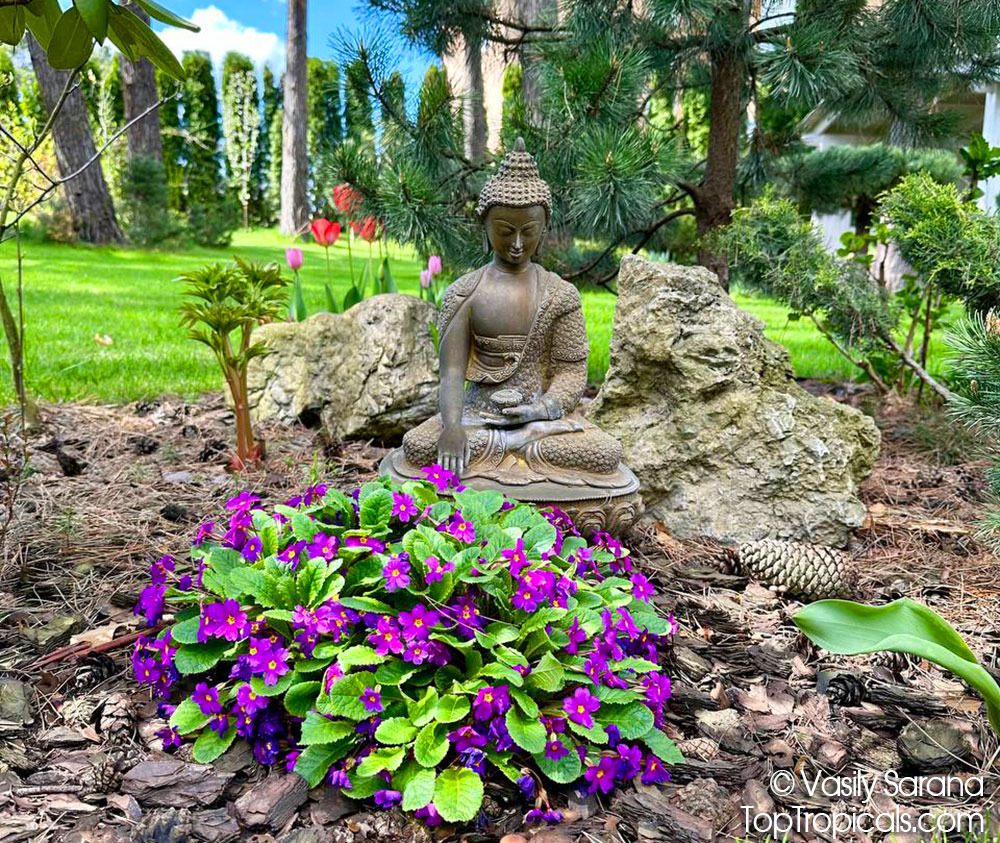
For example, plant in the same group lush foliage plants, gingers, and flowering brunfelsias in shady areas; plant jasmines and gardenias in full sun and very well-drained spots.
Rotate annual crops regularly and experiment with combinations to find what
works best. By doing this, you can create a thriving ecosystem that benefits
both your plants and the environment, reducing the need for harmful
chemicals.