Garden Blog - Top Tropicals

Date: 19 Feb 2026

10 ways to enjoy Wild Medlar - Spanish Tamarind
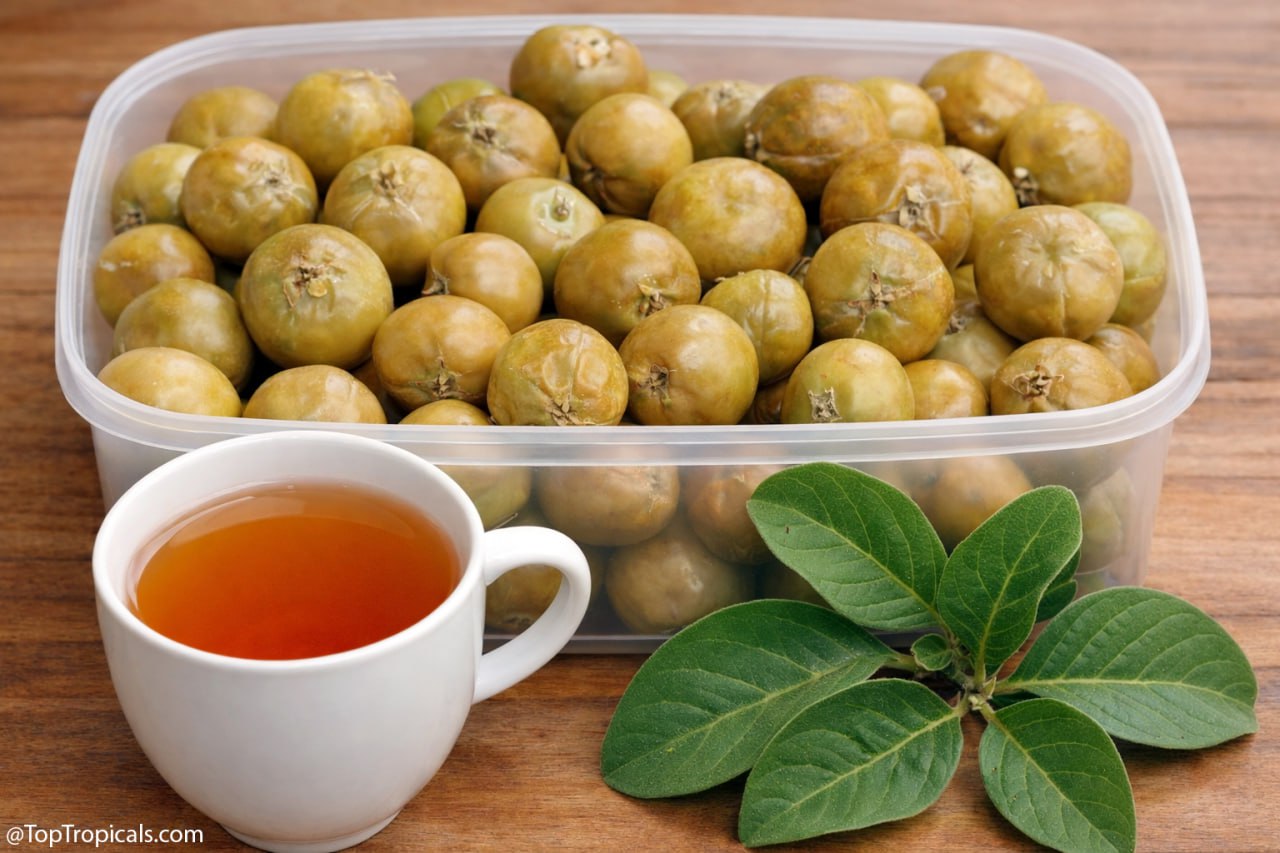
Vangueria infausta (Spanish Tamarind, Wild Medlar)

Vangueria infausta (Spanish Tamarind, Wild Medlar)

🍊 10 ways to enjoy Wild Medlar - Spanish Tamarind


Vangueria infausta (Spanish Tamarind, Wild Medlar) from Africa to your backyard: the fruit, the medicine, the tradition.

Spanish Tamarind may look like a small, unassuming fruit - but don’t let it fool you. In its native Africa, this tree is a food staple, a home remedy, and a cultural favorite, all wrapped into one. And now, it’s ready to bring that same magic into your garden and kitchen. People have used this fruit for generations - and how you can too.

🍊 1. Eat it fresh, off the tree


When ripe, the fruit turns golden brown and softens slightly. Its flavor is sweet-tart, almost like a tangy apple or tamarind with a hint of citrus. Just peel and eat!

🍬 2. Dry it for snacks


In many African regions, the fruit is sun-dried and enjoyed like natural fruit leather. It keeps well, travels well, and makes a great healthy snack.

🍵 3. Brew it into a fruit tea


Dried fruit can be steeped into a tart, refreshing tea that’s packed with vitamin C and antioxidants. Add honey or ginger for a soothing drink.

🍷 4. Ferment it into traditional beer or wine


In some local cultures, the fruit is fermented into a mild alcoholic drink, similar to fruit wine or beer. This is one of the tree’s oldest known traditional uses.

🍧 5. Make jams and preserves


Boil the pulp with sugar and lemon juice to make tangy medlar jam. Spread it on toast, stir into yogurt, or use it in baking.

6. Add to porridge or smoothies


Crushed or juiced medlar fruit is added to traditional maize porridge for a nutrient boost. You can do the same with oatmeal or smoothies.

7. Try traditional fruit pudding


A simple medlar mash with a little sweetener makes a rich, apple-like pudding with hints of spice. Great as a chilled dessert.

🌿 8. Use the leaves and bark medicinally


In folk medicine, leaves are brewed into a tea for treating fever, colds, and stomach aches. Bark is used for chest congestion and coughs. Roots are sometimes used for even stronger remedies like malaria treatment.

9. Clean your teeth the traditional way


Believe it or not, people use medlar leaves to clean their teeth! The leaves are antimicrobial and have a slight astringent taste that leaves your mouth feeling fresh.

🎨 10. Dye fabric naturally
Crush the bark or boil the leaves to create natural dyes in yellow, green, and even purple tones. This use is still practiced in rural areas of southern Africa.

✍️ Why this tree belongs in your life


Wild Medlar is more than just a fruit. It’s a versatile, resilient, and deeply cultural plant that connects generations. It’s food, it’s healing, it’s art—and now it can be part of your garden story.
Grow it for the fruit, the medicine, the tradition… or just for the joy of growing something wild and wonderful.

🛒 Plant Spanish Tamarind and enjoy exotic fruit benefits

📚 Learn more:


#Food_Forest #Remedies #Recipes #Discover

🟢 Join 👉 TopTropicals
Date: 24 Oct 2025

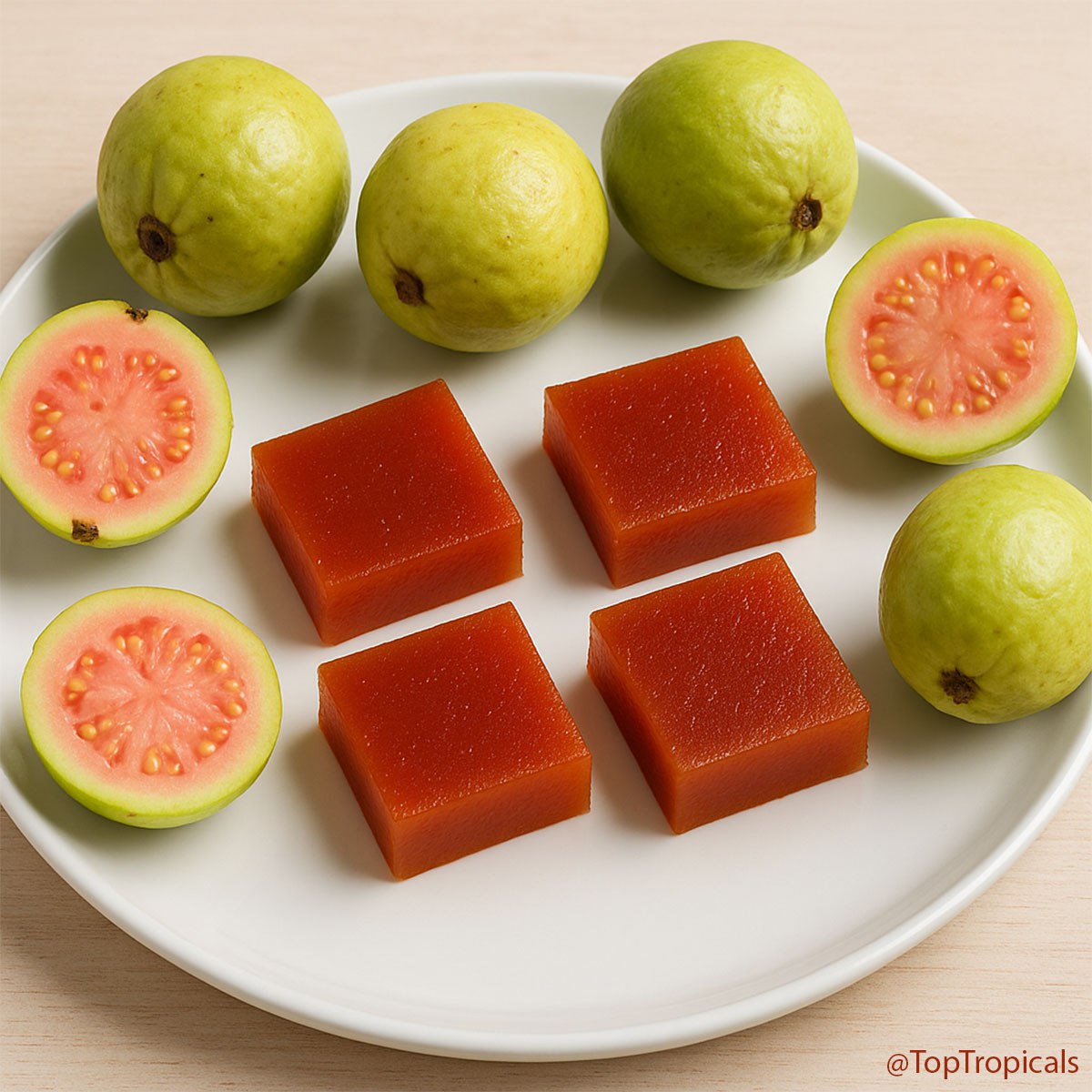
Guava fudge: quick-n-fun exotic recipes

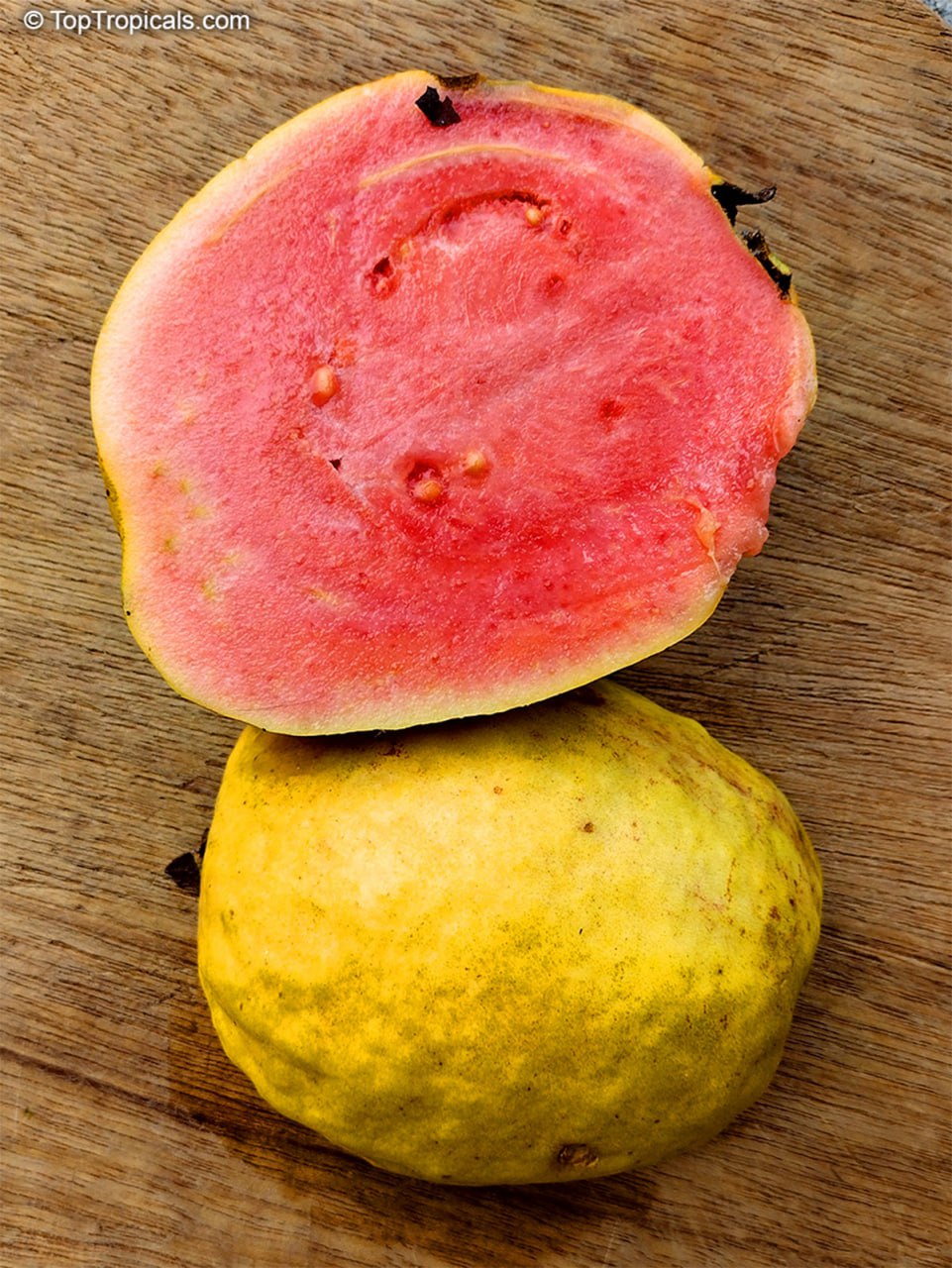
Guava fruit

Guava fruit

Guava fudge

Guava fudge

🔴Cook guava pulp with sugar until thick, pour into a pan, cut into squares.
🔴A tropical fudge-like sweet.

🍴 Guava fudge: quick-n-fun exotic recipes

Ingredients

  • 2 cups ripe guava pulp
  • 1½ cups sugar
  • 1 tbsp lemon juice (optional)

Instructions

  1. Cook guava pulp with sugar in a pan over medium heat.
  2. Stir constantly until mixture thickens and pulls away from sides.
  3. Pour into a greased pan and let it cool.
  4. Cut into small squares and enjoy your tropical fudge.

🛒 Grow your own sweet guava fruit

📚 Learn more:


#Food_Forest #Recipes

🟢 Join 👉 TopTropicals

Date: 2 Mar 2026

Eugenia Cherries 🍒

By Tatiana Anderson, Horticulture Expert at Top Tropicals with Smokey & Sunshine help

Eugenia brasiliensis - Grumichama fruit on the branch

Growing Eugenia Cherries (Cherry of the Rio Grande & Grumichama)

Cherry of the Rio Grande and Grumichama are compact, adaptable tropical fruit trees well suited to Southern landscapes. While forgiving, they perform best when planted correctly from the beginning.

Site and Planting

  • Drainage is essential. Avoid low areas where water collects. Plant on a slight mound if soil is heavy or clay-like.
  • Choose full sun for best flowering and fruit production. Partial shade is tolerated.
  • A south or southeast exposure near a wall improves cold resilience and reduces wind stress.
  • Dig a hole twice as wide as the container, but no deeper than the root ball.
  • Set the tree level with surrounding soil. Do not bury the trunk.

Water and Feeding

  • Water regularly during the first few months while roots establish.
  • Once established, trees tolerate short dry periods but fruit best with moderate, consistent moisture.
  • Feed lightly and consistenly. SUNSHINE Boosters Robusta liquid fertilizer is safe to use with with every watering. During hot season you may add controlled release Green Magic every 6 months. It is essential to apply micro elements: Sunshine Superfood micro nutrients complex

Cold Tolerance

  • Protect young trees during hard freezes.
  • Established Cherry of the Rio Grande can tolerate brief drops into the low 20s.
  • Established Grumichama tolerates temperatures into the upper 20s.

Harvest and Production

  • Cherry of the Rio Grande fruits from late spring into summer. Pick when fully dark and slightly soft.
  • Grumichama ripens quickly, often within four weeks after flowering. Pick when glossy and deep purple-black.
  • Both trees often begin fruiting within 2–3 years and increase production steadily with maturity.

Growing in Containers

  • Use at least a 10–20 gallon pot for long-term growth.
  • Ensure multiple drainage holes.
  • Use a high-quality, well-draining container mix. Avoid heavy garden soil. Top Tropicals Abundance soil-less mix is specially formulated for pot growing
  • Place in full sun for best fruiting.
  • Water deeply, then allow the top layer to dry slightly before watering again.
  • Move containers to a protected area during hard freezes.
  • Prune lightly to maintain shape and airflow.

Common Mistakes

  • Planting in poorly drained soil.
  • Overwatering and keeping soil constantly saturated.
  • Over-fertilizing with excessive nitrogen.
  • Planting too deep and burying the trunk.
  • Expecting heavy crops immediately instead of allowing time for maturity.
  • Skipping cold protection for young plants.

Learn more: Tropical Cherries – Eugenias

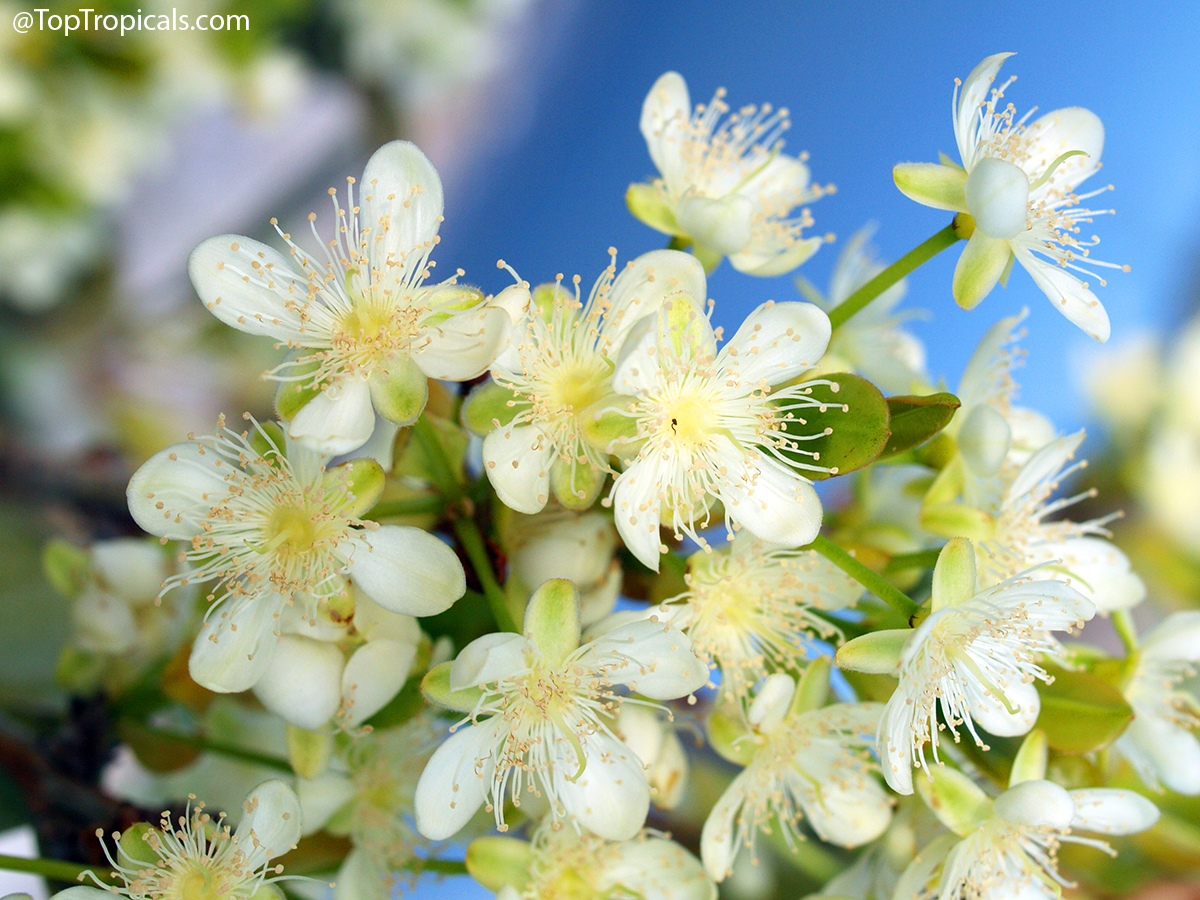
EGrumichama  flowers  (Eugenia  brasiliensis)  in  close-up  showing  white 


petals  and  long 


stamens

Eugenia brasiliensis - Grumichama flowers

❓Frequently Asked Questions: Eugenia cherries (FAQ)

  • Which one tastes better – Cherry of the Rio Grande or Grumichama?
    Cherry of the Rio Grande has a deeper, classic “sweet cherry” flavor with slight richness. Grumichama is softer, juicier, and often described as cherry with hints of grape and plum. Both are excellent fresh; Grumichama is especially popular for jam.
  • Which tree produces more fruit?
    Grumichama typically produces heavier crops once mature and can carry hundreds of fruits in a season. Cherry of the Rio Grande produces consistently but in slightly smaller volumes.
  • Do birds take all the fruit?
    Birds are attracted to both trees, especially Grumichama. Netting during peak ripening or harvesting promptly usually solves the issue.
  • Are these true "tropical" trees or subtropical?
    They are best described as subtropical tropicals. Unlike ultra-tender tropical fruits, Eugenia cherries tolerate occasional frost once established, making them more reliable in Southern landscapes.
  • Do they drop fruit messily?
    Fruit will fall if overripe, but the trees are compact and manageable. Regular harvesting prevents ground drop and keeps the area clean.
  • Can they be used for hedging or screening?
    Yes. Their dense evergreen foliage and upright growth make them suitable for edible hedges or privacy screens while still producing fruit.

Choosing between them is not about survival — both have proven resilient. It is about flavor preference, crop volume, and how you want to use the fruit in your kitchen and landscape.

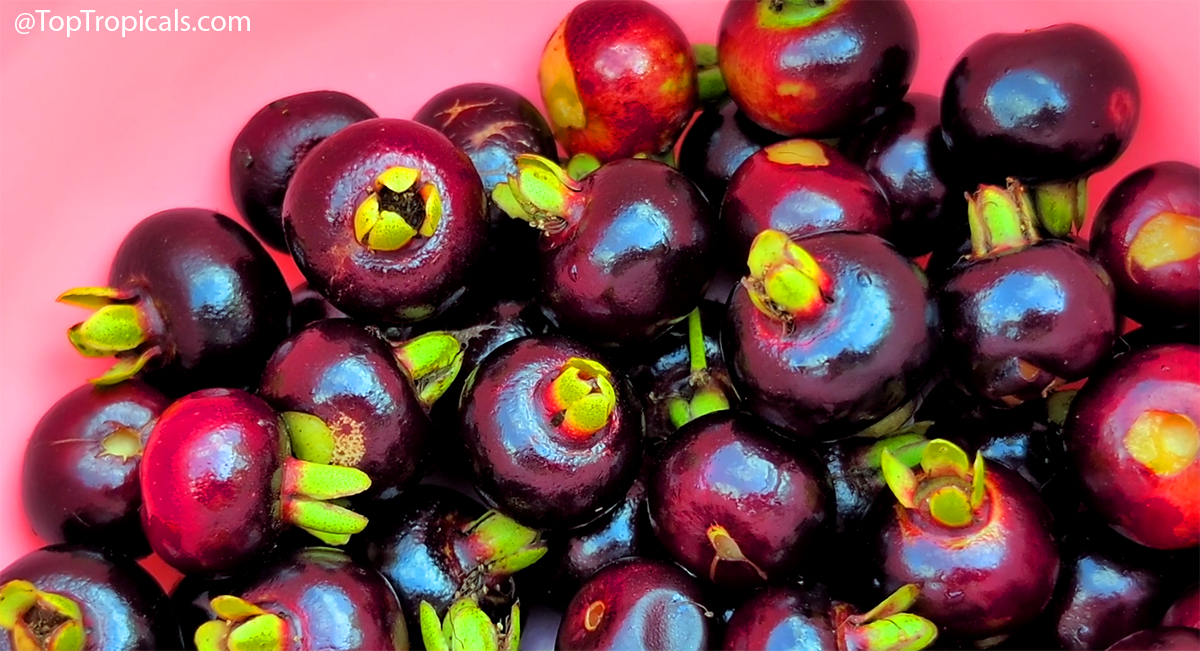
Freshly  harvested  Grumichama  fruits  (Eugenia  brasiliensis)  showing  dark
 
 
  purple  skin  and  green 


calyx

Eugenia brasiliensis - Grumichama fruit close up

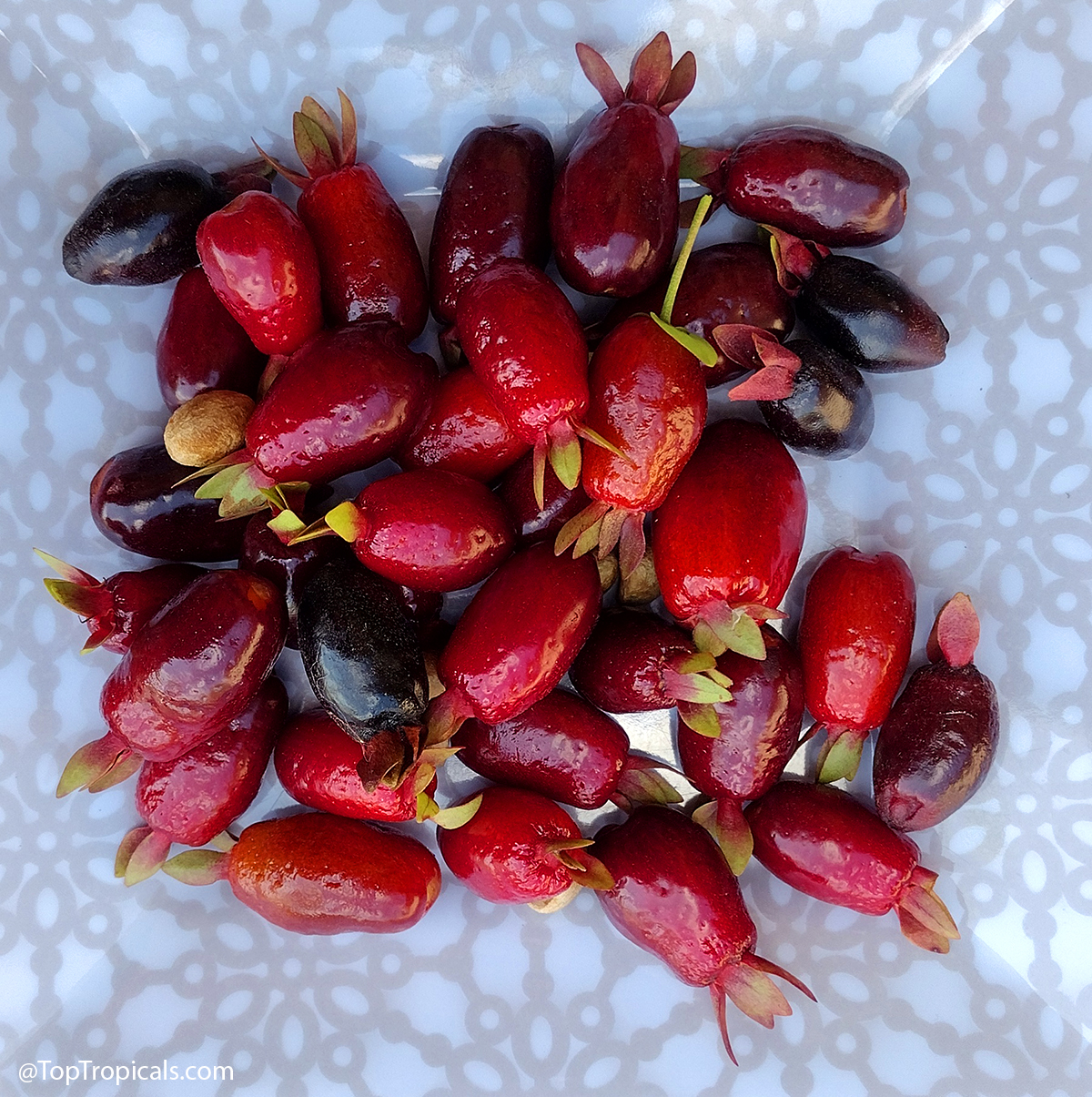
Harvested  Cherry  of  the  Rio  Grande  fruits  (Eugenia  aggregata  cv. 


Calycina)  showing  red  to  dark  purple  ripening  stages


Caption:

Eugenia aggregata (cv. Calycina), Cherry of the Rio Grande

🛒 Add Eugenia cherries to your garden

✍️ Top Ten Fruit Tree Winners of Florida 2026 Record Freeze

Date: 20 Mar 2022

Join our Sunday Garden Party Today!

Saving on your favorite plants is Easy.
Easy like Sunday Morning...


It's time for our favorite day and another Easy stroll through Top Tropicals Garden with savings of

up to 50% and MORE!

Spring into Spring Garden Party
Local or Virtual

Spring has arrived! Spring signals new beginnings and nature's renewal and offers a ray of hope in a world that could really use some right now.
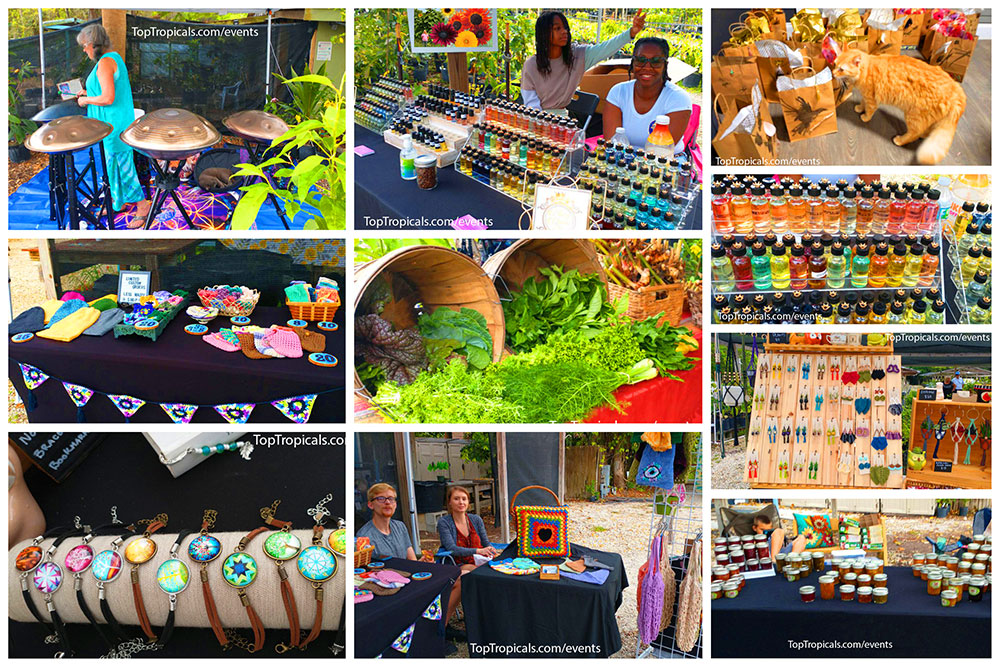
Today is our Spring into Spring Garden Party at our TopTropicals Garden Center in Fort Myers, Florida. Cool vendors, Live Music, Plant Clinic and 15% off all plants. If you can't join us live, come to this virtual party and you can Save 15% too! And more...

Check our event page for the latest pictures and take advantage of our savings available to you! 15% off all orders of $100 or more. Simply use the code GARDENPARTY at checkout and save!

For 15% off use code:
GARDENPARTY

Min order $100 excluding S/H, exp. 3-21-22.

Exclusive offer for online guests only:
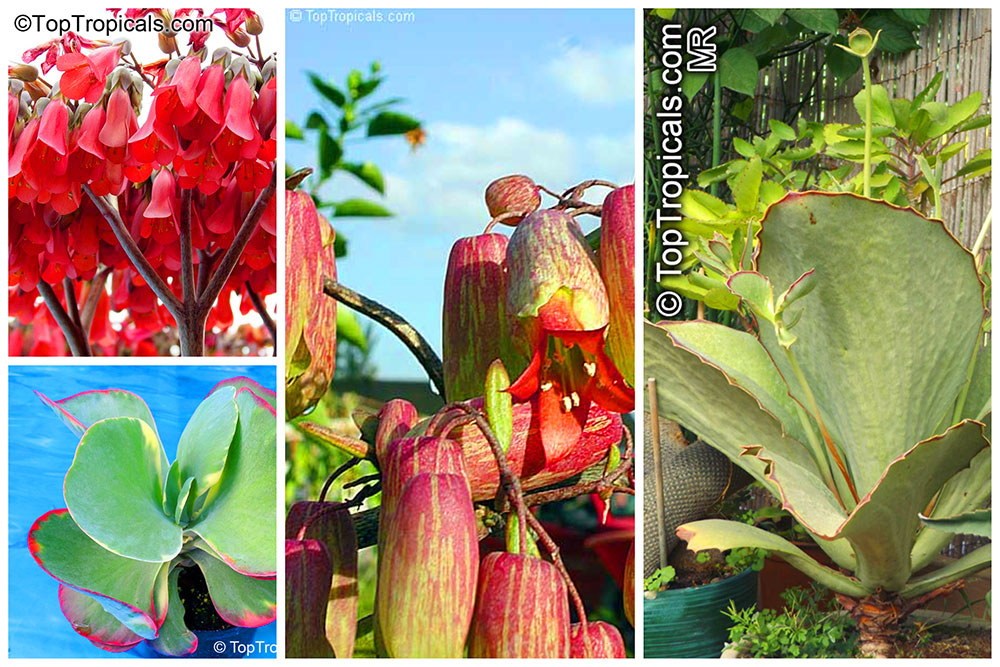
50% OFF 4 rare Kalanchoe species

As a special offer for online shoppers, we offer a flash deal of easy to grow, yet rare Kalanchoe varieties, with at instant 50% OFF for one day only! On top of that, use your GARDENPARTY 15% off coupon at checkout and make it a STEAL!

Kalanchoe synsepala Magnificent - Walking Cup Kalanchoe
Kalanchoe thyrsiflora (tetraphylla ) - Flapjacks
Kalanchoe pinnata - Hawaiian Air Plant, Bahamas Breath Plant
Kalanchoe daigremontiana - Mother of Thousands

Remember, this Easy Sunday Deal expires on Monday, 3-21-22.

Date: 20 Nov 2025

Feijoa coconut loaf: quick-n-fun exotic recipes

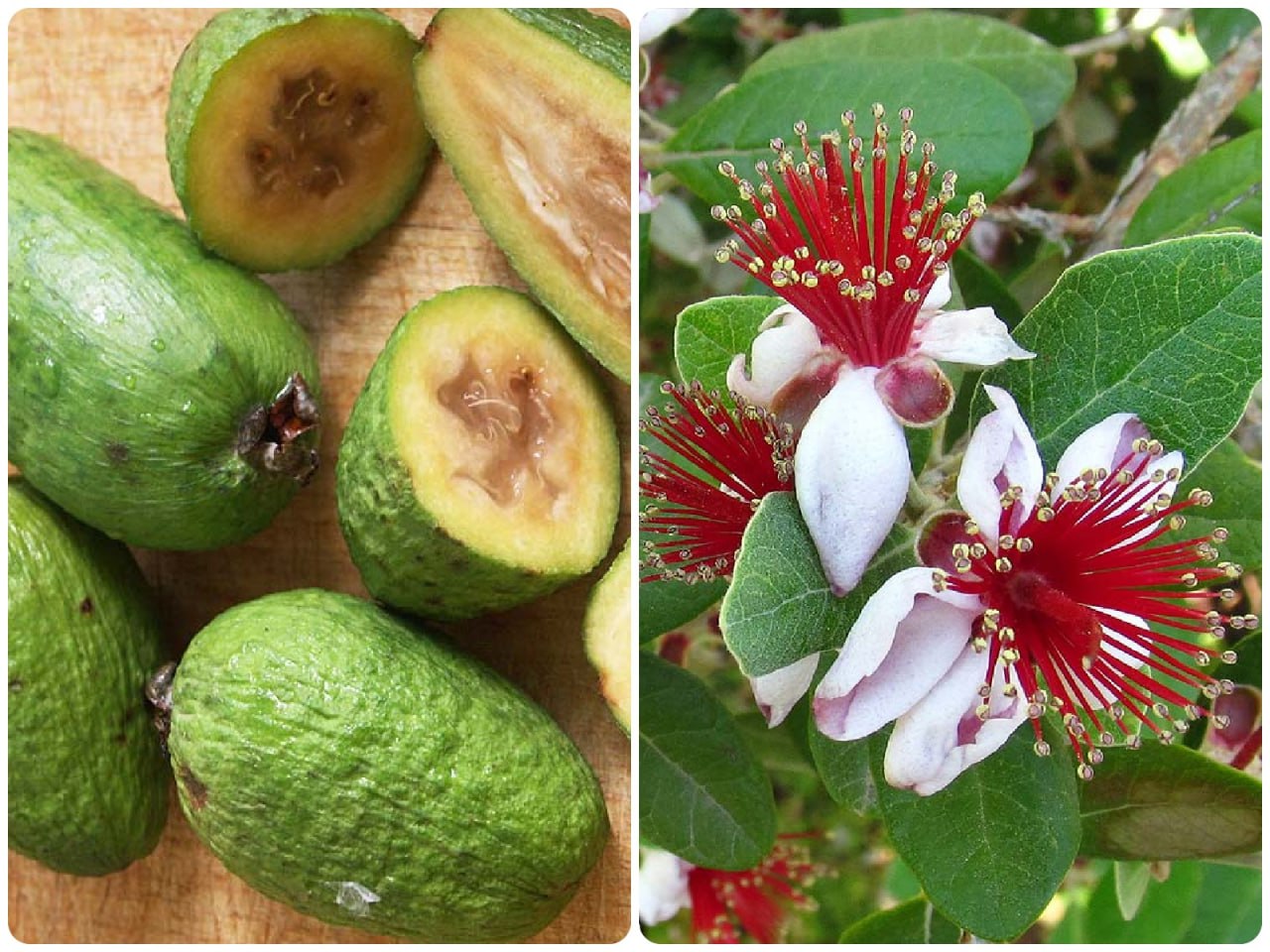
Pineapple Guava, Guavasteen, Fejoa (Feijoa sellowiana)

Pineapple Guava, Guavasteen, Fejoa (Feijoa sellowiana)

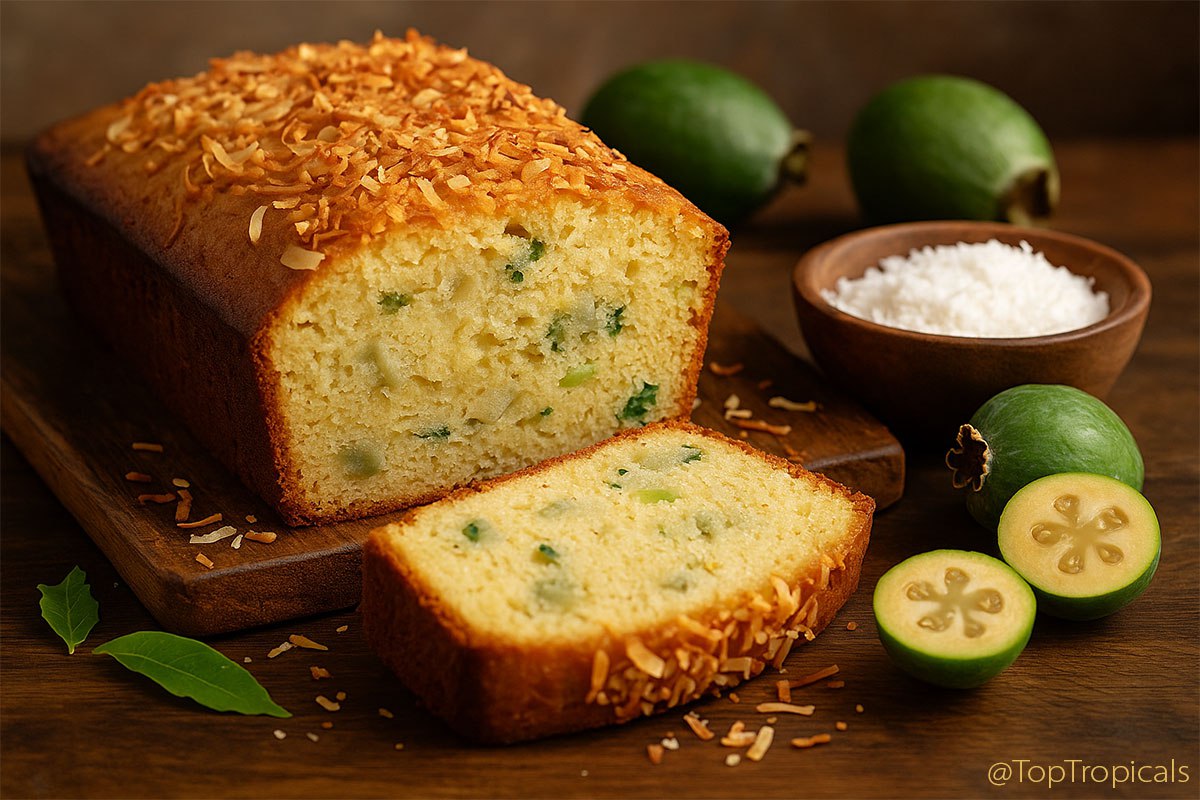
Feijoa coconut loaf

Feijoa coconut loaf

🍴 Feijoa coconut loaf: quick-n-fun exotic recipes

  • 🔴Mix Feijoa pulp into a coconut quick-bread batter.
  • 🔴Bakes into a fragrant tropical treat.

Feijoa Coconut Loaf

Ingredients

  • 1 cup feijoa pulp, finely chopped
  • 1 3/4 cups all-purpose flour
  • 1 cup sugar
  • 1 cup shredded coconut
  • 2 large eggs
  • 1/2 cup melted butter
  • 1/2 cup milk
  • 1 tsp baking powder
  • 1/2 tsp baking soda
  • 1 tsp vanilla extract
  • Pinch of salt

Instructions

  1. Preheat oven to 350F. Grease a loaf pan.
  2. Whisk flour, baking powder, baking soda, coconut, and salt.
  3. Mix eggs, sugar, melted butter, milk, and vanilla.
  4. Fold dry ingredients into wet, then stir in feijoa pulp.
  5. Pour batter into loaf pan and smooth the top.
  6. Bake 45 to 55 minutes or until golden and a toothpick tests clean.
  7. Cool before slicing.

🛒 Plant exotic fragrant Feijoa - Pineapple Guava

📚 Learn more:


#Food_Forest #Recipes

🟢 Join 👉 TopTropicals