🍒 Cherry of the Rio Grande (Eugenia aggregata) is one of those tropical fruits you don't forget once you taste it. The fruit looks like a dark ruby jewel and ripens to almost black, with a sweet, full cherry-like flavor.
🍒 Unlike the temperate cherries, this one thrives in warm climates and starts flowering as early as March, keeping the harvest going well into summer.
🍒 This little fruit tree that fits anywhere! It's slender, branching, fits neatly in limited spaces or even in a pot, yet still produces plenty of fruit.
🍒 Can a tropical cherry really handle freezing temps? Once mature, Cherry of the Rio Grande can handle surprising cold snaps down into the 20s. A tough little tree that gives you a taste of the tropics right in your own backyard!
🌳 Moringa vs spinach: which one wins for nutrition?
✔️Moringa is sometimes called the Tree of Life, and for good reason. Almost every part is edible - leaves, pods, seeds, even the flowers. It isn't just a tree, it's like a whole pantry and medicine cabinet rolled into one.
✔️ The leaves pack vitamins, minerals, and protein.
✔️ The pods look like drumsticks and end up in curries.
✔️ Even the seeds are handy - pressed for oil or used to clean water.
✔️ And here's the bonus: it grows fast, covers itself in fragrant white flowers, and looks beautiful right in your garden.
✔️ A tree that feeds you, heals you, and makes the yard smell good.
💥 If you have ever seen a mature Bombax tree (Bombax ceiba), you were impressed!
💥 A fire in the canopy. The Red Kapok tree, or Bombax (Ceiba) malabaricum) - is one of the most striking flowering trees in the tropics. In late winter and spring, when its branches are bare, it bursts into bloom with huge, crimson flowers that light up the entire crown. These flowers are not only spectacular to look at but also rich in nectar, drawing in flocks of birds, bees, and butterflies. Their size, color, and fragrance make the tree a true seasonal landmark wherever it grows.
💥 More than just beauty. Beyond its beauty, the Bombax tree has many uses. Its blossoms, bark, and leaves are valued in traditional medicine for treating coughs, skin issues, and inflammation. The tree produces large woody pods filled with silky floss that has long been used for stuffing pillows, cushions, and life jackets. Its wood is strong yet lightweight, making it useful for carving, canoes, and even musical instruments.
💥 Sacred and symbolic. The Bombax tree also carries cultural weight. In Hindu mythology, it is associated with Lord Indra, the god of rain and storms, and in many regions it is considered sacred, often celebrated during festivals.
💥 A tree you never forget. With its towering trunk, impressive buttress roots, and dazzling red blooms, the Bombax tree is more than just an ornamental - it is a tree of beauty, tradition, and utility.
Its a miracle: Miracle Fruit messes with your tongue, makes lemon sweet!
🍭 It's a miracle: Miracle Fruit messes with your tongue, makes lemon sweet!
🍋🍬Miracle Fruit (Synsepalum dulcificum) Miracle Fruit - is a tidy, productive pot plant with a magical surprise.
🍋🍬 Ever wish lemons tasted like candy? This little berry makes sour foods taste sweet - lemon turns into a lemon candy, vinegar into syrup, and the effect can last for hours. The secret is a natural compound that masks the sour taste buds on your tongue.
🍋🍬 Miracle fruit isn’t just a fun trick - it’s also a perfect plant for your garden. A compact, slow-growing shrub, it actually prefers pots since it likes acidic soil. Indoors or out, it can fruit almost year-round, staying a neat 3-5 ft tall in a container.
🍋🍬 Best part? You can surprise your friends with a slice of lemon before and after trying it - and just wait for their reaction!
🍋🍬 What foods did you try with Miracle fruit? How did it change the taste?
Its a miracle: Miracle Fruit messes with your tongue, makes lemon sweet!
Synsepalum dulcificum - Miracle Fruit
🍭 It's a miracle: Miracle Fruit messes with your tongue, makes lemon sweet!
🍋🍬Miracle Fruit (Synsepalum dulcificum) Miracle Fruit - is a tidy, productive pot plant with a magical surprise.
🍋🍬 Ever wish lemons tasted like candy? This little berry makes sour foods taste sweet - lemon turns into a lemon candy, vinegar into syrup, and the effect can last for hours. The secret is a natural compound that masks the sour taste buds on your tongue.
🍋🍬 Miracle fruit isn’t just a fun trick - it’s also a perfect plant for your garden. A compact, slow-growing shrub, it actually prefers pots since it likes acidic soil. Indoors or out, it can fruit almost year-round, staying a neat 3-5 ft tall in a container.
🍋🍬 Best part? You can surprise your friends with a slice of lemon before and after trying it - and just wait for their reaction!
🍋🍬 What foods did you try with Miracle fruit? How did it change the taste?
🍖 Your fence could smell better than your neighbor’s grill!
📌Got a plain or ugly fence? Just cover it up! We did just that and created a Perfume Fence.
📌First, we planted Hawaiian Plumeria trees along the fence line. Then we added vining jasmines to climb the wire fence and smother it in flowers. Each jasmine has its own fragrance - some sweet, some rich, some spicy - and together they make the whole fence smell incredible!
📌Soon the wire won’t even show - just a living wall of blossoms and perfume drifting through the garden.
Here are some of the best plants you can use to make your own fragrant fence:
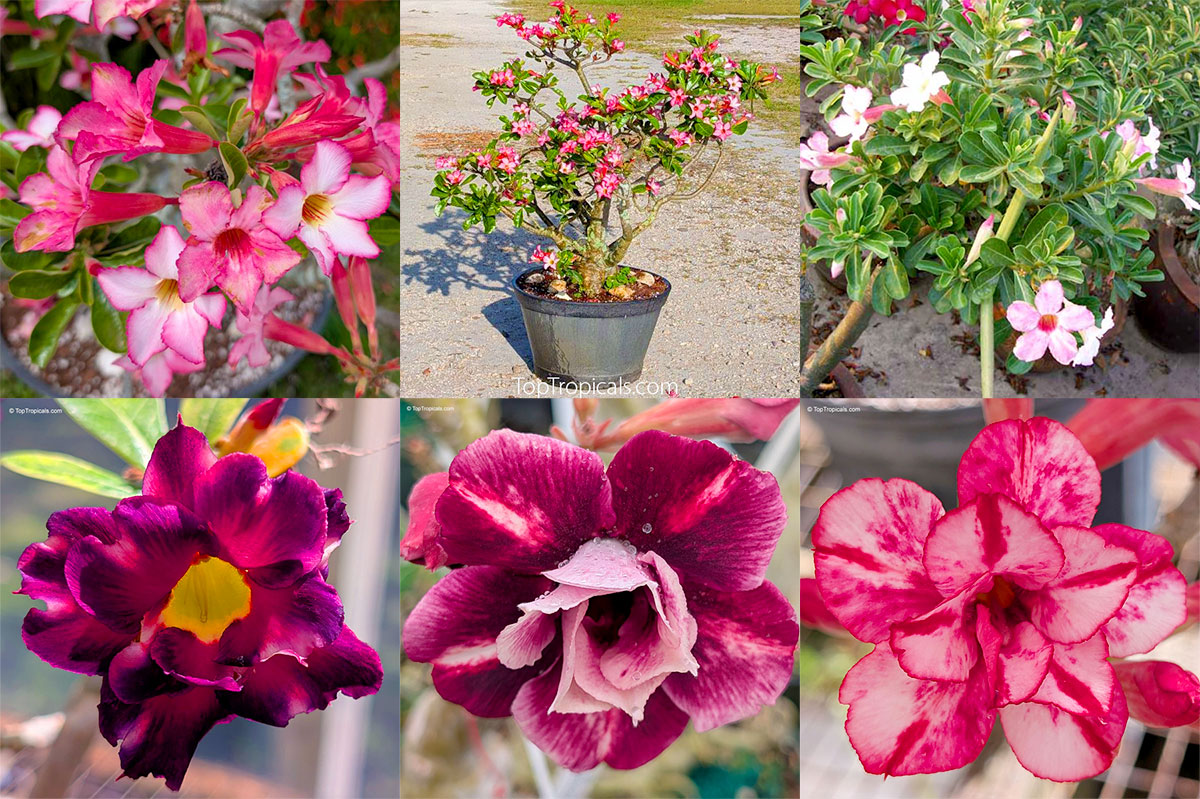
Care for adeniums is simple once you understand what they like. Think of
them as half succulent, half tropical shrub. Keep their roots dry but never
bone-dry, give them sun, and feed them during the warm months. Do that, and they will reward you with fat trunks and nonstop flowers.
Soil and pot: Use a gritty, fast-draining Adenium Soilless Mix. Shallow wide pots work best — they let the caudex spread and show off its shape like a bonsai.
Watering: Water in the morning. Let the surface dry before watering again. Never let pots sit in saucers of
water.
Foliage: Keep leaves dry. Wet leaves invite rot and fungus.
Fertilizer: During active growth, feed with Sunshine Megaflor liquid fertilizer (flower booster); it promotes swollen trunk and sets flower
buds.
Light: Give them bright light year-round. Full sun in mild climates; filtered light if your summers are
scorching.
Winter rest: Cut water back when days shorten and let the plant rest. Dormancy is
normal.
Repotting trick: Each time you repot, lift the plant a bit so the crown roots peek above the soil. This encourages bigger
caudex.
Desert roses are made for containers, easy enough for a beginner but rewarding enough for a
collector.









 Adenium care