Piper longum (Bengal Pepper)
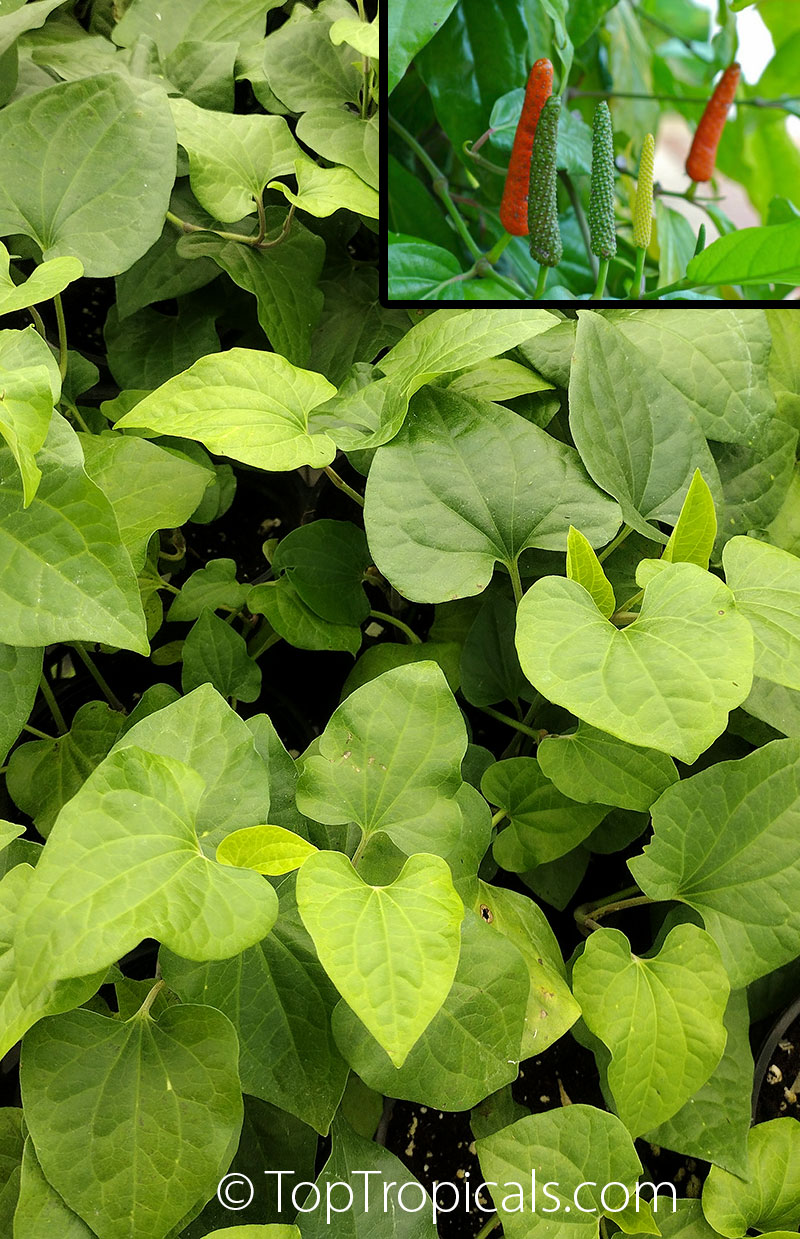
Botanical name: Piper longum
Common names: Bengal Pepper, Indian Long Pepper, Pippali, Piplamul
Family: Piperaceae
Origin: South Asia
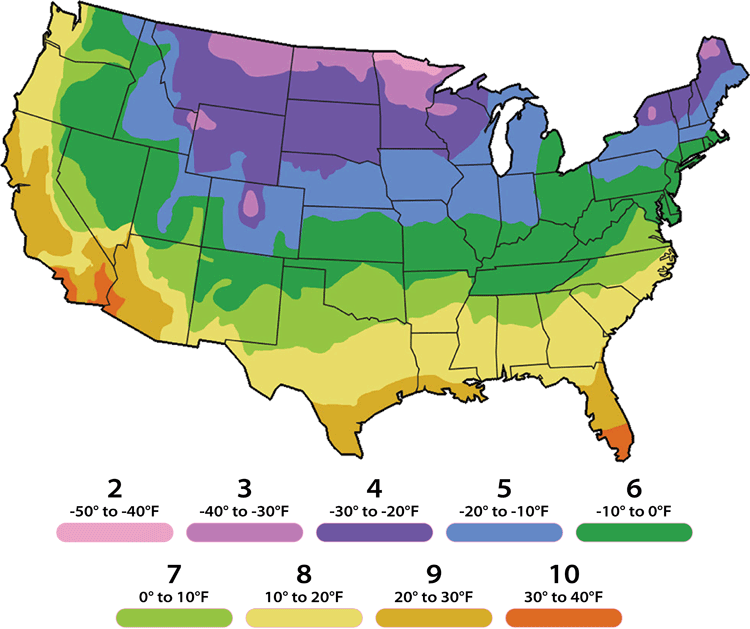
USDA Zone: 9-11
 Plant form: Large bush
 Mature height: 5-10 ft
 Sun exposure: Full sun or bright light indoor
 Cold tolerance: Frost sensitive. Protect from freezing.
 Watering: Regular
 Suitable for: Outdoors in the suitable USDA zone; small gardens, containers, and indoor growing
 Ethnomedical: Ethnomedical plant, traditionally used in folk or indigenous medicine
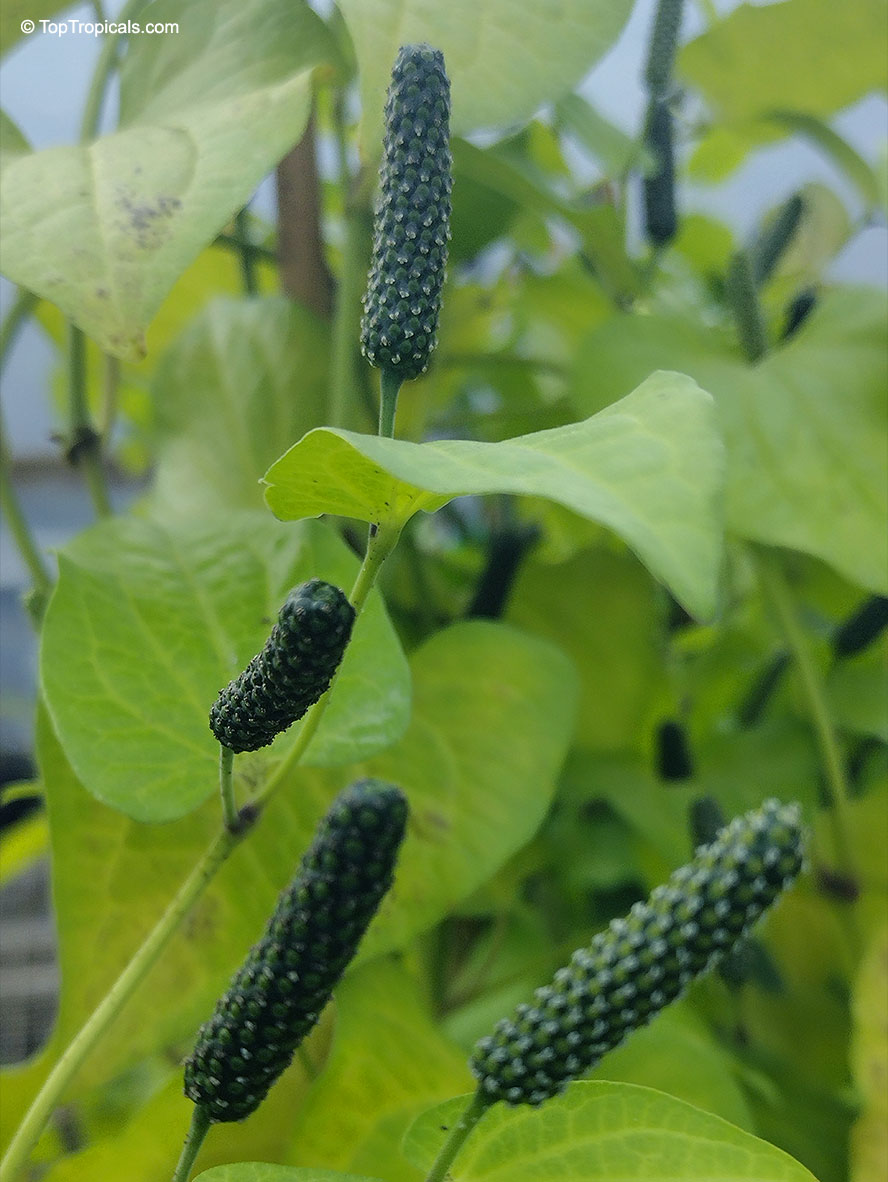
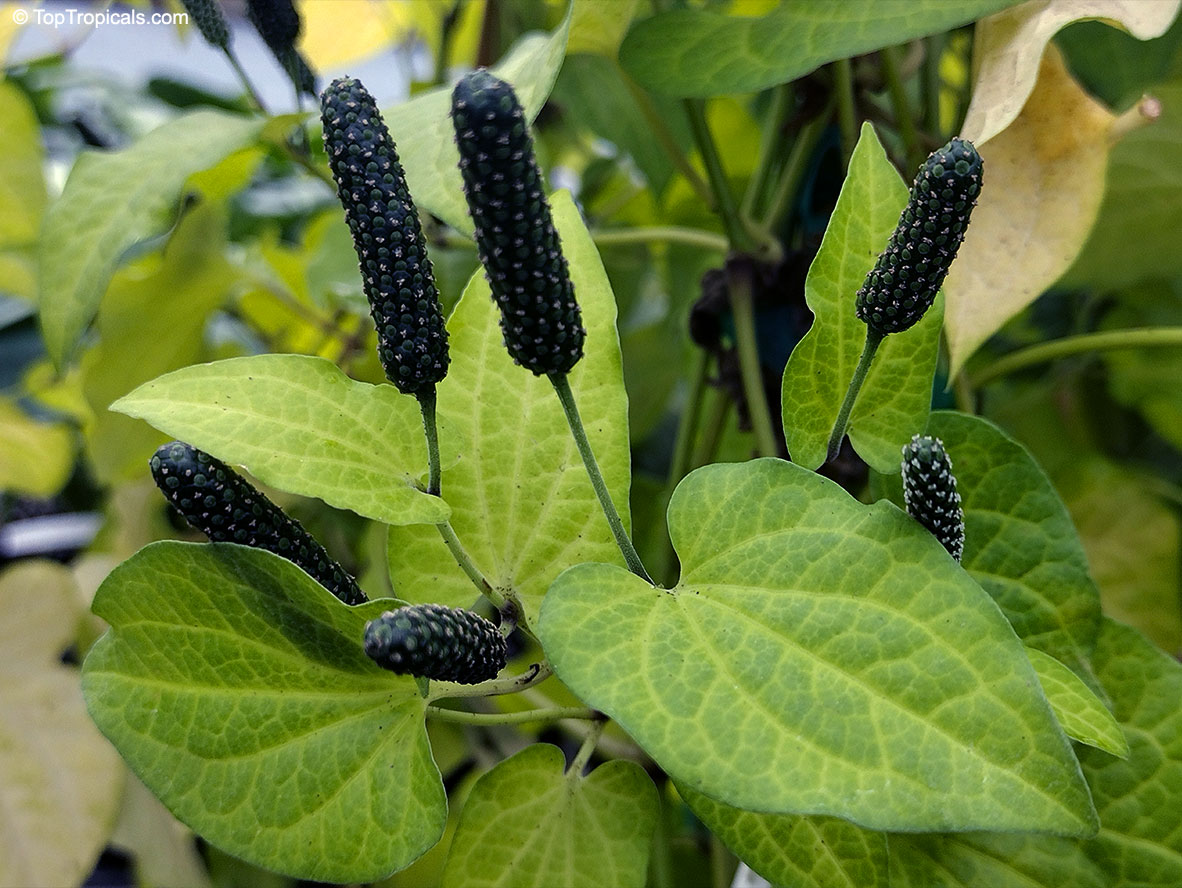
Long pepper is an edible and medicinal plant used as spice and in traditional Chinese medicine. It is cultivated for its fruit, which is usually dried and used as a spice and seasoning. Long pepper has a taste similar to, but sweeter and less pungent than, that of its close relative Piper nigrum (Black pepper) - from which black, green and white pepper are obtained.
Long Pepper is highly valued medicinal plant with decongestant, bronchodilator and expectorant effects, used to treat respiratory infections, stomachache, bronchitis, diseases of the spleen, cough, and much more.
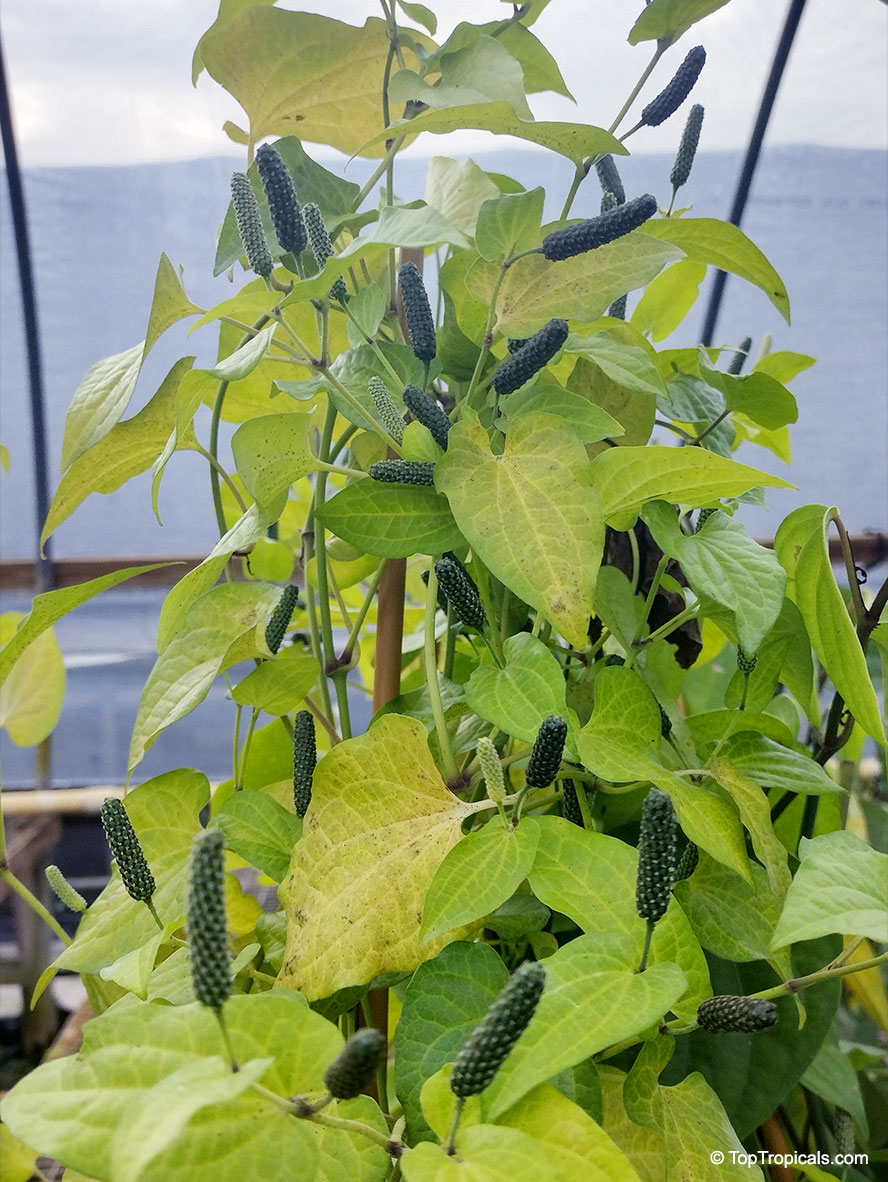
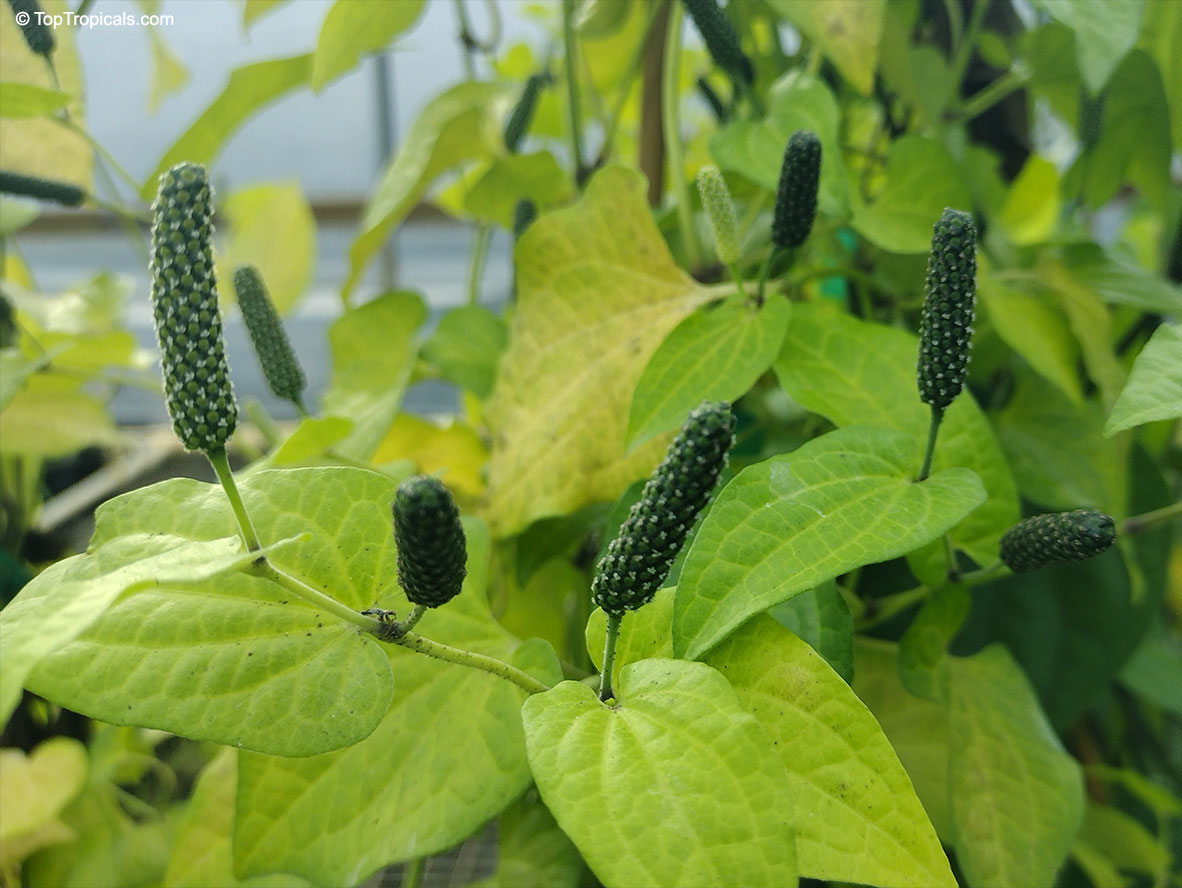
The plant grows into a vining shrub or a vine that can climp a tree, trellis or fence. Prefers shade to semi-shade and adequate water. The leaves of Piper longum start as heart shaped in juvenile plants and may get more elongated as the plant matures.
The species Piper longum is of South Asian origin (Deccan peninsular), whereas the closely related Piper retrofractum
comes from South East Asia and is mostly cultivated in Indonesia and Thailand.
See Article about Pipers.
Similar plants: Piper longum (Bengal Pepper)
- Piper aduncum (Spiked Pepper)
- Piper auritum (Root Beer Plant)
- Piper betle (Betel Leaf)
- Piper blattarum (Higuillo)
- Piper magnificum (Lacquered Peppertree)
- Piper methysticum (Kava)
- Piper nigrum (Pepper)
- Piper ornatum (Celebes pepper)
- Piper peltatum (Pakina)
- Piper retrofractum (Javanese Long Pepper)