Piper betle (Betel Leaf)
Botanical name: Piper betle
Common name: Betel Leaf
Family: Piperaceae
Origin: India
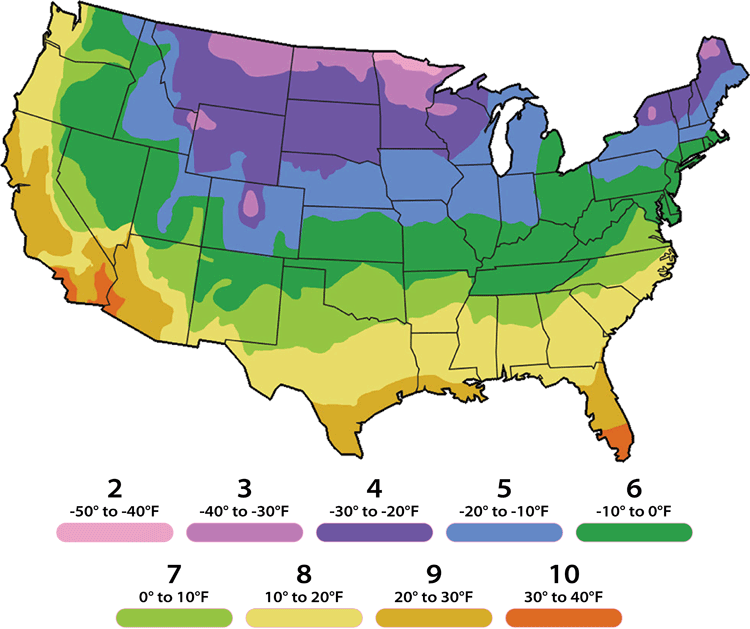
USDA Zone: 9-11
 Plant form: Climbing or creeping vine

 Sun exposure: Full sun or bright light indoor; semi-shade; shade
 Cold tolerance: Tolerates light freezing to about 30°F for short periods (mature plants). Young plants must be protected.
 Watering: Moderate
 Suitable for: Outdoors in the suitable USDA zone; small gardens, containers, and indoor growing
 Foliage color: Ornamental foliage
 Ethnomedical: Ethnomedical plant, traditionally used in folk or indigenous medicine
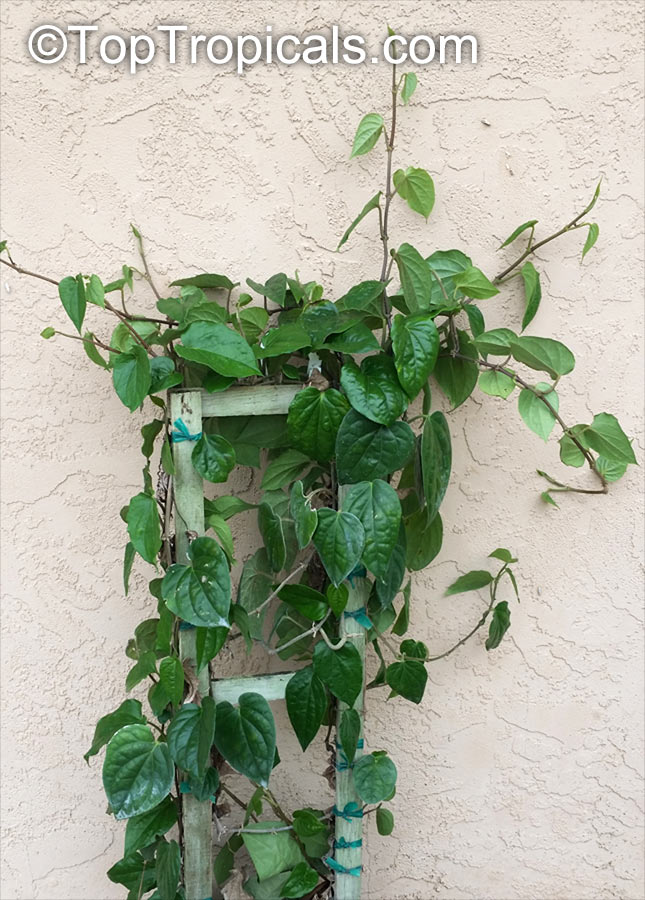
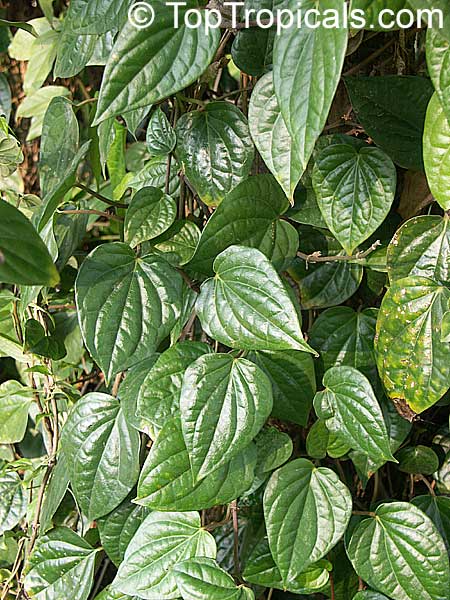
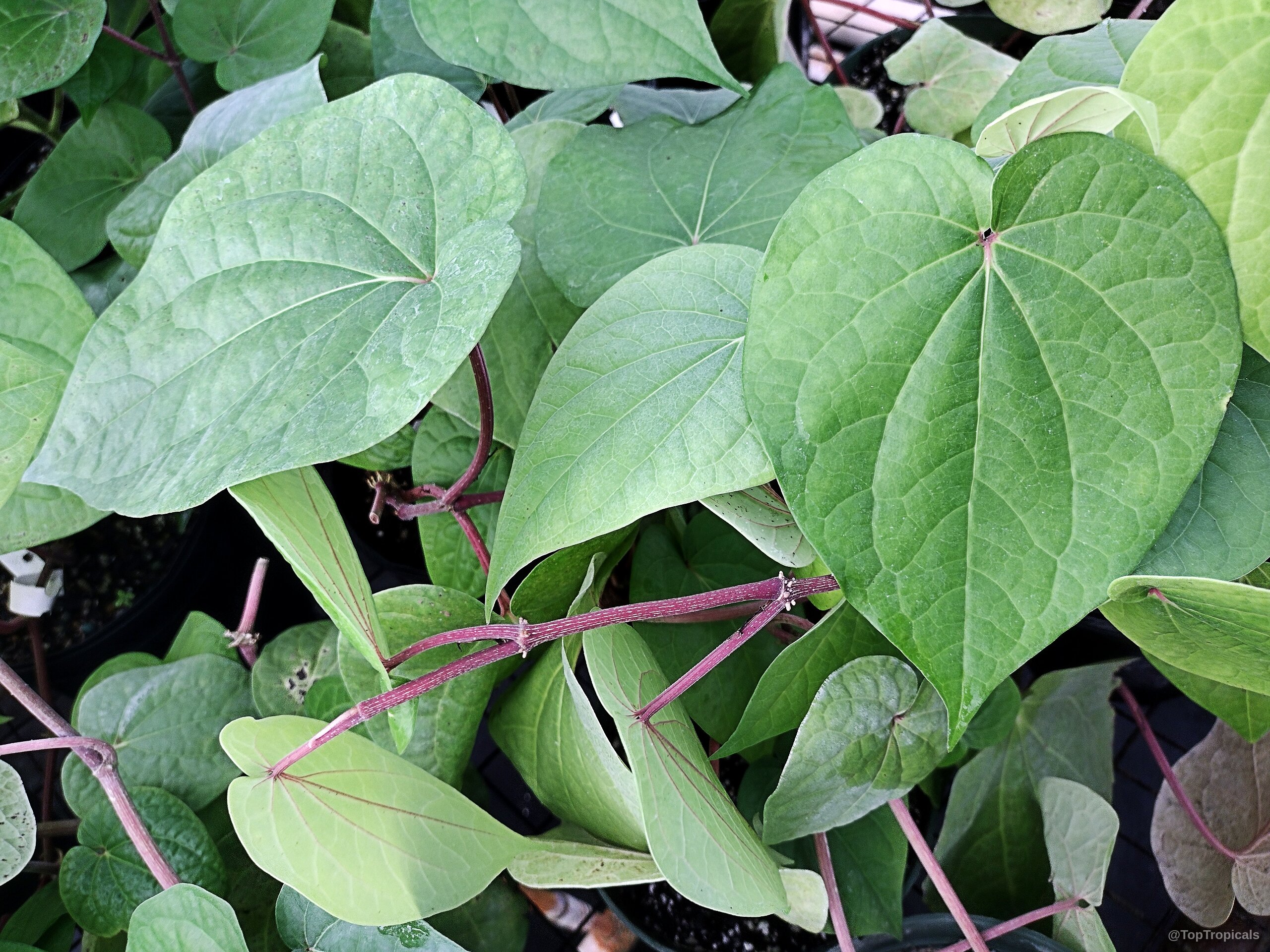
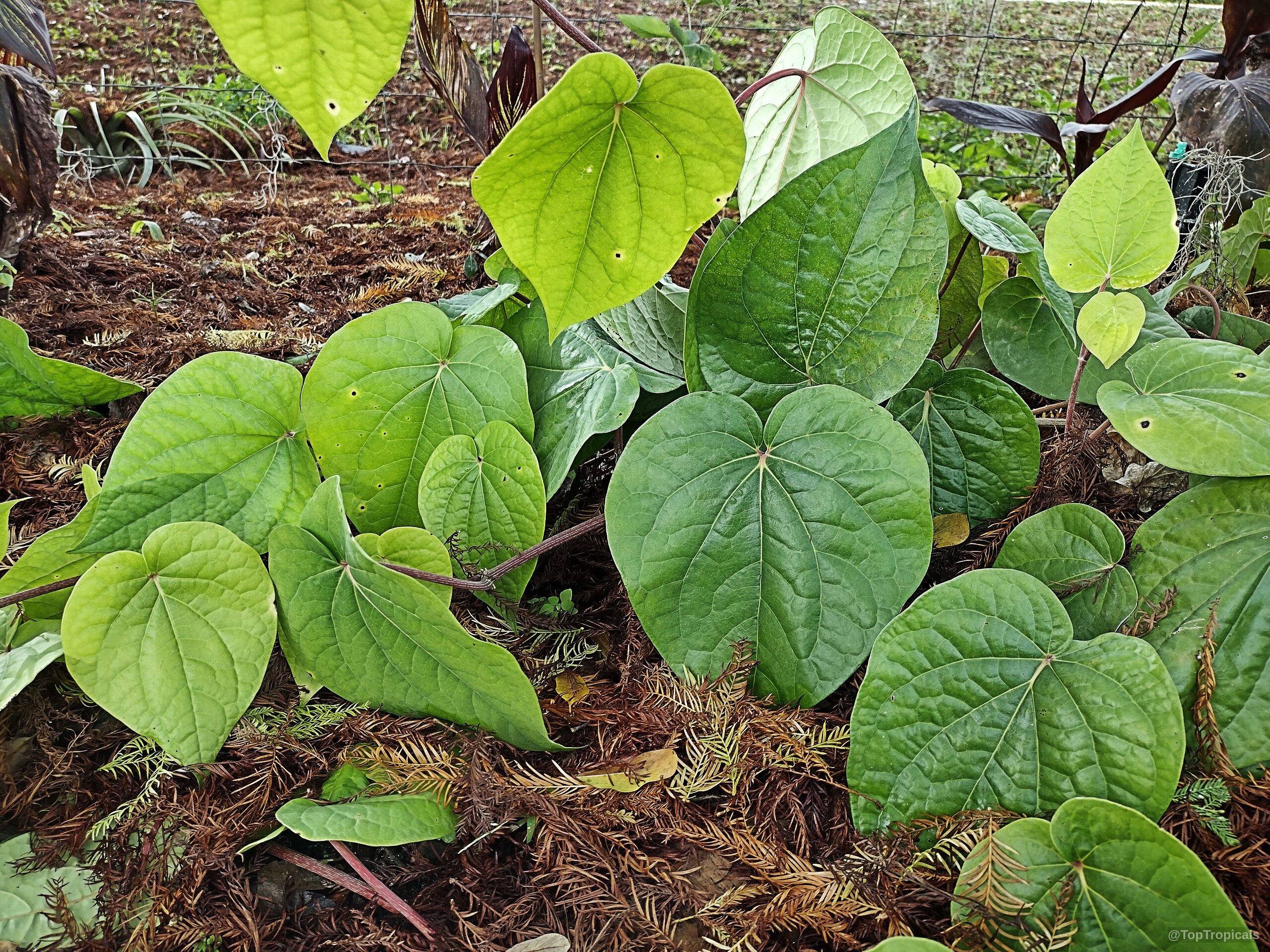
The plant grows widely over the entire area between South Arabia and Southeast China. It is a branching vine, that may climb as high as 10-15ft, although it often grows as an understory ground cover. The plant prefers warm, humid conditions, but can tolerate some drought. It is generally too tender to grow outside of the tropics. It is used in a number of traditional remedies for the treatment of stomach ailments, infections, and as a general tonic. It is often chewed in combination with the betel nut (Areca catechu), as a stimulatory. Some evidence suggests that betel leaves have immune boosting properties as well as anti-cancer properties. The essential oil is produced by steam distillation from the leaves of Piper Betle. Betel Leaf Oil is yellow to brown with an distinctly phenolic, almost tar-like or smoky. Leaves have long been used in Indonesia as traditional medicine. These leaves have antimicrobial activity towards bacteria in the mouth. Essential oils of the plant contained phenolic compounds. Throughout the balmy Asian tropics, great passion is accorded the chewing of the stimulating fruit of the Areca catechu palm known as betel nut. Traditionally prepared by chopping or slicing the areca nut, adding a bit of moistened lime to a Piper betle leaf and wrapping the nuts in ribbon-like strips of leaf to make a small packet known as a buyo. When one visits a household, the host will likely offer one of these buyos as a gesture of hospitality. Workers will often carry small boxes or bags of prepared betel much like the Peruvians carry coca leaves. Piper betle grows as a vigorous vine which is usually supported by a trellis of bamboo poles. The heart-shaped leaves are marvelously pungent and spicy. Makes as interesting container plant.
See Article about Piper.
Similar plants: Piper betle (Betel Leaf)
- Piper aduncum (Spiked Pepper)
- Piper auritum (Root Beer Plant)
- Piper blattarum (Higuillo)
- Piper longum (Bengal Pepper)
- Piper magnificum (Lacquered Peppertree)
- Piper methysticum (Kava)
- Piper nigrum (Pepper)
- Piper ornatum (Celebes pepper)
- Piper peltatum (Pakina)
- Piper retrofractum (Javanese Long Pepper)

Recommended Fertilizer: SUNSHINE Robusta - Rapid Growth Booster
 SUNSHINE C-Cibus (NPK 2-2-4) - Crop Booster for every watering.
  SUNSHINE C-Cibus (NPK 2-2-4) - Crop Booster for every watering.