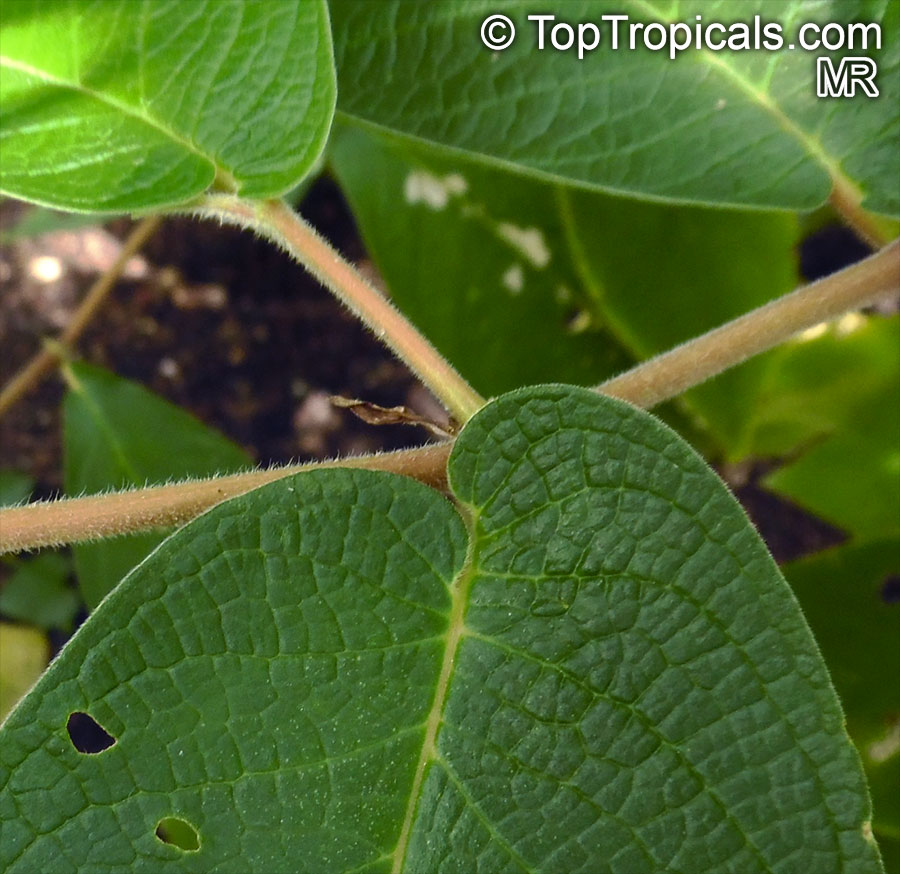
Piper aduncum (Spiked Pepper)
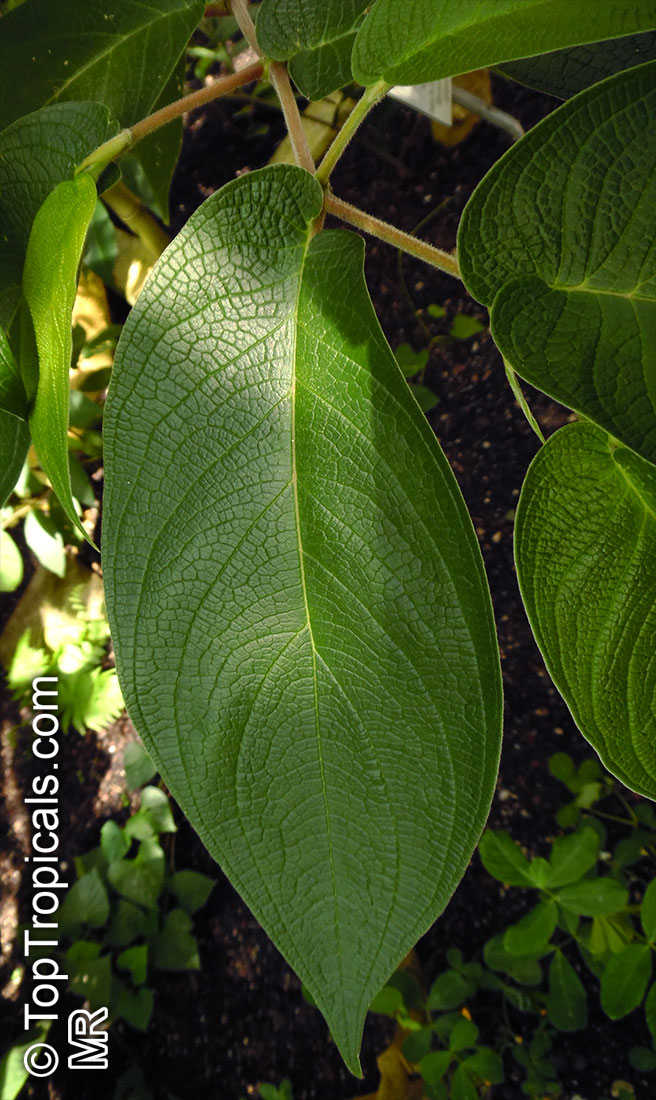
Botanical names: Piper aduncum, Piper angustifolium, Piper elongatum
Common names: Spiked Pepper, Higuillo de Hoja, Matico
Family: Piperaceae
Origin: South and Central America
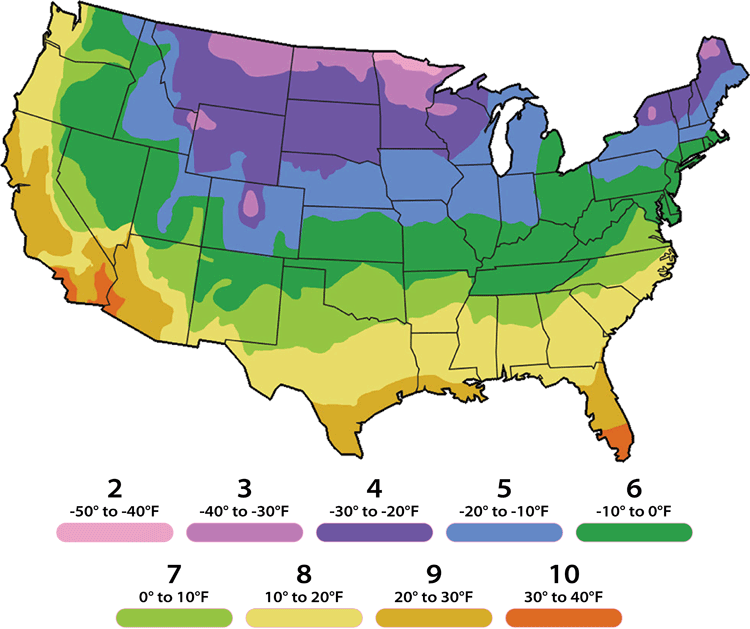
USDA Zone: 9-10
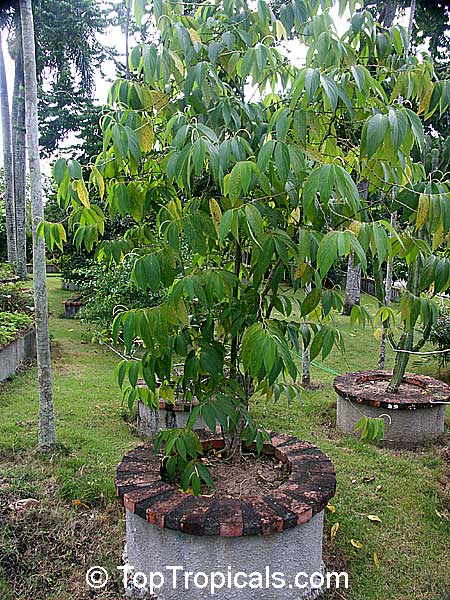
 Plant form: Small tree
 Mature height: 10-20 ft
 Sun exposure: Full sun or bright light indoor; semi-shade
 Cold tolerance: Frost sensitive. Protect from freezing.
 Watering: Regular
 Suitable for: Outdoors in the suitable USDA zone; small gardens, containers, and indoor growing
 Ethnomedical: Ethnomedical plant, traditionally used in folk or indigenous medicine
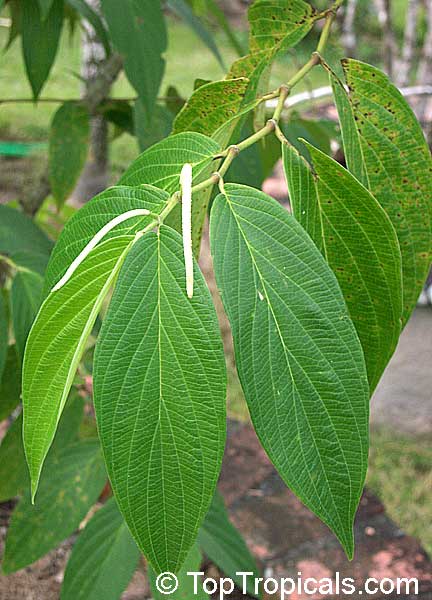
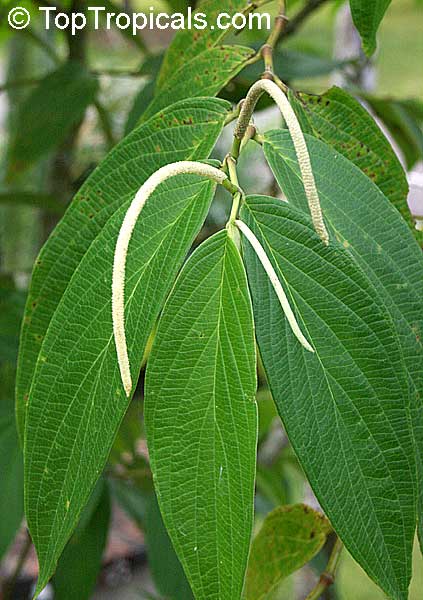
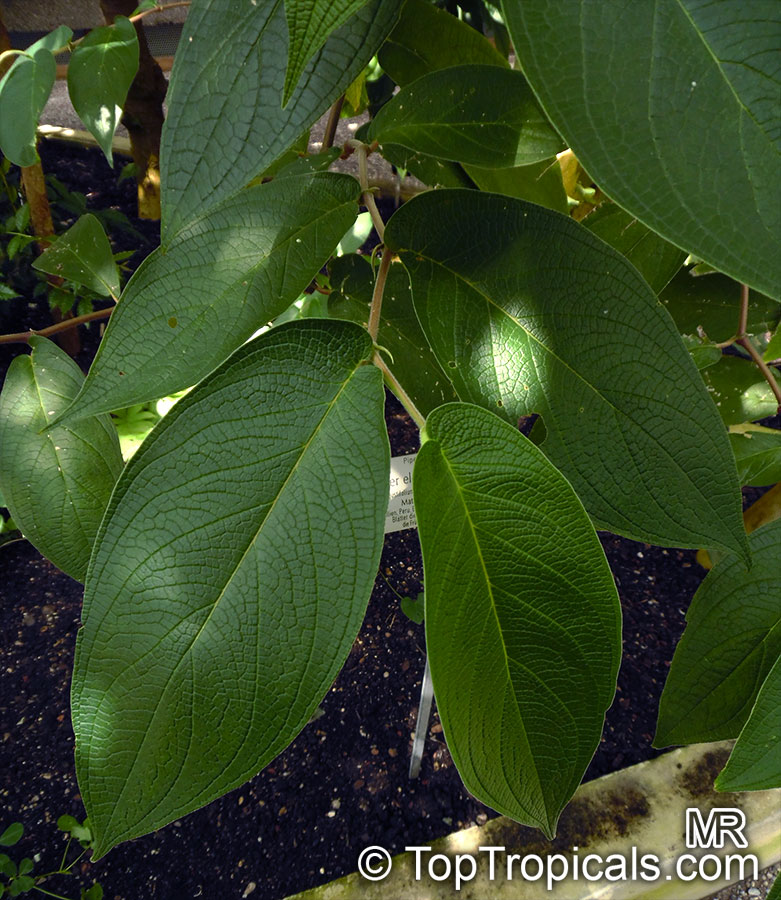
Small tree to 7 m tall, with short silt roots and soft, brittle wood; foliage and twigs aromatic. Branches erect, but with drooping twigs and swollen, purplish nodes. Leaves alternate, distichous, elliptic, 12-22 cm long, shortly petiolate; lamina scabrid above, with sunken nerves, softly hairy beneath. Inflorescence a leaf-opposed, curved spike on a 12-17 cm peduncle, white to pale yellow, turning green with maturity. Flowers crowded in regular transverse ranks. Fruit a 1-seeded berry, blackish when ripe.
Used as a aromatic stimulant, against gonorrhea, leukorrhea, piles, hemorrhages and dyspepsia.
Propagation: seeds and cuttings.
Culture: full sun / light shade, sandy loam soil, needs high humidity.
Plant in frost free areas.
Similar plants: Piper aduncum (Spiked Pepper)
- Piper auritum (Root Beer Plant)
- Piper betle (Betel Leaf)
- Piper blattarum (Higuillo)
- Piper longum (Bengal Pepper)
- Piper magnificum (Lacquered Peppertree)
- Piper methysticum (Kava)
- Piper nigrum (Pepper)
- Piper ornatum (Celebes pepper)
- Piper peltatum (Pakina)
- Piper retrofractum (Javanese Long Pepper)