Date:
What
Fertilizer to Use Now and How?
Five important keys to healthy plants
Q: It's early Spring this year. Should I start fertilizing my plants sooner than usual?
A: Most fertilizer instructions recommend fertilizing tropical plants from March to November. This is because plants don't need as much food during the cooler months when many go dormant, and excess nutrients can burn the roots if not absorbed. However, for the most effective fertilizer program and healthy plants, consider these points:
1. Sunshine Boosters Year-Round
Liquid amino-acid-based fertilizers like Sunshine Boosters are safe to use year-round. Since watering is reduced in cooler weather, the intake of water-soluble fertilizer is also lower, providing plants with just the essential nutrients for their minimal needs.
2. Dry Fertilizer Schedule
Be cautious with dry fertilizers. Apply them only during active growth in the hot season.
3. Temperature Is Key
If March is still cold, delay dry fertilizer use. However, if nighttime temperatures in February stay above 65F, you can start a dry fertilizer program using slow-release, granulated plant food.
4. What Fertilizers to Use and How
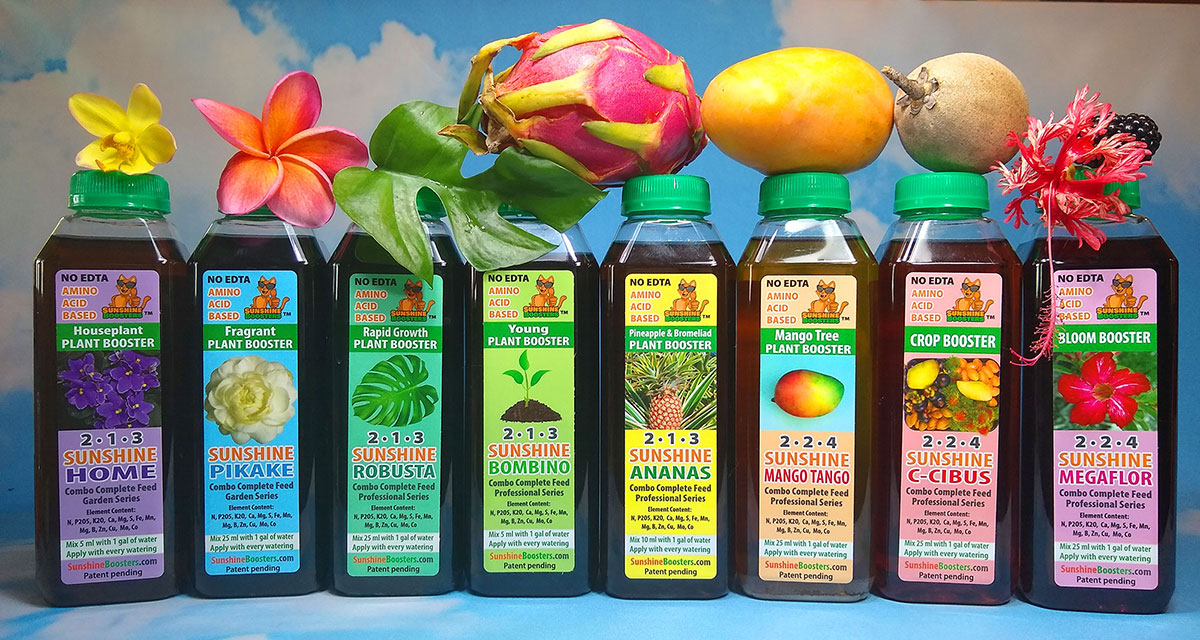
Check out our Sunshine Boosters selection for different types of plants and choose the right type for your needs. These can be applied as often as with every watering:
For Rapid Growth
Sunshine Robusta - Rapid Growth Booster: general fertilizer for both foliage
plants and small starters that need an extra boost.
For Flowers
Sunshine Megaflor - Bloom Booster: boosts flowers on established plants; and Sunshine Pikake - Fragrant Plant Booster: best for fragrant flowers.
For Fruit Trees
Sunshine C-Cibus - Crop Booster: contains all necessary elements for fruit trees and their production. Sunshine Mango Tango - specifically formulated for Mango and Avocado
trees, and Sunshine Citron - ideal for citrus trees.
For Tender Perennials
Sunshine Orchidasm - Orchid Total Feed and Sunshine Ananas - Pineapple and Bromeliad Booster: mild formulas for these tender perennials.
5. Microelement Supplements Are a Must
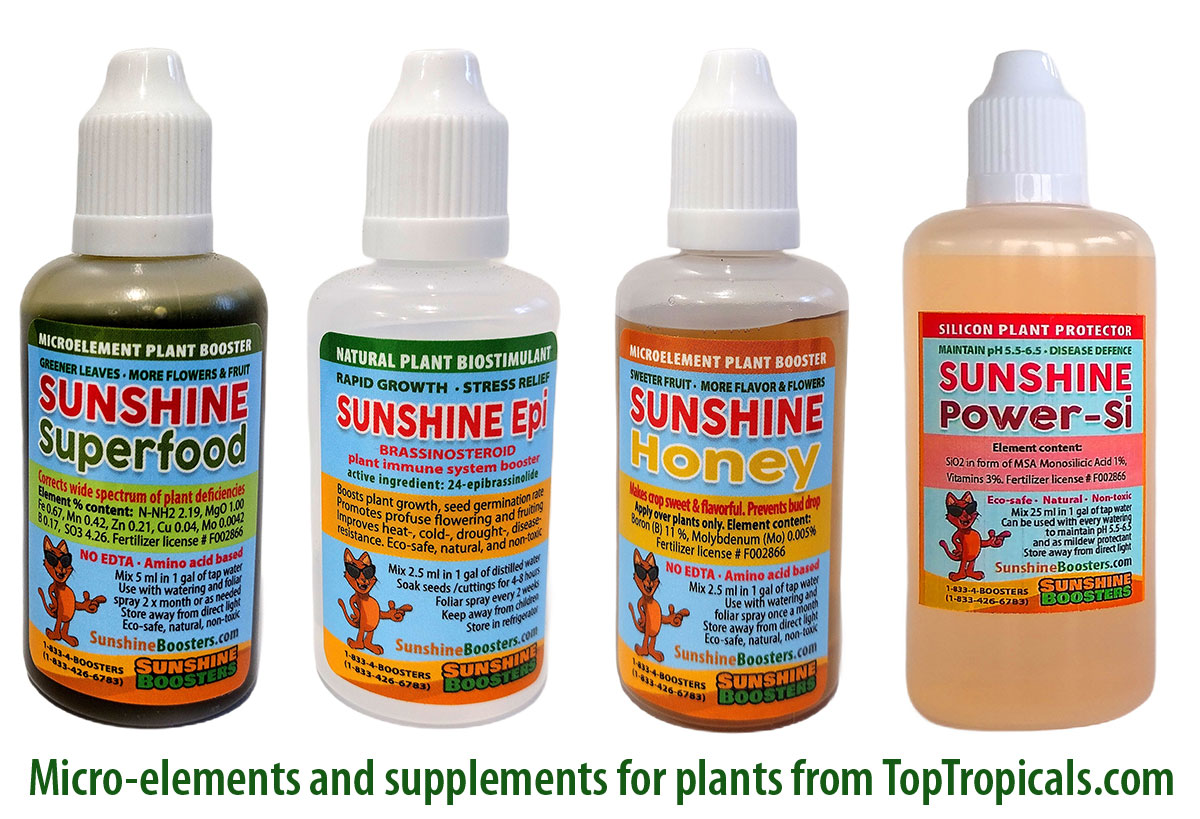
Besides macronutrients, plants need additional microelements, just like humans need vitamins. Be sure to apply these supplements along with your regular plant food:
For Green Leaves and Health
Sunshine SuperFood - Complex Microelement Supplement: a
must for healthy plants. Apply once a month.
For Stress Relief
Sunshine-Epi - Brassinosteroid Plant
Hormone: essential for plants recovering from stress (shipping, transplanting,
drought, insect damage, cold stress, etc.). Apply as needed.
For Sweeter, Bigger Fruit
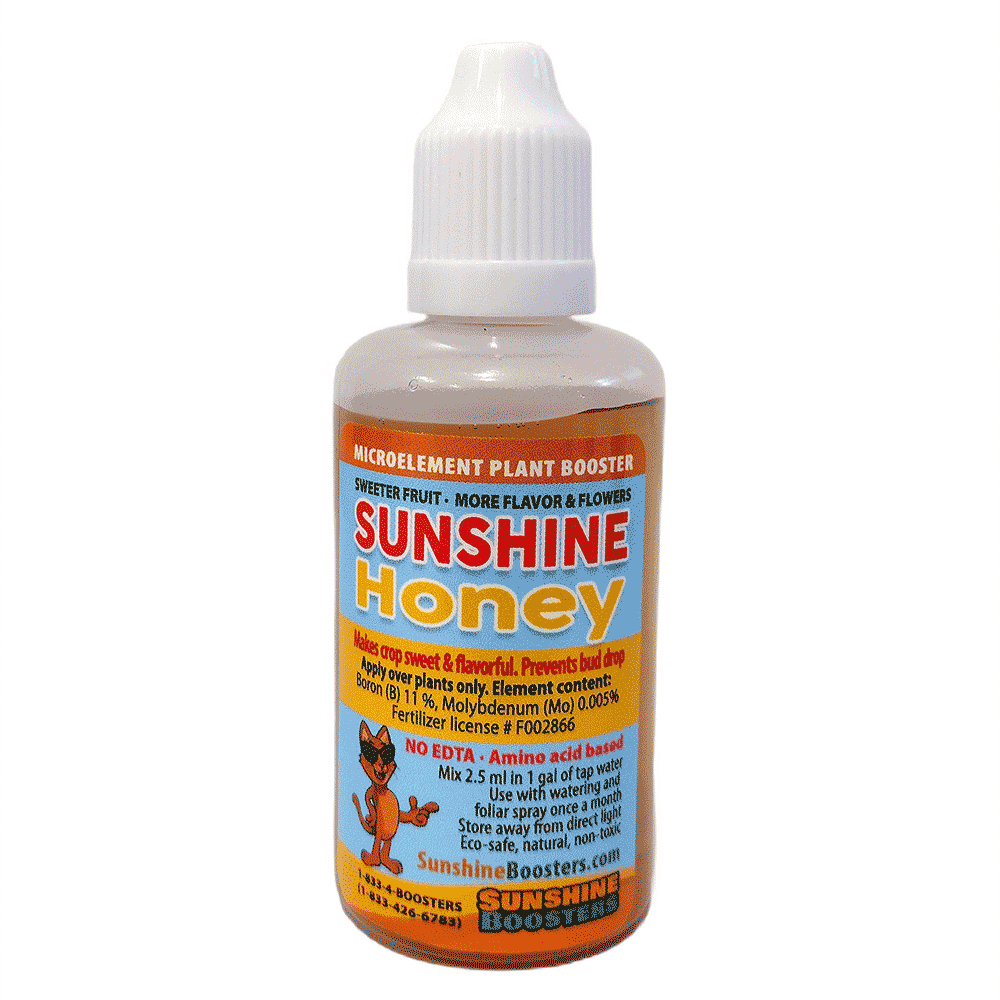
Sunshine Honey - Fruit Sugar Booster: application on fruit trees will make
fruit bigger and sweeter by directing sugars to the fruit from other plant parts, and helps to prevent bud
drop. Apply 4 times a year: at bud setting, flowering, fruit setting, and
after harvesting.
For Better Resistance
Sunshine Power Si - Silicon Protector - enhances resistance to insects, diseases, drought, and frost, while boosting growth. Apply once a
month, along with Sunshine SuperFood.
Need Help? Our Plant Experts Are Ready to Assist!
Date:
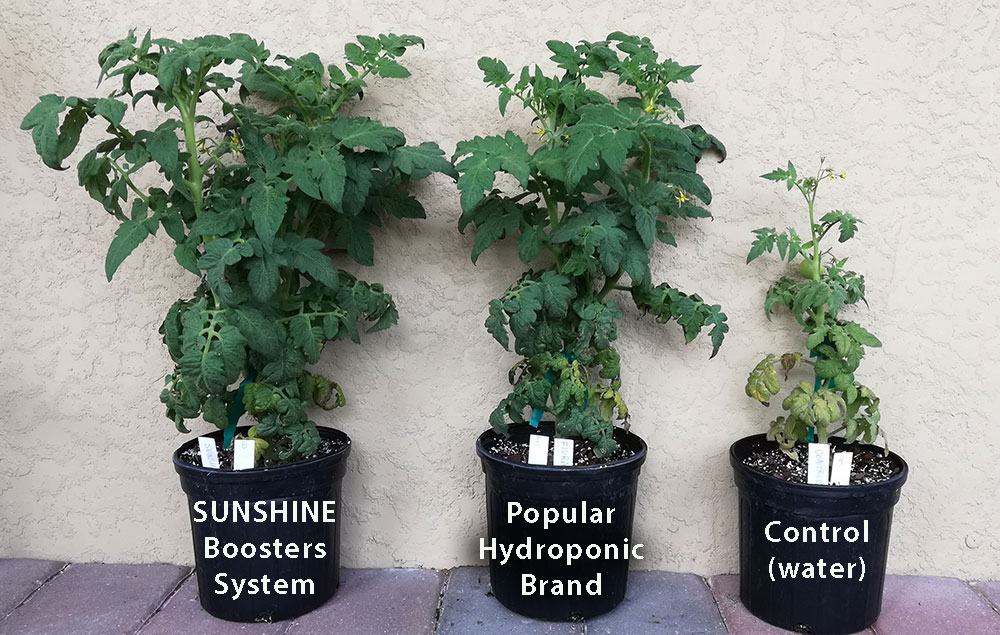
Using SUNSHINE Complete Nutrition System
For hydroponics and potted plants
Q: I recently bought both the 5ml of the sunshine epi and the 100 ml advanced nutrition kit. I read on the paper for the Epi not to use any other strong fertilizers along with this but I was wondering if it'd be alright to use both this foliar spray and nutrition watering together?
A: All solutions in SUNSHINE Booster Nutrition System (NPK-macro and micro-boosters) are
compatible.
The only exception is Sunshine-Epi - brassinosteroid bio-stimulant. Epi
should be mixed with distilled water separately from other boosters. The
reason is, it is very bio-active, and if mixed with other compounds, oxidizes
quickly which may affect its performance.
Sunshine-Epi solution must be prepared using distilled water and applied as foliar spray only (it only works on contact with leaves and not through the root system). Epi shows extremely impressive results when you apply it before the application of other nutrients because it increases plant metabolism; so all boosters become even more effective if you spray Epi the day before.
When using Micro- and Macro-boosters, you may mix all components in one watering can/tank (except for Epi), using regular tap water. Besides watering root ball, the macro-micro solution can be also used for foliar spray. It is optional, as in some circumstances growers prefer to keep leaves dry at all times: to stay away from mold, fungus and other issues caused by the wet environment.
Here is an example of Sunshine Boosters Nutrition System application:
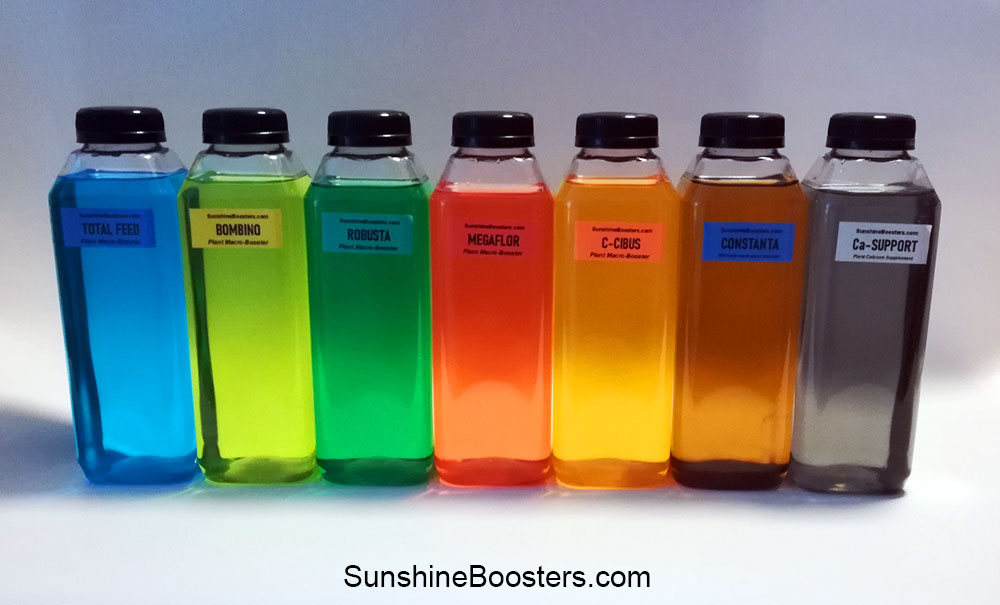
1. Daily watering in one can: NPK 25 ml/gal (one of 5, depending on growth stage) + Constanta 5 ml/gal + Ca-Support 5 ml/gal, mixed in tap water
2. Every 2 weeks: spray Sunshine-Epi 2.5 ml/gal - to boost the immune system and growth rate,
mixed in distilled water
3. From daily to every 2 weeks: Sunshine-Power-Si 25 ml/gal to protect from diseases and keep pH at
5.5-6.5. Can be used as often as daily and mixed with a daily watering solution
(1)
4. As needed: Sunshine SuperFood and GreenLeaf - for correcting deficiencies. Can be also mixed with the
daily solution (1)
Make sure to prepare a solution right before use and do not store solution for more than 1 day. Keep concentrates and solutions protected from bright sunlight.
Here is also advanced information on Sunshine Boosters compatibility.

Date:

Healthy Plants: Q&A from Mr Booster
New Boosters for the New Year!
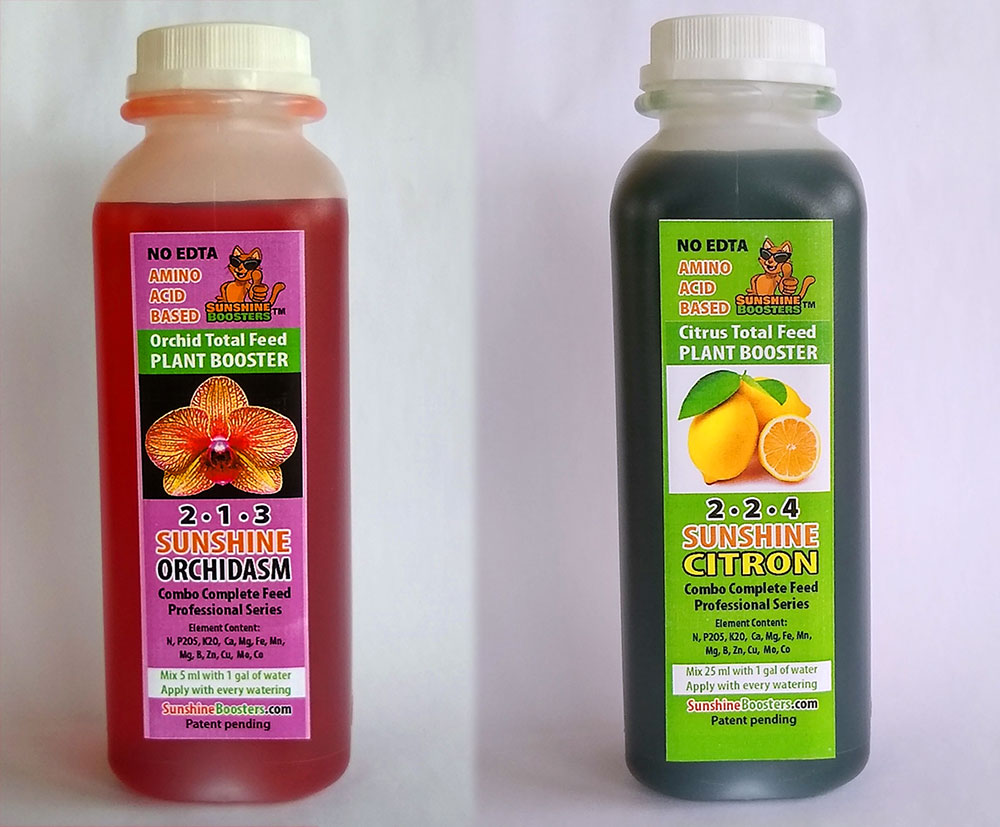
Sunshine Total Feed: Orchidasm and Citron
How to grow everblooming orchids?
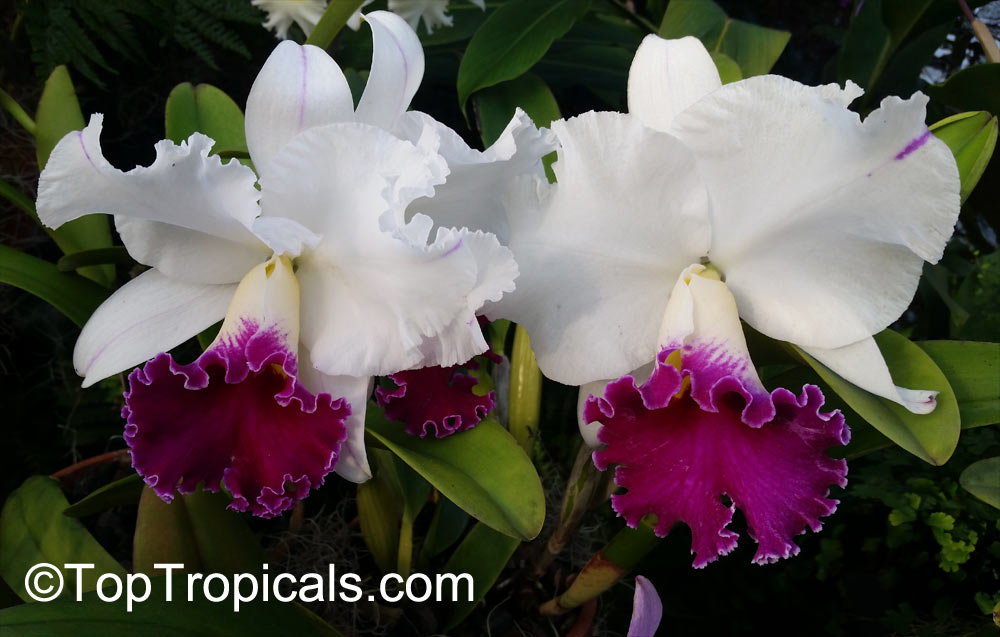
Q: I ended up with a large collection of orchids that I was given as presents... They grow well but unfortunately after the showy blooms were gone, I don't see any more flowers, just green leaves. What do I need to do to make them bloom again? Should I fertilize them with Azalea bloom booster?
A: Orchids culture is different from garden ornamental plants. First big difference, they are epiphytes, growing in a loose bark medium rather than soil, and
benefit from daily mist. Second difference is a type of fertilizer. You can not use a regular garden fertilizer on orchids,
because they are very sensitive to salts. Orchids need special, acidic type of fertilizer, very mild in action.
Luckily, Sunshine Boosters formulas are exactly what orchids need! They are amino-acid based, have very mild formulas, and do not create nutrient lock up (building up salts is one of the biggest
enemies of tender orchids).
A new Sunshine Boosters Orchidasm TotalFeed is scientifically balanced orchid food that contains all
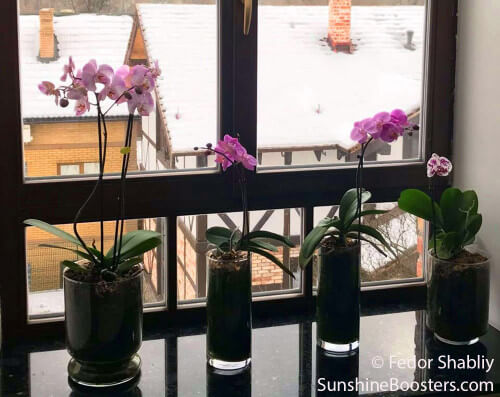
necessary nutrients, including micro-elements, for healthy, happy, vigorous orchids. It can be used as often as daily with every foliage spray. From our testing experience, after using Orchidasm Booster, orchids not only got happy and thriving -
they also bloom more often - up to several times a year, shooting new flower spikes one after another! (while normal blooming cycle for most
orchids is once a year). It gets even better - the flower display lasts twice longer!
To enjoy these beautiful flowers year around - treat them with Love, give them some
Orchidasm!
See more information with pictures in Sunshine Boosters Orchid Blog
Secrets of a healthy Citrus tree
Q: We planted several citrus trees in our yard - Meyer Lemon, Grapefruit and Blood Orange. The trees came from the store full of flowers and even had a few fruit, but a year after planting - no more flowers! The old leaves are green, but new growth doesn't look healthy, leaves are yellowish and have spots, maybe eaten by bugs (?), and how do we get them to fruit?
A: Citrus plants are not the easiest trees to grow; they are susceptible to various diseases, pests, and deficiencies, especially in areas with high humidity/rainfall like Florida.
Fungi, viruses, leaf minors, chlorosis - this is not a complete list of citrus common problems. In commercial groves, these conditions are kept under
control by using harsh chemicals on solid schedule.
For home gardeners, growing citrus trees may become a challenge. Many people don't want to use harsh
chemicals on their edibles; and those who do, may not always have time to apply treatments on a professional schedule. So as much as we all love a fresh juicy orange,
growing your own may become quite a pain!
Sunshine
Citron TotalFeed is your simple, eco-safe solution to a healthy looking, productive citrus tree with organic fruit! Amino-acid based formula provides all
necessary elements to strengthen the tree and make it resistant to possible problems.
Did you know that treatment of leaf chlorosis (yellow leaves with dark
green veins), commonly treated with iron supplements, in fact requires a complex combination of nutrients - both balanced NPK and micro-elements?
Use Sunshine Citron in combination with Sunshine GreenLeaf and
Sunshine SuperFood and never see yellow chlorotic leaves again!
Apply Sunshine Epi on regular basis (every 2 weeks) and help your tree boost its immune system and stay virus-free.
Add Sunshine Honey, and you will have large, juicy fruit that
are much sweeter and more flavorful than those from the store! All these boosters are compatible with each other, and perfectly natural. Eat your fruit safely and enjoy...
Read more about treating citrus tree defficiencies in Sunshine Boosters Citrus Blog.
Figs with honey and nuts: quick-n-fun exotic recipes
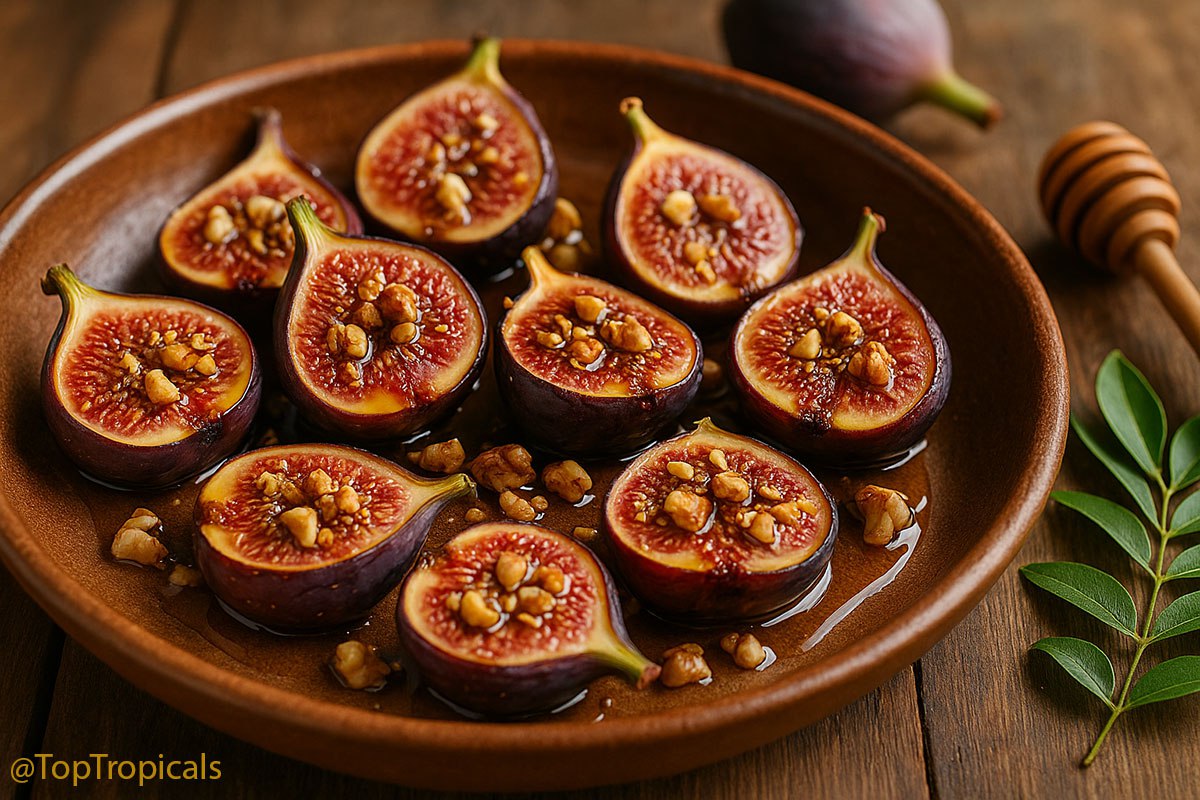
🍴 Figs with honey and nuts: quick-n-fun exotic recipes
Ingredients
- Fresh ripe figs
- Honey
- Chopped nuts (walnuts or almonds)
Instructions
- Cut figs in half and place them cut side up on a baking tray.
- Roast lightly at 350°F for about 10 minutes until warm and slightly caramelized.
- Drizzle with honey and sprinkle with chopped nuts.
- Serve warm or at room temperature. Simple and irresistible.
🛒 Plant fig trees and always have healthy desserts
📚 Learn more:
The fruit tree that every garden must have
#Food_Forest #Recipes
🟢 Join 👉 TopTropicals
Ingredients
- Fresh ripe figs
- Honey
- Chopped nuts (walnuts or almonds)
Instructions
- Cut figs in half and place them cut side up on a baking tray.
- Roast lightly at 350°F for about 10 minutes until warm and slightly caramelized.
- Drizzle with honey and sprinkle with chopped nuts.
- Serve warm or at room temperature. Simple and irresistible.
🛒 Plant fig trees and always have healthy desserts
📚 Learn more:
The fruit tree that every garden must have
#Food_Forest #Recipes
🟢 Join 👉 TopTropicals
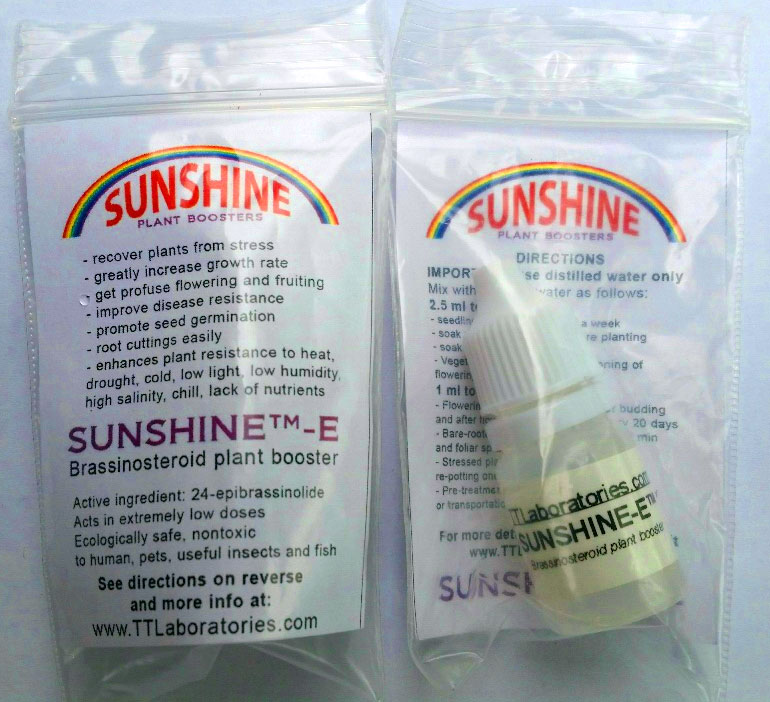
SUNSHINE in a Bottle
See SUNSHINE BOOSTERS PAGE
When people purchase plants and trees either on-line, or from their local nursery, expectation and anticipation for their new find is high. Many times, however, disappointment is encountered due to a variety of reasons. These reasons include changes in light, temperature, water, soil conditions and transportation; just to name a few. So how can the stress on newly transported and transplanted plants be mitigated? Easy! There are plant stimulators able to reduce the shock encountered.
One such plant stimulator is SUNSHINE Epi, a revolutionary, broad spectrum, plant stress reliever, originally developed by innovative Russian scientists. Extracted initially from plant pollen, SUNSHINE Epi can bring back and keep the vigor to stressed plants in both the home and garden. Sunshine is indeed a plant stimulator on the cutting edge of plant care technology. Reasonably priced, and easy to use, Sunshine will be your plants' best friend, next to yourself, of course.
SUNSHINE Epi is a natural plant growth hormone and the first representative of a new generation of agricultural chemicals. It has a broad spectrum of stimulative and protective activities. Synthetically prepared epibrassinolide, active ingredient of SUNSHINE Epi, belongs to a class of brassinosteroids and is identical in all respects to naturally occurring plant hormone.
See also Overview of fertilizers.
See detailed plant profile in new window: https://toptropicals.com/catalog/uid/epin.htm
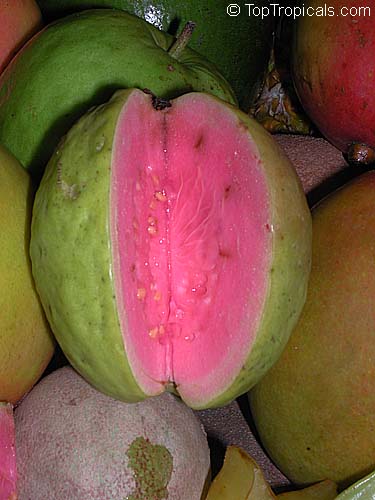
Family:Myrtaceae
Tropical Guava, Guajava


The Guava is well known throughout the tropics, many people are familiar with it because of the large number of products made from this aromatic fruit. The plant is well distributed throughout the tropics and subtropics. This is a low growing tree up to 25 feet high and about the same spread. The bark is an attractive reddish brown and peels off revealing smooth gray bark beneath. The large coarse
... more
| Psidium guajava |  |
Upon ripening, the fruit becomes soft and juicy. It may be eaten fresh, made into a juice or nectar contain fruit pulp, or made into preserves, jam, jelly, or paste. A distinctive, savory-fresh aroma of fruit is thermostable, thus survives processing. The guava is an excellent source of vitamins C and A.
Guava is a good tropical fruit tree not fussy on the soil quality, and produces fruit year after year. It is relatively cold hardy. Mature trees freeze at about 29 F, but young plants can be injured by light frost. Tropical Guava should be protected from extreme salt spray. Once established, it withstands drought well, but fruits better when watered on a regular schedule. The trees are rapid growers and start fruiting in 2-3 years from seed, however for specific varieties grafting is necessary as they don't come true from seed. Guavas are fast growers and heavy feeders, and benefit from regular applications of fertilizer.
Guava can make a nice container fruiting specimen, plants start blooming and producing fruit when they are as small as 1 gal pot size. It responds well to pruning and can be kept in compact bushy shape. In fact, Guava is probably the most popular container fruit tree among tropical plant growers.
Using SUNSHINE-Honey increases fruit production, fruit size and quality. On the photo below you can see Guava fruit without (left) and with SUNSHINE-Honey applications.
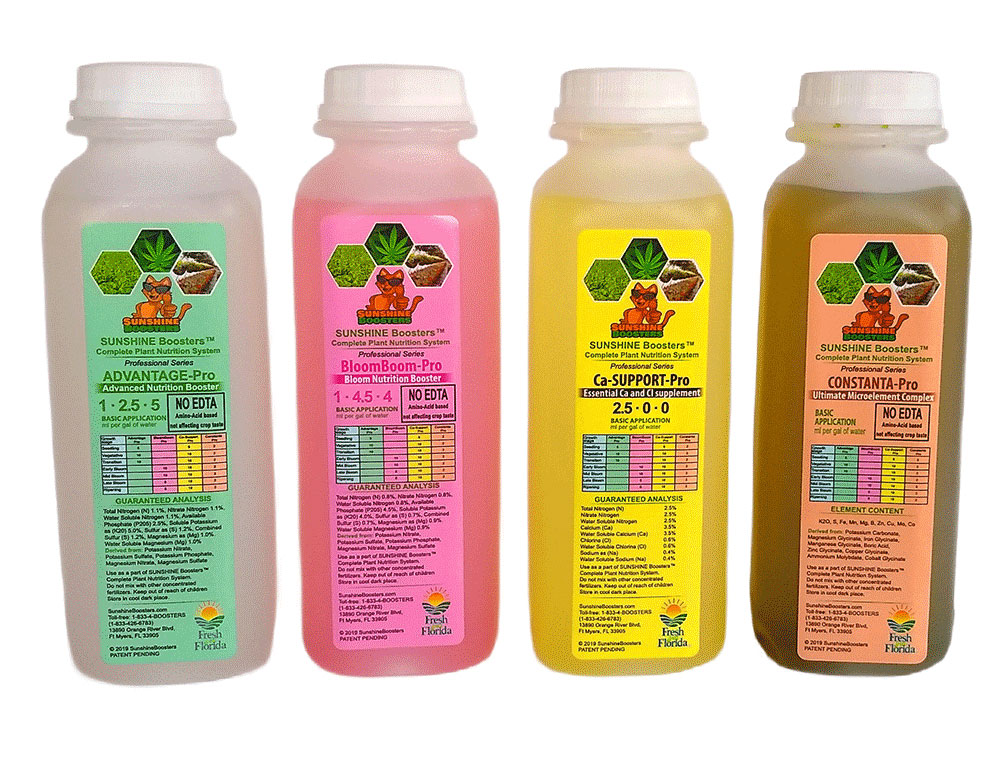
Macro and Micro elements
Plants, like living organisms, require adequate nutrition for grown. The concept of plant nutrition includes the following substances:
Carbon dioxide. In the process of photosynthesis with the participation of chlorophyll, in the leaves of plants from water, carbon dioxide and light, organic compounds are formed that participate in the construction of the organism. This is the main and only significant source of organic matter for plants.
MACRO-elements. The macroelements include inorganic compounds necessary for the vital activity of a living organism. The prefix macro-means a relatively high content of these elements in the composition of plants, respectively, their high demand. The macroelements include: carbon, hydrogen, oxygen, sodium, potassium, chlorine, sulfur, calcium, magnesium, nitrogen and phosphorus.
Liquid Sunshine Boosters - Mild stable formulas, can be used year-around. Organic acid-based, Sunshine Boosters are perfect for organic gardens, edibles and do not affect crop pure taste. Amino-acid stable formulas have NO EDTA chelators to eliminate nutrients lockup in soil. Pollinating insects friendly. Designed for continuous use, Sunshine Boosters contain no excess salts, maintain soil pH at optimal level (5.5-6.5) and do not require soil flushing or additional pH regulators. They can be use with every watering, year around.
Water-soluble fertilizers - dry (powdered) fertilizers that must be diluted in water before use. EDTA-chelated. Can be used only during hot weather, during active growth season.
Smart release (granulated) fertilizers - Slow-release during 1-3-6-12 month period. EDTA-chelated. Can be used only during hot weather, during active growth season.
MICROelements. Microelements are inorganic compounds involved in the synthesis of enzymes and biologically active substances. The content in a living organism is very low, but they play a vital role in the life of plants. The microelements include: iron, manganese, zinc, copper, boron, molybdenum, cobalt.
ULTRA-microelements. Very small amounts of almost all elements of the periodic table are contained in all organisms. They fall into plants with root nutrition from the soil. The necessity for the life of ultramicroelements is not fully proved. Of more or less necessary are considered: vanadium, iodine, nickel, titanium, aluminum, cadmium, fluorine (for plants).
See full article: The role of elements in plant nutrition.
Fertilizers, or Plant Food, contain macro- and micro-elements, for example:
Macro-elements: Nitrogen (N), Phosphate (P), Potassium (K).
Micro-elements: Boron (B), Molybdenum (Mo), Copper (Cu), Iron (Fe), Manganese (Mn), Zink (Zn), Sulfur (S).
Application: Follow directions on the labels. Do not exceed the recommended dose. Less concentration is always better than overdose. Generally, for tropical plants, dry fertilizers should be used only during the growth period when temperatures are above 65F, and Amino-acid based liquid fertilizers can be used year around.
See also: Plant Growth Hormones
For more information about Sunshine Boosters, see SUNSHINE BOOSTERS PAGE and learn more about Essential Nutrients.
See detailed plant profile in new window: https://toptropicals.com/catalog/uid/fertilizers.htm
Detailed plant profiles: 3 plants found