Garden Blog - Top Tropicals
Date: 21 Nov 2026
The rare blue ginger that surprised us after the freeze: Dichorisandra
💎 The rare blue ginger that surprised us after the freeze: Dichorisandra
True blue is an unusual color in tropical flowers. We have plenty of reds, oranges, yellows, and pinks. But those brilliant blue-violet blossoms? They're something special!
That's one reason we love Weeping Blue Ginger (Dichorisandra penduliflora), a beautiful tropical perennial rarely seen in cultivation.
And this year, it gave us quite a surprise!
A delicate beauty with a tough secret
During February's record freeze in Florida, our Weeping Blue Ginger suffered cold damage. We weren't sure how well it would recover.
But when warm weather returned, fresh shoots emerged from the roots. And the plant didn't just recover. It grew even bigger than last year!
Now it's a lush fountain of graceful stems, glossy green leaves, and dangling clusters of extraordinary blue-violet flowers.
Of course, this doesn't make it frost-proof. The foliage is sensitive to freezing temperatures. But our experience shows that established plants can sometimes survive much more than their delicate appearance suggests.
Not really a ginger!
Despite its common name, Weeping Blue Ginger isn't a true ginger at all!
It belongs to the Commelinaceae family, making it a relative of Tradescantia and Spiderwort.
Native to Brazil, this unusual plant develops arching, jointed stems with elongated leaves and delicate, three-petaled flowers.
Unlike its close relative, Blue Ginger or Sapphire Gem (Dichorisandra thyrsiflora), which grows upright with dense clusters of brilliant sapphire-blue flowers, Weeping Blue Ginger has graceful, cascading stems adorned with delicate, hanging flower clusters. Both species thrive in partial shade, making them spectacular companions in a tropical garden.
Surprisingly easy to grow
You might expect such an exotic-looking rarity to be demanding. Fortunately, it isn't!
Light: Partial shade or bright filtered light. Protect from intense afternoon sun.
Water: Keep evenly moist during active growth, but avoid waterlogged soil.
Soil: Rich, loose, well-drained soil with organic matter.
Size: Approximately 2–4 feet tall, with arching, spreading stems.
Containers: Excellent for shaded patios, hanging baskets, and large decorative pots.
Propagation: Divide established clumps or root stem cuttings.
In warm climates, Weeping Blue Ginger can flower over a long season, sometimes nearly year-round.
A rare treasure for shade gardens
Most gardeners associate spectacular tropical flowers with full sunshine. Weeping Blue Ginger proves that shaded corners can be just as colorful!
Plant it where its cascading stems can spill naturally, or grow it in a container where the unusual flowers can be admired up close.
For us, the biggest surprise wasn't just its gorgeous blue color.
It was watching this seemingly delicate tropical return after a devastating freeze - stronger and more beautiful than before!
🛒 Bring Rare Blue Blooms to Your Garden
📚 Learn more:


• Dichorisandra penduliflora in Plant Encyclopedia
• Can Ginger be blue? How to add electric blue flair to your garden
• You won't believe what glows in the shade: the rare blue ginger
• Is Sapphire Gem really a ginger?
#Nature_Wonders #Container_Garden #Shade_Garden
🟢 Join 👉 TopTropicals
Date: 20 Nov 2026
Why grow a boring hedge when you can eat it? Creating privacy with Surinam cherry
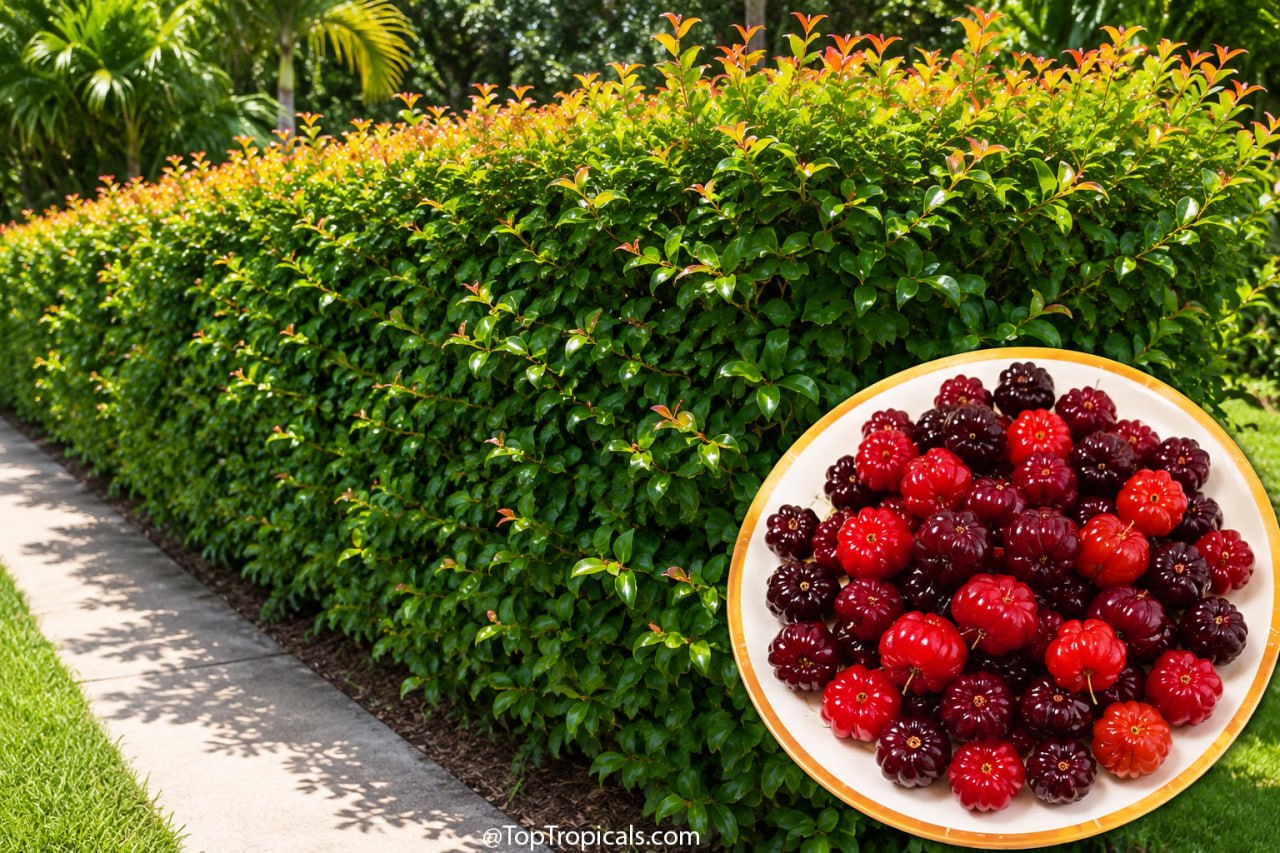
🍒 Why grow a boring hedge when you can eat it? Creating privacy with Surinam cherry.
Why plant another boring Ficus hedge when you could grow something beautiful, evergreen, and delicious?
Imagine a dense green privacy screen that produces hundreds of colorful little cherries! That's exactly what Surinam Cherry (Eugenia uniflora) can do.
This tropical fruit tree is one of our favorite choices for an edible hedge, especially in Florida gardens.
🍒 A hedge that works for you
Surinam Cherry grows naturally into a dense, bushy shrub with small, glossy leaves. New growth emerges in beautiful bronze and reddish shades, adding color even when the plant isn't fruiting.
It's fast-growing, tolerates heat and occasional drought once established, and is surprisingly cold-hardy for a tropical fruit plant. Mature shrubs can survive brief freezes, although severe cold may damage some branches.
Best of all, it loves pruning! Shape it into a formal hedge, a privacy screen, or let it grow naturally.
🍒 How to plant and maintain your edible hedge
For a thick, continuous hedge, space plants 3-4 feet apart, measuring from trunk to trunk. For a tighter, faster-filling screen, plant about 2.5-3 feet apart.
Choose full sun for maximum fruit production, although partial shade works too. Water regularly during establishment.
Start pruning while plants are young! Pinch or trim growing tips to encourage branching from the bottom. Keep the hedge slightly wider at the base than at the top so sunlight reaches lower branches.
Once established, trim lightly to maintain your desired height and shape, typically 4–8 feet.
🍒 Will pruning reduce fruit production?
Here's the secret: Surinam Cherry flowers and fruits on young growth. Pruning stimulates new branches that can produce future crops.
But constant shearing removes flowering shoots and developing fruit. For the best harvest, prune after fruiting, then allow fresh growth to mature and bloom. Avoid heavy trimming during flowering and fruit development.
🍒 Little pumpkins with a cherry surprise
The fruit looks like a miniature pumpkin, with deep ribs and brilliant colors ranging from orange-red to dark crimson and almost black.
And the flavor? Nothing like an ordinary cherry!
It's sweet-tart, juicy, intensely aromatic, and sometimes slightly resinous. Darker selections often have richer, sweeter flavor.
Let the fruit ripen completely before picking. Fully ripe cherries are softer, sweeter, and practically fall into your hand.
🍒 From hedge to kitchen
Enjoy Surinam Cherries fresh, or turn your harvest into delicious jams, jellies, syrups, smoothies, sorbets, and tropical desserts.
Explore our favorite Surinam Cherry recipes below!
Why settle for privacy when you can have privacy AND dessert?
🛒 Grow Your Own Edible Hedge
📚 Learn more:


• Eugenia uniflora - in Plant Encyclopedia
• Which Eugenia should you plant? 7 tropical cherries compared
• Why you should grow a Pitanga tree. Health benefits of Surinam Cherry
• 7 delicious ways to use Surinam Cherry: quick-n-fun exotic recipes
• Surinam cherry skillet glaze: quick-n-fun exotic recipes
• Surinam cherry salsa: quick-n-fun exotic recipes
• How to make a jam with Surinam Cherry
#Food_Forest #Discover #How_to
🟢 Join 👉 TopTropicals
Date: 19 Nov 2026
From Naked to Bloom-2: Two Months Later, Our Adeniums Have Gone Crazy
🌸 From Naked to Bloom-2: Two Months Later, Our Adeniums Have Gone Crazy
Remember those naked Desert Roses we unpacked from Thailand back in September? Just bare roots, fat caudexes, and a few lonely branches. Not exactly glamorous!
In our original blog and video, New Thai Adeniums: Same Plant, Totally Different Animal. From Naked to Bloom, we showed how we planted them, what soil we used, and our tricks for preventing root rot. Well, it's been just two months. And look at them NOW! It's hard to believe these were bare-root plants only eight weeks ago!
But today, we're checking on some particularly strange members of our collection.
🌸 The weird and wonderful adeniums
Adenium Medusa is finally flowering! Its bizarre, twisting leaves remind us of Hindu Rope Hoya, and its unusual growth habit makes it fascinating even without flowers.
Dwarf Adenium Arabicum looks like a miniature bonsai, with a chunky caudex and thick, sculptural branches. These little guys have so much personality!
Dorset Horn is another oddball, famous for its dramatically curled leaves.
Coral Adenium takes weirdness to another level, producing twisted, flattened, crested growth that looks more like underwater coral than a desert plant.
All this development in just two months!
🌸 Plumeria Great Wall
And now - an alien Plumeria!
Our biggest surprise isn't even an adenium.
It's Plumeria Great Wall, a rare dwarf crested variety with an absolutely bizarre branching habit.
Instead of ordinary branches, its stems split, fuse, and twist into strange, fan-shaped clusters. Imagine dozens of little fingers reaching for the sky! Each branch seems to have a mind of its own.
Our larger Great Wall plants arrived bare-root from Thailand about a year ago. Today, they're spectacular miniature sculptures.
And the newest babies? They're already developing those funny little crested branches. Tiny hands building their own Great Wall!
🌸 The fun of collecting unusual plants
Flowers are wonderful, but some plants are worth growing just for their shapes. These unusual Adeniums and Plumerias are living sculptures, and no two look exactly alike.
We have limited quantities of these rare varieties at Top Tropicals, so collectors, don't wait too long!
Tell us which one YOU would take home!
🎥 Missed the beginning? Watch our original video, , to see how we grow bare-root Adeniums from Thailand
🛒 Explore Exotic Thai Adeniums
📚 Learn more:


• Adenium varieties in Plant Encyclopedia
• New Thai Adeniums: Same Plant, Totally Different Animal
• Complete Adenium Care Guide: 9 tips how to keep it simple and thriving
#Container_Garden #Adeniums
🟢 Join 👉 TopTropic
Date: 18 Nov 2026
Daily Cat Lesson: Is Gravity Optional for Cats?
🐾 Daily Cat Lesson: Is Gravity Optional for Cats?
Timo is a big cat. So big, apparently, that the filing cabinet can accommodate only half of him.
The other half? Hanging in midair.
Does Timo care? Not remotely. He wakes up, washes his face, and continues defying the laws of physics.
🐾 How can cats be comfortable in such ridiculous positions?
Cats have remarkably flexible spines, mobile shoulders, and muscles that let them twist, stretch, and fold themselves into positions that would send a human straight to a chiropractor.
But there's another secret: proprioception - the body's built-in GPS. It tells cats exactly where their legs, paws, and tail are, even without looking.
Combined with their excellent sense of balance, this helps cats know how their weight is distributed and whether they're securely supported.
As long as Timo's center of gravity stays over the cabinet, his dangling legs aren't a problem.
Scientists say gravity affects all objects with mass.
Timo would like a second opinion.
❓ Does your cat sleep in a position that defies the laws of physics? Share a picture in the comments!
🐈📸 TopTropicals rescued cat Timo, demonstrating advanced feline physics at PeopleCats.Garden.
🐈 Stay with us for your #DailyDoseOfCat!
#DailyCatLesson #PeopleCats
🟢 Join 👉 TopTropicals
Date: 18 Nov 2026
Tamarind caramel pineapple:

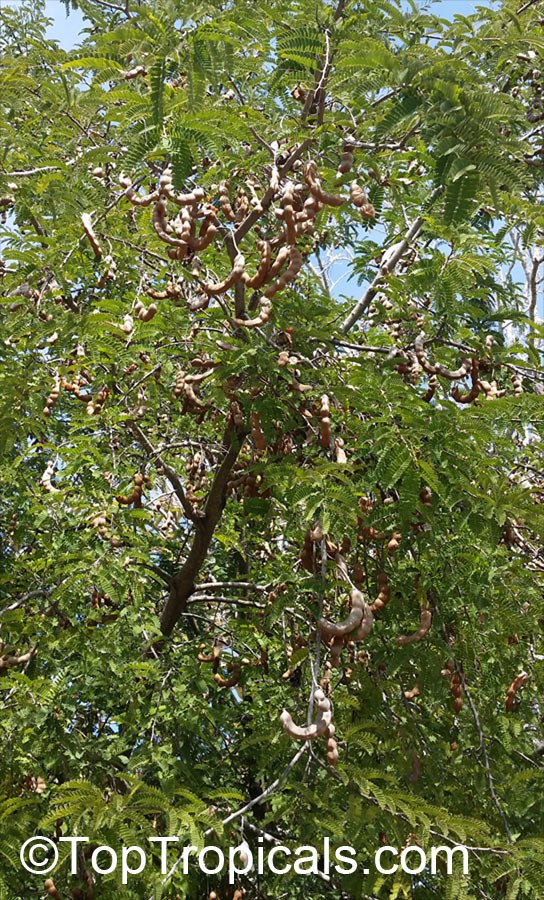
🍴 Tamarind caramel pineapple: quick-n-fun exotic recipes
🟡Reduce tamarind with sugar until thick.
🟡Brush over grilled pineapple slices.
🟡Sweet, sour, tropical finish.
🌿 About the plant:
Tamarind reduces beautifully into a glossy glaze. Its acidity prevents desserts from becoming overly sweet.
🏡 In the garden:
A mature tamarind tree (Tamarindus indica) can produce large quantities of pods annually, making it both ornamental and productive in warm climates.
🛒 Add Tamarind tree and Pineapple to your edible landscape
📚 Learn more:


Tamarindus indica in Plant Encyclopedia
Tamarind Agua Fresca: quick-n-fun exotic recipes
Tamarind mango chutney: quick-n-fun exotic recipes
Tamarind shrimp stir-fry: quick-n-fun exotic recipes
Tamarind date dipping sauce: quick-n-fun exotic recipes
Top 10 fruit you'll ever need for your health benefits: #7 Tamarind
How to use Tamarind in cooking
#Food_Forest #Recipes
🟢 Join 👉 TopTropicals