Garden Blog - Top Tropicals
Date: 19 Aug 2026
Will she jump off the highest shelf?
🐾 Will she jump off the highest shelf?
"Success is not final, failure is not fatal: it is the courage to continue that counts." - Winston Churchill
🐈📸 Top Tropicals rescued cat Lilimon is testing her courage at PeopleCats.Garden.
#PeopleCats #Quotes
🟢 Join 👉 TopTropicals
Date: 19 Aug 2026
When Is the Best Time to Water Your Plants?
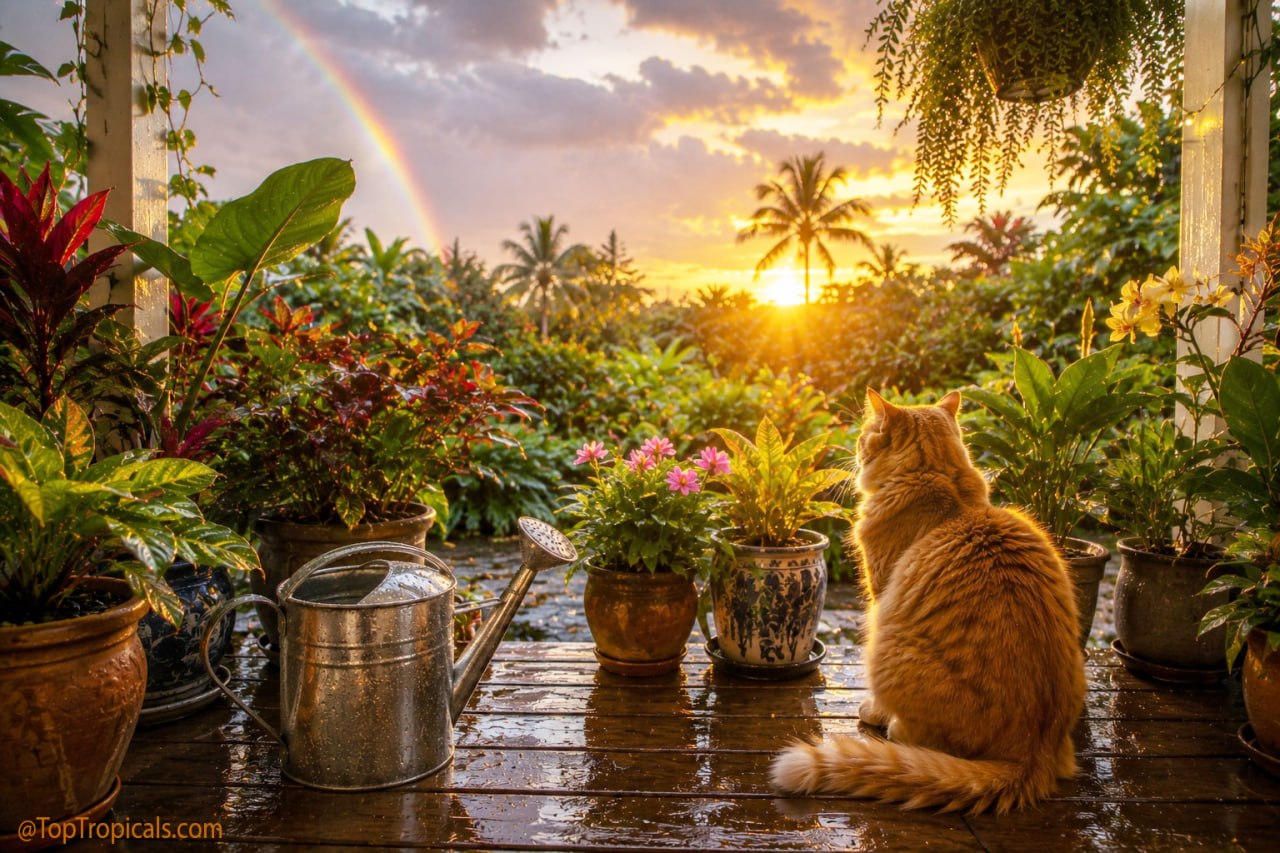
💧 When Is the Best Time to Water Your Plants?
Morning? Afternoon? Evening?
Ask three gardeners when to water during summer and you'll usually get three conflicting rules:
"Always water in the morning."
"Never water in the hot afternoon - you’ll burn the leaves."
"Water in the evening so the sun doesn't evaporate it all."
So who’s right?
Our answer is much simpler. As our longtime friend and tropical plant expert Murray Corman used to say:
"Water whenever the plants need it.
Just let the leaves dry before they go to bed."
💦 1. Morning is Best - But It Isn't the Only Good Time
If you have a choice, morning is usually ideal. Plants are waking up, temperatures are moderate, and they're gearing up for a full day of photosynthesis.
Think of it as breakfast juice before a long day at work.
But on a 90F+ summer day, yesterday’s breakfast isn't going to carry a thirsty container plant until tomorrow morning. By late afternoon, many plants are desperate for another drink.
Give it to them. Don't let a plant wilt for hours simply because a generic rule said you're only allowed to water at 8 AM.
💦 2. Will Afternoon Water Burn the Leaves?
You’ve probably heard that water droplets act like tiny magnifying glasses, concentrating sunlight and scorching foliage.
For almost all garden plants, this is a myth.
If a plant is drooping at 2 PM, heat stress and severe dehydration are far greater threats than a few drops of water on the foliage. Give the plant a drink, and try to focus the hose at the root zone where it actually counts.
💦 3. What About Evening Watering?
This is where climate - especially high humidity - changes the game.
Extreme heat + high humidity + soaking wet foliage + a warm night = a fungal explosion
That's why wet leaves shouldn't go to bed dripping.
Late afternoon or early evening watering is fine IF there is still enough warmth, light, and airflow for the leaves to dry completely before nightfall.
It’s not really about what your watch says - it’s about how long the foliage stays wet.
💦 4. How We Water at Our Florida Nursery
At TopTropicals nursery, summer temperatures routinely cross 90F, with nights lingering around 75-80F. Container plants lose moisture much faster than in-ground plants, so during the peak of summer heat, our baseline schedule looks like this:
8:00 AM – The morning wake-up drink
12:00 PM – Midday heat check & refresh
4:00 PM – The final afternoon soak
Notice that last watering is at 4:00 PM, not 8:00 PM. The plants get relief right after the hottest part of the day, leaving several warm daylight hours for excess moisture on the foliage to evaporate.
💡Note: In-ground plants or larger trees won't need this frequency, but the logic remains the same.)
💦 5. Schedules Must Change With the Seasons
The "best" watering routine in August will be completely wrong by January.
Late Fall: As temperatures cool, soil stays moist longer, and midday waterings are dropped.
Winter: Morning dew often keeps plants wet early on. Adding water at 8 AM can promote root chill and disease. Instead, late afternoon watering - after the sun has warmed the soil - makes much more sense.
✅ The Bottom Line
Don't let rigid rules dictate your garden care.
Morning is great for preparation.
Afternoon is vital when heat stress sets in.
Evening works fine IF the leaves dry before dark.
Watch your plants, your soil, and the weather - not just the clock.
And when in doubt, remember Murray's golden rule: "Let the leaves dry before they go to bed".
🛒 Shop Garden Supplies
📚 Learn more
· How much water is too much?
· The complete guide to potting mix
· Container Gardening in Hot Climate
#How_to #Discover
🟢 Join 👉 TopTropicals
Date: 19 Aug 2026
🍇🍑 Two tropical fruits. Two familiar flavors. One very unusual garden snack.
By Tatiana Anderson, Plant Expert, Top Tropicals

Sunshine: And I solved the final problem.
Smokey: Which was?
Sunshine: They needed a donut.

Peanut butter and blackberry jam. You know the pair. Here is the surprise: both flavors can be picked off tropical plants. One makes a dense, sticky pulp that tastes like peanut butter. The other makes dark, gooey pulp that tastes like blackberry preserves. Grow both and you have a natural tropical PB&J. Bunchosia argentea - peanut butter fruit and Randia formosa - Blackberry Jam Fruit
🍑 The Peanut Butter Side
Bunchosia argentea
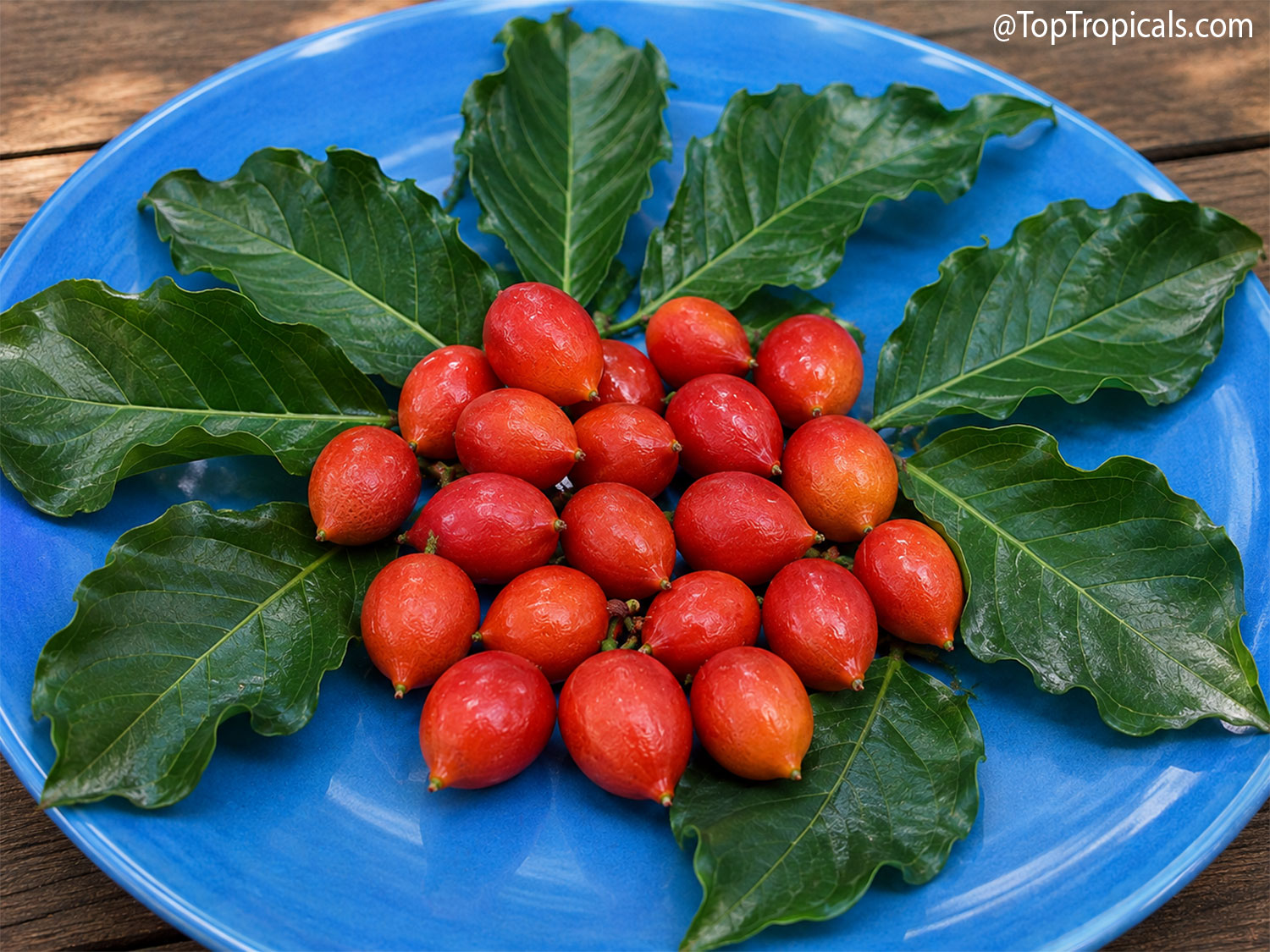
Small fruits grow in clusters and ripen from green through orange to a deep red-orange, so even a small plant can produce a useful harvest. The ripe pulp is dense, creamy, and only slightly juicy, more paste than berry. That sweet, nutty flavor and thick texture are what earn the peanut butter comparison, and it carries far fewer calories by weight than ordinary peanut butter. It also contains beta-carotene, a precursor of vitamin A important for normal vision. Eat it fresh, or blend it into a smoothie with milk and honey.
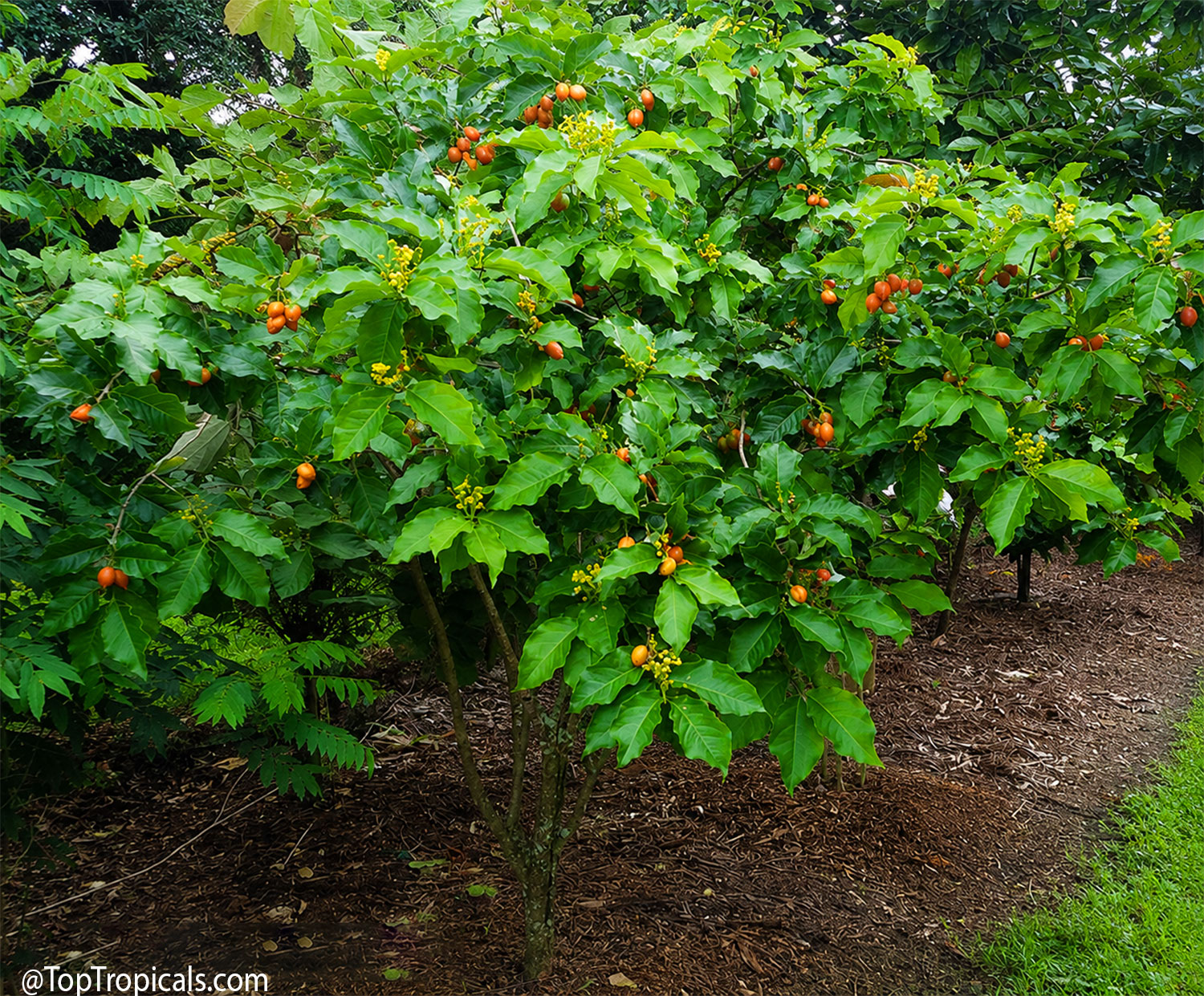
Now the questions a gardener actually asks. It grows as a compact shrub or small tree, usually kept around 8 to 15 ft, though left alone it becomes a real small tree, so prune if you want it bushy. It takes full sun, grows in the ground or a container, and is roughly a Zone 10 plant, with mature plants tolerating a brief dip to around 28 F and young ones needing frost protection. Give it well-drained soil with plenty of organic matter and steady water while it establishes, without letting the roots sit wet, and remember that pots dry out faster than open ground. It fruits fast for a tropical: seedlings in roughly 2 to 3 years, while established nursery plants can fruit sooner. Yellow flowers add ornamental value before the red fruit even shows.
✍️ More About Peanut Butter Tree
🎥 Peanut Butter Fruit Tree Videos
🍇 The Blackberry Jam Side
Randia formosa
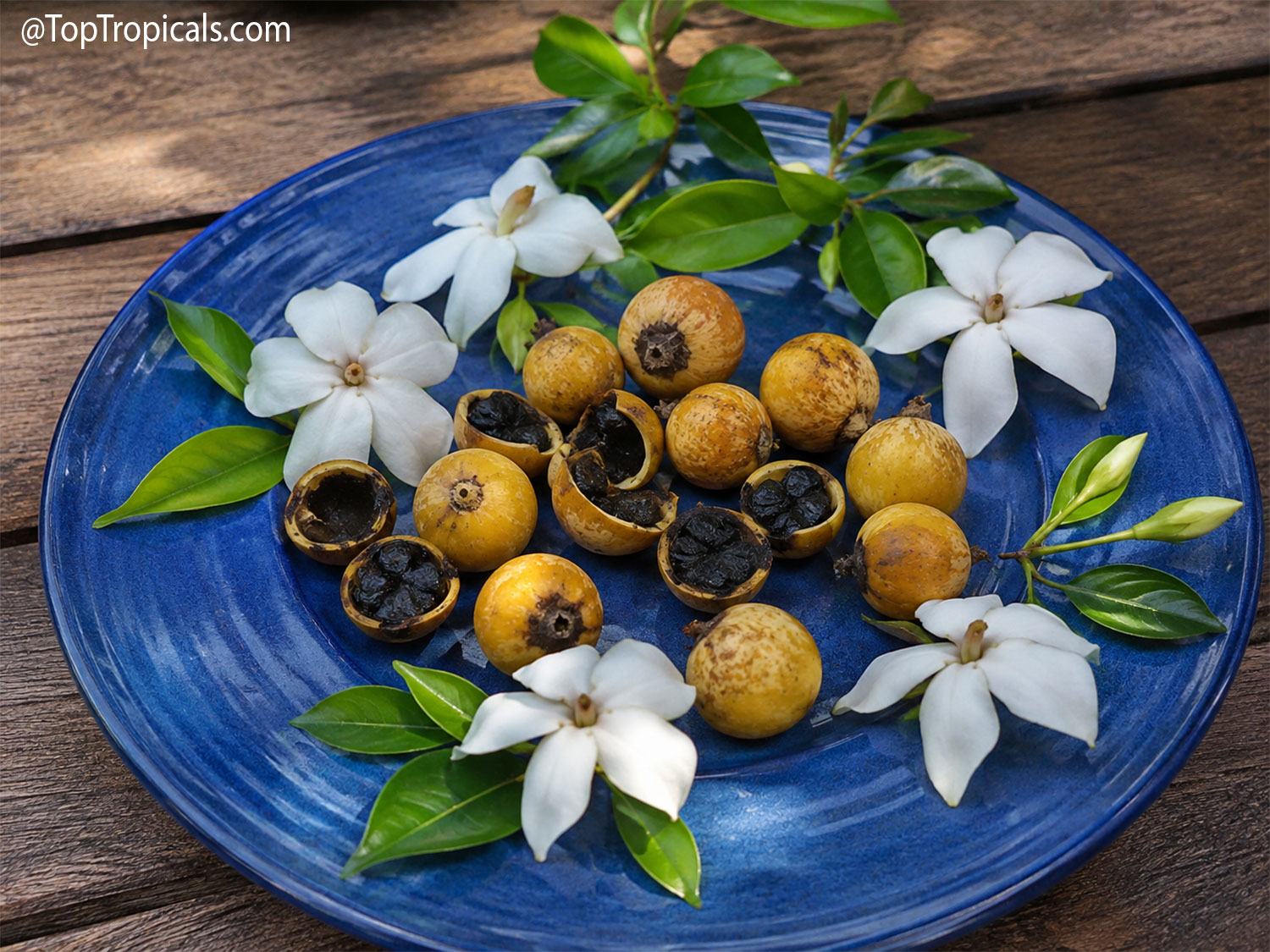
Small and olive-shaped, the fruit ripens from green to yellow or golden. Unlike Peanut Butter Fruit, it does not soften on the outside; the shell stays firm. The color is the ripeness cue. Crack it open to reveal the soft black pulp inside, dark purple to nearly black and gooey, with a flavor remarkably close to blackberry preserves. No cooking, no added sugar. Scoop it straight from the shell or fold it into a dessert.
Here is why it matters in a warm climate. Conventional blackberries generally prefer temperate or subtropical conditions, and many varieties require winter chill that truly tropical gardens cannot provide. Randia formosa gives you that blackberry-jam flavor on a plant that actually thrives in tropical and warm subtropical gardens.
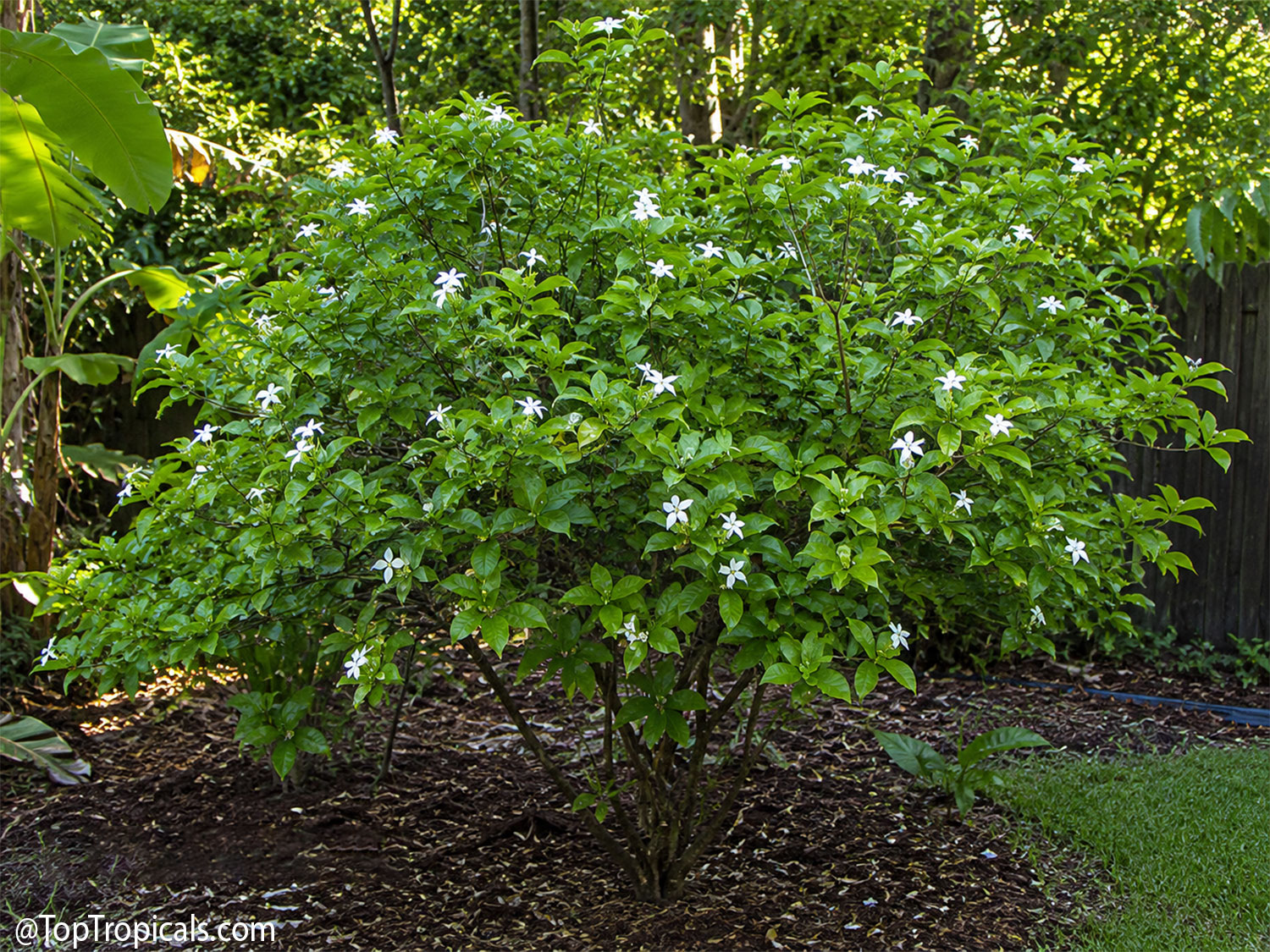
It stays compact, usually 4 to 5 ft in the landscape and smaller in a pot, and can flower and fruit while still small, carrying a good number of fruits at once despite its size. Unlike most fruit plants, it takes sun or shade, and filtered light often keeps the foliage its best green, which makes it handy for patios and gardens without full sun. Give it acidic, well-drained soil, since cool wet feet cause trouble, and ease off watering in cool spells. It is generally grown in roughly Zones 9 to 11, with mature specimens tolerating brief dips into the upper 20s F, though young plants still need frost protection. The large white star-shaped flowers look and smell like gardenias, which fits, since Randia shares a family with both Gardenia and coffee. They are fragrant and open at night, drawing moth pollinators.
✍️ More About Blackberry Jam Tree
💞 Why These Two Belong Together
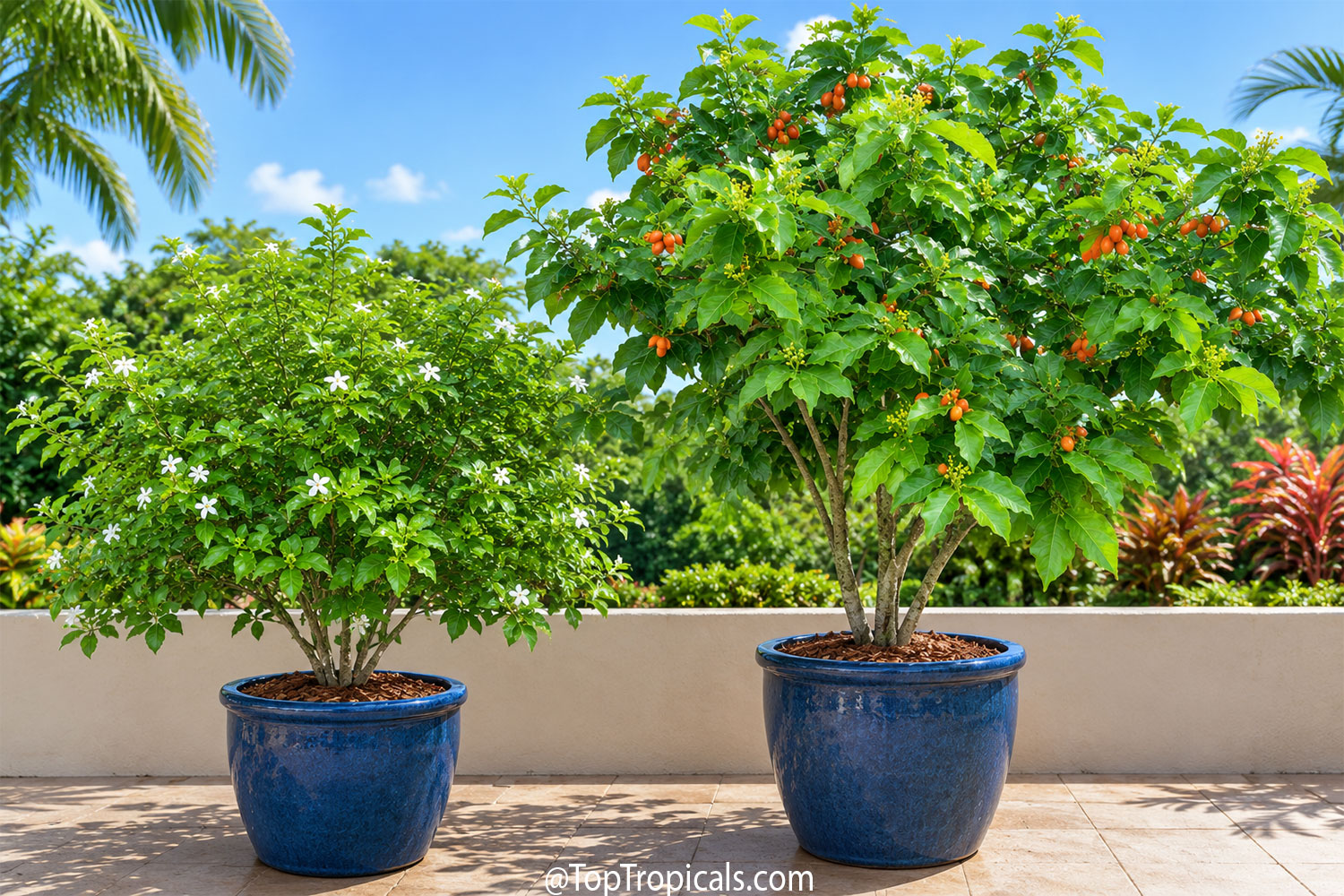
Neither is merely a novelty. Both solve the same practical garden problems: limited space, long waits for fruit, and the wish for plants that look good between harvests. And together, they happen to recreate one of the world's most familiar flavor combinations.
Eat Peanut Butter Fruit fresh or blend it into a smoothie. Scoop Blackberry Jam Fruit straight from the shell or use it in desserts. And, naturally, someone eventually had to combine them.
🛒 Shopping links:
Date: 18 Aug 2026
How much we enjoy
🍷 How much we enjoy
"It is not how much we have, but how much we enjoy, that makes happiness." - Charles Spurgeon
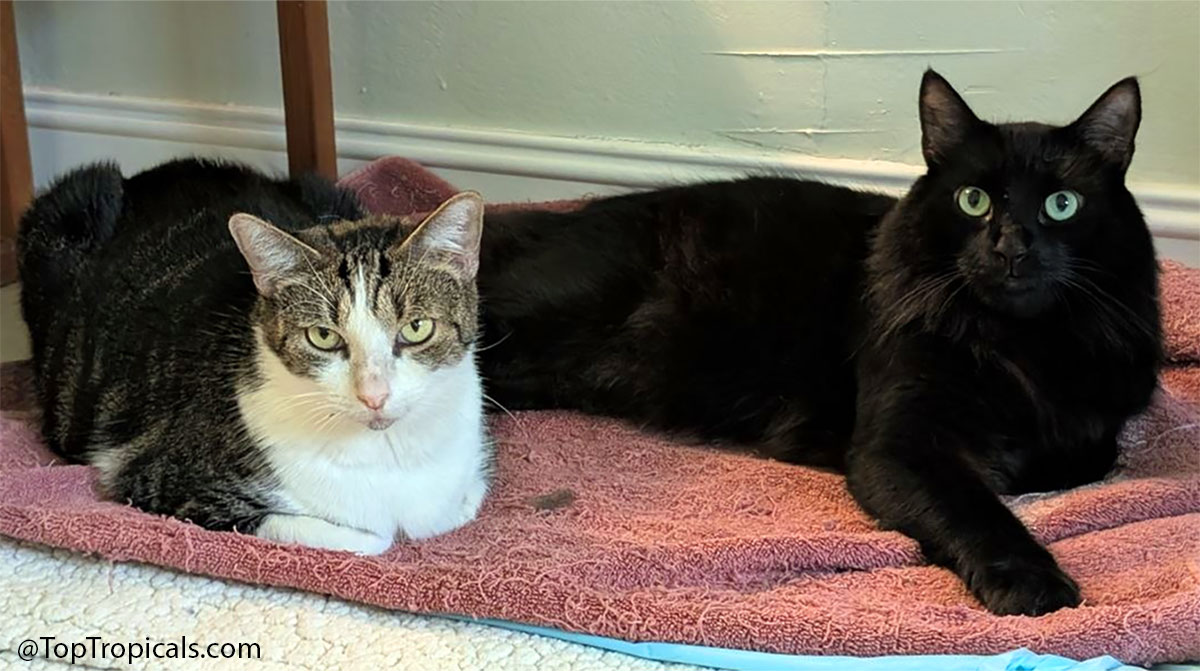
🐈📸 Top Tropicals rescued cats Riki and Georgie both came with a history.
Riki went through years of health issues and is finally feeling better. Georgie was born on the streets, and it took him a while to learn that having a real home - and people who care about him - is actually pretty nice.
Now these two are the best of friends and are rarely far from each other. They always enjoy each other's company at PeopleCats.Garden.
#PeopleCats #Quotes
🟢 Join 👉 TopTropicals
Date: 18 Aug 2026
Insulin Ginger: Myths vs Facts
📚 Insulin Ginger: Myths vs Facts
Insulin Ginger (Chamaecostus cuspidatus, formerly Costus igneus) has become one of the world's most talked-about medicinal plants. As its popularity has grown, so have the myths. Here are some of the most common misconceptions - and what gardeners actually know about this remarkable tropical plant.
- ❌ Myth: You need to eat dozens of leaves.
✅ Fact: Traditionally, people usually chew just one fresh leaf or prepare a mild tea from a small number of leaves. More isn't necessarily better. - ❌ Myth: It replaces diabetes medication.
✅ Fact: Insulin Ginger has a long history of traditional use and is being studied by researchers, but it should never replace prescribed medication without guidance from your healthcare provider.
❗️Safety Note: If you take prescription blood sugar medication, consult a healthcare provider before adding Insulin Ginger to your routine, as combining them can cause blood sugar to drop too low. - ❌ Myth: It only grows in the tropics.
✅ Fact: While it loves warm weather, Insulin Ginger grows very well in containers and can be overwintered indoors in cooler climates. - ❌ Myth: It's the same plant as culinary ginger.
✅ Fact: Despite the common name, it's not the ginger used in the kitchen. It's a different a different genus with its own unique appearance and traditional uses. - ❌ Myth: Harvesting leaves weakens the plant.
✅ Fact: A healthy, established plant tolerates regular harvesting very well. Removing a few mature leaves allows more light into the center of the clump and often encourages fresh new growth. - ❌ Myth: You have to keep buying new plants.
✅ Fact: Quite the opposite. Insulin Ginger spreads by underground rhizomes, so one plant gradually becomes a larger clump that can easily be divided into many new plants. - ❌ Myth: It's grown only for medicinal purposes.
✅ Fact: Many gardeners grow it simply because it's beautiful. Its lush spiral foliage and bright orange flowers make it an attractive ornamental even if you never harvest a single leaf. - ❌ Myth: The leaves taste like spicy ginger.
✅ Fact: They don't. The leaves have a mild, fresh herbal flavor with very little spiciness. Many people chew a fresh leaf, brew it into tea, or blend it with coconut water, pineapple juice, or smoothies. - ❌ Myth: The name means the plant contains insulin.
✅ Fact: It doesn't contain insulin. The nickname "Insulin Plant" comes from its long history of traditional use for supporting healthy blood sugar levels. - ❌ Myth: It's a difficult medicinal plant to grow.
✅ Fact: It's actually one of the easiest. Given warmth, moisture, and regular feeding, Insulin Ginger grows vigorously, produces fresh shoots throughout the season, and can provide leaves for many years.
💡 Sometimes the best way to understand a plant isn't by reading another headline - it's by growing it yourself. Watch it flourish, harvest a few leaves, divide it into new plants, and discover why gardeners around the world have been passing this remarkable tropical from one friend to another for years.
🛒 Grow Your Own Insulin Ginger
📚 Learn more:


Costus igneus (Chamaecostus cuspidatus) - Insulin Ginger in Plant Encyclopedia
One plant today - dozens tomorrow: why gardeners love Insulin Ginger
Insulin Ginger traditional remedies: Quick-n-fun exotic recipes
A leaf you grow, not a pill you buy: Insulin ginger - the plant people actually use
How to make lots of Insulin Ginger plants quickly and get more health benefits
How to lose weight naturally with tropical fruit and plants
The fiery plant that fights sugar: Nature secret insulin?
#Food_Forest #Remedies #Shade_Garden #Discover
🟢 Join 👉 TopTropicals