The smallest orchid tree with the biggest flower show
🕊 The smallest orchid tree with the biggest flower show
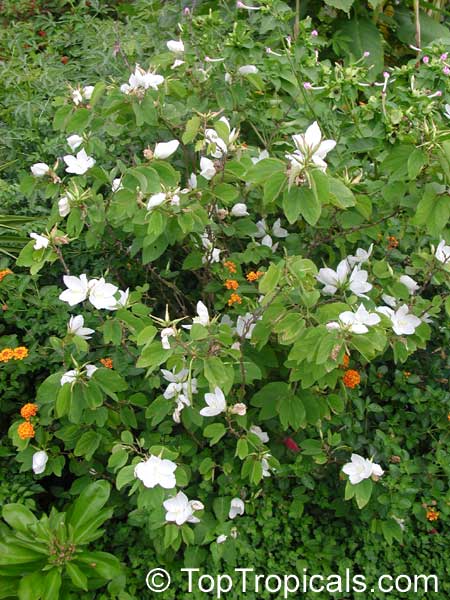
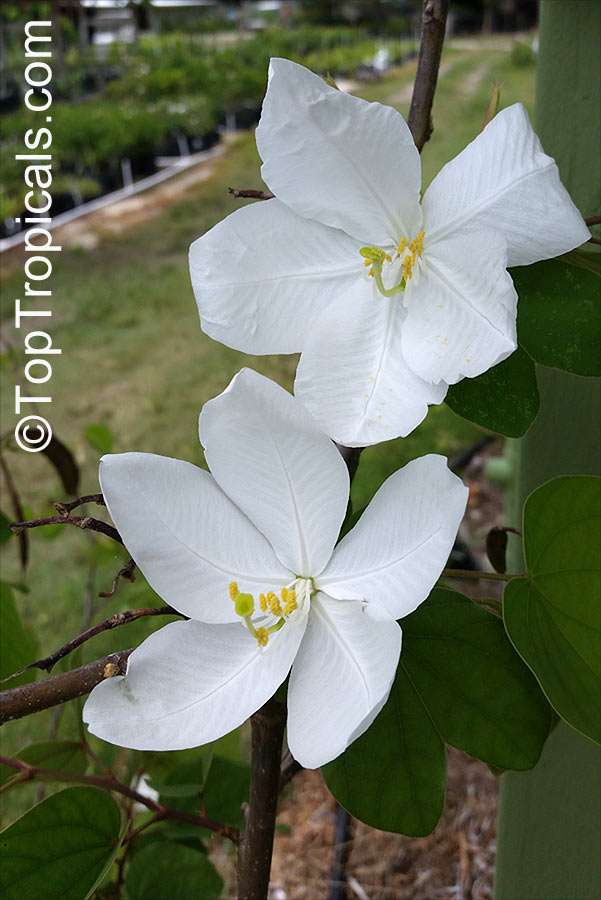
If you are looking for that lush, exotic look but short on garden space, check out Bauhinia acuminata - the Dwarf White Orchid Tree. It might be the smallest member of the Orchid Tree family, but it packs the absolute biggest floral punch. While typical Orchid Trees grow into massive landscape giants, this naturally compact beauty rarely tops 6 to 8 feet. Yet, what it lacks in height, it more than makes up for in sheer flower power. In warm weather, it smothers itself in large, snow-white blossoms, blooming almost year-round in true tropical climates.
【Dwarf  White  Orchid  Tree  Quick  Stats】🌸
  Blooms:  Huge,  snow-white  flowers  with  bright  yellow  stamens
☀️  Light:  Full  sun  to  bright,  partial  shade
💧  Moisture:  Regular  watering  &  loose,  well-draining  soil
  Foliage:  Unique,  distinct  butterfly-shaped  twin  leaves
❄️  Cold:  Sensitive,  protect  from  frost
Non-Stop Blooms & Elegant Foliage
Don't let the short lifespan of individual flowers fool you. While each elegant bloom lasts just a day or two, the tree is a continuous bud-producing machine. As soon as one flower fades, a fresh, crisp "orchid" opens right next to it.
With its striking snow-white petals, bright yellow stamens, and classic butterfly-shaped leaves, it brings an instant touch of sophisticated tropical elegance to any small space.
Perfect for Patios and Pots
Because it stays naturally small, this is the ultimate choice for patios, tight courtyards, townhouse gardens, and large containers where standard Bauhinias simply won't fit. Give it plenty of sunshine, warmth, and well-drained soil, and it will reward you with months of continuous color rather than just one brief seasonal flush.
Why Gardeners Fall in Love With It:
✦ Perfectly Petite: A naturally dwarf habit that fits beautifully into small yards and patios. ✦ Relentless Bloomer: One of the most free-flowering and floriferous members of the entire genus. ✦ Oversized Impact: Huge, dramatic white blossoms that look spectacular against the plant's compact frame. ✦ Container Champion: Thrives beautifully in large pots, making it easy to protect from winter weather. ✦ Instant Tropics: Delivers high-end exotic elegance without requiring a massive estate.
⚠️ Grower's Note on Cold Sensitivity: If there is a catch, it’s that this stunning species is among the most cold-sensitive of the Bauhinias. A light frost can easily damage the foliage. If you experience chilly winter snaps, keep this beauty in a large container so it can easily be moved to a protected location, like a garage or patio, until the freeze passes.
💕 Fertilizer Supplies Nutrients. A
Biostimulant Helps the Plant Function.
Sunshine: So fertilizer is the plant's building materials.
Like donuts & coffee for me. Smokey: Correct. Minerals for leaves, roots, flowers, and
fruit. Sunshine: And a biostimulant is like a You can grow
it! motivational poster? Smokey: No. It is the plant's physical therapist after
life punches it around. Sunshine: So it is encouraging. Smokey: It is useful. There is a difference.
Fertilizer or Biostimulant? Why Your Plants Might Need Both
⚗️
By Michael Dubinovsky, Plant Care Expert, Top
Tropicals
If you walked away from that comic still picturing Sunshine arguing with
Smokey about which bottle does what, you are not alone. It is one of the
most common questions we hear from gardeners: what is the actual difference
between a fertilizer and a biostimulant, and do you really need both?
The short answer is yes. Here's why.
Fertilizer Supplies Nutrients. A Biostimulant Helps the Plant
Function.
Fertilizer supplies essential mineral nutrients: nitrogen, phosphorus,
potassium, and other elements that a plant needs to build new leaves, roots,
flowers, and fruit. Without enough of the right nutrients, a plant simply
cannot grow, flower, or produce healthy new tissue.
A biostimulant works differently. It does not feed the plant in the
traditional sense. Instead, it supports the plant's natural processes so it
can
use nutrients more efficiently, develop stronger roots, and better cope with
environmental stress. That might mean promoting root development, helping
the
plant recover from stress, or improving how efficiently it uses the
nutrients
supplied by fertilizer.
Fertilizer provides mineral nutrients. A biostimulant makes sure the
plant is in shape to use them well. These are not two versions of the same
product. They are two different tools, and in many cases they work best side
by
side.
Question
Fertilizer
Biostimulant
What does it do?
Supplies essential mineral nutrients.
Supports the plant's natural processes.
Simple idea
Provides essential elements.
Helps the plant use them better.
Best use
Regular feeding during active growth.
Stress support, root support, and recovery.
Examples
Nitrogen, phosphorus, potassium, and
micronutrients.
Plants need both nutrition and support to perform their best.
Fertilizers
supply the essential mineral nutrients needed to build new leaves, roots,
flowers, and fruit, while biostimulants help plants use those nutrients more
efficiently, develop stronger roots, and better tolerate environmental
stress.
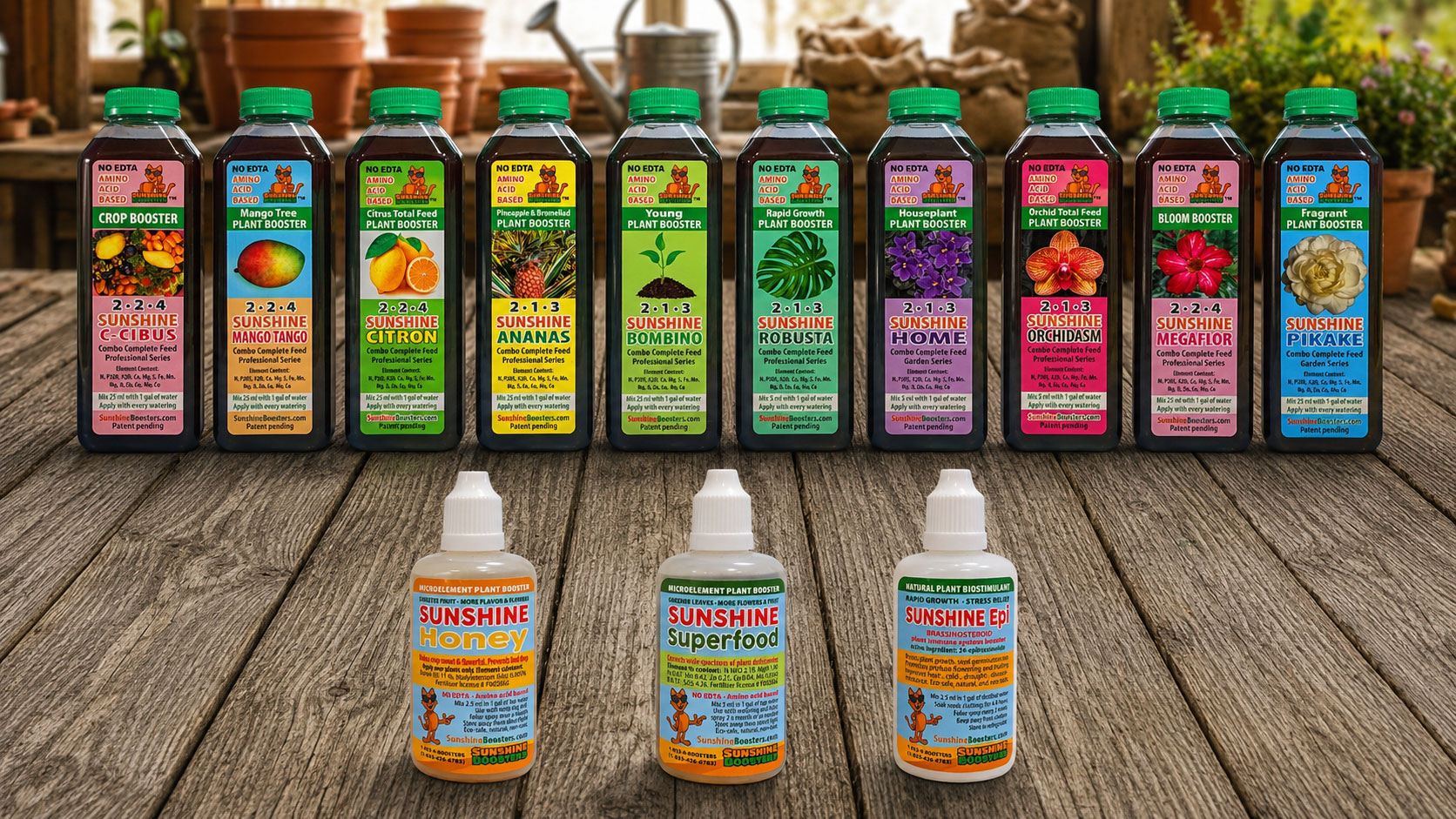
Because they serve different purposes, Sunshine Boosters® fertilizers and biostimulants complement each
other - working together to produce healthier, more vigorous plants.
Why Healthy Roots Matter So Much
It is easy to focus on leaves and flowers, since that is what we
actually see. But almost everything starts underground.
Roots are how a plant takes in water and nutrients. If roots are weak,
damaged, or stressed, it does not matter how much fertilizer you apply. The
plant simply cannot absorb nutrients efficiently. Because healthy roots
influence nearly every aspect of plant growth, many biostimulants are
designed to
support root development and root function, helping plants make better use
of
the nutrients available.
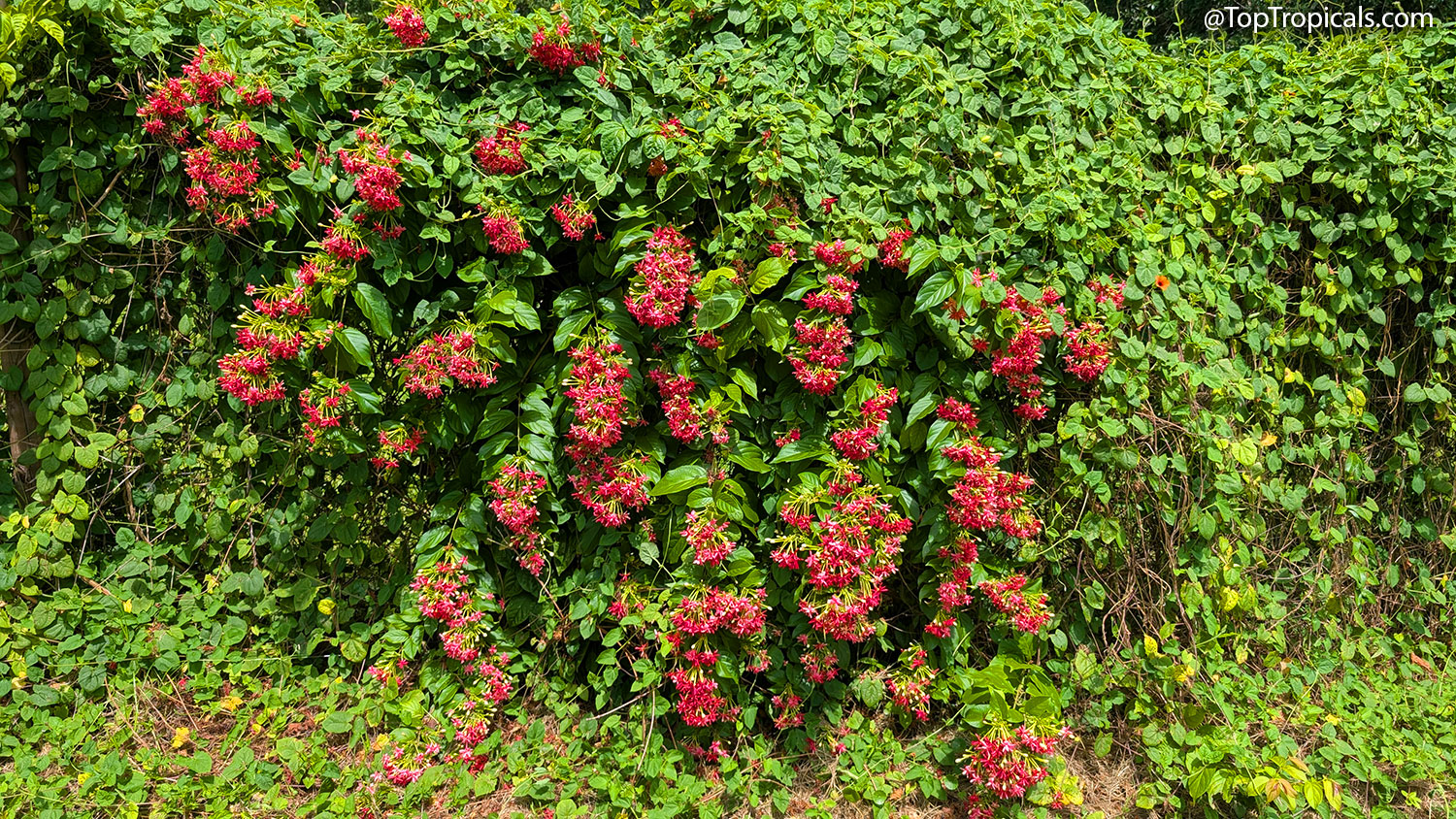
This Quisqualis vine was fed regularly with Green Magic throughout the
previous growing season and treated with Sunshine Epi bio-stimulant before
Florida's record freeze in February 2026. Although the freeze killed it back
almost
to the ground, it rebounded from roots with remarkable vigor and is now
covered in blooms, putting on a spectacular display as if nothing had ever
happened.
Plants Get Stressed Too
Plants experience environmental stress too, and its effects are very
real. Common sources of stress include transplanting into a new pot or
garden
bed, the shock of shipping after a long trip, pruning, drought, intense
heat,
and cold damage. Even moving a plant from a stable greenhouse to your patio,
or repotting it into a larger container, can cause a setback. Any of these
events can temporarily slow growth as the plant shifts resources from
producing
new tissue to coping with stress.
Why Adding More Fertilizer Is Not the Fix
A common gardening mistake is assuming that a stalled plant simply needs
more fertilizer.
But if the plant is stressed, simply increasing fertilizer does not solve
the underlying problem. The roots may not be in a position to absorb those
extra nutrients efficiently. In some cases, adding more fertilizer to an
already
stressed plant can do more harm than good, since the plant is not equipped
to process it.
What the plant often needs first is support, not simply more nutrients.
Feeding a stressed plant is a little like asking someone with the flu to run
a marathon before they've recovered. Sunshine would probably recommend
coffee
and donuts. Smokey recommends helping the plant recover first.
That is where biostimulants come in. Interest in biostimulants has grown
rapidly over the past decade as researchers have gained a better
understanding of how plants respond to environmental stress and how certain
natural
compounds can support those responses. As a result, gardeners now have
access to
a much wider range of biostimulant products than they did only a few years
ago.
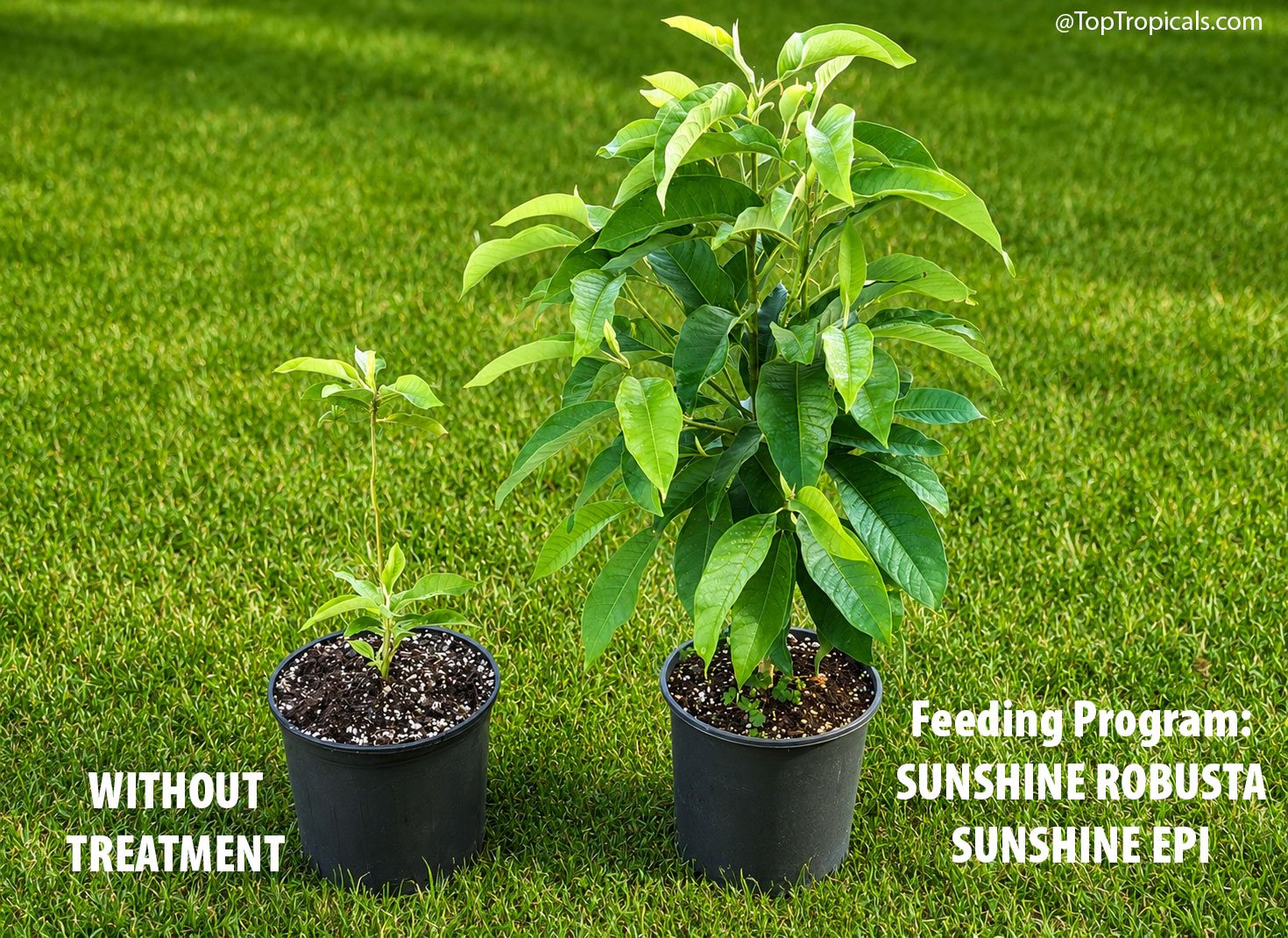
A side-by-side comparison of two Magnolia champaca plants from the same batch. The plant on the left is
the control specimen and received no fertilizer or supplements. The plant on
the right was fed with Sunshine Robusta at every watering and treated with
Sunshine Epi bio-stimulant once a month, resulting in dramatically stronger,
healthier growth.
Why Amino Acids Matter
You may see amino acids listed as an ingredient in biostimulant
products, and it is worth understanding what they actually do.
Amino acids are natural building blocks that plants use to make proteins
and carry out many normal biological processes. Plants produce them on their
own, but supplying amino acids directly may reduce the energy needed to
create them during stressful periods, allowing more energy to be directed
toward
recovery and new growth.
Amino acids are only one type of biostimulant. Others include seaweed
extracts, humic substances, beneficial microorganisms, and naturally
occurring
plant compounds. Although they work in different ways, they all share a
common goal: helping plants function more efficiently under normal and
stressful
conditions.
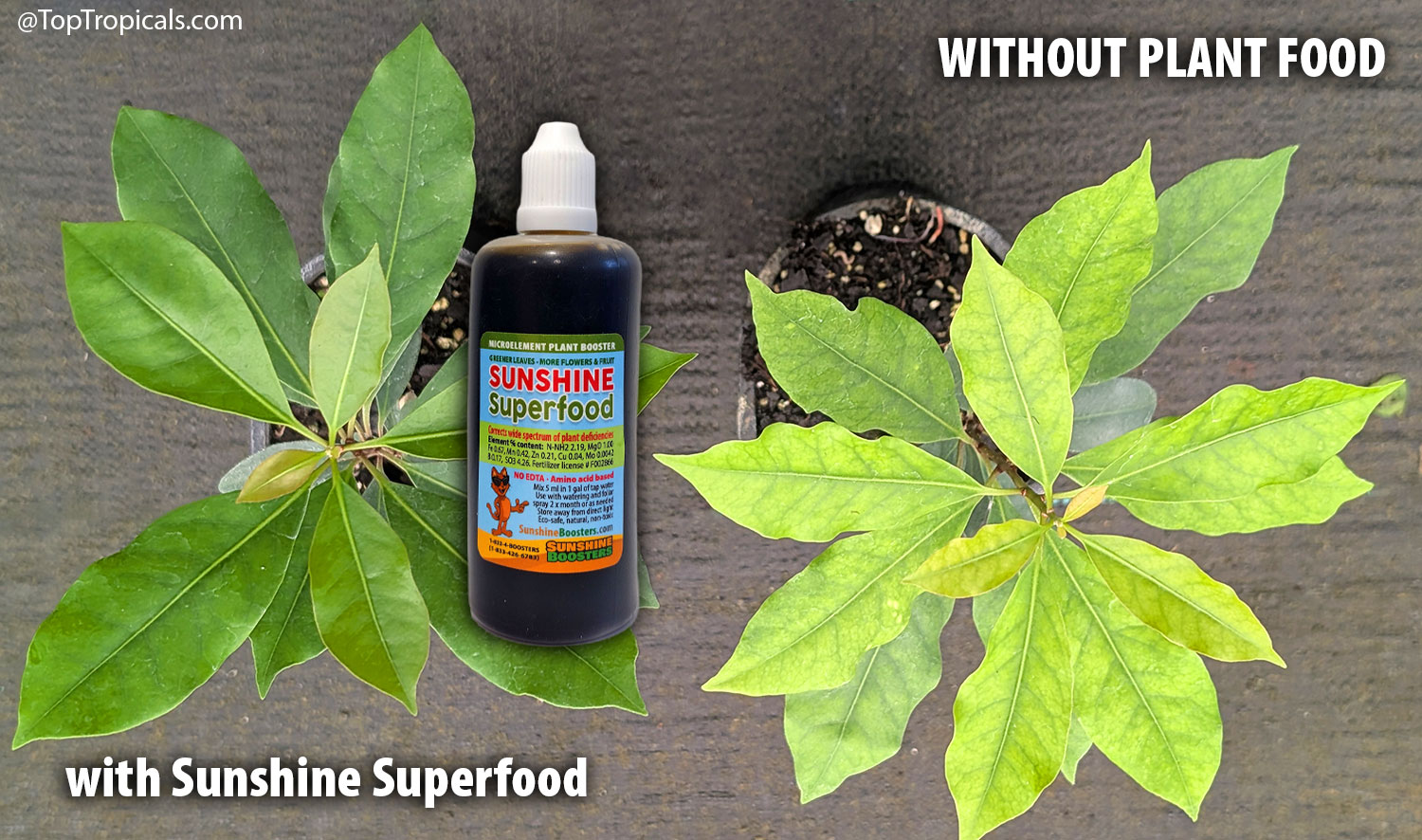
This side-by-side comparison shows the difference proper nutrition can
make. The Neea psychotrioides - Pigeon Plum - on the left was fed regularly
with Sunshine Robusta and Sunshine Superfood, both amino acid-based plant
supplements. Amino acids are natural building blocks that plants use to
produce
proteins and support countless normal biological processes, allowing
nutrients
and micro-elements to be absorbed efficiently for healthier, greener growth.
The untreated plant on the right shows the effects of nutrient
deficiency.
When a Biostimulant Makes the Most Sense
Biostimulants tend to shine in specific situations. After transplanting,
when roots are adjusting to new soil. After pruning, when the plant is
redirecting its energy. After shipping, when a plant has just been through a
long,
disruptive journey. During periods of heat stress, when the plant is working
hard just to stay stable. And after frost or drought, when recovery is the
main priority.
Many gardeners also apply biostimulants before predictable stresses,
such as a heat wave, transplanting, or shipping, to help plants prepare
rather
than simply recover afterward.
Unlike fertilizers, which directly supply nutrients, or pesticides,
which target a specific pest or disease, biostimulants work by supporting
the
plant's own biological processes. Their effects are usually gradual rather
than
immediate, helping plants become healthier and more resilient over time
rather than producing overnight results.
In all of these cases, the goal is not to push rapid new growth right
away. The goal is to help the plant stabilize and recover its normal
functioning, so that growth can resume naturally.
Situation
What the Plant
Usually Needs
Normal active growth
Regular fertilizer, with biostimulants as extra
support.
After shipping or
transplanting
Gentle support first. Let the plant recover
before pushing growth.
Heat, drought, or cold
stress
Correct the growing conditions, then use a
biostimulant to support recovery.
Weak roots or stalled
growth
Avoid over-fertilizing. Focus on root health,
proper watering, and stress recovery.
Why So Many Gardeners Use Both Together
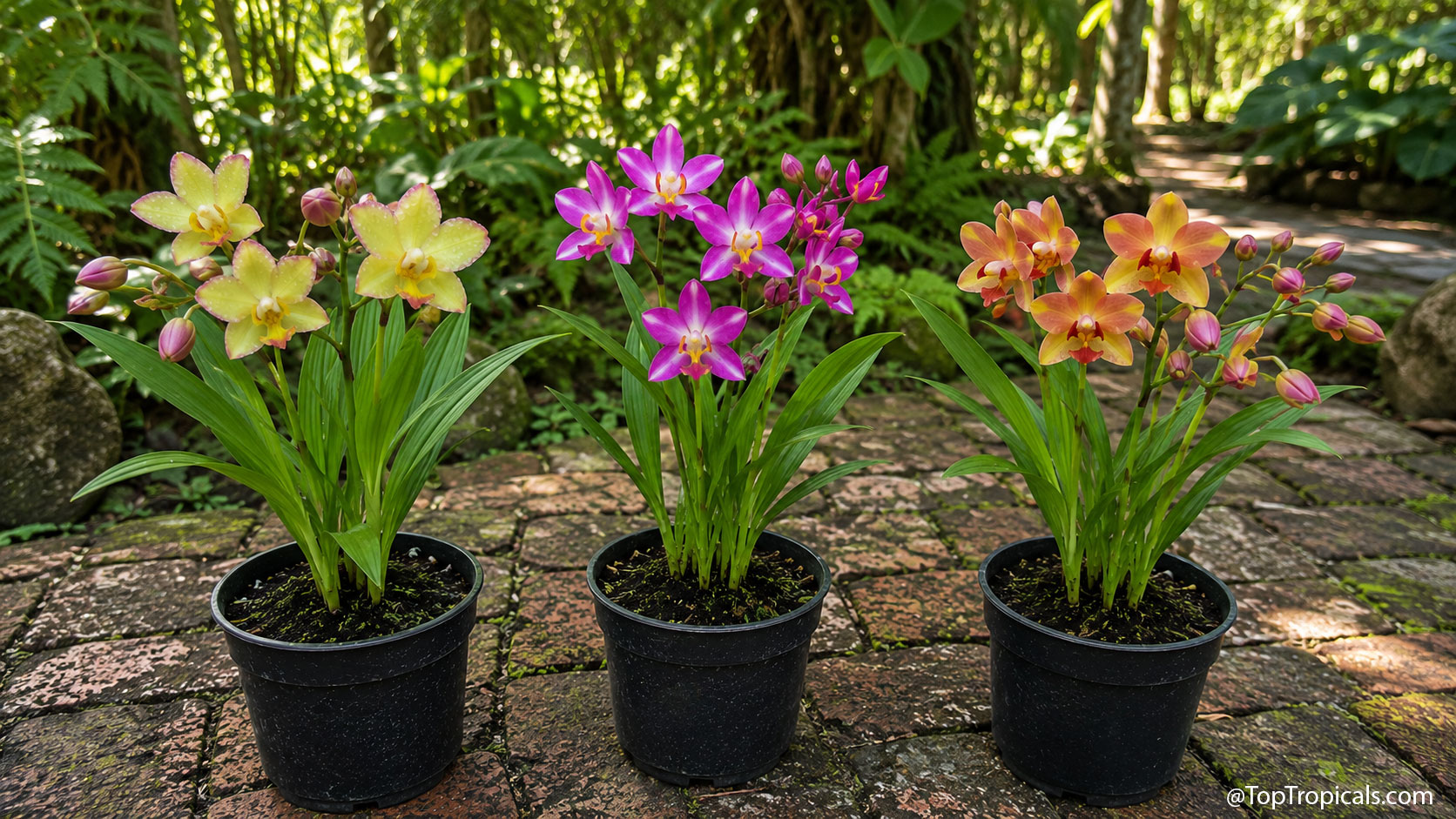
Ground orchids are surprisingly vigorous and reward good care with
spectacular blooms. As heavy feeders, they respond quickly to regular
fertilizing, micro-element supplements, and bio-stimulants, producing
stronger growth
and abundant flowers throughout the season.
Once you see fertilizer and biostimulants as two different tools rather
than competing products, using them together makes a lot of sense.
Fertilizer supplies the nutrients. The biostimulant helps the plant be
ready to use those nutrients well, especially during or after a stressful
period. Together they provide both nutrition and stress support.
Clearing Up a Few Common Myths
Here are a few common misconceptions.
Biostimulants do not replace fertilizer. They are not a substitute for
nutrition.
And healthy plants benefit from biostimulants too, not just struggling
ones. A plant going through a normal stressful event, like a routine
repotting
or a hot summer week, can use the support just as much as one that is
already showing signs of trouble.
Where Sunshine Boosters Fit In
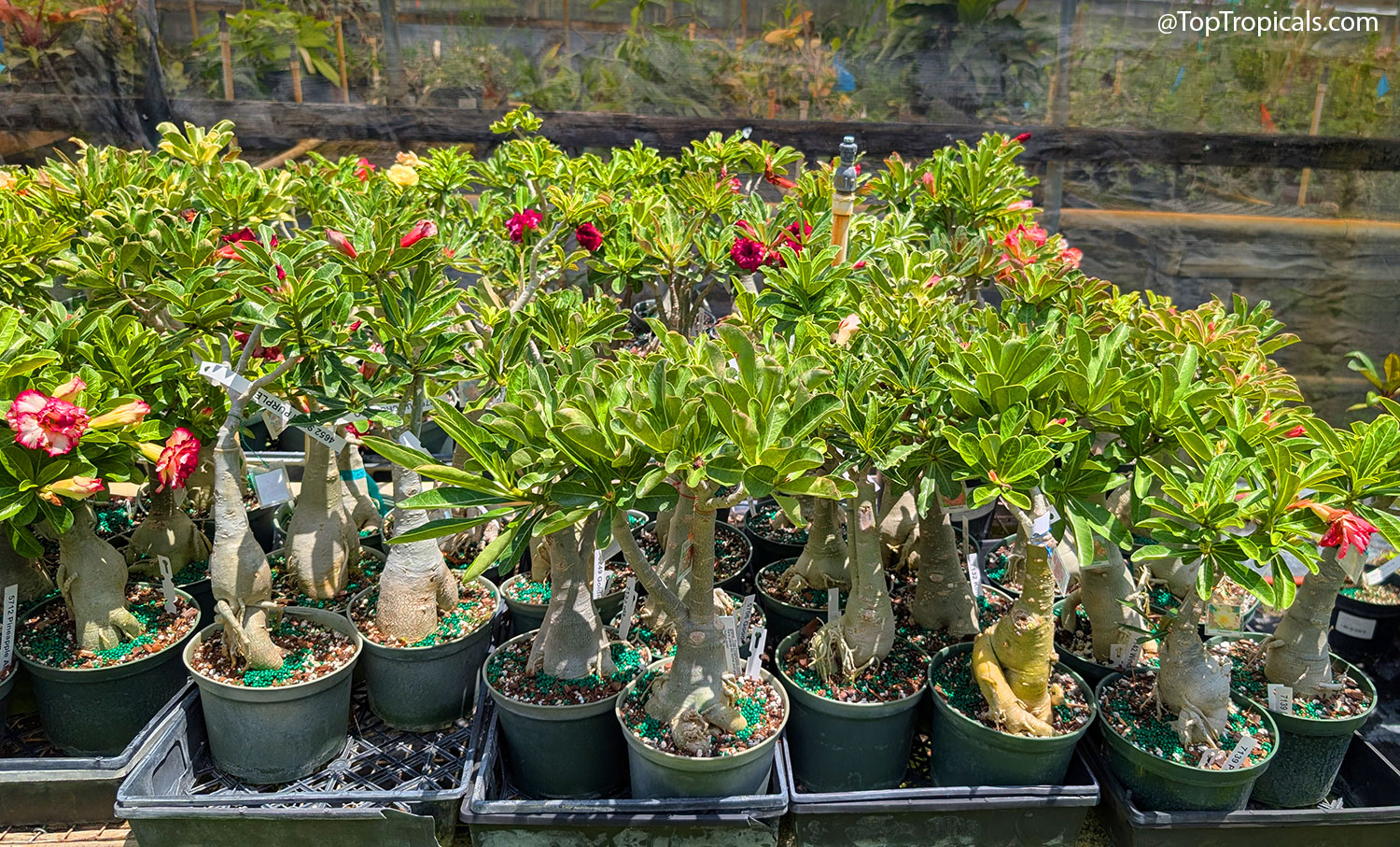
Healthy Desert Roses start with a good feeding program. During active summer
growth we use Green Magic controlled-release fertilizer, combined with
Sunshine
Boosters Megaflor to encourage abundant flowering. Before dormancy in fall -
and again in spring as new growth begins - we apply Sunshine Epi
bio-stimulant to help plants transition smoothly and start the growing
season with
vigorous growth.
Some modern products combine mineral nutrients with biostimulant
ingredients in a single formulation. Sunshine Boosters are one example of
this
approach. Rather than choosing between providing nutrients and supporting
recovery
from stress, they combine both functions in a single product.
That means you are not stuck picking one function over the other. You
get essential nutrients along with added support for root growth, stress
tolerance, and recovery, in one practical step.
A Closer Look at Sunshine EPI
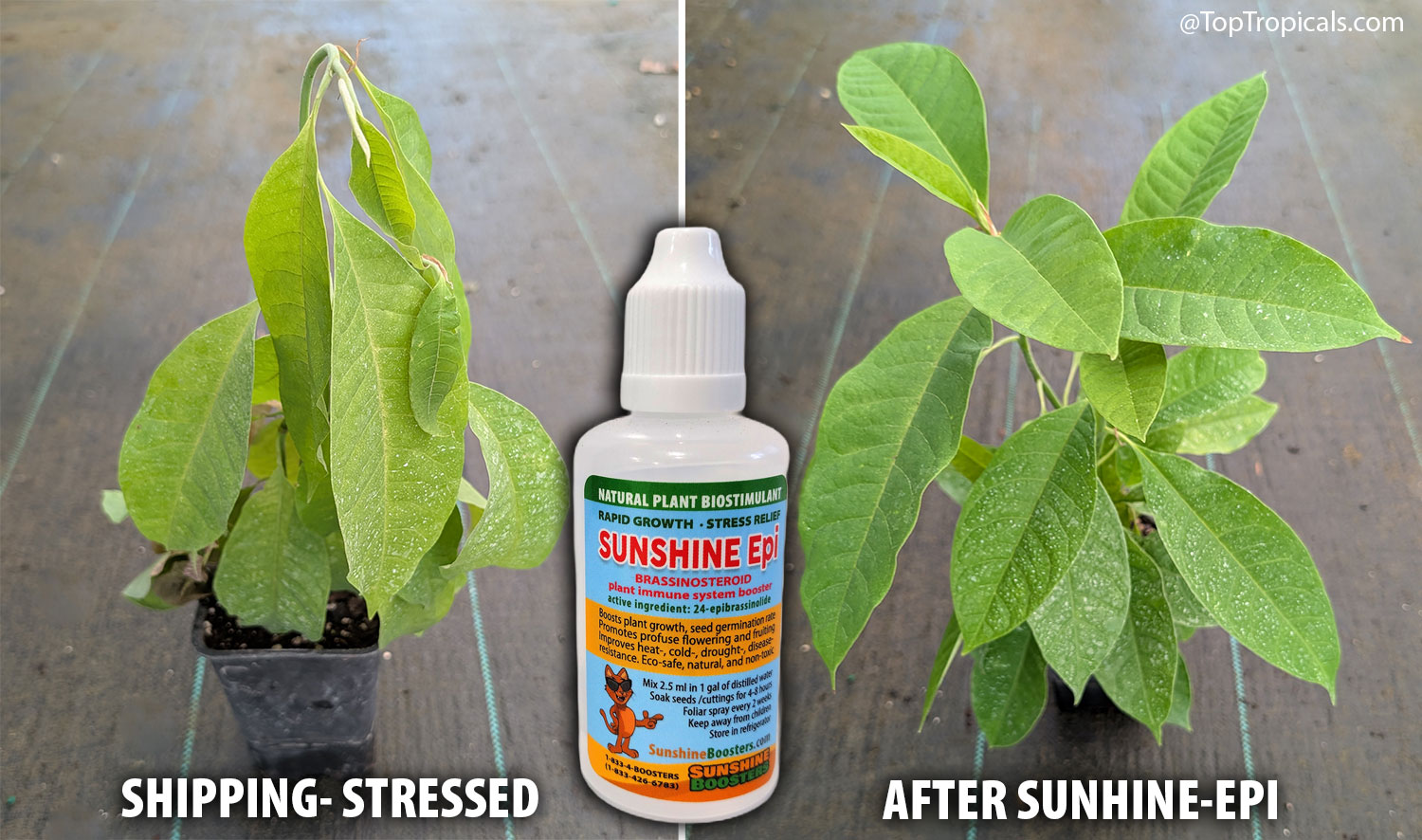
The same plant is shown in both photos. On the left, it had just
arrived
after shipping and was suffering from severe shipping stress. It was treated
with Sunshine Epi upon arrival. The photo on the right was taken three weeks
later, showing a remarkable recovery with firm leaves, healthy new growth,
and restored vigor.
Sunshine EPI is designed for a more specialized purpose. It contains
epibrassinolide, a synthetic form of a naturally occurring plant hormone
known
as a brassinosteroid. In practical terms, this ingredient helps plants
tolerate environmental stress and recover more quickly afterward.
While Sunshine Boosters are built for everyday nutrition and stress
support, Sunshine EPI is meant for moments of unusually severe stress, such
as
transplant shock, frost damage, or prolonged heat.
The Most Important Thing to Remember: Biostimulants Are Not Magic
Biostimulants cannot replace sunlight. They cannot replace water. They
cannot make up for poor soil, and they cannot fix growing conditions that
are
simply wrong for the plant.
If a plant is sitting in deep shade when it needs full sun, no
biostimulant will change that. If the soil drains poorly and the roots are
sitting in
water, no product will undo that damage on its own. Good growing conditions
always come first. Biostimulants and fertilizers are there to support a
plant
that is already being given a reasonable chance to succeed, not to rescue
one
from fundamentally wrong conditions.
Problem
Fix the Cause
First
Too little light
Move the plant to brighter conditions before
expecting strong growth.
Wet, poorly drained soil
Improve drainage and watering before adding
more products.
Root damage
Let the plant recover. Do not push it with
heavy fertilizer.
Wrong temperature
Protect from cold, heat, or sudden changes
first.
Closing Thoughts
If you remember nothing else from this article, remember Smokey's rule:
feed the plant, help the plant, and do not confuse the two.
Fertilizer supplies the mineral nutrients plants require for growth.
Biostimulants support the plant's natural processes, helping it recover from
stress and use those nutrients more effectively. Together, combined with
good
growing practices, they give plants the best opportunity to thrive.
Sunshine: So the rule is: feed the plant, help the plant,
and do not confuse the two. Smokey: Correct. Sunshine: And if the plant still looks sad? Smokey: Check the light, water, roots, and temperature
before you check the garden supply shelf.
Rescued Cat Bob hard at work in his office at TopTropicals
💻 People ask how I stay productive working from home?
Every office has that one coworker - who contributes absolutely nothing to the project but insists on attending every meeting.
Bob parks himself on a printer and activates his patented five-second reminder system.
Making absolutely sure I never experience an uninterrupted thought.
He's not hungry.
He's not in distress.
He's just conducting regular quality assurance and reminding that he needs CHEESE!
"MEEEOOW!"
"MEEEOOW!"
"MEEEOOW!"
This tropical Bird of Paradise survived freeze without dropping a leaf: Caesalpinia mexicana
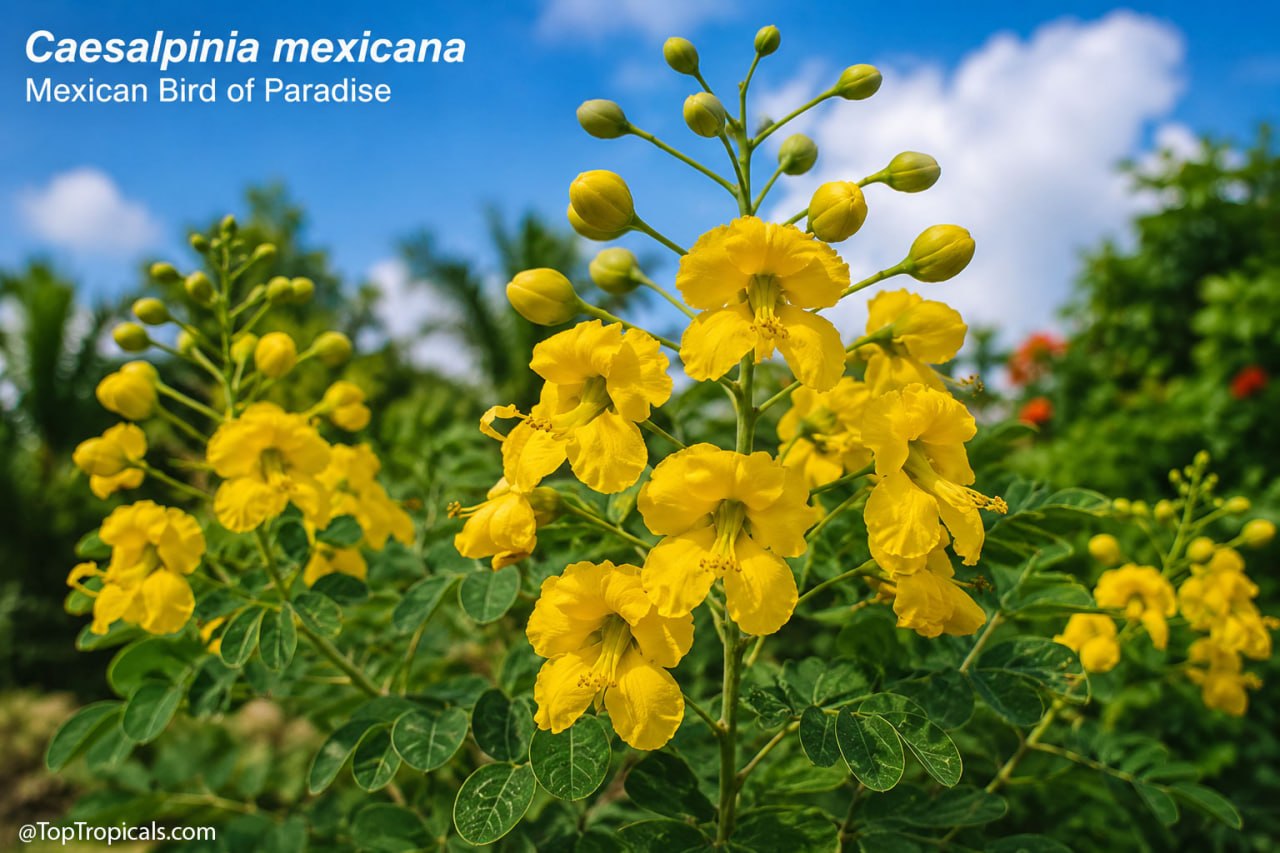
Caesalpinia mexicana - Mexican Bird of Paradise
Caesalpinia mexicana - Mexican Bird of Paradise flowers
🌞 This tropical Bird of Paradise survived freeze without dropping a leaf: Caesalpinia mexicana
When Florida was hit by the historic, record-breaking freeze of February 2026, the aftermath wasn't pretty. Gardens across the state looked like a battleground. Countless tropical plants lost their leaves, suffered severe dieback, or simply gave up. Not this one.
While neighboring plants were turning brown, Caesalpinia mexicana - the Mexican Bird of Paradise - stayed vibrant green through the worst of the cold, refused to drop a single leaf, and was soon happily covered in bright yellow flowers.
That remarkable resilience is exactly why gardeners are suddenly scrambling to find this hidden gem.
🌞 The Mexican Bird of Paradise Blueprint
You don’t need a green thumb to keep this plant happy. Because it evolved in rugged, rocky terrains, it prefers a hands-off approach. If you're planning to add one to your landscape, here is the quick-reference data sheet for success:
[PLANT  PROFILE:  CAESALPINIA  MEXICANA]


■  CLASSIFICATION:  Evergreen  Flowering  Shrub  /  Small  Tree
■  SUN  EXPOSURE:  Full  Sun
■  WATER  NEED:  Very  Low;  drought-tolerant  once  established
■  COLD  HARDINESS:  Fully  evergreen  down  to  15F
■  SOIL:  Poor,  sandy,  well-draining  soils
■  MATURE  SIZE:  8–12  ft  tall
■  FOLIAGE:  Fern-like  blue-green  leaves


⚠️  PRO-TIP:  Avoid  heavy  organic  mulches  or  overwatering.  Too  much  "love"  (and  moisture)  may  rot  the  roots.  Plant  it,  water  it  to  establish,  and  then  walk  away.
🌞 Tougher Than Your Average "Hardy Shrub"
Most people are familiar with the common red-and-orange Bird of Paradise (Caesalpinia pulcherrima), which routinely gets zapped to the ground by hard frosts. This rare Mexican cousin offers something entirely different: absolute bulletproof toughness combined with an elegant, tropical aesthetic.
But its superhuman cold tolerance isn't its only party trick:
Fragrant Golden Blooms: Unlike its scentless relatives, this species produces dense clusters of fragrant, butter-yellow flowers from spring well into summer. Hummingbird Magnet: The sweet scent and bright nectar-rich blossoms keep local pollinators and hummingbirds visiting daily. Stunning Foliage: Its unique blue-green, fern-like foliage stays lush and attractive year-round, serving as the perfect backdrop for the golden blooms.
🌞 Born to Survive
Native to the rugged, arid regions of northern Mexico and southern Texas, this plant evolved to handle nature's extremes. It shrugs off blazing summer heat, intense droughts, and poor soils just as easily as it dismisses a historic freeze. Once established, it requires remarkably little care.
Nature's Entertainment: After the flowering season, the plant develops decorative woody seed pods. As they dry out in the sun, they suddenly snap open with an audible pop, physically launching seeds several feet away.
Naturally growing as a large shrub, it can easily be trained into an elegant, multi-trunk small tree reaching about 8 to 12 feet tall. It is versatile enough to star as a standalone specimen, a vibrant flowering hedge, or a patio shade tree.
🌞 The Verdict
If you want a picture-perfect garden but are tired of crossing your fingers every time the weather forecast dips, this is the plant your yard is missing. It proves that sometimes, the toughest plants in the garden are also the most beautiful. 👉 More...
🐈📸 Manx tailless cats Matilda and Timo - the rescued Twins from Top Tropicals PeopleCats.Garden - are sharing one brain cell and running the same software.