Garden Blog - Top Tropicals
Date: 1 Sep 2025
Politeness

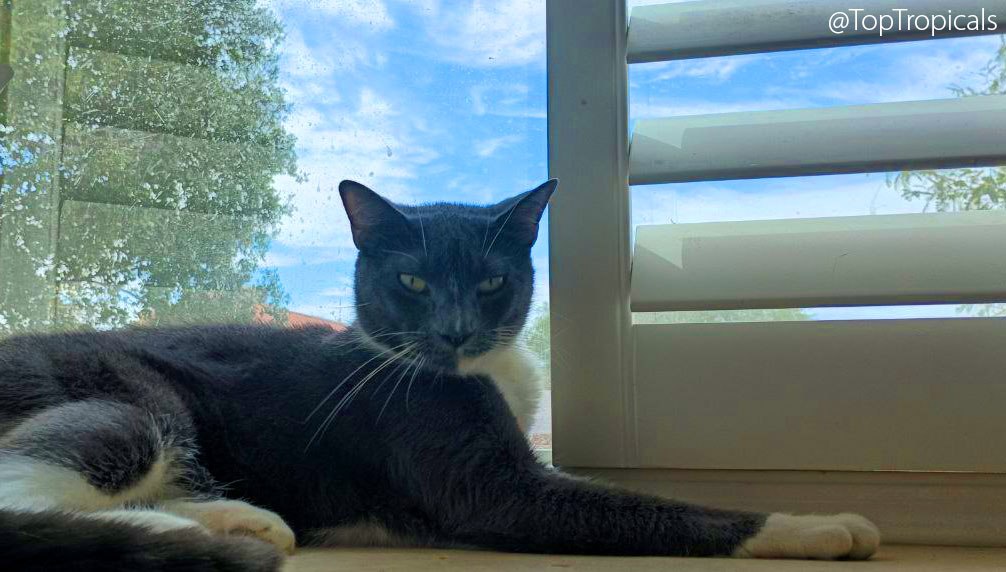
Cat Wesley
❤️ Politeness
"Nothing costs so little and is valued so highly as politeness." - Miguel de Cervantes
🐈📸 In loving memory of Cat Wesley - a lover boy at TopTropicals PeopleCats.Garden
#PeopleCats #Quotes
🟢 Join 👉 TopTropicals
Date: 1 Sep 2025
Whats inside the Devils Tongue that smells like trouble?
Amorphophallus paeoniifolius (campanulatus) - Voodoo lily
👅 What's inside the Devils Tongue that smells like trouble?
👹 Amorphophallus plants - the Voodoo Lilies - are also known as Devil's tongue, Snake Palm, or Elephant Foot Yam, Corpse flower. This plant has a reputation as wicked as its name!
👹 Amorphophallus is the largest flower in the world and one of the most exotic bizarre flowers. Amorphophallus titanum is known for its massive size, its flower can reach heights of over 10 feet and blooms only once every few years.
👹 Why Corpse flower? Because of the smell that the flower omits, but for only a few hours - just long enough to summon its pollinators, the flies 🐱
After that, the air clears, leaving only the memory of the spectacle.
👹 The titan of the group, Amorphophallus titanum, can soar over 10 feet tall. But its cousin in this video, Amorphophallus paeoniifolius, is just as fascinating. It rises from a giant underground corm (which is actually edible in Asia), then sends up either one surreal flower or one umbrella-like leaf as big as a small tree.
👹 Season after season, it alternates between leaf and bloom, keeping its mysterious cycle alive. Hardy enough to rest through winter dormancy, it can even be grown in a pot at home.
🎥 Amorphophallus paeoniifolius (campanulatus) - Voodoo lily
🛒 Discover more of Amorphophallus - rare and enigmatic plants
📚 Learn more:


Different species of Amorphophallus
Amorphophallus bulbifer
Amorphophallus konjak
#Nature_Wonders #Shade_Garden #Container_Garden
🟢 Join 👉 TopTropicals
Date: 31 Aug 2025
Who was your grandpa?

Macaron: "My grandpa was a Snow Leopard!"
Jim II: "My grandpa was a Teddy Bear..."
🐈📸 Cats Macaron and Jim II bragging about their family history at TopTropicals PeopleCats.Garden
#PeopleCats #Quotes
🟢 Join 👉 TopTropicals
Date: 31 Aug 2025
Zero Sugar fruit: forget lemonade - new perfect summer drink discovered!
Costa Rican Guava, Cas Guava - Psidium friedrichsthalianum
Zero Sugar fruit: forget lemonade - new perfect summer drink discovered!
🍋 Costa Rican Guava, or Cas Guava (Psidium friedrichsthalianum) is the boldest fruit you can grow for refreshing drinks. Its flavor is sharp, tangy, and unforgettable - perfect for anyone who loves acidic fruit. Cas Guava has sugar at all, unless you decide to add some.
🍋 The trees are super prolific - even young ones fruit heavily, and we make gallons of juice at Top Tropicals.
🍋 The best part? You can freeze the fruit or boil it into a concentrate with a bit of sugar. That drink lasts in the fridge for months without going bad, thanks to Cas Guava’s natural antibacterial punch.
🍋 Cas Guava juice is Costa Rica’s traditional Agua de Cas - tart, refreshing, and perfect for summer heat. And if you save enough, you’ll still be sipping it through the winter.
♨️ Agua de Cas Quick Recipe
We boiled this fruit and the drink lasted for months!
Boil halved fruits in water with sugar to taste
Simmer 5-10 minutes, let sit, then mash the softened fruit to release all the flavor
Strain through a colander, bottle, and refrigerate - just dilute with water when serving
✔️ Why choose Cas Guava?
• Packed with vitamin C - four times more than lemons - for a powerful immune boost.
• Rich in antioxidants to combat stress and inflammation.
• Hardy and low-maintenance, thriving in poor soils and resisting pests.
🛒 Grow your own Cas Guava
📚 Learn more:
• What is the best fruit for summer drinks and wine?
• What fruit is more sour and has more vitamin C than a lemon
• What fruit can you drink? Costa Rican Cas is the Guava for Drinking
• Costa Rican Guava
#Food_Forest #Recipes #Guava
🟢 Join 👉 TopTropicals
Date: 31 Aug 2025
🌿 The Jungle Cactus with a secret life
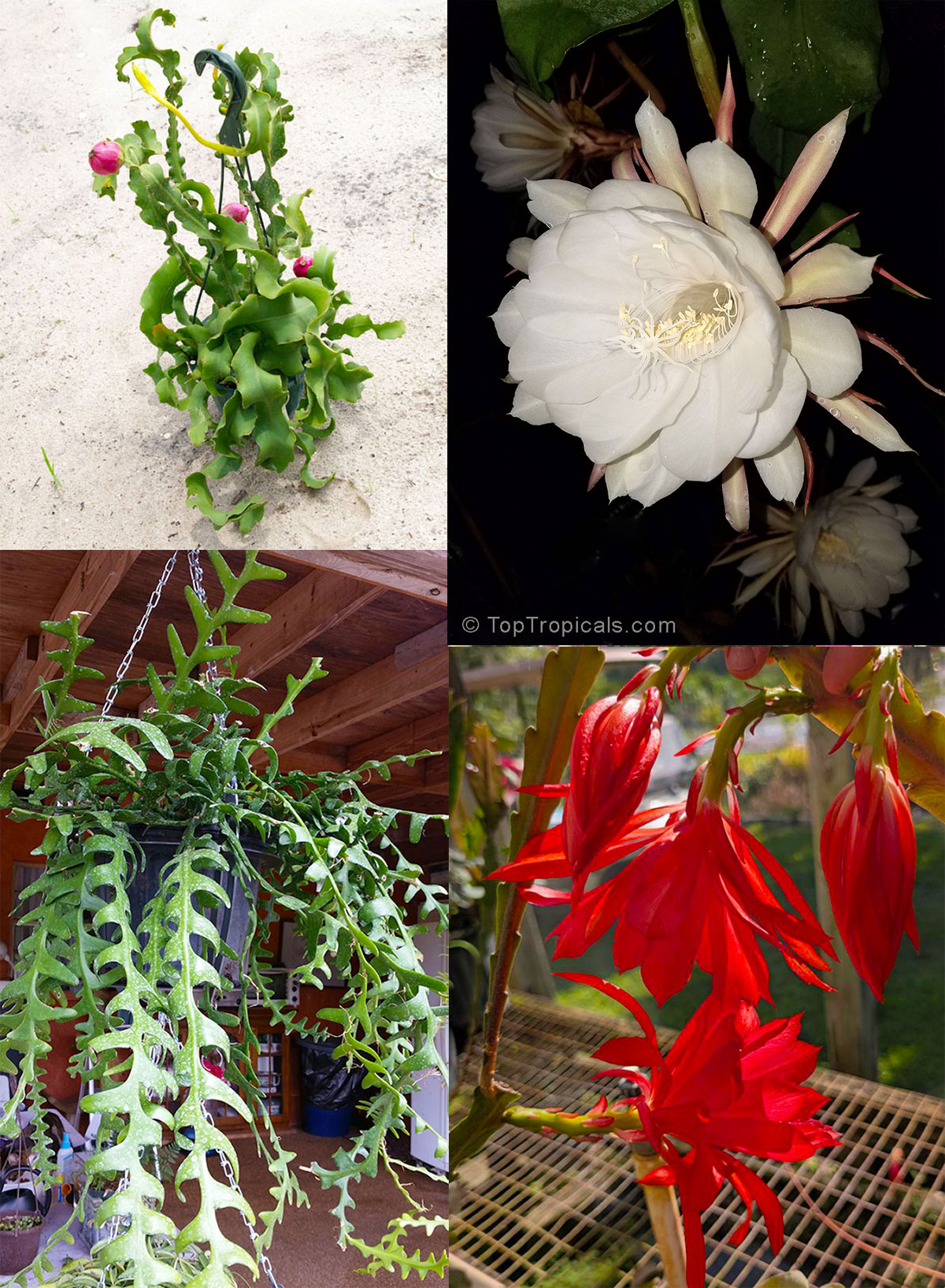
Jungle cactus collage: top left Epiphyllum guatemalense Monstrosa (Curly Locks Orchid Cactus), top right Epiphyllum oxypetalum (Queen of the Night), bottom left Cryptocereus anthonyanus (Zig-Zag Cactus), and bottom right Disocactus ackermanni (Red Orchid Cactus)
Most people picture cactus as desert plants: hot sun, sharp spines, dry sand. But that’s only half the story. There’s another branch of the family that lives in the shade of rainforests. These are the jungle cacti — epiphyte plants that climb trees, trail from branches, and throw out flowers so big and showy they look closer to orchids than to cactus blooms.
See one up close and it’s a surprise. The stems can be flat, zig-zagged, or even curly. Some trail like ferns, others pile into a shaggy basket. And when the flowers open — often at night — they’re wide, fragrant, and gone by morning. It’s no wonder gardeners like them from a first sight.
✔️ Jungle Cactus Q&A
Aren’t all cacti desert plants?
Not these. Jungle cacti are epiphytes and grow in rainforests, clinging to trees and catching rain. They never touch desert sand.
What kind of light do they need?
Outdoors, filtered sun under a tree works best. Indoors, give them bright but indirect light — east or north windows are usually safe. Direct summer sun can scorch the stems, whether inside or out.
How much water is safe?
They take more water than desert cactus but still hate wet feet. Outdoors, a rain shower is fine if the pot drains fast. Indoors, water when the top inch of soil feels dry. Always use a loose mix like Adenium mix so roots get some air.
Do they bloom indoors?
Yes. In fact, many bloom better inside where conditions are steady. They set buds when a little root-bound, and cooler nights help. Outdoors in frost-free zones, flowers come with seasonal shifts. Indoors, expect surprise buds after a cool spell by the window.
Best way to display them?
Hanging baskets show off trailing stems both inside and out. Shallow pots work well on shelves or ledges indoors. In warm climates, they can even be tied to a tree branch outside — exactly how they grow in the wild.
Extra note on indoor vs. outdoor care?
Indoors, watch for dry heated air in winter — they like a bit of humidity. A tray of pebbles and water under the pot helps. Outdoors, protect from heavy midday sun and bring them in if nights dip below the mid 30s F.
Jungle cacti are easy to keep and full of surprises. Whether trailing from a basket or blooming after dark, they prove that not every cactus belongs in the desert.