The SECRET growers never tell you: simple trick how to bring plants back to life and keep green
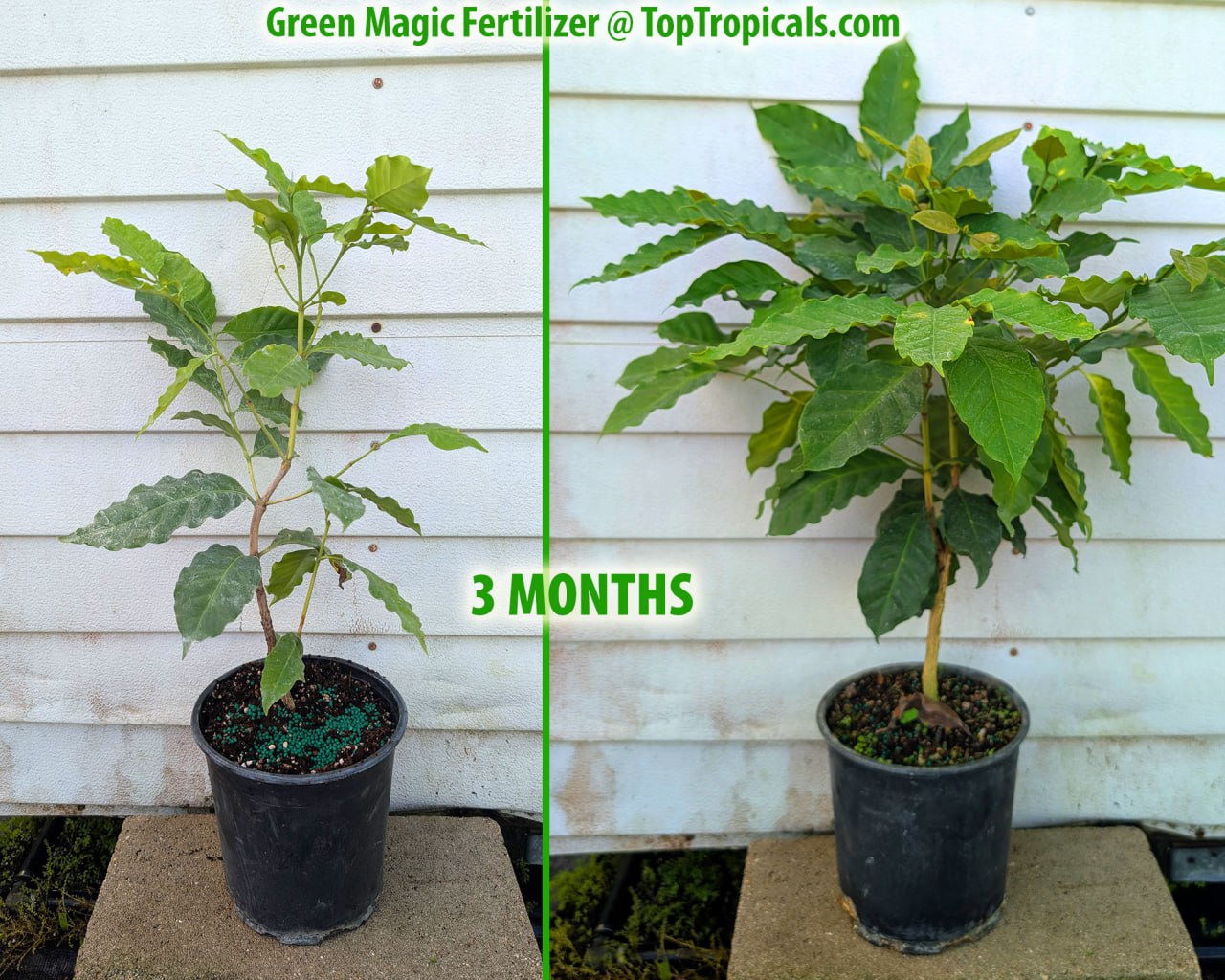
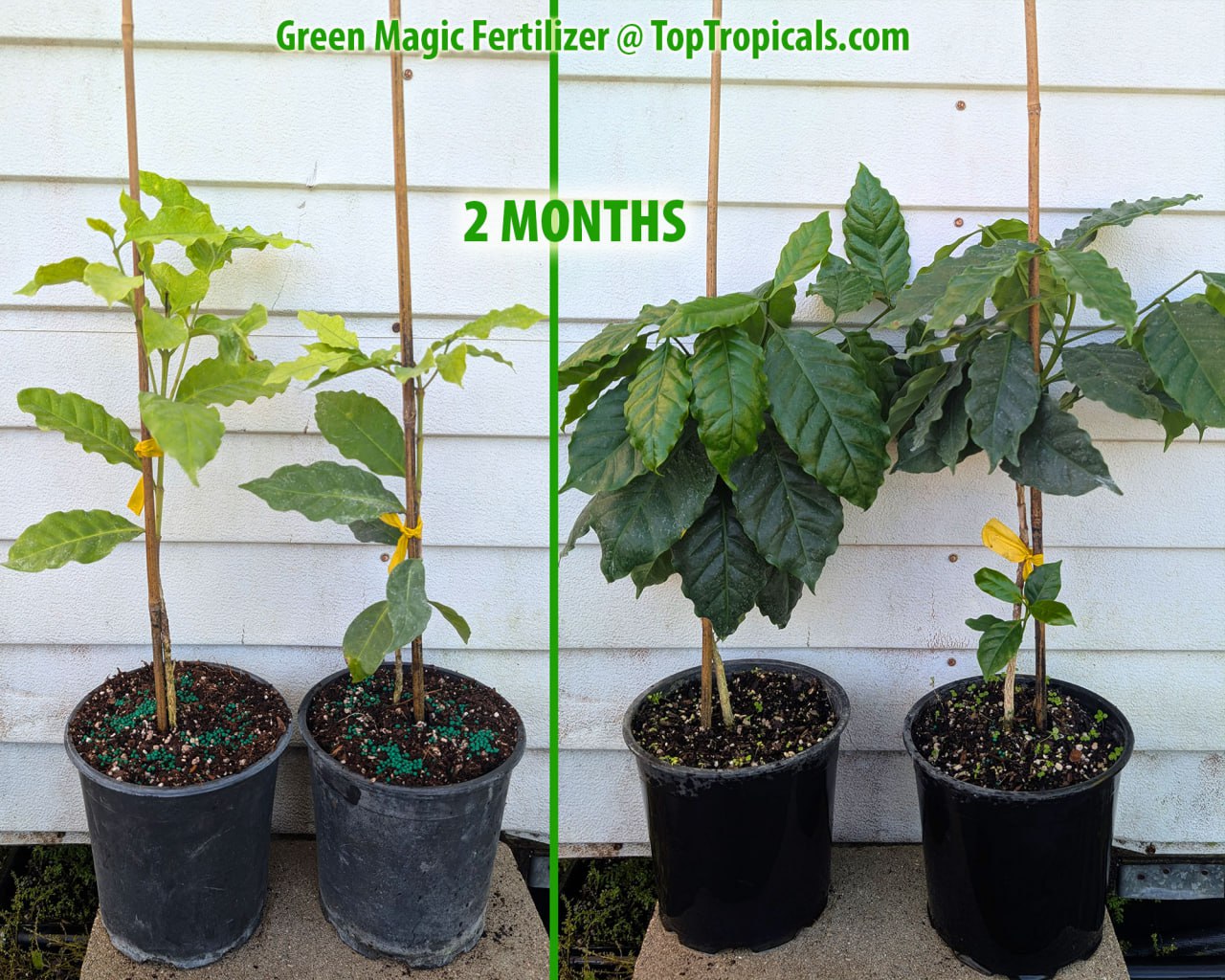
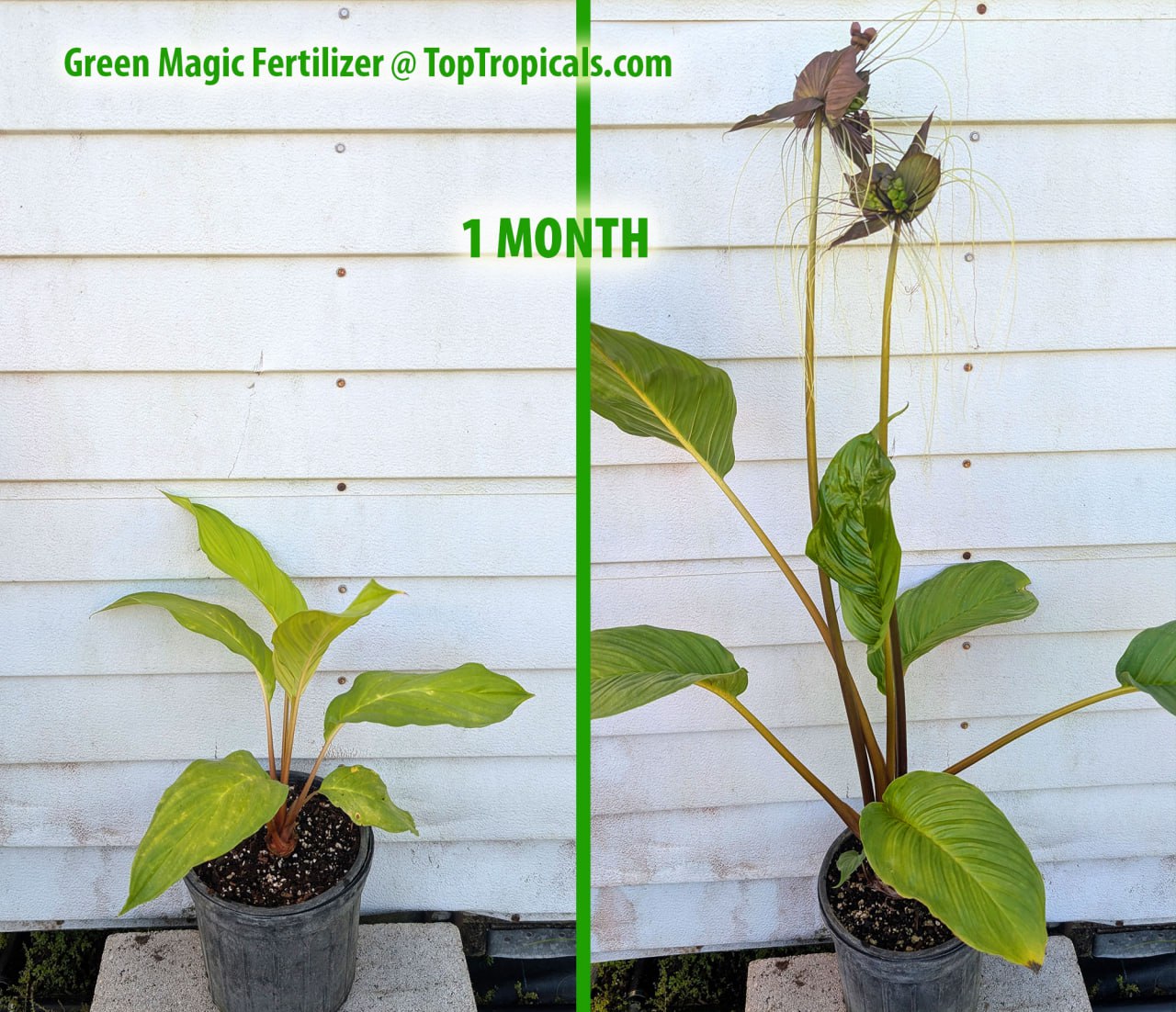
Green Magic Fetilizer makes plants green
🌳 The SECRET growers never tell you: simple trick how to bring plants back to life and keep green
💚 Green Magic is plant food that really works. It keeps your plants green, strong, and growing steady.
💚 We call it Magic - because it even brought back plants we thought were gone! So thу Green Magic can bring dead to live!
💚 The secret is slow release. Most dry fertilizers dump everything at once, burn the roots, then disappear. Green Magic feeds little by little for six months straight. No burn, no guesswork, just steady food that plants love.
💚 It's perfect for potted fruit trees, ornamentals, and houseplants. One handful is all it takes, and your plants stay fed for half a year.
✔️How to use:
Mix in 1 teaspoon per gallon of soil when potting, or sprinkle on top once every six months. That's it!
✔️ Why it works:
▫️Feeds slowly and evenly for six months
▫️Keeps leaves green and plants healthy
▫️Strong growth, even for weak or struggling plants
▫️Works in any climate, indoors or out
▫️Great for containers, trees, and ornamentals
▫️This isn’t a flower booster. It’s a growth booster. The kind of steady food that builds strong plants for life.
👉 Watch your plants come back to life and thrive with this professional-grade, controlled-release fertilizer - Green Magic. Even struggling plants can turn lush and green again.
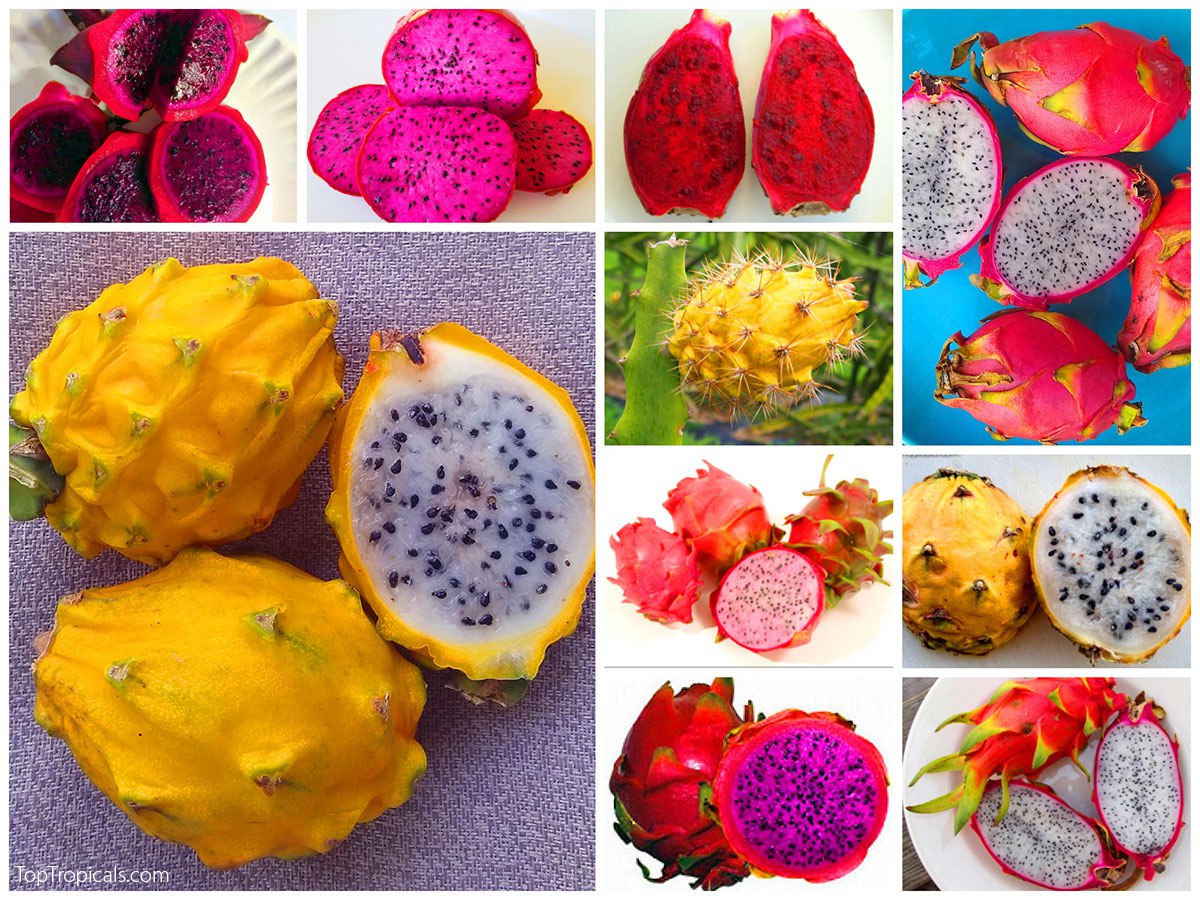
🌵Dragon Fruit (Pitaya) is one of the most rewarding exotic fruits to grow. Sweet pulp, striking looks, and plenty of health benefits make it a favorite. You'll see it in three main types: white-fleshed (Hylocereus undatus), red-fleshed (Hylocereus costaricensis), and yellow-skinned (Hylocereus, or Selenicereus megalanthus).
🌵Don't want to wait years for fruit? Here’s the good news: unlike many tropical trees that test your patience, dragon fruit is a fast-fruiting, easy-going cactus. With the right care, you can harvest in just 1-2 years from a cutting - or even the same season if you plant a well-established specimen.
🌵 How to get Dragon Fruit faster
▫️Give it strong support - trellis, fence, or post. This cactus loves to climb.
▫️Smart watering - water deeply in hot weather, then let the soil dry. Dragon fruit loves water during active summer growth, but remember it's still a cactus - don’t keep soil soggy.
▫️Pollination matters - flowers open at night. Some varieties are self-fertile, but planting a few different types boosts fruit set. This is why it helps to keep several varieties close together.
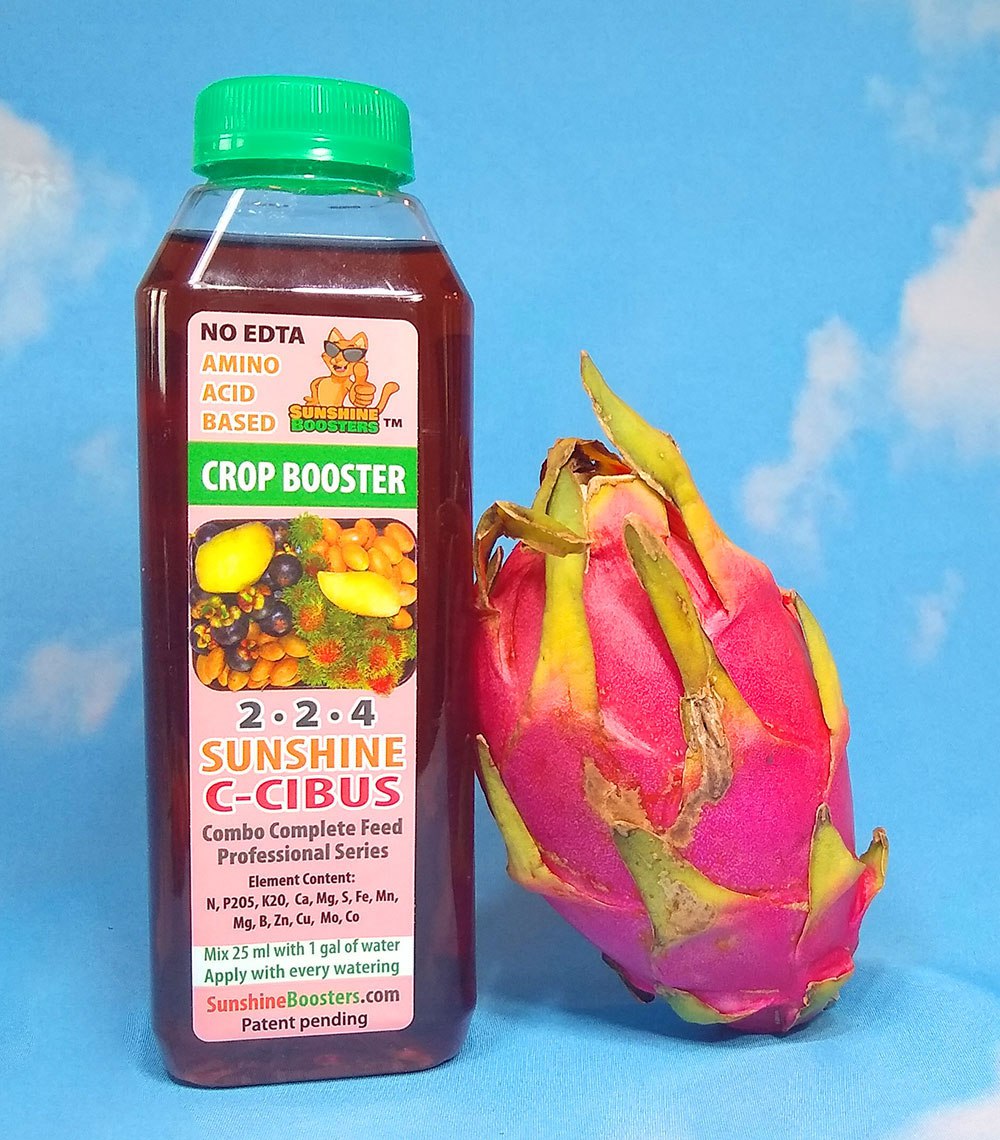
▫️Feed well - use organic liquid fertilizers like Sunshine Boosters C-Cibus with every watering, or Green Magic controlled-release fertilizer every 6 months.
Most tropical flowers bring in pollinators, and bees are usually first in line. But what if you’d rather avoid them? Maybe you’re allergic, or just don’t want bees buzzing around. Good news: some flowers attract butterflies, hummingbirds, moths, or even flies - but not bees.
👉 Quick rules:
✔️ Night-blooming + strong fragrance = moths or bats, not bees.
✔️ Red tubular flowers with little scent = hummingbirds or butterflies, not bees.
✔️ Rotten or fermented smell = flies, not bees.
✔️ Carnivorous plants = trap insects, no bee nectar.
1. Night-blooming, fragrant - moth and bat flowers
Bees forage by day, so many night-fragrant flowers skip them.
▫️Brugmansia - Angel’s Trumpet - big, hanging blooms, moth and bat pollinated.
🔴 Dragon fruit (Pitaya) thrives when it's fed regularly. For the best results, use Sunshine C-Cibus, a complete liquid fertilizer made for fruit trees. It is gentle enough to apply with every watering, all year long, and it gives your plants the steady nutrition they need to set more flowers and produce bigger harvests.
Both names refer to climbing cacti in the genus Hylocereus. The word pitaya is more common in Latin America, while dragon fruit is the name used in Asia and English-speaking countries. They come in different types: white-fleshed (Hylocereus undatus), red-fleshed (Hylocereus costaricensis), and yellow-skinned (Hylocereus, or Selenicereus megalanthus). All share the same growth habit and care needs. Pitaya or dragon fruit - whichever name you use, it's one of the easiest exotic fruits to grow at home.
🍉 How to grow Dragon Fruit
▫️Get a desired variety or start from a cutting - let the cut end dry for a few days before planting to prevent rot.
▫️Plant in well-draining soil with lots of sun.
▫️Give it a strong support to climb on - it's a vining cactus.
▫️Water deeply but let the soil dry between waterings.
▫️Flowers open at night and need pollination - some types are self-fertile, others need cross-pollination.
▫️With care, you can enjoy fruit in 1-2 years. Remember to ferilize!
🍉 Dragon fruit varieties
🔴 ⚪️ Red skin, white flesh(Hylocereus undatus) - The most popular type, and the biggest fruit. Mildly sweet, refreshing, and often compared to a kiwi crossed with a pear.
Varieties:David Bowie, Delight, Hana, Lake Atitlan, Seoul Kitchen, Vietnamese Jaina, Hana
🔴🔴 Red skin, red flesh(Hylocereus costaricensis) - Sweeter, juicier, and more intense in flavor. The deep red juice can stain, but it’s loaded with antioxidants.
Varieties:American Beauty, Bloody Mary, Eureka Red, Costa Rican Sunset, Mac Edwin, Halleys Comet, Mac Edwin, Makisupa, Mega Red, Physical Graffiti, Sweet Red
🔴🟣 Red flesh, purple/magenta flesh(Hylocereus x costaricensis) - Hybrids, usually between red and white varieties.
🟡⚪️ Yellow skin, white flesh (Hylocereus, or Selenicereus megalanthus) - Smaller fruit, but the sweetest of all. Crisp, juicy, and tropical with notes of pineapple or honey. Varieties:Amarilla (Kirin), Colimbiana, Godlen Dragon, Palora, Thai Gold (Hawaiian)
Each type looks stunning and tastes slightly different, but all are easy to grow once you give them sun, support, and patience.
🍖 Your fence could smell better than your neighbor’s grill!
📌Got a plain or ugly fence? Just cover it up! We did just that and created a Perfume Fence.
📌First, we planted Hawaiian Plumeria trees along the fence line. Then we added vining jasmines to climb the wire fence and smother it in flowers. Each jasmine has its own fragrance - some sweet, some rich, some spicy - and together they make the whole fence smell incredible!
📌Soon the wire won’t even show - just a living wall of blossoms and perfume drifting through the garden.
Here are some of the best plants you can use to make your own fragrant fence:
Who is stealing my fruit?! How to protect mango fruit from critters
How to protect mango fruit from critters
🐰 Who’s stealing my fruit?! How to protect mango fruit from critters.
It's Mango season! But somehow, the mangoes are disappearing. Looks familiar? Squirrels, bunnies, birds, rats, raccoons… They all love the fruit. But sharing? Not so much. You’re lucky to get their leftovers!
Here’s what we do to protect our mangoes and avocados - and it works! We use fruit protection bags. They are made of a strong mesh netting with easy drawstrings - keep out bugs, birds, and every other freeloading critter! Just slip it over the fruit and tighten both ends. They’re inexpensive, about 15 cents each, worth every penny! 💰
🐁🐿 Save your fruit - and maybe even have some left to share!
✔️ Turn the plant upside down and gently remove it from the old pot. Loosen up roots if root bound. Set it on top of the soil and check the level again.
✔️ Add more fertilizer around the sides and fill in with soil, pressing around the edges.
✔️ Check the level one more time.
✔️ Water thoroughly - and you are done! Happy growing!