9 best tropical shrubs that bloom all summer long or year around
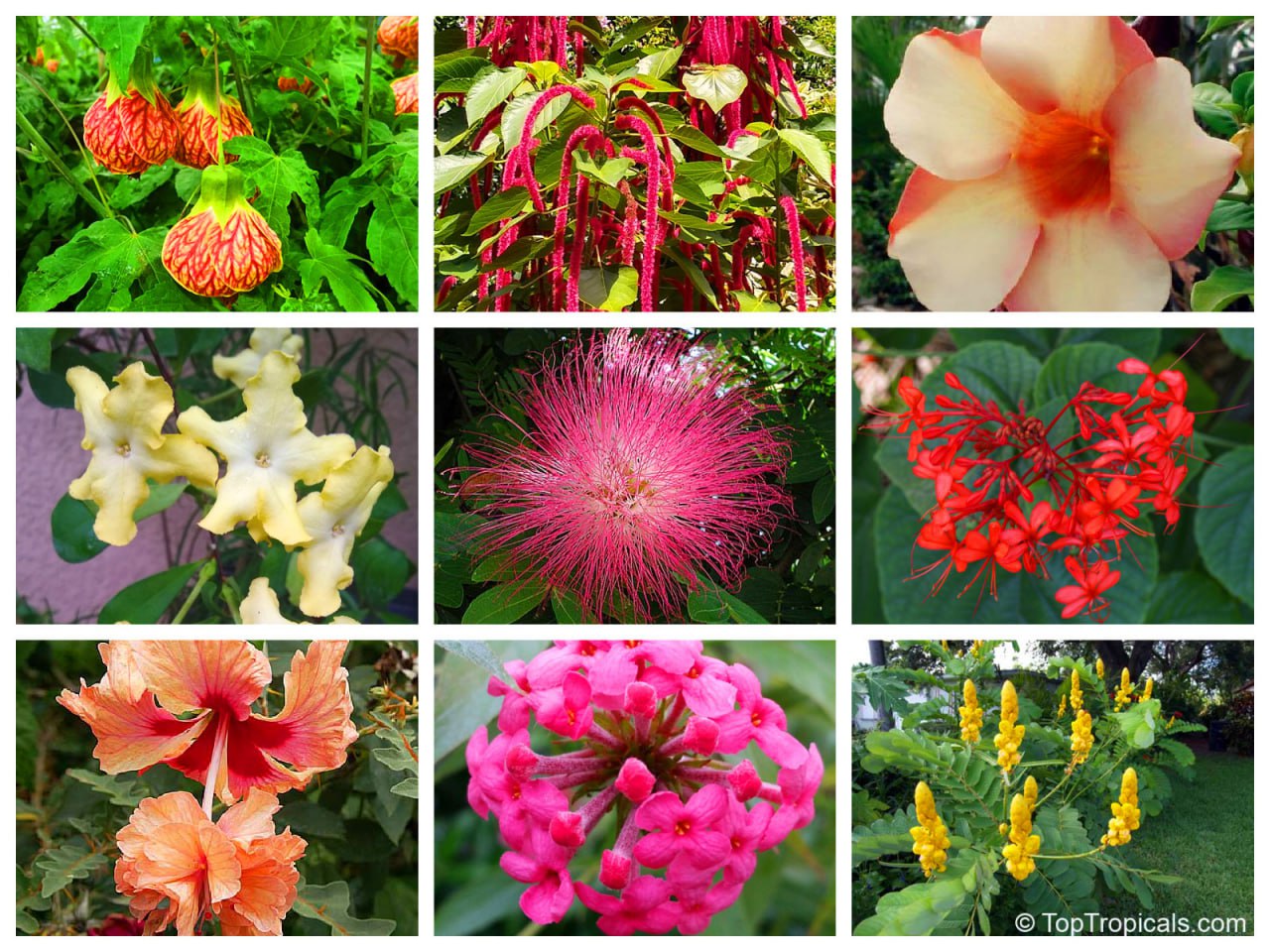
Abutilon darwinii x striatum - Fireball, Biltmore Ballgown, Acalypha hispida - Cat Tail, Chenille plant, Allamanda, Brunfelsia - Lady of the night, Calliandra - Powderpuff, Clerodendrum speciosissimum - Java Glorybower, Hibiscus El Capitolio, Rondeletia leucophylla - Panama Rose, Senna alata - Empress Candle, Candelabra Plant
🌺 9 best tropical shrubs that bloom all summer long or year around
🌺 1. Abutilon darwinii x striatum - Fireball, Biltmore Ballgown. Lantern-like blooms in orange, red, and yellow keep coming all summer. Compact and graceful, perfect for pots or borders.
🌺 2. Acalypha hispida - Cat Tail, Chenille plant. Fuzzy red tassels dangle nonstop in the heat, adding playful texture to containers and garden beds.
🌺 3. Allamanda (many varieties). Fast growers with trumpet flowers in yellow or pink. Can be shaped as shrubs, trellised vines, or flowering hedges.
🌺 4. Brunfelsia - Lady of the night. Creamy white blooms open at dusk, filling the evening garden with a sweet fragrance.
🌺 5. Calliandra - Powderpuff (many varieties). Cheerful pompom flowers in red, pink, or white attract hummingbirds and bloom nearly year-round.
🌺 6. Clerodendrum speciosissimum - Java Glorybower. Bright red flower clusters stand out against tropical foliage. Loves sun and steady moisture.
🌺 7. Hibiscus El Capitolio - Unique, double-skirted, ruffled pendant blooms with pom-pom-like centers make this hibiscus a showpiece shrub for summer gardens.
🌺 8. Rondeletia leucophylla - Panama Rose. Compact and butterfly-friendly, with fragrant pink flower clusters that perfume warm evenings.
🌺 9. Senna alata - Empress Candle, Candelabra Plant. Bold, upright candles of golden flowers shine through the season and draw in pollinators.
Most tropical flowers bring in pollinators, and bees are usually first in line. But what if you’d rather avoid them? Maybe you’re allergic, or just don’t want bees buzzing around. Good news: some flowers attract butterflies, hummingbirds, moths, or even flies - but not bees.
👉 Quick rules:
✔️ Night-blooming + strong fragrance = moths or bats, not bees.
✔️ Red tubular flowers with little scent = hummingbirds or butterflies, not bees.
✔️ Rotten or fermented smell = flies, not bees.
✔️ Carnivorous plants = trap insects, no bee nectar.
1.
Night-blooming, fragrant - moth and bat flowers
Bees forage by day, so many night-fragrant flowers skip them.
Brugmansia - Angel’s Trumpet - big, hanging blooms, moth and bat pollinated.
🌳 5 small tropical trees that bloom all summer or year around
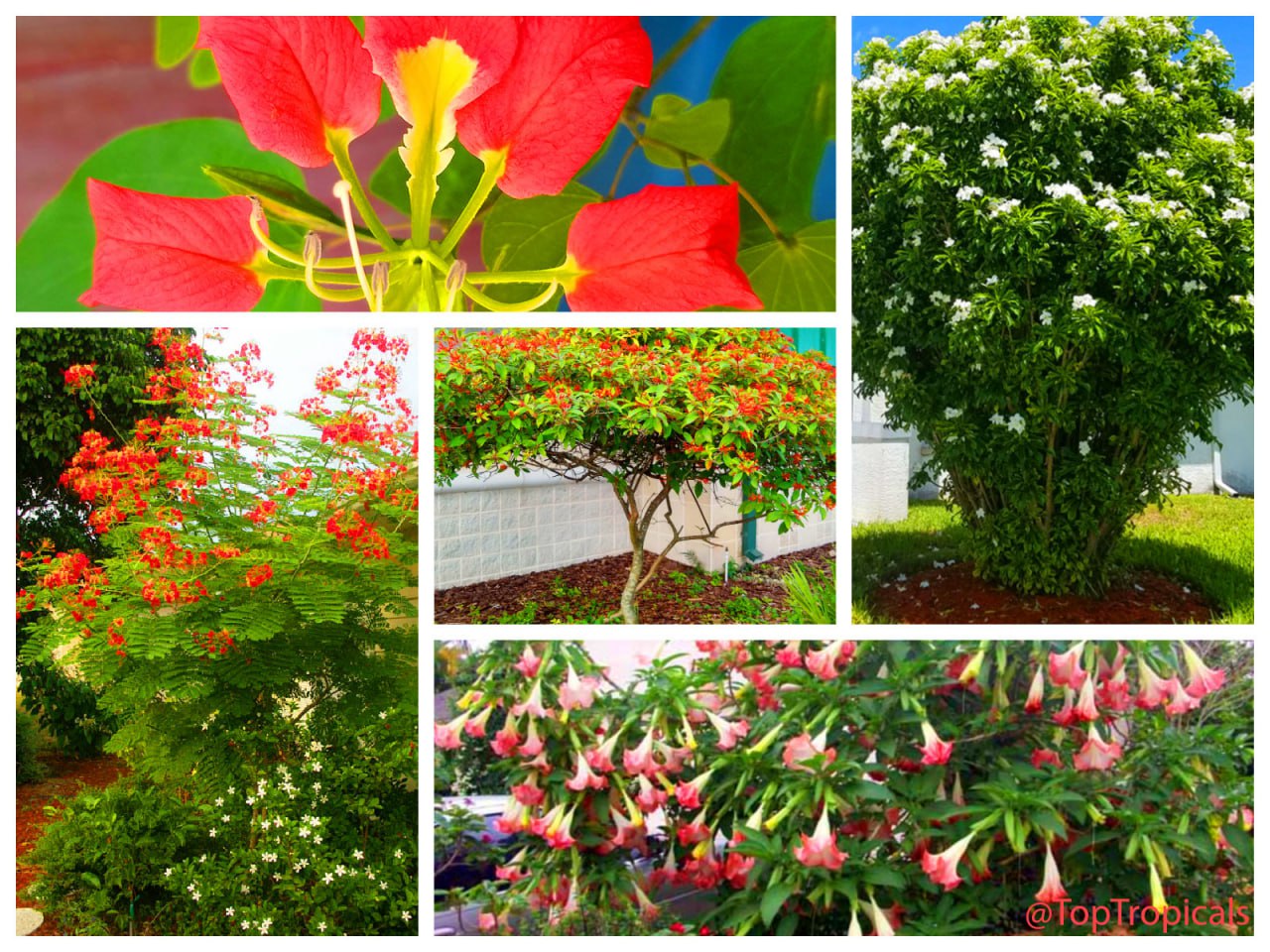
🌳 1. Bauhinia madagascariensis - Red Butterfly Orchid Tree. A rare small tree with scarlet blooms patterned like butterflies, highlighted with golden stripes at the petal bases. It grows fast, adapts to containers, and brings vivid color all summer.
🌳 2. Brugmansia - Angel Trumpet - Large, pendulous trumpet flowers make Brugmansia unforgettable, especially when they release their sweet fragrance at night. It flowers in cycles all summer, perfect for moon gardens and patios.
🌳 3. Caesalpinia - Pride of Barbados, Dwarf Poinciana, Bird of Paradise. This small tree explodes with bright red, orange, or yellow blooms all summer, like fireworks in the garden. It's drought-tolerant, fast-growing, and makes a bold focal point.
🌳 4. Hamelia - Fire Bush - is a pollinator favorite, covered in clusters of fiery orange-red blooms from spring through fall. Compact and easy to trim, it thrives in poor soil while attracting hummingbirds and butterflies.
Unlike most plumerias, Bridal Bouquet keeps blooming all summer without resting. Its pure white flowers, neat form, and adaptability to pots make it an excellent patio or garden tree.
Night jasmine that disappears with sunrise: Parijat
💔 Night jasmine that disappears with sunrise: Parijat
💔Nyctanthes arbor-tristis, Parijat, Night Jasmine, Sad Tree or Tree of Sorrow... What secret is hidden in this flower?
💔 Parijat is a small tree or shrub from South Asia known for its intensely perfumed white flowers with bright orange centers that open at dusk and fall by dawn.
Mostly for its scent and stories - but locals also use it in traditional remedies. The flowers are beloved in temple garlands and perfumery. Leaves, flowers, bark, and seeds are used in Ayurveda for treating fevers, sciatica, arthritis, and more. Extracts also show anti-inflammatory and liver-protective effects in modern studies.
It’s both fragrant and spiritual. Parijat is sacred in Hindu myth - some say Krishna brought it from heaven, others that it sprang from a grieving princess’s ashes. People plant it near temples or in small gardens not just for the scent, but for its cultural symbolism and graceful beauty.
Yes - if your climate cooperates. Parijat grows up to 10 feet tall, handles full sun or light shade, and thrives in well-drained soil with regular, moderate watering. It blooms best with monthly fertilizer and tolerates light cold (into the 30s F). In cooler areas, grow it in a container. Regular pruning helps it stay compact and flower more.
Night jasmine that disappears with sunrise: Parijat
Nyctanthes arbor-tristis - Parijat, Night Jasmine, Sad Tree, Tree of Sorrow
💔 Night jasmine that disappears with sunrise: Parijat
💔Nyctanthes arbor-tristis, Parijat, Night Jasmine, Sad Tree or Tree of Sorrow... What secret is hidden in this flower?
💔 Parijat is a small tree or shrub from South Asia known for its intensely perfumed white flowers with bright orange centers that open at dusk and fall by dawn.
Mostly for its scent and stories - but locals also use it in traditional remedies. The flowers are beloved in temple garlands and perfumery. Leaves, flowers, bark, and seeds are used in Ayurveda for treating fevers, sciatica, arthritis, and more. Extracts also show anti-inflammatory and liver-protective effects in modern studies.
It’s both fragrant and spiritual. Parijat is sacred in Hindu myth - some say Krishna brought it from heaven, others that it sprang from a grieving princess’s ashes. People plant it near temples or in small gardens not just for the scent, but for its cultural symbolism and graceful beauty.
Yes - if your climate cooperates. Parijat grows up to 10 feet tall, handles full sun or light shade, and thrives in well-drained soil with regular, moderate watering. It blooms best with monthly fertilizer and tolerates light cold (into the 30s F). In cooler areas, grow it in a container. Regular pruning helps it stay compact and flower more.
Four best low-growing perennials that bloom all summer
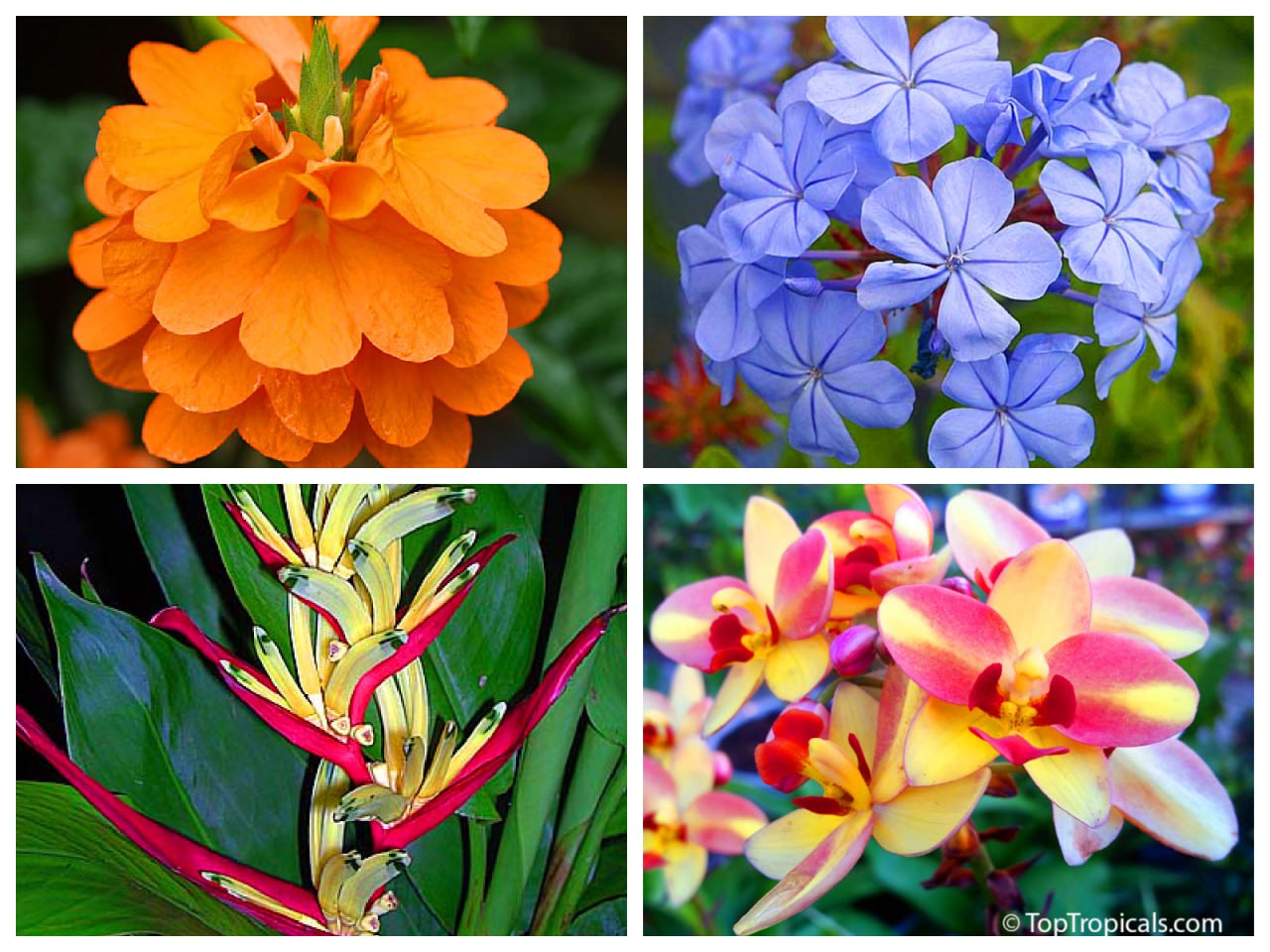
Crossandra, Heliconia Lady Di, Plumbago, and Spathoglottis ground orchids.
🌷 Four best low-growing perennials that bloom all summer
🌼 1. Crossandra
Crossandra is one of those plants that never really takes a break. Its ruffled orange blooms pop almost nonstop in warm weather, making it a reliable color source for borders, pots, or even as a filler around taller shrubs. Unlike many flowering plants that fade in midsummer, Crossandra keeps going through heat and humidity, thriving where others give up. It's compact, easy to trim, and works beautifully in small gardens or patios.
🌼 2. Heliconia psittacorum Lady Di
Heliconia Lady Di adds a tropical accent with its upright, torch-like blooms in fiery orange and yellow. What makes this variety practical is its manageable size compared to giant heliconias - it fits well in small gardens and large pots. Its flowers last long, both on the plant and as cut flowers, making it popular for summer arrangements. Once established, it keeps sending up flower stalks all season, giving a steady display of color and drama.
🌼 3. Plumbago
Plumbago is a gardener's friend in hot climates because it covers a lot of ground and throws out flower clusters all summer (sky-blue, white or red). It's versatile - train it as a shrub, hedge, or let it spill over walls and trellises. The flowers attract butterflies, and the plant is low-maintenance, tolerating pruning, sandy soil, and neglect. If you need a reliable plant to soften fences or add a cool color contrast to reds and oranges in the garden, plumbago is a winner.
🌼 4. Spathoglottis ground orchids
Ground orchids like Spathoglottis are practical because they give you the exotic look of orchids without the fuss. These hardy, clumping perennials send up spikes of purple, pink, or yellow blooms that last for weeks, repeating through summer in warm climates. They’re perfect for edging walkways or filling beds where you want constant color with minimal care. Unlike potted orchids that bloom once and rest, Spathoglottis keeps producing flowers right in the ground, almost year-round in frost-free areas.
🍆 10 reasons to grow this Indian secret tree - the miracle Fruit of the Gods you never knew about
Sacred and secret Indian divine Berry - Jambolan (Syzygium cumini) - goes by many names: Java plum, Malabar plum, Black Plum, Jamun, Jaman, Jambul, Duhat, even Lilly Pilly! Which one do you know it by?
Sweet-tart and healthy fruit. The tree is a heavy producer of juicy, sweet-tart black fruits that can be eaten fresh or turned into tarts, sauces, and jams. In Ayurveda and Chinese medicine, both the fruit and plant are valued for their powerful health benefits. The flavor is unique, with a mile herbal note (maybe Oregano?).
A tree steeped in tradition. According to Hindu belief, Rama survived on this fruit during his 14-year exile, which earned it the title Fruit of the Gods. Lord Krishna himself is often described as having skin the color of jambul. In India, its leaves are still used to decorate marriage pendals.
2. Weight loss - low in calories, high in fiber, keeps you full and curbs cravings.
3. Fiber-rich digestion aid - improves gut health, prevents constipation, and soothes indigestion.
4. Vitamin C boost - strengthens immunity, brightens skin, and supports healthy hair.
5. Controls heart rate and blood health - potassium regulates heart rate and blood pressure, while iron supports hemoglobin and circulation.
6. Slows aging - loaded with antioxidants, it protects cells and supports vitality.
7. Liver and kidney detox - traditionally used for cleansing and protection.
8. Skin and oral care - helps with acne, blemishes, mouth ulcers, and freshens breath.
9. Respiratory relief - eases coughs, asthma, and colds.
10. Quick privacy screen! Here's what most gardeners don't realize: Jambolan is the ultimate low-maintenance, fast-growing tree with dense glossy leaves. It thrives in any soil, stays pest free, and in just a couple of seasons can grow into a dense, bushy privacy screen - perfect if you want quick shade, an ornamental barrier, or a living fence with health benefits that practically takes care of itself!