🌞 Mango trees love warm weather. They grow best in temperatures between 70F to 100F.
📍 Cold weather can be harmful to mango trees: when the temperature drops below freezing, trees can get damaged. Frost can hurt young leaves and flowers, reducing the amount of fruit.
💬 Ways to protect mango trees from cold
🔹 Right location: Plant in sunny areas with protection from cold winds.
🔹 Cover them up: Use blankets or frost cloth to protect young trees.
🔹 Add mulch: Helps keep the roots warm during cold weather.
🔹 Move potted trees: Bring them inside when it gets too cold.
🔹 Use Sunshine Boosters to improve tree hardiness
➡ Fertilized mango trees are stronger and more resilient.
➡ They grow faster and have better root systems, making them more hardy against cold weather.
➡ Sunshine Boosters provide the essential nutrients needed for strength and vigor, helping plants recover faster from cold damage.
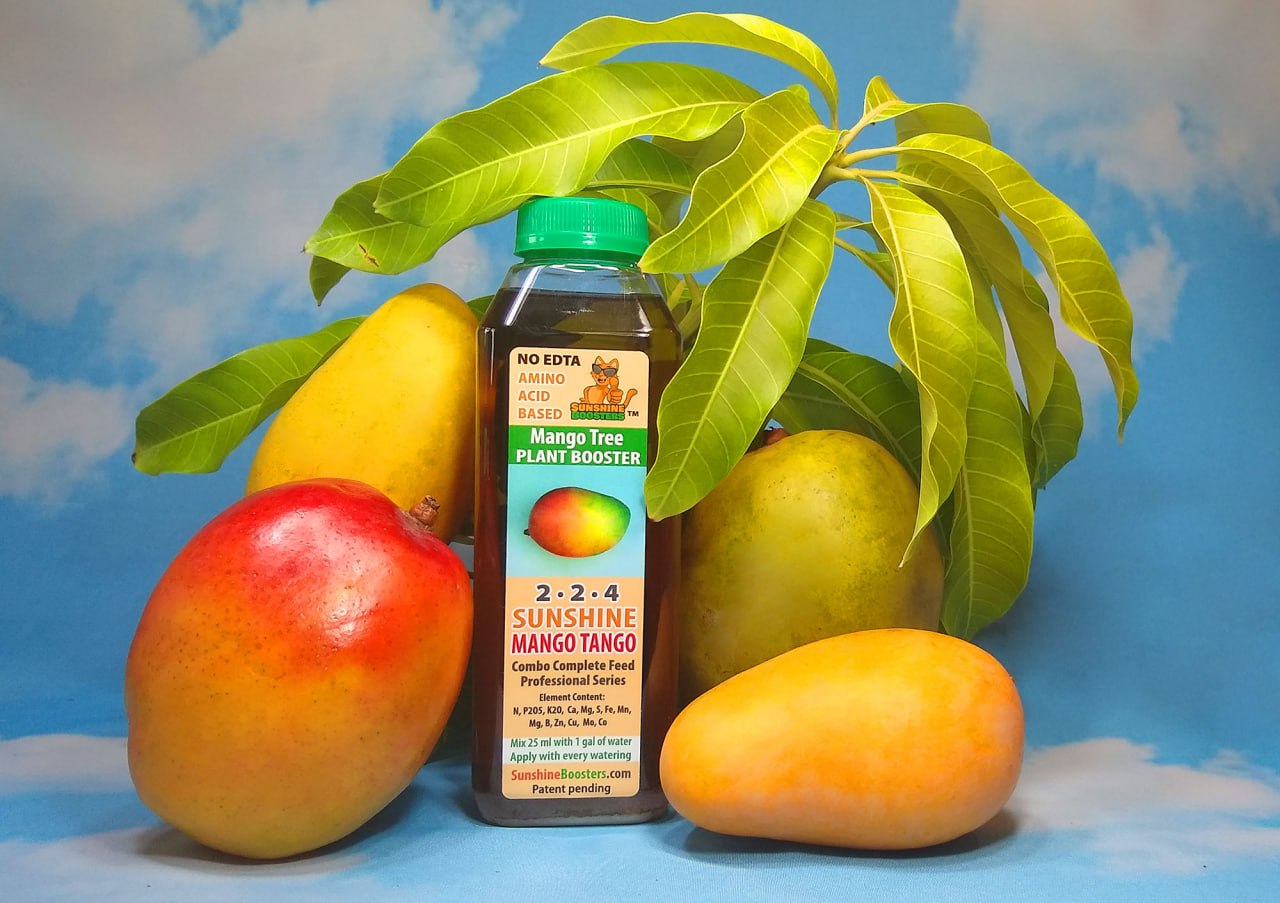
Sunshine Boosters "Mango Tango" makes mango trees stronger and more resistant to cold. A well-fed tree can survive cold better and produce more fruit. With Sunshine Boosters, you ensure your mango trees stay healthy, even in chilly weather!
🌞 Mango trees love warm weather. They grow best in temperatures between 70F to 100F.
📍 Cold weather can be harmful to mango trees: when the temperature drops below freezing, trees can get damaged. Frost can hurt young leaves and flowers, reducing the amount of fruit.
💬 Ways to protect mango trees from cold
🔹 Right location: Plant in sunny areas with protection from cold winds.
🔹 Cover them up: Use blankets or frost cloth to protect young trees.
🔹 Add mulch: Helps keep the roots warm during cold weather.
🔹 Move potted trees: Bring them inside when it gets too cold.
🔹 Use Sunshine Boosters to improve tree hardiness
➡ Fertilized mango trees are stronger and more resilient.
➡ They grow faster and have better root systems, making them more hardy against cold weather.
➡ Sunshine Boosters provide the essential nutrients needed for strength and vigor, helping plants recover faster from cold damage.
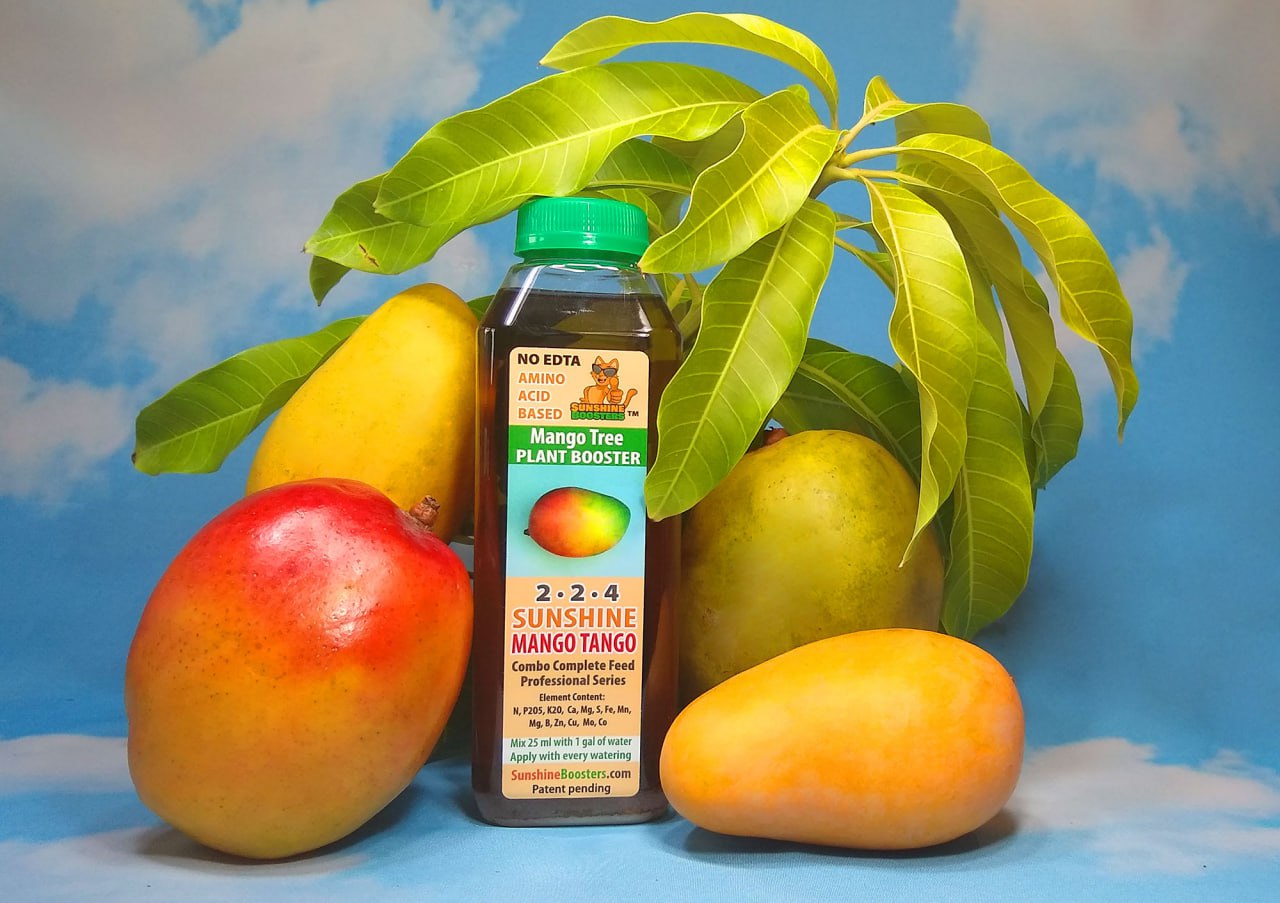
Sunshine Boosters "Mango Tango" makes mango trees stronger and more resistant to cold. A well-fed tree can survive cold better and produce more fruit. With Sunshine Boosters, you ensure your mango trees stay healthy, even in chilly weather!
🟠 Madame Fransis - dark orange pulp, slightly fibrous, robust, meaty like a steak, good with cognac. A little pulpy but unique flavor.
🟠 Diamond - bright yellow, fiberless, sugary, juicy, no pulp at all, classic mango taste, good with ice cream, "wow" taste!
🟠 Pickering - zesty, waterfall: all the flavors come at once, eat with White wine and/or a cake. Oval fruit somewhat flat, very large for a dwarf tree!
🟠 Baptiste - hint of citrus, melts in your mouth, dark orange flesh, crisp, eat with Red wine and cheese.
🟠 Florigon - creamy, buttery, spicy. Eat with Ice cream!
🟠 Tommy Atkins - has a bit zing to it, perfect consistency, perfect taste. Super colorful, crimson red to purple skin!
🔍 We discovered one of the biggest Mango fruit after we planted this new variety - Kiew Yai.
Right now the fruit is almost a foot long!
⏳ The tree was planted in April - only 3 months ago.
😋 Looking forward to tasting it soon and sharing our taste impressions with you. Stay with us!
⬆️ Reminder:In order to have good quality fruit, your Mango tree must be grafted. Grafted varieties start fruiting right away, while seedlings may take from 7 to 10 years to fruit and the taste of the seedling's fruit will always be a surprise, they may be small in size and very fibrous.
📍 India grows 45% of all the mangoes in the world. However, exports account for only 1% of international trade - almost all the mangoes are consumed locally by the residents.
📍 Mango import in the US limited by only easy-to-ship, fibrous varieties such as Tommy Atkins.
📍 To enjoy the full palette of mango varieties, you need to grow your own tree or buy fruit from local growers in southern areas.
Mango Rainbow tasting table: whats the taste of that Mango variety?
Mango Rainbow tasting table
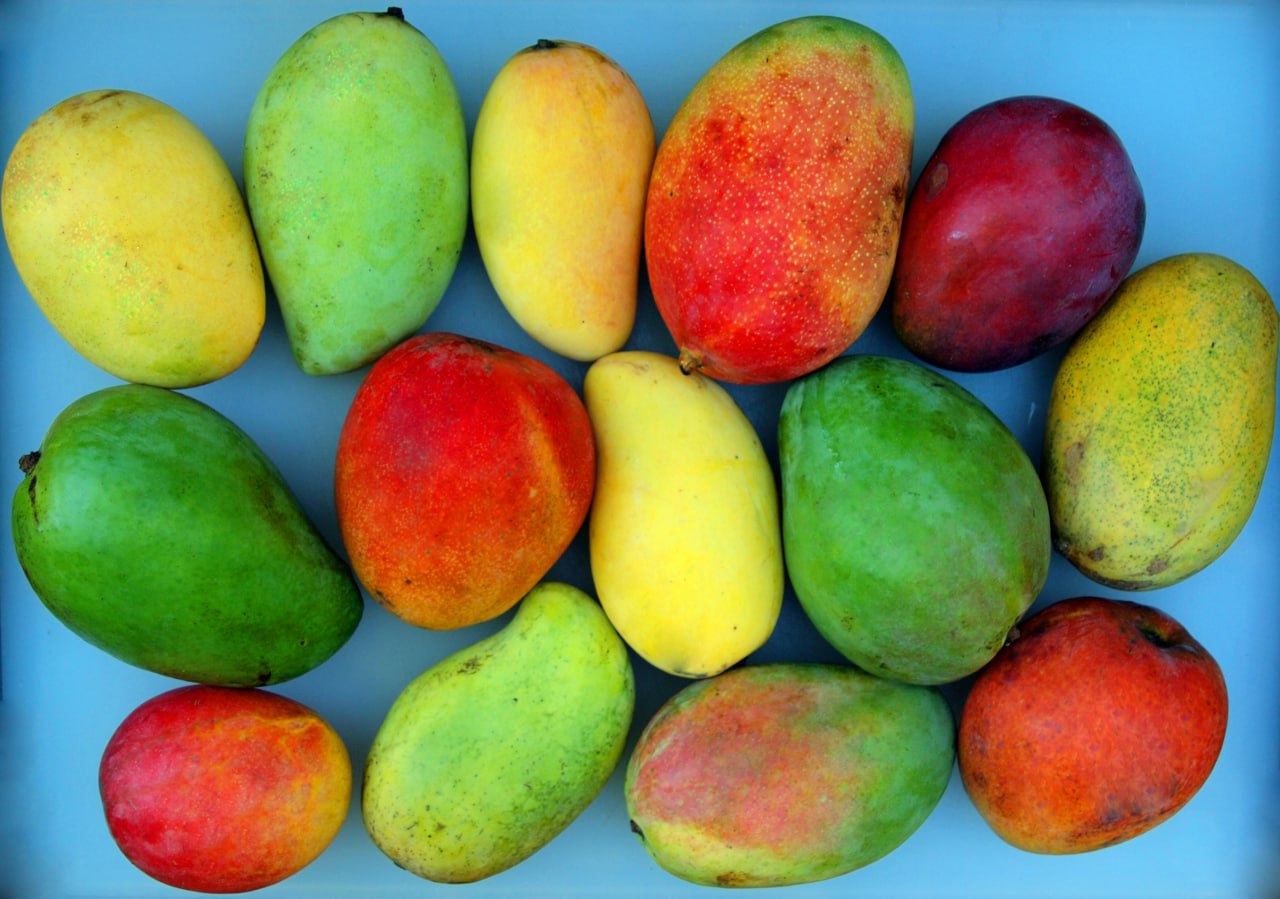
🌈 Mango Rainbow tasting table: what's the taste of that Mango variety?
We just had a mango tasting table of a few early and mid-season varieties and here is our impression:
🟠 Tommy Atkins (purple) - the earliest variety, sweet a juicy, but a bit fibrous. The fruit is super colorful! The tree is an excellent producer, vigorous and problem-free.
🟠 Haden (red) - a full sweet flavor, less fibrous than Tommy. Very colorful, large fruit.
🟠Florigon (yellow-green, round) - completely fibreless, sweet and flavor is somewhat mild pineapple-like.
🟠 Baptiste (bright yellow) - very sweet, firm flesh, good flavor.
🟠 Val Carrie (green elongated) - reminds large Asian mangoes, with firm flesh, very sweet, fibreless and juicy. It is a cross between Valencia Pride (large fruit) and Carrie (excellent flavor). It took the best from its parents. Very aromatic flesh has no fiber at all.
🟠 Kent (large green-and-red) - excellent flavor, large size, and very little fiber. Eat before fruit gets too ripe.
❔ What Mango varieties have you tried this year?
Share in comments 👇
2. 🌳 Buy a grafted tree from a reputable nursery to ensure better fruit quality and faster fruiting.
3. 🏡 Planting site: choose a sunny location with well-draining soil. Ensure there is enough space for the tree to grow, as some varieties can become quite large.
4. ⛏️ Planting: dig a hole twice as wide and just as deep as the root ball. Mix in organic compost to enrich the soil. Place the tree in the hole, making sure the growth point is 1-2" above the soil line. Fill the hole with soil, pressing gently to remove air pockets. Water the tree thoroughly.
5. 💦 Watering: Water the tree regularly, especially during the first few weeks. Allow the soil to dry slightly between waterings to prevent root rot.
6. Mulch: apply mulch around the base of the tree to retain moisture and suppress weeds. Keep the mulch a few inches away from the trunk to prevent rot.
7. Fertilize: use a balanced fertilizer formulated for fruit trees. We recommend Sunshine Boosters Mango Tango formulated specially for mango trees.
8. ✂️ Prune to shape the tree to encourage good airflow and sunlight penetration, and to improve the yield.
.
9. 🕷 Pest and disease control: monitor for scale and mealybugs and treat them with systemic pesticides. Keep an eye out for fungal diseases and treat them promptly with copper spray.
10. Harvesting: Mangoes are ready to harvest when they change color and soften slightly.
2. 🌳 Buy a grafted tree from a reputable nursery to ensure better fruit quality and faster fruiting.
3. 🏡 Planting site: choose a sunny location with well-draining soil. Ensure there is enough space for the tree to grow, as some varieties can become quite large.
4. ⛏️ Planting: dig a hole twice as wide and just as deep as the root ball. Mix in organic compost to enrich the soil. Place the tree in the hole, making sure the growth point is 1-2" above the soil line. Fill the hole with soil, pressing gently to remove air pockets. Water the tree thoroughly.
5. 💦 Watering: Water the tree regularly, especially during the first few weeks. Allow the soil to dry slightly between waterings to prevent root rot.
6. Mulch: apply mulch around the base of the tree to retain moisture and suppress weeds. Keep the mulch a few inches away from the trunk to prevent rot.
7. Fertilize: use a balanced fertilizer formulated for fruit trees. We recommend Sunshine Boosters Mango Tango formulated specially for mango trees.
8. ✂️ Prune to shape the tree to encourage good airflow and sunlight penetration, and to improve the yield.
.
9. 🕷 Pest and disease control: monitor for scale and mealybugs and treat them with systemic pesticides. Keep an eye out for fungal diseases and treat them promptly with copper spray.
10. Harvesting: Mangoes are ready to harvest when they change color and soften slightly.