Garden Blog - Top Tropicals
Date: 4 Mar 2021
Pretty Fancy Nancy from Brazil
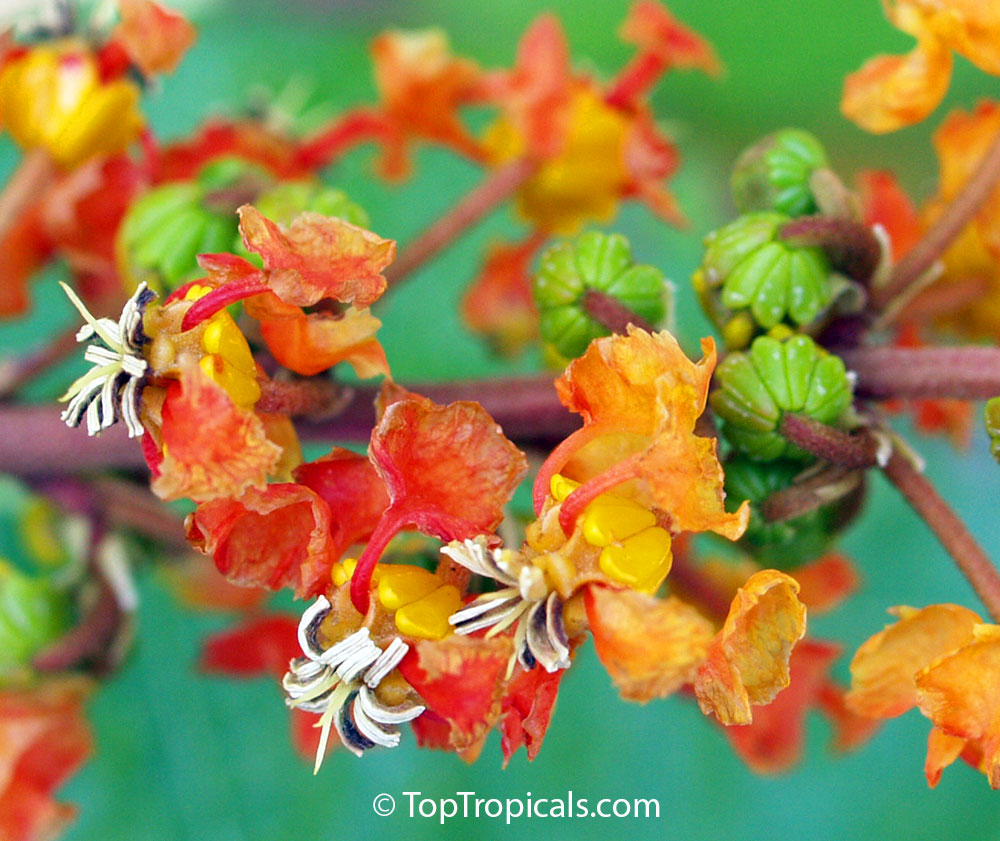
Byrsonima crassifolia - Nancy Tree or Golden Spoon
by Alex Butova, the Witch of Herbs and Cats
Once Dr. David Fairchild bought in Panama seeds of a fruit plant unknown to him, which looked a little like
Acerola (Malpighia). When he asked what it was called, the woman who sold the seeds
answered - Nance, wild cherries from Brazil! The famous horticulturist brought the seeds from Panama to the United States Department of Agriculture in 1899. A few of
his specimens still exist in private collections in South Florida...
Nancy Tree fruit are not only delicious, but also very useful, they are widely used by many local people for medicinal purposes and include all of Vitamins B,
Vitamin C, Vitamin K, Vitamin E, Calcium, Cooper, Iron, Magnesium, Manganese,
Phosphorus, Potassium, Sodium and Zink. The whole multi-vitamin prescription in
one fruit!..
CONTINUE READING >>

Date: 25 Feb 2021
Healthy Plants: Q&A from Mr Booster
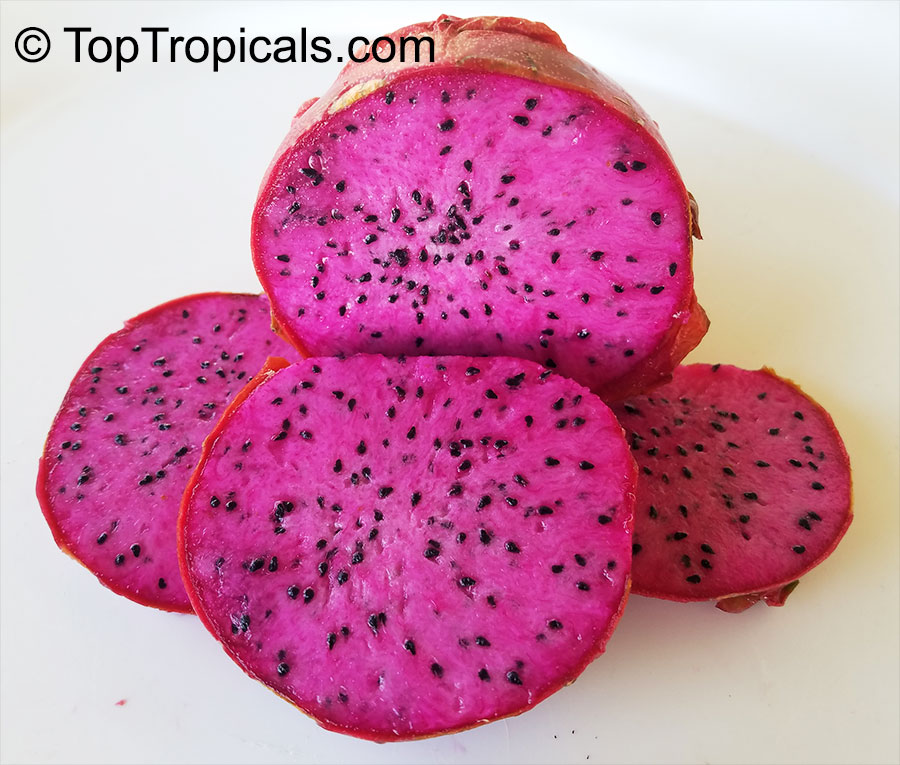
Dragon Fruit Magic Tricks
Q: I purchased two sweet red pitayas, that arrived and were planted on May 28, 2020, they were damaged but not serious. my question is this one pitaya is a beautiful green, and has grown 6or 8 "already, the other is bigger and is a grayish green and has not shown any sign of growth at all in six weeks, how long do I wait before I throw it out and buy another?
A: Being a cactus, sometimes Pitaya slows down its growth waiting
for more favorable conditions. If one of your plants doesn't show any new
growth, just give a it some more time and make sure the plant stays happy. To
make pitaya happy, provide the following:
- Water. Unlike most cacti, Pitaya prefers regular watering (but not
a wet soil). Make sure it is planted in well-drained media. Do not water
again if soil remains moist, wait until it dries out on the surface. During hot
weather, Pitaya enjoys light daily watering.
- Light. Unlike most cacti, Pitaya benefits from a filtered light
especially while establishing. Try to create a temporary shade over the plant
until it starts active growth (if grown in the ground), or move the pot in
filtered light. Dull color or dry spots are signs of sun burn. Once the plant
shows new growth, you may remove sun protection, or move the pot gradually into
the full sun.
- Food. Pitayas are heavy feeders. Use the following fertilizer:
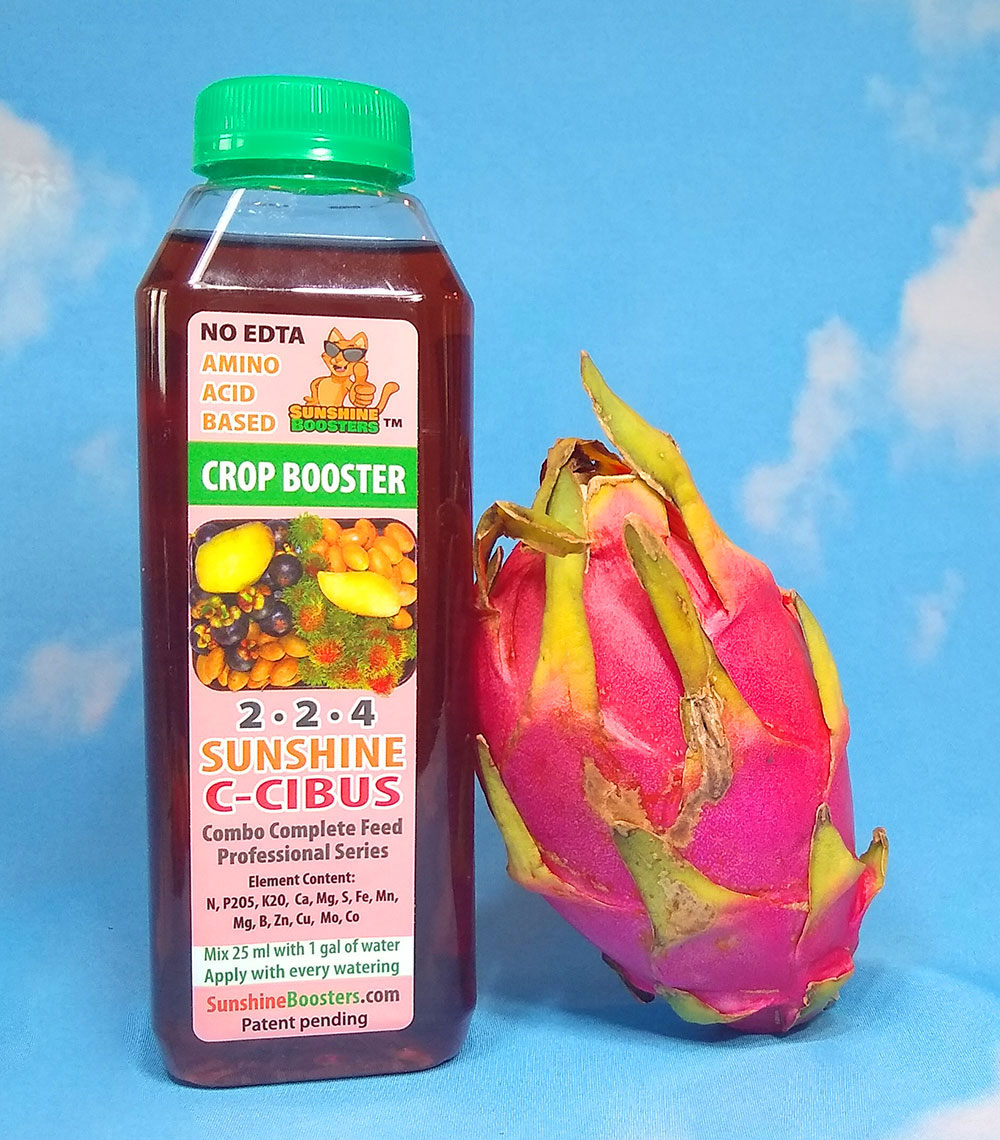
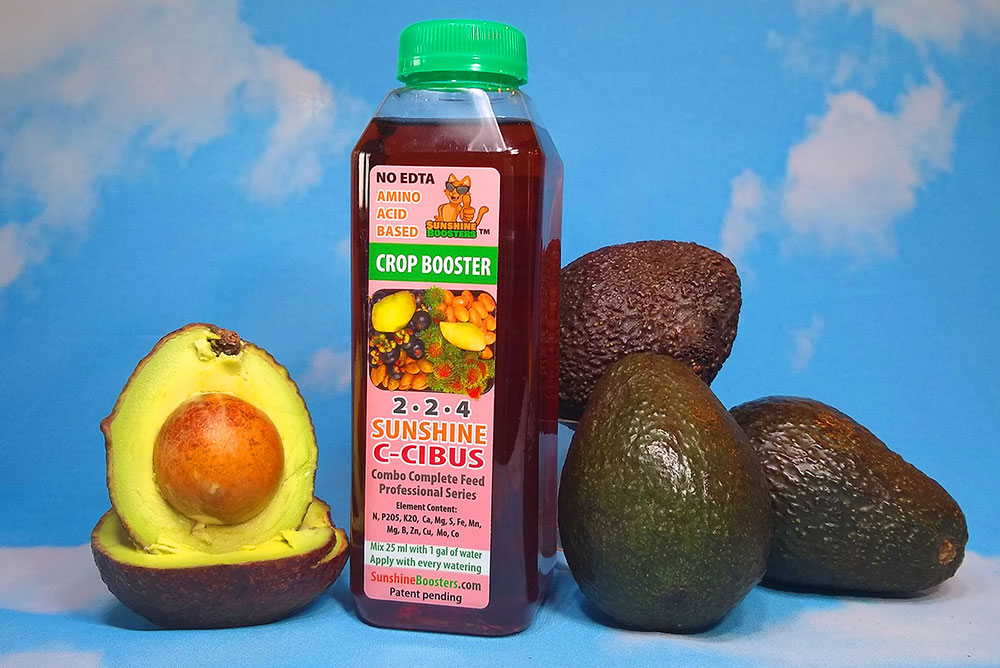
SUNSHINE C-Cibus - Crop Nutrition Booster
Q: I've been growing dragon fruit cuttings from Okinawa, Thailand and Vietnam for several years in pots and cannot get them to fruit. Any fertilizer suggestions? I live in Northern Virginia so I bring the massive pots in the garage under lights and a heater for the winter but back outside once the temperature warms up.
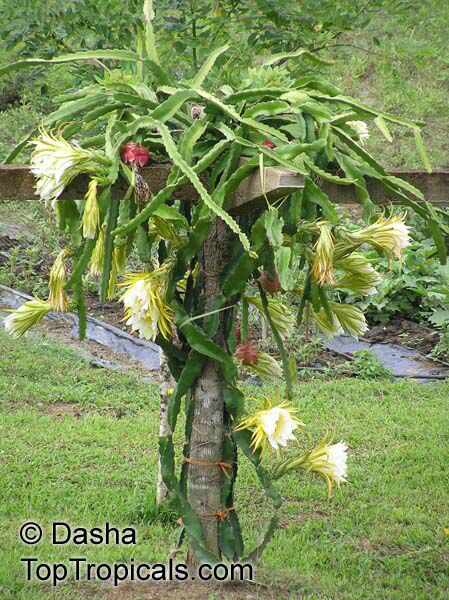
A: There is a little trick to get Dragon fruit to flowering and
fruiting. This plant likes flowering when it is attached to a strong support.
In commercial plantations, they use special trellises/frames made out of
logs, but you can make one yourself using simple materials.
See article: Do-It-Yourself Support Structure for Dragon Fruit.
And of course, don't forget a special plant food for tropical fruit - Sunshine C-Cibus.
You can successfully get your Dragon fruits to fruit in pots, providing
bright light in Summer. In Winter, keep the plants on a dry side to give them
some rest and a chance to hibernate before the next fruiting season.
Date: 25 Feb 2021
Container mango - Condo varieties
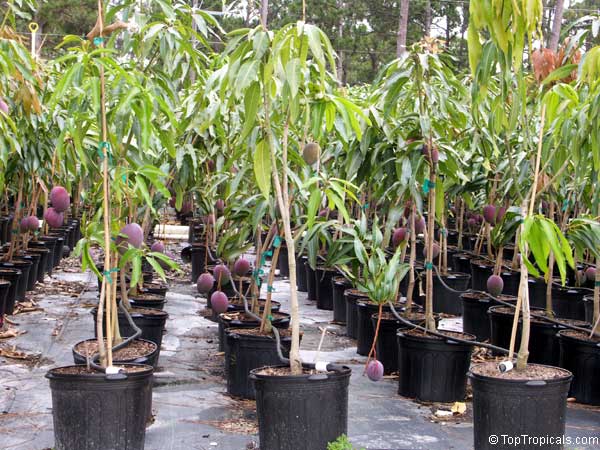
Q: What are the good varieties of mango trees available for container grow? Can you please share the details?
A: There are some great varieties of Mango selected specifically
for container culture, they even have a nick-name - "condo mangoes". They
have compact growth habit and respond well to pruning to keep them in small
size. Here are a few of our favorites that we currently have in stock:
Glenn
Ice
Cream
Cotton
Candy
Mallika
Manilita
Pram
Kai Mai
Mun
Kun Si
Maha
Chinook
You can see more condo mangoes on this page.
Related articles:
How to grow a Dwarf Mango tree
Choosing the right Mango for your garden
10 secrets of successful Container Mango growing on a balcony.
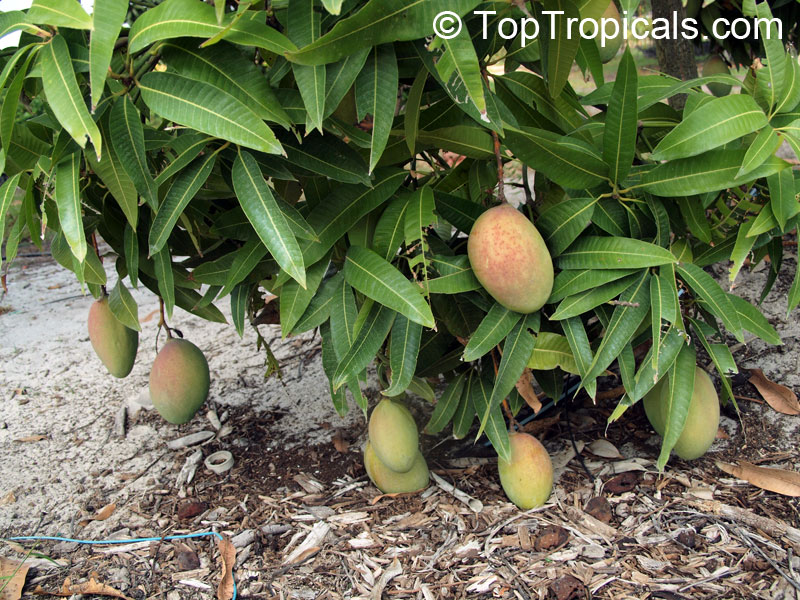
Condo Mango
Date: 18 Feb 2021
Healthy Plants - Q&A from Mr Booster: Feeding Avocado Tree

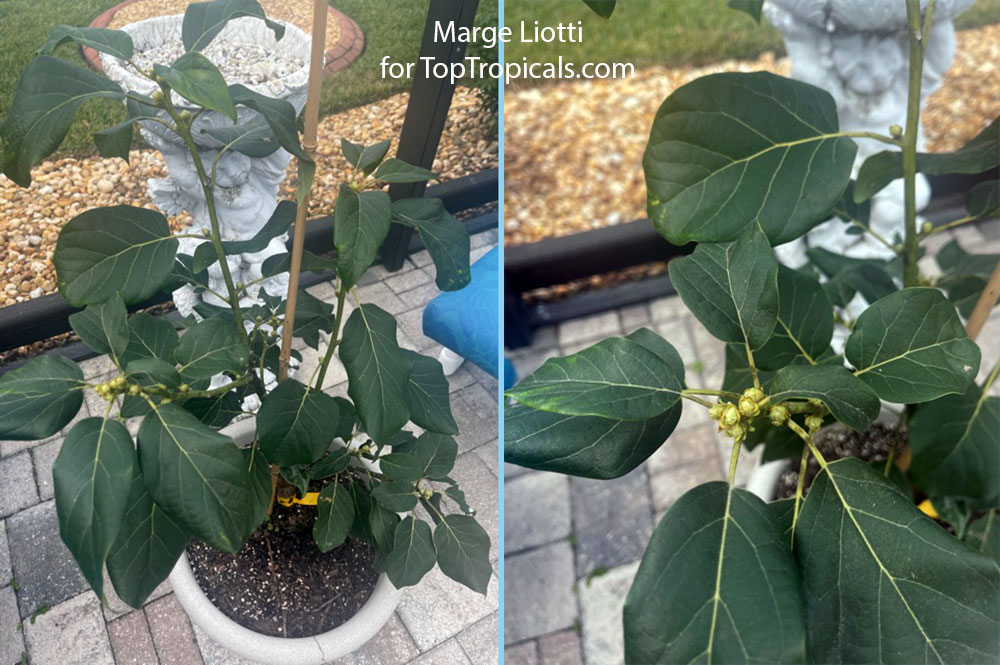
Q:We bought one of your avocado grafts and it's doing great, lots of buds for fruit. It's still in a pot and fertilizing with the Sunshine Boosters. Should we continue with this product? We'll plant it in the ground in March. Thought you'd enjoy pictures of our wonderful tree. No freezing temperatures in Riverview, but when it got down into the 30s, the plant came in. One good thing about growing in the pot. I'll be buying some more Sunshine Boosters. This stuff is working great on all our plants.
A: Congratulations with a good job on growing avocado over
winter. Avocado trees are not easy, we are happy to hear that your plant is ready
for production, this is amazing! We've noticed that Sunshine Boosters perform
miracles. Here are some suggestions for you:
1) Continue fertilizing with Sunshine Boosters according to the feeding chart
2) When ready to plant, dig a large hole and fill it with good soil full of
organic matter (compost mixed with existing sandy soil will be good). Make
sure to plant the tree on 3-4"high elevation, like on a little hill. Avocados
need perfect drainage and can't tolerate wet feet. See more info on planting and planting instructions (pdf).
3) Water daily with a hose, do not rely on sprinklers. Avocados like water
(considering perfect drainage)
4) Continue applications of Sunshine Boosters at least until the tree is established and starts
growing new branches with lots of leaves. After that, you can switch to
slow-release fertilizers once a month if it makes it easier, but if you can, continue
Sunshine Boosters at least on weekly basis - they really boost plant growth!
Date: 18 Feb 2021
Red Stopper Cherry
Rare plant from Key West
by Mark Hooten, the Garden Doc
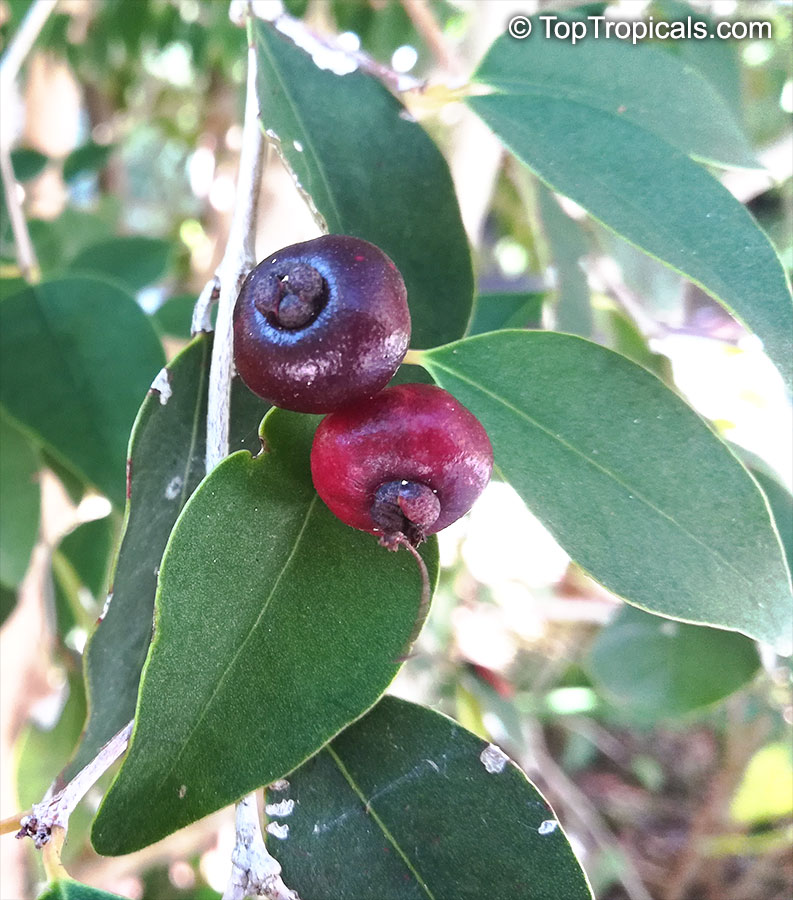
Eugenia rhombea, commonly known in Florida as "Red Stopper", is one of four
species of Eugenia native to North America. It is a beautiful small tree,
bearing small shiny deep green leaves which are pinkish-orange-red when young,
giving them the appearance of a flowering tree at a distance when flushing out
new growth a number of times a year.
Its native range includes Florida, Bahamas, Cuba, Hispaniola and part of
Eastern Central America. However, here in Florida, it is federally listed as an
endangered species, only known from the lowermost Everglades and Keys, where
even there it is rare.
These elegant little trees grow to perhaps 12 or so feet tall, developing
an elegant, umbrella shaped canopy. At a distance, they rather resemble Ficus
benjamina, yet with a more orderly and refined appearance. In addition, they
develop fluffy white flowers with a delightful fragrance, followed by
holly-like long lasting red berries which are relished by wonderful song birds.
Although appearing delicate, this tropical species is surprisingly hardy,
and would likely even make striking, a one-of-a-kind houseplant in the
North.
These very few plants were grown from seeds collected near Royal Palm
Hammock in the Everglades, and and may not be available again for some time...