Garden Blog - Top Tropicals

Date: 12 Jan 2026

Cherry of the Rio Grande quick compote: quick-n-fun exotic recipes

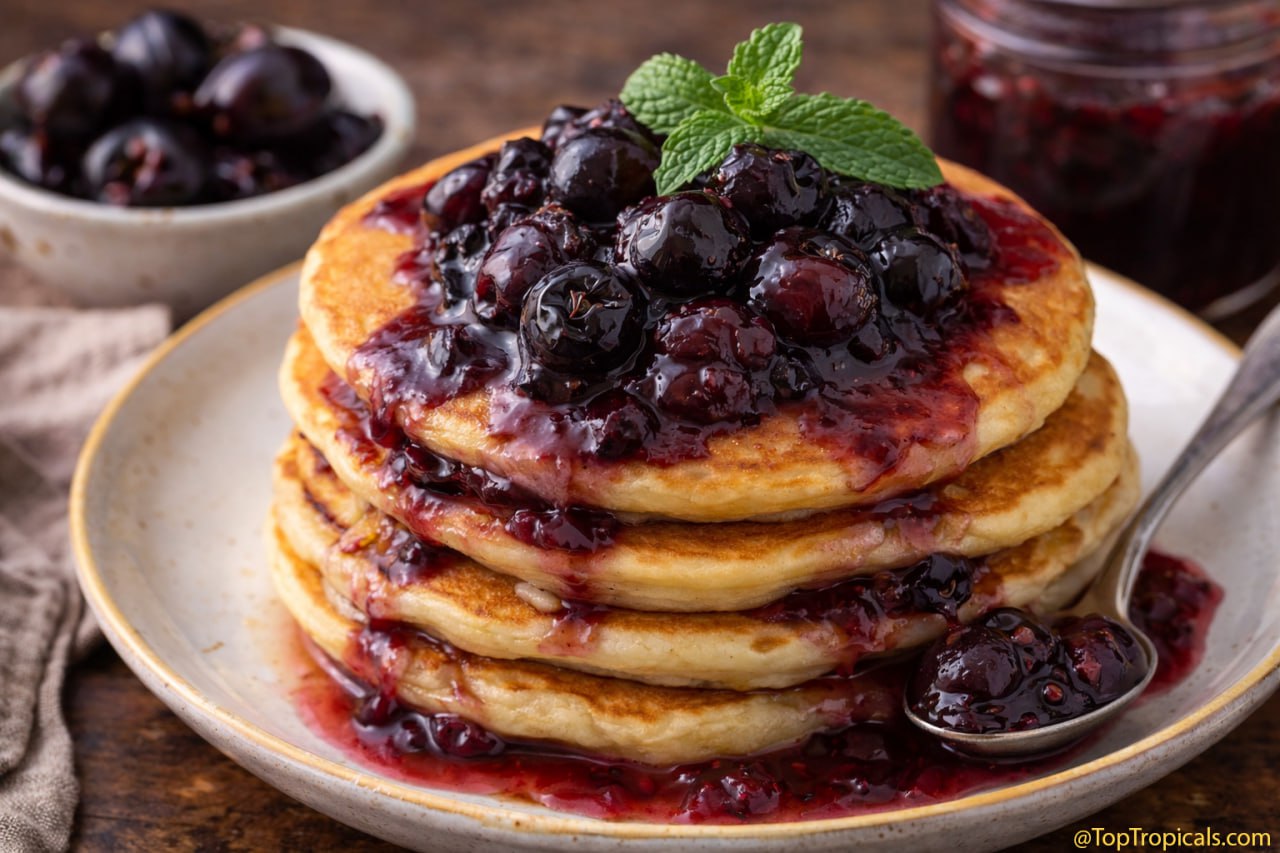
Cherry of the Rio Grande quick compote over pancakes

Cherry of the Rio Grande quick compote over pancakes

Eugenia aggregata - Cherry of the Rio Grande fruit

Eugenia aggregata - Cherry of the Rio Grande fruit

🍴 Cherry of the Rio Grande Quick Compote

This fast cherry compote is made from Cherry of the Rio Grande (Eugenia aggregata). It is tart, rich, and perfect over pancakes, waffles, toast, or warm bread.

Ingredients

  • 1 cup Cherry of the Rio Grande fruit, pitted
  • 2 to 4 tablespoons water

Instructions

  1. Place cherries and water in a small saucepan.
  2. Simmer over medium heat until the cherries soften and release juice.
  3. Mash lightly with a spoon for a chunky texture.
  4. Spoon warm compote over pancakes or bread and serve immediately.

🛒 Plant Cherry of the Rio Grande

📚 Learn more:


#Food_Forest #Recipes

🟢 Join 👉 TopTropicals

Date: 2 Mar 2026

😼😺 The Story Behind Smokey and Sunshine 🐾

Smokey  and  Sunshine  in  office  presentation  about  Cherry  of  the  Rio 


Grande  freeze  survival,  with  Sunshine  pointing  at  polar  bear  and  penguin 


marketing  poster,  coffee  and  donuts  on  table,  tropical  plants  on  shelves  in 


background.
Sunshine: You know, February 27 was International Polar Bear Day. I just learned about it and got a brilliant marketing idea. Cherry of the Rio Grande survived 25F. With wind. Real wind. That means we go north. Let them taste this magic. I even have a donut recipe with the fruit. It’s a bomb, Smokey. We expand. Trust me. Finally you can afford that new watering timer.

Smokey: Not so fast, genius. Twenty five degrees is not the North Pole. And polar bears and penguins do not share zip codes.

Sunshine: You always pour cold water on my brilliance. Fine. Where do we start?

Smokey: Well, first you go talk to Tatiana. She graduated from the Geography Department. She can explain climate zones. Cherry of the Rio Grande can grow in North Florida, Texas, and similar climates. Let’s master that before we conquer Arctic.

Sunshine: So… Phase One: Geography?

Smokey: Exactly.

Some stories are easier to tell with a little humor. Smokey and Sunshine were never just mascots. They represent the two forces behind every decision we make here: bold ideas and careful reality. One dreams big. The other checks the climate zone map. Together, they remind us that growing plants is part science, part optimism, and always personal. If you have ever wondered why they keep appearing in our newsletters, you can read their full story on the Smokey and Sunshine page. They have been with us longer than most people realize.

🐾 Learn the Story of Smoky and Sunshine

Freeze Testing of Grumichama and Cherry of Rio Grande 🍒❄️
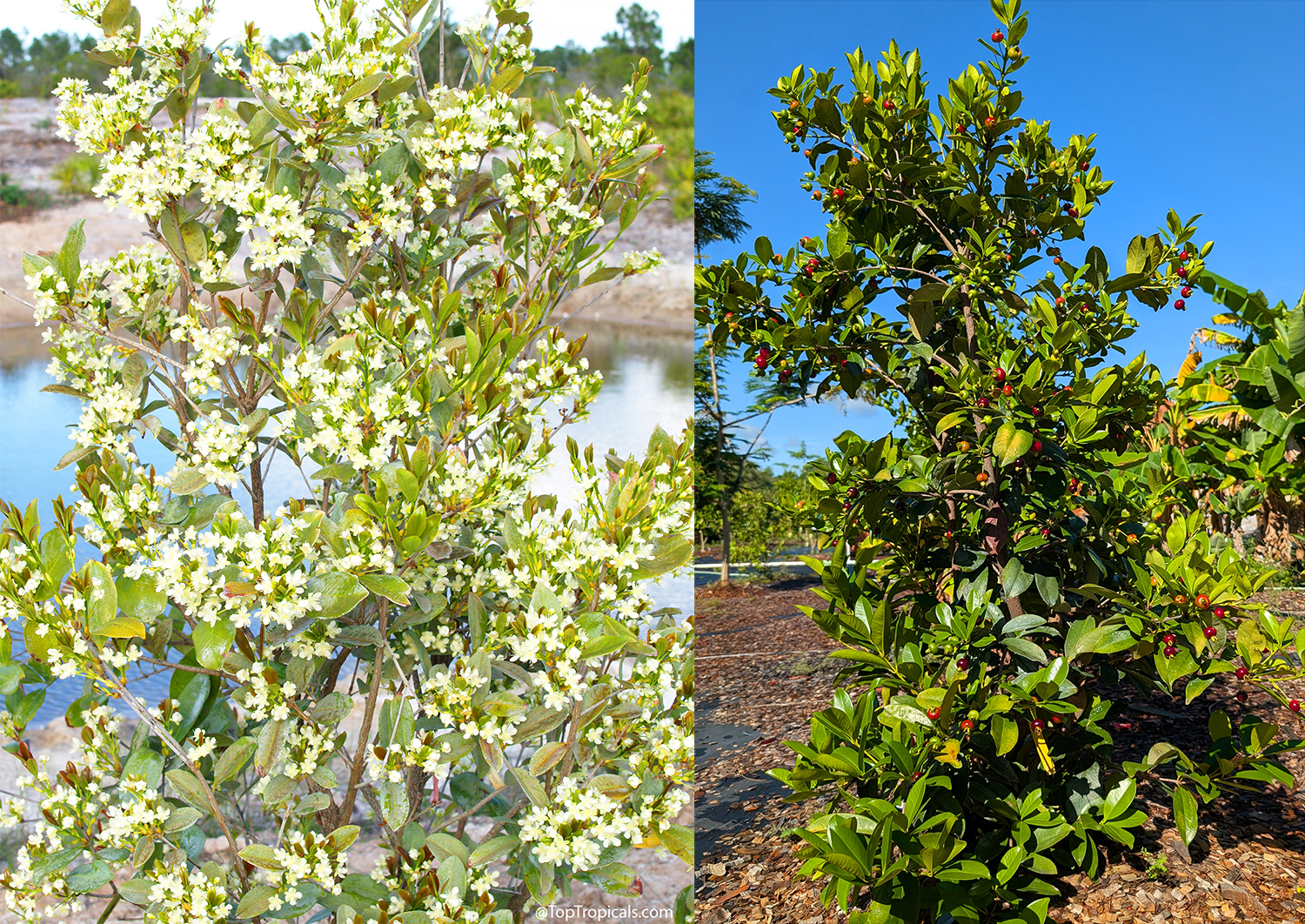
Grumichama  tree  (Eugenia  brasiliensis)  showing  white  flowers  and  ripe 


red  fruits  in  tropical  garden 


conditions

Eugenia brasiliensis - Grumichama tree flowering and fruiting

When temperatures dropped to 25F, with wind chill near 14F, winter made it clear which tropical trees were truly resilient. Some plants burned back. Tender growth collapsed. But our established Eugenia cherries stood steady. Leaves held. Branches stayed flexible. The canopy remained intact.

Cherry of the Rio Grande (Eugenia aggregata) and Grumichama (Eugenia brasiliensis) are among the most cold-hardy tropical cherries for Southern gardens. Both are native to Brazil and thrive in USDA Zones 9b–11, and even protected 9a sites.

Cherry of the Rio Grande produces dark ruby fruit that ripens almost black, with a rich, full cherry flavor. It flowers early in spring and can fruit well into summer. Mature trees can tolerate brief drops into the low 20s once established. Trees typically grow 8 to 15 feet tall, remain naturally compact, and often begin fruiting within 2 to 3 years.

Grumichama is an evergreen tree known for both beauty and productivity. In spring, it covers itself in white starburst flowers that attract pollinators. Within about four weeks, glossy purple-black fruit develops. Established trees tolerate temperatures into the upper 20s and grow well in the ground or in 5–10 gallon containers. Mature trees can produce hundreds of fruits per season.

Across the Eugenia group, strengths are consistent: early bearing, compact growth, heat tolerance, light freeze endurance, and low pest pressure. They are adaptable to different soils, need modest water once established, and perform in full sun or partial shade. Birds enjoy the fruit, but there is usually plenty to share.

Nutritionally, Eugenia cherries provide Vitamin C, fiber, antioxidants, and notable Vitamin A that supports eye health. They offer sweetness with real dietary value.

In the kitchen, they are simple and rewarding. Cherry of the Rio Grande makes an easy compote. Simmer the fruit with a small amount of water until soft, mash lightly, and spoon over pancakes or warm bread. Grumichama turns into a deep red jam with sugar and lime, or can be blended into a bright spoon drizzle over vanilla ice cream.

Even when not fruiting, both trees remain attractive year-round with glossy evergreen foliage and clean structure. They fit well into edible landscapes, small yards, and container gardens.

Winter will return. The difference lies in planting fruit trees that can handle heat, humidity, and the occasional cold snap. If you are building a food forest for lasting harvests, cold-hardy tropical cherries like Cherry of the Rio Grande and Grumichama deserve a place in your garden.
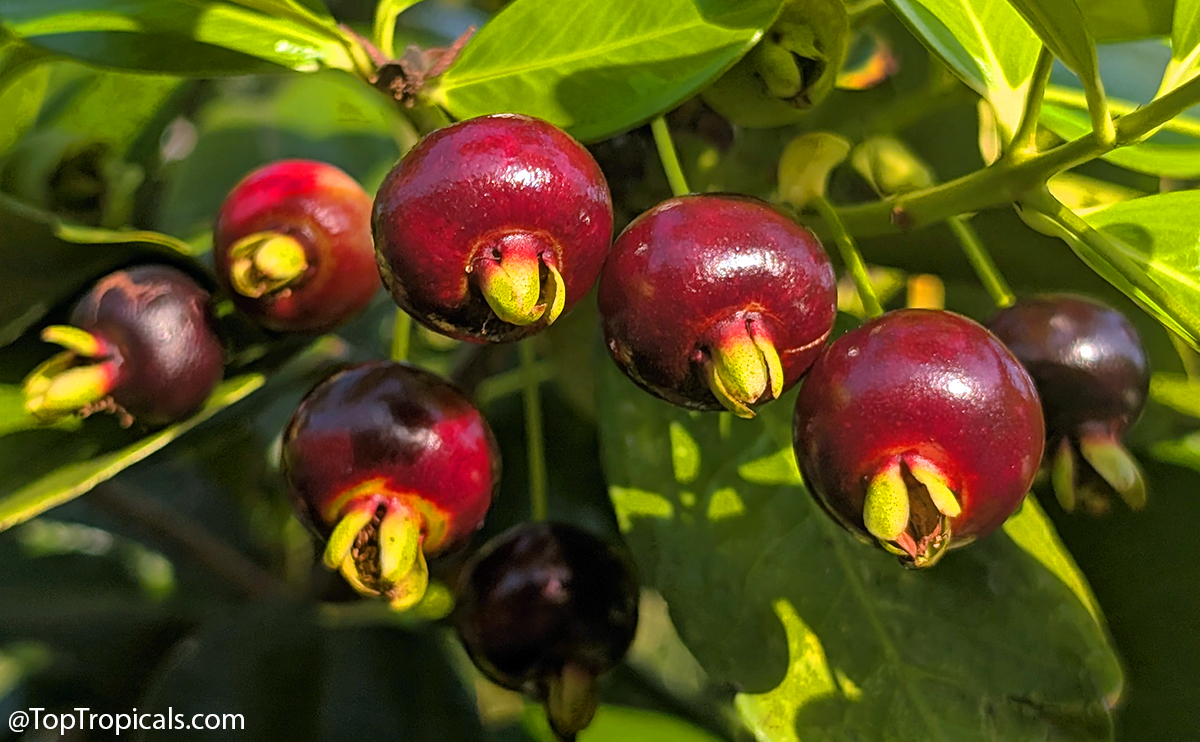
Ripe  Grumichama  fruits  (Eugenia  brasiliensis)  hanging  on  a  branch  with 


glossy 


leaves

Ripe Grumichama (Eugenia brasiliensis) fruits developing on the tree, turning deep red to nearly black when fully mature.
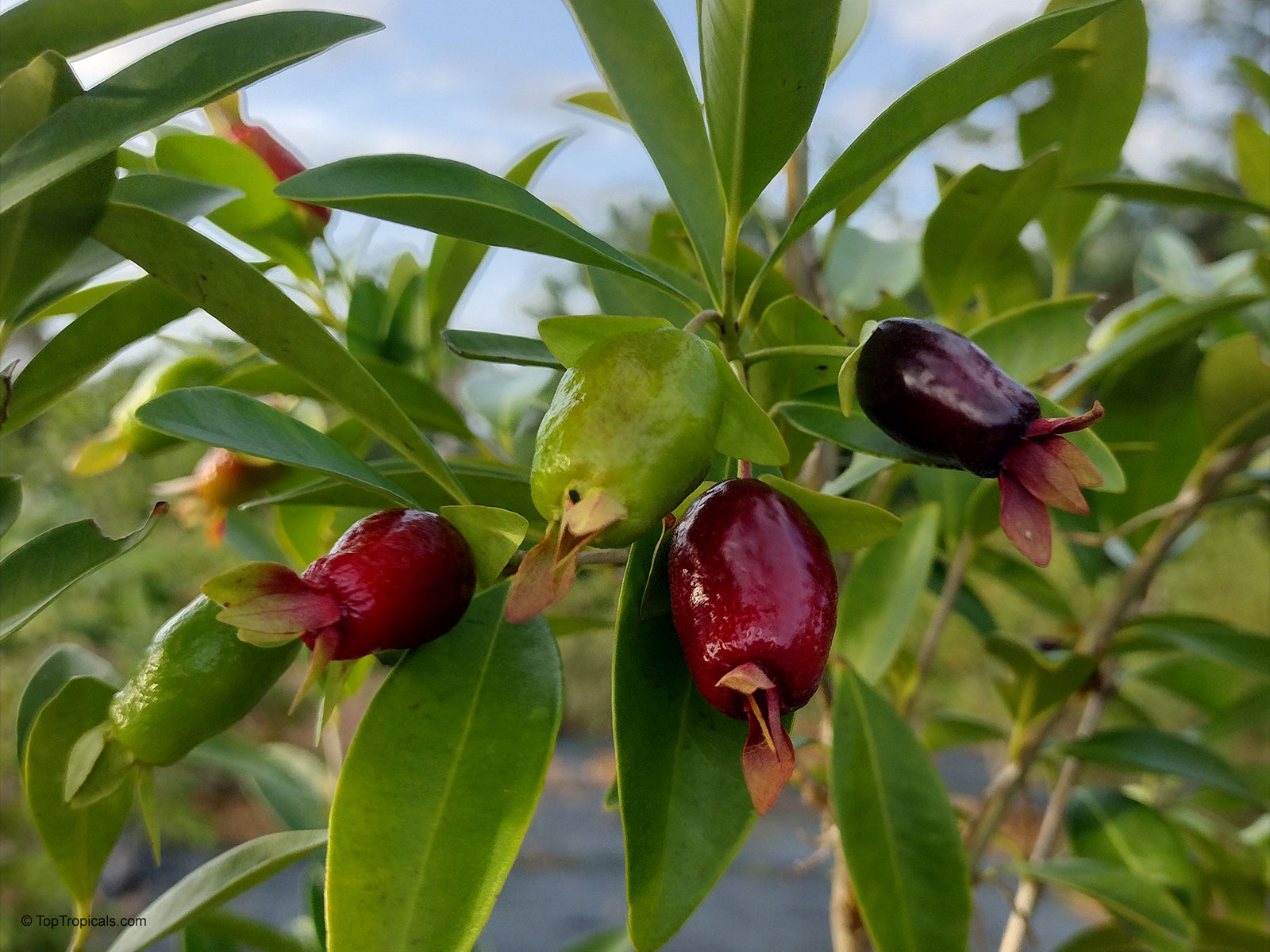
Cherry  of  the  Rio  Grande  (Eugenia  aggregata  cv.  Calycina)  fruits 


ripening  from  green  to  dark  purple  on  the 


branch

Eugenia aggregata (cv. Calycina), Cherry of the Rio Grande

🛒 Plant hardy Eugenia cherries
Date: 16 Sep 2019

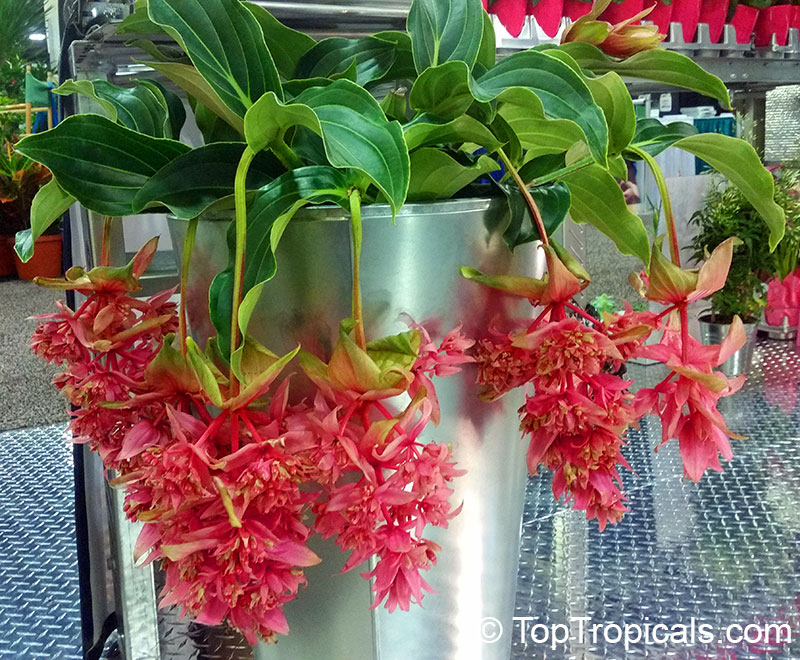
What pot is good for Medinilla?

Q: I just acquired a Medinilla plant. I have a cylindrical tall clay pot that I would like to repot this beauty into. Would like to know if a deep pot is good for this type of tropical plants even if the medium is lightweight with bark and perlite allowing adequate drainage. Would appreciate your advice.

A: Medinillas are very close to epiphytes, meaning they like high air humidity and very good soil drainage characteristics. Clay pots usually provide good air circulation, as long as they are not glazed. If you add a lot of soil conditioner into your mix, like orchid mix and perlite, the tall pot will provide a good drainage. Tall pot is also great for displaying the beautiful pendulous blooms!

Plastic pots work well too, as long as you provide a well-drained soil for the plant. If a nursery plastic pot is not pretty enough, you may place it in a fancy planter; however, make sure never let the pot sit in water, Medinillas do not like wet feet.

Date: 5 Apr 2025

10 reasons why chocolate is actually good for you and how you can grow your own

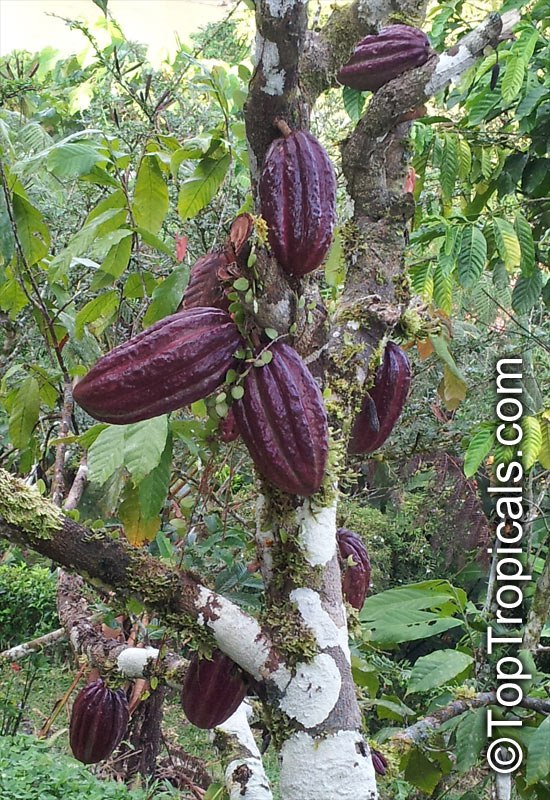
Chocolate Tree (Theobroma cacao) fruit on a tree

Chocolate Tree (Theobroma cacao) fruit on a tree

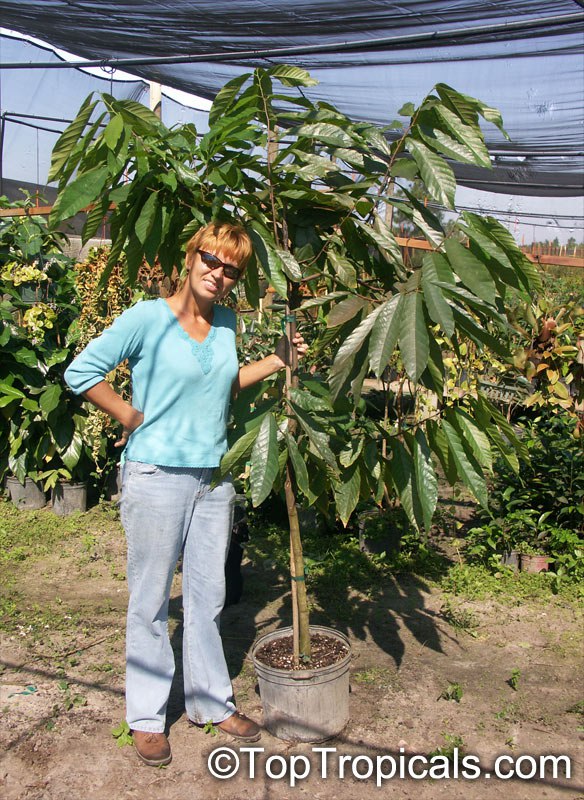
Chocolate Tree (Theobroma cacao) tree in a pot

Chocolate Tree (Theobroma cacao) tree in a pot

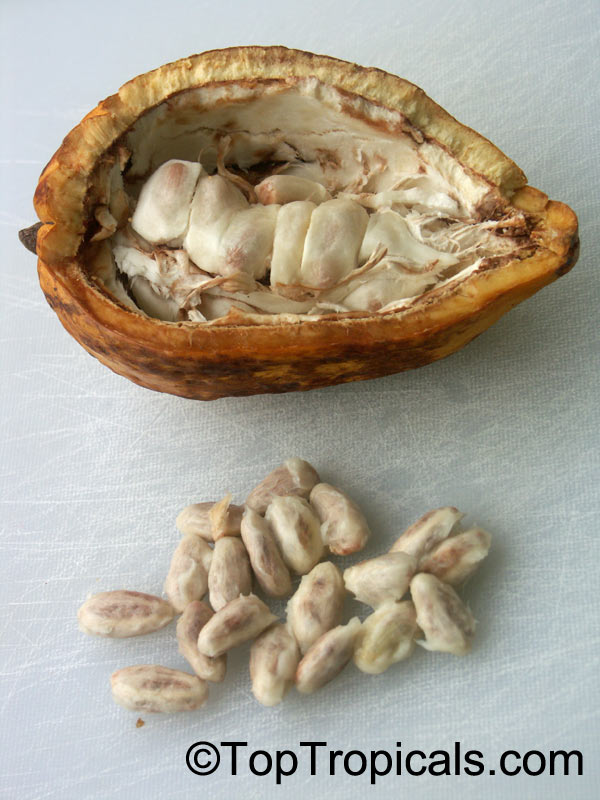
Chocolate Tree (Theobroma cacao) opened fruit with cacao beans

Chocolate Tree (Theobroma cacao) opened fruit with cacao beans

💩 10 reasons why chocolate is actually good for you and how you can grow your own

  • ☕️ That's right - the source of your favorite sweet treat, the Chocolate Tree (Theobroma cacao) we introduced in earlier post, produces cocoa that's packed with powerful health benefits. Growing your own chocolate tree isn't just fun and rewarding - it's a way to bring a superfood right into your backyard!
  • ☕️ Here are 10 reasons why cocoa is a health hero:


  • 🍫 Loaded with Antioxidants - Fights free radicals and supports overall cell health.
  • 🍫 Heart Healthy - Helps lower blood pressure and improve circulation.
  • 🍫 Mood Booster - Promotes feel-good chemicals like serotonin and endorphins.
  • 🍫 Brain Power - Flavanols support memory, focus, and cognitive function.
  • 🍫 Fights Inflammation - Natural compounds help reduce chronic inflammation.
  • 🍫 Supports Blood Sugar Balance - May improve insulin sensitivity.
  • 🍫 Glowing Skin - Boosts hydration and protects against UV damage.
  • 🍫 Aids in Weight Management - May reduce cravings and support metabolism.
  • 🍫 Rich in Minerals - Packed with magnesium, iron, copper, and more.
  • 🍫 Good for Gut Health - Acts as a prebiotic to feed good bacteria.


☕️ With all these benefits, why not grow your own source of chocolate? Plant a Theobroma cacao tree and enjoy the magic of harvesting your very own cocoa pods. It's not just a tree - it's a conversation starter, a wellness booster, and your personal chocolate factory in the making.

🛒 Get your Chocolate Tree today and grow your own goodness

#Food_Forest #Fun_Facts #Discover

🔴 Join 👉 TopTropicals

Date: 13 Nov 2022

Vietnamese Mickey Mouse Plant...
Hoa Mai - for good luck!

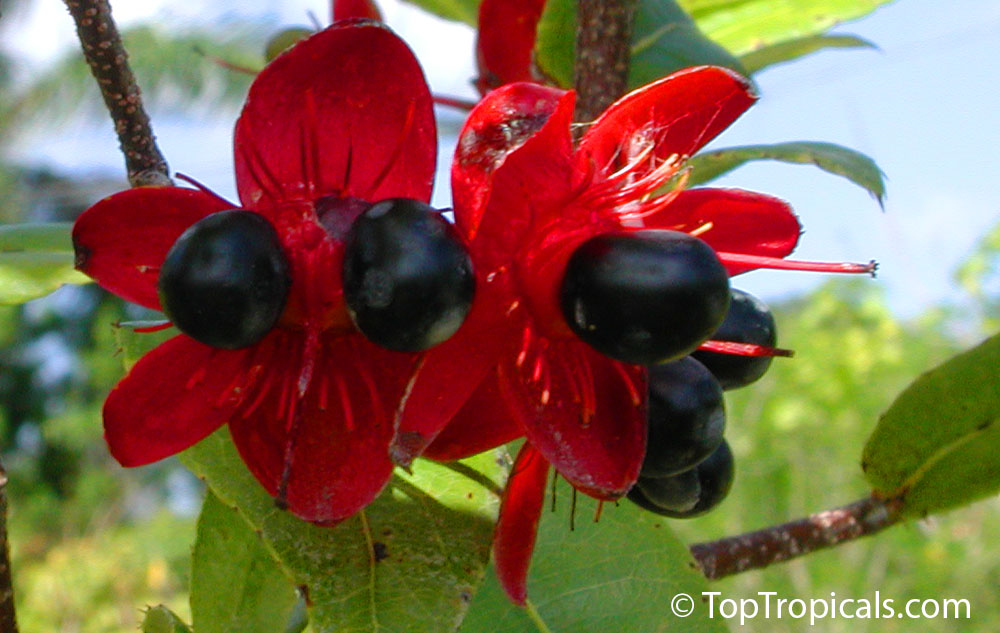
Ochna  integerrima  (thomasiana)  -  Vietnamese  Mickey  Mouse  plant,  Hoa  Mai,  Mai  Vang,  black 


fruit

Ochna integerrima (thomasiana)

What is the yellow flower that brings good luck on Vietnamese New Year (Tet) Celebration? Why is it called Mickey Mouse Plant?

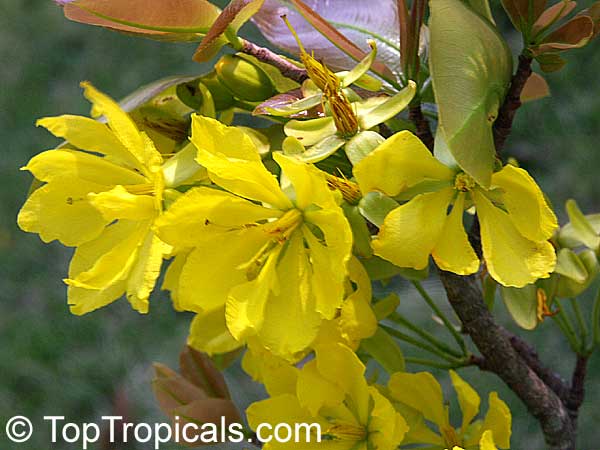
The most celebrated flower in Vietnam, Ochna integerrima, called in Vietnam Hoa Mai or Mai Vang, blooms profusely on the occasion of Tet, the Vietnamese New Year. Commonly known as Yellow Mai Flower (Hoa Mai literally means "yellow blossoms"), this plant is considered the quintessential symbol of Spring. In Southern Vietnam, Hoa Mai are some of the first plants to flower.
This plant is a must for exotic plant collection. It is a rather slow growing, medium size shrub that can be trained into miniature tree. In winter the plant is covered with pretty bright yellow flowers, believed to bring good luck and prosperity. They are followed by cute shiny black berries on bright red sepals that resemble the face of Mickey Mouse.

The plant is easy to grow and relatively cold hardy to light freeze. Start fertilizing your Hoa Moa plant right now through the Winter to encourage early blooms. Luckily, we have a perfect bloom booster liquid fertilizer that is safe to use year around, including Winter months: Sunshine Boosters MegaFlor!

Lunar year 2023 will be a year of the Cat on the Vietnamese zodiac, from January 22nd, 2023 to February 9th, 2024. Cat is the fourth sign in Vietnamese Zodiac, taking place of the Rabbit in Chinese Zodiac.

Ochna  integerrima  (thomasiana)  -  Vietnamese  Mickey  Mouse  plant,  Hoa  Mai,  Mai  Vang,  yellow  flowers

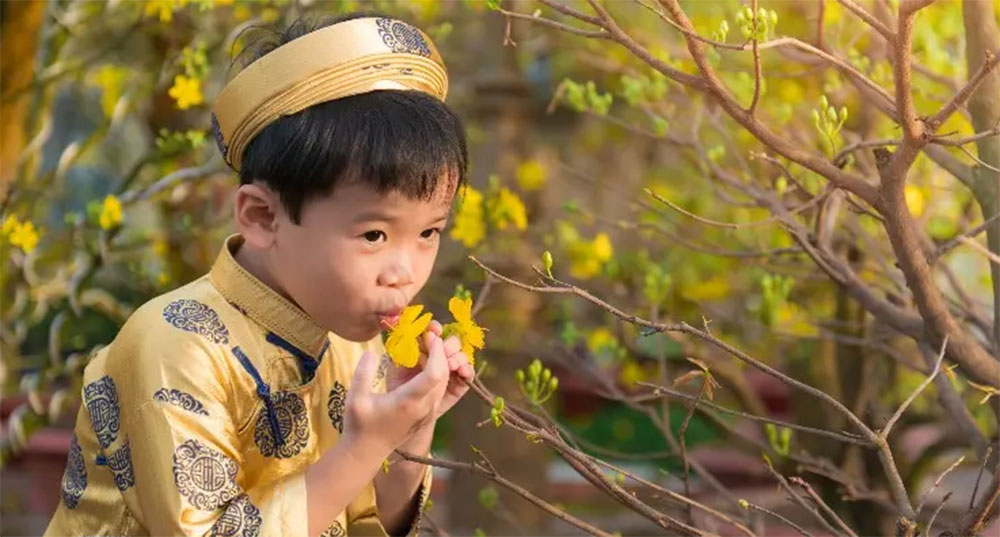
Vietnamese  boy  with  Hoa  Mai  Mickey  Mouse 


plant