Garden Blog - Top Tropicals

Date: 5 Apr 2023

What are Low Chill Apricots?

Prunus armeniaca (Armenian plum)
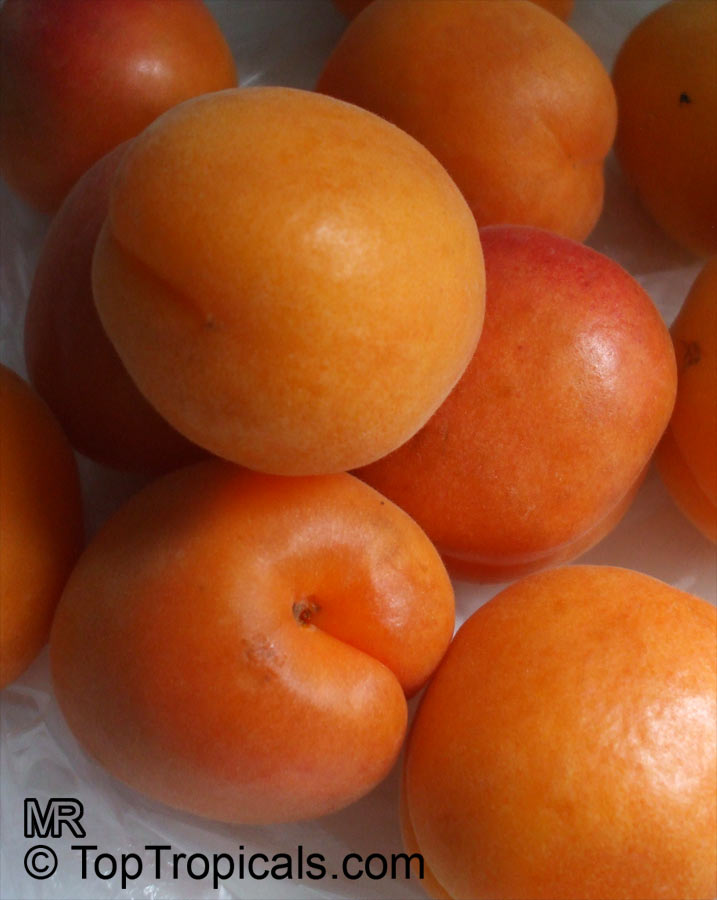
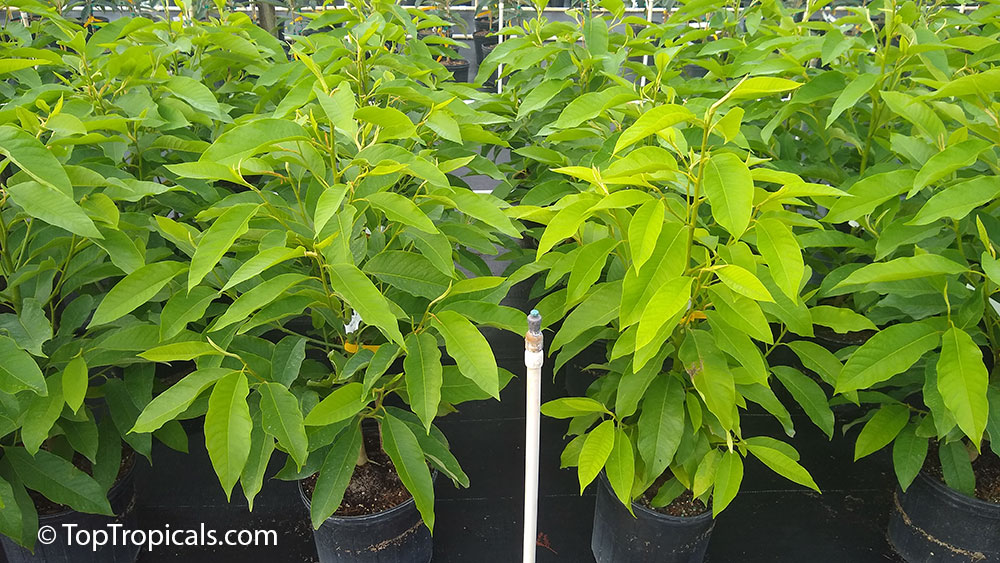
Apricot  var.  Katy  (Prunus  armeniaca)

Q: Can I grow apricots and plums in Florida?

A: Low chill apricots have been specially developed for subtropical regions like Central and South Florida, where the climate is not typically conducive for apricot cultivation due to the high number of chill hours required. This is also true for other fruit trees such as plums and peaches. However, through successful hybridization, several low chill varieties have been created that require less than 300 hours of cold weather below 45 degrees.
One such example is the low chill Katy Apricot tree, which only requires 250 chill hours and is self-fertile. It is a popular choice among homeowners due to its large size, rich flavor, and free-stone characteristics with a semi-sweet, low-acid taste. Katy Apricot tree typically bears fruit early, usually in May.
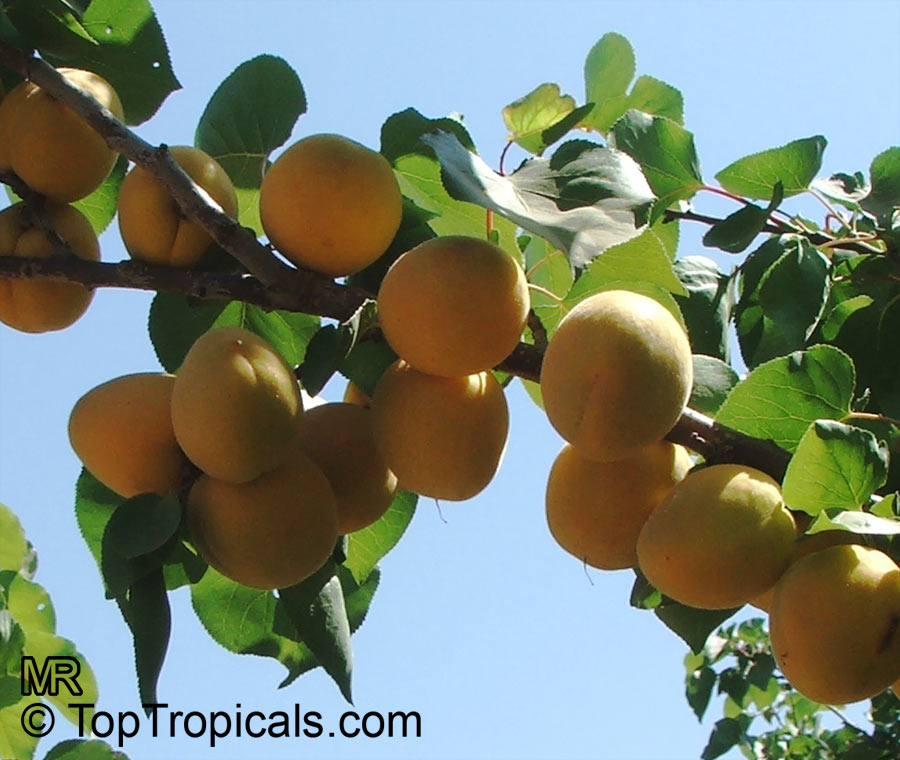
Apricot  fruit  on  a  tree

Date: 24 Nov 2021

Winter is coming tips

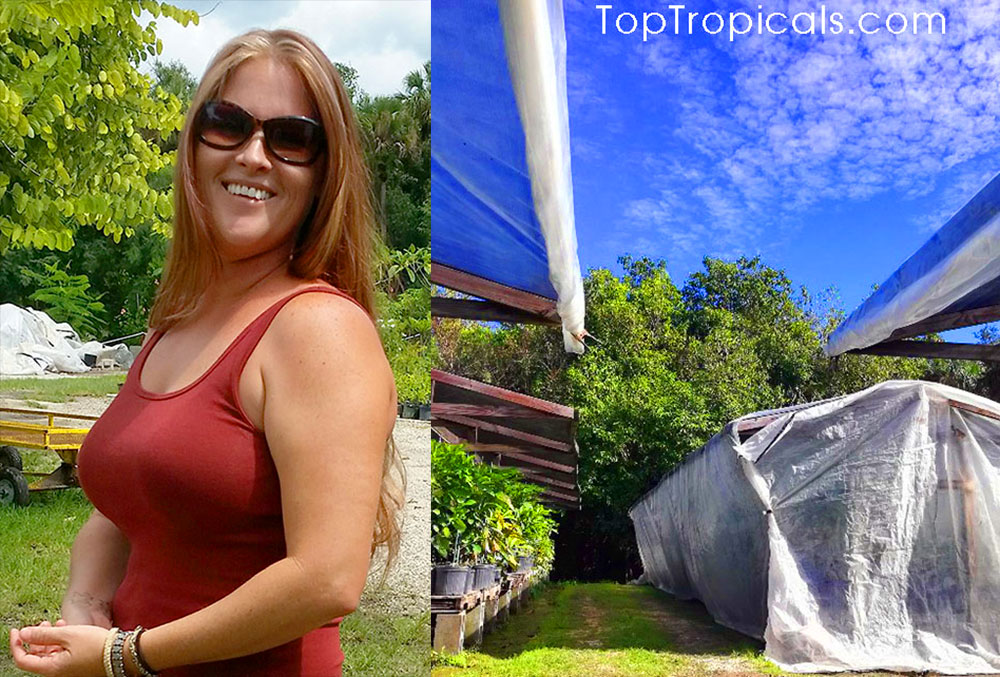
Reminder from Kristi, the Tropical Flower Girl

As the weather gets cooler, many of you move your potted tropical plants indoors. Please remember:
1. Leaf drop. Lower air humidity, lower light and short day may cause some leaf drop. This is normal for seasonal environment change.
2. Reduce watering as it gets cooler and darker. Under lower light and in cooler temperature, plants won't need much water; some plants go dormant and only need minimum water (so soil doesn't completely dry out). Excess water may damage roots and kill a plant in winter.
3. No dry fertilizer in winter. Active growth stops. Let the plant to go into dormancy or simply have a rest. You can continue liquid Sunshine Boosters according to regular dosage chart with every watering. Since the watering is reduced, the plants will get only as much food as needed for getting through the winter.
4. Watch for insects by inspecting leaves regularly. They may attack plants more likely in the indoor conditions. You may use organic NoBug insecticide especially for your indoor plants.

Stay Warm!

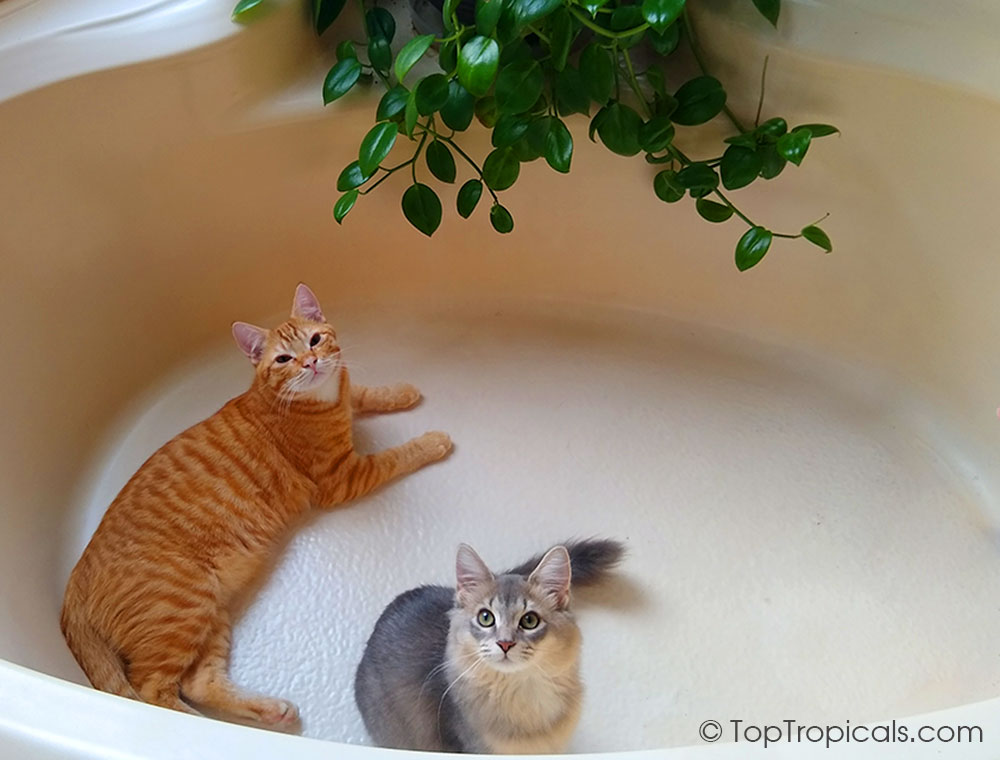
In the photo: Mr Big and Zoe-the-Scooby-Doo sharing a warm tub with Emerald Peperonia.

Date: 6 Oct 2021

Top Tropicals Top House Plants

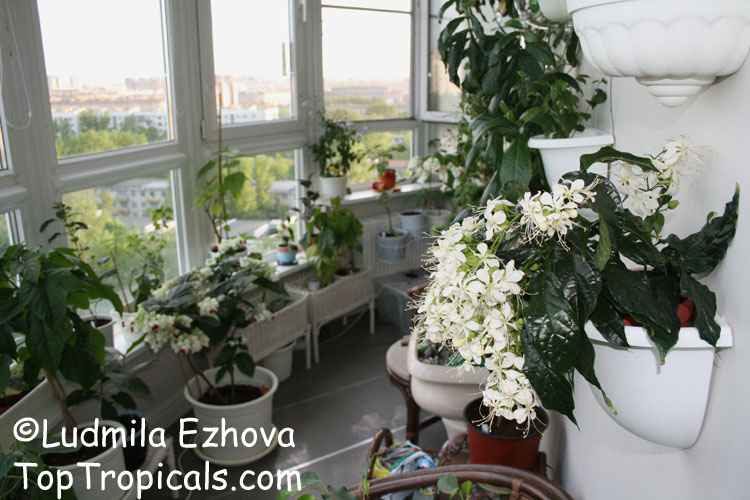
Photo above: Clerodendrum indoor garden of Ludmila Ezhova, St Petersburg, Russia.

Enjoy the Tropics Year round!
Bring them inside...

Q: I just discovered your amazing website and spent hours browsing your beautiful tropical plants! I wish I could have them all! But it's getting cold here (I live in Chicago area), too late? Can you recommend something of a small size, colorful, that I can easily overwinter indoors? Thanks for bringing this beauty into our lives!

A: Don't get discouraged even in colder climates. Yes, you can grow tropical plants indoors! Remember that all traditional houseplants are in fact tropical plants that grow in tropics in a wild habitat. Humans didn't invent them as indoor plants, they originally collected them from the rain forests and jungles! Most of tropical plants, including trees and fruit trees, can be grown in containers and even indoors. It's just a matter of space limitations and amount of time you are willing to spend caring of your exotic babies. Many gardeners up North are very successful with their tropical plant collections.
Below are a few suggestions of compact growing, easy species for your indoor collection. Enjoy the Tropics Year round!

See more plants well-suitable for indoor culture and our specials at the end of this newsletter.

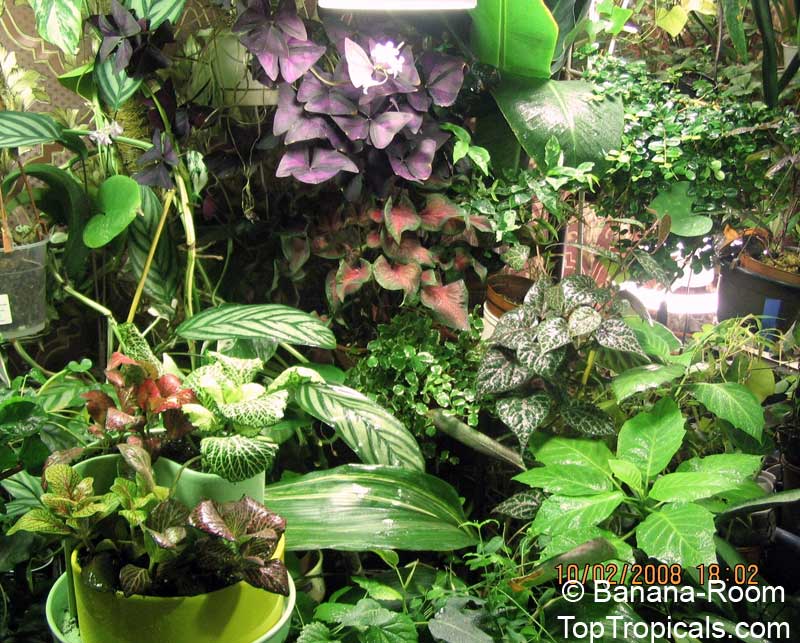
Photo above: small tropical indoor garden of Julia Nikolayeva, St Petersburg, Russia.

Date: 10 Jun 2021

Growing Champaka in Virginia

Q: I purchased a Magnolia champaca 1 gallon a few years ago. It is still growing as I bring it into my greenhouse in the winter. I live in VA. This spring I planted it in the ground hoping it might bloom which it did not. Will it survive our fairly mild winters with several freezing days with some special attention? What would you do?

A: Magnolia champaca is a tropical tree and won't survive winter in VA. It can not take hard freeze. Your only option is, to keep it in a pot and bring inside. If the temperature inside your greenhouse is too low, this may affect the plant's ability to flower. For example, if it stays 35-40F for a whole month - although it is not a hard freeze and the plant may survive, but the duration of the cold period is more critical than the low temperature itself. Champaka can survive a few hours even at upper 20's, but not many days with cool temperatures. The temperature in winter should be maintained at least above 55F during day time (the higher the better) and at least above 45F at night.
If the tree has grown too big, you may trim it. If the root ball is too large, roots can be trimmed too (similar way like they do with bonsai) before repotting. However, trimming must be done either during warm season and active growth, or in Spring, when the tree starts waking up and promotes new growth.
To encourage flowering, start fertilizing your Champaka with a liquid bloom booster - SUNSHINE Pikake - Fragrant Flower Booster. It can be used year round including winter months, and it is safe to apply with every watering. This way you will provide to the tree enough energy for the next flowering season, so flowers can be expected in late Spring - Summer.

Read more about greenhouse growing: Greenhouse in Virginia.

Date: 10 Mar 2021

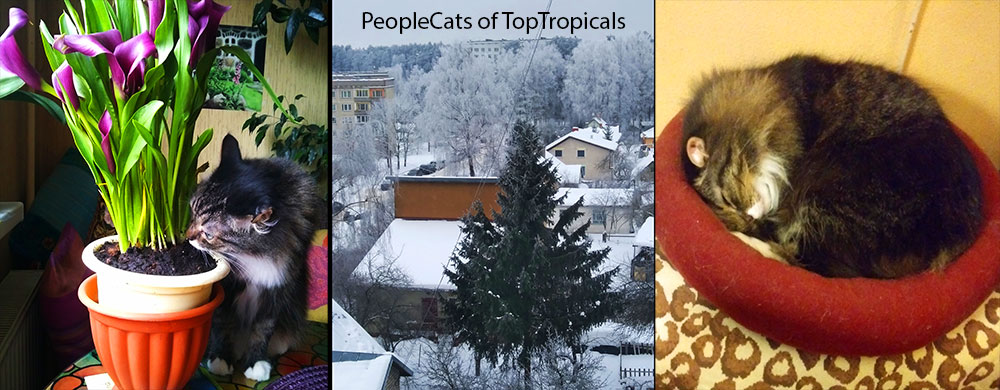
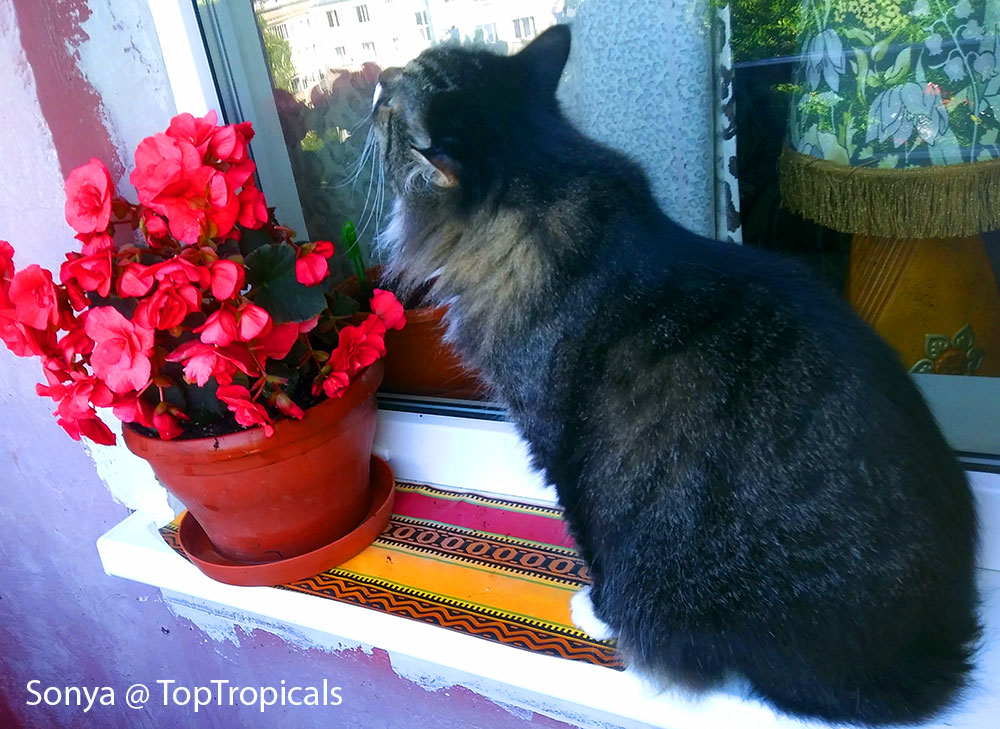
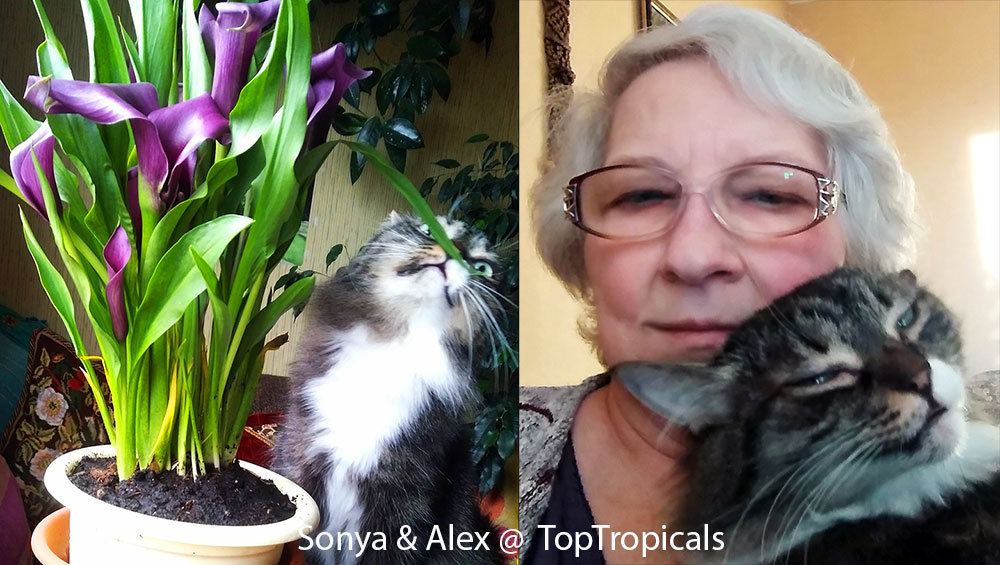
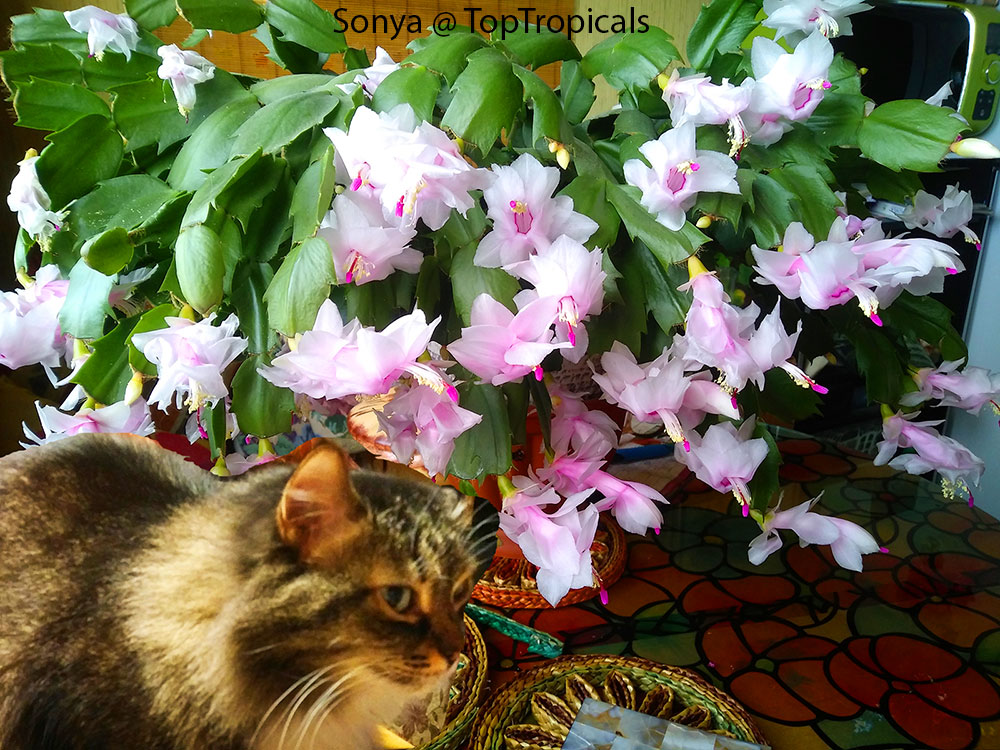
PeopleCats of TopTropicals. Cat of the Month: Sonya growing indoors

Sonya, the Co-Author of our columnist Alex Butova, this year can't wait for the Spring to begin. Sonya is a True Tropical Cat, enjoying sunny hot days, and she hates cold and snow in spite of her beautiful fluffy coat. Together with Alex, she grows tropical flowers in their apartment in Riga, Latvia. The countdown to True Spring has just begun, and Sonya promises warm weather to start by hers and Alex's birthday on March 16.
Aren't we lucky to live in Tropics!

TopTropicals PeopleCat Club and Zoo

Thank you for supporting us in helping PeopleCat Community!
Make your kind donation today and receive a surprise gift from us! Every little bit helps. Thank you and God bless you and your pets!