Garden Blog - Top Tropicals

Date: 28 Sep 2025

Guava Tree Plant Care

Tips from Top Tropicals Plant Expert - Tatiana Anderson

Guava  trees  for  sale  in  3-gallon  nursery  pots,  healthy  young  plants 
 with  green 
 foliage.

Where to Plant Outdoors

Guavas love full sun — aim for 6–8 hours of direct light. They’re adaptable to many soils but do best in well-drained, organic-enriched mixes. Plant them in a spot where you can water easily; guavas are thirsty trees during fruiting.

Container & Indoor Growing

Don’t have space or live in a cooler climate? Guavas thrive in large pots. Use well-drained potting mix. LINK TO OUR SOIL Keep them on a sunny patio during warm months and bring them indoors when nights dip below freezing. Compact varieties like Dwarf Hawaiian Rainbow or Tikal are especially good for pots.

Winter Care

Mature guavas can handle a light frost (down into the high 20s F), but young plants need protection. If planted outdoors, cover them with frost cloth on cold nights. Container guavas can be wheeled into a garage, greenhouse, or bright indoor window until the weather warms.

Watering and Fertilizing

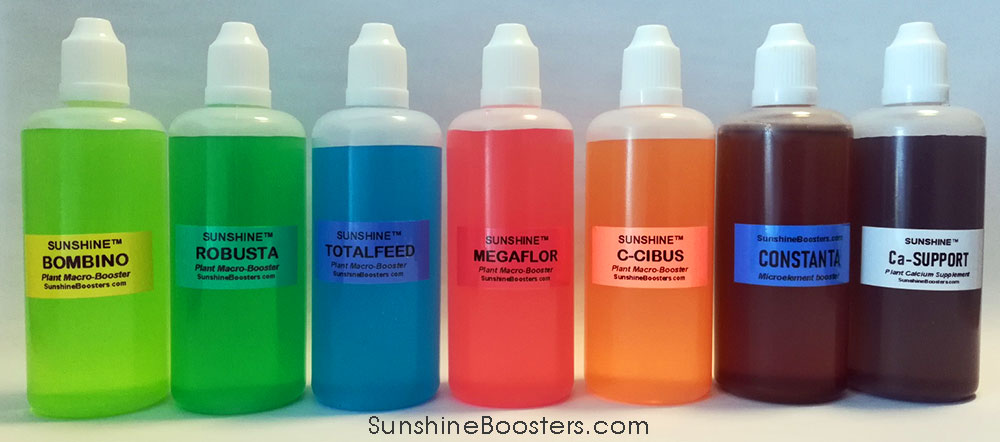
Water deeply once or twice a week, more often in hot weather or when fruit is developing. They don’t like soggy soil, but they won’t complain about short floods either. Fertilize 3–4 times a year during the growing season with a balanced fruit tree fertilizer. Guavas especially love potassium and phosphorus for strong flowering and heavy crops. We recommend liquid crop booster Sunshine C-Cibus and balanced controlled release fertilizer Green Magic.

Pruning

Prune after fruiting to keep them compact and open up airflow. Remove crossing or dead branches. In containers, trim back vigorous shoots regularly to manage size and encourage more fruiting wood.

Pests and Problems

Guavas are generally tough and pest-resistant. The main thing to watch for in humid or rainy climates is mealybugs - those cottony white clusters on leaves or stems. They're easy to manage with neem oil or a quick spray of horticultural soap.

Fruit time

Guavas fruit young - often within a year or two.

Pollination

Guavas are self-pollinating, so you'll get fruit even with a single tree. Planting more than one tree, however, often boosts harvests and gives you a longer fruiting season.

If you've ever wanted instant gratification from a fruit tree, guava is it.

Ruby  Supreme  Guava  tree  with  a  large  ripe  yellow  fruit,  variety  known 
 for  sweet  pink  flesh  and  reliable 
 harvests.

🍴 Guava Recipes

With all that fruit, the next question is always: "What do I do with it?" Here are our favorites:

  • Cas Guava: Make Agua de Cas

    Boil halved Cas Guava fruits with sugar, simmer, strain, and bottle. Dilute with water when serving. The concentrate keeps for months in the fridge.
    Check out the recipe.

  • Hawaiian Gold: Make Drinks

    Perfect for Mojitos or Margaritas. Sweet, tangy juice pairs beautifully with lime and mint. Learn more

  • Araca Pera: Guava Wine

    Famous in Brazil, where the fruit is turned into a vibrant rosу wine. Locals say it’s the taste of summer in a glass — and yes, you can make it at home too. Learn more...

  • Quick snack: Guava Grilled Cheese

    Spread guava paste or fresh mashed fruit with cheese, grill until golden. Sweet and savory heaven. Learn more...

  • Simple Guava Juice

    Blend ripe guavas with water, ice, and a little sugar if you like. Instant refreshment.

✅Ready to Grow? Whether you want fresh juice, sweet fruit, or even your own guava wine, we’ve got the best varieties in stock right now. Your future self, sipping guava juice on a hot summer afternoon, will thank you.

👉 Order your guava tree today

Tabby  cat  sitting  between  a  glass  of  yellow  guava  juice  with  white 
 guavas  and  a  glass  of  pink  guava  juice  with  green  guavas  and  cut  pink  guava 
 fruit.

Date: 16 Mar 2026

🌱 💪 Green Magic + SUNSHINE Boosters: A Complete System for Strong Plant Growth

By Tatiana Anderson, Horticulture Expert at Top Tropicals with Smokey & Sunshine help

Nearly  dead  houseplants  (Dracaena,  Syngonium,  and  Spathiphyllum) 
 recovering  and  growing  vigorously  after  treatment  with  Green  Magic 
 fertilizer  and  Sunshine  Robusta  plant 
 booster.

Green Magic recovery test with SUNSHINE Robusta support: Dracaena, Syngonium, and Spathiphyllum revived from severe stress and growing vigorously.

☀️🌱 Sunshine Boosters: Complete Plant Nutrition

Sunshine Boosters provide complete plant nutrition, including Calcium and micronutrients that plants need for strong growth. Because nutrients are delivered in liquid form, plants can absorb them quickly and respond almost immediately.

The Practical Problem

Liquid feeding works well, but it requires frequent application. In real gardens, many growers simply do not have time to add liquid fertilizer with every watering.

Green Magic: The Foundation

Green Magic solves this problem by providing steady background nutrition through controlled-release fertilizer. It feeds plants gradually, so they continue receiving nutrients even between liquid feedings.

Why This Combination Works

Together, this system provides both complete nutrition and steady feeding. Sunshine Boosters supply fast nutrients and Calcium, while Green Magic maintains a stable nutrient supply between feedings.

✍️ How to Feed Your Plants

📅 Step 1 – Start of the Growing Season

  • Apply Green Magic around the root zone every 6 months.

    In ground:
    • Small Shrubs (1–3 feet): Use approximately 1/4 to 1/2 cup per plant
    • Established Trees: Use 1/2 lb to 1 lb of product per 1 inch of trunk diameter.
    • Small In-Ground Ornamentals: A common "spoon" rate is roughly 1 teaspoon per gallon of estimated root volume (or per sq. ft. of surface area).
    • Spread evenly around the dripline. Avoid piling the granules against the base or trunk of the plant. For best results, lightly rake the granules into the top 1–2 inches of soil.
    Container plants:
    • Apply 1 tea spoon per 1 gal of soil (mix in with soil) every 6 months during active growth period, or with every re-potting.
  • Water normally after application.
  • Adjustment for Temperature. Because Green Magic is temperature-controlled, adjust your rate if your local climate is extreme:
    • Cooler Climates (<60°F average): Increase the rate by 20% to ensure enough nutrients are released.
    • Hot Climates (> 80°F average): Decrease the rate by 20% to prevent over-releasing as the heat speeds up the process.

☀️🌿 Step 2 – Active Growing Season

  • Apply Sunshine Boosters during the growing season.
  • Regular feeding (maintenance): Mix with tap water according to the ratio on the label. For SUNSHINE Robusta use 25 ml (5 tsp)per gallon of water and spray leaves every 5-7 days during active growth.
  • Correction feeding ("medicine" dose): if plants show visible nutrient deficiencies, combine SUNSHINE Robusta with SUNSHINE Superfood and spray every 5–7 days until new growth appears healthy. All SUNSHINE Boosters products are compatible and can be mixed with water in the same sprayer.
  • Best time to spray: early morning or evening when temperatures are cooler and leaves can absorb nutrients efficiently.
  • Important: spray both the top and underside of leaves for maximum absorption.

Tacca  plant  (bat  flower)  showing  strong  vegetative  growth  and  flower 
 bud  development  in  the  same  season  after  feeding  with  Green  Magic 
 fertilizer.

Tacca (bat flower) showing vigorous growth and producing flower buds in the same season after feeding with Green Magic.
Swipe left/right to see all data ↔️

📊 Seasonal feeding schedule with Green Magic and Sunshine Boosters.

Season Product Method Goal
Spring (March) Green Magic Soil Surface 6-month steady nutrient base.
Growing Season Sunshine Boosters Foliar (Every 5-7 days) Calcium & Bio-available growth power.
Late Summer Green Magic Soil Surface Replenish foundation for Fall.
Winter Sunshine Epi Foliar/Drench Cold tolerance and shipping recovery.

Quick Dose Reference

  • Green Magic: 1 teaspoon per 1 gallon of soil volume.
  • Sunshine Boosters: 25 ml (5 tsp) per 1 gallon of water.
  • Pro Tip: Always spray in the early morning or late evening to prevent leaf scorch and ensure maximum absorption through the stomata.

❓Frequently Asked Questions: Plant Nutrition & Fertilizer

General Fertilizer Concepts

Why is the "Spring Fertilizer Rush" a problem?
Most gardeners apply a large amount of traditional fertilizer once in March. This creates a "roller coaster" effect where plants get a sudden spike of nutrients followed by weeks of starvation. This leads to inconsistent growth and potential "fertilizer burn."

What is "fertilizer burn"?
Traditional fertilizers are made of soluble salts. When too many salts accumulate around the roots, they actually pull water out of the plant tissues (osmosis), dehydrating the plant and damaging sensitive root tips and leaf edges.

Is there a difference between "Slow-Release" and "Controlled-Release"?
Yes.

  • Slow-Release: Relies on natural factors like moisture and soil microbes to break down. It is often unpredictable.
  • Controlled-Release: Uses engineered polymer membranes (like Polyon) to release nutrients at a specific, predictable rate based primarily on temperature.

Green Magic & Temperature

How does temperature affect my fertilizer?
Most fertilizers are lab-tested at 75°F. In hot climates (90°F+), the nutrients release much faster. A "6-month" fertilizer might only last 3 months in the summer heat.

How should I adjust Green Magic for my local weather?

  • Cooler Climates (<60°F): Increase the application rate by 20%.
  • Hot Climates (> 80°F): Decrease the application rate by 20% to prevent over-releasing.

The Calcium Gap

Why doesn't Green Magic contain Calcium?
Calcium salts are highly soluble and can destabilize the polymer coating used in controlled-release granules. Therefore, most high-quality granules leave Calcium out. You can provide Calcium by using SUNSHINE Boosters

Why is Calcium so important for new growth?
Calcium is the "bone" of the plant, building strong cell walls. Unlike other nutrients, it is immobile—the plant cannot move it from old leaves to new ones. If you don't provide a constant supply, new leaves and fruit will emerge distorted or weak.

Advanced Science & Troubleshooting

What makes Sunshine Boosters "Bioavailable"?
Unlike most liquid fertilizers that use EDTA chelators, Sunshine Boosters are amino-acid based. They use organic acids and glycine to escort minerals into the plant, allowing it to incorporate nutrients into its proteins almost immediately.

Will these fertilizers affect the taste of my fruit?
No. Sunshine Boosters are made from pharmaceutical-grade components and contain no urea or harmful salts, ensuring your harvest (like Mangoes or Avocados) has a pure, natural flavor without a chemical aftertaste.

✨ Green Magic - 15% Off This Week

Give Your Plants a Strong Start This Spring
Green Magic - 15% OFF.

Build the foundation for the entire growing season with a steady, long-lasting nutrient base.

No coupon needed. The discount is automatically applied at checkout.
Offer valid through 03/21/2026. Discount applies to Green Magic products only. Not valid on previous purchases and cannot be combined with other promotions or discounts. Offer subject to change without notice.
Sunshine: So Green Magic feeds the plant for months. Does that mean I can forget about Sunshine Boosters?

Smokey: Not quite. Green Magic is the steady base diet. Sunshine Boosters are the weekly power drink during active growth.

Sunshine: Ah. Like my regular meals and donuts on top.

Smokey: Exactly. Plants eat slowly from Green Magic, and once a week they get a fresh boost.

Sunshine: Sprinkle once, then boosters every week. The plant grows, I drink coffee, and nobody forgets anything important.

Smokey: Except where you left the donuts.

Sunshine: Smokey... nobody forgets donuts. Ever

🛒 Feed your plants

✍️ Learn more about fertilizers

Date: 13 Apr 2026

🌸 Secrets of Blooming Plumerias

Plumeria  Orange  KLS  stands  out  with  a  rare  mix  of  five  colors  -  peach, 
 yellow,  orange,  white,  and  crimson  -  all  blending  into  one  vivid  bloom. 
 Fragrant  and  eye-catching,  it’s  a  truly  unique  plumeria.

Plumeria Orange KLS stands out with a rare mix of five colors - peach, yellow, orange, white, and crimson - all blending into one vivid bloom. Fragrant and eye-catching, it’s a truly unique plumeria.

Practical Growing Tips (Keep It Simple)

  • Sun: Full sun is key. 6+ hours daily for best blooms.
  • Soil: Fast-draining mix. In pots, use cactus mix or add perlite and sand. The best soil for Plumerias is a 50:50 mix of Abundance potting soil with coarse sand.
  • Watering: Water well, then let soil dry out before watering again.
  • Containers: Excellent for pots. Easier control and mobility.
  • Feeding: Light feeding during active growth helps more blooms. Use liquid Sunshine Boosters Megaflor for profuse blooming and controlled release Green Magic fertilizer every 6 months.
  • Airflow: Good airflow keeps plants healthy and clean.
  • Spacing: Give each plant room - better shape and more flowers.

Blooming  plumeria  plants  in  multiple  pots  with  colorful  flowers, 
 arranged  outdoors  in  a  nursery  setting  after  rain.

Blooming plumeria plants in pots after rain.

Winter Care (Very Important)

  • Temperature: Protect from freeze. Below 40F they need protection.
  • Dormancy: Leaves drop in winter. This is normal.
  • Watering: Almost dry during dormancy.
  • Indoors: Move containers inside if frost is expected.
  • Light: Bright spot is enough. No need for full sun in dormancy.
  • No feeding: Do not fertilize during winter rest.
  • Restart: Resume watering when new growth appears in spring.

potted  plumeria  plant  pink  orange  flowers  with  water  droplets  on  leaves
    and  petals

Potted plumeria in bloom.

About Plumeria Rust (Florida Reality)

If you are growing plumerias in Florida, you will likely see plumeria rust at some point. It shows up as orange powdery spots on the underside of leaves and can cause leaves to yellow and drop early. It is driven by high humidity and is most common in the fall, right before the plant naturally starts dropping its leaves.

It looks alarming, but it is mostly a cosmetic issue and does not harm the plant long term. Good airflow, full sun, and avoiding overhead watering help reduce it. If needed, you can remove affected leaves or use a simple fungicide (in our experience, the most effective one for Plumeria rust is Southern Ag Garden Friendly Fungicide), but in most cases the plant grows right through it and comes back clean with fresh growth.

white  plumeria  tree  full  bloom  in  yard  with  green  leaves  and  fallen 
 flowers  on 
 grass

White and Yellow Plumerias are the most fragrant.

Plumeria Fragrance - Bring It Anywhere

That scent does not have to stay in the garden. Fresh plumeria flowers can be brought inside and placed in a small bowl of water they will float and gently perfume the room. You can make a simple lei, keep a few blooms on a table, or even place a flower in your car on a hot day - the warmth releases the fragrance.

Terracotta  bowl  filled  with  floating  plumeria  flowers  in  white,  yellow,
    pink,  and  red,  set  outdoors  on  wet  ground  in  a  garden 
 setting.

Bowl with Plumeria flowers creates a scented space anywhere

🎥 Watch Plumeria videos

📚 Learn about Plumerias from our Blog

red  plumeria  tree  full  bloom  pink  red  flowers  in  residential  yard 
 tropical  flowering  tree

Red Plumeria is not just fragrant, it is one of the most spectacular trees when in full bloom

Build Your Plumeria Paradise - Save 10%

Get 10% off with coupon code PLUMERIA2026 on plumeria trees.
Offer valid through 04/15/2026.
Discount applies to plumeria plants only. Not valid on previous purchases and cannot be combined with other promotions or discounts. Offer subject to change without notice.

Date: 7 Oct 2025

🌸 Caring for Winter-Blooming Trees

Smokey  the  tuxedo  cat  plants  a  young  Bauhinia  blakeana  tree  in  the 
 ground  while  Sunshine,  a  ginger  cat,  relaxes  in  a  wicker  recliner  with  a  cup
    of  pumpkin  latte.  A  Callistemon  Little  John  bottlebrush  blooms  beside  him, 
 surrounded  by  pumpkins,  autumn  leaves,  and  warm  golden 
 light.

Tips from Top Tropicals Plant Expert - Tatiana Anderson

When northern gardens fade into gray, our tropicals wake up. Winter is color season here - and even if you live up north, you can still enjoy these same flowering trees indoors or on a sunny patio.

From the fiery Royal Poinciana to the golden Tabebuia and violet Jacaranda, these eight trees prove that winter can bloom anywhere

How to Care for Winter-Flowering Trees

We're often asked, at Top Tropicals, “Can I really grow tropical trees in winter?” Yes — with the right light and care, you can. Here’s what works best both outdoors and indoors, according to our expert, Tatiana Anderson.

🌡️ Fall Planting Guide

Let’s talk about timing, because that’s the part most people get nervous about. Everyone asks: “Isn’t it too cool to plant now?” — and the answer is no! Fall and early winter are actually the best months for tropicals in Zones 9 to 11.

Here’s why: the air has cooled off, but the soil is still warm. Roots love that combination. They quietly spread underground while the rest of the plant takes a break. By spring, those roots are ready to feed a burst of new growth — and that’s when you’ll see the first big flush of flowers.

Pick a sunny spot that gets plenty of light — six to eight hours if you can. Loosen the soil and mix in compost or pine bark so it drains well. Dig a hole about twice as wide as the pot and just as deep. Set the plant level with the ground, backfill, and water it deeply to settle everything in. Then add mulch — two or three inches is plenty — but keep it away from the trunk so it can breathe.

Tatiana’s tip: “Fall planting builds roots while everyone else is resting. By spring, your tree wakes up ready to grow.”

🌳 Outdoor Care (Warm Climates Zones 9–11)

Now, let’s talk about what happens after planting — because real gardening starts once the plant is yours. Tropical trees thrive on routine: steady sunlight, deep watering, and just a bit of attention.

Water them about once a week when the weather is mild, more often if it’s dry or windy. Always check the soil first — if it feels dry two inches down, go ahead and water. Mulch helps more than most people realize — it keeps roots cool in summer and warm in winter, and it saves you from watering as often.

Now, for those of you in Zone 9, here’s the truth: your trees can take a chill, but they don’t love surprises. A quick night in the upper 20s F won’t hurt mature plants, but young ones appreciate a little help — a frost cloth or being planted at the south side.

And don’t underestimate the wind. Cold, dry gusts can burn leaves faster than frost. Use fences, hedges, or taller shrubs as windbreaks, and take advantage of microclimates — those warm pockets next to the house, brick patios, or corners that get extra afternoon sun.

Tatiana’s tip: “A tropical garden in Zone 9 isn’t about fighting nature — it’s about cooperating with it. Find the warm corners, protect from the cold wind, and your trees will thank you with flowers all winter.”

🏚️ Indoor & Patio Care (Cooler Climates)

For our northern friends — yes, you can grow tropicals indoors! You just need good light, warm air, and a little attention.

Pick a large pot, with drainage holes and a light tropical soil mix. Place it in a bright window — south or southwest if you can — or under grow lights for about 12–14 hours a day. Keep temperatures between 65 and 85 F, and water when the top inch of soil dries out.

Misting helps keep leaves clean and adds humidity. Rotate the pot every couple of weeks so all sides get sun. In summer, move your plant outdoors gradually so it can enjoy real sunlight — then bring it back in before nights drop below 40 F.

Tatiana’s tip: “Don’t be afraid of growing trees in pots. They adapt beautifully — just select the right trees and pay attention to their needs.”

✔️ Learn more: Secrets of Winter planting - tropical planting breaks the rules.

🎥 Watch short videos about Winter Bloomers:

Royal  poinciana,  Flamboyant  tree,  Delonix  regia

💲 Special Offer – 20% off Winter Bloomers!

Get 20% OFF winter bloomers with code

BLOOM2025

Min order $100. Excluding S/H, valid online only, cannot be combined with other offers.

Hurry, offer expires October 13, 2025!

👉 Explore Winter Flowering Plants

Date: 20 Oct 2023

Prepare your plants for Winter with Sunshine Boosters

Tropical  Plants  on  Winter  Windowsill

We usually stop using dry slow-release fertilizers from November to March. However, liquid Sunshine Boosters, which are natural plant food, can be used all year. They help your plants survive winter. When it gets colder, we water less, so the fertilizer decreases too. The plants only use what they need. To learn more about how Sunshine Boosters work and why they're safe and helpful, check out this blog: Using Sunshine Booster during Winter.

Sunshine  boosters  formulas

Apart from giving your plants nutrients during winter, you also can improve their ability to handle the cold. Try the Sunshine Boosters supplement kit for tropical plants. Follow the schedule and use three different supplements: SUNSHINE Superfood, SUNSHINE Epi, and SUNSHINE-Power-Si. Read more about treatment with Sunshine boosters supplement kit.

Sunshine  boosters  supplement  kit

Sunshine  boosters  supplement  kit