Garden Blog - Top Tropicals

Date: 29 Oct 2024

How to overwinter tropical plants indoors
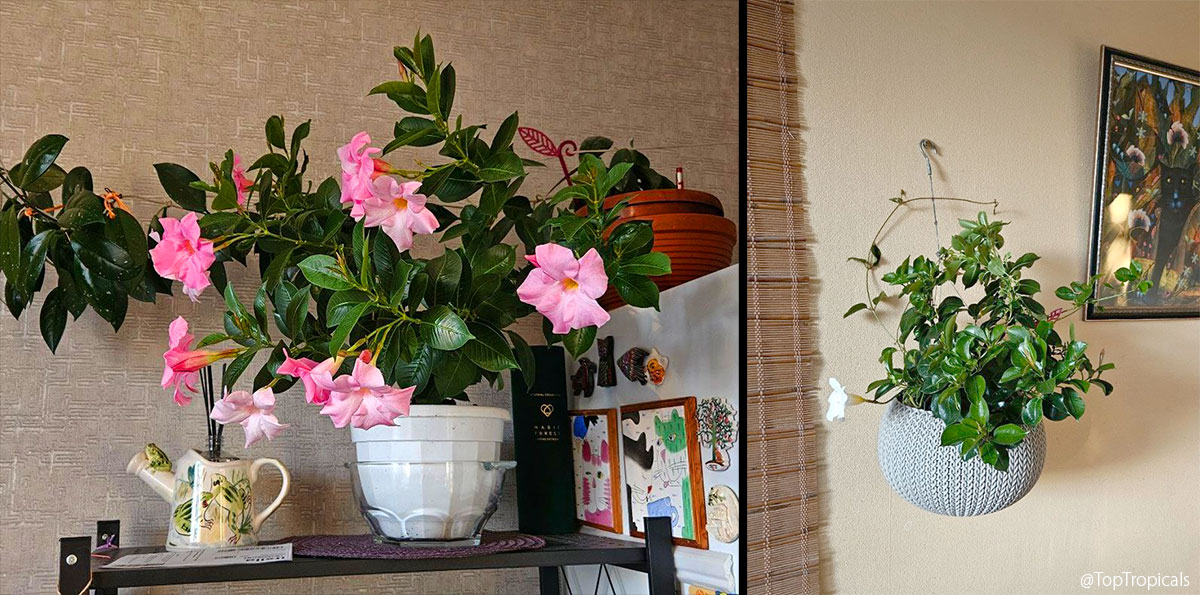
Mandevillas  indoors

10 key tips for successful overwintering

Q: I have two Mandevillas that thrived on my balcony all summer. Now that cold weather is approaching, I've moved them indoors to bright spots, but they're dropping and wilting leaves. How can I keep them healthy until spring? Should I fertilize them? Can Mandevillas grow indoors year-round?

A: First, keep in mind that the plants we call "indoor plants" or "house plants" are all tropical. However, not all tropical plants are suitable for indoor living. Some, especially shade-loving ones, thrive in indoor conditions, which is why we refer to them as "house plants" (philodendrons, monsteras, calatheas, peperomias, and many others, including some succulents). Others are less adaptable to the lower light and humidity typical of indoor spaces, but with a little extra care, you can overwinter them inside and move them back outdoors in spring. Mandevillas are no exception! Even tropical trees, including fruit trees, can tolerate a few months indoors if given the right conditions for semi-dormancy. Below are the 10 key tips for successfully overwintering tropical plants indoors.

1. Maximize Light: The more light, the better. There's no such thing as too much indoor light. If windows aren't enough, use LED grow lights, which stay cool and won't dry the air. Rotate plants every few days to prevent uneven leaf loss.

2. Reduce Watering: Less light and cooler temperatures mean plants need less water. Allow the soil to dry between waterings, and avoid overwatering - combination of cold + wet is especially harmful.

3. Maintain Moderate Temperatures: Most tropicals are happy with daytime temperatures around 75F and nights at 50-60F. In sunrooms or greenhouses, some can handle 45F if watering is kept to a minimum.

4. Boost Humidity: Avoid placing plants near heaters or vents that dry the air. Misting daily helps, or place pots on trays filled with water and pebbles to raise humidity around them.

5. Monitor for Pests: Check leaves weekly to catch insect problems early, as pests can cause serious damage or even kill the plant indoors.

6. Fertilize Smart: Use ONLY liquid, amino-acid-based fertilizers like Sunshine Boosters throughout winter; they won't burn roots since their dosage adjusts with reduced watering. Avoid dry, granulated, and EDTA-based fertilizers during winter and dormancy.

7. Use Micro-Nutrients: Along with macro-elements (fertilizers), supplement with micro-elements like Sunshine Superfood and bio-stimulants such as Sunshine Epi to build strong plants with robust immune systems, better able to withstand unfavorable conditions and resist diseases.

8. Hold Off on Pruning: Leaf drop and leggy growth are normal responses to winter. Wait until spring to prune, when new growth starts, to encourage branching and healthy foliage.

9. Don't Repot Yet: During dormancy, roots slow their growth. Repotting too soon risks root rot. Wait until spring when new growth appears to transplant into a larger container. Typically, roots grow in proportion to the above-ground parts.

10. Let Them Rest: Winter is a natural resting period. Avoid forcing growth - your plants will reward your patience with vibrant leaves and flowers when spring returns.
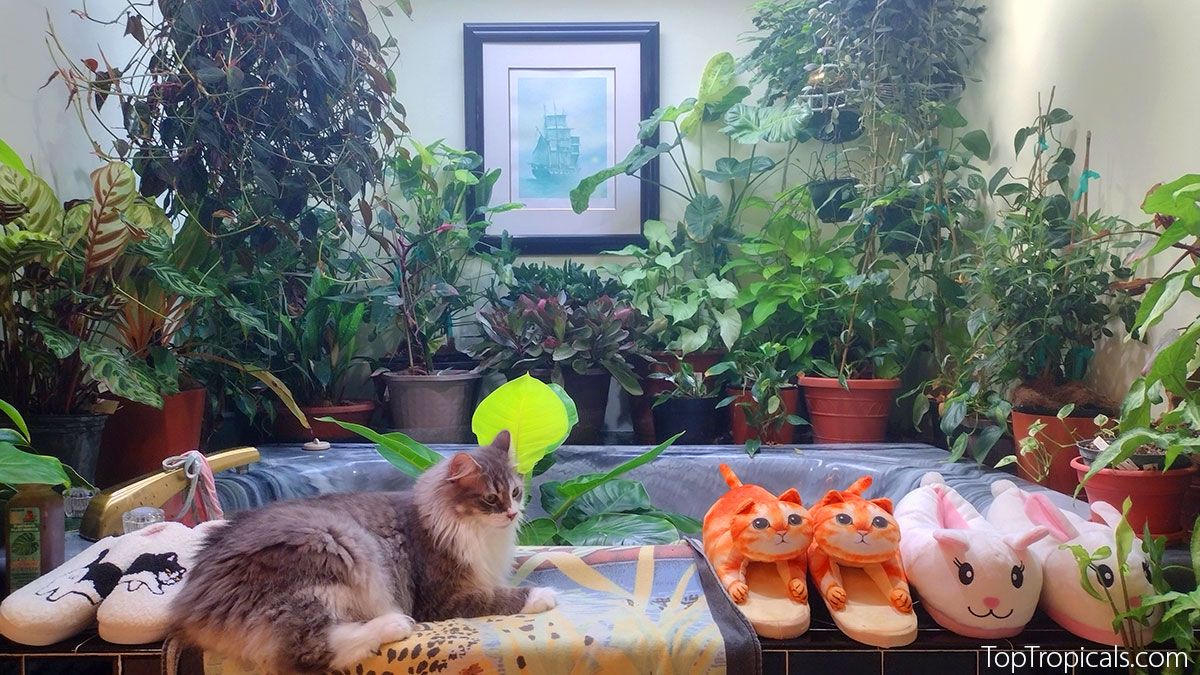
Cat  Indoor  Garden

Date: 18 Apr 2025

Want Constant Blooms? Plant Clerodendrums

Your Shortcut to a Colorful Garden

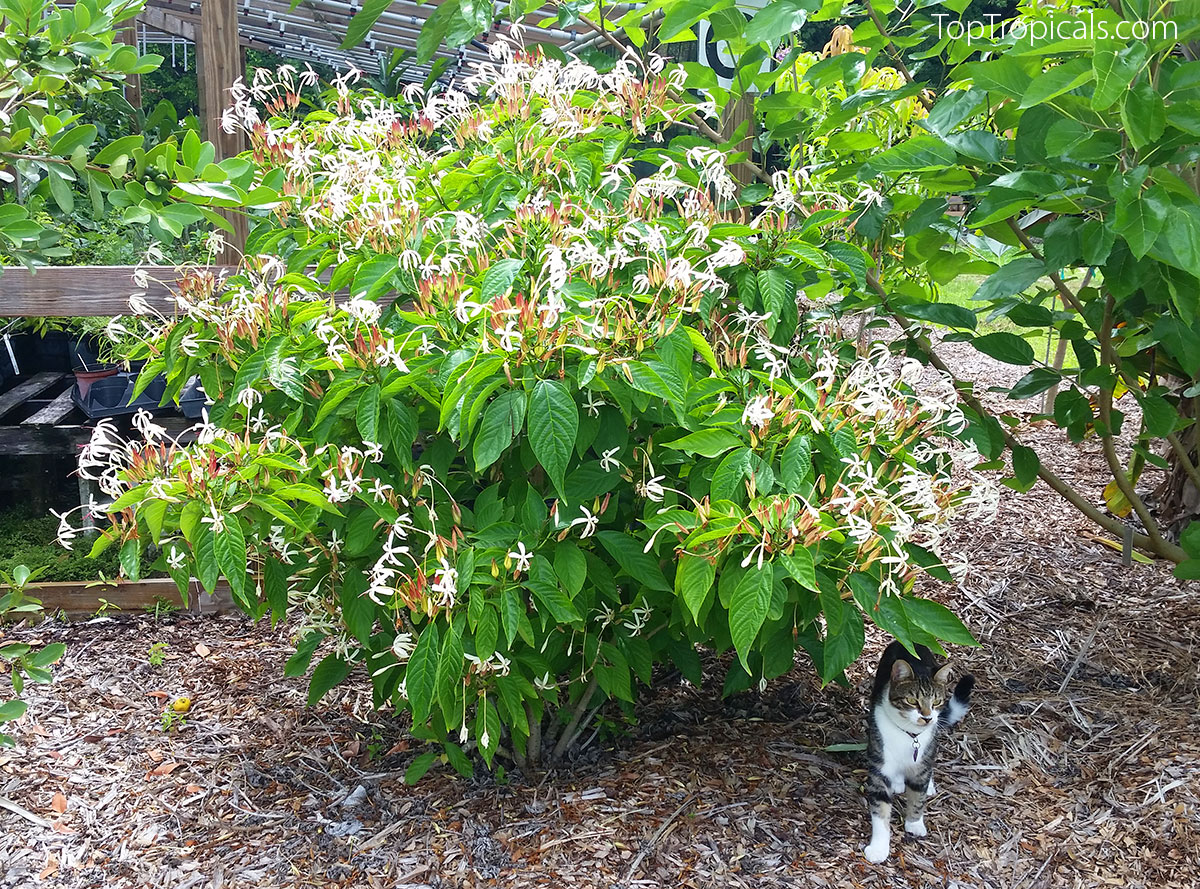
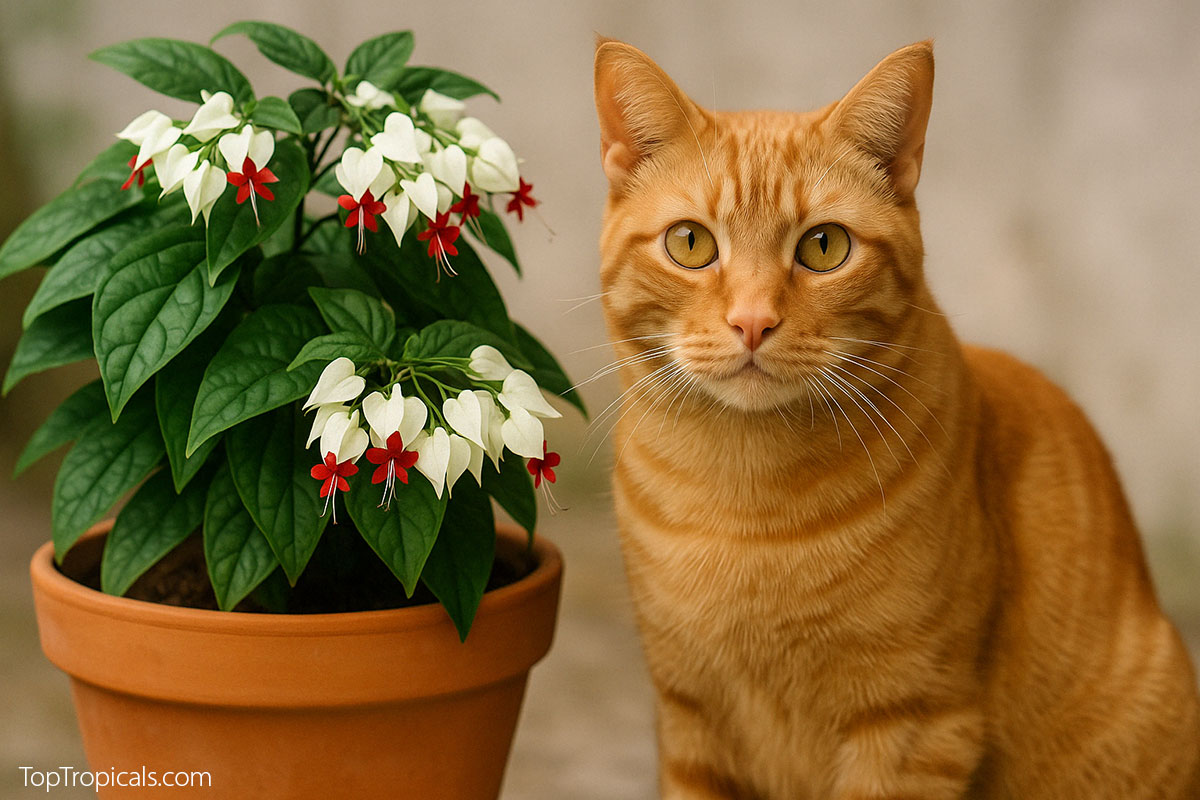
Cat  with  Bleeding  Heart  Clerodendrum

Q: Q: I live in Florida, and while everything is green, I want more color in my garden and patio. What low-maintenance perennials can add nonstop blooms without constant care? I'm tired of annuals that don't last. Do such plants even exist?

A: Yes, they do - and your perfect solution is Clerodendrums. These colorful tropical perennials grow fast, bloom for most of the year, and thrive in both sun and shade. They're easy to care for, relatively cold-tolerant, and come in many shapes: shrubs, vines, and even small trees. Ideal for both garden beds and containers.

Why Grow Clerodendrums?

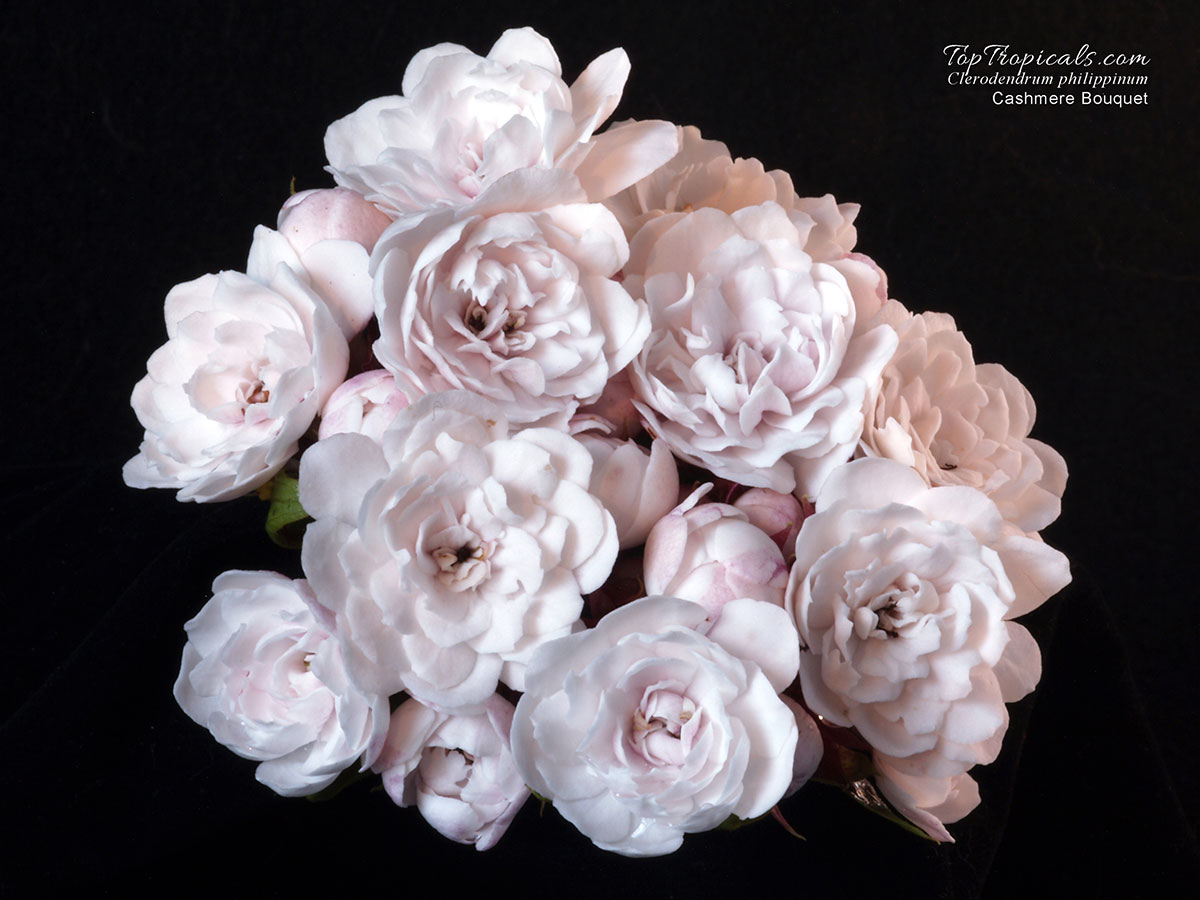
Clerodendrum  philippinum  -  Cashmere  Bouquet

Clerodendrums are tough, reliable, and visually striking plants:
- Fast-growing with a compact habit
- Available in many forms: shrubs, vines, and small trees
- Colorful flowers, many of them are sweetly fragrant!
- Thrive in sun or shade; cold tolerant; not picky about soil
- Bloom repeatedly or continuously
- Excellent for pots, patios, or indoors

Clerodendrums as Shrubs

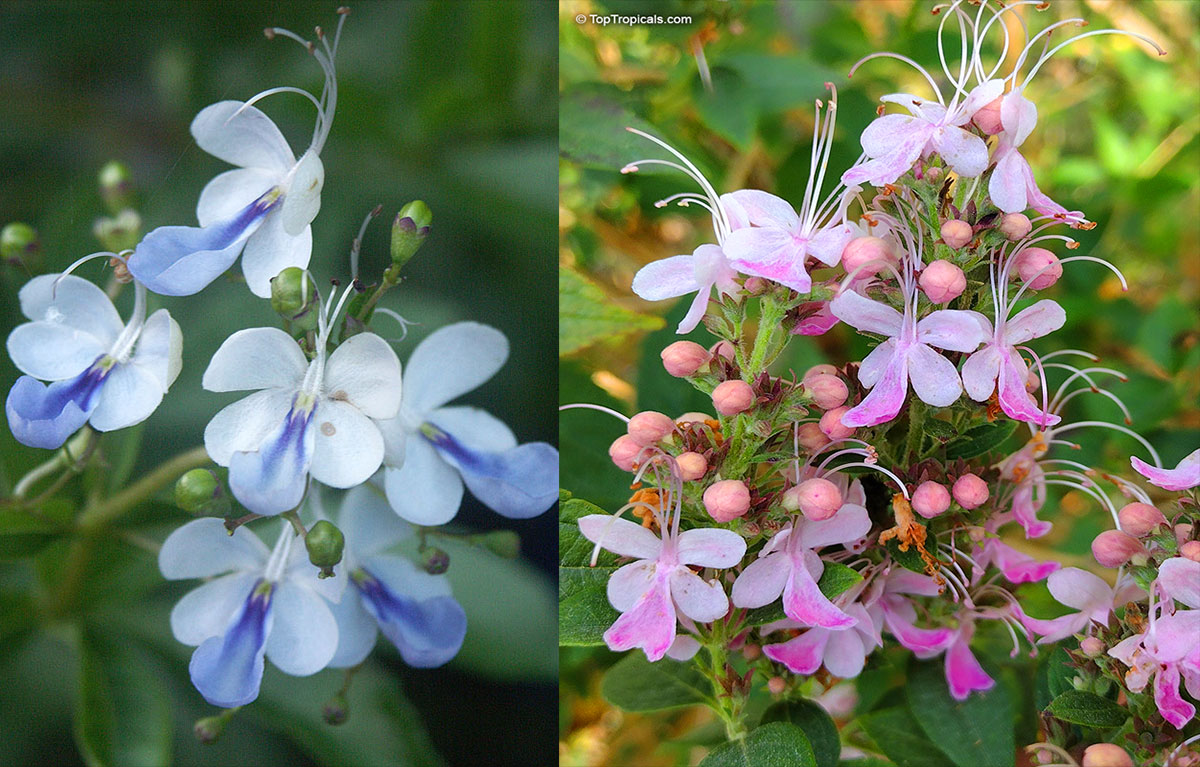
Clerodendrum  ugandense  and  mastacanthum

- Clerodendrum bungei - Glory Bower: fragrant pink blooms, spreads quickly
- Clerodendrum incisum - Musical Note: unique buds shaped like musical notes
- Clerodendrum inerme - Wild Jasmine: salt-tolerant, good for seaside areas
- Clerodendrum mastacanthum - Pink Butterfly Bush: long-blooming, eye-catching pink
- Clerodendrum paniculatum - Pagoda Flower: layered red-orange towers of flowers
- Clerodendrum philippinum - Cashmere Bouquet: double fragrant flowers, shade-tolerant
- Clerodendrum ugandense - Blue Butterfly: delicate blue blooms that attract pollinators

Clerodendrums as Vines

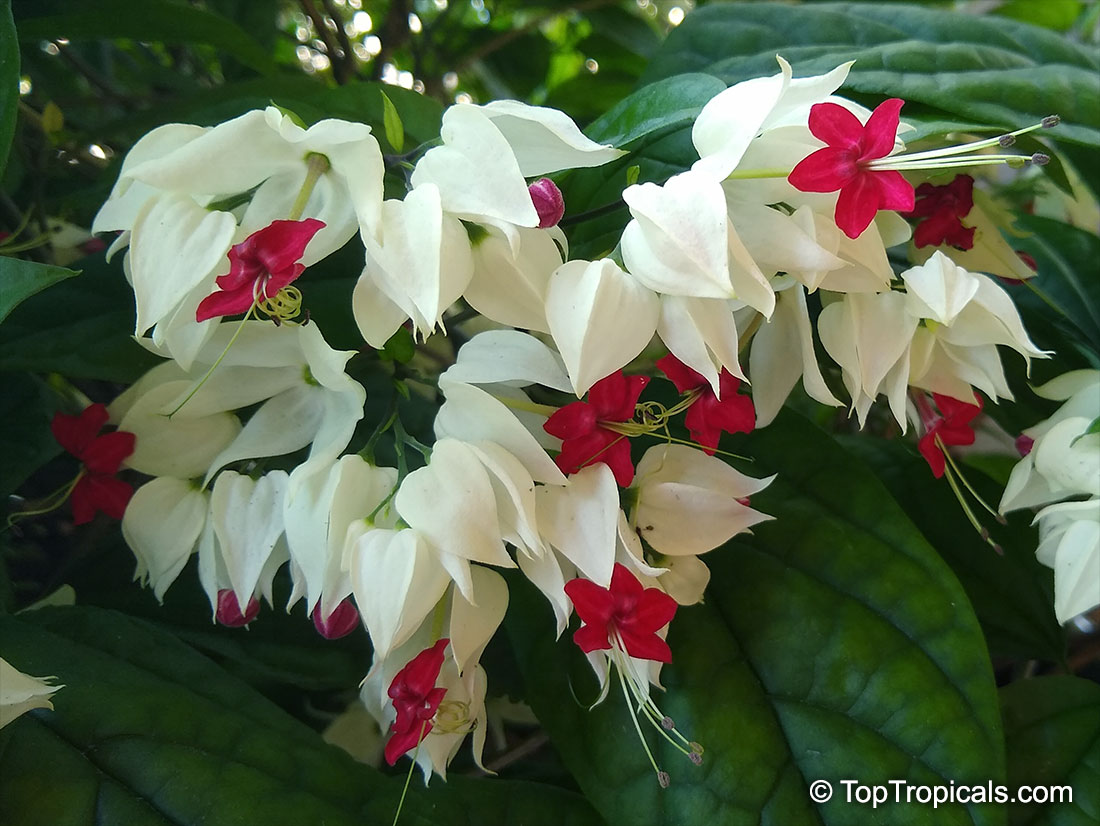
Clerodendrum  thomsoniae  -  Bleeding  Heart

- Clerodendrum thomsoniae - Bleeding Heart: classic red-and-white contrast, climbs easily
- Clerodendrum speciosum - Red Bleeding Heart: vivid magenta blooms, great on trellises

Clerodendrums as Small Trees

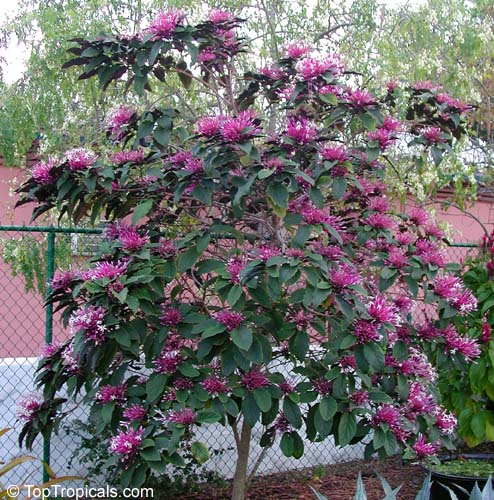
Clerodendrum  quadriloculare  -  Winter  Starburst

- Clerodendrum minahassae - Fountain Clerodendrum: upright, white flower sprays
- Clerodendrum sahelangii - Champagne Clerodendrum: cascading white blooms
- Clerodendrum quadriloculare - Winter Starburst: purple leaves, late winter blooms
- Clerodendrum schmitii - Chains of Glory: dangling flower clusters, unusual look
- Clerodendrum wallichii - Bridal Veil: long white flowers, graceful arching branches

Clerodendrum  minahasse

Date: 6 Dec 2018

Why starting tropicals from seed indoors is better than outside?

TopTropicals.com

Q: I am in Texas, it is getting cold, but I bought these seeds the last two packs, as I didn't want to miss them, was looking for a long time and found you had them. Should I wait until spring to plant them?

A: You can grow tropical plants from seed year round and don't have to wait until warm weather outside. It is, in fact, beneficial to start tropicals indoors in a controlled temperature, moisture and humidity. Seeds of some species are very sensitive to excess water and/or require a certain range of temperature for germination... Besides, it's so much fun!
First, read the basics: Happy Hobby: growing tropicals from seeds

Advantages of indoor growing from seed

It is easier to keep under control indoors:

1) Temperature and Light. Although many tropical seeds require higher temperature and bright light for germination (hot sun may help), it may be hard to avoid overheating and drying out when you put trays in full sun. Using heat pads and additional lighting indoors makes germination smooth, even may take a little longer than in hot sun.
2) Soil moisture. If you ever lost your seeds or tiny seedlings to a heavy summer rain, you sure will appreciate your own moisture-controlled environment! Just make sure to use the right soil mix.
3) Air humidity. Indoor air is drier than outside. It may not be best for some tropical plants, but definitely perfect for seed health - they will never get moldy considering you keep your eye on the plantings.
4) Pre-treatment. Some seeds require scarification (sanding down hard shell), others stratification (cold treatment), but all seeds will benefit from SUNSHINE-S soak before planting. It is easier to do in your home lab. Based on our experience, using Sunshine pre-treatment reduces the risk of fungal damage and improves germination from 30 to 65%.
5) After germination culture. Watching seedlings closely in your home environment and giving them all that is needed for healthy, fast growth - miscroelements and first fertilizer - will help to establish young plants just in time before planting them out in Spring-Summer.

Read more: From Kristi - how to grow tropicals from seed.

Check out our seeds selection...

Date: 20 Aug 2018

6 things NOT to do in Summer planting

TopTropicals

Q: What a hot summer we have... everything I plant in the ground seem to be unhappy and doesn't seem to grow. I water a lot but it seems not enough? leaves stay droopy or get burned. Are there any secrets for summer planting?

A: End of Summer is still a good time for planting in the South, because there are a few more warm months until winter and your plants need enough time to establish before cold season. However because of high temperatures, a few things should be avoid to reduce stress on the plant:

1. Do not plant mail-ordered plant directly from a box into the ground. Keep it in a pot for a week or two and gradually move the pot from shade into permanent location in full sun.

2. Do not expose to full time direct sun even if potted plant was adjusted to sun. Cover newly planted tree with a shade cloth or simply a bed sheet for a few days. Use bamboo stakes to support the cloth. Even tough, sun-loving plants may get a leaf burn if not established.

3. Do not put mulch too close to the stem/trunk. Keep it 1-1.5 inches away from the plant for air circulation.

4. Do not keep wet. Combination of extreme heat and wet is not good for roots (as well as cold and wet). If you notice that soil dries too quickly - water more frequently but lightly, without creating soggy hot swamp.

5. Do not overfertilize. A handful of slow-release fertilizer is good at time of planting, however do not try to push your plant to grow and do not apply more chemicals or manure until you see a new growth.

6. Do not get discouraged and give the plant some time to establish. In most cases, a new growth starts with roots which you can't see. Sometimes it takes a few months until you see the upper part of the tree suddenly starts growing rapidly.

Date: 24 Jun 2018

Care for ultra-tropical plants

TopTropicals

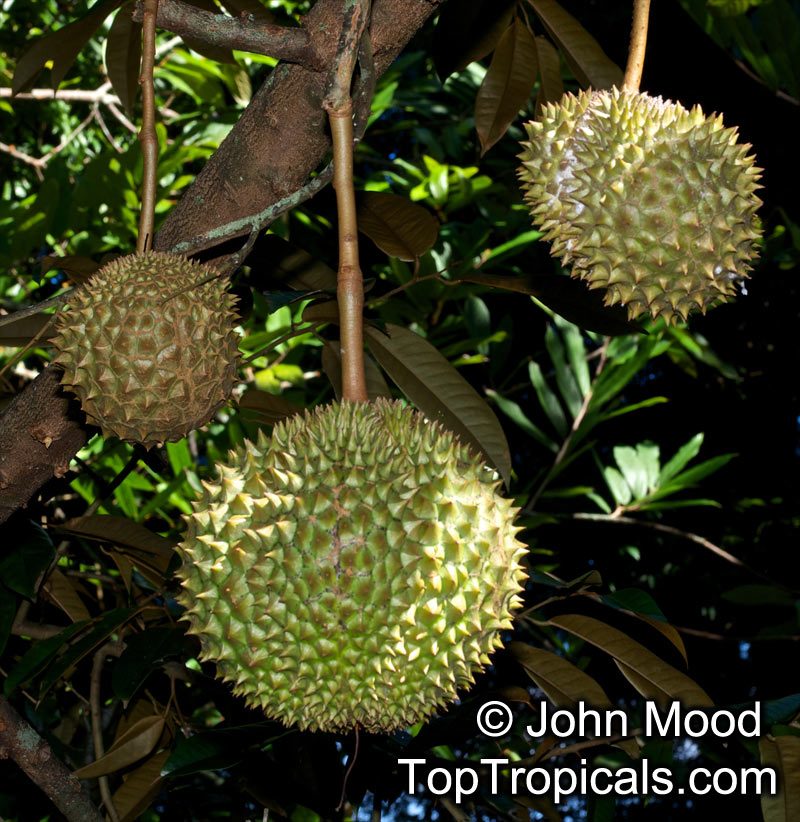
Some tropical plants like Durian, Breadfruit, Cacao are rare in plant collections and require true tropical environment for successful growing and most likely greenhouse conditions unless you live in mild tropical climate like Hawaii. These plants are hard to find and are not cheap. They can be shipped to you in original containers via Express mail and usually take trip well as long as there are no delays or overheating (or cold) during transportation. To enjoy your rare plant collection gem, please make sure to follow these recommendations:
- Keep your eye on delivery, track the shipment and make sure package is not left outside in the heat or cold.
- Unpack immediately and put plant in humid, warm environment with filtered light. Remember, "warm" for tropical plant means 78-85F.
- If a plant is wilted, put clear plastic bag over leaves to increase humidity for a few days. Keep the branches covered with clear plastic, in shade only - to avoid overheating.
- Keep soil slightly moist and don't let dry out. These plants like water as well as good drainage.
- Keep plant in original container until recovers from shipping stress. If necessary, re-pot in 2-3 weeks in bigger pot with rich organic potting mix, containing a lot of peat moss, and perlite or bark for good drainage.
- Grow these plants in warm and mild conditions, in filtered light, high humidity, with no temperature extremes. Remember to keep these plants at temperatures above 50F at all times.