Garden Blog - Top Tropicals

Date: 18 Jan 2026

Five steps to everblooming Rose Hydrangea

Dombeya seminole - Tropical Rose Hydrangea

🌸 Five steps to everblooming Rose Hydrangea


🌸 Dombeya seminole - Tropical Rose Hydrangea: everyone who sees this plant falls in love at first sight. Exceptional rose-pink flower clusters cover the shrub, and butterflies and bees go wild over it. While it is considered a winter bloomer, here at Top Tropicals garden we regularly see it flower multiple times a year, with peak bloom from November through January and surprise blooms the rest of the year.

🌸 Here is how to keep your Dombeya seminole happy and blooming more:

💋 1. Full sun


The more sun it gets, the more flowers it produces. Sun equals bloom power.

💋 2. Adequate water


Dombeyas are heavy drinkers. Regular watering fuels fast growth and heavier flowering.

💋 3. Feed for flowers


Use Sunshine Megaflor bloom booster with regular watering, or apply Green Magic controlled-release fertilizer every 6 months.

💋 4. Trim after flowering


Prune once blooms fade. A bushier plant means more flowering points next season.

💋 5. Give it space


This is a round, airy shrub. Allow at least 6 x 6 ft for good air circulation and even light exposure.

🌸 Quick facts you will appreciate:
💋Often called Tropical Hydrangea because of its hydrangea-like flower clusters
💋Blooms fall through spring, often all winter
💋Reaches about 6-7 ft tall and wide, but can be kept smaller with pruning
💋Thrives in full sun to partial shade and tolerates poor soil
💋An excellent nectar source for butterflies

If you want a beautiful color that refuses to quit, this shrub earns its spotlight.

🛒 Add Beautiful Dombeya to your garden

📚 Learn more:


Dombeya seminole - Tropical Rose Hydrangea i- n Plant Encyclopedia
The number one seller of tropical flowering shrubs: Tropical Rose Hydrangea.
What is the most popular Winter-flowering shrub?
How to create privacy in your yard fast

#Hedges_with_benefits #Butterfly_Plants

🟢 Join 👉 TopTropicals
Date: 9 Jan 2026

Mango Tree for Zone 5: top 15 Condo Mango for growing in cold areas

Mango Tree for Zone 5

🥭 Mango Tree for Zone 5: top 15 Condo Mango for growing in cold areas


🥭 Can you grow a mango tree in Zone 5? Short answer - yes! The trick is - containers!
Mango trees are tropical plants but they do great in pots when you choose the right varieties.

🥭 Compact types stay short, respond well to pruning, and produce in containers.
You can grow them on a patio, balcony, even move them indoors in your condo for winter. That is why they are called condo mangoes!
During warm months, they live outside.
When cold weather hits, they come inside.

🥭 With good light, proper watering, fertilizing, and some patience, these trees can reward you with real mangoes. Not a farm harvest, but enough to enjoy and share.

🏆 Most popular Condo Mango varieties:


Baptiste
Carrie
Cogshall
Diamond
Fairchild
Ice Cream
Julie
Keitt
Lancetilla
Lemon Meringue
Mallika
Nam Doc Mai
Okrung
Pickering
Venus

🛒 Discover Condo Mango

📚 Learn more:
What are the Condo Mangos - a practical guide
Top 10 Dwarf "Condo" Mango, great for container culture
Best tropical fruit and edibles to grow in Zone 5 and anywhere outside the Tropics

#Food_Forest #How_to #Discover #Mango

🟢 Join 👉 TopTropicals

Date: 21 Aug 2025

🍒 Tropical Cherries – Eugenias

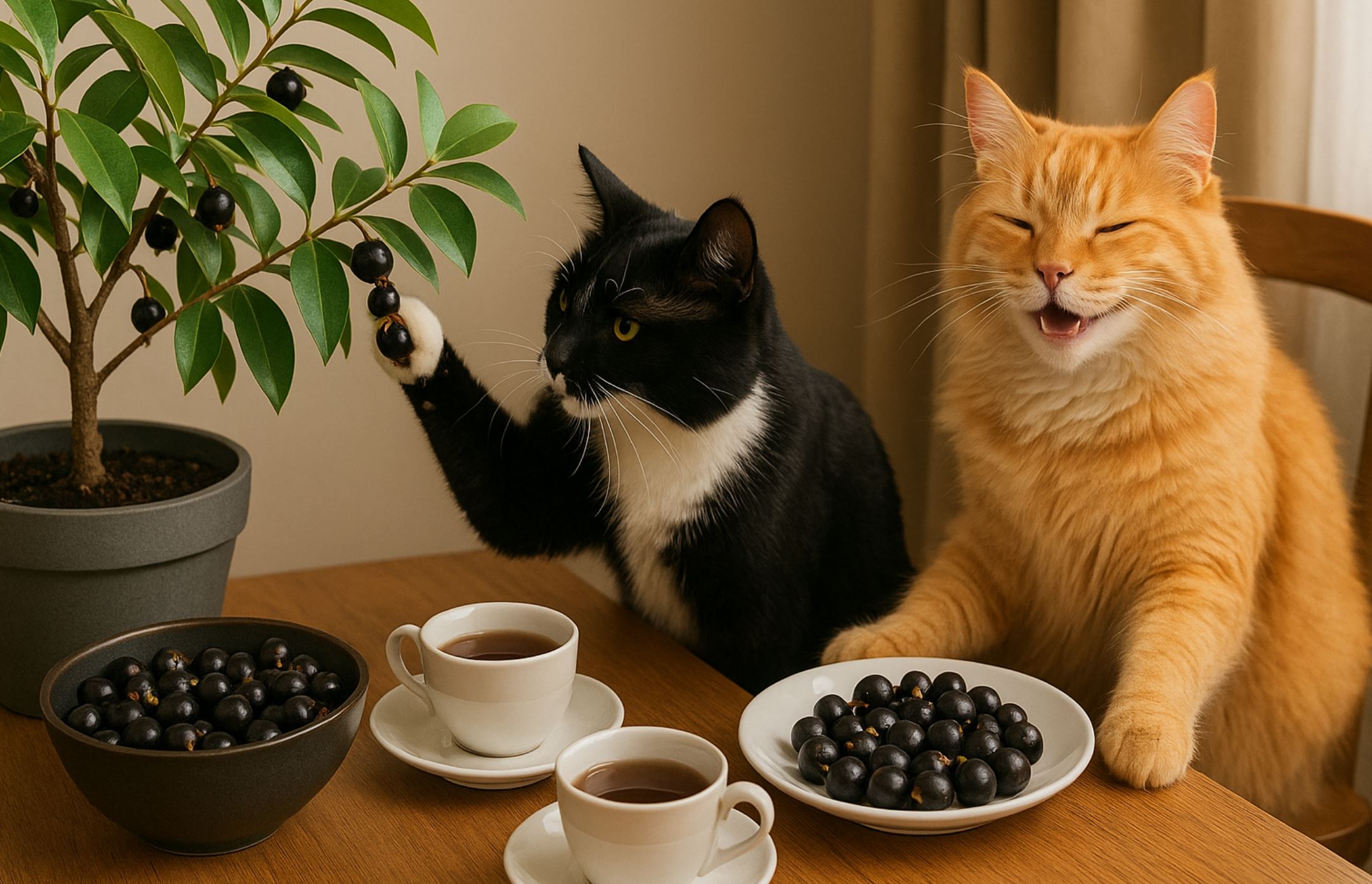
Two  cats  enjoy  Grumichama  fruit  indoors  —  a  tuxedo  cat  picks  berries  from  a  potted  tree  while  an  orange  fluffy  cat  smiles,  sitting  by  tea  cups  and  plates  of 
 fruit.

Tropical Tea Time with Grumichama

Eugenias have earned a spot in many Southern gardens because they’re easy, dependable, and surprisingly versatile. These small trees and shrubs grow well in the ground or in containers, and they don’t waste time before setting fruit.

15% Off Eugenias – Limited Time

Use code EUGENIA15 at checkout.
Excluding S/H. Offer expires 08/28/2025

👍 Popular Choices:

What Makes Eugenia Cherries Stand Out

  • Start producing fruit in just a couple of years
  • Compact size — easy to keep 6–12 ft tall, smaller in pots
  • Low-care — tolerant of most soils and resistant to common pests
  • Strong in hot weather, yet can handle a light frost down to the mid-20s °F
  • Plenty of fruit for people and birds alike

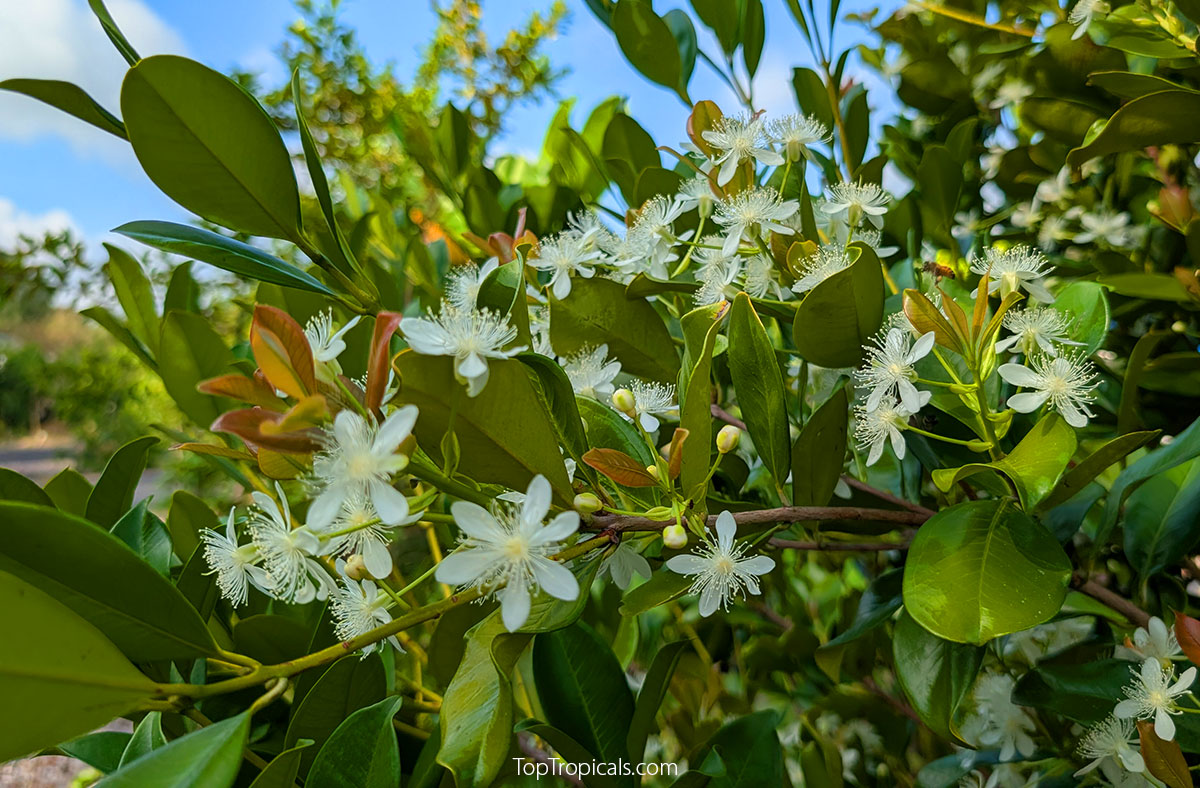
Close-up  of  Grumichama  tree  branches  with  clusters  of  small  white  flowers  among  glossy  green 
 leaves. Grumichama Tree in Bloom – Eugenia brasiliensis

Growing & Care

Outdoors

  • Best in USDA Zones 9–11
  • Sun or partial shade; more sun usually means sweeter fruit
  • Plant in well-drained soil; avoid heavy, wet spots
  • Withstands summer heat and humidity, and can take a light freeze

Container / Indoor

  • Do well in 5–10 gallon pots on patios or balconies
  • Need bright light indoors — a sunny window or grow lights
  • Can flower and fruit in containers if kept warm and well lit
  • In cooler zones, bring plants indoors for winter and back out in spring

General Care

  • Water: Keep soil evenly moist; drought-tolerant once established but best yields with regular watering
  • Soil: Use good potting mix - LINK TO SOIL
  • Fertilizer: Balanced slow-release LINKL TO FERTILIZER Sunshine Boosters
  • Pruning: Light trimming keeps plants bushy and productive
  • Pollination: Self-fertile; one plant will fruit on its own

Read Garden Blog about Tropical Cherries

Shop Tropical Cherries

Date: 16 Dec 2019

Meet PeopleCats of TopTropicals. Cat of the Day: Jim the Founder

Jim is the oldest cat of Top Tropicals. In fact, he is one of the Founders. In 2004 a tiny kitten showed up at first TopTropicals Nursery - a small quarter acre in Ft Lauderdale... Jim looked very important and confident and told us that he wants to stay with us because he sees a great future for TopTropicals... and he was right. Since then, Jim traveled with us through all nursery locations we ever had!

Jim used to lay on top of a warm monitor and help with our first website designs... if you look at his favorite monitor in the picture, you now can imagine how old this cat is!
In spite of his age, Jim is very active and likes to eat a lot. He believes that a good meal is key to a healthy living, and prefers variety. He eats everything: meat, fish, soup, pasta, pizza, veggies, cucumbers, salad... eats well and stays healthy!
Jim happily participates in all costume parties. Yes, it is him in a Santa costume greeting you at the top of this newsletter!

Don't miss out: Loquat Big Jim - we only have 4 plants, they all named after Jim!

Check out and more Cat of the Day stories.

Date: 24 Jun 2018

Cold hardy tropical fruit trees for Luisiana

Q: I've just moved to Louisiana and have been wondering whether it would make sense to plant some tropical fruit trees in our garden. Average lows in New Orleans are 41 deg F in January and February, although we did hit 25 once with the Arctic vortex. I'm interested in litchi, longan, rambutans, and persimmons. Do you have varieties that can tolerate Louisiana's temperature range? I'd love mangosteen but I don't suppose they will survive. Do you have any suggestions on tropical fruit trees that I could try?

A: Average temperatures are for statistics only; it is actual temperatures that may hurt your cold sensitive plant. This is what you should keep in mind when starting your tropical fruit collection:
1) Ultra-tropical plants like Rambutan can not survive winters below 45-50F. However, they can be successfully grown in containers in a greenhouse or moved indoors into a sun room during cold periods.
2) Tropical plants like Litchi and Longan may take some light frost once established. Still, for areas with freeze our advice is - keep them in pots and move inside in case of cold.
3) There is a number of subtropical fruit trees that are hardy enough to take some freeze. Persimmon, Feijoa, Fig, Cattley Guava, Jujube, Kiwi, some Eugenias and others. Please refer to our Tropical Fruit Sensitivity Chart.
4) Remember that plant's ability to survive winter depends on several factors, not only temperature itself. Important factors are: wind protection (chill wind kills rather than low temperature itself), exposure, how close the tree is planted to the house, plant maturity and its overall strength and health. If a plant had received good nutrients during summer, has well established root system, planted in enclosed area protected from winds and has plenty of bright sunlight - it has better chances to survive than a weak plant in warmer conditions.
5) Use SUNSHINE plant boosters for improving cold tolerance of your tropical plant. It only takes a few drops, and only costs $5!